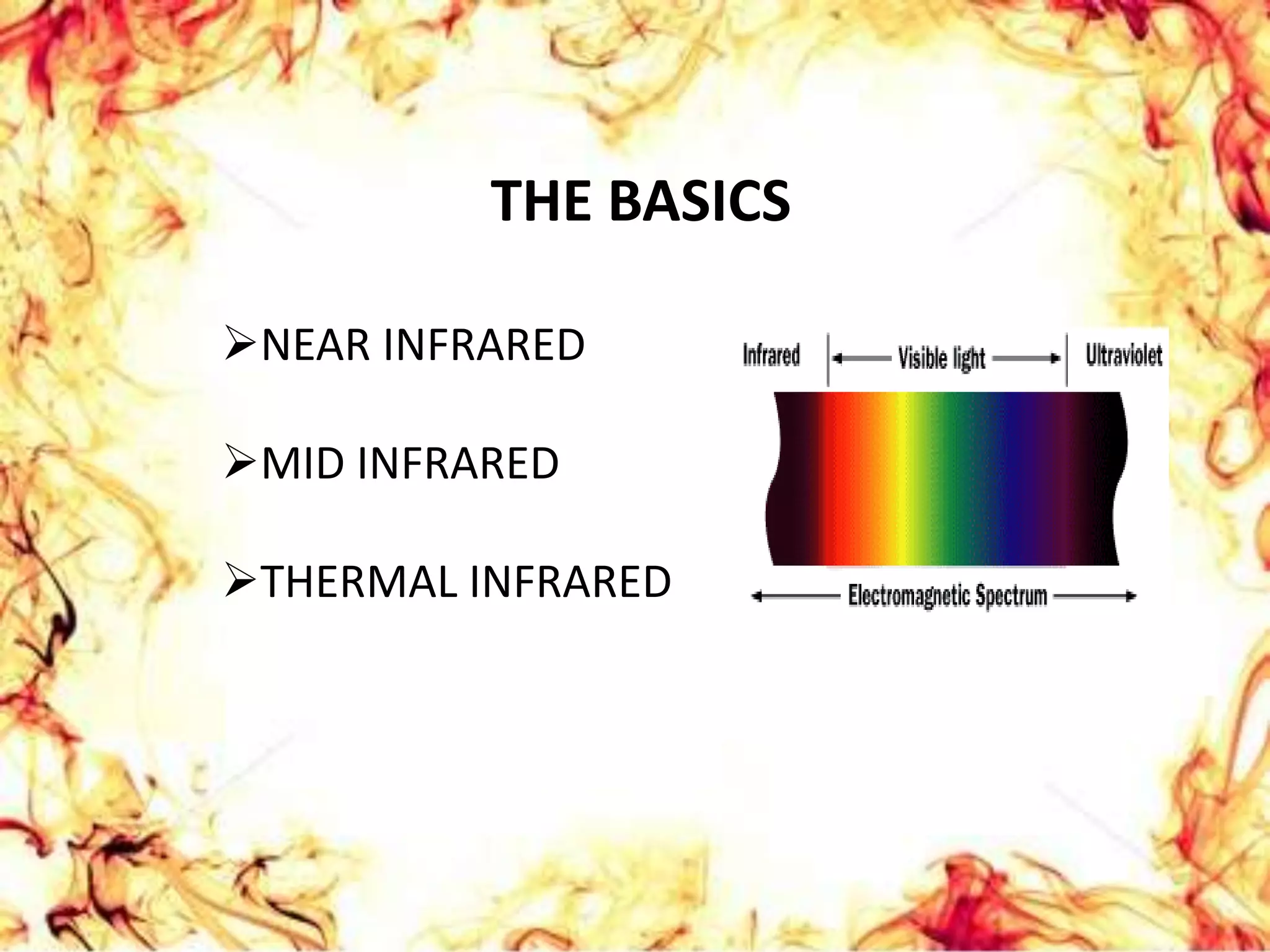
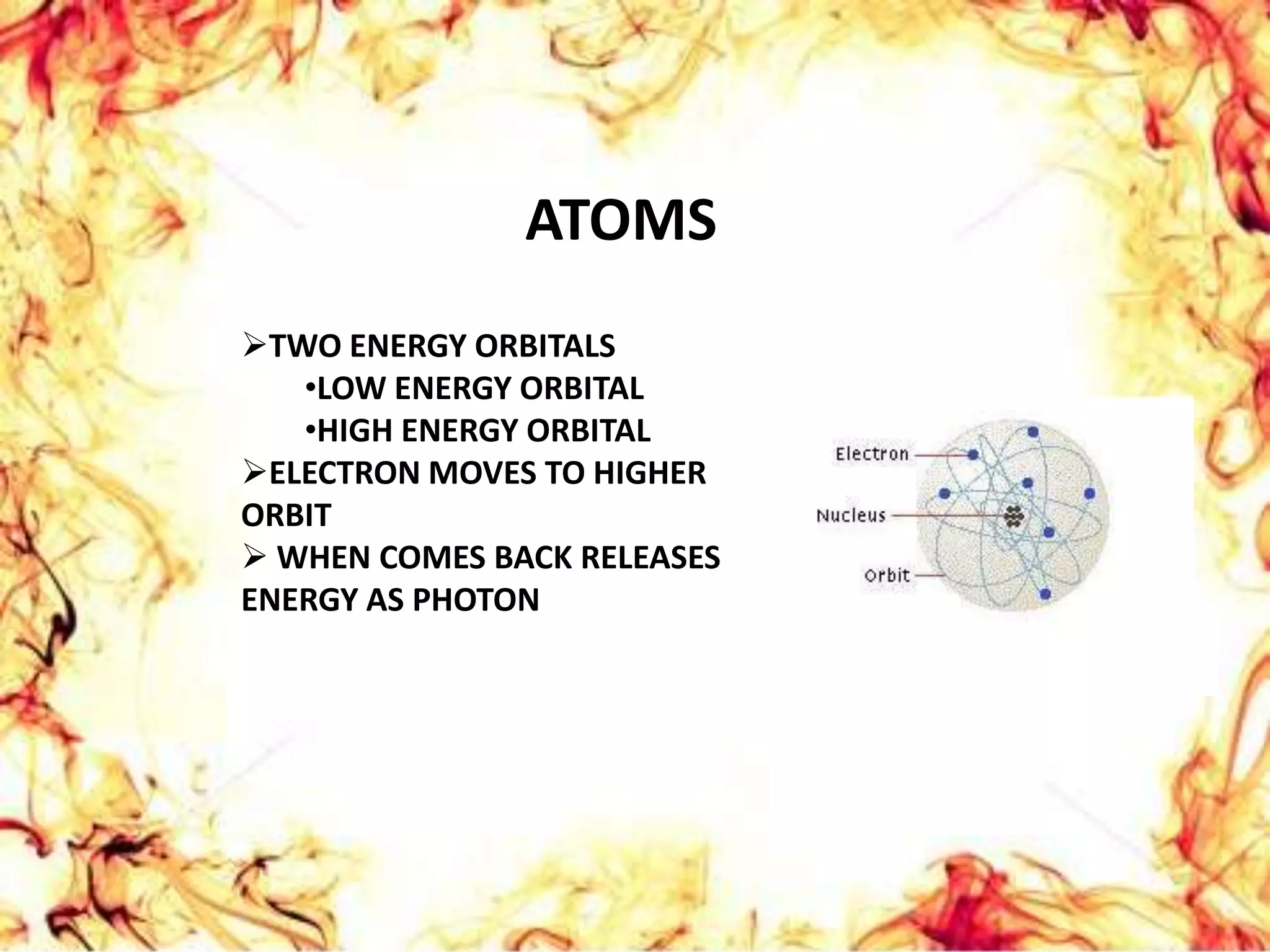
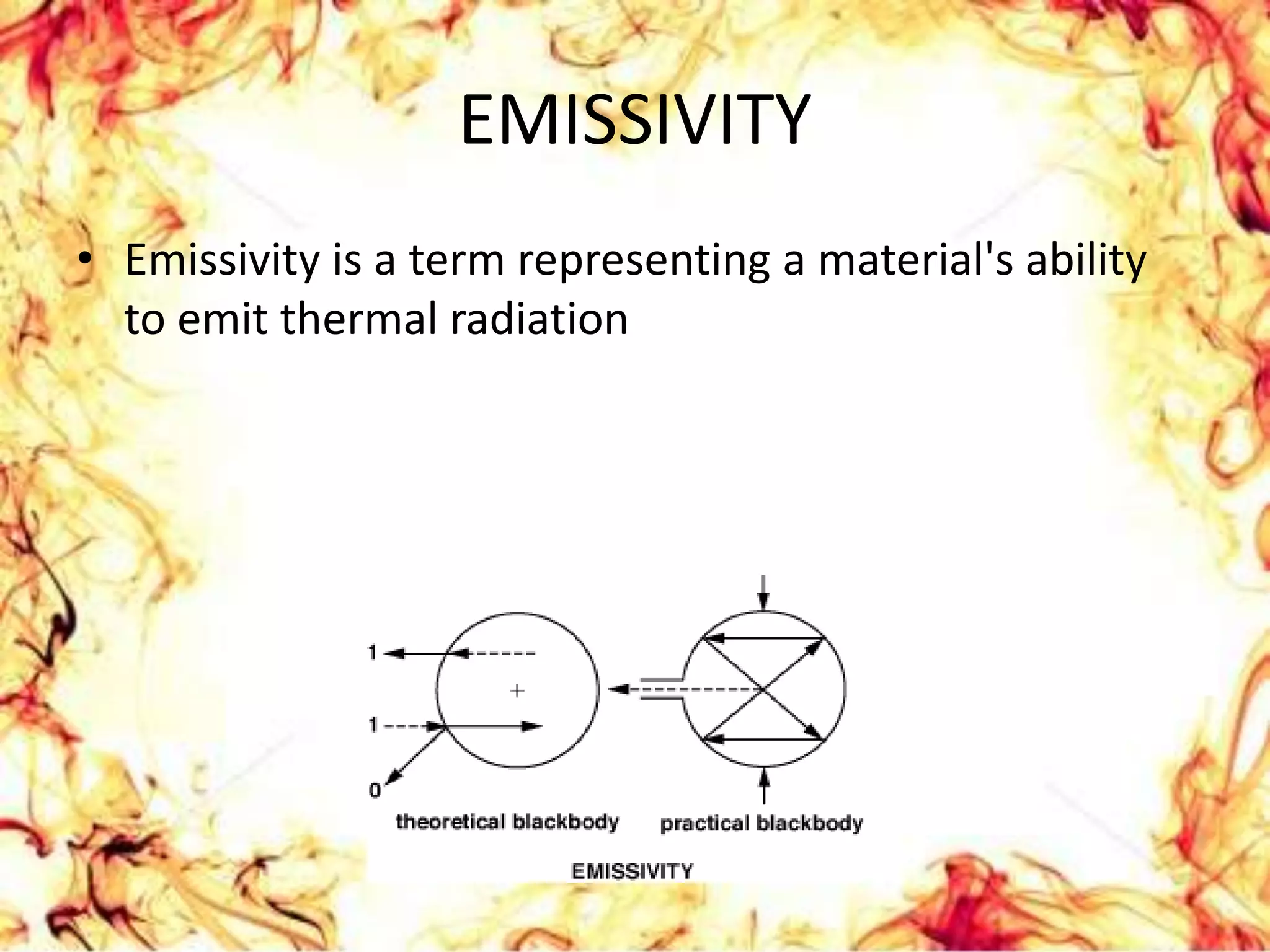
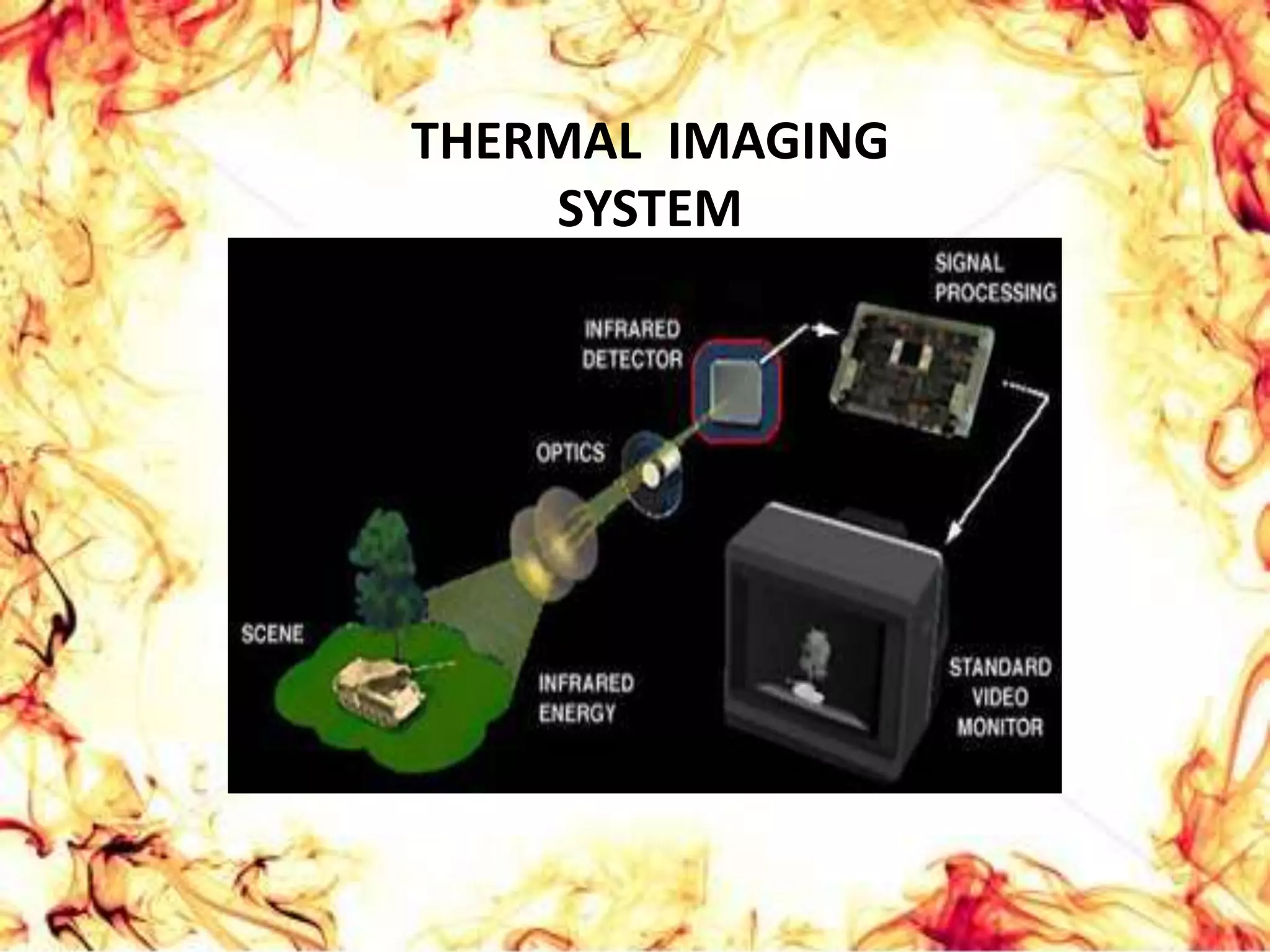
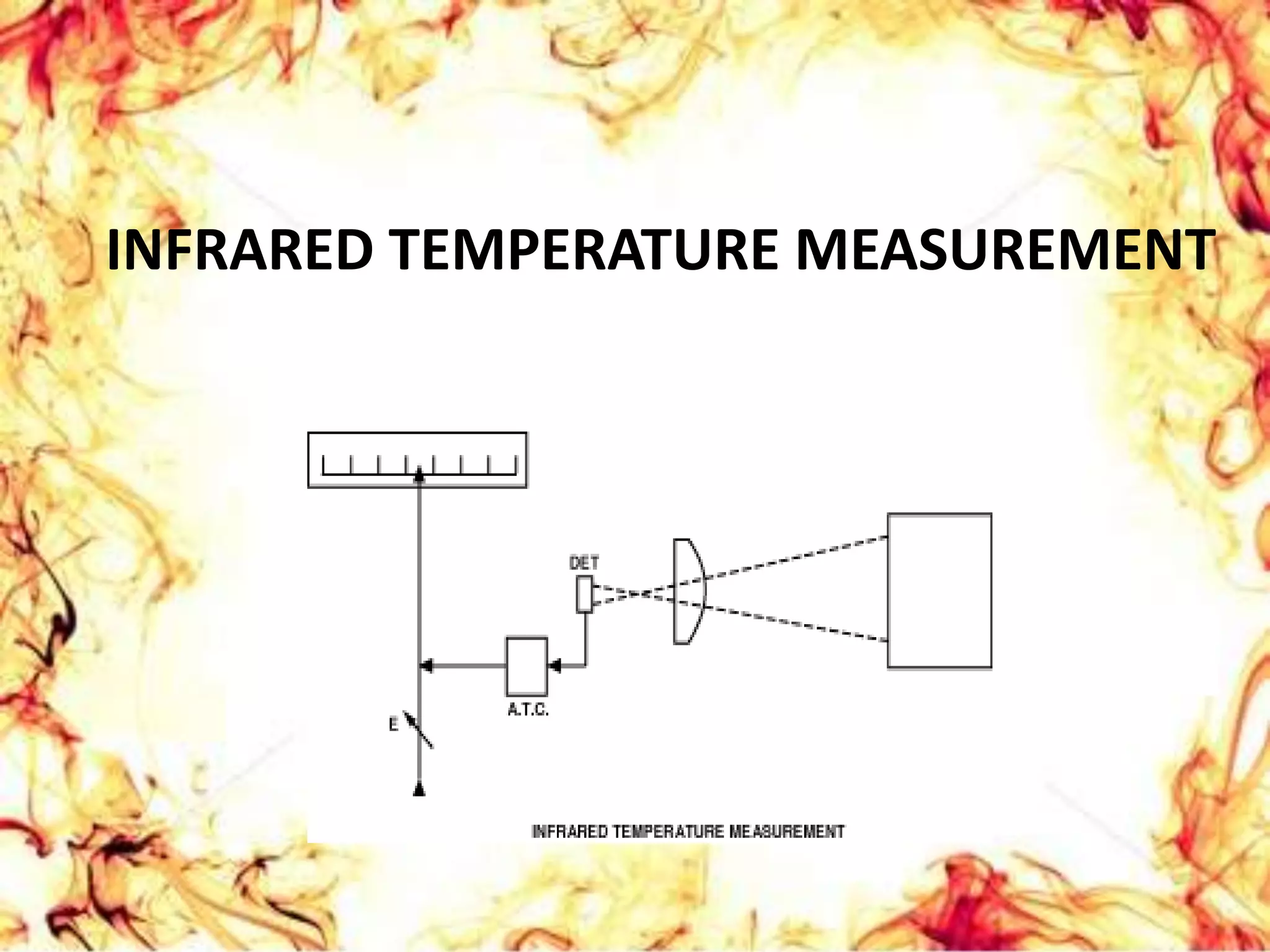
This document provides an overview of thermography and infrared temperature measurement. It discusses the basics of near, mid, and thermal infrared wavelengths and how atoms emit infrared energy as photons when electrons move between energy orbitals. Thermal images show the infrared energy emitted, transmitted, and reflected by an object. Emissivity describes a material's ability to emit thermal radiation. Thermal imaging systems use uncooled or cooled infrared detectors to capture infrared wavelengths and convert them into temperature measurements using techniques like two color thermometry. Thermography has applications in areas like condition monitoring, healthcare, security, and manufacturing.
WHEN COMESBACK RELEASES ENERGY AS PHOTONTHERMAL ENERGYThermal images, or Thermograms, are actually visual displays of the amount of infrared energy emitted, transmitted, and reflected by an object.
9.
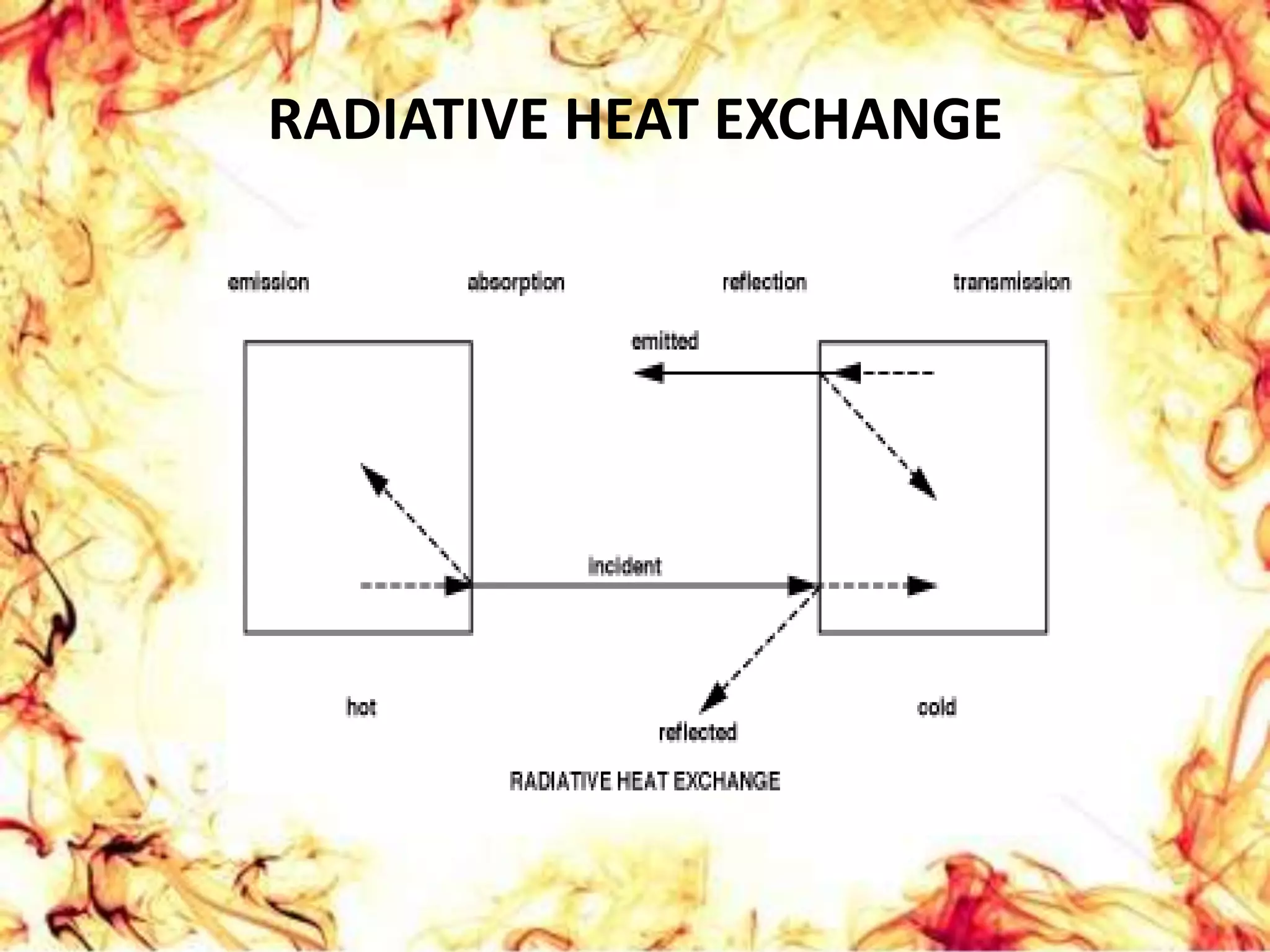
Incident Energy =Emitted Energy + Transmitted Energy + Reflected Energy
10.
Second law ofthermodynamics and EmissivityRADIATIVE HEAT EXCHANGE
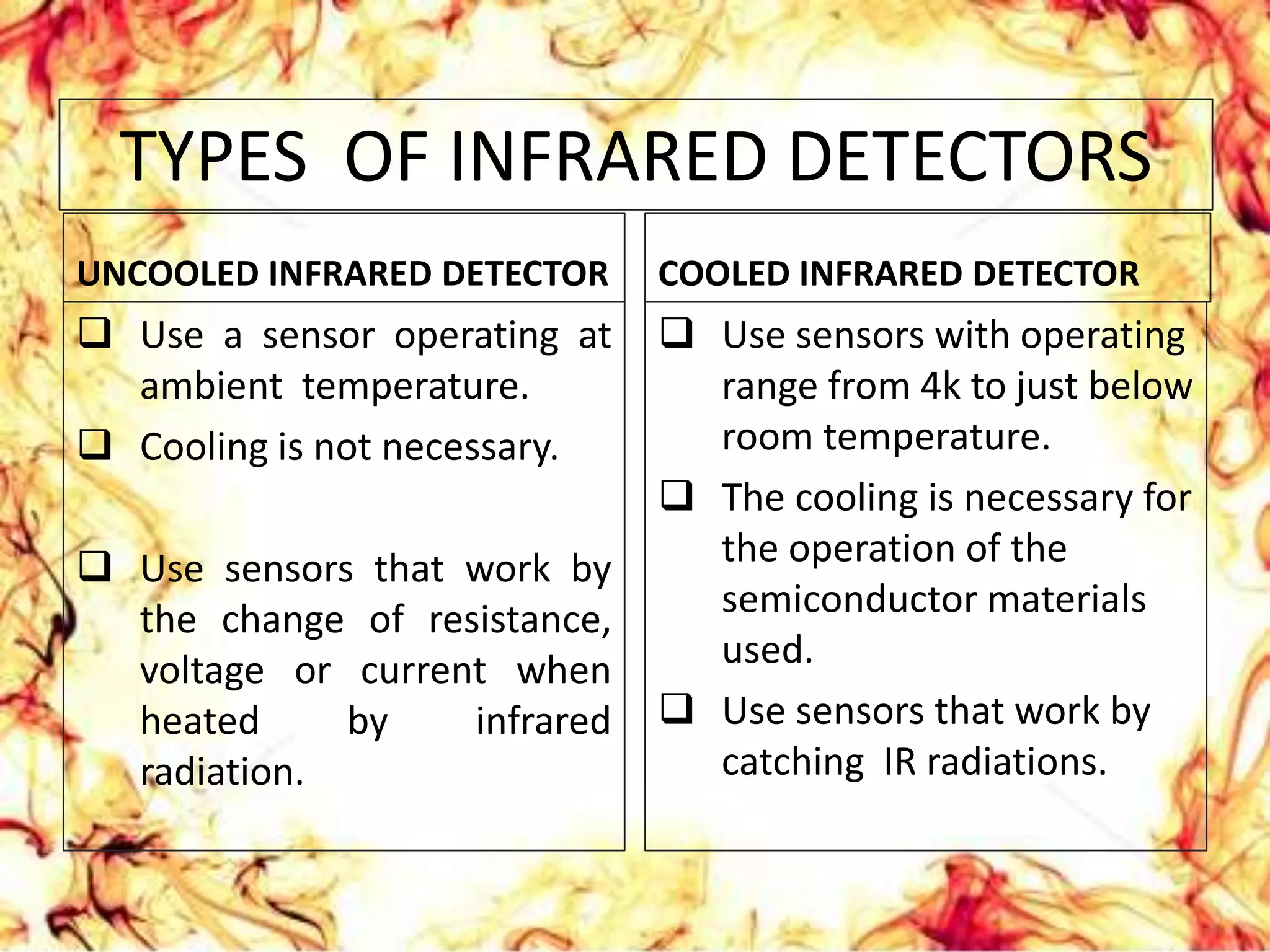
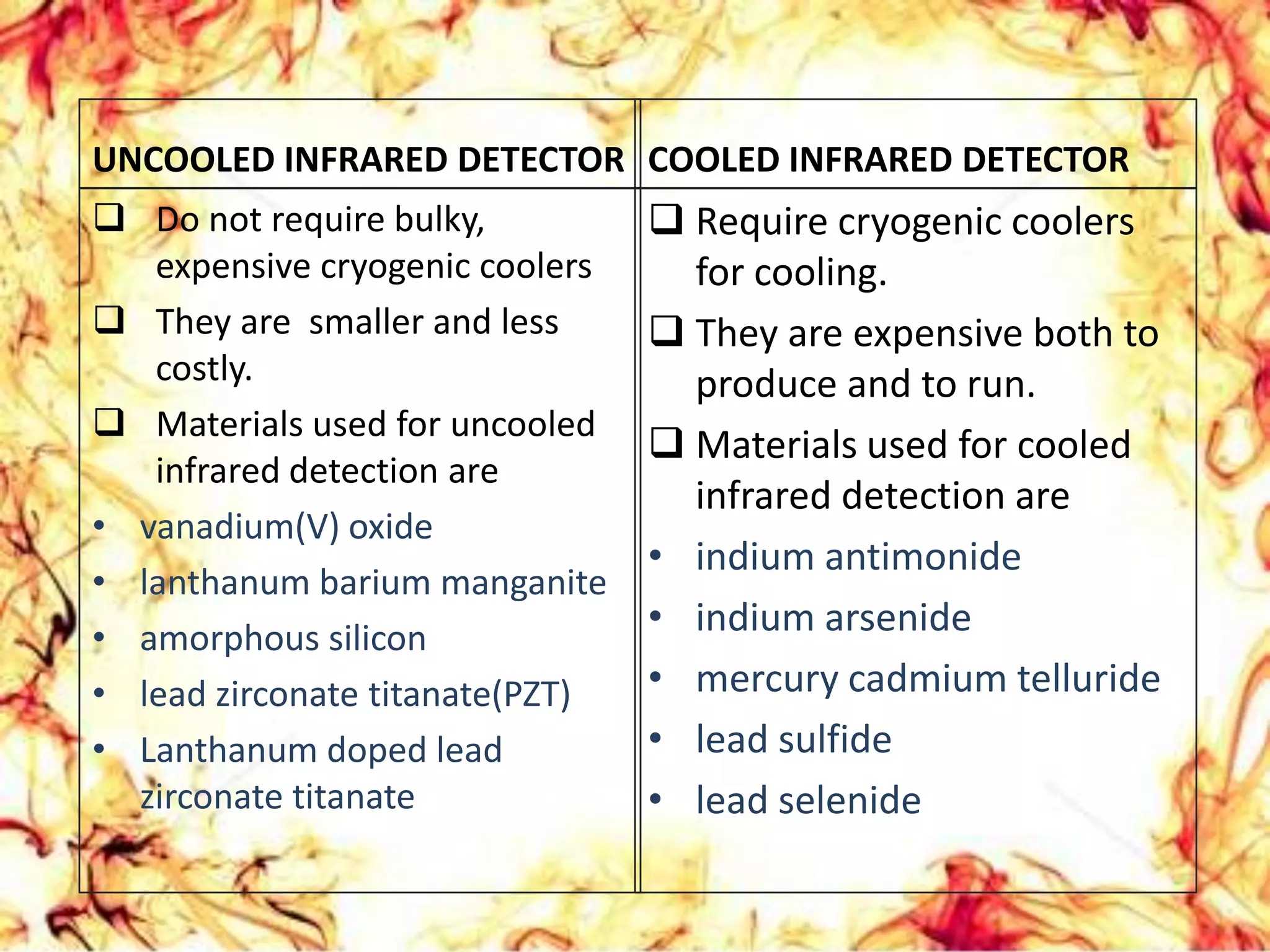
Use sensors thatwork by the change of resistance, voltage or current when heated by infrared radiation.COOLED INFRARED DETECTORUse sensors with operating range from 4k to just below room temperature.
20.
The cooling isnecessary for the operation of the semiconductor materials used.
21.
Use sensors thatwork by catching IR radiations.UNCOOLED INFRARED DETECTORCOOLED INFRARED DETECTORDo not require bulky, expensive cryogenic coolers



![Vibe Coding vs. Spec-Driven Development [Free Meetup]](https://cdn.slidesharecdn.com/ss_thumbnails/vibecodingvsspecdrivendevelopment-251209105622-43f455e7-thumbnail.jpg?width=640&height=640&fit=bounds)


