“Thermal Imaging Cameras”
An
Application
of
Digital
Image
Processing
Introduction:
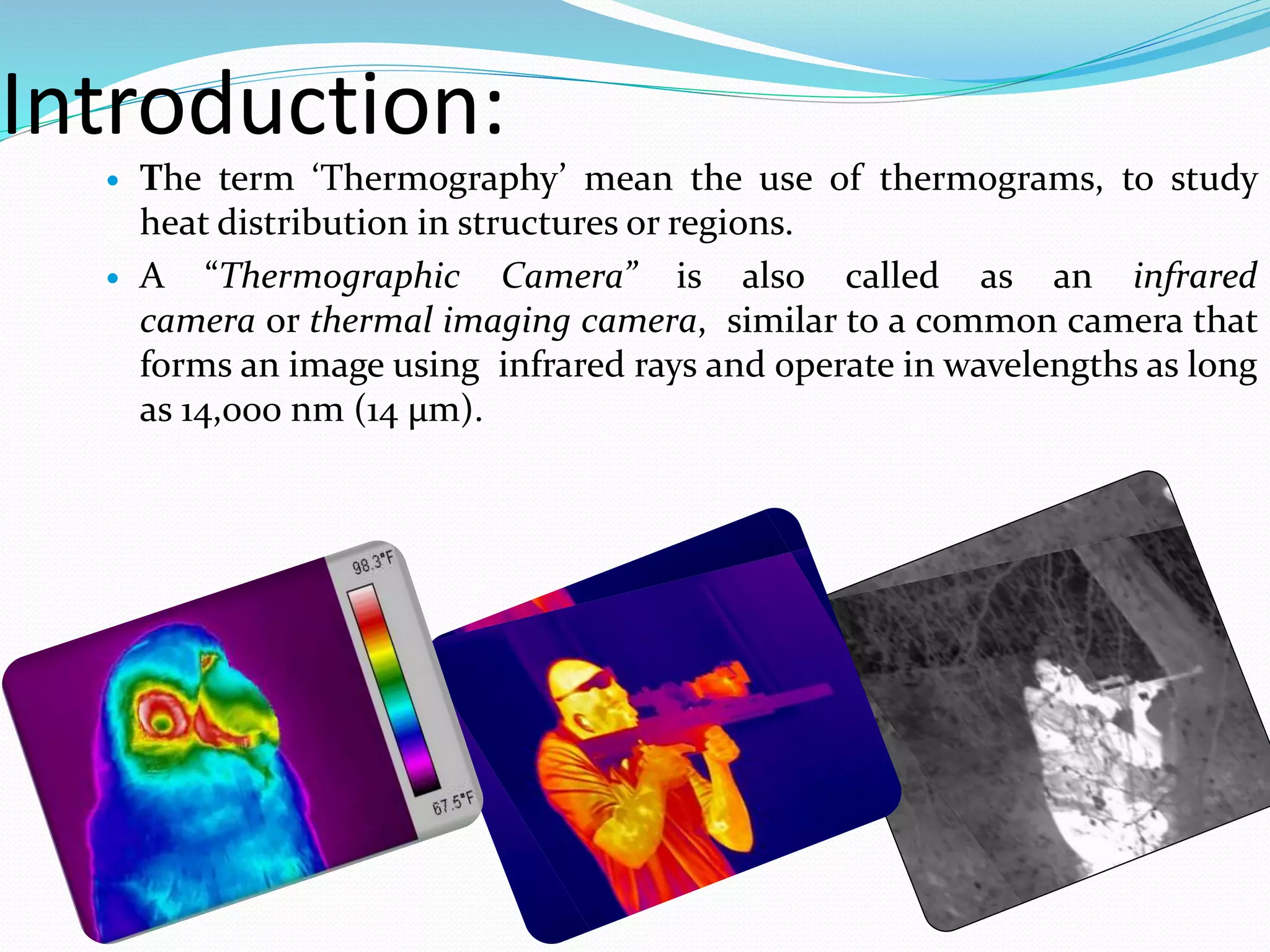
 The term ‘Thermography’ mean the use of thermograms, to study
heat distribution in structures or regions.
 A “Thermographic Camera” is also called as an infrared
camera or thermal imaging camera, similar to a common camera that
forms an image using infrared rays and operate in wavelengths as long
as 14,000 nm (14 µm).
The Infrared rays were used
mainly for thermal
measurement. The basic form
of IR radiations beyond red
light are used for the
development of detectors,
which can detect(s) a person
10 meters away.
The advanced application of IR
technology may have been
used to detect the presence of
icebergs and steamships using
a mirror and thermopile. This
was followed up to a proposal
to detect the warm blooded
organisms.
Components of a
Thermographic Camera
1. Camera.
2. Thermal Sensors.
3. Solid state thermal imaging arrays.
4. Crystal slice imaging devices.
5. Smart Sensors.
The images captured from infrared
cameras tend to have a single-color
channel because the cameras
generally use an image sensor that has
a different wavelengths of infrared
radiation.
Sometimes these monochromatic
images are displayed in pseudo-color.
This technique is called density
slicing. This is useful because
although humans have much
greater dynamic range in intensity
detection than color overall, the
ability to see fine intensity differences
in bright areas is fairly limited.
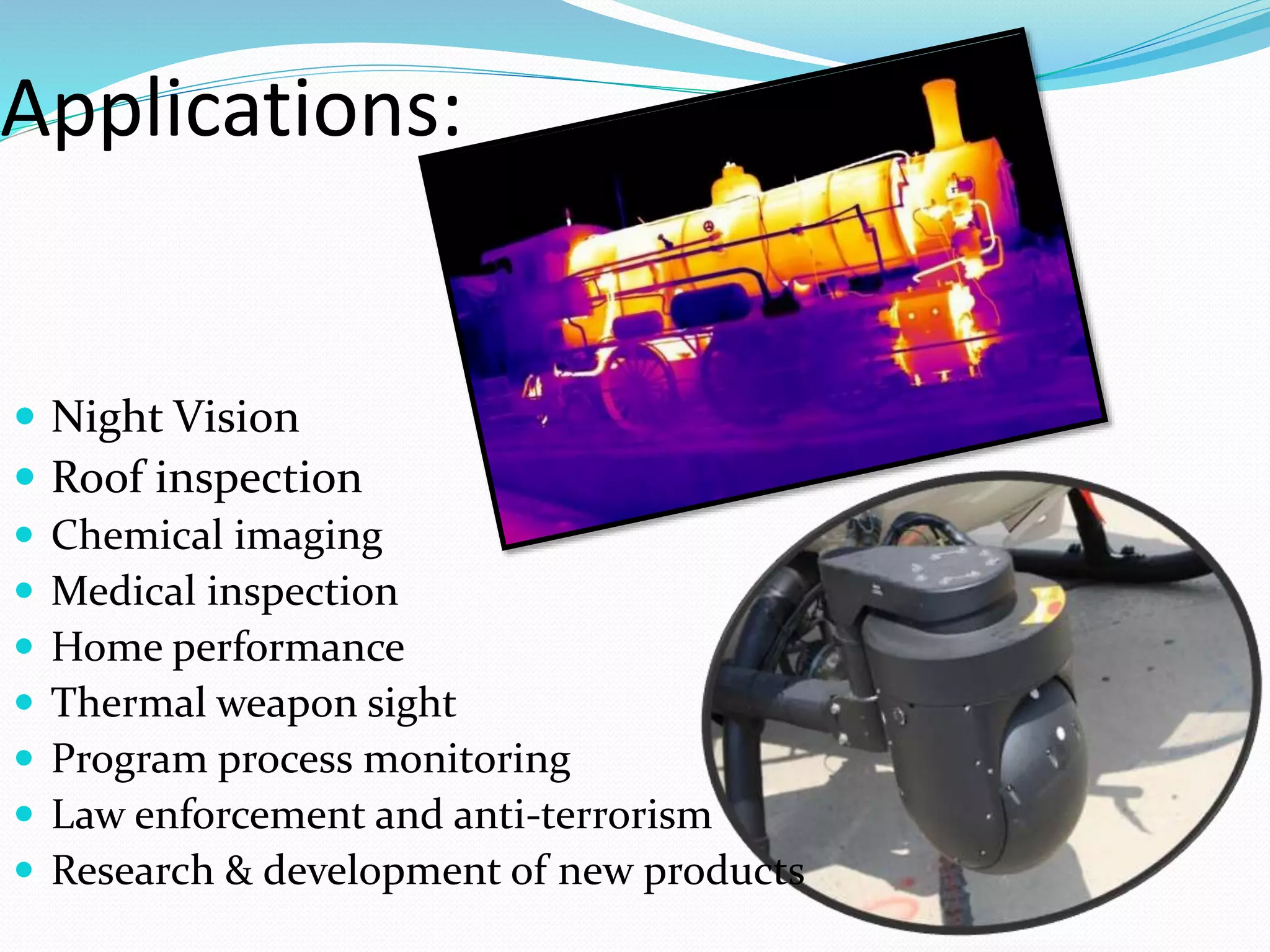
Applications:
 Night Vision
 Roof inspection
 Chemical imaging
 Medical inspection
 Home performance
 Thermal weapon sight
 Program process monitoring
 Law enforcement and anti-terrorism
 Research & development of new products
Advantages
Temperature recognition:
Temperature variation in two different cases.
This is a technology in which
machines are able to extract
necessary information from an
image.
Conclusion:
Thermal Imaging is an
outstanding technique, if
implemented it could
contribute the Nation.
References:
 http://www.ti.com/corp/docs/company/history/
timeline/defense/docs/first_flir.html
 DARPA developing personal LWIR cameras to give
soldiers heat vision
 Thermal detector with preferentially-ordered
thermally sensitive element and method
!!

Thermal imaging camera

  • 1.
  • 2.
    Introduction:  The term‘Thermography’ mean the use of thermograms, to study heat distribution in structures or regions.  A “Thermographic Camera” is also called as an infrared camera or thermal imaging camera, similar to a common camera that forms an image using infrared rays and operate in wavelengths as long as 14,000 nm (14 µm).
  • 4.
    The Infrared rayswere used mainly for thermal measurement. The basic form of IR radiations beyond red light are used for the development of detectors, which can detect(s) a person 10 meters away. The advanced application of IR technology may have been used to detect the presence of icebergs and steamships using a mirror and thermopile. This was followed up to a proposal to detect the warm blooded organisms.
  • 5.
    Components of a ThermographicCamera 1. Camera. 2. Thermal Sensors. 3. Solid state thermal imaging arrays. 4. Crystal slice imaging devices. 5. Smart Sensors.
  • 6.
    The images capturedfrom infrared cameras tend to have a single-color channel because the cameras generally use an image sensor that has a different wavelengths of infrared radiation. Sometimes these monochromatic images are displayed in pseudo-color. This technique is called density slicing. This is useful because although humans have much greater dynamic range in intensity detection than color overall, the ability to see fine intensity differences in bright areas is fairly limited.
  • 7.
    Applications:  Night Vision Roof inspection  Chemical imaging  Medical inspection  Home performance  Thermal weapon sight  Program process monitoring  Law enforcement and anti-terrorism  Research & development of new products
  • 8.
  • 10.
    Temperature recognition: Temperature variationin two different cases. This is a technology in which machines are able to extract necessary information from an image.
  • 11.
    Conclusion: Thermal Imaging isan outstanding technique, if implemented it could contribute the Nation.
  • 12.
    References:  http://www.ti.com/corp/docs/company/history/ timeline/defense/docs/first_flir.html  DARPAdeveloping personal LWIR cameras to give soldiers heat vision  Thermal detector with preferentially-ordered thermally sensitive element and method
  • 13.