Therapeutic Hypothermia
Frank W Meissner MD, FACP, FACC, FCCP, FASNC
The Hidden Obstacle to Reanimation


   CNS Reperfusion Injury
   Simply defined as ‘damage observed
   after resoration of blood flow to ischemic
   tissues’
Hypoxic Cerebral Insult

6% Decrease in Cerebral Metabolism per
1°C Decrease Core Body Temp => Anti-
inflammatory Effects
Resultant Suppression Of CNS Reperfusion
Injury
  Decreased Free Radical Production
  Reduced Excitatory Neurotransmitters
  Suppression of Ca++ mediated cell death
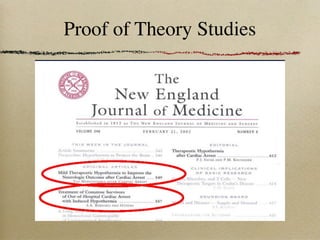
Proof of Theory Studies
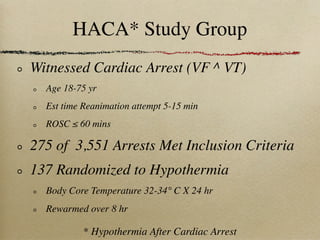
HACA* Study Group
Witnessed Cardiac Arrest (VF ^ VT)
  Age 18-75 yr
  Est time Reanimation attempt 5-15 min
  ROSC ≤ 60 mins

275 of 3,551 Arrests Met Inclusion Criteria
137 Randomized to Hypothermia
  Body Core Temperature 32-34° C X 24 hr
  Rewarmed over 8 hr

           * Hypothermia After Cardiac Arrest
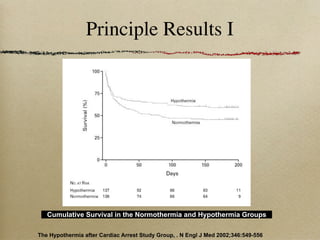
Principle Results I


   Cumulative Survival in the Normothermia and Hypothermia Groups

The Hypothermia after Cardiac Arrest Study Group, . N Engl J Med 2002;346:549-556
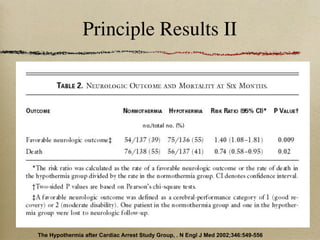
Principle Results II


The Hypothermia after Cardiac Arrest Study Group, . N Engl J Med 2002;346:549-556
Current AHA (Y2005) Guideline

Unconscious adult patients with ROSC after
out-of-hospital arrest cooled to 32 - 34 °C
(89.6 - 93.2° F) X 12-24 hr in V Fib
Arrest(Class IIa)
Similiar therapy may be beneficial for out-of
hospital or in-hospital non-VF arrest (Class
IIb)
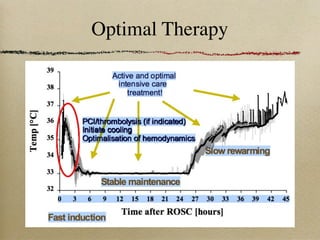
Optimal Therapy
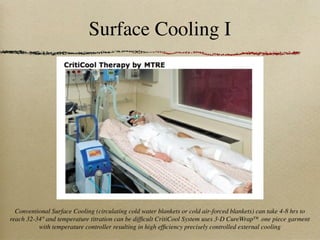
Surface Cooling I


  Conventional Surface Cooling (circulating cold water blankets or cold air-forced blankets) can take 4-8 hrs to
reach 32-34° and temperature titration can be difficult CritiCool System uses 3-D CureWrap™ one piece garment
          with temperature controller resulting in high efficiency precisely controlled external cooling
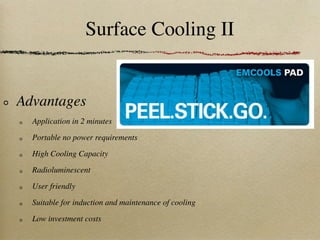
Surface Cooling II


Advantages
  Application in 2 minutes

  Portable no power requirements

  High Cooling Capacity

  Radioluminescent

  User friendly

  Suitable for induction and maintenance of cooling

  Low investment costs
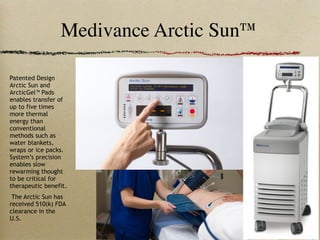
Medivance Arctic Sun™

Patented Design
Arctic Sun and
ArcticGel™ Pads
enables transfer of
up to five times
more thermal
energy than
conventional
methods such as
water blankets,
wraps or ice packs.
System’s precision
enables slow
rewarming thought
to be critical for
therapeutic benefit.
 The Arctic Sun has
received 510(k) FDA
clearance in the
U.S.
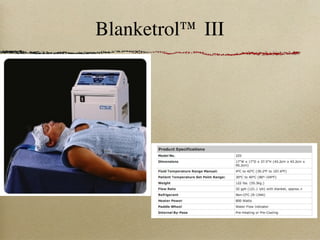
Blanketrol™ III
Invasive Cooling Methods I

         30ml/kg Lacated Ringers Solution @ 4°
         C infused via femoral catheter over 30
         mins => T 35.5 to 33.8° C
         Rapid & predictable + volume infusion
         blunts hypothermia induced diuresis
         Maintenance therapy cooling blankets
Bernard, S. et al. Induced hypothermia using large volume, ice-cold intravenous fluid in comatose
 survivors of out-of-hospital cardiac arrest: A preliminary report. Resuscitation 2003;56:9-13)
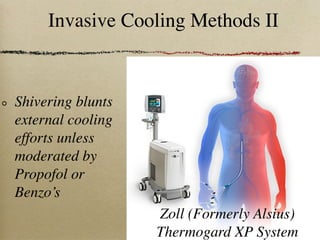
Invasive Cooling Methods II


Shivering blunts
external cooling
efforts unless
moderated by
Propofol or
Benzo’s
                   Zoll (Formerly Alsius)
                   Thermogard XP System
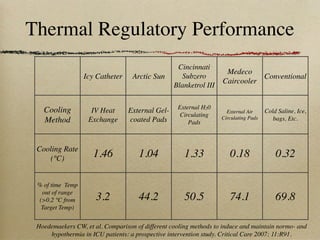
Thermal Regulatory Performance
                                                   Cincinnati
                                                                    Medeco
                  Icy Catheter     Arctic Sun       Subzero                   Conventional
                                                                   Caircooler
                                                  Blanketrol III

                                                   External H20
   Cooling          IV Heat      External Gel-                       External Air     Cold Saline, Ice,
                                                    Circulating    Circulating Pads
   Method          Exchange      coated Pads                                             bags, Etc.
                                                       Pads


 Cooling Rate
    (°C)             1.46            1.04             1.33            0.18                0.32

 % of time Temp
  out of range
 (>0.2 °C from        3.2            44.2             50.5            74.1                69.8
  Target Temp)


 Hoedemaekers CW, et al. Comparison of different cooling methods to induce and maintain normo- and
     hypothermia in ICU patients: a prospective intervention study. Critical Care 2007; 11:R91.
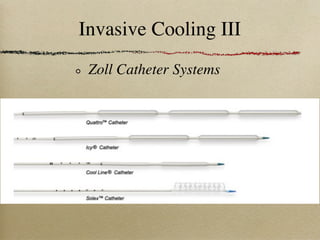
Invasive Cooling III
 Zoll Catheter Systems
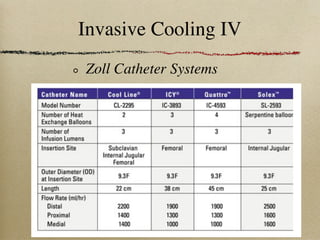
Invasive Cooling IV
Zoll Catheter Systems
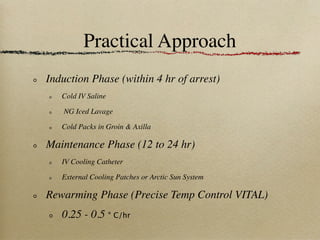
Practical Approach
Induction Phase (within 4 hr of arrest)
   Cold IV Saline

   NG Iced Lavage

   Cold Packs in Groin & Axilla

Maintenance Phase (12 to 24 hr)
   IV Cooling Catheter

   External Cooling Patches or Arctic Sun System

Rewarming Phase (Precise Temp Control VITAL)
   0.25 - 0.5 ° C/hr
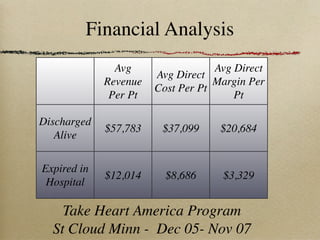
Financial Analysis
               Avg                 Avg Direct
                       Avg Direct
             Revenue               Margin Per
                       Cost Per Pt
              Per Pt                   Pt

Discharged
             $57,783    $37,099     $20,684
   Alive

Expired in
             $12,014     $8,686     $3,329
 Hospital

    Take Heart America Program
  St Cloud Minn - Dec 05- Nov 07
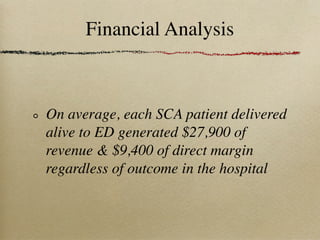
Financial Analysis


On average, each SCA patient delivered
alive to ED generated $27,900 of
revenue & $9,400 of direct margin
regardless of outcome in the hospital
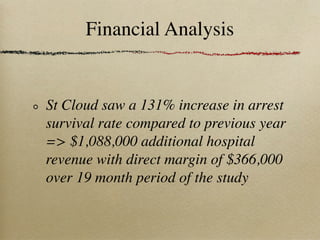
Financial Analysis


St Cloud saw a 131% increase in arrest
survival rate compared to previous year
=> $1,088,000 additional hospital
revenue with direct margin of $366,000
over 19 month period of the study
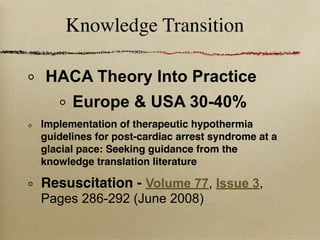
Knowledge Transition

HACA Theory Into Practice
      Europe & USA 30-40%
Implementation of therapeutic hypothermia
guidelines for post-cardiac arrest syndrome at a
glacial pace: Seeking guidance from the
knowledge translation literature

Resuscitation - Volume 77, Issue 3,
Pages 286-292 (June 2008)
Barrier’s To Implementation

500% variation in post arrest survival
Therapeutic Nihilism & Fatalism
Stove-piped Processes
Inability To Effectively Team
Lack of Physician Champion
Institutional Financial Concerns
Level I Cardiac Arrest Center

 Minimum of 40 reanimated patient’s
 annually
 Aligned with STEMI Primary PCI
 Treatment of re-arrest
 EP assessment and/or ICD assessment
 and implantation
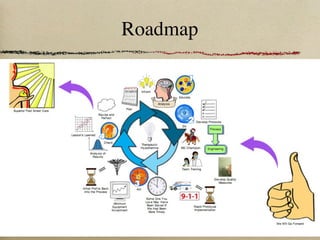
Roadmap

Therapeutic hypothermia

  • 1.
    Therapeutic Hypothermia Frank WMeissner MD, FACP, FACC, FCCP, FASNC
  • 2.
    The Hidden Obstacleto Reanimation CNS Reperfusion Injury Simply defined as ‘damage observed after resoration of blood flow to ischemic tissues’
  • 3.
    Hypoxic Cerebral Insult 6%Decrease in Cerebral Metabolism per 1°C Decrease Core Body Temp => Anti- inflammatory Effects Resultant Suppression Of CNS Reperfusion Injury Decreased Free Radical Production Reduced Excitatory Neurotransmitters Suppression of Ca++ mediated cell death
  • 4.
  • 5.
    HACA* Study Group WitnessedCardiac Arrest (VF ^ VT) Age 18-75 yr Est time Reanimation attempt 5-15 min ROSC ≤ 60 mins 275 of 3,551 Arrests Met Inclusion Criteria 137 Randomized to Hypothermia Body Core Temperature 32-34° C X 24 hr Rewarmed over 8 hr * Hypothermia After Cardiac Arrest
  • 6.
    Principle Results I Cumulative Survival in the Normothermia and Hypothermia Groups The Hypothermia after Cardiac Arrest Study Group, . N Engl J Med 2002;346:549-556
  • 7.
    Principle Results II TheHypothermia after Cardiac Arrest Study Group, . N Engl J Med 2002;346:549-556
  • 8.
    Current AHA (Y2005)Guideline Unconscious adult patients with ROSC after out-of-hospital arrest cooled to 32 - 34 °C (89.6 - 93.2° F) X 12-24 hr in V Fib Arrest(Class IIa) Similiar therapy may be beneficial for out-of hospital or in-hospital non-VF arrest (Class IIb)
  • 9.
  • 10.
    Surface Cooling I Conventional Surface Cooling (circulating cold water blankets or cold air-forced blankets) can take 4-8 hrs to reach 32-34° and temperature titration can be difficult CritiCool System uses 3-D CureWrap™ one piece garment with temperature controller resulting in high efficiency precisely controlled external cooling
  • 11.
    Surface Cooling II Advantages Application in 2 minutes Portable no power requirements High Cooling Capacity Radioluminescent User friendly Suitable for induction and maintenance of cooling Low investment costs
  • 12.
    Medivance Arctic Sun™ PatentedDesign Arctic Sun and ArcticGel™ Pads enables transfer of up to five times more thermal energy than conventional methods such as water blankets, wraps or ice packs. System’s precision enables slow rewarming thought to be critical for therapeutic benefit. The Arctic Sun has received 510(k) FDA clearance in the U.S.
  • 13.
  • 14.
    Invasive Cooling MethodsI 30ml/kg Lacated Ringers Solution @ 4° C infused via femoral catheter over 30 mins => T 35.5 to 33.8° C Rapid & predictable + volume infusion blunts hypothermia induced diuresis Maintenance therapy cooling blankets Bernard, S. et al. Induced hypothermia using large volume, ice-cold intravenous fluid in comatose survivors of out-of-hospital cardiac arrest: A preliminary report. Resuscitation 2003;56:9-13)
  • 15.
    Invasive Cooling MethodsII Shivering blunts external cooling efforts unless moderated by Propofol or Benzo’s Zoll (Formerly Alsius) Thermogard XP System
  • 16.
    Thermal Regulatory Performance Cincinnati Medeco Icy Catheter Arctic Sun Subzero Conventional Caircooler Blanketrol III External H20 Cooling IV Heat External Gel- External Air Cold Saline, Ice, Circulating Circulating Pads Method Exchange coated Pads bags, Etc. Pads Cooling Rate (°C) 1.46 1.04 1.33 0.18 0.32 % of time Temp out of range (>0.2 °C from 3.2 44.2 50.5 74.1 69.8 Target Temp) Hoedemaekers CW, et al. Comparison of different cooling methods to induce and maintain normo- and hypothermia in ICU patients: a prospective intervention study. Critical Care 2007; 11:R91.
  • 17.
    Invasive Cooling III Zoll Catheter Systems
  • 18.
    Invasive Cooling IV ZollCatheter Systems
  • 19.
    Practical Approach Induction Phase(within 4 hr of arrest) Cold IV Saline NG Iced Lavage Cold Packs in Groin & Axilla Maintenance Phase (12 to 24 hr) IV Cooling Catheter External Cooling Patches or Arctic Sun System Rewarming Phase (Precise Temp Control VITAL) 0.25 - 0.5 ° C/hr
  • 20.
    Financial Analysis Avg Avg Direct Avg Direct Revenue Margin Per Cost Per Pt Per Pt Pt Discharged $57,783 $37,099 $20,684 Alive Expired in $12,014 $8,686 $3,329 Hospital Take Heart America Program St Cloud Minn - Dec 05- Nov 07
  • 21.
    Financial Analysis On average,each SCA patient delivered alive to ED generated $27,900 of revenue & $9,400 of direct margin regardless of outcome in the hospital
  • 22.
    Financial Analysis St Cloudsaw a 131% increase in arrest survival rate compared to previous year => $1,088,000 additional hospital revenue with direct margin of $366,000 over 19 month period of the study
  • 23.
    Knowledge Transition HACA TheoryInto Practice Europe & USA 30-40% Implementation of therapeutic hypothermia guidelines for post-cardiac arrest syndrome at a glacial pace: Seeking guidance from the knowledge translation literature Resuscitation - Volume 77, Issue 3, Pages 286-292 (June 2008)
  • 24.
    Barrier’s To Implementation 500%variation in post arrest survival Therapeutic Nihilism & Fatalism Stove-piped Processes Inability To Effectively Team Lack of Physician Champion Institutional Financial Concerns
  • 25.
    Level I CardiacArrest Center Minimum of 40 reanimated patient’s annually Aligned with STEMI Primary PCI Treatment of re-arrest EP assessment and/or ICD assessment and implantation
  • 26.