HX
●25 y/o African male
●Intermittant gross hematuria X 8 mo’s
●Dysuria and Increased Frequency
●Infantryman in Croatia since June 1994
●4 yrs ago treated for something similiar
HX
●Somali tribe of kenya (nomadic)
●Garrisa District (NorthEastern Province) of
Kenya
●Traveled widely in search of bride
●Had Swum in Tana River in past 4 yrs
approximately 15 times
Laboratory
●U/A (+) RBC’s, (-) WBC’s, (-) nitrites, (-)
leukocyte esterase
●U/A had single egg discovered in
multiple slides of centrifuged urine
●However, diagnositic specimen
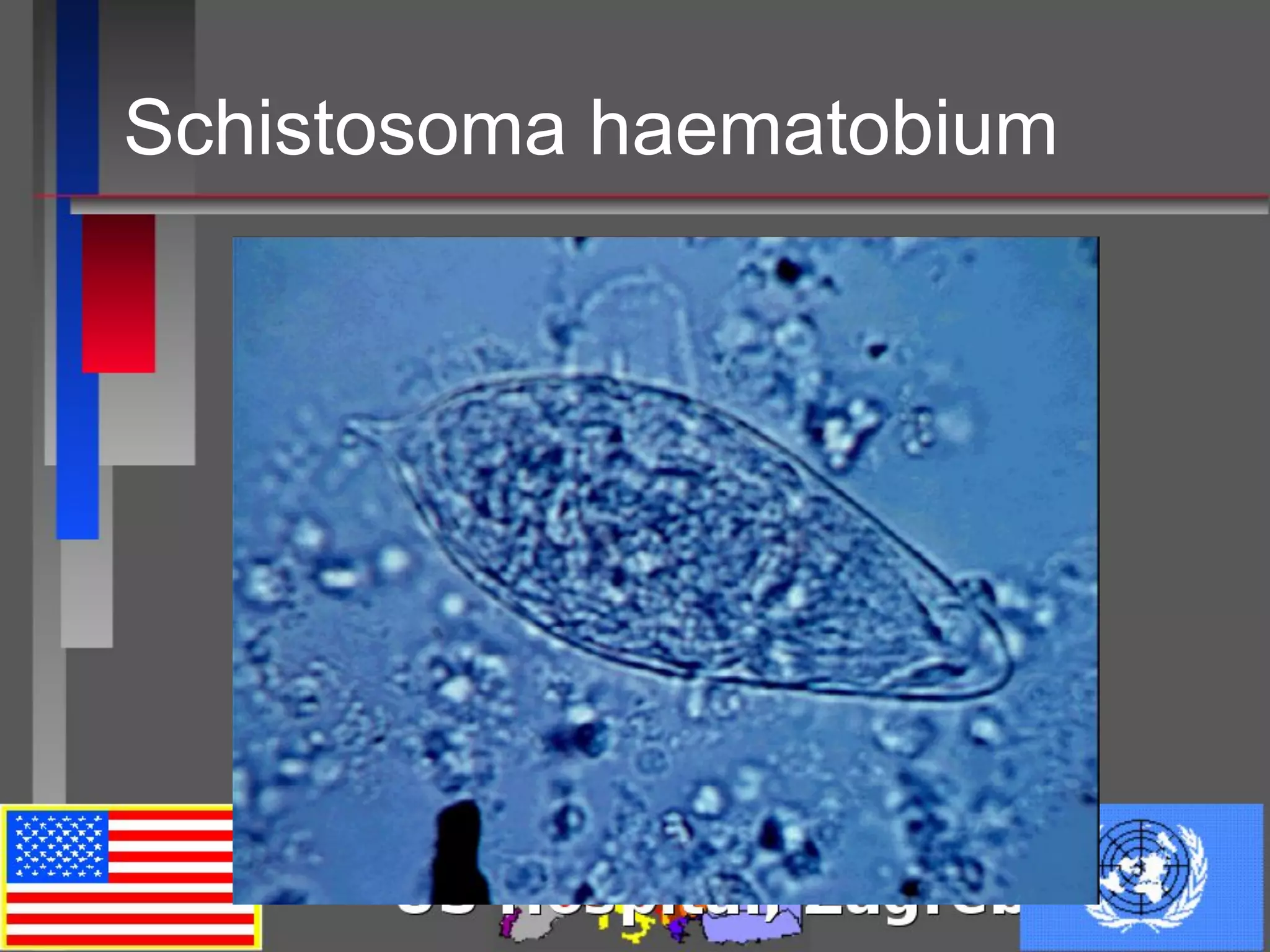
●Schistosomasis hematobium
Schistosomiasis
Frank Meissner, LtCol, USAF, MC, FS
Emergency Medicine
The fact that illness is associated
with the poor-who are, from the
perspective of the privileged,
aliens in one's midst-reinforces
the association of illness with the
foreign: with an exotic, often
primitive place.
Susan Sontag
Introduction
●Chronic trematode (fluke) infection of
humans
●Major worldwide health problem
●Three major species Schistosoma
mansoni, S. japonicum, and S.
haematobium
Geographic Distribution
●S. mansoni - Africa, Arabia, South
America, and parts of the Caribbean
●S. japonicum - Japan, China, and the
Philippines
●S. haematobium - Africa and the Middle
East
●A minor species, S. mekongi - mainland
Indochina
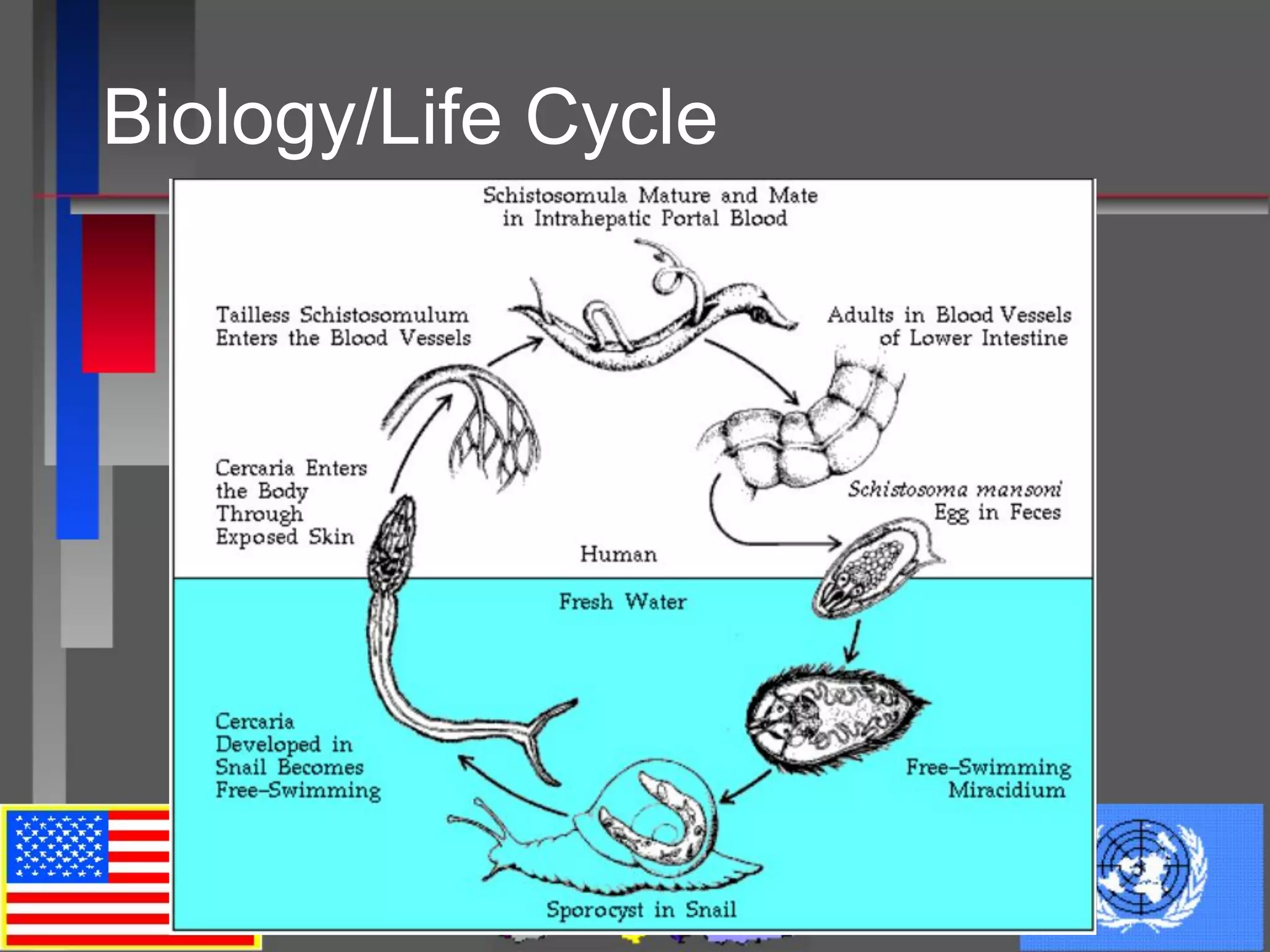
Biology/Life Cycle
Epidemiology I
●Highly endemic, 2-3 million people
●Infection rates by region as high as 60%
●Risk elevated in rainy seasons March to
May and Late September to November
Epidemiology II
●Haematobium coastal plain and lower
Tana River Valley
●Taveta vicinity (extreme southwestern
Coast Province)
●Kitui District (Eastern Province)
●Nyanza Province (bordering Lake
Victoria)
Epidemiology III
●Intestinal Shistosomasis less widely
distributed
●Kitui and Machakos Districts (Eastern
Province)
●Taveta vicinity
●Bordering Lake Victoria
●Rusinga and Mfango Islands (Lake
Victoria)
Epidemiology
Garissa
District
Tana
River
Coast
Province
Kitui
District
Epidemiology
Clinical Features I
●Three stages of disease may occur
●First stage, schistosomal dermatitis
●Develops acutely within a day of
cercarial penetration of the skin
●Swimmer's itch, similar reaction in US
●26 percent of Michigan residents have
antischistosomal antibodies
Clinical Features II
●Second stage of disease
●Acute schistosomiasis, or Katayama
fever
●Four to eight weeks after heavy,
primary, infection
●Fever, cough, hepatosplenomegaly,
malaise, myalgias, urticaria, and
eosinophilia
Clinical Findings III
●Stage III - Chronic schistosomiasis
●Caused by heavy deposition of eggs in
intestine or bladder and in the liver
●S. haematobium infection, principal
symptoms -terminal hematuria, dysuria,
and frequency
●Hydronephrosis and pyelonephritis may
develop 2ndary fibrosis and infection
Non-Haematobium infection I
●S. mansoni, S. mekongi, or S.
japonicum infection
●Fever, malaise, abdominal pain,
diarrhea, or hepatosplenomegaly
●Presinusoidal hepatic trapping of eggs
●Granulomatous reaction induces portal
hypertension collateral esophageal
varices
Non-Haematobium infection II
●Eggs may be shunted from liver to lung,
with PAH
●Death 2ndary variceal bleeding
●Hepatic encephalopathy rare- hepatic
parenchyma spared
●Less common sequelae - intestinal
polyps, bladder carcinoma, persistent
Salmonella infections
Non-Haematobium infection III
●Infrequently, focal neurologic dysfunction
2ndary aberrant localization in CNS tissue
●Embolic deposition of S. japonicum eggs
may produce cerebral granulomas
●S. mansoni may lead to transverse
myelitis involving the midthoracic or
lumbar spinal cord
Diagnosis I
●Suggested - history of possible exposure
●Exposure may be years distant
●Compatable gastrointestinal or urinary
tract symptoms, hepatosplenomegaly,
eosinophilia, or combination of findings
●Serologic tests are rarely helpful
Diagnosis II
●Document presence of active infection
●=> find viable eggs
●Assess intensity of infection -quantitate
egg excretion
Diagnosis III
●Stool examination should include
search for all Schistosoma species
●S. haematobium, urine should be
obtained between 10:00 A.M. and 2:00
P.M.
●Microscopic examination of biopsy
specimens of rectal mucosa
Schistosoma haematobium
Treatment
●Praziquantel is drug of choice
●S. haematobium, single dose 40 mg/kg po
●S. japonicum, S. mansoni, and S. mekongi,
20 mg/kg po TID X 1 day
●Drug efficacious, paucity of side effects, is
convenient
Conclusions
●Geographic Medicine NOT Tropical
Medicine
●Detailed history of location and activities
important in making geographic
medicine diagnosis
●Knowledge of ecology of parasites
important
Meissner 6 W’s- ID Hx/o
●WHERE & WHEN? (travel history)
●You did WHAT WITH WHO, WHERE ?!!!!!!!!
(sexual history)
●WACKY WAYS to WASTE time?
(avocational/occupational history)
Meissner 6 W’s- ID Hx/o
●WEIRD and non-WEIRD WILDLIFE?
(Zoonoses)
●Wolfing WHAT? (food and ingestion history)
●WEAK-knead WIMP
(immunocompromised/immunosuppressed
host)

Schistomasis

  • 1.
    HX ●25 y/o Africanmale ●Intermittant gross hematuria X 8 mo’s ●Dysuria and Increased Frequency ●Infantryman in Croatia since June 1994 ●4 yrs ago treated for something similiar
  • 2.
    HX ●Somali tribe ofkenya (nomadic) ●Garrisa District (NorthEastern Province) of Kenya ●Traveled widely in search of bride ●Had Swum in Tana River in past 4 yrs approximately 15 times
  • 3.
    Laboratory ●U/A (+) RBC’s,(-) WBC’s, (-) nitrites, (-) leukocyte esterase ●U/A had single egg discovered in multiple slides of centrifuged urine ●However, diagnositic specimen ●Schistosomasis hematobium
  • 4.
    Schistosomiasis Frank Meissner, LtCol,USAF, MC, FS Emergency Medicine
  • 5.
    The fact thatillness is associated with the poor-who are, from the perspective of the privileged, aliens in one's midst-reinforces the association of illness with the foreign: with an exotic, often primitive place. Susan Sontag
  • 6.
    Introduction ●Chronic trematode (fluke)infection of humans ●Major worldwide health problem ●Three major species Schistosoma mansoni, S. japonicum, and S. haematobium
  • 7.
    Geographic Distribution ●S. mansoni- Africa, Arabia, South America, and parts of the Caribbean ●S. japonicum - Japan, China, and the Philippines ●S. haematobium - Africa and the Middle East ●A minor species, S. mekongi - mainland Indochina
  • 8.
  • 9.
    Epidemiology I ●Highly endemic,2-3 million people ●Infection rates by region as high as 60% ●Risk elevated in rainy seasons March to May and Late September to November
  • 10.
    Epidemiology II ●Haematobium coastalplain and lower Tana River Valley ●Taveta vicinity (extreme southwestern Coast Province) ●Kitui District (Eastern Province) ●Nyanza Province (bordering Lake Victoria)
  • 11.
    Epidemiology III ●Intestinal Shistosomasisless widely distributed ●Kitui and Machakos Districts (Eastern Province) ●Taveta vicinity ●Bordering Lake Victoria ●Rusinga and Mfango Islands (Lake Victoria)
  • 12.
  • 13.
  • 14.
    Clinical Features I ●Threestages of disease may occur ●First stage, schistosomal dermatitis ●Develops acutely within a day of cercarial penetration of the skin ●Swimmer's itch, similar reaction in US ●26 percent of Michigan residents have antischistosomal antibodies
  • 15.
    Clinical Features II ●Secondstage of disease ●Acute schistosomiasis, or Katayama fever ●Four to eight weeks after heavy, primary, infection ●Fever, cough, hepatosplenomegaly, malaise, myalgias, urticaria, and eosinophilia
  • 16.
    Clinical Findings III ●StageIII - Chronic schistosomiasis ●Caused by heavy deposition of eggs in intestine or bladder and in the liver ●S. haematobium infection, principal symptoms -terminal hematuria, dysuria, and frequency ●Hydronephrosis and pyelonephritis may develop 2ndary fibrosis and infection
  • 17.
    Non-Haematobium infection I ●S.mansoni, S. mekongi, or S. japonicum infection ●Fever, malaise, abdominal pain, diarrhea, or hepatosplenomegaly ●Presinusoidal hepatic trapping of eggs ●Granulomatous reaction induces portal hypertension collateral esophageal varices
  • 18.
    Non-Haematobium infection II ●Eggsmay be shunted from liver to lung, with PAH ●Death 2ndary variceal bleeding ●Hepatic encephalopathy rare- hepatic parenchyma spared ●Less common sequelae - intestinal polyps, bladder carcinoma, persistent Salmonella infections
  • 19.
    Non-Haematobium infection III ●Infrequently,focal neurologic dysfunction 2ndary aberrant localization in CNS tissue ●Embolic deposition of S. japonicum eggs may produce cerebral granulomas ●S. mansoni may lead to transverse myelitis involving the midthoracic or lumbar spinal cord
  • 20.
    Diagnosis I ●Suggested -history of possible exposure ●Exposure may be years distant ●Compatable gastrointestinal or urinary tract symptoms, hepatosplenomegaly, eosinophilia, or combination of findings ●Serologic tests are rarely helpful
  • 21.
    Diagnosis II ●Document presenceof active infection ●=> find viable eggs ●Assess intensity of infection -quantitate egg excretion
  • 22.
    Diagnosis III ●Stool examinationshould include search for all Schistosoma species ●S. haematobium, urine should be obtained between 10:00 A.M. and 2:00 P.M. ●Microscopic examination of biopsy specimens of rectal mucosa
  • 23.
  • 24.
    Treatment ●Praziquantel is drugof choice ●S. haematobium, single dose 40 mg/kg po ●S. japonicum, S. mansoni, and S. mekongi, 20 mg/kg po TID X 1 day ●Drug efficacious, paucity of side effects, is convenient
  • 25.
    Conclusions ●Geographic Medicine NOTTropical Medicine ●Detailed history of location and activities important in making geographic medicine diagnosis ●Knowledge of ecology of parasites important
  • 26.
    Meissner 6 W’s-ID Hx/o ●WHERE & WHEN? (travel history) ●You did WHAT WITH WHO, WHERE ?!!!!!!!! (sexual history) ●WACKY WAYS to WASTE time? (avocational/occupational history)
  • 27.
    Meissner 6 W’s-ID Hx/o ●WEIRD and non-WEIRD WILDLIFE? (Zoonoses) ●Wolfing WHAT? (food and ingestion history) ●WEAK-knead WIMP (immunocompromised/immunosuppressed host)