Bipolar Disorde
r

Outline
•Clinical Presentation & Diagnosis
•Epidemiology
•Age of Onset & Course
•Diagnosis & Subtypes
•Etiology & Risk Factors
•Comorbidity
•Clinical Presentations
Bipolar Disorder-I (BD-I) DSM-5 Codes (See Next Slide)


• Cyclic changes between mania & major depressive
episodes


Bipolar Disorder-II (BD-II) DSM-5 296.89(F31.81)


• Episodes of major depression and hypomania


Cyclothymic Disorder DSM-5 301.13 (F34.0)


• Episodes of hypomania and depressed mood but not major
depression
	
Bipolar Disorder


Introduction:


Bipolar Disorder and Subtypes
Current or most recent
episode:
manic hypomanic depressed
Mild 296.41 NA 296.51
Moderate 296.42 NA 296.52
Severe 296.43 NA 296.53
With psychotic
features
296.44 NA 296.54
In partial remission 296.45 296.45 296.55
Bipolar Disorder


Introduction:


Bipolar Disorder and Subtypes
DSM V Coding Bipolar Type I
Substance/Medication-Induced Bipolar and
Related Disorder


Bipolar and Related Disorder Due to Another
Medical Condition


Other Specified Bipolar and Related Disorder


Unspecified Bipolar and Related Disorder


• Sub-threshold (eg shorter) episodes of mania or
hypomania with or without depression
	
Bipolar Disorder


Introduction:


Bipolar Disorder and Subtypes
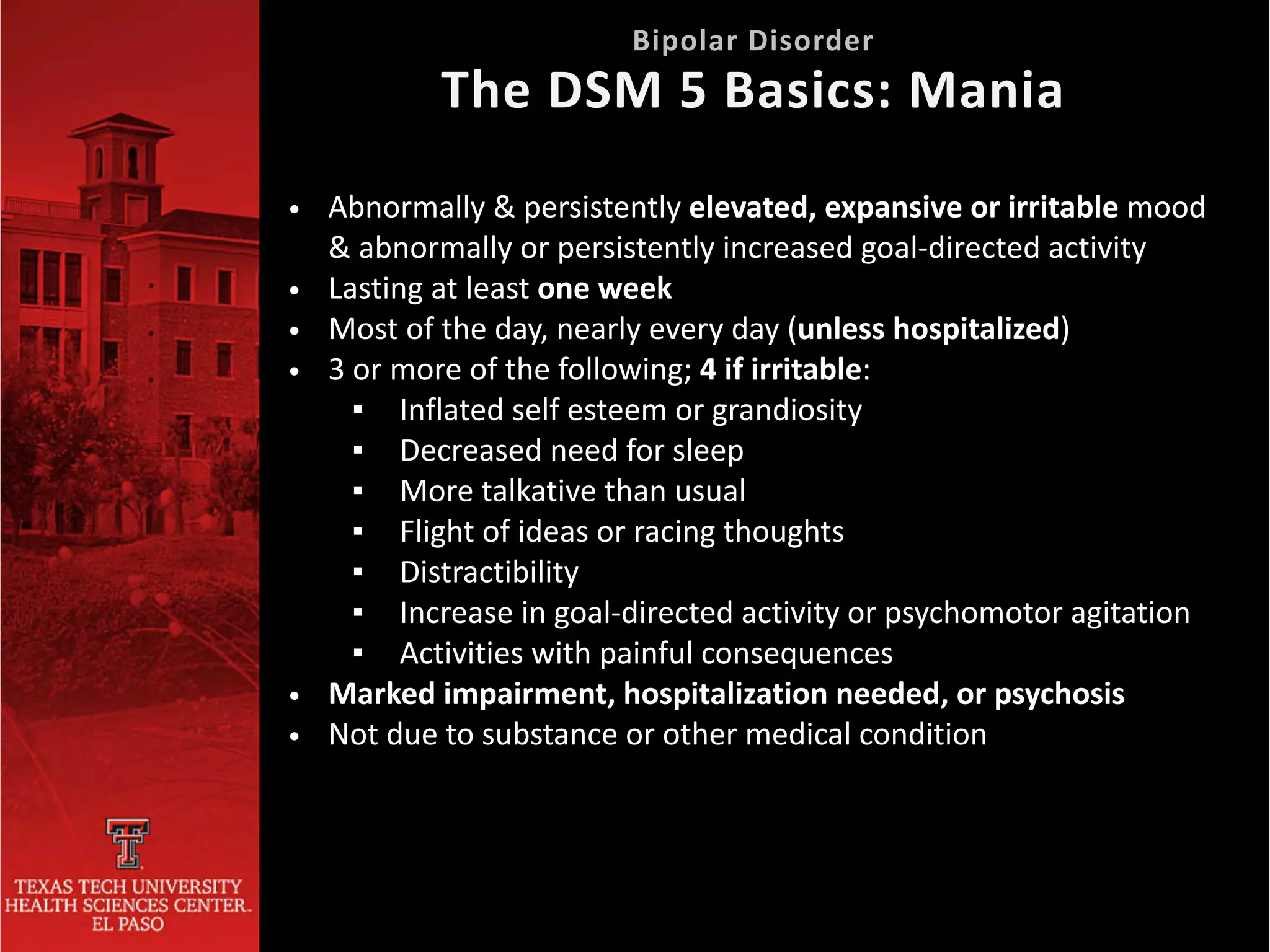
• Abnormally & persistently elevated, expansive or irritable mood
& abnormally or persistently increased goal-directed activity


• Lasting at least one week


• Most of the day, nearly every day (unless hospitalized)


• 3 or more of the following; 4 if irritable:


▪ Inflated self esteem or grandiosity


▪ Decreased need for sleep


▪ More talkative than usual


▪ Flight of ideas or racing thoughts


▪ Distractibility


▪ Increase in goal-directed activity or psychomotor agitation


▪ Activities with painful consequences


• Marked impairment, hospitalization needed, or psychosis


• Not due to substance or other medical condition
Bipolar Disorder


The DSM 5 Basics: Mania
Mnemonic
• Abnormally & persistently elevated, expansive or irritable
mood and abnormally or persistently increased goal-directed
activity


• At least 4 days, most of the day, nearly every day


• 3 or more of the following; 4 if irritable:


▪ Inflated self esteem or grandiosity


▪ Decreased need for sleep


▪ More talkative than usual


▪ Flight of ideas or racing thoughts


▪ Distractibility


▪ Increase in goal-directed activity or psychomotor
agitation


▪ Activities with painful consequences


• Unequivocal change in functioning; observable by others


• No marked impairment, hospitalization needed, or psychosis


• Not due to substance or other medical condition
Bipolar Disorder


The DSM 5 Basics: Hypomania
• 2 week period with change in functioning


• 5 or more of the following (at least one is either
depressed mood or loss of interest or pleasure):


▪ Depressed mood most of the day nearly every day
(in children and adolescents can be irritable mood)


▪ Decreased interest or pleasure


▪ Inadvertent change in weight or appetite (in
children failure to make expected gain)


▪ Insomnia or hypersomnia


▪ Worthlessness or guilt


▪ Decreased ability to concentrate or indecisiveness


▪ Recurrent thoughts of death, suicidal ideation or
action


• Significant distress or impairment


• Not due to substance or other medical condition


Bipolar Disorder


The DSM 5 Basics: Depression
Prevalence in Adults:


• BD-I: 1%


• BD spectrum disorders: 5%


• Majority with onset before age 20


Meta-analysis of BD in youth around the world


(Van Meter et al, 2011):


• Overall rate of BD 1.8%


• BD prevalence in youth ~ BD prevalence in
adults


• BD prevalence in youth not different in US vs
other countries


• BD prevalence in community youth not
increasing
Bipolar Disorder


Epidemiology
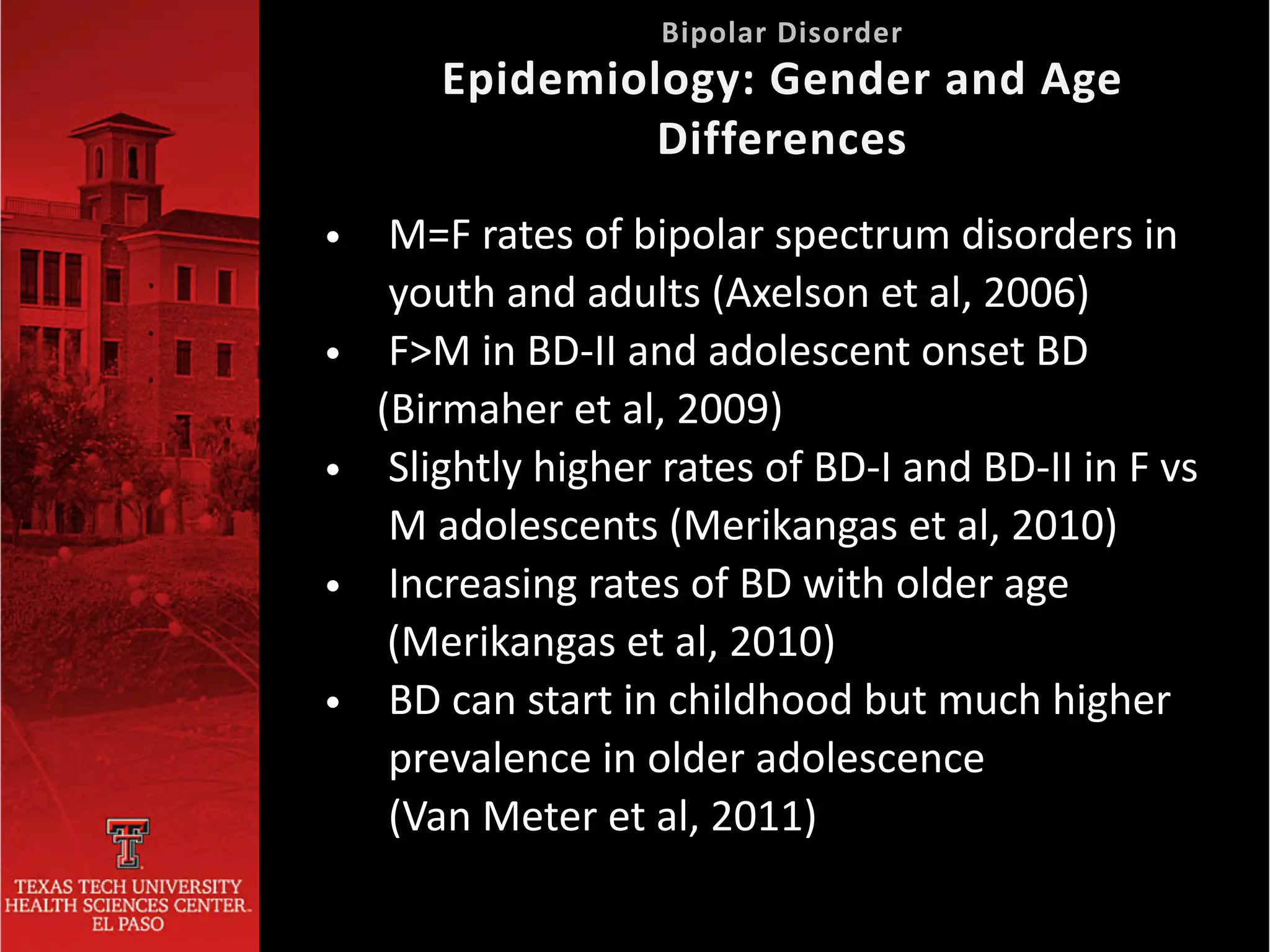
• M=F rates of bipolar spectrum disorders in
youth and adults (Axelson et al, 2006)


• F>M in BD-II and adolescent onset BD


(Birmaher et al, 2009)


• Slightly higher rates of BD-I and BD-II in F vs
M adolescents (Merikangas et al, 2010)


• Increasing rates of BD with older age


(Merikangas et al, 2010)


• BD can start in childhood but much higher


prevalence in older adolescence


(Van Meter et al, 2011)
Bipolar Disorder


Epidemiology: Gender and Age
Differences
• BD=6th leading cause of disability (WHO)


• BD in youth associated with:


▪ Impaired family and peer relationships


▪ Poor academic performance


▪ High rates of chronic mood symptoms/mixed presentation


▪ Psychosis


▪ Disruptive behavior disorders


▪ Anxiety disorders


▪ Substance use disorders


▪ Medical problems (obesity, thyroid, diabetes)


▪ Hospitalizations, suicide attempts & completions
Bipolar Disorder


Epidemiology: Burden of Illness
• 10-20% onset before age 10


• Up to 60% onset before age 20


• BD in adults often preceded by childhood
disruptive and anxiety disorders


• Pre-pubertal onset of BD: 2 x less likely to
recover vs post-pubertal onset


• 70-100% youth with BD recover from index
episode


• 80% recur after recovery despite treatment


• Subtypes of BD in youth may not be stable
over time


Bipolar Disorder


Age of Onset & Course
Worse outcome associated with:


• Early age of onset


• Long duration


• Low socioeconomic status


• Mixed or rapid cycling episodes


• Psychosis


• Sub-syndromal mood symptoms


• Comorbid disorders


• Exposure to negative life events


• High expressed emotion


• Family psychopathology


Bipolar Disorder


Age of Onset & Course
Bipolar Disorder


Diagnosis & Subtypes
Cyclothymia:


• Numerous hypomanic episodes


• Numerous periods of depressed mood or loss of
interest or pleasure that do not meet criteria for
depressive episode


• 1 year of duration in youth vs 2 years in adults


Bipolar Disorder NOS


• Features of hypomanic or mixed episodes that
are subthreshold


• Research criterion exist to clarify ambiguity


▪ 2 days of hypomania


▪ Or at least 4 shorter periods >/= 4 hours
Bipolar Disorder


Diagnosis & Subtypes
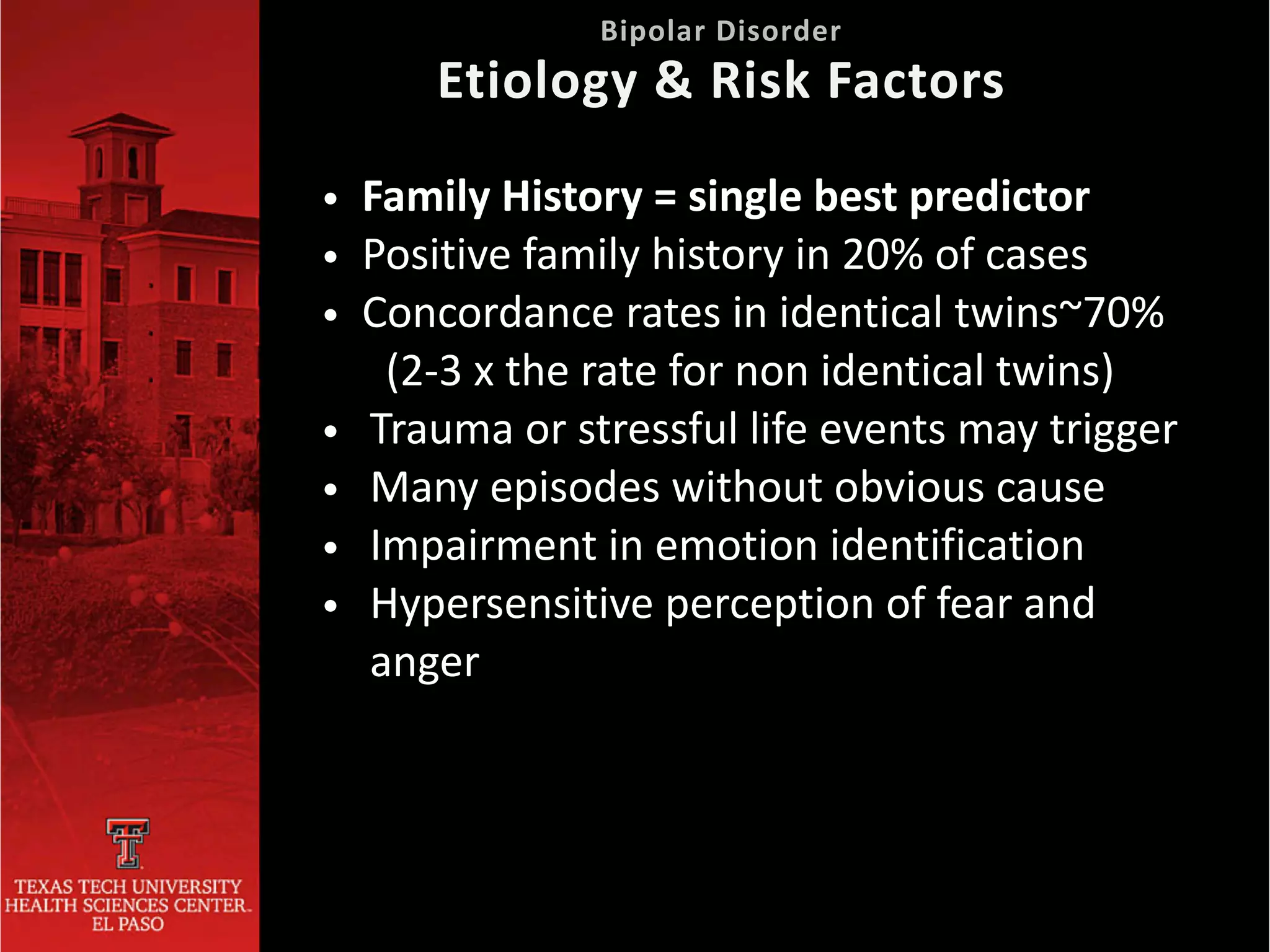
• Family History = single best predictor


• Positive family history in 20% of cases


• Concordance rates in identical twins~70%


(2-3 x the rate for non identical twins)


• Trauma or stressful life events may trigger


• Many episodes without obvious cause


• Impairment in emotion identification


• Hypersensitive perception of fear and
anger


Bipolar Disorder


Etiology & Risk Factors
• Differences in neural circuits involved in
emotion processing and regulation on
MRI and fMRI


▪ Subcortical and prefrontal regions


▪ Reduced volume of amygdala


▪ Possible delay in gray matter
development


▪ Possible delay in prefrontal cortex
development


Bipolar Disorder


Etiology & Risk Factors
• Disruptive Behavior Disorders


~30-70%


• ADHD


~50-80%


• Anxiety Disorders


~30-70%
Bipolar Disorder


Comorbidity
• Episodic


• Cardinal symptoms: elation and grandiosity


• Irritability


▪ Must be episodic


▪ Also in depression, ODD, GAD, PTSD, PDD


• Subthreshold presentations


▪ Usually less than 4 and 7 day duration criteria


• Bipolar depression


▪ Most common manifestation


▪ Increased risk for suicide


• Preadolescence and preschool presentations


▪ Caution with diagnosis below age 6


Bipolar Disorder


Clinical Presentations
Bipolar Disorder (BD) vs Disruptive Behavior
Disorder (DBD):


• Behavior problems disappear when mood improvesà
consider BD


• “Off and On” oppositional or conduct symptomsà
consider BD


• Oppositional behaviors precede the mood disordersà
consider both


• Severe behavioral problems not responsive to treatmentà
consider mood disorder, other psychiatric disorder or
stressors


• Behavioral problems and a family history of BDà


consider mood disorder


• Behavior problems and hallucinations or delusionsà


consider BD, schizophrenia, drugs or alcohol, medical


or neurological conditions


Bipolar Disorder


Differential Diagnosis
Suspect Bipolar Disorder in a child with ADHD if:


• ADHD symptoms:


▪ appeared later in life >/= 10


▪ appeared abruptly


▪ stopped responding to stimulants


▪ come and go and tend to occur with mood
changes


• Periods of exaggerated elation, grandiosity,
depression, decreased need for sleep, inappropriate
sexual behaviors


• Recurrent mood swings, temper outbursts or rages


• Hallucinations or delusions


• Strong family history of BD, especially if not


responding to ADHD treatments


Bipolar Disorder


Differential Diagnosis
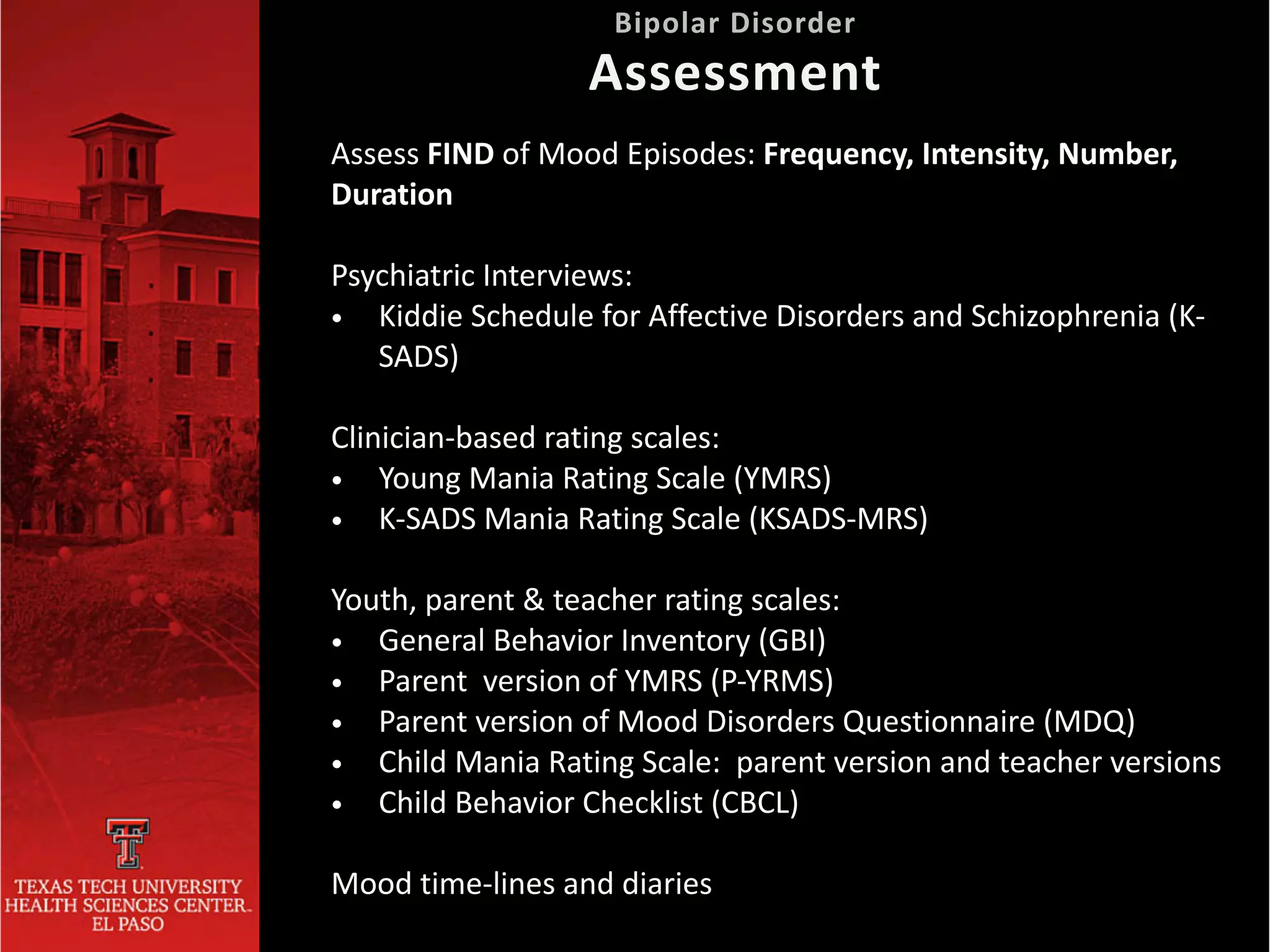
Assess FIND of Mood Episodes: Frequency, Intensity, Number,
Duration


Psychiatric Interviews:


• Kiddie Schedule for Affective Disorders and Schizophrenia (K-
SADS)


Clinician-based rating scales:


• Young Mania Rating Scale (YMRS)


• K-SADS Mania Rating Scale (KSADS-MRS)


Youth, parent & teacher rating scales:


• General Behavior Inventory (GBI)


• Parent version of YMRS (P-YRMS)


• Parent version of Mood Disorders Questionnaire (MDQ)


• Child Mania Rating Scale: parent version and teacher versions


• Child Behavior Checklist (CBCL)


Mood time-lines and diaries
Bipolar Disorder


Assessment
• Psychosocial functioning


▪ Caregivers, teacher


• Level of care


▪ Appropriate intensity and restrictiveness


▪ Factors: severity of mood symptoms, suicidal
or homicidal ideation, psychosis, substance
dependence, agitation, adherence, parental
psychopathology, family environment


• Medical conditions


▪ Thyroid function


▪ Whole blood count


▪ B12, folate, iron levels
Bipolar Disorder


Other Areas for Assessment
• Psychoeducation:


▪ Causes


▪ Symptoms & course


▪ Different treatments and risks vs no
treatment


• Importance of sleep hygiene and routine


• Evidence base: few studies on pre-pubertal
children or with comorbid disorders


• Acute treatment:


▪ Mood stabilizers=lithium, anticonvulsants
and antipsychotics


▪ Start low and go slow


▪ Doses similar to adults
Bipolar Disorder


Treatment
• Maintain regular sleep routine: same bedtime
& wake time


• Avoid naps


• Do not stay in bed awake for more than 5-10
minutes; move to a chair in the dark


• Do not watch TV or read in bed


• Avoid substances that interfere with sleep:
caffeine, cigarettes, alcohol, over the counter
medications


• Exercise before 2 pm everyday, not before bed


• Have a quiet, comfortable bedroom


• Hide the clock if you are a clock watcher


• Have a comfortable pre-bedtime routine
Bipolar Disorder


Treatment: Sleep Hygiene
• Monotherapy with lithium, valproate or
carbamazepine


▪ Comparable for non psychotic mania/mixed
episodes


▪ Manic symptoms response 23-55%


▪ Lithium=1st approval for mania (age 12-17) by US
Food & Drug Administration (US FDA)


• Secondary Generation Antipsychotics (SGAs)


▪ Manic/mixed symptoms response 33-75%


▪ May yield quicker response


▪ FDA approvals:


o Risperidone for age 10-17


o Olanzapine for age 13-17


o Aripiprazole for age 10-17


o Quetiapine for age 10-17
Bipolar Disorder


Pharmacotherapy:


Acute manic & mixed episodes
• If monotherapy does not work, try:


▪ Remove


▪ Optimize


▪ Switch


▪ Or Combine


• May need adjuvant medication
temporarily in acute phase
Bipolar Disorder


Pharmacotherapy:


Partial or non-responders
• Open label trials


--Lithium alone in depressed BD youth:
48%


(Patel et al, 2006)


--Lamotrigine alone or adjunct to
Lithium: 84%


(Chang et al, 2006).


--SGAs: 35-60%, Carbamazepine: 43%,
Omega-3 fatty acids: 40% (Liu et al, 2011)
Bipolar Disorder


Pharmacotherapy:


Acute bipolar depression
Adult data:


• Acute treatment:


▪ Quetiapine monotherapy, olanzapine and
fluoxetine together (Nivoli et al, 2011)


▪ Monotherapy with lamotrigine, valproate, and
combination of anticonvulsant or SGA with
antidepressant


▪ Latuda - Drug of Choice For Acute Bipolar
Depression


• Maintenance: lamotrigine (Nivoli et al,
2011)
Bipolar Disorder


Pharmacotherapy:


Acute bipolar depression
• First stabilize BD symptoms


• Try psychosocial treatments before
adding new medications


• Consider amphetamine salts or
atomoxetine for comorbid ADHD
after stabilizing mood
Bipolar Disorder


Pharmacotherapy:


Comorbid conditions
• Drug-drug interactions


▪ Medscape Reference


▪ Micromedex Drug Information


▪ Epocrates


• Pregnancy test


• Urine drug screen


• Height & weight/Body Mass Index


• Vital signs


• Waist circumference


• Physical exam


• Family history of cardiac, diabetes, thyroid
diseases


• Lab monitoring
Bipolar Disorder


Pharmacotherapy:


Monitoring and clinical concerns
• Narrow therapeutic window: blood levels 0.6-1.2 mEq/L


• Toxicity signs: dizziness, clumsiness, unsteady gait, slurred
speech, coarse tremors, abdominal pain, vomiting,
sedation, confusion, blurred vision


• Common side effects: polyuria, polydypsia, tremor, weight
gain, nausea, diarrhea, hypothyroidism, cognitive dulling,
sedation, leukocytosis


• Fluid loss, NSAIDS, marijuana, alcohol: increase Li levels


• Caffeine lowers Li levels


• Obtain blood levels 4-5 days after dose changes, or every
3-6 months


• Labs: BUN, creatinine, urinalysis, TSH, free T4, CBC,
electrolytes, calcium, albumin, weight
Bipolar Disorder


Pharmacotherapy: Lithium (Li)
• Possible risk for suicidality


• Neurological, cognitive, and gastrointestinal side
effects


• Increase doses gradually


• Valproate: polycystic ovarian syndrome


• Carbamazepine: induces metabolism of oral
contraceptives, other medicines, and itself


• Oxcarbazepine: does not induce metabolism, no
blood monitoring


• Lamotrigine: usually well-tolerated, low risk for
weight gain and sedation; serious rash with rapid
dose increase; half dose if combined with valproate


• Topamax: weight loss and cognitive dulling
Bipolar Disorder


Pharmacotherapy: Anticonvulsants
• Varying side effects between agents: extrapyramidal
symptoms, neuroleptic malignant syndrome, tardive
dyskinesia, prolactinemia, sedation, orthostatic
hypotension, dizziness, drowsiness, weight gain


• Increased weight, glucose and lipids concerning in
youth


• Measure body mass index, waist circumference, fasting
glucose and lipids, abnormal involuntary movements


• EKG if family or personal history of cardiac problems
Bipolar Disorder


Pharmacotherapy: Antipsychotics
Selective Serotonin Reuptake Inhibitors
(SSRIs):


• May be helpful for bipolar depression


• Should be used in combination with a mood
stabilizer


• Watch for manic switch, hypomania, mixed
episodes or rapid cycling


• Possibility of increased risk for suicide,
agitation, or serotonin syndrome


• Start low and go slow
Bipolar Disorder


Pharmacotherapy: Antidepressants
• Supportive psychotherapy necessary for all youth with
BD and families


• Specific treatments help with


▪ Psychoeducation


▪ Management of acute manic and depressive symptoms


▪ Improvement of coping skills


▪ Adherence to treatment


▪ Management of comorbid conditions: oppositional behaviors,
substance abuse, anxiety disorders


▪ Prevention of recurrences


• Currently: 5 lines of overlapping psychosocial


therapies for specific ages and intervention methods
Bipolar Disorder


Psychosocial Treatments
• West et al (2007)Child and Family Focused
Cognitive behavior Therapy (CFF-CBT)


• Fristad (2006) Multi-family Psychoeducation
Groups (MFPG) and Individual Family
Psychoeducation (IFP)


• Miklowitz et al (2011) Family Focused Therapy
(FFT) specifically for adolescents with BD (FFT-
A)


• Goldstein et al adapted Dialectical Behavior
Therapy (DBT) for the treatment of adolescents


• Hlastala et al (2010) adapted Interpersonal and
Social Rhythm Therapy (IPSRT)


Bipolar Disorder


Treatment: Psychotherapy
Child and Family Focused Cognitive behavior Therapy (CFF-CBT)


• 8-18 year olds with BD and their parents


• Reward-based CBT with interpersonal psychotherapy


• Emphasis on empathic validation


• 12, 60-minute sessions delivered weekly over 3 months


• Multiple domains: individual, family, peers, school


• Key components=RAINBOW


• R—Routine


• A—Affect regulation


• I—I can do it


• N—No negative thoughts and live in the now


• B—Be a good friend/balanced lifestyle for parent


• O—Oh-how can we solve this problem


• W—Ways to get support
Bipolar Disorder


Treatment: Psychotherapy
• Shortage of non-English scientific literature


• Diagnosis in childhood difficult for many reasons


• Persistent non-episodic manic symptoms, ultra-rapid
mood cycling, BD diagnosis in pre-school age
controversial


• Recent meta-analysis of international rates of BD in youth
similar to rates in US (Van Meter et al, 2011)


• Few countries have training programs in child psychiatry


• Social workers, nurses, case workers also lacking
worldwide


• Differences of ICD vs DSM diagnostic systems


• Expression of mania may be different in quality and
frequency in different cultures


• Non-traditional treatment approaches for youth with BD
in other countries, like China
Bipolar Disorder


Cultural Perspectives

Bipolar D/O

  • 1.
    Bipolar Disorde r Outline •Clinical Presentation& Diagnosis •Epidemiology •Age of Onset & Course •Diagnosis & Subtypes •Etiology & Risk Factors •Comorbidity •Clinical Presentations
  • 2.
    Bipolar Disorder-I (BD-I)DSM-5 Codes (See Next Slide) • Cyclic changes between mania & major depressive episodes Bipolar Disorder-II (BD-II) DSM-5 296.89(F31.81) • Episodes of major depression and hypomania Cyclothymic Disorder DSM-5 301.13 (F34.0) • Episodes of hypomania and depressed mood but not major depression Bipolar Disorder 
 Introduction: Bipolar Disorder and Subtypes
  • 3.
    Current or mostrecent episode: manic hypomanic depressed Mild 296.41 NA 296.51 Moderate 296.42 NA 296.52 Severe 296.43 NA 296.53 With psychotic features 296.44 NA 296.54 In partial remission 296.45 296.45 296.55 Bipolar Disorder 
 Introduction: Bipolar Disorder and Subtypes DSM V Coding Bipolar Type I
  • 4.
    Substance/Medication-Induced Bipolar and RelatedDisorder Bipolar and Related Disorder Due to Another Medical Condition Other Specified Bipolar and Related Disorder Unspecified Bipolar and Related Disorder • Sub-threshold (eg shorter) episodes of mania or hypomania with or without depression Bipolar Disorder 
 Introduction: Bipolar Disorder and Subtypes
  • 5.
    • Abnormally &persistently elevated, expansive or irritable mood & abnormally or persistently increased goal-directed activity • Lasting at least one week • Most of the day, nearly every day (unless hospitalized) • 3 or more of the following; 4 if irritable: ▪ Inflated self esteem or grandiosity ▪ Decreased need for sleep ▪ More talkative than usual ▪ Flight of ideas or racing thoughts ▪ Distractibility ▪ Increase in goal-directed activity or psychomotor agitation ▪ Activities with painful consequences • Marked impairment, hospitalization needed, or psychosis • Not due to substance or other medical condition Bipolar Disorder 
 The DSM 5 Basics: Mania
  • 6.
  • 7.
    • Abnormally &persistently elevated, expansive or irritable mood and abnormally or persistently increased goal-directed activity • At least 4 days, most of the day, nearly every day • 3 or more of the following; 4 if irritable: ▪ Inflated self esteem or grandiosity ▪ Decreased need for sleep ▪ More talkative than usual ▪ Flight of ideas or racing thoughts ▪ Distractibility ▪ Increase in goal-directed activity or psychomotor agitation ▪ Activities with painful consequences • Unequivocal change in functioning; observable by others • No marked impairment, hospitalization needed, or psychosis • Not due to substance or other medical condition Bipolar Disorder 
 The DSM 5 Basics: Hypomania
  • 8.
    • 2 weekperiod with change in functioning • 5 or more of the following (at least one is either depressed mood or loss of interest or pleasure): ▪ Depressed mood most of the day nearly every day (in children and adolescents can be irritable mood) ▪ Decreased interest or pleasure ▪ Inadvertent change in weight or appetite (in children failure to make expected gain) ▪ Insomnia or hypersomnia ▪ Worthlessness or guilt ▪ Decreased ability to concentrate or indecisiveness ▪ Recurrent thoughts of death, suicidal ideation or action • Significant distress or impairment • Not due to substance or other medical condition 
 Bipolar Disorder 
 The DSM 5 Basics: Depression
  • 9.
    Prevalence in Adults: •BD-I: 1% • BD spectrum disorders: 5% • Majority with onset before age 20 Meta-analysis of BD in youth around the world (Van Meter et al, 2011): • Overall rate of BD 1.8% • BD prevalence in youth ~ BD prevalence in adults • BD prevalence in youth not different in US vs other countries • BD prevalence in community youth not increasing Bipolar Disorder 
 Epidemiology
  • 10.
    • M=F ratesof bipolar spectrum disorders in youth and adults (Axelson et al, 2006) • F>M in BD-II and adolescent onset BD (Birmaher et al, 2009) • Slightly higher rates of BD-I and BD-II in F vs M adolescents (Merikangas et al, 2010) • Increasing rates of BD with older age (Merikangas et al, 2010) • BD can start in childhood but much higher prevalence in older adolescence (Van Meter et al, 2011) Bipolar Disorder 
 Epidemiology: Gender and Age Differences
  • 11.
    • BD=6th leadingcause of disability (WHO) • BD in youth associated with: ▪ Impaired family and peer relationships ▪ Poor academic performance ▪ High rates of chronic mood symptoms/mixed presentation ▪ Psychosis ▪ Disruptive behavior disorders ▪ Anxiety disorders ▪ Substance use disorders ▪ Medical problems (obesity, thyroid, diabetes) ▪ Hospitalizations, suicide attempts & completions Bipolar Disorder 
 Epidemiology: Burden of Illness
  • 12.
    • 10-20% onsetbefore age 10 • Up to 60% onset before age 20 • BD in adults often preceded by childhood disruptive and anxiety disorders • Pre-pubertal onset of BD: 2 x less likely to recover vs post-pubertal onset • 70-100% youth with BD recover from index episode • 80% recur after recovery despite treatment • Subtypes of BD in youth may not be stable over time 
 Bipolar Disorder 
 Age of Onset & Course
  • 13.
    Worse outcome associatedwith: • Early age of onset • Long duration • Low socioeconomic status • Mixed or rapid cycling episodes • Psychosis • Sub-syndromal mood symptoms • Comorbid disorders • Exposure to negative life events • High expressed emotion • Family psychopathology 
 Bipolar Disorder 
 Age of Onset & Course
  • 14.
  • 15.
    Cyclothymia: • Numerous hypomanicepisodes • Numerous periods of depressed mood or loss of interest or pleasure that do not meet criteria for depressive episode • 1 year of duration in youth vs 2 years in adults Bipolar Disorder NOS • Features of hypomanic or mixed episodes that are subthreshold • Research criterion exist to clarify ambiguity ▪ 2 days of hypomania ▪ Or at least 4 shorter periods >/= 4 hours Bipolar Disorder 
 Diagnosis & Subtypes
  • 16.
    • Family History= single best predictor • Positive family history in 20% of cases • Concordance rates in identical twins~70% (2-3 x the rate for non identical twins) • Trauma or stressful life events may trigger • Many episodes without obvious cause • Impairment in emotion identification • Hypersensitive perception of fear and anger 
 Bipolar Disorder 
 Etiology & Risk Factors
  • 17.
    • Differences inneural circuits involved in emotion processing and regulation on MRI and fMRI ▪ Subcortical and prefrontal regions ▪ Reduced volume of amygdala ▪ Possible delay in gray matter development ▪ Possible delay in prefrontal cortex development 
 Bipolar Disorder 
 Etiology & Risk Factors
  • 18.
    • Disruptive BehaviorDisorders ~30-70% • ADHD ~50-80% • Anxiety Disorders ~30-70% Bipolar Disorder 
 Comorbidity
  • 19.
    • Episodic • Cardinalsymptoms: elation and grandiosity • Irritability ▪ Must be episodic ▪ Also in depression, ODD, GAD, PTSD, PDD • Subthreshold presentations ▪ Usually less than 4 and 7 day duration criteria • Bipolar depression ▪ Most common manifestation ▪ Increased risk for suicide • Preadolescence and preschool presentations ▪ Caution with diagnosis below age 6 
 Bipolar Disorder 
 Clinical Presentations
  • 20.
    Bipolar Disorder (BD)vs Disruptive Behavior Disorder (DBD): • Behavior problems disappear when mood improvesà consider BD • “Off and On” oppositional or conduct symptomsà consider BD • Oppositional behaviors precede the mood disordersà consider both • Severe behavioral problems not responsive to treatmentà consider mood disorder, other psychiatric disorder or stressors • Behavioral problems and a family history of BDà consider mood disorder • Behavior problems and hallucinations or delusionsà consider BD, schizophrenia, drugs or alcohol, medical or neurological conditions Bipolar Disorder 
 Differential Diagnosis
  • 21.
    Suspect Bipolar Disorderin a child with ADHD if: • ADHD symptoms: ▪ appeared later in life >/= 10 ▪ appeared abruptly ▪ stopped responding to stimulants ▪ come and go and tend to occur with mood changes • Periods of exaggerated elation, grandiosity, depression, decreased need for sleep, inappropriate sexual behaviors • Recurrent mood swings, temper outbursts or rages • Hallucinations or delusions • Strong family history of BD, especially if not responding to ADHD treatments Bipolar Disorder 
 Differential Diagnosis
  • 22.
    Assess FIND ofMood Episodes: Frequency, Intensity, Number, Duration Psychiatric Interviews: • Kiddie Schedule for Affective Disorders and Schizophrenia (K- SADS) Clinician-based rating scales: • Young Mania Rating Scale (YMRS) • K-SADS Mania Rating Scale (KSADS-MRS) Youth, parent & teacher rating scales: • General Behavior Inventory (GBI) • Parent version of YMRS (P-YRMS) • Parent version of Mood Disorders Questionnaire (MDQ) • Child Mania Rating Scale: parent version and teacher versions • Child Behavior Checklist (CBCL) Mood time-lines and diaries Bipolar Disorder 
 Assessment
  • 24.
    • Psychosocial functioning ▪Caregivers, teacher • Level of care ▪ Appropriate intensity and restrictiveness ▪ Factors: severity of mood symptoms, suicidal or homicidal ideation, psychosis, substance dependence, agitation, adherence, parental psychopathology, family environment • Medical conditions ▪ Thyroid function ▪ Whole blood count ▪ B12, folate, iron levels Bipolar Disorder 
 Other Areas for Assessment
  • 25.
    • Psychoeducation: ▪ Causes ▪Symptoms & course ▪ Different treatments and risks vs no treatment • Importance of sleep hygiene and routine • Evidence base: few studies on pre-pubertal children or with comorbid disorders • Acute treatment: ▪ Mood stabilizers=lithium, anticonvulsants and antipsychotics ▪ Start low and go slow ▪ Doses similar to adults Bipolar Disorder 
 Treatment
  • 26.
    • Maintain regularsleep routine: same bedtime & wake time • Avoid naps • Do not stay in bed awake for more than 5-10 minutes; move to a chair in the dark • Do not watch TV or read in bed • Avoid substances that interfere with sleep: caffeine, cigarettes, alcohol, over the counter medications • Exercise before 2 pm everyday, not before bed • Have a quiet, comfortable bedroom • Hide the clock if you are a clock watcher • Have a comfortable pre-bedtime routine Bipolar Disorder 
 Treatment: Sleep Hygiene
  • 27.
    • Monotherapy withlithium, valproate or carbamazepine ▪ Comparable for non psychotic mania/mixed episodes ▪ Manic symptoms response 23-55% ▪ Lithium=1st approval for mania (age 12-17) by US Food & Drug Administration (US FDA) • Secondary Generation Antipsychotics (SGAs) ▪ Manic/mixed symptoms response 33-75% ▪ May yield quicker response ▪ FDA approvals: o Risperidone for age 10-17 o Olanzapine for age 13-17 o Aripiprazole for age 10-17 o Quetiapine for age 10-17 Bipolar Disorder 
 Pharmacotherapy: 
 Acute manic & mixed episodes
  • 28.
    • If monotherapydoes not work, try: ▪ Remove ▪ Optimize ▪ Switch ▪ Or Combine • May need adjuvant medication temporarily in acute phase Bipolar Disorder 
 Pharmacotherapy: 
 Partial or non-responders
  • 29.
    • Open labeltrials --Lithium alone in depressed BD youth: 48% (Patel et al, 2006) --Lamotrigine alone or adjunct to Lithium: 84% (Chang et al, 2006). --SGAs: 35-60%, Carbamazepine: 43%, Omega-3 fatty acids: 40% (Liu et al, 2011) Bipolar Disorder 
 Pharmacotherapy: 
 Acute bipolar depression
  • 30.
    Adult data: • Acutetreatment: ▪ Quetiapine monotherapy, olanzapine and fluoxetine together (Nivoli et al, 2011) ▪ Monotherapy with lamotrigine, valproate, and combination of anticonvulsant or SGA with antidepressant ▪ Latuda - Drug of Choice For Acute Bipolar Depression • Maintenance: lamotrigine (Nivoli et al, 2011) Bipolar Disorder 
 Pharmacotherapy: 
 Acute bipolar depression
  • 31.
    • First stabilizeBD symptoms • Try psychosocial treatments before adding new medications • Consider amphetamine salts or atomoxetine for comorbid ADHD after stabilizing mood Bipolar Disorder 
 Pharmacotherapy: 
 Comorbid conditions
  • 32.
    • Drug-drug interactions ▪Medscape Reference ▪ Micromedex Drug Information ▪ Epocrates • Pregnancy test • Urine drug screen • Height & weight/Body Mass Index • Vital signs • Waist circumference • Physical exam • Family history of cardiac, diabetes, thyroid diseases • Lab monitoring Bipolar Disorder 
 Pharmacotherapy: 
 Monitoring and clinical concerns
  • 33.
    • Narrow therapeuticwindow: blood levels 0.6-1.2 mEq/L • Toxicity signs: dizziness, clumsiness, unsteady gait, slurred speech, coarse tremors, abdominal pain, vomiting, sedation, confusion, blurred vision • Common side effects: polyuria, polydypsia, tremor, weight gain, nausea, diarrhea, hypothyroidism, cognitive dulling, sedation, leukocytosis • Fluid loss, NSAIDS, marijuana, alcohol: increase Li levels • Caffeine lowers Li levels • Obtain blood levels 4-5 days after dose changes, or every 3-6 months • Labs: BUN, creatinine, urinalysis, TSH, free T4, CBC, electrolytes, calcium, albumin, weight Bipolar Disorder 
 Pharmacotherapy: Lithium (Li)
  • 34.
    • Possible riskfor suicidality • Neurological, cognitive, and gastrointestinal side effects • Increase doses gradually • Valproate: polycystic ovarian syndrome • Carbamazepine: induces metabolism of oral contraceptives, other medicines, and itself • Oxcarbazepine: does not induce metabolism, no blood monitoring • Lamotrigine: usually well-tolerated, low risk for weight gain and sedation; serious rash with rapid dose increase; half dose if combined with valproate • Topamax: weight loss and cognitive dulling Bipolar Disorder 
 Pharmacotherapy: Anticonvulsants
  • 35.
    • Varying sideeffects between agents: extrapyramidal symptoms, neuroleptic malignant syndrome, tardive dyskinesia, prolactinemia, sedation, orthostatic hypotension, dizziness, drowsiness, weight gain • Increased weight, glucose and lipids concerning in youth • Measure body mass index, waist circumference, fasting glucose and lipids, abnormal involuntary movements • EKG if family or personal history of cardiac problems Bipolar Disorder 
 Pharmacotherapy: Antipsychotics
  • 36.
    Selective Serotonin ReuptakeInhibitors (SSRIs): • May be helpful for bipolar depression • Should be used in combination with a mood stabilizer • Watch for manic switch, hypomania, mixed episodes or rapid cycling • Possibility of increased risk for suicide, agitation, or serotonin syndrome • Start low and go slow Bipolar Disorder 
 Pharmacotherapy: Antidepressants
  • 37.
    • Supportive psychotherapynecessary for all youth with BD and families • Specific treatments help with ▪ Psychoeducation ▪ Management of acute manic and depressive symptoms ▪ Improvement of coping skills ▪ Adherence to treatment ▪ Management of comorbid conditions: oppositional behaviors, substance abuse, anxiety disorders ▪ Prevention of recurrences • Currently: 5 lines of overlapping psychosocial therapies for specific ages and intervention methods Bipolar Disorder 
 Psychosocial Treatments
  • 38.
    • West etal (2007)Child and Family Focused Cognitive behavior Therapy (CFF-CBT) • Fristad (2006) Multi-family Psychoeducation Groups (MFPG) and Individual Family Psychoeducation (IFP) • Miklowitz et al (2011) Family Focused Therapy (FFT) specifically for adolescents with BD (FFT- A) • Goldstein et al adapted Dialectical Behavior Therapy (DBT) for the treatment of adolescents • Hlastala et al (2010) adapted Interpersonal and Social Rhythm Therapy (IPSRT) 
 Bipolar Disorder 
 Treatment: Psychotherapy
  • 39.
    Child and FamilyFocused Cognitive behavior Therapy (CFF-CBT) • 8-18 year olds with BD and their parents • Reward-based CBT with interpersonal psychotherapy • Emphasis on empathic validation • 12, 60-minute sessions delivered weekly over 3 months • Multiple domains: individual, family, peers, school • Key components=RAINBOW • R—Routine • A—Affect regulation • I—I can do it • N—No negative thoughts and live in the now • B—Be a good friend/balanced lifestyle for parent • O—Oh-how can we solve this problem • W—Ways to get support Bipolar Disorder 
 Treatment: Psychotherapy
  • 40.
    • Shortage ofnon-English scientific literature • Diagnosis in childhood difficult for many reasons • Persistent non-episodic manic symptoms, ultra-rapid mood cycling, BD diagnosis in pre-school age controversial • Recent meta-analysis of international rates of BD in youth similar to rates in US (Van Meter et al, 2011) • Few countries have training programs in child psychiatry • Social workers, nurses, case workers also lacking worldwide • Differences of ICD vs DSM diagnostic systems • Expression of mania may be different in quality and frequency in different cultures • Non-traditional treatment approaches for youth with BD in other countries, like China Bipolar Disorder 
 Cultural Perspectives