Embed presentation
Downloaded 25 times


This document defines key concepts in sociology and anthropology related to culture, including folkways, mores, systems of beliefs, cultural traits, enculturation, acculturation, and assimilation. It explains how culture allows humans to overcome physical limitations by providing tools, clothing, food, shelter, and rules for social conduct. Culture also shapes concepts of family, nation, and class. The document discusses different approaches to studying culture, including views that cultures have equal value and need neutral study.


Explores folkways, mores, beliefs systems, and institutional patterns in sociology.
Defines cultural traits, complexities, and patterns, discussing elements of both material and non-material culture.
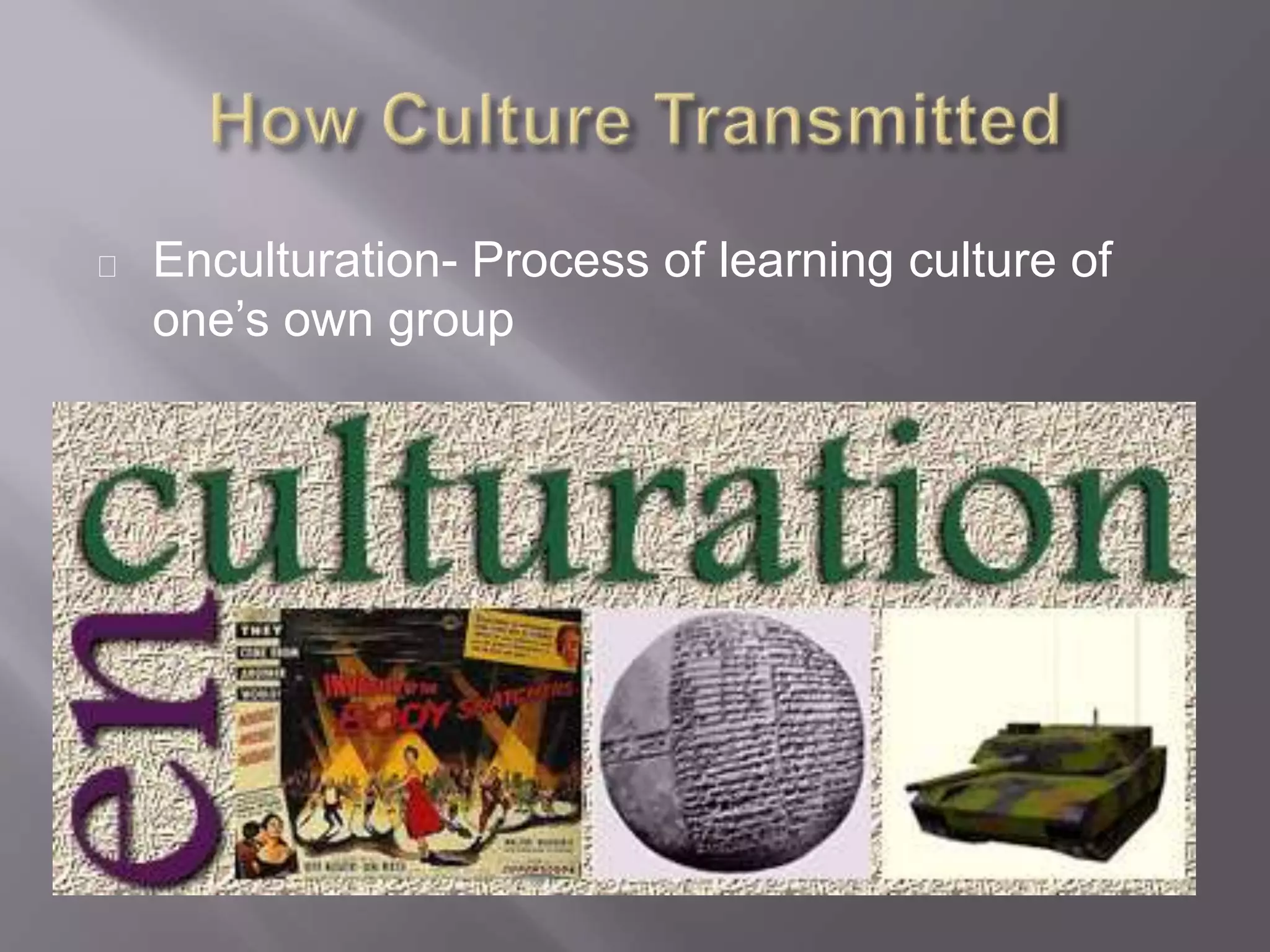
Describes enculturation as the process of learning one's own culture.
Defines acculturation as the process of adopting traits from another culture.
Discusses assimilation, where individuals lose their native identity by adopting a new culture.
Highlights how culture helps individuals meet needs and guides proper conduct within society.
Discusses Rosado's and Glazer's views on cultural values and the importance of studying cultures neutrally.
States the idea that all beliefs and practices are considered right or wrong depending on context.