Downloaded 669 times
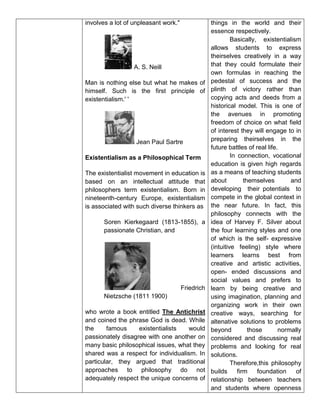
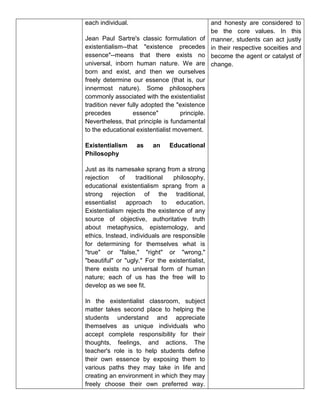
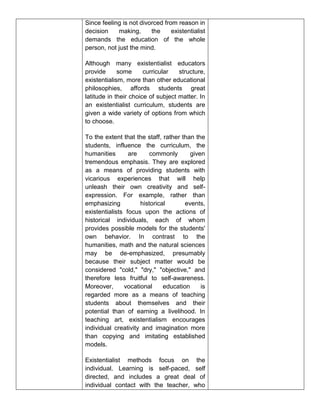
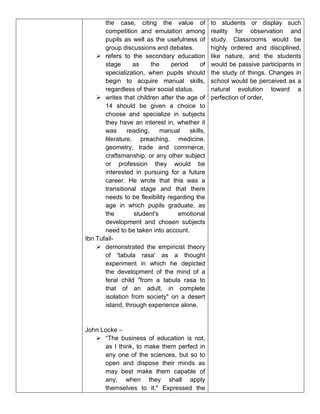
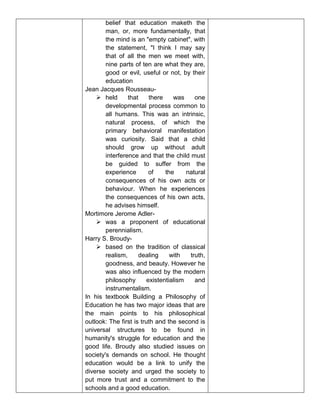
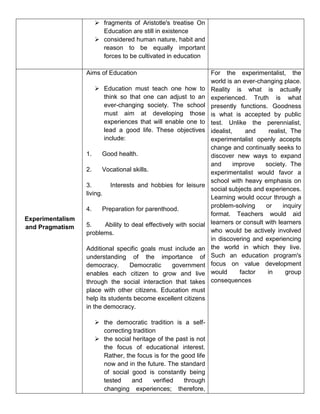
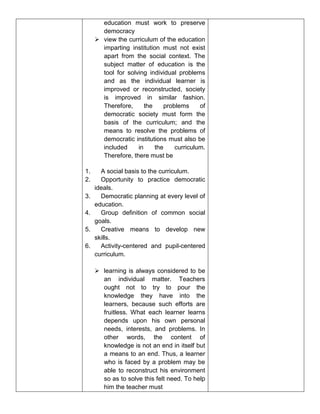
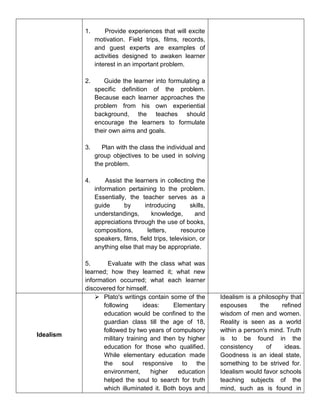
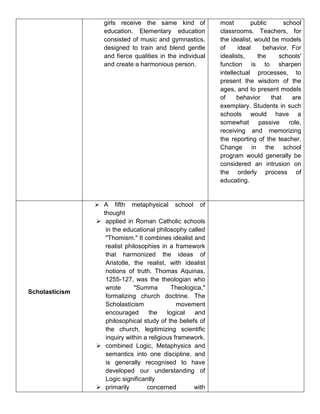
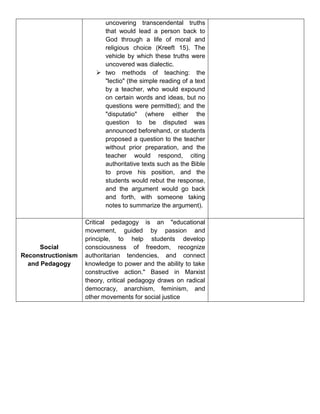


This document discusses five major educational philosophies: perennialism, essentialism, progressivism, existentialism, and pragmatism. Perennialism focuses on teaching reasoning and wisdom through subjects and doctrine with a highly disciplined approach. Essentialism emphasizes teaching intellectual and moral standards through a core curriculum of essential knowledge and skills. Progressivism believes education should focus on the whole child through active learning rooted in the learner's experiences. Existentialism rejects set truths and focuses on helping students understand themselves and accept responsibility for their own development. Pragmatism sees education as a means to solve problems and believes learning happens through active experimentation.


