Early Theories of Aging
Thanatophobia

Extend maximum life span
Hippocrates – gradual loss of body heat
Erasmus Darwin – reduced responses to stimuli, loss of
excitability
Others – metabolic rate, irradiation, genetics
“geriatrics” coined in 1914
First geriatric medical journal published in 1945
ACSM founded in 1954
NIA created in 1974
Theories of Aging
Psychological

◦ Maslow’s Hierarchy of Needs (1943)
◦ Erikson’s Psychological Stages (1956)
◦ Selective Optimization with Compensation (SOC, 1980)
Sociological

◦ Activity
◦ Continuity
Biological

◦ Damage
◦ Genetic
◦ Gradual Imbalance
Theories of Aging
Psychological

◦ Primarily related to success
◦ Personal development
Sociological

◦ Engagement
◦ Experience & environment
Maslow’s Hierarchy of Needs:
Theory of Successful Aging
Theories of Aging
Erikson’s

Psychosocial Stages

◦ Development through late adulthood
◦ Positive/Negative Outcomes
Late

Adulthood

◦ Pride & satisfaction vs. lack of
accomplishment
◦ Dignity & acceptance vs. frustration
Keys:

close relationships; productivity
with family and/or work; evaluation of the
rear view
Theories of Aging
Selective

Optimization with
Compensation (Baltes & Baltes, 1990)
◦ Select priorities/likes/most important
◦ Optimize skills and talents
◦ Compensate for decrements in ability

Examples

◦ Playing music
◦ Lifting weights
◦ Running
Theories of Aging
SOC

◦ Functional competence is key
Related

◦
◦
◦
◦

concepts

Self-efficacy (Bandura, 1977)
Self-esteem
Control
Cognitive capacity
Theories of Aging: Sociological
Activity

Theory (Havighurst, 1961)

◦ Engaged in mental and physical activities
◦ Community/family/profession
Continuity

(Atchley, 1971)

◦ Carry forward positive habits, relationships,
regardless of advancing age
Can

social beings successfully age without
solid social connections?
Cognitive function?
Theories of Aging
Theories of Aging
Damage

from wear and tear

◦ Chemical reactions that occur naturally in the
body begin to produce a # of irreversible
defects in molecules.
◦ What is the source of “microinsults”?





Physical
Chemical
Infectious
Mechanical

Loss of function &
System failure
Injury
Repair
Theories of Aging
Theories of Aging
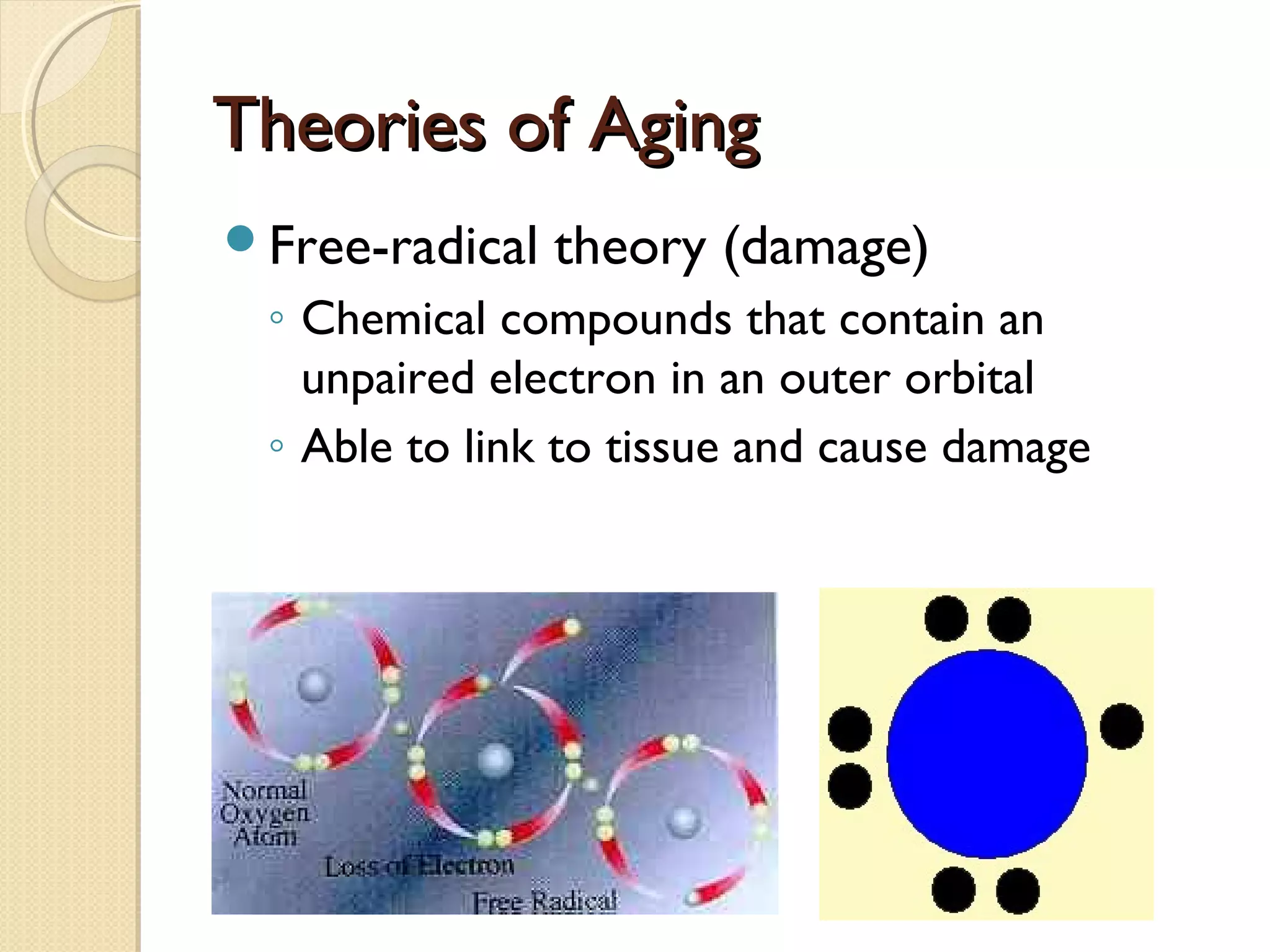
Free-radical

theory (damage)

◦ Chemical compounds that contain an
unpaired electron in an outer orbital
◦ Able to link to tissue and cause damage
Theories of Aging

 Mitochondrial

respiration–
“leaking intermediates”
 Superoxide dismutase
Theories of Aging
Free

radical targets

◦ Cell membranes
◦ DNA & RNA
◦ Enzymes
Damage

to tissues, ultimately systems
Theories of Aging
Accumulation

of defects in metabolic

pathways
Does aging originate in the mitochondria?
Oxidation of mitochondrial DNA
Widespread impact
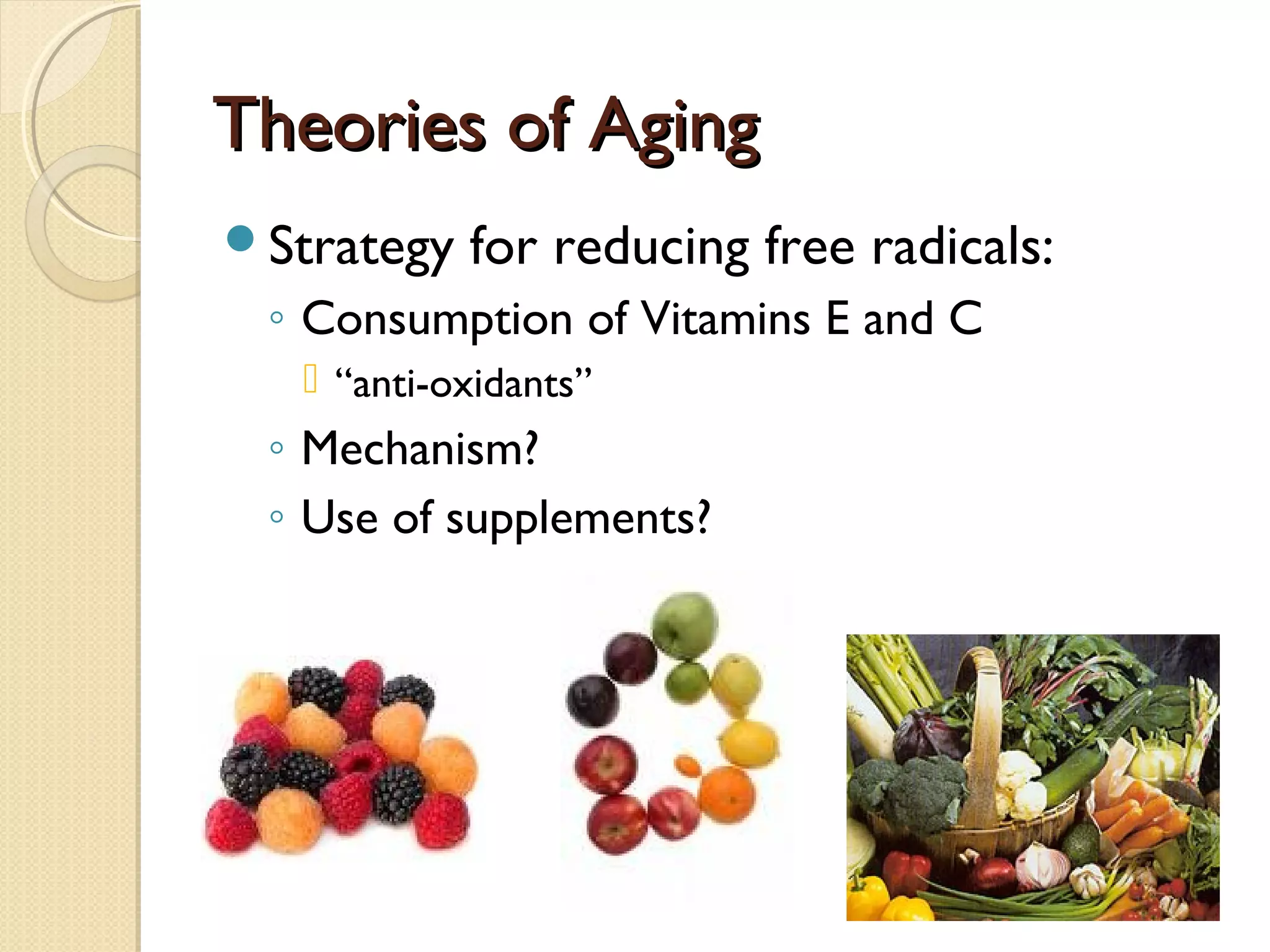
Theories of Aging
Strategy

for reducing free radicals:

◦ Consumption of Vitamins E and C
 “anti-oxidants”

◦ Mechanism?
◦ Use of supplements?
Theories of Aging
Cross-linkage

(damage)

◦ Corrupted DNA not repaired
◦ Cross-linking occurs in protein-based collagen
fibers
◦ Over time, results in






Stiffening of tissue
Rigidity of blood vessels
Tight ligaments & tendons
Cataracts
Atherosclerosis
Theories of Aging
Genetic

theories

◦ Genes related to
pathologies
◦ Could dictate cellular aging
◦ DNA mutations of
mitochondria build during
lifetime
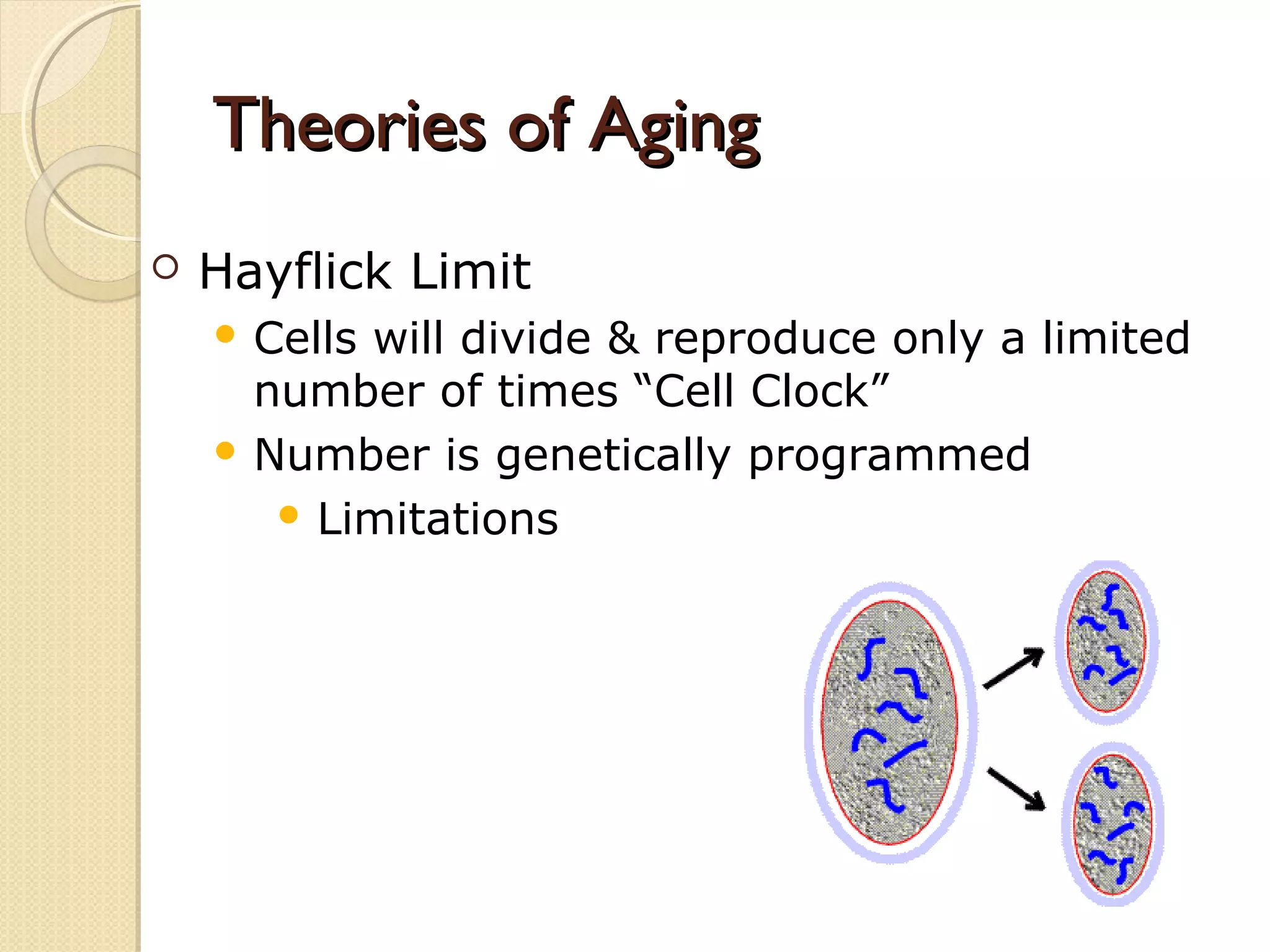
Theories of Aging


Hayflick Limit
 Cells

will divide & reproduce only a limited
number of times “Cell Clock”
 Number is genetically programmed
 Limitations
Theories of Aging
Telomere

Hypothesis

◦ Shortens with each replication
of the chromosome
◦ Replication at a fixed rate may
indicate that the telomere is
the “clock” that determines the
lifespan of any given cell
◦ Dolly’s fate
Theories of Aging
Gradual

Imbalance Theory

◦ Nervous system
◦ Endocrine system
◦ Impaired relationship btwn the two
Hormones

impacted
Adaptation impaired
Is aging the result of decreased ability to
survive stress??
Theories of Aging
There is no overwhelming support for
just one biological theory of aging.
Likely theories overlap and each explain
some aspect(s) of aging
Slowing the Aging Process
Improve

nutrition
↓ total food consumed
Maintain general activity levels
Have social/community
involvement
Perform moderate amounts of
physical exercise
Slowing the Aging Process
Caloric

restriction

◦ Total amt of food is reduced
 How much?

◦ Major nutrients, minerals, & vitamins
necessary for health are maintained
Slowing the Aging Process
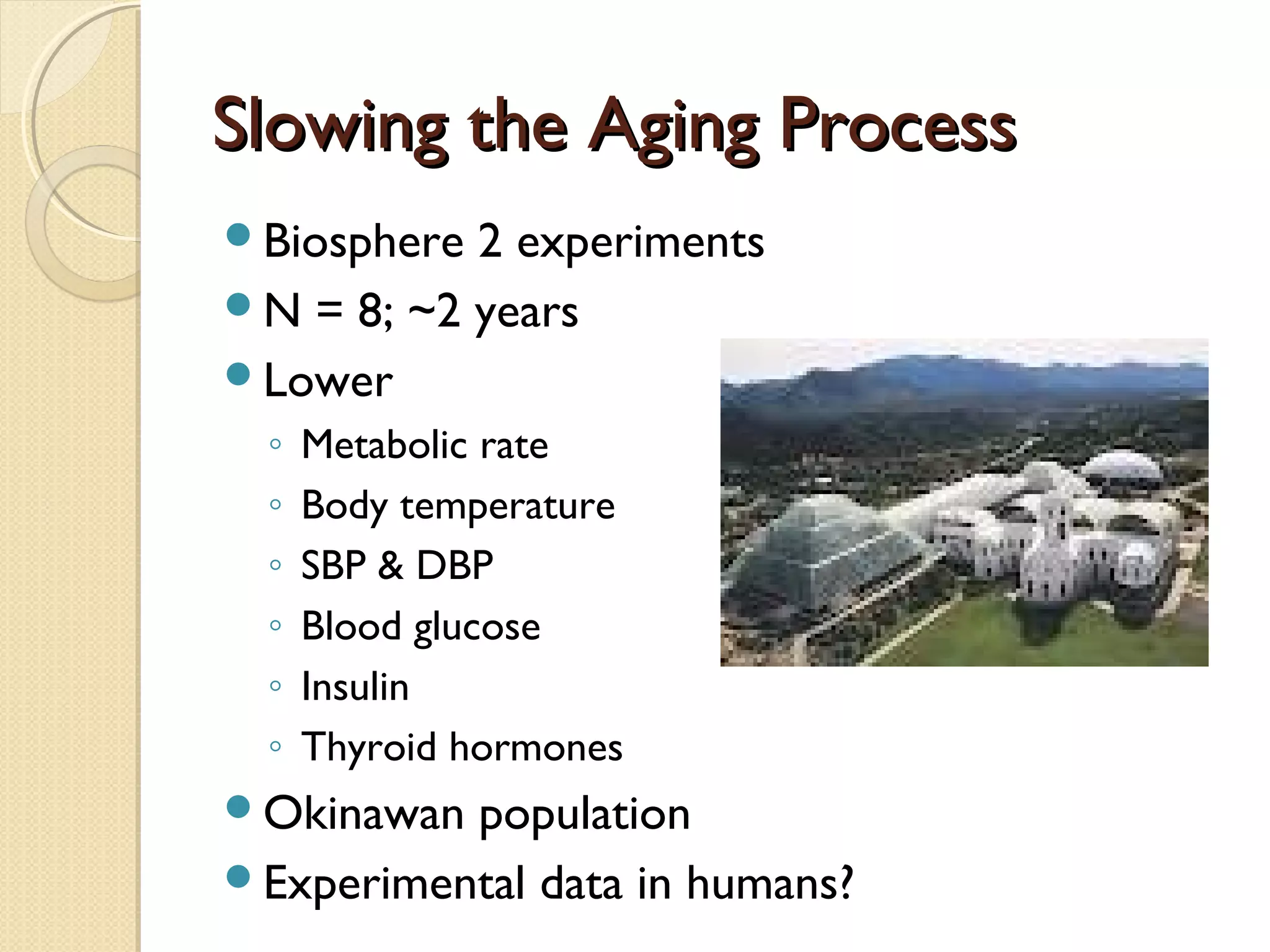
Biosphere

2 experiments
N = 8; ~2 years
Lower
◦
◦
◦
◦
◦
◦

Metabolic rate
Body temperature
SBP & DBP
Blood glucose
Insulin
Thyroid hormones

Okinawan

population
Experimental data in humans?
Slowing the Aging Process
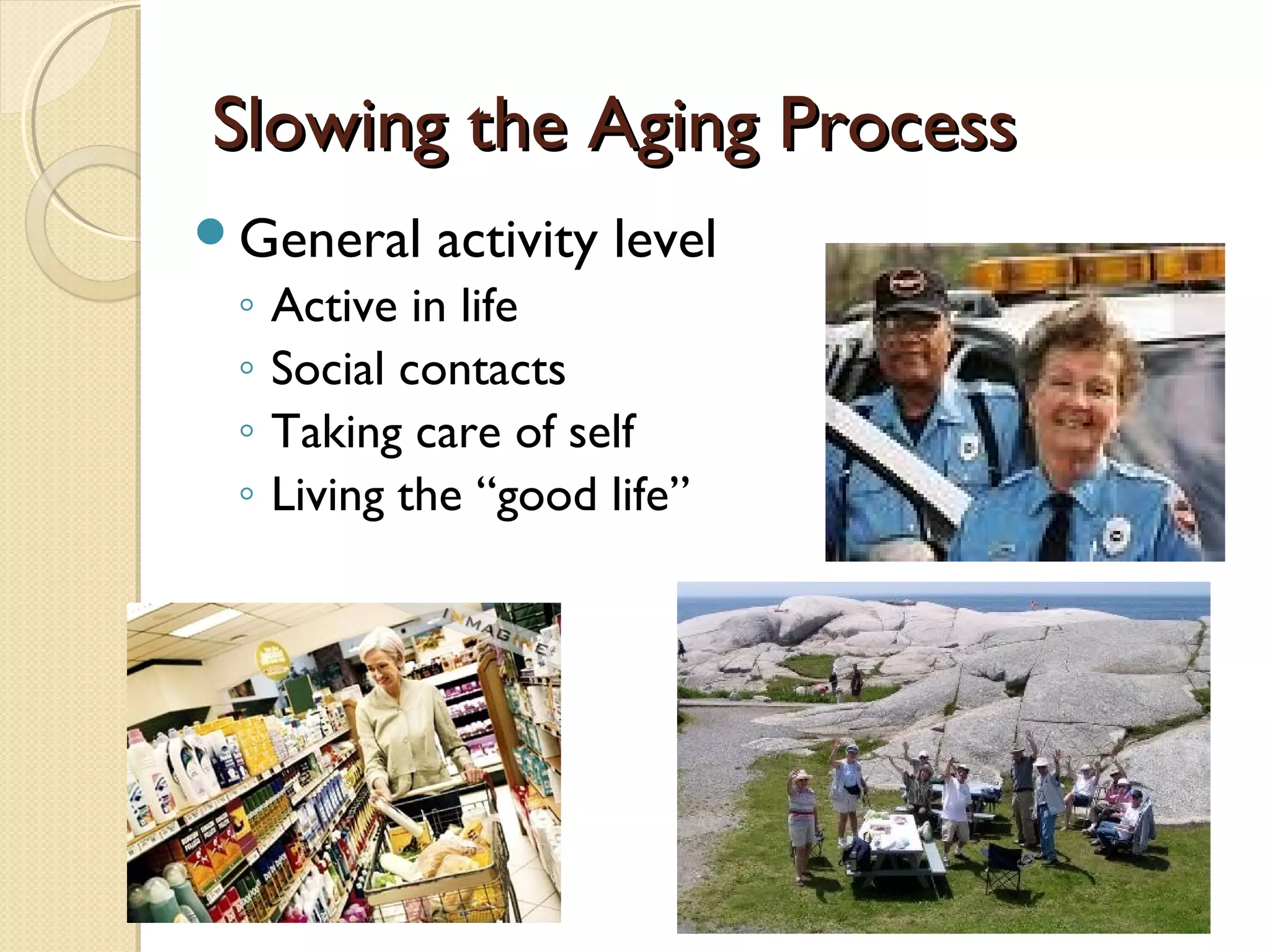
General

◦
◦
◦
◦

activity level

Active in life
Social contacts
Taking care of self
Living the “good life”
Role of PA/Exercise/Sport?
Compression

of morbidity?
Decrease premature mortality?
SOC?
Social opportunities?
Quality of Life
The difference between active living
& just being alive.
Active

life expectancy
Quality of Life (more to come)
Activities

of Daily
Living (ADLs)
◦
◦
◦
◦
◦

Walking
Dressing
Bathing/toileting
Eating
Getting up from a
bed or chair

Instrumental

Activities
of Daily Living (IADLs)
◦ Managing finances
◦ Using the telephone
◦ Light housework
◦ Heavy housework
◦ Meal preparation
◦ Shopping

Spiritual health: Relationships,
values, purpose
Summary
Factors

that optimize
successful aging:
◦ Avoiding disease
◦ Engaging in life activities
◦ Maintaining high cognitive and
physical function

Theories of aging s14

  • 1.
    Early Theories ofAging Thanatophobia Extend maximum life span Hippocrates – gradual loss of body heat Erasmus Darwin – reduced responses to stimuli, loss of excitability Others – metabolic rate, irradiation, genetics “geriatrics” coined in 1914 First geriatric medical journal published in 1945 ACSM founded in 1954 NIA created in 1974
  • 2.
    Theories of Aging Psychological ◦Maslow’s Hierarchy of Needs (1943) ◦ Erikson’s Psychological Stages (1956) ◦ Selective Optimization with Compensation (SOC, 1980) Sociological ◦ Activity ◦ Continuity Biological ◦ Damage ◦ Genetic ◦ Gradual Imbalance
  • 3.
    Theories of Aging Psychological ◦Primarily related to success ◦ Personal development Sociological ◦ Engagement ◦ Experience & environment
  • 4.
    Maslow’s Hierarchy ofNeeds: Theory of Successful Aging
  • 5.
    Theories of Aging Erikson’s PsychosocialStages ◦ Development through late adulthood ◦ Positive/Negative Outcomes Late Adulthood ◦ Pride & satisfaction vs. lack of accomplishment ◦ Dignity & acceptance vs. frustration Keys: close relationships; productivity with family and/or work; evaluation of the rear view
  • 6.
    Theories of Aging Selective Optimizationwith Compensation (Baltes & Baltes, 1990) ◦ Select priorities/likes/most important ◦ Optimize skills and talents ◦ Compensate for decrements in ability Examples ◦ Playing music ◦ Lifting weights ◦ Running
  • 7.
    Theories of Aging SOC ◦Functional competence is key Related ◦ ◦ ◦ ◦ concepts Self-efficacy (Bandura, 1977) Self-esteem Control Cognitive capacity
  • 8.
    Theories of Aging:Sociological Activity Theory (Havighurst, 1961) ◦ Engaged in mental and physical activities ◦ Community/family/profession Continuity (Atchley, 1971) ◦ Carry forward positive habits, relationships, regardless of advancing age Can social beings successfully age without solid social connections? Cognitive function?
  • 9.
  • 10.
    Theories of Aging Damage fromwear and tear ◦ Chemical reactions that occur naturally in the body begin to produce a # of irreversible defects in molecules. ◦ What is the source of “microinsults”?     Physical Chemical Infectious Mechanical Loss of function & System failure Injury Repair
  • 11.
  • 12.
    Theories of Aging Free-radical theory(damage) ◦ Chemical compounds that contain an unpaired electron in an outer orbital ◦ Able to link to tissue and cause damage
  • 13.
    Theories of Aging Mitochondrial respiration– “leaking intermediates”  Superoxide dismutase
  • 14.
    Theories of Aging Free radicaltargets ◦ Cell membranes ◦ DNA & RNA ◦ Enzymes Damage to tissues, ultimately systems
  • 15.
    Theories of Aging Accumulation ofdefects in metabolic pathways Does aging originate in the mitochondria? Oxidation of mitochondrial DNA Widespread impact
  • 16.
    Theories of Aging Strategy forreducing free radicals: ◦ Consumption of Vitamins E and C  “anti-oxidants” ◦ Mechanism? ◦ Use of supplements?
  • 17.
    Theories of Aging Cross-linkage (damage) ◦Corrupted DNA not repaired ◦ Cross-linking occurs in protein-based collagen fibers ◦ Over time, results in      Stiffening of tissue Rigidity of blood vessels Tight ligaments & tendons Cataracts Atherosclerosis
  • 18.
    Theories of Aging Genetic theories ◦Genes related to pathologies ◦ Could dictate cellular aging ◦ DNA mutations of mitochondria build during lifetime
  • 19.
    Theories of Aging  HayflickLimit  Cells will divide & reproduce only a limited number of times “Cell Clock”  Number is genetically programmed  Limitations
  • 20.
    Theories of Aging Telomere Hypothesis ◦Shortens with each replication of the chromosome ◦ Replication at a fixed rate may indicate that the telomere is the “clock” that determines the lifespan of any given cell ◦ Dolly’s fate
  • 21.
    Theories of Aging Gradual ImbalanceTheory ◦ Nervous system ◦ Endocrine system ◦ Impaired relationship btwn the two Hormones impacted Adaptation impaired Is aging the result of decreased ability to survive stress??
  • 22.
    Theories of Aging Thereis no overwhelming support for just one biological theory of aging. Likely theories overlap and each explain some aspect(s) of aging
  • 23.
    Slowing the AgingProcess Improve nutrition ↓ total food consumed Maintain general activity levels Have social/community involvement Perform moderate amounts of physical exercise
  • 24.
    Slowing the AgingProcess Caloric restriction ◦ Total amt of food is reduced  How much? ◦ Major nutrients, minerals, & vitamins necessary for health are maintained
  • 25.
    Slowing the AgingProcess Biosphere 2 experiments N = 8; ~2 years Lower ◦ ◦ ◦ ◦ ◦ ◦ Metabolic rate Body temperature SBP & DBP Blood glucose Insulin Thyroid hormones Okinawan population Experimental data in humans?
  • 26.
    Slowing the AgingProcess General ◦ ◦ ◦ ◦ activity level Active in life Social contacts Taking care of self Living the “good life”
  • 27.
    Role of PA/Exercise/Sport? Compression ofmorbidity? Decrease premature mortality? SOC? Social opportunities?
  • 28.
    Quality of Life Thedifference between active living & just being alive. Active life expectancy
  • 29.
    Quality of Life(more to come) Activities of Daily Living (ADLs) ◦ ◦ ◦ ◦ ◦ Walking Dressing Bathing/toileting Eating Getting up from a bed or chair Instrumental Activities of Daily Living (IADLs) ◦ Managing finances ◦ Using the telephone ◦ Light housework ◦ Heavy housework ◦ Meal preparation ◦ Shopping Spiritual health: Relationships, values, purpose
  • 30.
    Summary Factors that optimize successful aging: ◦Avoiding disease ◦ Engaging in life activities ◦ Maintaining high cognitive and physical function