Aging Research at
Tufts University
Fiatarone et al., 1990
Bassey et al., 1992
• Effects on Skeletal Muscle
• JAMA, 1990

High-Intensity Strength
Training in
Nonagenarians
•
•
•
•

Biologic aging (??)
Disease
Sedentary lifestyle
Nutritional inadequacies
• All related to type II fiber atrophy

• Intervention?
• Weakness

Rationale

Falls
To determine
• Feasibility
• Physiological consequences
• High-resistance strength training in the
frail elderly

Aims
•
•
•
•
•

Long term care facility (“nursing home”)
Ambulatory
Not acutely ill
Follow instructions
No unstable disease

Participants
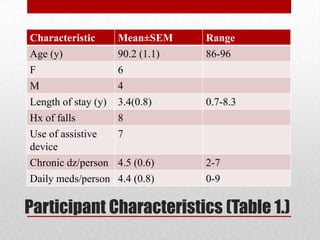
Characteristic
Age (y)
F

Mean±SEM
90.2 (1.1)
6

M
Length of stay (y)
Hx of falls
Use of assistive
device
Chronic dz/person
Daily meds/person

4
3.4(0.8)
8
7
4.5 (0.6)
4.4 (0.8)

Range
86-96

0.7-8.3

2-7
0-9

Participant Characteristics (Table 1.)
• Body composition
• Total and regional

• Diet records
• 1RM
• Safety measures

• Functional mobility

Measures
•
•
•
•

8 weeks
Con/Ecc leg extension
3 x/wk
3 sets of 8
• 6-9 seconds
• 1-2 min rest
• 80% 1RM

• 2 & 4 weeks of detraining

Training
• Level of care
• Excluded
• MI
• Fracture
• Behavioral
• Arthritis

Results: Participants
• 40% signs of under nutrition
• FFM higher in men than in women
• SSkFs highly related to BF% (r=0.89,
P<.001)
• Regional muscle area highly related to
total body FFM (r=.98, P<.0001)

Results: Participants
• Right leg: 9.0±1.4
• Left leg: 8.9±1.7
• Corr with FFM
(r=.732; P<.01)
• Corr with thigh
muscle area
(r=.752, P<.01)

• Dietary intake
• Chair stand
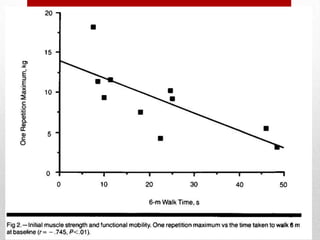
2.2±0.5 sec
• 6m walk time
22.2±4.6 sec
• Both related to
1RM (how?)

Results: Baseline Muscle Function
•
•
•
•

9 of 10 completed protocol
98.8% attendance
No CV complications
Minor joint discomfort

Response to Training
• 174 ± 31% increase
• 8.02±1.0 kg to 20.6 ± 2.4 kg (right)
• 7.6±1.3 kg to 19.3±2.2 kg (left)
• No plateau
• Same among men and women

Muscle Strength
• No change in gait speed
• Tandem gait improvements (N=5)
• 2 no longer needed canes
• 1 of 3 could rise from chair w/o arms

Clinical Outcomes
• Dramatic increases in strength
• 61-374% (!!!)
• Reversal of age-related weakness
• Principle of specificity
• Previous research
• Remarkable findings given potential limitations of
population
• Familiarization??
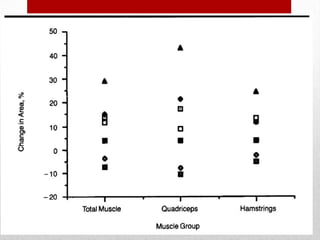
• Hypertrophy or neural improvements?
• Well tolerated
• Limitations
• Safety of training versus not training (ie, falls)

Discussion
• Bassey et al., 1992
• Clinical Science

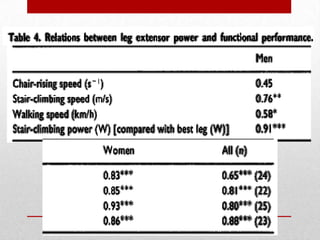
Leg extensor power and
functional performance
in very old men and
women
• Power is the basis for daily activities
• Short time requirement
• Importance of leg extensors in ADLs
….To what extent power output …..predicted performance
in older people

Rationale & Aim
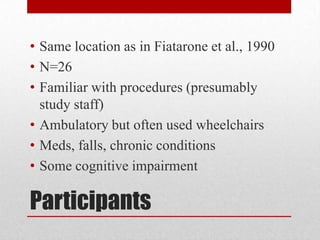
• Same location as in Fiatarone et al., 1990
• N=26
• Familiar with procedures (presumably
study staff)
• Ambulatory but often used wheelchairs
• Meds, falls, chronic conditions
• Some cognitive impairment

Participants
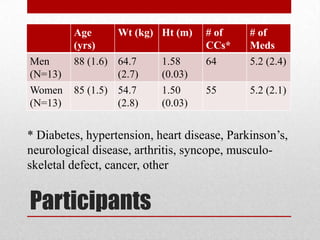
Men
(N=13)

Age
Wt (kg) Ht (m)
(yrs)
88 (1.6) 64.7
1.58
(2.7)
(0.03)

# of
CCs*
64

# of
Meds
5.2 (2.4)

Women
(N=13)

85 (1.5) 54.7
(2.8)

55

5.2 (2.1)

1.50
(0.03)

* Diabetes, hypertension, heart disease, Parkinson’s,
neurological disease, arthritis, syncope, musculoskeletal defect, cancer, other

Participants
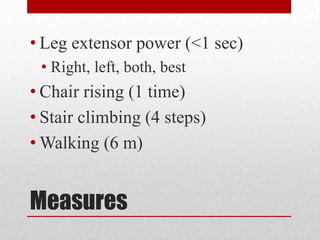
• Leg extensor power (<1 sec)
• Right, left, both, best

• Chair rising (1 time)
• Stair climbing (4 steps)
• Walking (6 m)

Measures
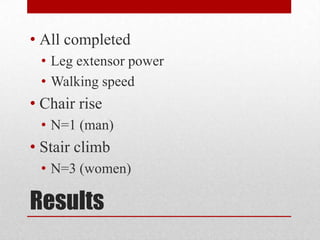
• All completed
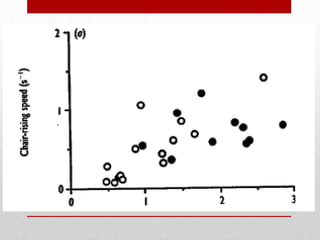
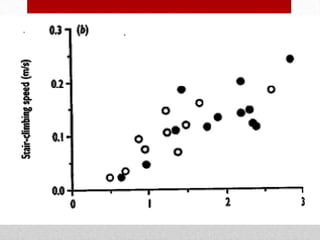
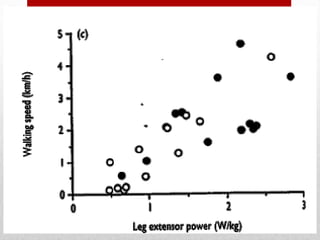
• Leg extensor power
• Walking speed

• Chair rise
• N=1 (man)

• Stair climb
• N=3 (women)

Results
•
•
•
•

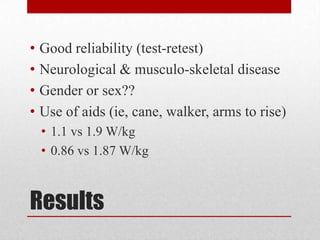
Good reliability (test-retest)
Neurological & musculo-skeletal disease
Gender or sex??
Use of aids (ie, cane, walker, arms to rise)
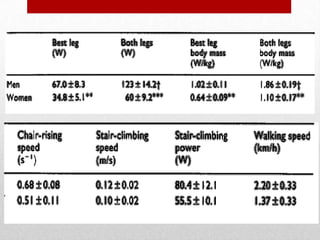
• 1.1 vs 1.9 W/kg
• 0.86 vs 1.87 W/kg

Results
•
•
•
•
•
•

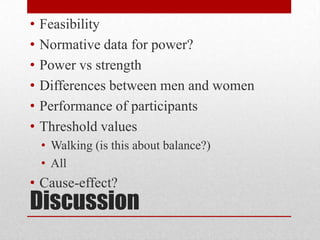
Feasibility
Normative data for power?
Power vs strength
Differences between men and women
Performance of participants
Threshold values
• Walking (is this about balance?)
• All

• Cause-effect?

Discussion
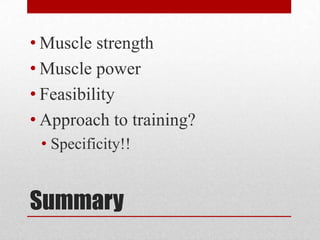
• Muscle strength
• Muscle power
• Feasibility
• Approach to training?
• Specificity!!

Summary

Tufts research slides s14

  • 1.
    Aging Research at TuftsUniversity Fiatarone et al., 1990 Bassey et al., 1992
  • 2.
    • Effects onSkeletal Muscle • JAMA, 1990 High-Intensity Strength Training in Nonagenarians
  • 3.
    • • • • Biologic aging (??) Disease Sedentarylifestyle Nutritional inadequacies • All related to type II fiber atrophy • Intervention? • Weakness Rationale Falls
  • 4.
    To determine • Feasibility •Physiological consequences • High-resistance strength training in the frail elderly Aims
  • 5.
    • • • • • Long term carefacility (“nursing home”) Ambulatory Not acutely ill Follow instructions No unstable disease Participants
  • 6.
    Characteristic Age (y) F Mean±SEM 90.2 (1.1) 6 M Lengthof stay (y) Hx of falls Use of assistive device Chronic dz/person Daily meds/person 4 3.4(0.8) 8 7 4.5 (0.6) 4.4 (0.8) Range 86-96 0.7-8.3 2-7 0-9 Participant Characteristics (Table 1.)
  • 7.
    • Body composition •Total and regional • Diet records • 1RM • Safety measures • Functional mobility Measures
  • 8.
    • • • • 8 weeks Con/Ecc legextension 3 x/wk 3 sets of 8 • 6-9 seconds • 1-2 min rest • 80% 1RM • 2 & 4 weeks of detraining Training
  • 9.
    • Level ofcare • Excluded • MI • Fracture • Behavioral • Arthritis Results: Participants
  • 10.
    • 40% signsof under nutrition • FFM higher in men than in women • SSkFs highly related to BF% (r=0.89, P<.001) • Regional muscle area highly related to total body FFM (r=.98, P<.0001) Results: Participants
  • 11.
    • Right leg:9.0±1.4 • Left leg: 8.9±1.7 • Corr with FFM (r=.732; P<.01) • Corr with thigh muscle area (r=.752, P<.01) • Dietary intake • Chair stand 2.2±0.5 sec • 6m walk time 22.2±4.6 sec • Both related to 1RM (how?) Results: Baseline Muscle Function
  • 13.
    • • • • 9 of 10completed protocol 98.8% attendance No CV complications Minor joint discomfort Response to Training
  • 14.
    • 174 ±31% increase • 8.02±1.0 kg to 20.6 ± 2.4 kg (right) • 7.6±1.3 kg to 19.3±2.2 kg (left) • No plateau • Same among men and women Muscle Strength
  • 16.
    • No changein gait speed • Tandem gait improvements (N=5) • 2 no longer needed canes • 1 of 3 could rise from chair w/o arms Clinical Outcomes
  • 17.
    • Dramatic increasesin strength • 61-374% (!!!) • Reversal of age-related weakness • Principle of specificity • Previous research • Remarkable findings given potential limitations of population • Familiarization?? • Hypertrophy or neural improvements? • Well tolerated • Limitations • Safety of training versus not training (ie, falls) Discussion
  • 18.
    • Bassey etal., 1992 • Clinical Science Leg extensor power and functional performance in very old men and women
  • 19.
    • Power isthe basis for daily activities • Short time requirement • Importance of leg extensors in ADLs ….To what extent power output …..predicted performance in older people Rationale & Aim
  • 20.
    • Same locationas in Fiatarone et al., 1990 • N=26 • Familiar with procedures (presumably study staff) • Ambulatory but often used wheelchairs • Meds, falls, chronic conditions • Some cognitive impairment Participants
  • 21.
    Men (N=13) Age Wt (kg) Ht(m) (yrs) 88 (1.6) 64.7 1.58 (2.7) (0.03) # of CCs* 64 # of Meds 5.2 (2.4) Women (N=13) 85 (1.5) 54.7 (2.8) 55 5.2 (2.1) 1.50 (0.03) * Diabetes, hypertension, heart disease, Parkinson’s, neurological disease, arthritis, syncope, musculoskeletal defect, cancer, other Participants
  • 22.
    • Leg extensorpower (<1 sec) • Right, left, both, best • Chair rising (1 time) • Stair climbing (4 steps) • Walking (6 m) Measures
  • 23.
    • All completed •Leg extensor power • Walking speed • Chair rise • N=1 (man) • Stair climb • N=3 (women) Results
  • 29.
    • • • • Good reliability (test-retest) Neurological& musculo-skeletal disease Gender or sex?? Use of aids (ie, cane, walker, arms to rise) • 1.1 vs 1.9 W/kg • 0.86 vs 1.87 W/kg Results
  • 30.
    • • • • • • Feasibility Normative data forpower? Power vs strength Differences between men and women Performance of participants Threshold values • Walking (is this about balance?) • All • Cause-effect? Discussion
  • 31.
    • Muscle strength •Muscle power • Feasibility • Approach to training? • Specificity!! Summary