22
Reviewing the literature
Learning Objectives
After studying this chapter, you should be able to
understand:
 What is meant by literature review?
 Functions of literature review
 Steps of literature review
1-2
Literature Review
 is the documentation of a comprehensive
review of the published and unpublished
work from secondary sources of data in the
areas of specific interest to the researcher.
literature review
The literature review is an integral part of the
entire research process and makes a
valuable contribution to almost every
operational step.
1-3
A literature review has a number of
functions
 Bring clarity and focus to your research
problem
  Improve your methodology
 Broaden your knowledge base in your
research area
 Contextualise your findings
1-10
Bring clarity and focus to your
research problem
 N.B. you cannot effectively start the literature
review search without an idea of the problem you
wish to investigate.
 The literature review can play an extremely
important role in shaping your research problem
 It also helps you to define the relationship
between your research problem and the body of
knowledge in the area.
1-14
Improve your methodology
Literature review
 acquaints you with the methodologies that have
been used by others to find answers to questions
similar to the one you are investigating.
 Tells you if others have used procedures and
methods similar to the ones that you are
proposing, which procedures and methods worked
well for them and what pitfalls they have faced with
them.
Broaden your knowledge base in
your research area
 Literature review ensures you read widely around
the subject area in which you are intend to
conduct your research study.
 It is important to know what other researchers
have found in regard to the same or similar
questions, what theories have been put forward
and what gap exit in the relevant body of
knowledge
Contextualise your findings
 Literature review helps identifying how your
findings compare with the existing body of
knowledge.
 How do answers to your questions compare with
what other have found? What contribution have
you been able to make to the existing body of
knowledge? How your finding different from
others?
Procedures for reviewing the
literature
There are five steps involved in
conducting a literature review:
 search for existing literature in your area of
study;
 review the literature selected;
 develop a theoretical framework;
 develop a conceptual framework;
 writing up the literature reviewed
1) Search for existing literature
 Start with at least some idea of the broad subject
area and of the problem you wish to investigate,
in order to set parameters for your search.
 Next compile a bibliography for this broad area.
There are two sources that you can use to
prepare a bibliography:
 books;
 journals.
Notice
 Be aware that sometimes a title does not
provide enough information to decide if a
book/ journal is going to be of use.
 Start with the latest issue, examine its
contents page to see if there is an article of
relevance to your research topic.
 Start by reading the abstract. If it is relevant
then download and read.
2) Review the literature selected
 Now that you have identified several
books and articles as useful, the next step
is to start reading them critically to pull
together themes and issues that are
associated.
 If you do not have a theoretical framework
or themes in mind to start with, use
separate sheets of paper for each article
or book.
 Once you develop rough frameworks, slot the
findings from the material so far reviewed into that
framework, using a separate sheet of paper for
each themes of that framework. As you read
further, go on slotting the information where it
logically belongs under the themes so far
developed.
 Notice where there are significant
differences of opinion among researchers
and give your opinion about the validity of
these differences.
 Ascertain the areas in which little or nothing
is known-the gaps that exist in the body of
knowledge.
3) Develop a theoretical framework
 As you start reading the literature, you will soon
discover that the problem you wish to investigate
has its roots in a number of theories that have
been developed from different perspectives.
4) Develop a conceptual framework
 The conceptual framework stems from the
theoretical framework and concentrates,
usually, on one section of that theoretical
framework which becomes the basis of
your study.
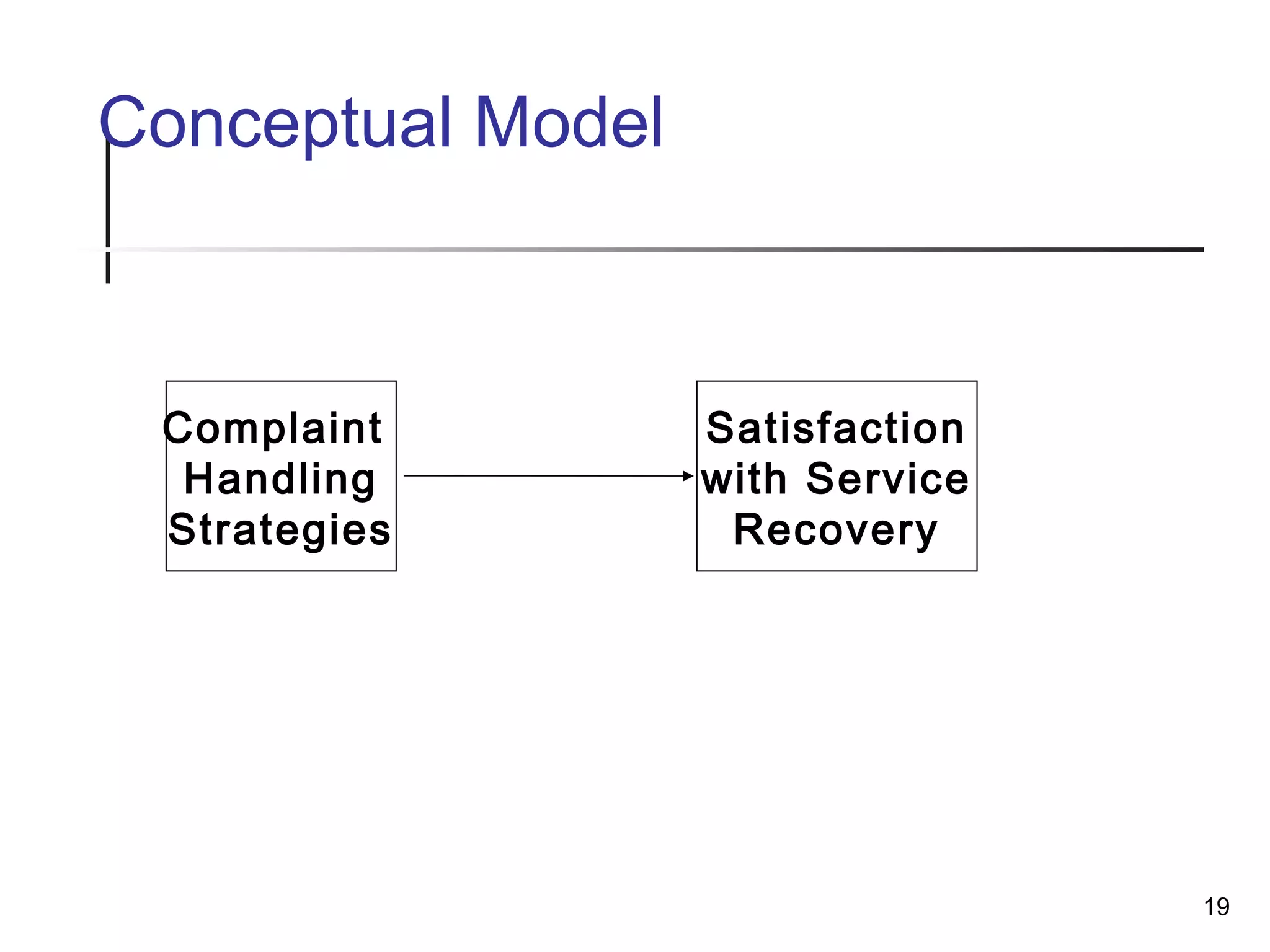
 Examples of conceptual
framework
19
Conceptual Model
Complaint
Handling
Strategies
Satisfaction
with Service
Recovery
20
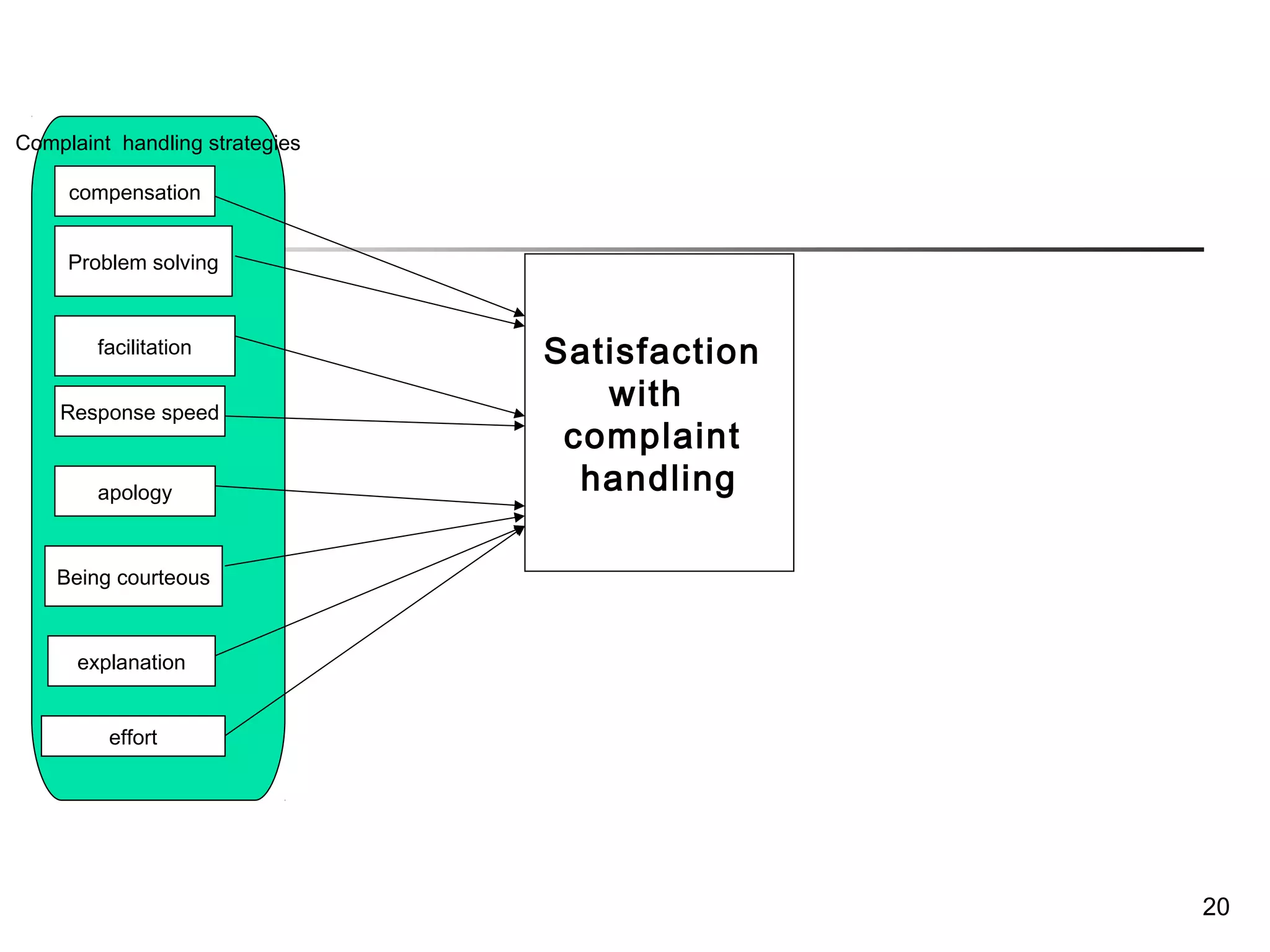
Complaint handling strategies
apology
explanation
compensation
Response speed
facilitation
Being courteous
Problem solving
effort
Satisfaction
with
complaint
handling
Examples of conceptual
framework
21
Customer
satisfaction
Service
Quality
Customer
Loyalty
5) Writing up the literature reviewed
 While reading the literature for theoretical
background of your study, you will realize that
certain themes have emerged.
 List the main ones, converting them into
subheadings. These subheadings should be
precise, descriptive of the theme in question, and
follow a logical progression.
 Now, under each subheading, record the main
findings with respect to the theme in question,
highlighting the reasons for and against an
argument if they exist, and identifying gaps and
issues.
24
Examples of Literature
Surveys
Organizational effectiveness
Organization theorists have defined
organizational effectiveness (OE) in
various ways. OE has been described
in terms of goals (Etzioni, 1960),
efficiency (Katz and Kahn, 1966),
resources acquisition (Yuchtman and
Seashore, 1967). As Coutler (2002)
remarked, there is little consensus on
how to conceptualize, measure, or
explain OE.
25
Examples of Literature
Surveys
Researchers are now moving away from
a single model and are taking
contingency approaches to
conceptualizing OE (Cameron, 1996;
Wernerfelt, 1998; Yetley, 2001).
How to write references?
 Book
 Journal
 Online document
27
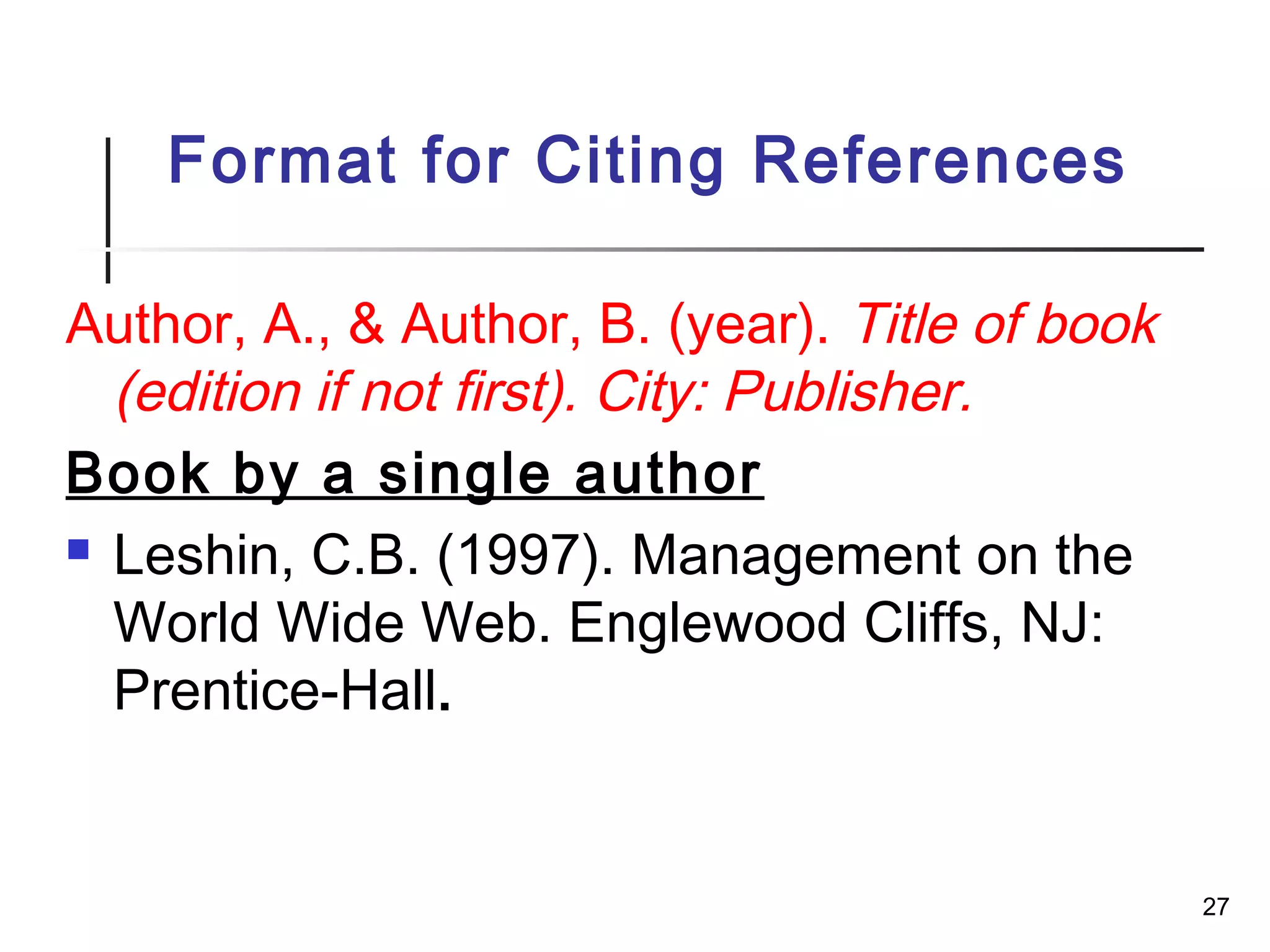
Format for Citing References
Author, A., & Author, B. (year). Title of book
(edition if not first). City: Publisher.
Book by a single author
 Leshin, C.B. (1997). Management on the
World Wide Web. Englewood Cliffs, NJ:
Prentice-Hall.
28
Format for Citing References
Author, A., & Author, B. (year). Title of book
(edition if not first). City: Publisher.
Book by more than one author
 Cornett, M., Wiley, B.J., & Sankar, S.
(1998). The pleasures of nurturing (2nd
ed).
London: McMunster Publishing.
29
Format for Citing References
Journal Article
Author, A., & Author, B. (year). Title of article.
Title of Journal, volume number (issue
number), page numbers.
 Barry, H. (1996). Cross-cultural research with
matched pairs of societies. Journal of Social
Psychology, 79 (1), 25-33.
 Jeanquart, S., & Peluchette, J. (1997). Diversity in
the workforce and management models, Journal of
Social Work Studies, 43, 72-85.
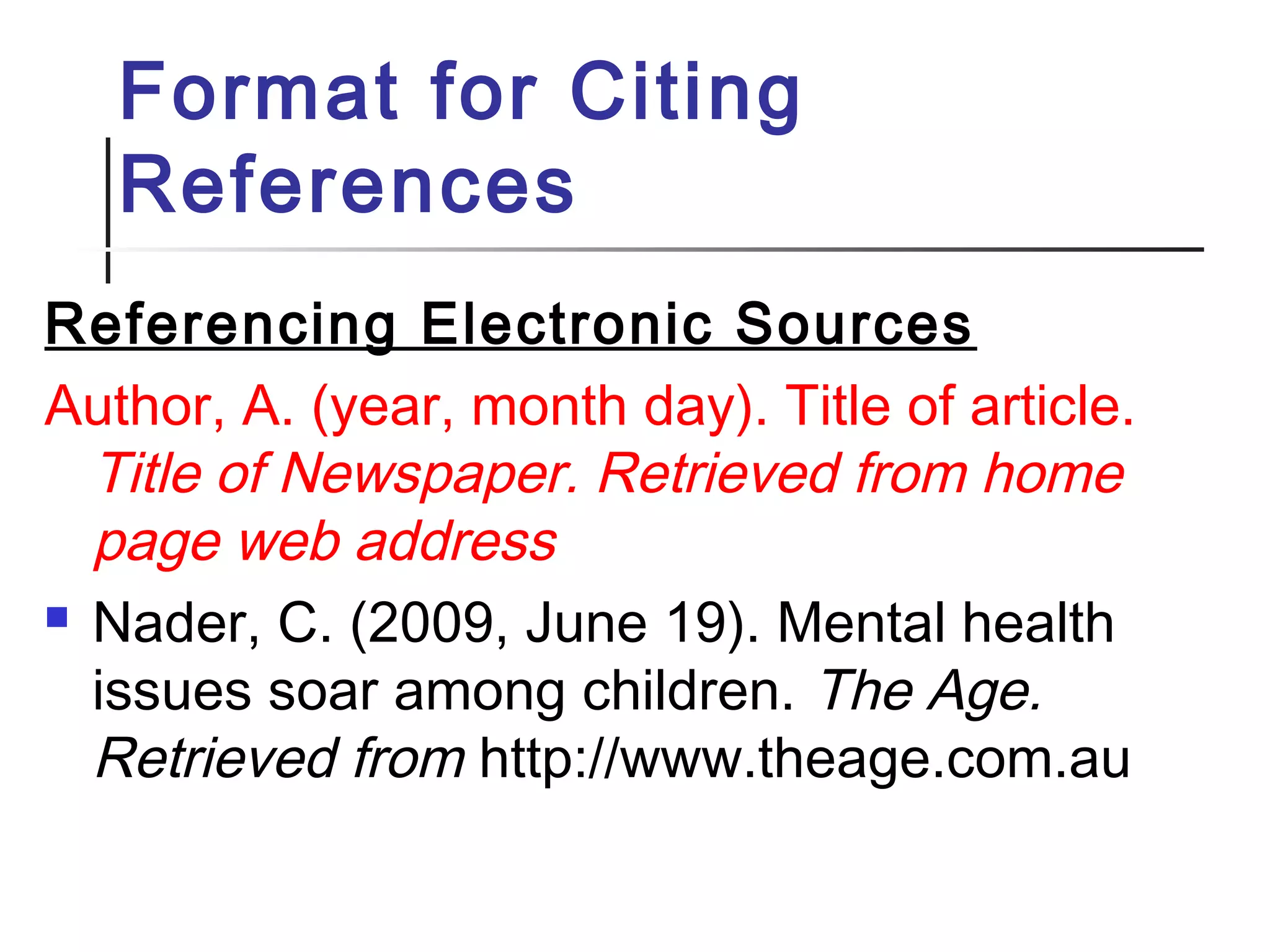
Format for Citing
References
Referencing Electronic Sources
Author, A. (year, month day). Title of article.
Title of Newspaper. Retrieved from home
page web address
 Nader, C. (2009, June 19). Mental health
issues soar among children. The Age.
Retrieved from http://www.theage.com.au

Theoretical Framework

  • 1.
  • 2.
    Learning Objectives After studyingthis chapter, you should be able to understand:  What is meant by literature review?  Functions of literature review  Steps of literature review 1-2
  • 3.
    Literature Review  isthe documentation of a comprehensive review of the published and unpublished work from secondary sources of data in the areas of specific interest to the researcher.
  • 4.
    literature review The literaturereview is an integral part of the entire research process and makes a valuable contribution to almost every operational step. 1-3
  • 5.
    A literature reviewhas a number of functions  Bring clarity and focus to your research problem   Improve your methodology  Broaden your knowledge base in your research area  Contextualise your findings 1-10
  • 6.
    Bring clarity andfocus to your research problem  N.B. you cannot effectively start the literature review search without an idea of the problem you wish to investigate.  The literature review can play an extremely important role in shaping your research problem  It also helps you to define the relationship between your research problem and the body of knowledge in the area. 1-14
  • 7.
    Improve your methodology Literaturereview  acquaints you with the methodologies that have been used by others to find answers to questions similar to the one you are investigating.  Tells you if others have used procedures and methods similar to the ones that you are proposing, which procedures and methods worked well for them and what pitfalls they have faced with them.
  • 8.
    Broaden your knowledgebase in your research area  Literature review ensures you read widely around the subject area in which you are intend to conduct your research study.  It is important to know what other researchers have found in regard to the same or similar questions, what theories have been put forward and what gap exit in the relevant body of knowledge
  • 9.
    Contextualise your findings Literature review helps identifying how your findings compare with the existing body of knowledge.  How do answers to your questions compare with what other have found? What contribution have you been able to make to the existing body of knowledge? How your finding different from others?
  • 10.
    Procedures for reviewingthe literature There are five steps involved in conducting a literature review:  search for existing literature in your area of study;  review the literature selected;  develop a theoretical framework;  develop a conceptual framework;  writing up the literature reviewed
  • 11.
    1) Search forexisting literature  Start with at least some idea of the broad subject area and of the problem you wish to investigate, in order to set parameters for your search.  Next compile a bibliography for this broad area. There are two sources that you can use to prepare a bibliography:  books;  journals.
  • 12.
    Notice  Be awarethat sometimes a title does not provide enough information to decide if a book/ journal is going to be of use.  Start with the latest issue, examine its contents page to see if there is an article of relevance to your research topic.  Start by reading the abstract. If it is relevant then download and read.
  • 13.
    2) Review theliterature selected  Now that you have identified several books and articles as useful, the next step is to start reading them critically to pull together themes and issues that are associated.  If you do not have a theoretical framework or themes in mind to start with, use separate sheets of paper for each article or book.
  • 14.
     Once youdevelop rough frameworks, slot the findings from the material so far reviewed into that framework, using a separate sheet of paper for each themes of that framework. As you read further, go on slotting the information where it logically belongs under the themes so far developed.
  • 15.
     Notice wherethere are significant differences of opinion among researchers and give your opinion about the validity of these differences.  Ascertain the areas in which little or nothing is known-the gaps that exist in the body of knowledge.
  • 16.
    3) Develop atheoretical framework  As you start reading the literature, you will soon discover that the problem you wish to investigate has its roots in a number of theories that have been developed from different perspectives.
  • 17.
    4) Develop aconceptual framework  The conceptual framework stems from the theoretical framework and concentrates, usually, on one section of that theoretical framework which becomes the basis of your study.
  • 18.
     Examples ofconceptual framework
  • 19.
  • 20.
    20 Complaint handling strategies apology explanation compensation Responsespeed facilitation Being courteous Problem solving effort Satisfaction with complaint handling
  • 21.
  • 22.
    5) Writing upthe literature reviewed  While reading the literature for theoretical background of your study, you will realize that certain themes have emerged.  List the main ones, converting them into subheadings. These subheadings should be precise, descriptive of the theme in question, and follow a logical progression.
  • 23.
     Now, undereach subheading, record the main findings with respect to the theme in question, highlighting the reasons for and against an argument if they exist, and identifying gaps and issues.
  • 24.
    24 Examples of Literature Surveys Organizationaleffectiveness Organization theorists have defined organizational effectiveness (OE) in various ways. OE has been described in terms of goals (Etzioni, 1960), efficiency (Katz and Kahn, 1966), resources acquisition (Yuchtman and Seashore, 1967). As Coutler (2002) remarked, there is little consensus on how to conceptualize, measure, or explain OE.
  • 25.
    25 Examples of Literature Surveys Researchersare now moving away from a single model and are taking contingency approaches to conceptualizing OE (Cameron, 1996; Wernerfelt, 1998; Yetley, 2001).
  • 26.
    How to writereferences?  Book  Journal  Online document
  • 27.
    27 Format for CitingReferences Author, A., & Author, B. (year). Title of book (edition if not first). City: Publisher. Book by a single author  Leshin, C.B. (1997). Management on the World Wide Web. Englewood Cliffs, NJ: Prentice-Hall.
  • 28.
    28 Format for CitingReferences Author, A., & Author, B. (year). Title of book (edition if not first). City: Publisher. Book by more than one author  Cornett, M., Wiley, B.J., & Sankar, S. (1998). The pleasures of nurturing (2nd ed). London: McMunster Publishing.
  • 29.
    29 Format for CitingReferences Journal Article Author, A., & Author, B. (year). Title of article. Title of Journal, volume number (issue number), page numbers.  Barry, H. (1996). Cross-cultural research with matched pairs of societies. Journal of Social Psychology, 79 (1), 25-33.  Jeanquart, S., & Peluchette, J. (1997). Diversity in the workforce and management models, Journal of Social Work Studies, 43, 72-85.
  • 30.
    Format for Citing References ReferencingElectronic Sources Author, A. (year, month day). Title of article. Title of Newspaper. Retrieved from home page web address  Nader, C. (2009, June 19). Mental health issues soar among children. The Age. Retrieved from http://www.theage.com.au