The document discusses three theories of truth:
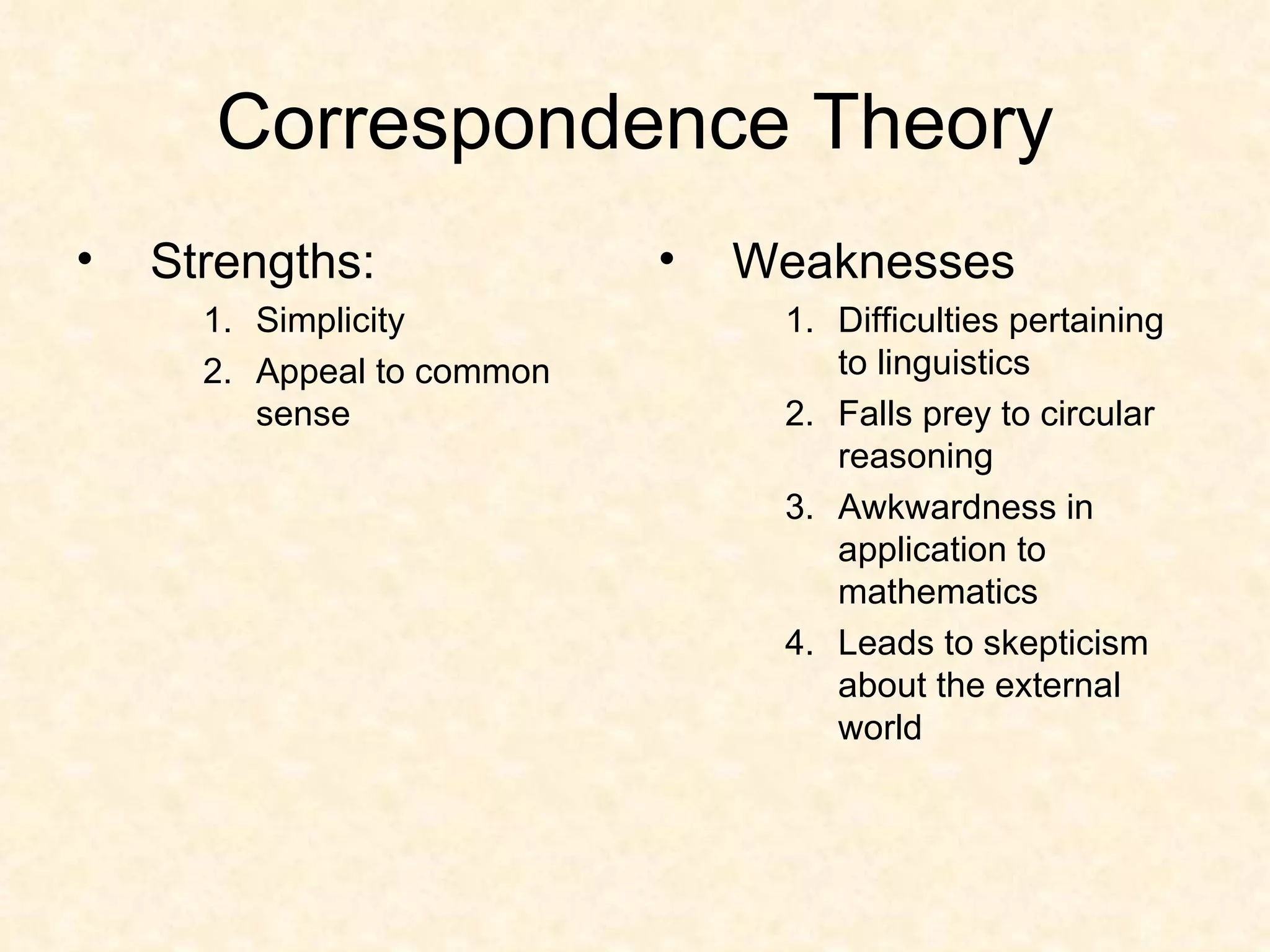
1. Correspondence theory proposes that a proposition is true if it corresponds to the facts in reality. It has strengths in simplicity and appealing to common sense but weaknesses in linguistic issues and circular reasoning.
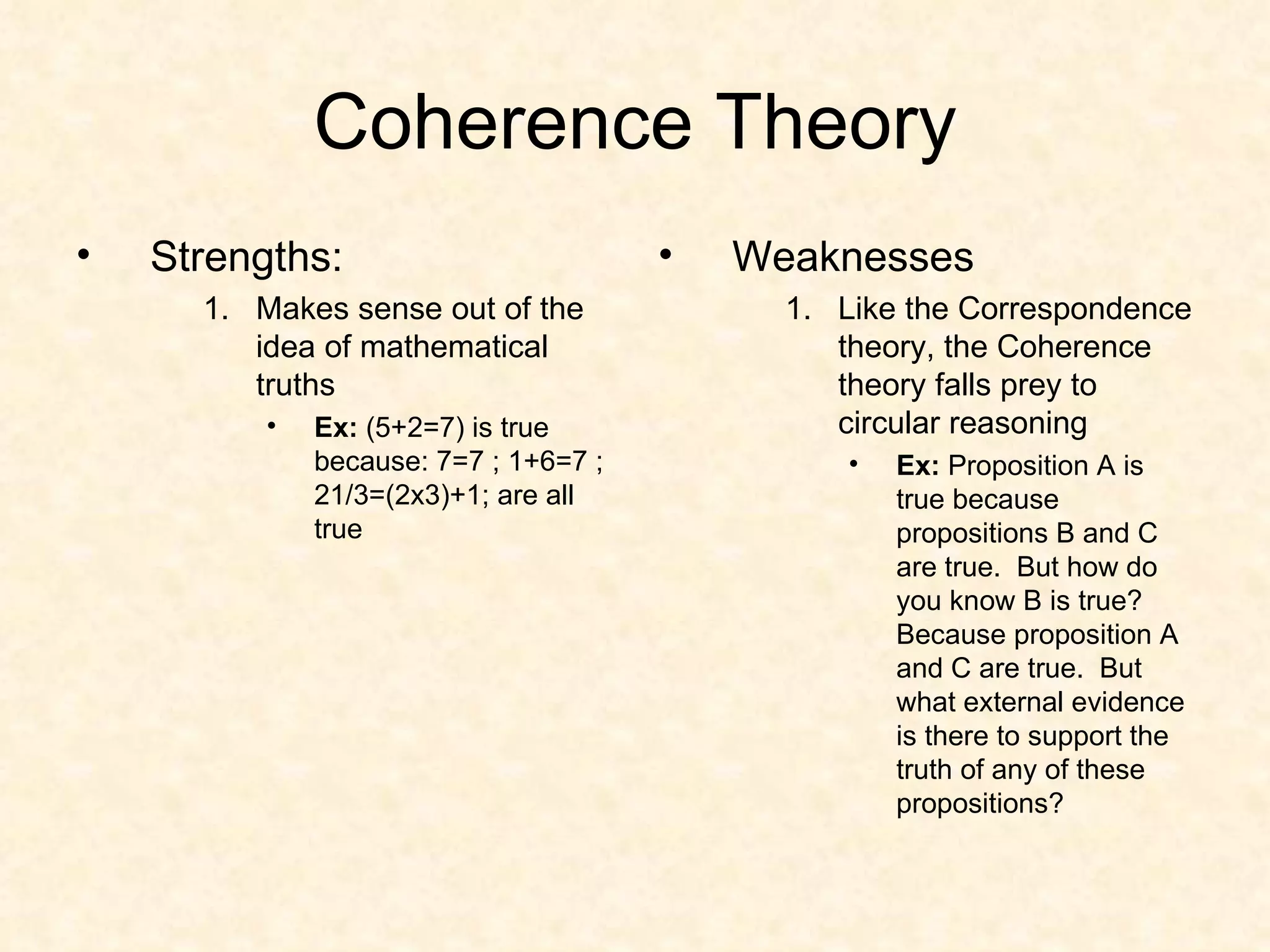
2. Coherence theory states that a proposition is true if it coheres with other propositions taken to be true. It has strengths in explaining mathematical truths but weaknesses in also falling victim to circular reasoning.
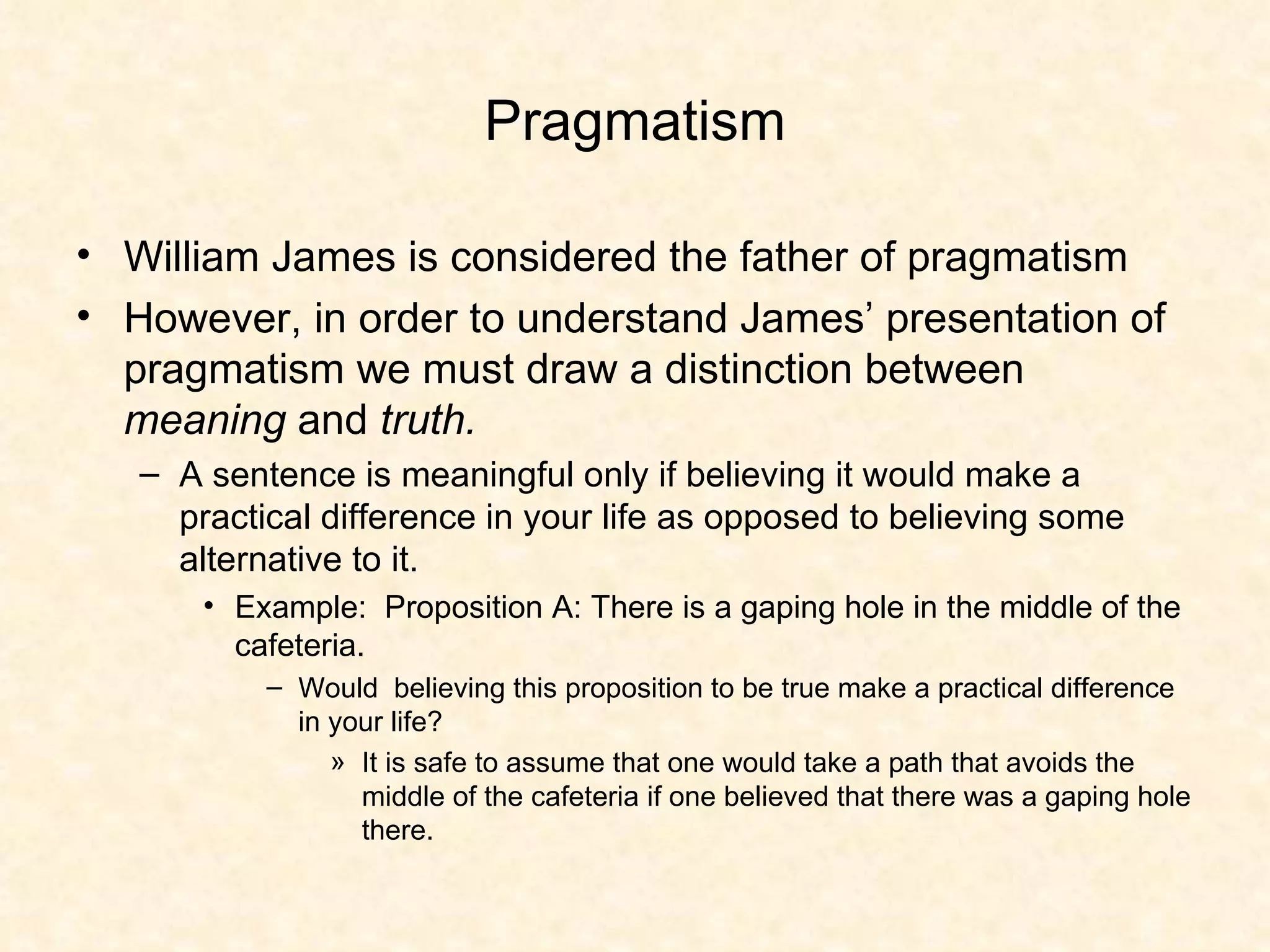
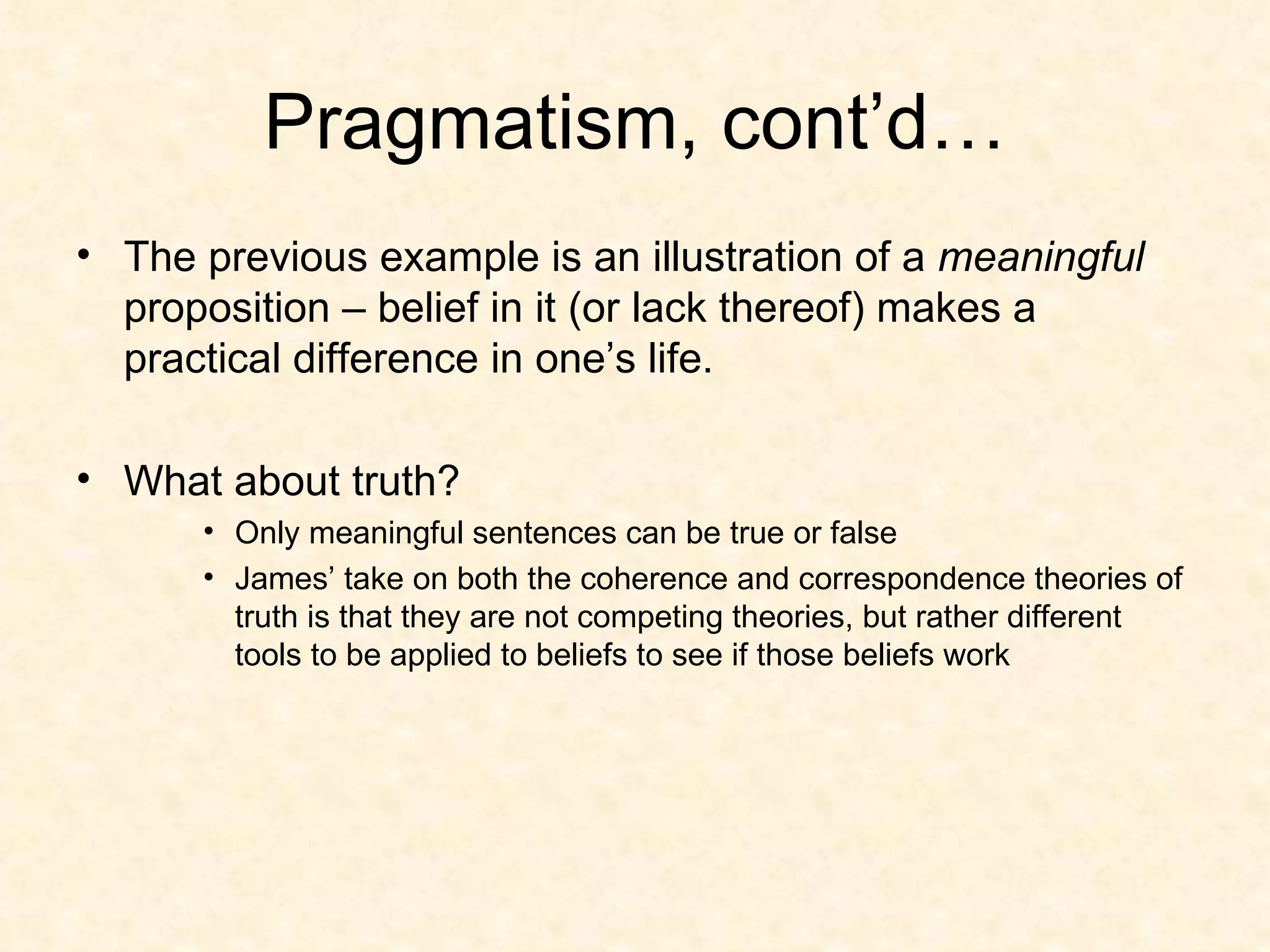
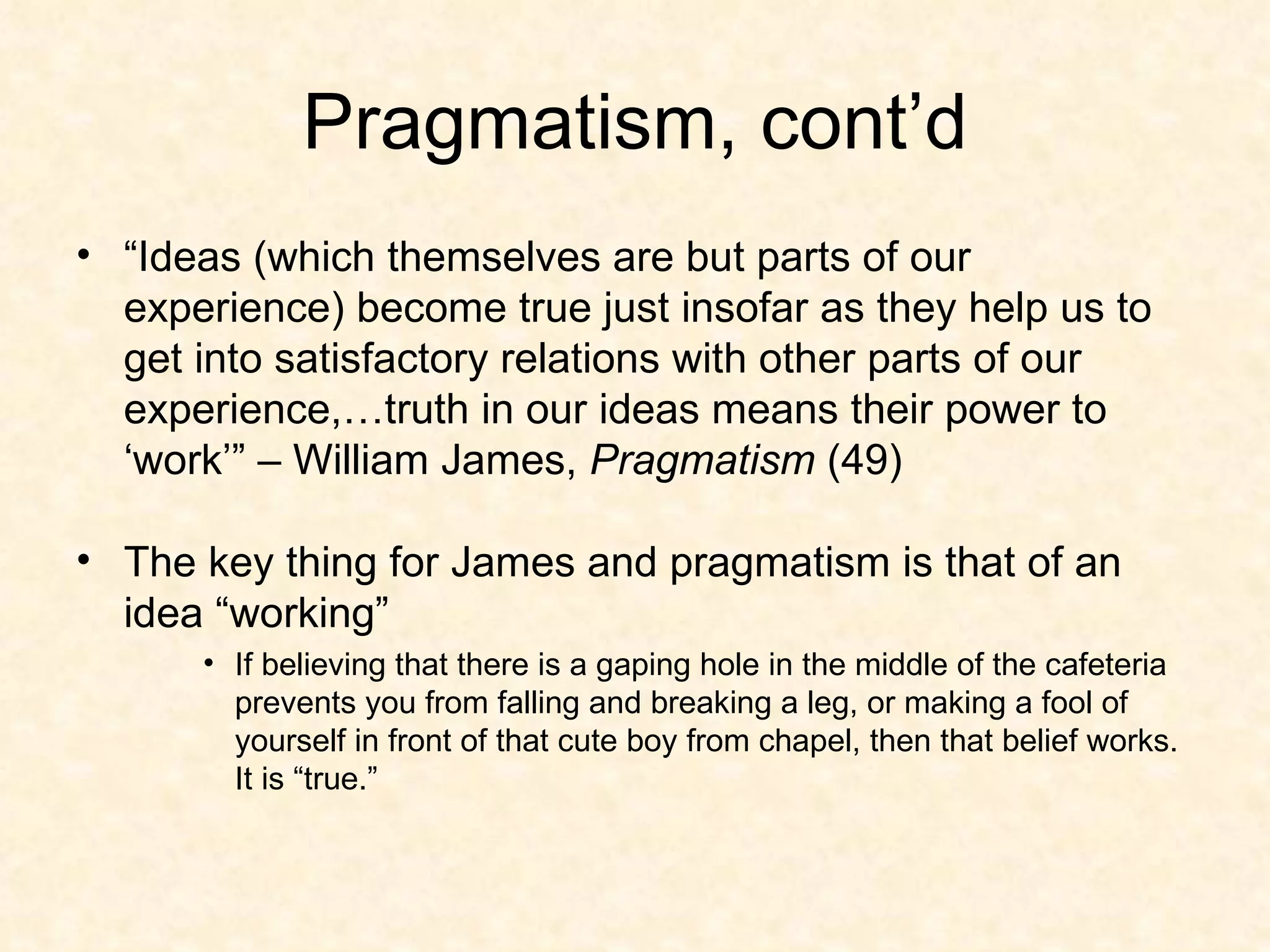
3. Pragmatism holds that a proposition is true if believing it has practical consequences and "works". William James defined truth as ideas that help us get into satisfactory relations with our experiences.