THE USAGE OF 
DICTIONARIES 
A N D R E Y K U Z N E T S O V 
1 - T E A C H E R S ’ G R O U P 5 T H C O U R S E
CONTENT 
• Lexics 
• Dictionary as an object of lexicography. 
• Macrostructure of dictionary 
• Microstructure of dictionary 
• The peculiarities of educational dictionaries 
• Types of dictionaries 
• Wordlist as a type of a dictionary. 
• Workbooks as a dictionary 
• Tasks for working with dictionaries.
LEXICS 
• Lexics(from greek. Lexicos- lexicographic) –is a set 
of all the words of a particular language. 
(vocabulary). A part of Linguistic science, exploring 
language vocabulary, calls lexicology.
DICTIONARY AS AN OBJECT OF 
LEXICOGRAPHY 
• Dictionary is a collection of words usually in 
alphabetical order (Ozhegov’s dictionary). 
• Dictionary - A book or electronic resource that lists 
the words of a language (typically in alphabetical 
order) and gives their meaning, or gives the 
equivalent words in a different language, often also 
providing information about pronunciation, origin, 
and usage (Oxford Dictionary online)
MACROSTRUCTURE OF DICTIONARY 
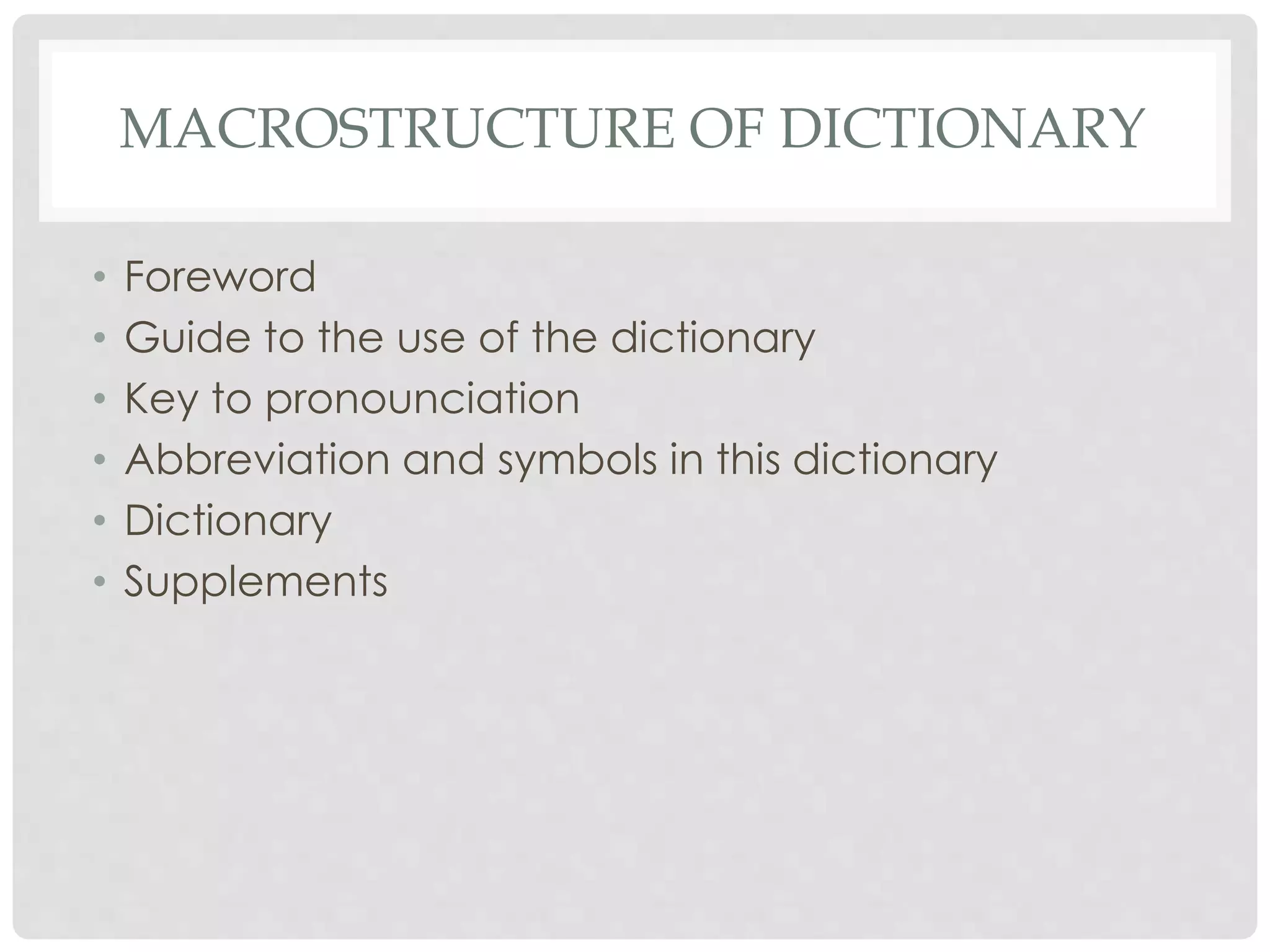
• Foreword 
• Guide to the use of the dictionary 
• Key to pronounciation 
• Abbreviation and symbols in this dictionary 
• Dictionary 
• Supplements
MICROSTRUCTURE OF DICTIONARY 
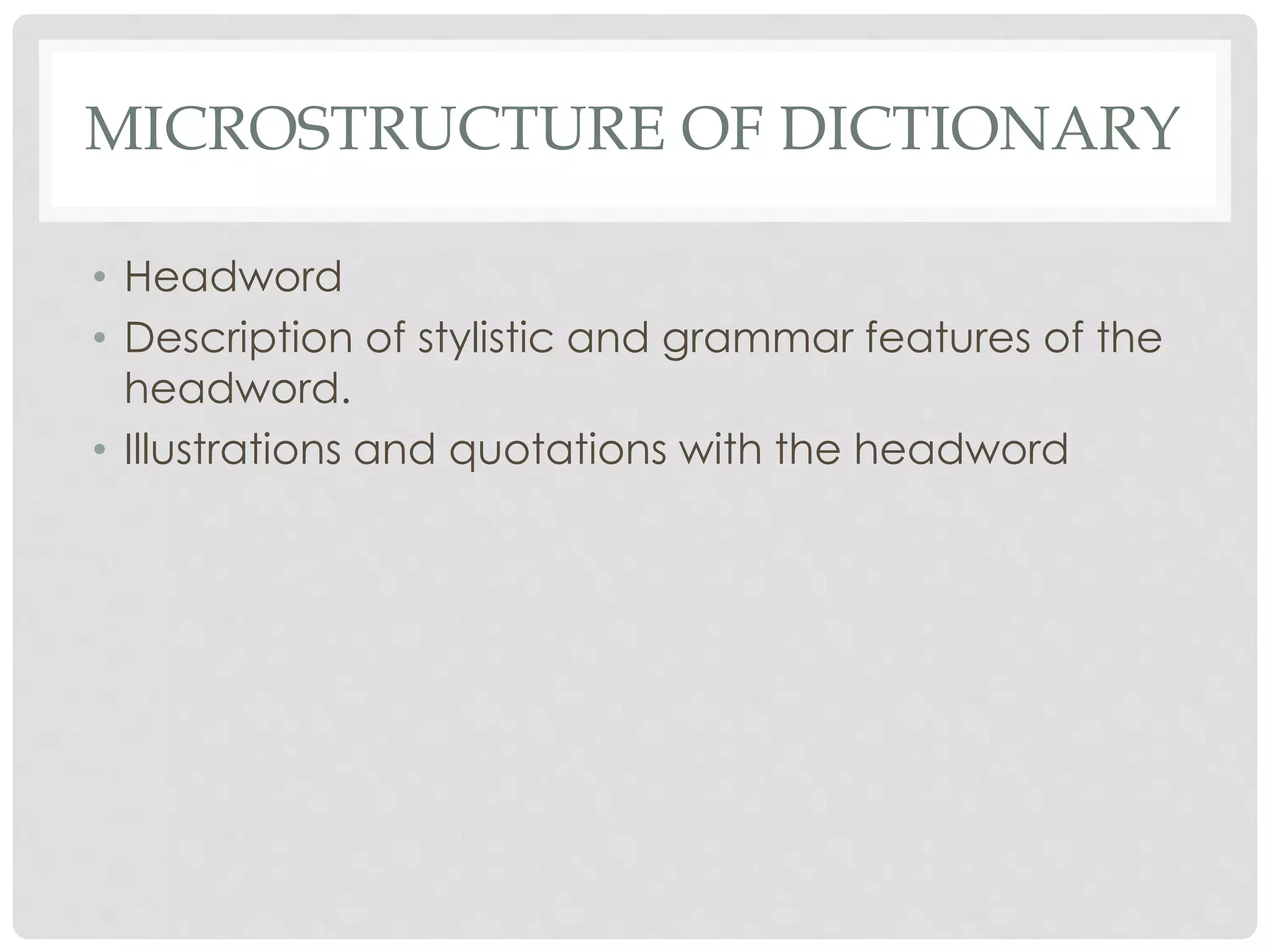
• Headword 
• Description of stylistic and grammar features of the 
headword. 
• Illustrations and quotations with the headword
THE PECULIARITIES OF EDUCATIONAL 
DICTIONARIES 
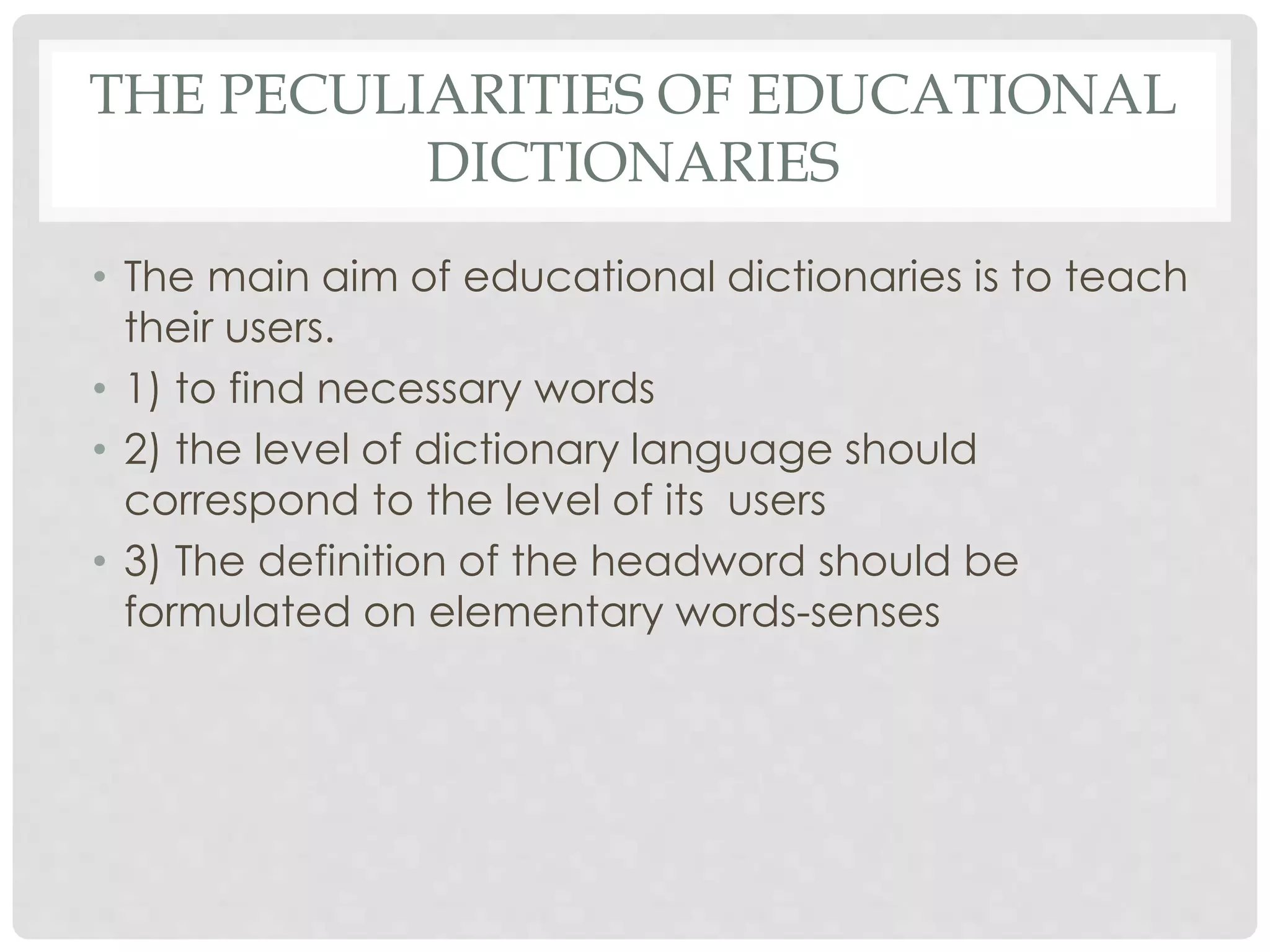
• The main aim of educational dictionaries is to teach 
their users. 
• 1) to find necessary words 
• 2) the level of dictionary language should 
correspond to the level of its users 
• 3) The definition of the headword should be 
formulated on elementary words-senses
TYPES OF DICTIONARIES 
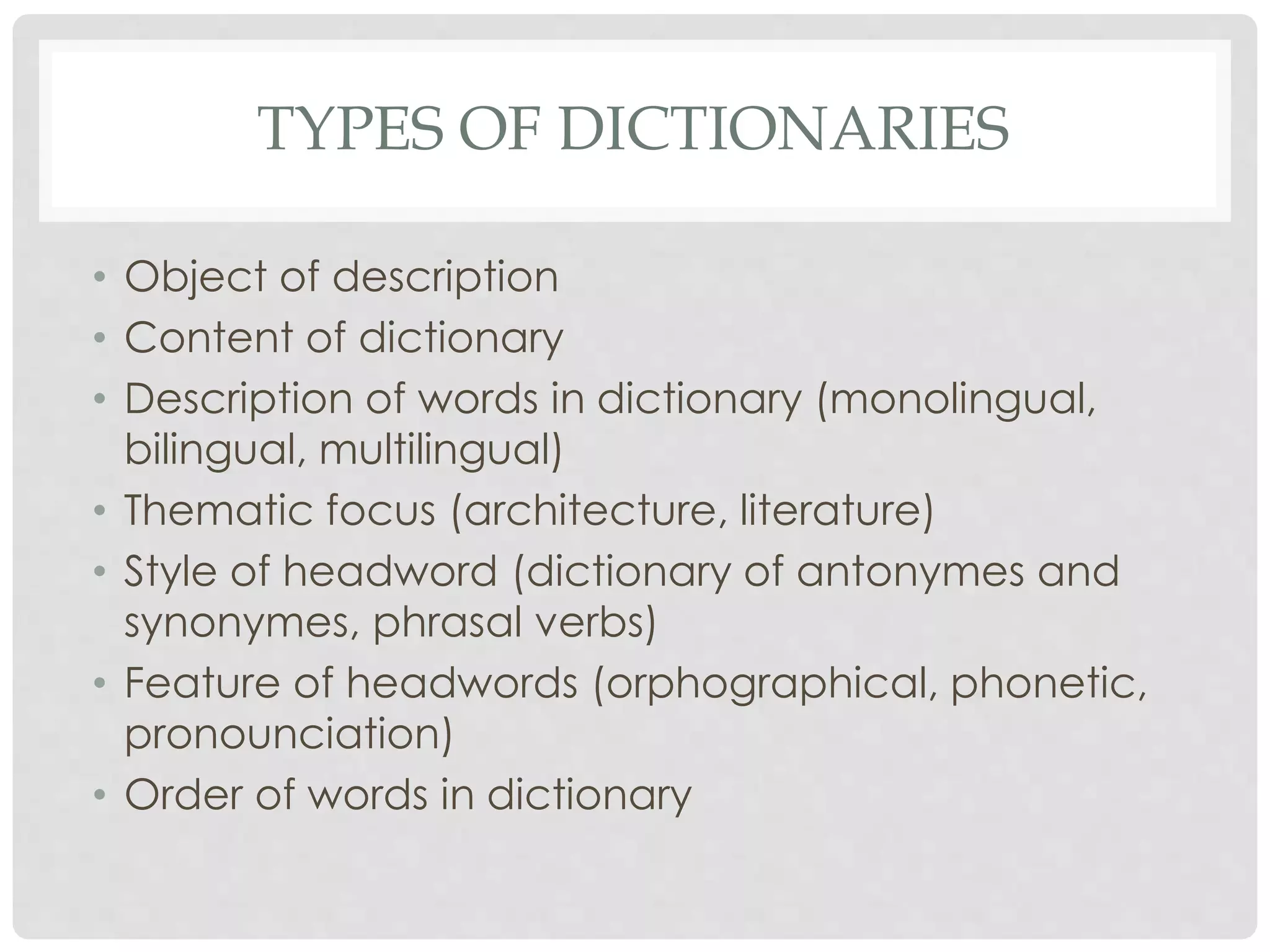
• Object of description 
• Content of dictionary 
• Description of words in dictionary (monolingual, 
bilingual, multilingual) 
• Thematic focus (architecture, literature) 
• Style of headword (dictionary of antonymes and 
synonymes, phrasal verbs) 
• Feature of headwords (orphographical, phonetic, 
pronounciation) 
• Order of words in dictionary
WORDLIST AS A TYPE OF A 
DICTIONARY 
• Topic dictionaries (vocabulairies) a set of words 
which are united by a particular topic
TASKS FOR WORKING WITH 
DICTIONARIES. 
• 1) Find the word with the first letter B 
• 2)Connect word with pictures 
• 3) Put the words in alphabetical order 
• 4) Find the right translation of the word 
• 5) Find in the dictionary the definition of phrasal 
verb or collocation 
• 6) Tasks for bilingual dictionaries 
• 7) Find lexical units in dictionary (their graphic forms 
and their transcriptions) 
• 8)Find the right translation of necessary word 
according to the context

The usage of dictionaries

  • 1.
    THE USAGE OF DICTIONARIES A N D R E Y K U Z N E T S O V 1 - T E A C H E R S ’ G R O U P 5 T H C O U R S E
  • 2.
    CONTENT • Lexics • Dictionary as an object of lexicography. • Macrostructure of dictionary • Microstructure of dictionary • The peculiarities of educational dictionaries • Types of dictionaries • Wordlist as a type of a dictionary. • Workbooks as a dictionary • Tasks for working with dictionaries.
  • 3.
    LEXICS • Lexics(fromgreek. Lexicos- lexicographic) –is a set of all the words of a particular language. (vocabulary). A part of Linguistic science, exploring language vocabulary, calls lexicology.
  • 4.
    DICTIONARY AS ANOBJECT OF LEXICOGRAPHY • Dictionary is a collection of words usually in alphabetical order (Ozhegov’s dictionary). • Dictionary - A book or electronic resource that lists the words of a language (typically in alphabetical order) and gives their meaning, or gives the equivalent words in a different language, often also providing information about pronunciation, origin, and usage (Oxford Dictionary online)
  • 5.
    MACROSTRUCTURE OF DICTIONARY • Foreword • Guide to the use of the dictionary • Key to pronounciation • Abbreviation and symbols in this dictionary • Dictionary • Supplements
  • 6.
    MICROSTRUCTURE OF DICTIONARY • Headword • Description of stylistic and grammar features of the headword. • Illustrations and quotations with the headword
  • 7.
    THE PECULIARITIES OFEDUCATIONAL DICTIONARIES • The main aim of educational dictionaries is to teach their users. • 1) to find necessary words • 2) the level of dictionary language should correspond to the level of its users • 3) The definition of the headword should be formulated on elementary words-senses
  • 8.
    TYPES OF DICTIONARIES • Object of description • Content of dictionary • Description of words in dictionary (monolingual, bilingual, multilingual) • Thematic focus (architecture, literature) • Style of headword (dictionary of antonymes and synonymes, phrasal verbs) • Feature of headwords (orphographical, phonetic, pronounciation) • Order of words in dictionary
  • 9.
    WORDLIST AS ATYPE OF A DICTIONARY • Topic dictionaries (vocabulairies) a set of words which are united by a particular topic
  • 10.
    TASKS FOR WORKINGWITH DICTIONARIES. • 1) Find the word with the first letter B • 2)Connect word with pictures • 3) Put the words in alphabetical order • 4) Find the right translation of the word • 5) Find in the dictionary the definition of phrasal verb or collocation • 6) Tasks for bilingual dictionaries • 7) Find lexical units in dictionary (their graphic forms and their transcriptions) • 8)Find the right translation of necessary word according to the context