Dictionary
DICTIONARY
What is a “dictionary”?

 A book containing a selection of words of a language or a
  some special subjects arranged alphabetically with
  explanation about them.

 a collection of words in one or more specific languages,
  often listed alphabetically, with usage
  information, definitions, etymologies, phonetics,
  pronunciations, and other information.
a dictionary may be regarded as a lexicographical product that
is characterized by three significant features:

 (1) it contains data that have been selected for the purpose of
    fulfilling those functions; and

 (2) its lexicographic structures link and establish relationships
    between the data so that they can meet the needs of users
    and fulfill the functions of the dictionary.

 (3) it has been prepared for one or more functions;
USES
 Define   or translate words

 verify spelling syllabication or pronunciation

 check on usage (prescriptive and descriptive)

 to determine the etymological history of a word

 to an extent, standardize the language
TYPES: (General)
    1. Unabridged Dictionaries

 contains 265 000 of words and more.

 Unabridged dictionaries are the most scholarly and
  comprehensive of all dictionaries, sometimes consisting of
  many volumes.

 They emphasize the history of words and the variety of their
  uses.
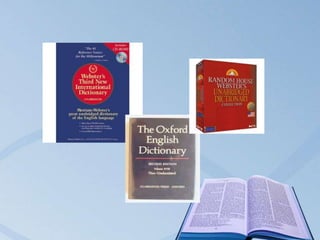
Examples of Unabridged Dictionary

• Webster’s 3rd new international dictionary. 1961

• The random house dictionary.

• The Oxford English Dictionary, (20 volumes)

• The Random House Dictionary of the English Language

• Webster's Third New International Dictionary of the English
  Language
2. Abridged Dictionaries


 often called desk dictionaries, list 150,000 to
  250,000 words and concentrate largely on fairly
  common words and meanings. A good desk
  dictionary will serve most reference needs for
  writing or reading.
Lis119 b
Lis119 b
Lis119 b
Lis119 b
Lis119 b
Lis119 b
Lis119 b
Lis119 b
Lis119 b
Lis119 b
Lis119 b
Lis119 b
Lis119 b
Lis119 b
Lis119 b
Lis119 b
Lis119 b
Lis119 b
Lis119 b
Lis119 b
Lis119 b

Lis119 b

  • 1.
  • 2.
    What is a“dictionary”?  A book containing a selection of words of a language or a some special subjects arranged alphabetically with explanation about them.  a collection of words in one or more specific languages, often listed alphabetically, with usage information, definitions, etymologies, phonetics, pronunciations, and other information.
  • 3.
    a dictionary maybe regarded as a lexicographical product that is characterized by three significant features: (1) it contains data that have been selected for the purpose of fulfilling those functions; and (2) its lexicographic structures link and establish relationships between the data so that they can meet the needs of users and fulfill the functions of the dictionary. (3) it has been prepared for one or more functions;
  • 4.
    USES  Define or translate words  verify spelling syllabication or pronunciation  check on usage (prescriptive and descriptive)  to determine the etymological history of a word  to an extent, standardize the language
  • 5.
    TYPES: (General) 1. Unabridged Dictionaries  contains 265 000 of words and more.  Unabridged dictionaries are the most scholarly and comprehensive of all dictionaries, sometimes consisting of many volumes.  They emphasize the history of words and the variety of their uses.
  • 6.
    Examples of UnabridgedDictionary • Webster’s 3rd new international dictionary. 1961 • The random house dictionary. • The Oxford English Dictionary, (20 volumes) • The Random House Dictionary of the English Language • Webster's Third New International Dictionary of the English Language
  • 8.
    2. Abridged Dictionaries often called desk dictionaries, list 150,000 to 250,000 words and concentrate largely on fairly common words and meanings. A good desk dictionary will serve most reference needs for writing or reading.