THE TONGUE ANATOMY
INTRODUCTION
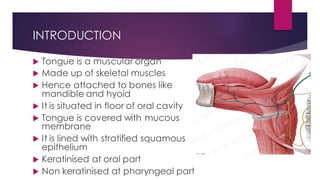
 Tongue is a muscular organ
 Made up of skeletal muscles
 Hence attached to bones like
mandible and hyoid
 It is situated in floor of oral cavity
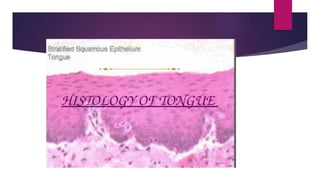
 Tongue is covered with mucous
membrane
 It is lined with stratified squamous
epithelium
 Keratinised at oral part
 Non keratinised at pharyngeal part
Structures related to the Tongue
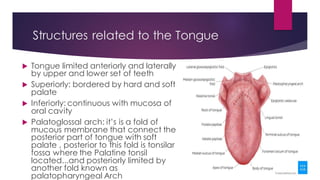
 Tongue limited anteriorly and laterally
by upper and lower set of teeth
 Superiorly: bordered by hard and soft
palate
 Inferiorly: continuous with mucosa of
oral cavity
 Palatoglossal arch: it’s is a fold of
mucous membrane that connect the
posterior part of tongue with soft
palate , posterior to this fold is tonsilar
fossa where the Palatine tonsil
located...and posteriorly limited by
another fold known as
palatopharyngeal Arch
PARTS OF TONGUE
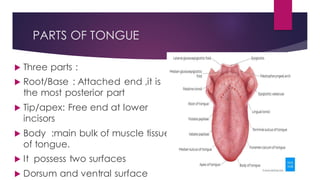
 Three parts :
 Root/Base : Attached end ,it is
the most posterior part
 Tip/apex: Free end at lower
incisors
 Body :main bulk of muscle tissue
of tongue.
 It possess two surfaces
 Dorsum and ventral surface
Dorsum
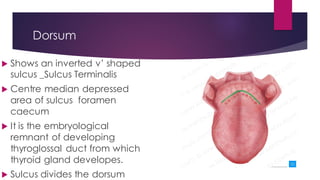
 Shows an inverted v’ shaped
sulcus _Sulcus Terminalis
 Centre median depressed
area of sulcus foramen
caecum
 It is the embryological
remnant of developing
thyroglossal duct from which
thyroid gland developes.
 Sulcus divides the dorsum
Dorsum
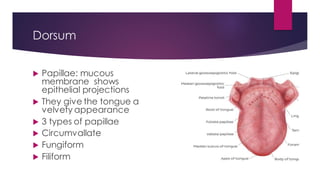
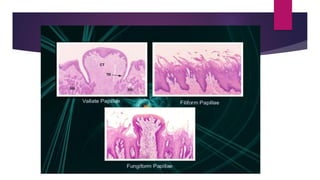
 Papillae: mucous
membrane shows
epithelial projections
 They give the tongue a
velvety appearance
 3 types of papillae
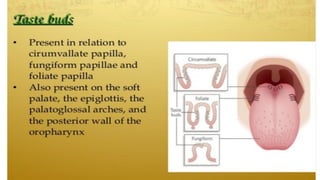
 Circumvallate
 Fungiform
 Filiform
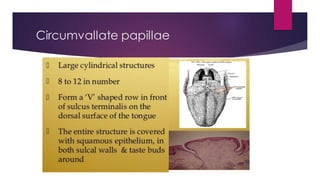
Circumvallate papillae
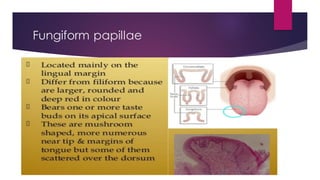
Fungiform papillae
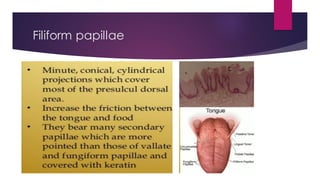
Filiform papillae
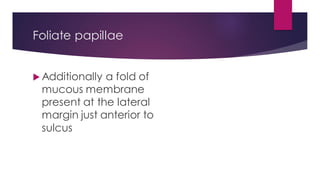
Foliate papillae
 Additionally a fold of
mucous membrane
present at the lateral
margin just anterior to
sulcus
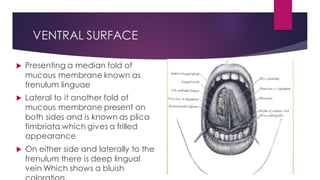
VENTRAL SURFACE
 Presenting a median fold of
mucous membrane known as
frenulum linguae
 Lateral to it another fold of
mucous membrane present on
both sides and is known as plica
fimbriata which gives a frilled
appearance
 On either side and laterally to the
frenulum there is deep lingual
vein Which shows a bluish
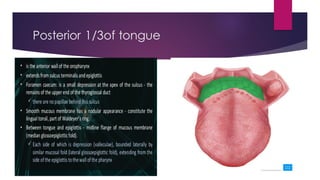
Posterior 1/3of tongue
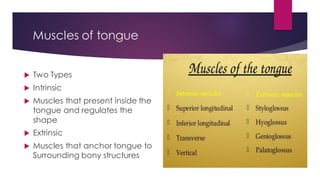
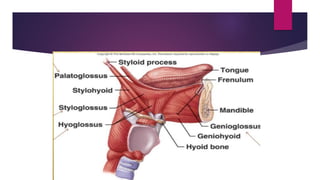
Muscles of tongue
 Two Types
 Intrinsic
 Muscles that present inside the
tongue and regulates the
shape
 Extrinsic
 Muscles that anchor tongue to
Surrounding bony structures
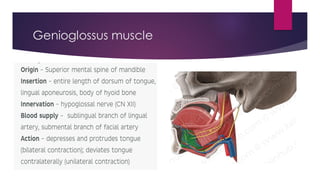
Genioglossus muscle
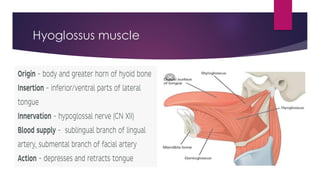
Hyoglossus muscle
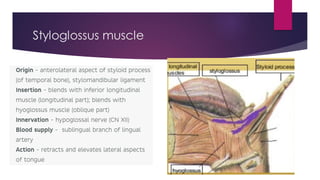
Styloglossus muscle
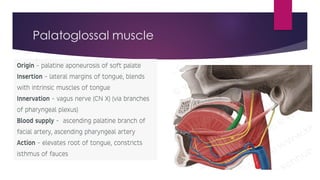
Palatoglossal muscle
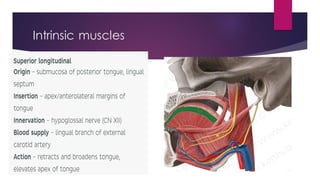
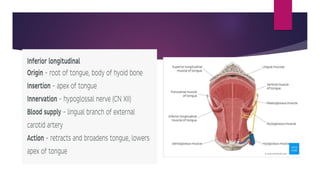
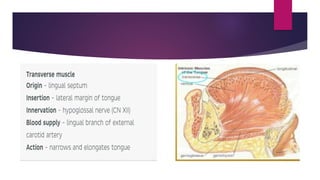
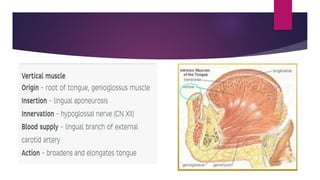
Intrinsic muscles
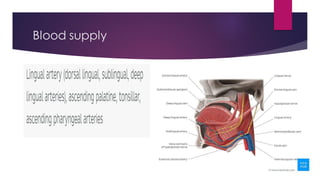
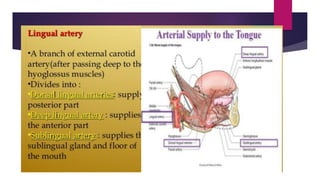
Blood supply
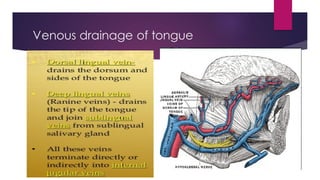
Venous drainage of tongue
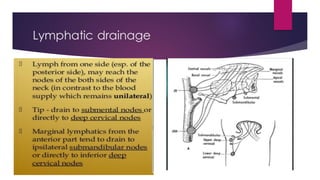
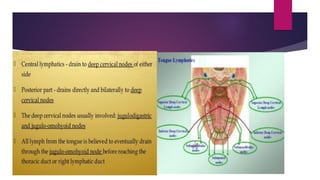
Lymphatic drainage
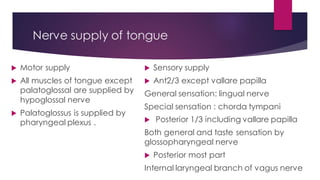
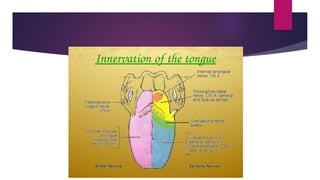
Nerve supply of tongue
 Sensory supply
 Ant2/3 except vallare papilla
General sensation: lingual nerve
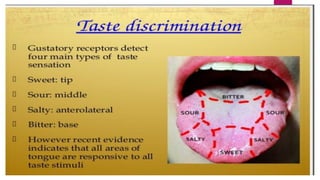
Special sensation : chorda tympani
 Posterior 1/3 including vallare papilla
Both general and taste sensation by
glossopharyngeal nerve
 Posterior most part
Internal laryngeal branch of vagus nerve
 Motor supply
 All muscles of tongue except
palatoglossal are supplied by
hypoglossal nerve
 Palatoglossus is supplied by
pharyngeal plexus .
The tongue
The tongue
The tongue
The tongue
The tongue
The tongue
The tongue
The tongue
The tongue
The tongue
The tongue

The tongue

  • 1.
  • 2.
    INTRODUCTION  Tongue isa muscular organ  Made up of skeletal muscles  Hence attached to bones like mandible and hyoid  It is situated in floor of oral cavity  Tongue is covered with mucous membrane  It is lined with stratified squamous epithelium  Keratinised at oral part  Non keratinised at pharyngeal part
  • 3.
    Structures related tothe Tongue  Tongue limited anteriorly and laterally by upper and lower set of teeth  Superiorly: bordered by hard and soft palate  Inferiorly: continuous with mucosa of oral cavity  Palatoglossal arch: it’s is a fold of mucous membrane that connect the posterior part of tongue with soft palate , posterior to this fold is tonsilar fossa where the Palatine tonsil located...and posteriorly limited by another fold known as palatopharyngeal Arch
  • 4.
    PARTS OF TONGUE Three parts :  Root/Base : Attached end ,it is the most posterior part  Tip/apex: Free end at lower incisors  Body :main bulk of muscle tissue of tongue.  It possess two surfaces  Dorsum and ventral surface
  • 5.
    Dorsum  Shows aninverted v’ shaped sulcus _Sulcus Terminalis  Centre median depressed area of sulcus foramen caecum  It is the embryological remnant of developing thyroglossal duct from which thyroid gland developes.  Sulcus divides the dorsum
  • 6.
    Dorsum  Papillae: mucous membraneshows epithelial projections  They give the tongue a velvety appearance  3 types of papillae  Circumvallate  Fungiform  Filiform
  • 7.
  • 8.
  • 9.
  • 10.
    Foliate papillae  Additionallya fold of mucous membrane present at the lateral margin just anterior to sulcus
  • 11.
    VENTRAL SURFACE  Presentinga median fold of mucous membrane known as frenulum linguae  Lateral to it another fold of mucous membrane present on both sides and is known as plica fimbriata which gives a frilled appearance  On either side and laterally to the frenulum there is deep lingual vein Which shows a bluish
  • 12.
  • 15.
    Muscles of tongue Two Types  Intrinsic  Muscles that present inside the tongue and regulates the shape  Extrinsic  Muscles that anchor tongue to Surrounding bony structures
  • 17.
  • 18.
  • 19.
  • 20.
  • 21.
  • 25.
  • 27.
  • 28.
  • 30.
    Nerve supply oftongue  Sensory supply  Ant2/3 except vallare papilla General sensation: lingual nerve Special sensation : chorda tympani  Posterior 1/3 including vallare papilla Both general and taste sensation by glossopharyngeal nerve  Posterior most part Internal laryngeal branch of vagus nerve  Motor supply  All muscles of tongue except palatoglossal are supplied by hypoglossal nerve  Palatoglossus is supplied by pharyngeal plexus .