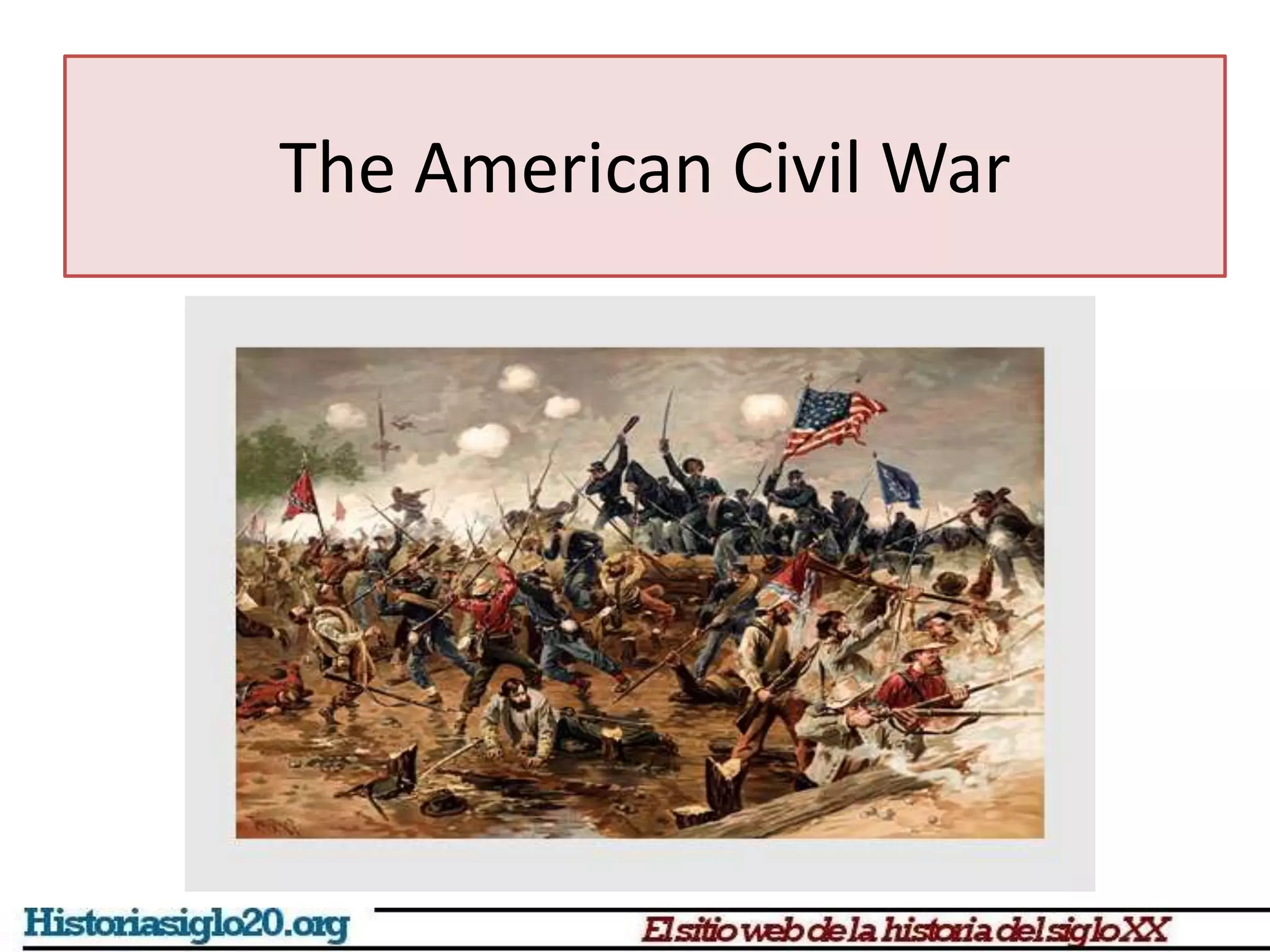
The American Civil War
Introduction

           United States of
        America were born in
            1783, after an
         Independence War
        against Britain which
           started in 1776
           (Declaration of
           Independence)
Introduction

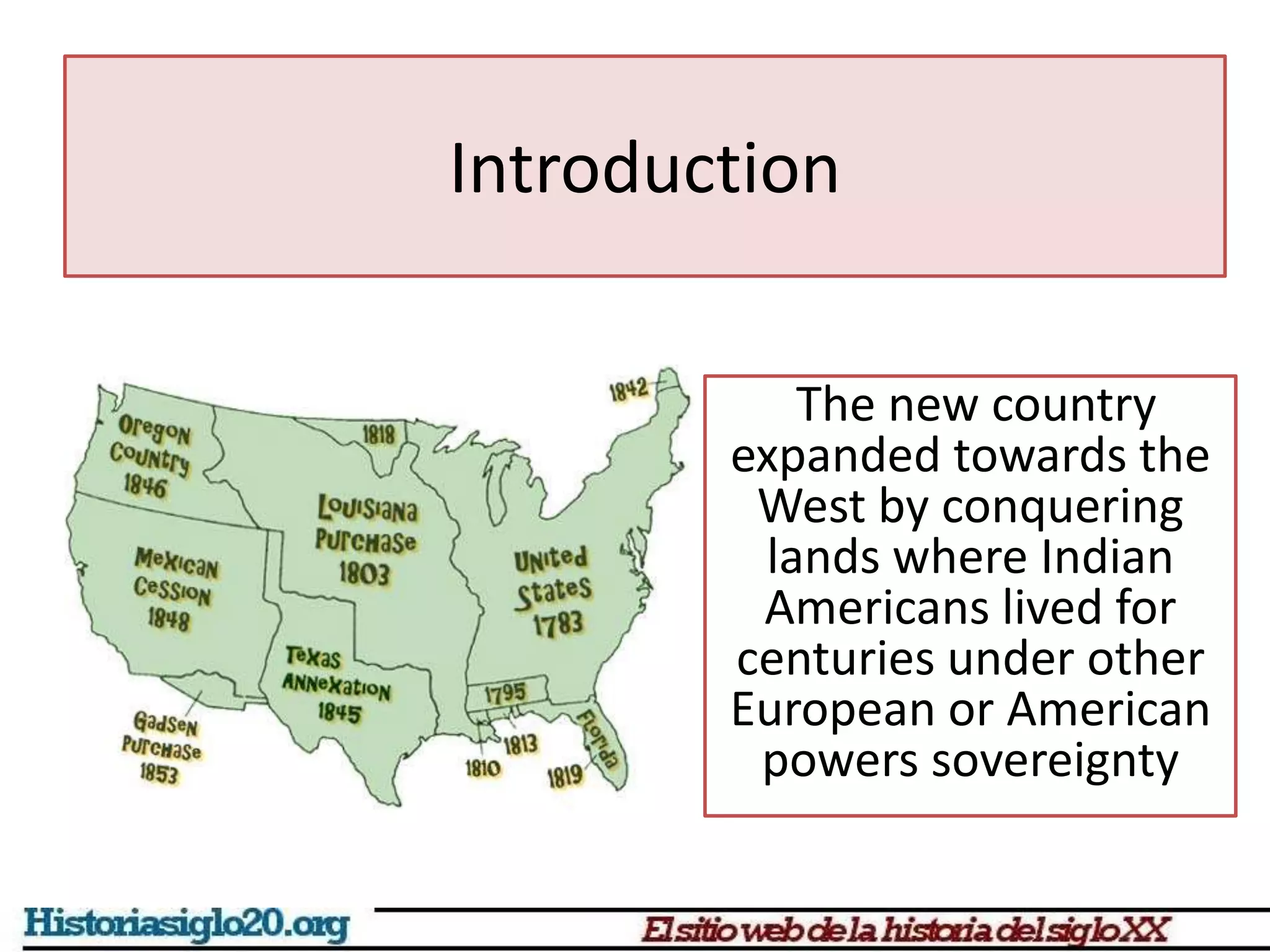
           The new country
        expanded towards the
         West by conquering
         lands where Indian
         Americans lived for
        centuries under other
        European or American
         powers sovereignty
Introduction


                Even from the
               Independence,
                 there were
                    strong
                 differences
               between North
                 and South
Introduction

           The North, more
            populated and
            industrialised,
           opposed slavery
            and wanted to
            «preserve the
               Union»
Introduction

            The South, with
            abundant slave
           black population
             that worked in
           the cotton fields,
               wanted to
            maintain slavery
           and secede from
           the United States
The war

             Bloody and
             violent war
                which
           devastated the
           US. More than
          600.000 people
            died either in
          battle or disease
The beginnings

   Urban
                                   In the Northern
                      Rural
Industry and
Trade based
                   Agriculture     states a growing
                    based on
   on free
 workforce
                   slave work         anti-slavery
                                        opinion
In favour of a
                   In favour of     demanded the
                  more political
more unified
    Union
                  power for the       abolition of
                      States
                                   slavery in the US
The Compromise of 1850
                •   California, free
                    state
                •   Territories of New
                    Mexico and Utah
                •   Border issues
                    between Texas
                    and Mexico
                    settled
                •   Slavery banned in
                    Washington D.C.
                •   The Fugitive Slave
                    Law
The Compromise of 1850
                • Slaves who
                  escaped to the
                  North must be
                  sent back to
                  their masters
                • This law changed
                  the atmosphere
                  regarding slavery
                  in the North,
                  encouragin the
                  abolitionist
                  movement
The Compromise of 1850
Regional Division, Political Unrest
   and the Elections of 1860
                       • Growing
                         political unrest
                         on the slavery
                         issue
                       • Violent
                         incidents
                       • Election
                         campaign of
                         1860
Regional Division, Political Unrest
   and the Elections of 1860
                       •   Republican Party
                           (Abraham
                           Lincoln): abolition
                           and stronger
                           central
                           government
                       •   Democratic Party:
                           States should
                           decide on slavery
                           issue (maintaining
                           slavery in the
                           South)
Regional Division, Political Unrest
   and the Elections of 1860
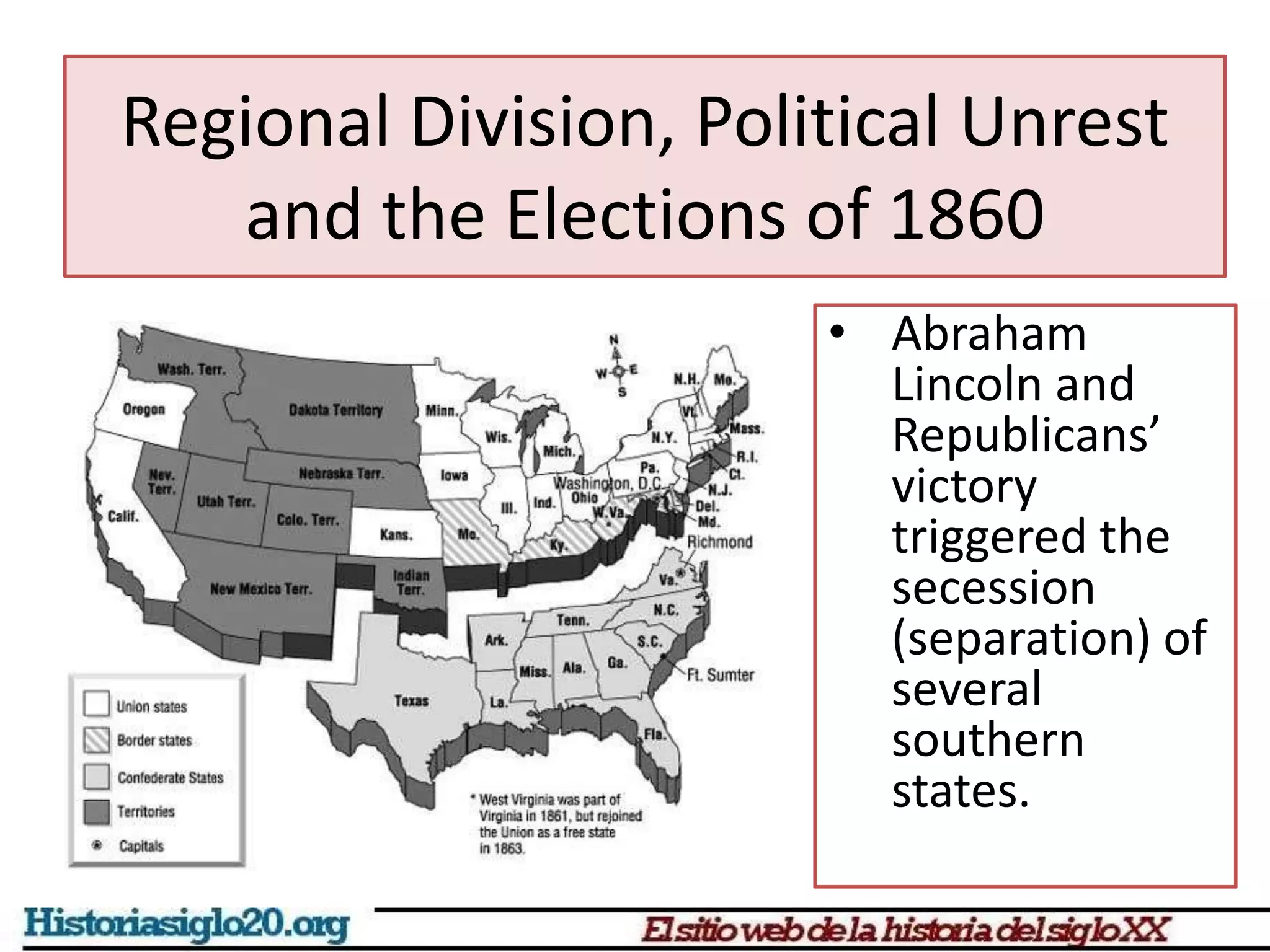
                       • Abraham
                         Lincoln and
                         Republicans’
                         victory
                         triggered the
                         secession
                         (separation) of
                         several
                         southern
                         states.
Regional Division, Political Unrest
   and the Elections of 1860
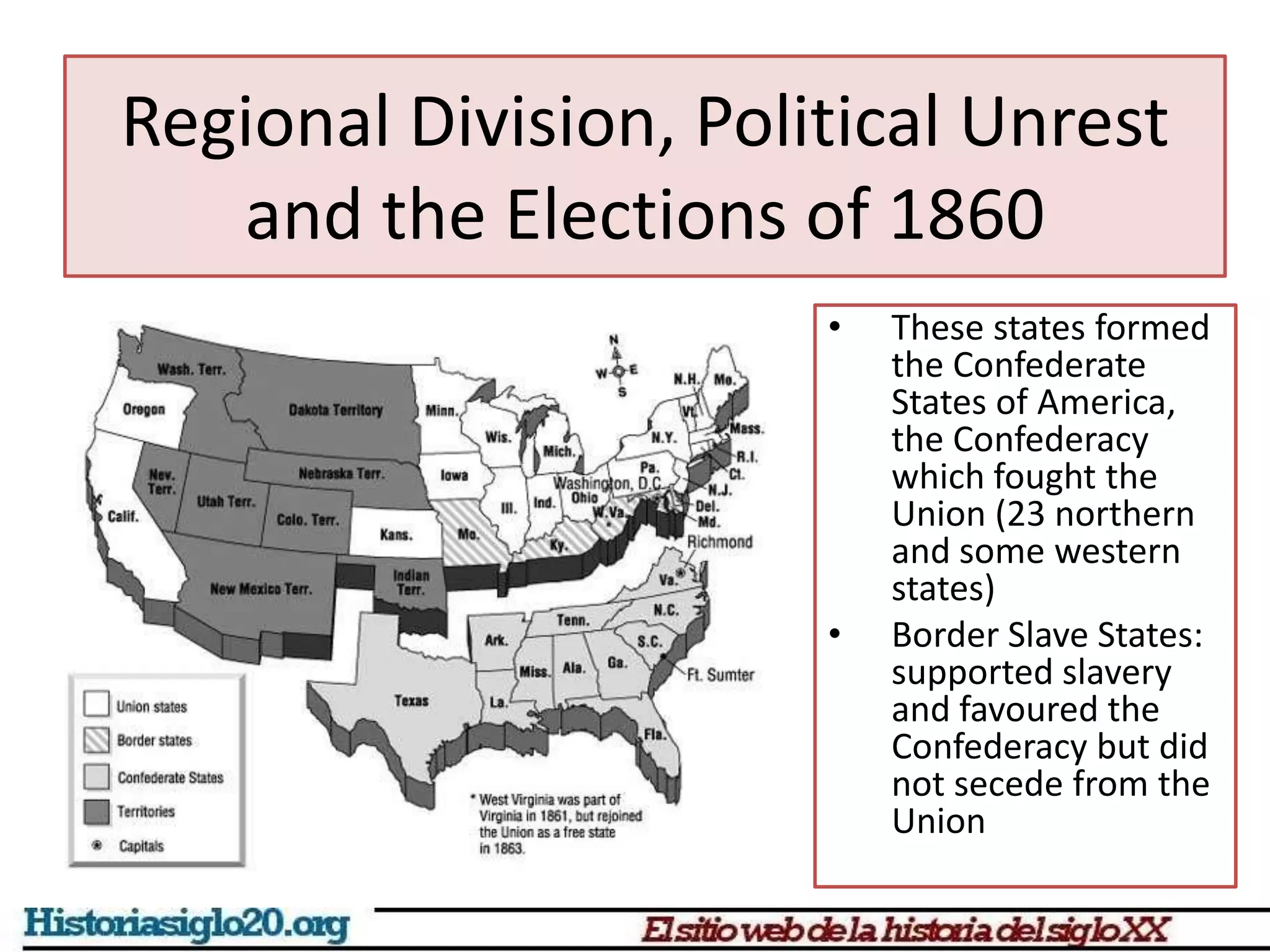
                       •   These states formed
                           the Confederate
                           States of America,
                           the Confederacy
                           which fought the
                           Union (23 northern
                           and some western
                           states)
                       •   Border Slave States:
                           supported slavery
                           and favoured the
                           Confederacy but did
                           not secede from the
                           Union
The War (1861-1865)
              •   Battle of Fort Sumter
                  1861 – the beginning
              •   Extremely cruel war
                  (600.000 people were
                  killed, not including
                  Native Americans)
              •   179.000 African
                  Americans fought in
                  both sides. 40.000 of
                  them died.
              •   «War of attrition»:
                  relentless, bloody war
                  until the complete
                  exhaution of materials
                  and soldiers of one
                  side
The War (1861-1865)
              The main figures of
              the war:
              • Ulysses S. Grant,
                 the most
                 prominent Union
                 general
              • Robert E. Lee,
                 one of the
                 principle
                 Confederate
                 generals
The War (1861-1865)
                The battles:
                • Antietam, 1862.
                    The Northern
                    army kept the
                    Confederate army
                    from further
                    advancing to the
                    North
                • Gettysburg, 1863.
                    The Union started
                    winning the war.
                    The higher
                    number of
                    casualties.
The War (1861-1865)
              The Gettysburg
              address:
              • The most famous
                 of Abraham
                 Lincoln’s speeches
              • The Union Army
                 was fighting for a
                 new country in
                 «which equality
                 and central
                 government
                 would reign»
The end of the American Civil War and
 the assassination of Abraham Lincoln
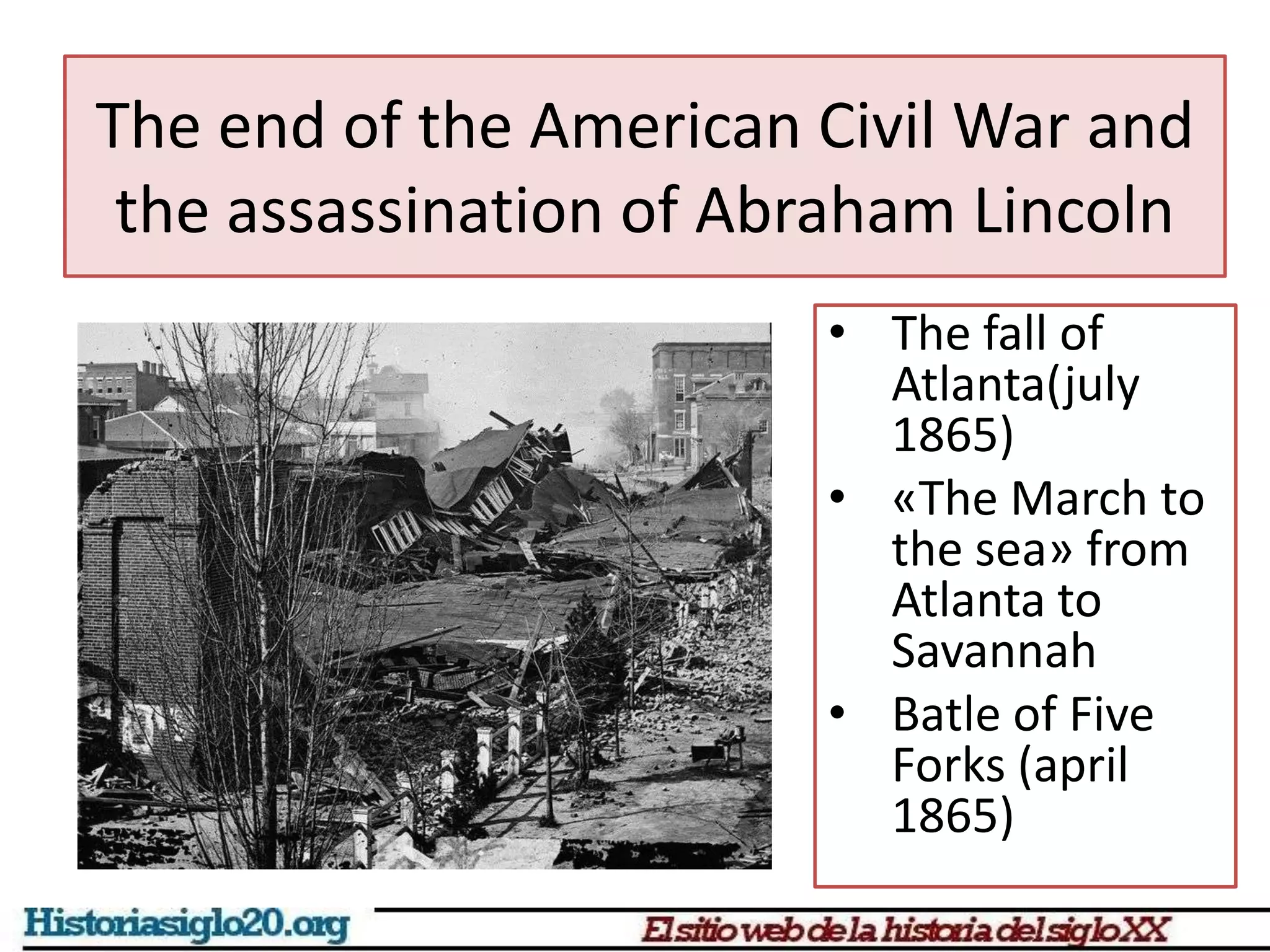
                        • The fall of
                          Atlanta(july
                          1865)
                        • «The March to
                          the sea» from
                          Atlanta to
                          Savannah
                        • Batle of Five
                          Forks (april
                          1865)
The end of the American Civil War and
 the assassination of Abraham Lincoln
                        • The Union
                          was
                          maintained
                        • 13th
                          Amendment
                          to the US
                          Constitution:
                          Abolition of
                          slavery
The end of the American Civil War and
 the assassination of Abraham Lincoln
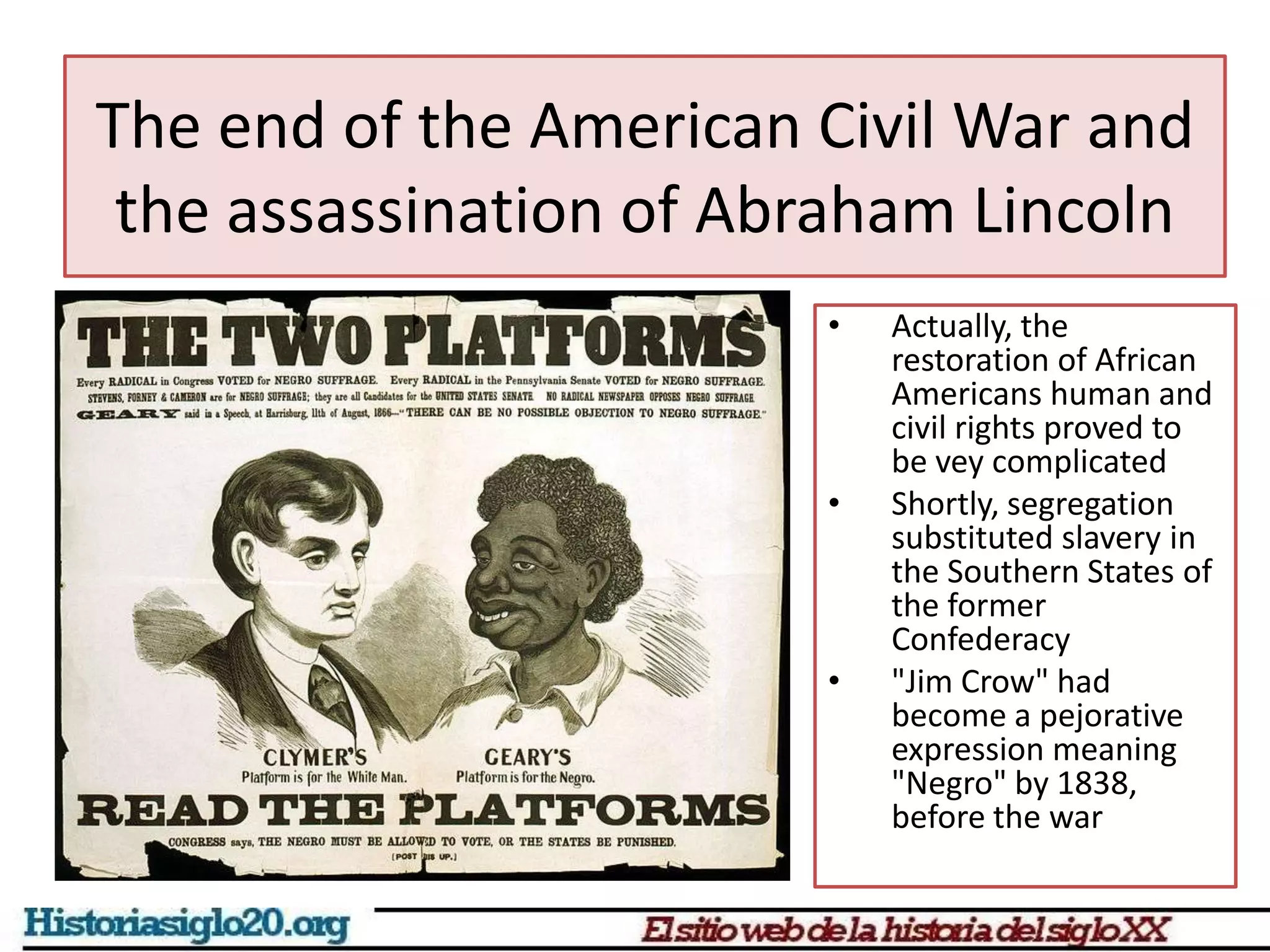
                        •   Actually, the
                            restoration of African
                            Americans human and
                            civil rights proved to
                            be vey complicated
                        •   Shortly, segregation
                            substituted slavery in
                            the Southern States of
                            the former
                            Confederacy
                        •   "Jim Crow" had
                            become a pejorative
                            expression meaning
                            "Negro" by 1838,
                            before the war
The end of the American Civil War and
 the assassination of Abraham Lincoln
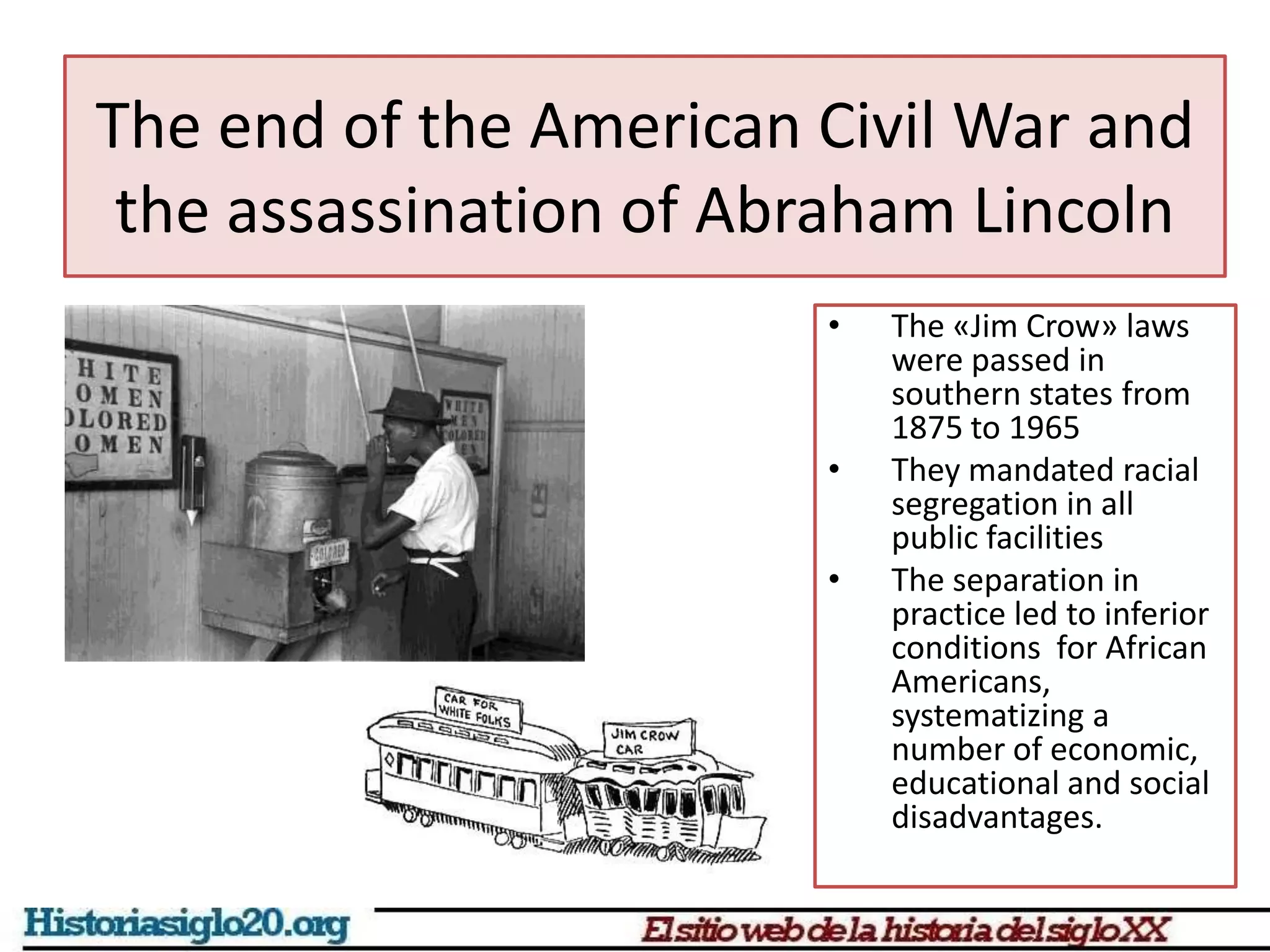
                        •   The «Jim Crow» laws
                            were passed in
                            southern states from
                            1875 to 1965
                        •   They mandated racial
                            segregation in all
                            public facilities
                        •   The separation in
                            practice led to inferior
                            conditions for African
                            Americans,
                            systematizing a
                            number of economic,
                            educational and social
                            disadvantages.
The end of the American Civil War and
 the assassination of Abraham Lincoln
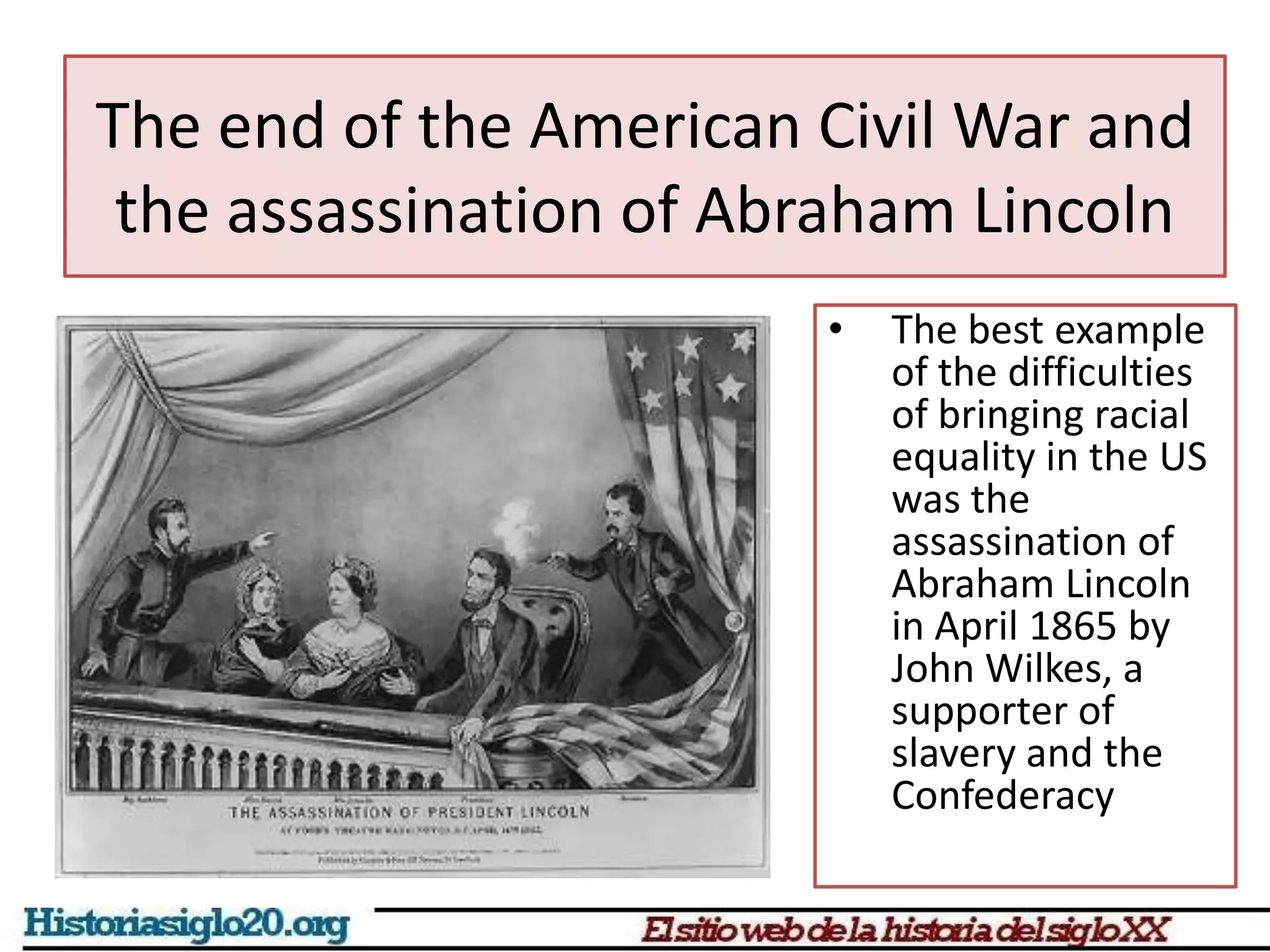
                        •   The best example
                            of the difficulties
                            of bringing racial
                            equality in the US
                            was the
                            assassination of
                            Abraham Lincoln
                            in April 1865 by
                            John Wilkes, a
                            supporter of
                            slavery and the
                            Confederacy

Amercian civil war

  • 1.
  • 2.
    Introduction United States of America were born in 1783, after an Independence War against Britain which started in 1776 (Declaration of Independence)
  • 3.
    Introduction The new country expanded towards the West by conquering lands where Indian Americans lived for centuries under other European or American powers sovereignty
  • 4.
    Introduction Even from the Independence, there were strong differences between North and South
  • 5.
    Introduction The North, more populated and industrialised, opposed slavery and wanted to «preserve the Union»
  • 6.
    Introduction The South, with abundant slave black population that worked in the cotton fields, wanted to maintain slavery and secede from the United States
  • 7.
    The war Bloody and violent war which devastated the US. More than 600.000 people died either in battle or disease
  • 8.
    The beginnings Urban In the Northern Rural Industry and Trade based Agriculture states a growing based on on free workforce slave work anti-slavery opinion In favour of a In favour of demanded the more political more unified Union power for the abolition of States slavery in the US
  • 9.
    The Compromise of1850 • California, free state • Territories of New Mexico and Utah • Border issues between Texas and Mexico settled • Slavery banned in Washington D.C. • The Fugitive Slave Law
  • 10.
    The Compromise of1850 • Slaves who escaped to the North must be sent back to their masters • This law changed the atmosphere regarding slavery in the North, encouragin the abolitionist movement
  • 11.
  • 12.
    Regional Division, PoliticalUnrest and the Elections of 1860 • Growing political unrest on the slavery issue • Violent incidents • Election campaign of 1860
  • 13.
    Regional Division, PoliticalUnrest and the Elections of 1860 • Republican Party (Abraham Lincoln): abolition and stronger central government • Democratic Party: States should decide on slavery issue (maintaining slavery in the South)
  • 14.
    Regional Division, PoliticalUnrest and the Elections of 1860 • Abraham Lincoln and Republicans’ victory triggered the secession (separation) of several southern states.
  • 15.
    Regional Division, PoliticalUnrest and the Elections of 1860 • These states formed the Confederate States of America, the Confederacy which fought the Union (23 northern and some western states) • Border Slave States: supported slavery and favoured the Confederacy but did not secede from the Union
  • 16.
    The War (1861-1865) • Battle of Fort Sumter 1861 – the beginning • Extremely cruel war (600.000 people were killed, not including Native Americans) • 179.000 African Americans fought in both sides. 40.000 of them died. • «War of attrition»: relentless, bloody war until the complete exhaution of materials and soldiers of one side
  • 17.
    The War (1861-1865) The main figures of the war: • Ulysses S. Grant, the most prominent Union general • Robert E. Lee, one of the principle Confederate generals
  • 18.
    The War (1861-1865) The battles: • Antietam, 1862. The Northern army kept the Confederate army from further advancing to the North • Gettysburg, 1863. The Union started winning the war. The higher number of casualties.
  • 19.
    The War (1861-1865) The Gettysburg address: • The most famous of Abraham Lincoln’s speeches • The Union Army was fighting for a new country in «which equality and central government would reign»
  • 20.
    The end ofthe American Civil War and the assassination of Abraham Lincoln • The fall of Atlanta(july 1865) • «The March to the sea» from Atlanta to Savannah • Batle of Five Forks (april 1865)
  • 21.
    The end ofthe American Civil War and the assassination of Abraham Lincoln • The Union was maintained • 13th Amendment to the US Constitution: Abolition of slavery
  • 22.
    The end ofthe American Civil War and the assassination of Abraham Lincoln • Actually, the restoration of African Americans human and civil rights proved to be vey complicated • Shortly, segregation substituted slavery in the Southern States of the former Confederacy • "Jim Crow" had become a pejorative expression meaning "Negro" by 1838, before the war
  • 23.
    The end ofthe American Civil War and the assassination of Abraham Lincoln • The «Jim Crow» laws were passed in southern states from 1875 to 1965 • They mandated racial segregation in all public facilities • The separation in practice led to inferior conditions for African Americans, systematizing a number of economic, educational and social disadvantages.
  • 24.
    The end ofthe American Civil War and the assassination of Abraham Lincoln • The best example of the difficulties of bringing racial equality in the US was the assassination of Abraham Lincoln in April 1865 by John Wilkes, a supporter of slavery and the Confederacy