Colonial
America,
1492-1763 AD
Europe, c. 1450-1600
What were these events and how did they
impact the European colonization of
America?
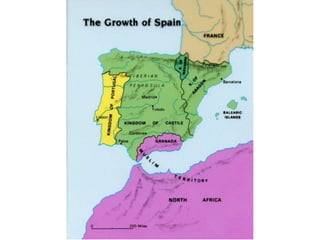
• Development of nation-states
• The Renaissance
• The Age of Exploration
• The Reformation
• The Scientific Revolution
Europe, c. 1450-1600
• New nation-states – modern warfare
demands new revenue  alliance with
merchants, national identity and purpose
• Renaissance – new knowledge and rising
standard of living
• Age of Exploration – new knowledge, new
products, profit from new trade routes and
European conquest of foreign lands
Europe, c. 1450-1600
• The Reformation – defiance of traditional
authority, self-reliance, religious fervor
• Scientific Revolution – questioning
traditional authority, curiosity, new
philosophical approaches to life
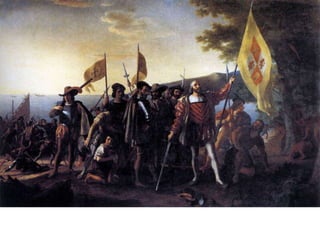
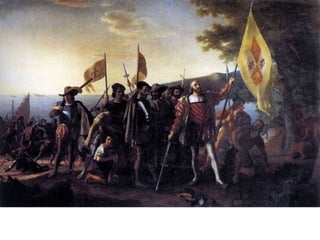
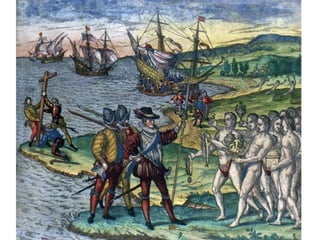
Q: Why did Columbus sail?
A: “Gold, glory, and God.”
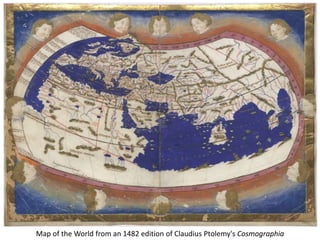
Map of the World from an 1482 edition of Claudius Ptolemy's Cosmographia
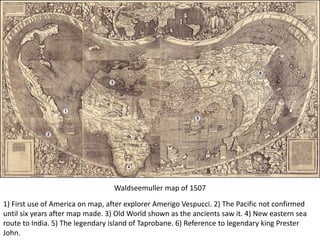
1) First use of America on map, after explorer Amerigo Vespucci. 2) The Pacific not confirmed
until six years after map made. 3) Old World shown as the ancients saw it. 4) New eastern sea
route to India. 5) The legendary island of Taprobane. 6) Reference to legendary king Prester
John.
Waldseemuller map of 1507
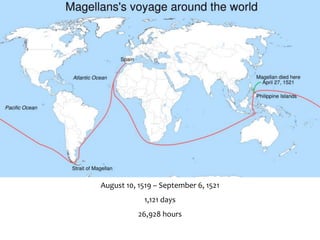
August 10, 1519 – September 6, 1521
1,121 days
26,928 hours
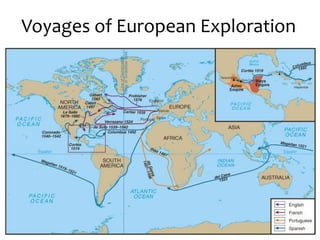
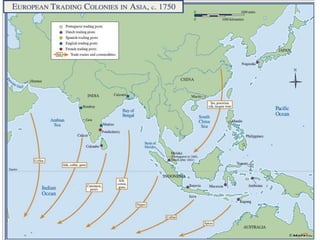
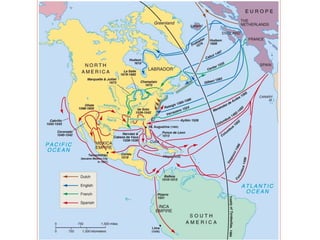
Voyages of European Exploration
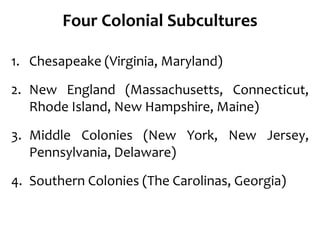
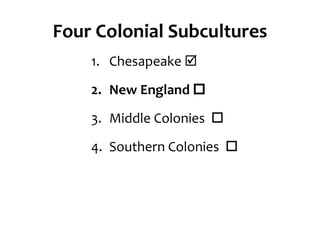
Four Colonial Subcultures
1. Chesapeake (Virginia, Maryland)
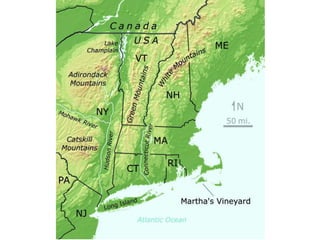
2. New England (Massachusetts, Connecticut,
Rhode Island, New Hampshire, Maine)
3. Middle Colonies (New York, New Jersey,
Pennsylvania, Delaware)
4. Southern Colonies (The Carolinas, Georgia)
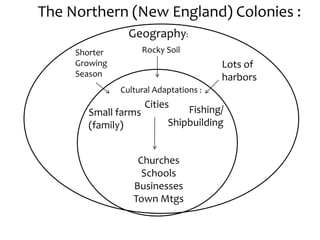
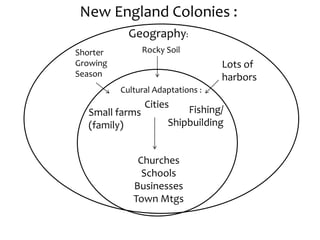
The Northern (New England) Colonies :
Geography:
Cultural Adaptations :
Rocky Soil
Lots of
harbors
Shorter
Growing
Season
Small farms
(family)
Cities
Fishing/
Shipbuilding
Churches
Schools
Businesses
Town Mtgs
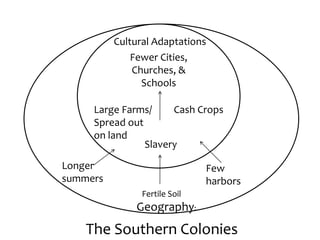
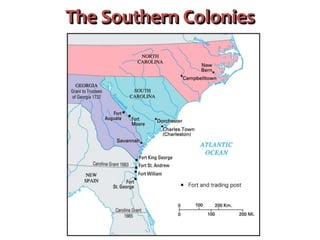
The Southern Colonies
Geography:
Cultural Adaptations
Fertile Soil
Few
harbors
Longer
summers
Large Farms/
Spread out
on land
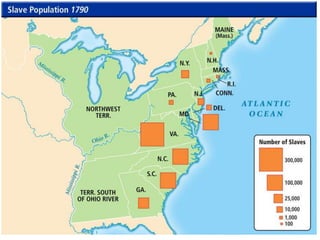
Slavery
Cash Crops
Fewer Cities,
Churches, &
Schools
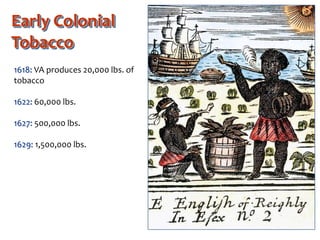
Early Colonial
Tobacco
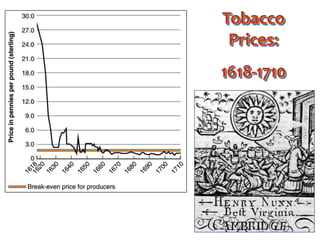
1618: VA produces 20,000 lbs. of
tobacco
1622: 60,000 lbs.
1627: 500,000 lbs.
1629: 1,500,000 lbs.
Tobacco
Prices:
1618-1710
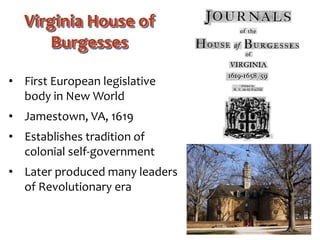
Virginia House of
Burgesses
• First European legislative
body in New World
• Jamestown, VA, 1619
• Establishes tradition of
colonial self-government
• Later produced many leaders
of Revolutionary era
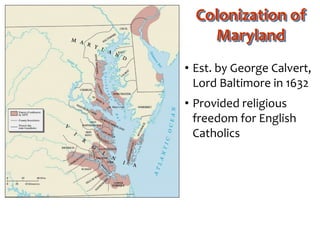
Colonization of
Maryland
• Est. by George Calvert,
Lord Baltimore in 1632
• Provided religious
freedom for English
Catholics
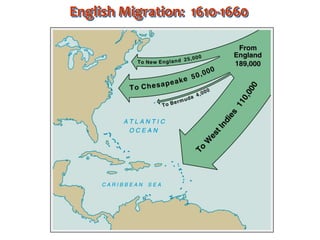
English Migration: 1610-1660
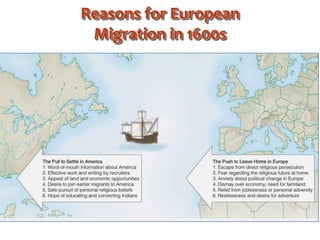
Reasons for European
Migration in 1600s
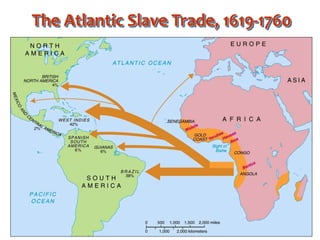
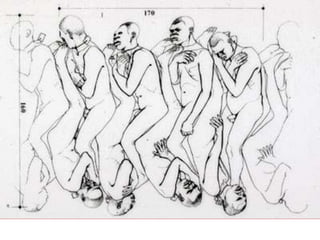
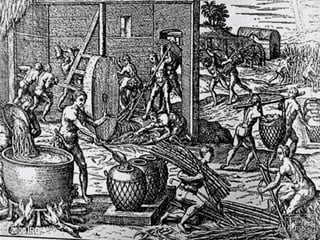
The Atlantic Slave Trade, 1619-1760
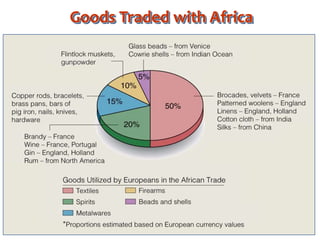
Goods Traded with Africa
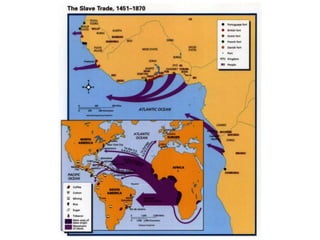
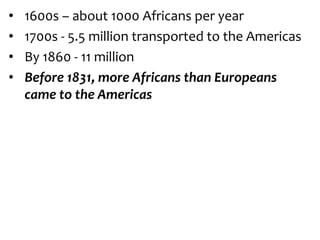
• 1600s – about 1000 Africans per year
• 1700s - 5.5 million transported to the Americas
• By 1860 - 11 million
• Before 1831, more Africans than Europeans
came to the Americas
Four Colonial Subcultures
1. Chesapeake 
2. New England 
3. Middle Colonies 
4. Southern Colonies 
New England Colonies :
Geography:
Cultural Adaptations :
Rocky Soil
Lots of
harbors
Shorter
Growing
Season
Small farms
(family)
Cities
Fishing/
Shipbuilding
Churches
Schools
Businesses
Town Mtgs
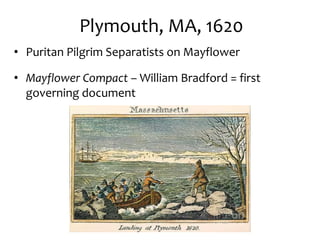
Plymouth, MA, 1620
• Puritan Pilgrim Separatists on Mayflower
• Mayflower Compact – William Bradford = first
governing document
Boston: “A City on a Hill”
• Puritan theocratic city-state = “beacon of
righteousness” to the world
• 1630-1640—16,000 immigrated, usually as families
• Church attendance required but membership not
automatic; all adult male church members could vote
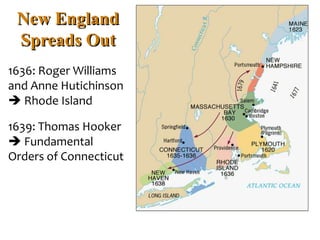
New England
Spreads Out
1636: Roger Williams
and Anne Hutichinson
 Rhode Island
1639: Thomas Hooker
 Fundamental
Orders of Connecticut
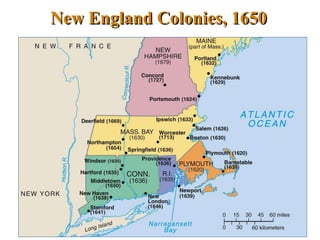
New England Colonies, 1650
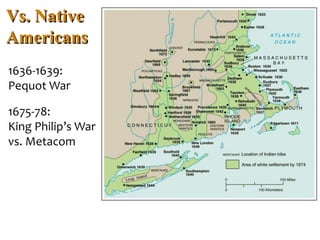
Vs. Native
Americans
1636-1639:
Pequot War
1675-78:
King Philip’s War
vs. Metacom
Characteristics of New England
Settlements
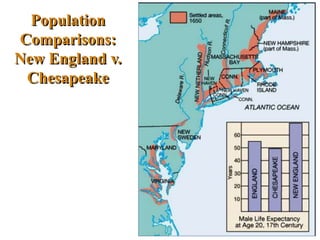
Low mortality  life expectancy about 70
Large, extended families; avg. 6 children per family.
Avg. age at marriage:
 Women – 22 years old
 Men – 27 years old.
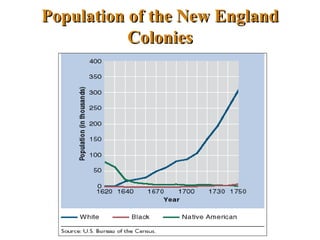
Population of the New England
Colonies
Population
Comparisons:
New England v.
Chesapeake
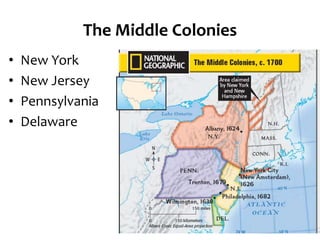
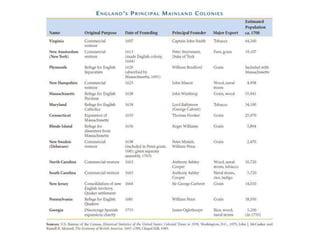
The Middle Colonies
• New York
• New Jersey
• Pennsylvania
• Delaware
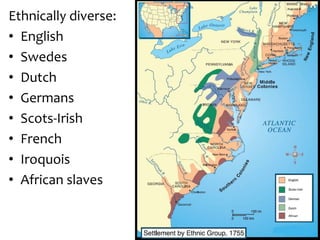
Ethnically diverse:
• English
• Swedes
• Dutch
• Germans
• Scots-Irish
• French
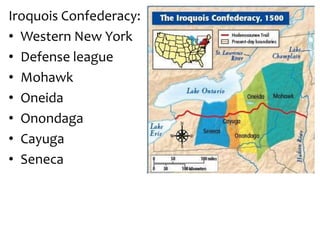
• Iroquois
• African slaves
Iroquois Confederacy:
• Western New York
• Defense league
• Mohawk
• Oneida
• Onondaga
• Cayuga
• Seneca
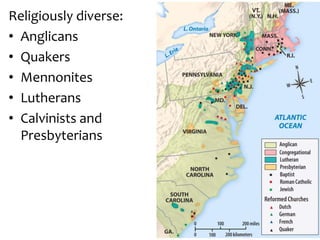
Religiously diverse:
• Anglicans
• Quakers
• Mennonites
• Lutherans
• Calvinists and
Presbyterians
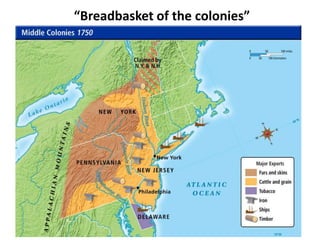
“Breadbasket of the colonies”
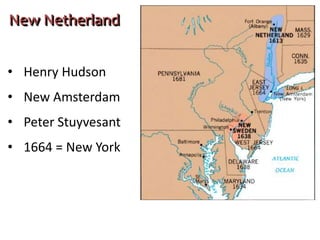
New Netherland
• Henry Hudson
• New Amsterdam
• Peter Stuyvesant
• 1664 = New York
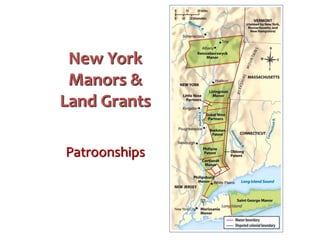
New York
Manors &
Land Grants
Patroonships
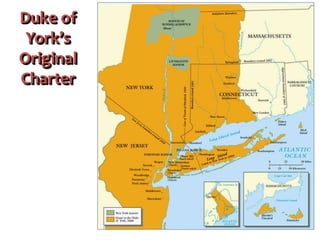
Duke of
York’s
Original
Charter
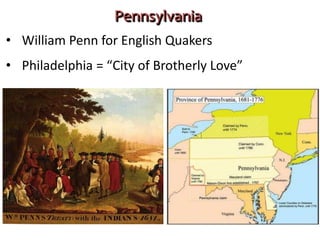
Pennsylvania
• William Penn for English Quakers
• Philadelphia = “City of Brotherly Love”
The Southern Colonies
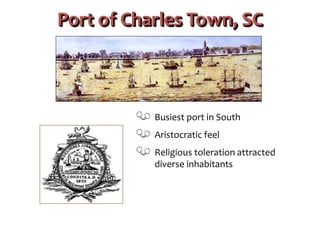
Port of Charles Town, SC
Busiest port in South
Aristocratic feel
Religious toleration attracted
diverse inhabitants
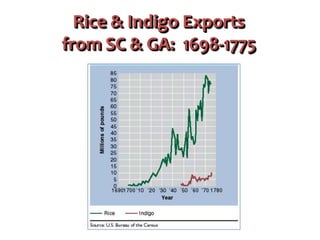
Rice & Indigo Exports
from SC & GA: 1698-1775
The Emergence of North Carolina
• VA = aristocratic planters and Church of
England
• Dissenters moved south to Carolina
 Poor farmers, little need for slaves
 Religious dissenters
• Early North Carolinians:
 Strong resistance to authority, hospitable to
pirates
 Irreligious
• 1712  NC officially separated from SC
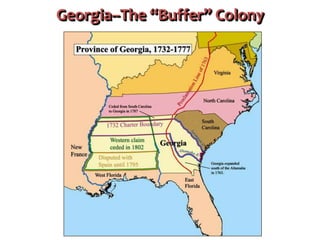
Georgia--The “Buffer” Colony
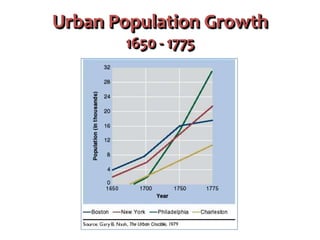
Urban Population Growth
1650 - 1775
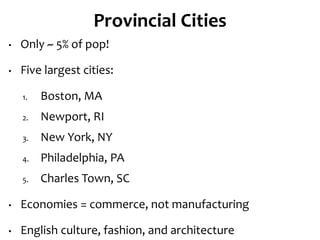
Provincial Cities
• Only ~ 5% of pop!
• Five largest cities:
1. Boston, MA
2. Newport, RI
3. New York, NY
4. Philadelphia, PA
5. Charles Town, SC
• Economies = commerce, not manufacturing
• English culture, fashion, and architecture
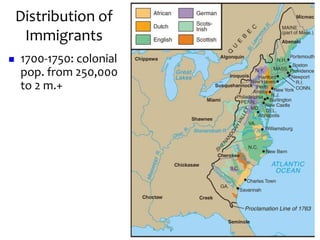
Distribution of
Immigrants
 1700-1750: colonial
pop. from 250,000
to 2 m.+
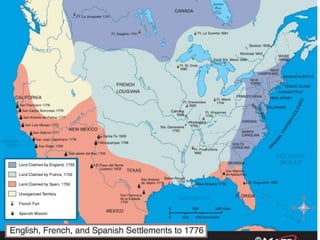
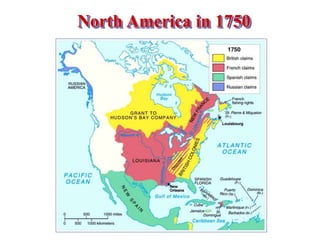
North America in 1750
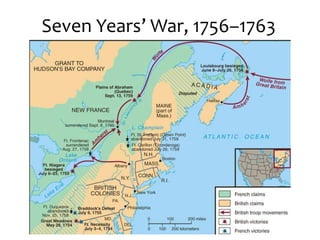
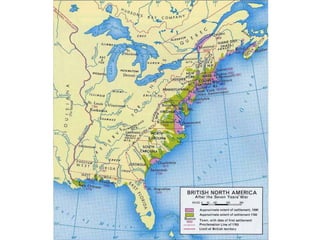
Seven Years’ War, 1756–1763
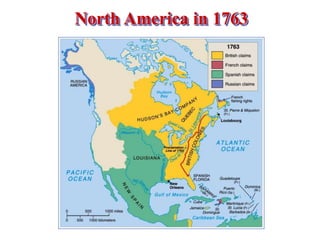
North America in 1763
Colonial america

Colonial america