Downloaded 58 times


![Limitation
Does not offer specific tools and techniques for
practicing manager.
In smaller organization it is not relevant [ apply ].
7The System Approach](https://image.slidesharecdn.com/thesystemapproach-150405111722-conversion-gate01/75/The-system-Approach-of-Management-7-2048.jpg)

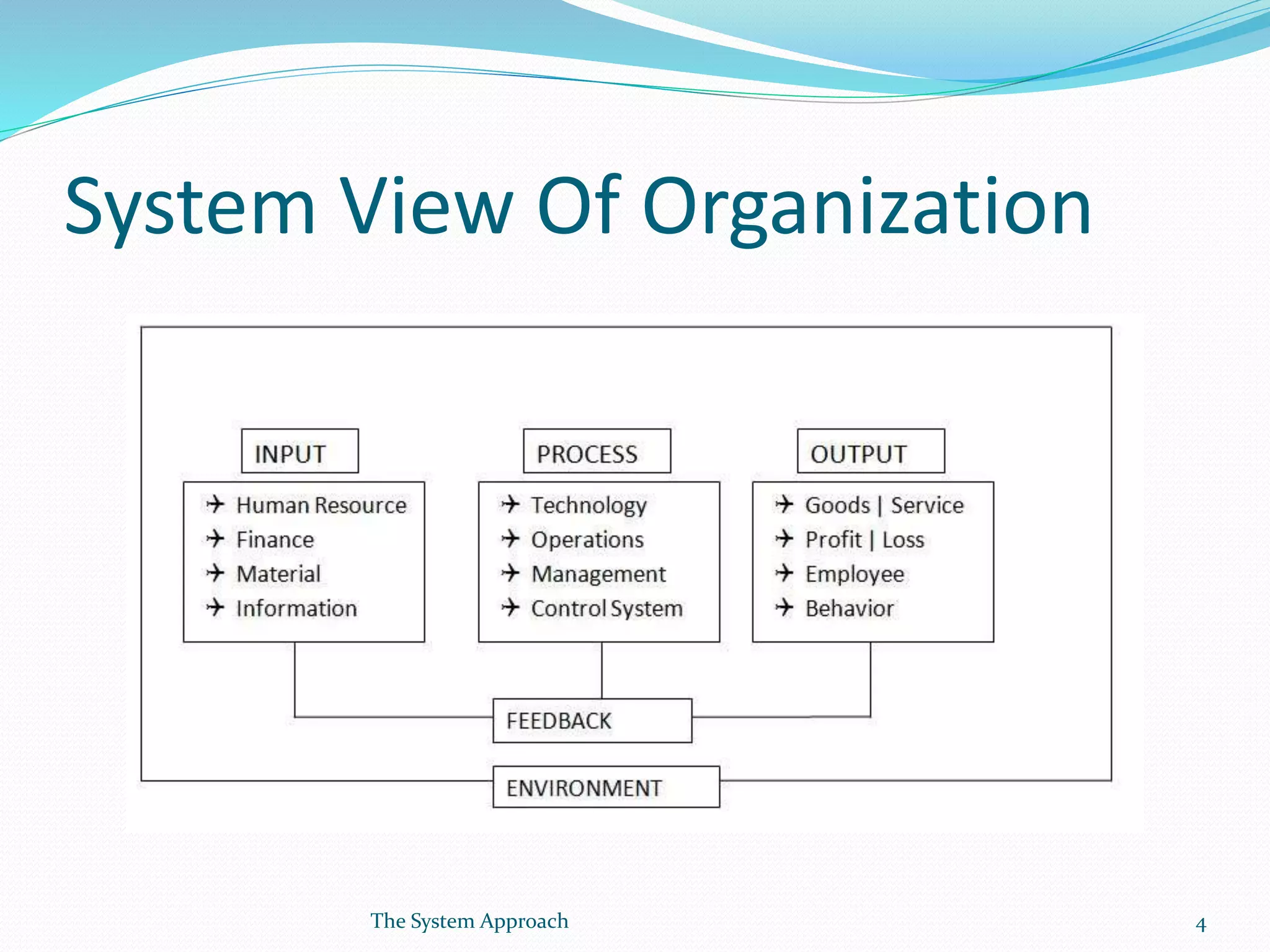
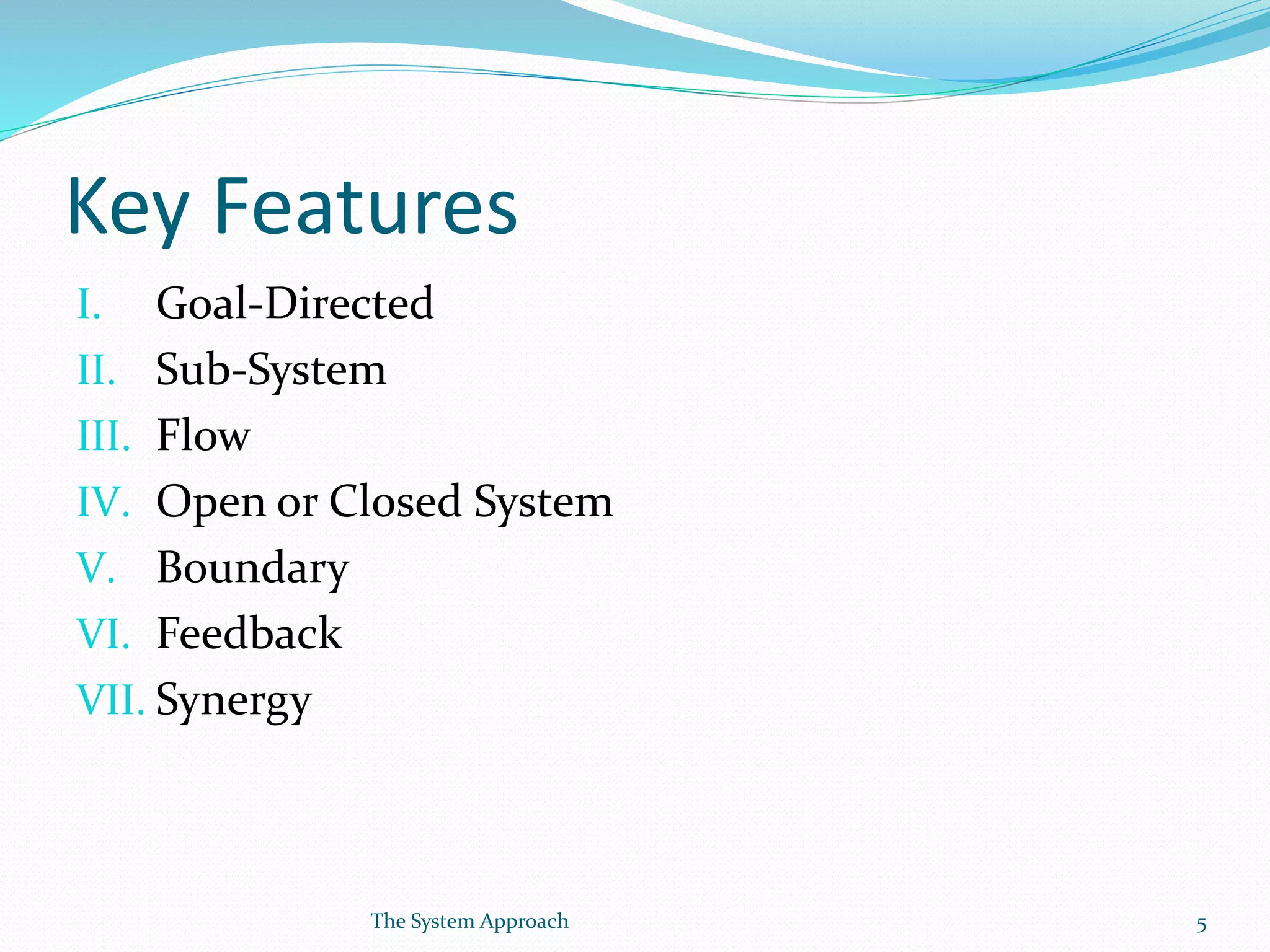
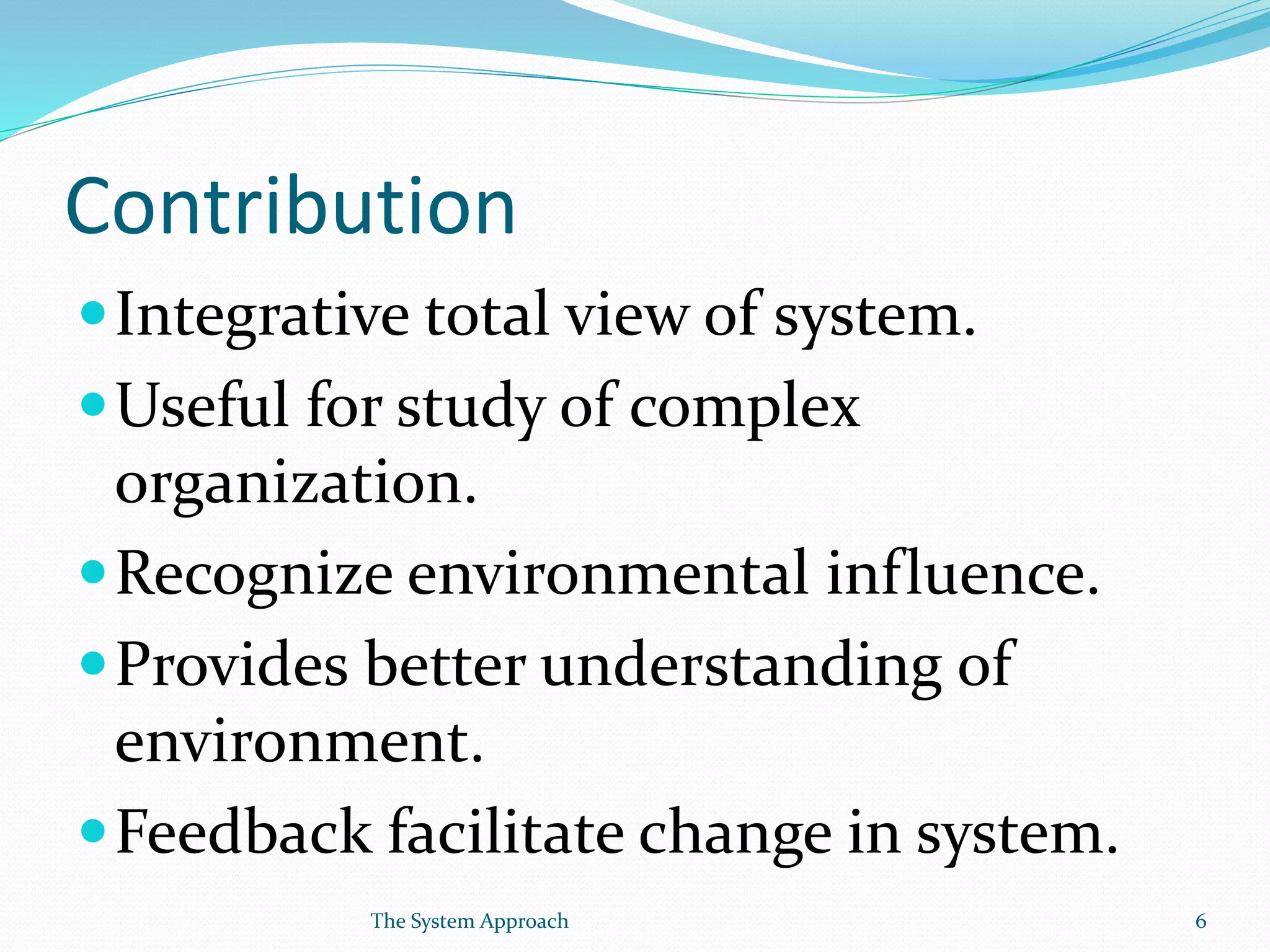
The document discusses the system approach to viewing organizations. The system approach views an organization as a group of interrelated and independent parts working towards a common goal. An organization is composed of parts that interact and relate to each other, and the activity of any one part can affect other parts. The system approach provides managers a way to view the organization as a unified, goal-oriented system composed of interrelated parts. It considers the basic elements of input, process, output, and feedback and key features like being goal-directed, having sub-systems, and information flows within open or closed systems. The system approach provides an integrated view of organizations and is useful for studying complex systems.


