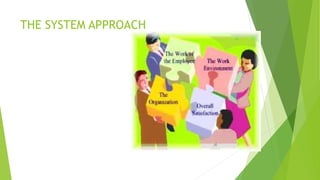










THE SYSTEM APPROACH
DEFINITION OF THE SYSTEM APPROACH
 The word "systems" is derived from the Greek word
"synistanai," which means "to bring together or
combine."
 Components 0r elements of the organizational
concepts is known as the "systems approach
systems theory approach.
 the organization as a system is made up 0f mutually
dependent sub systems that must contact or join with
their environments in order to sustain or remain is
known as the systems theory approach.
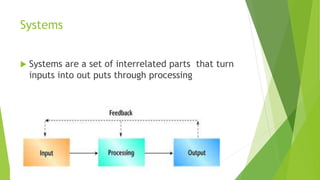
Systems
 Systems are a set of interrelated parts that turn
inputs into out puts through processing
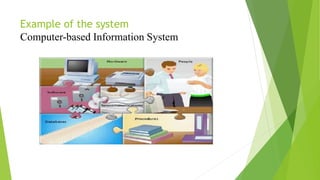
Example of the system
Computer-based Information System
Sub system
 A part of the over all system which also acts as
system in it self is called sub system
FOR EXAMPLE
 Human body has a complete organized system
and with in its system has different sub systems
 Digestive system
 Blood circulatory system etc
Systems theory
 Treats an organization as a system.
 There can be two types of systems
Open system
Closed system
What is an open system
 An open system organization
communicate or interact with its external
environment.
 Examples of the external environment
are
 (Customers, Government, Economy,
Competition, Public Opinion) which affect
the company's ability to function
What is closed system
The closed system do not interact or
communicate with its external environment.
For example watch

System Boundary
 System boundary separates the system from its
external environment
 OR
 It disallows the system to interact with the
external environment
Definition of Organization
 An organization is a collection of people working
together in a coordinated and structured fashion
to achieve one or more goals.
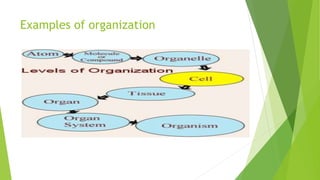
Examples of organization
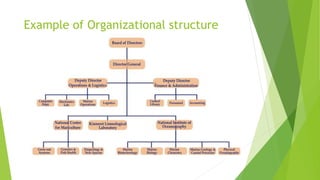
Example of Organizational structure
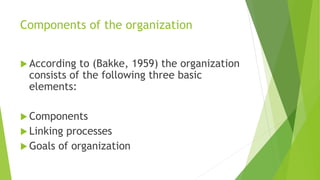
Components of the organization
 According to (Bakke, 1959) the organization
consists of the following three basic
elements:
 Components
 Linking processes
 Goals of organization
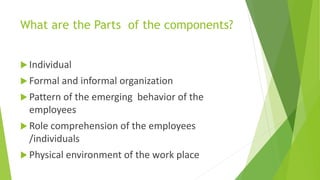
What are the Parts of the components?
 Individual
 Formal and informal organization
 Pattern of the emerging behavior of the
employees
 Role comprehension of the employees
/individuals
 Physical environment of the work place
• The individual
 Individual are the most important human
resource of the organization .they may be aware
about the organizational goals structure, process
and working environment
• The formal and informal organization:
Formal organization
 Formal organization are those that have fixed rules,
procedures and structures
 .the rules are written in the language of the rules
 and they are strictly obeys by everyone in the
organization
• Informal organizational structure
 The formation of social and friendly groups form
another structure in the same organization which is
called informal organizational structure
• Pattern of behavior of the individual
according to the role demands of the
organization:
 According to the systems approach theory the roles and
responsibilities of the individual will change according
to the organization demands
• Role comprehension of the
individual
 The individual working in the organization should
understand their job description and do their assigned
roles and responsibilities accordingly
• Physical environment in which
individuals work:
 Physical environment is a very important element of any
organization
 it creates a very pleasant effect on the employees and as
well as on the stakeholders.
 It plays a vital role in the development and sustainability of
the organization.
 for examples (water, electricity , lighting, furniture well
lighted rooms) etc., have encourage the employees to work
more diligently for the smooth running of organization.
2) Linking processes
 The linking process comprise of the following elements:
 Communication
 Balance
 Decision analysis
Basic types of communication:
 Formal communication
 Informal communication
What is formal communication
 According to an Oregon State study, formal
communication is defined as
 communication occurs through officially designated
channels between organization positions about a work
related topic.
 Formal communication exists within the
organization or company .
Types of formal communication
 Down ward communication
 Upward communication:
 Horizontal communication
What is Down ward communication ?
 This type of communication occurs when managers talk
to employees about explaining their jobs and provide
instructions,
 to correct employees' work,
 or
 explain new procedures. This type of communication is
vital to the organization
What is Upward communication:?
 This type of communication occurs when subordinates
or employees need to talk with their managers, they
usually talk about the completion of the task
 or about a work-related problem
What is Horizontal communication?
 This type of communication takes place when the
workers of the same work level communicate with each
other about completing tasks
Informal Communications:
 Informal communication takes place within the
employees of the organization.
 It helps to build employees social relationship.
2) Balance:
 Balance is the key element in the linking processes
of the system approach .so all the interrelated parts of
the organization are coordinate properly for the
achievement of the goals of the system.
3)Decision analysis:
 Decision analysis is a process that allows the decision
maker to select at least one option from a set of
possible decision alternatives.
 Making decisions is the most important and difficult
task of a manger.
 Decision are taken for the solution of the complex
problems of the system.
Goals of decision analysis
is to give guidance,
information,
 insight (deep understanding about
something),
to make better, more ‘rational’
(logical sensible) decisions.
Goals of organization:
 EVERY ORGANIZATION HAS
 Mission statement
 Objectives
 Strategy
 Goals
 Action plans
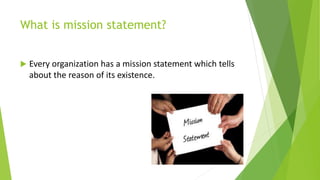
What is mission statement?
 Every organization has a mission statement which tells
about the reason of its existence.
 Objectives are the broader statements and they
are derived out from the mission statement.
Objectives
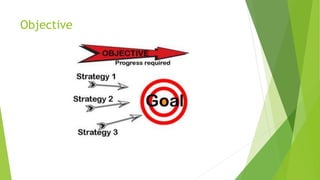
Objective
Strategy
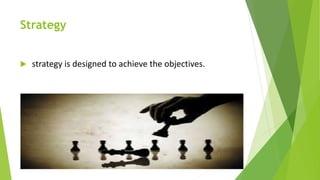
 strategy is designed to achieve the objectives.
Strategy
Goals
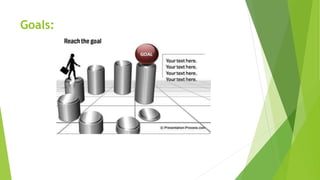
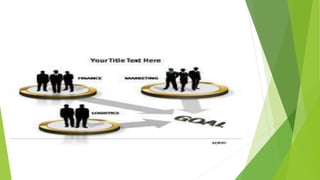
 Goals of the organization should be SMART.
 S Specific
 M measureable
 A Attainable
 R Relevant
 T Time bound
Goals:
Action plan
 It is a course of action through which an organization
get its targeted goals
organizational structure

organizational structure

  • 1.
  • 2.
    DEFINITION OF THESYSTEM APPROACH  The word "systems" is derived from the Greek word "synistanai," which means "to bring together or combine."  Components 0r elements of the organizational concepts is known as the "systems approach
  • 3.
    systems theory approach. the organization as a system is made up 0f mutually dependent sub systems that must contact or join with their environments in order to sustain or remain is known as the systems theory approach.
  • 4.
    Systems  Systems area set of interrelated parts that turn inputs into out puts through processing
  • 5.
    Example of thesystem Computer-based Information System
  • 6.
    Sub system  Apart of the over all system which also acts as system in it self is called sub system FOR EXAMPLE  Human body has a complete organized system and with in its system has different sub systems  Digestive system  Blood circulatory system etc
  • 7.
    Systems theory  Treatsan organization as a system.  There can be two types of systems Open system Closed system
  • 8.
    What is anopen system  An open system organization communicate or interact with its external environment.  Examples of the external environment are  (Customers, Government, Economy, Competition, Public Opinion) which affect the company's ability to function
  • 9.
    What is closedsystem The closed system do not interact or communicate with its external environment. For example watch 
  • 10.
    System Boundary  Systemboundary separates the system from its external environment  OR  It disallows the system to interact with the external environment
  • 11.
    Definition of Organization An organization is a collection of people working together in a coordinated and structured fashion to achieve one or more goals.
  • 12.
  • 13.
  • 14.
    Components of theorganization  According to (Bakke, 1959) the organization consists of the following three basic elements:  Components  Linking processes  Goals of organization
  • 15.
    What are theParts of the components?  Individual  Formal and informal organization  Pattern of the emerging behavior of the employees  Role comprehension of the employees /individuals  Physical environment of the work place
  • 16.
    • The individual Individual are the most important human resource of the organization .they may be aware about the organizational goals structure, process and working environment
  • 17.
    • The formaland informal organization: Formal organization  Formal organization are those that have fixed rules, procedures and structures  .the rules are written in the language of the rules  and they are strictly obeys by everyone in the organization
  • 18.
    • Informal organizationalstructure  The formation of social and friendly groups form another structure in the same organization which is called informal organizational structure
  • 19.
    • Pattern ofbehavior of the individual according to the role demands of the organization:  According to the systems approach theory the roles and responsibilities of the individual will change according to the organization demands
  • 20.
    • Role comprehensionof the individual  The individual working in the organization should understand their job description and do their assigned roles and responsibilities accordingly
  • 21.
    • Physical environmentin which individuals work:  Physical environment is a very important element of any organization  it creates a very pleasant effect on the employees and as well as on the stakeholders.  It plays a vital role in the development and sustainability of the organization.  for examples (water, electricity , lighting, furniture well lighted rooms) etc., have encourage the employees to work more diligently for the smooth running of organization.
  • 22.
    2) Linking processes The linking process comprise of the following elements:  Communication  Balance  Decision analysis
  • 23.
    Basic types ofcommunication:  Formal communication  Informal communication
  • 24.
    What is formalcommunication  According to an Oregon State study, formal communication is defined as  communication occurs through officially designated channels between organization positions about a work related topic.  Formal communication exists within the organization or company .
  • 25.
    Types of formalcommunication  Down ward communication  Upward communication:  Horizontal communication
  • 26.
    What is Downward communication ?  This type of communication occurs when managers talk to employees about explaining their jobs and provide instructions,  to correct employees' work,  or  explain new procedures. This type of communication is vital to the organization
  • 27.
    What is Upwardcommunication:?  This type of communication occurs when subordinates or employees need to talk with their managers, they usually talk about the completion of the task  or about a work-related problem
  • 28.
    What is Horizontalcommunication?  This type of communication takes place when the workers of the same work level communicate with each other about completing tasks
  • 29.
    Informal Communications:  Informalcommunication takes place within the employees of the organization.  It helps to build employees social relationship.
  • 30.
    2) Balance:  Balanceis the key element in the linking processes of the system approach .so all the interrelated parts of the organization are coordinate properly for the achievement of the goals of the system.
  • 31.
    3)Decision analysis:  Decisionanalysis is a process that allows the decision maker to select at least one option from a set of possible decision alternatives.  Making decisions is the most important and difficult task of a manger.  Decision are taken for the solution of the complex problems of the system.
  • 32.
    Goals of decisionanalysis is to give guidance, information,  insight (deep understanding about something), to make better, more ‘rational’ (logical sensible) decisions.
  • 33.
    Goals of organization: EVERY ORGANIZATION HAS  Mission statement  Objectives  Strategy  Goals  Action plans
  • 34.
    What is missionstatement?  Every organization has a mission statement which tells about the reason of its existence.
  • 35.
     Objectives arethe broader statements and they are derived out from the mission statement. Objectives
  • 36.
  • 37.
    Strategy  strategy isdesigned to achieve the objectives.
  • 38.
  • 39.
    Goals  Goals ofthe organization should be SMART.  S Specific  M measureable  A Attainable  R Relevant  T Time bound
  • 40.
  • 42.
    Action plan  Itis a course of action through which an organization get its targeted goals