By: Raviraj Jadeja (MBA MEFGI)
Scientific management was a theory of
  management that analyzed and
  Combines Elements                of workflows.


                  Raviraj Jadeja
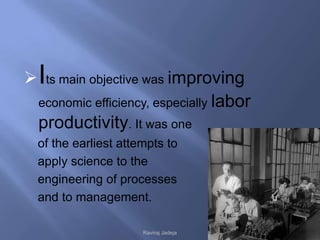
 Its main objective was improving
  economic efficiency, especially labor
  productivity. It was one
  of the earliest attempts to
  apply science to the
  engineering of processes
  and to management.

                      Raviraj Jadeja
 A management approach formulated by
  Frederick W. Taylor and others
  between 1890 and 1930, that sought to
  determine scientifically the best methods for
  performing any task, and for selecting, training,
  and motivating workers.


                     Raviraj Jadeja
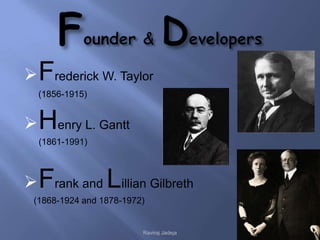
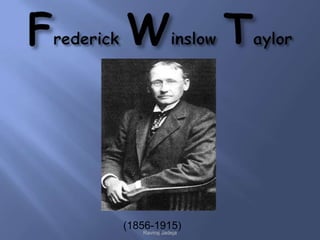
 Frederick W. Taylor
  (1856-1915)


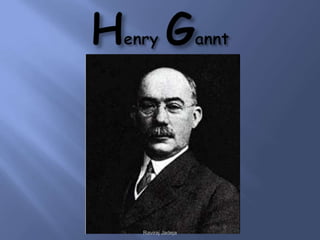
 Henry L. Gantt
  (1861-1991)


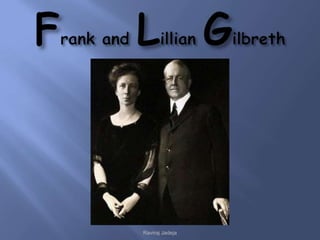
 Frank and Lillian Gilbreth
 (1868-1924 and 1878-1972)


                         Raviraj Jadeja
(1856-1915)
   Raviraj Jadeja
 The core ideas of scientific management
  were developed by Taylor in the 1880s and
  1890s, and were first published in his
  monographs A Piece Rate System
  (1895), Shop Management (1903) and
  The Principles of Scientific
  Management (1911)
                    Raviraj Jadeja
 The theory of scientific management is the
  “brainchild” of Frederick Winslow Taylor.

 “one best way” to do a job.


                    Raviraj Jadeja
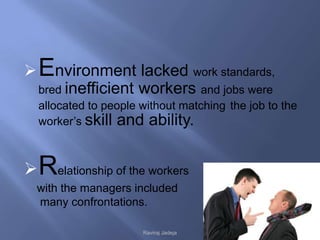
 Environment lacked work standards,
  bred inefficient workers and jobs were
  allocated to people without matching the job to the
  worker’s skill and ability.


 Relationship of the workers
  with the managers included
  many confrontations.

                      Raviraj Jadeja
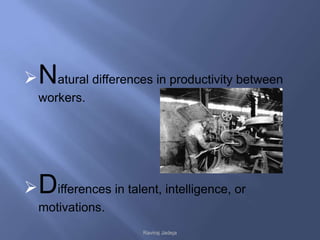
 Natural differences in productivity between
  workers.


 Differences in talent, intelligence, or
  motivations.
                      Raviraj Jadeja
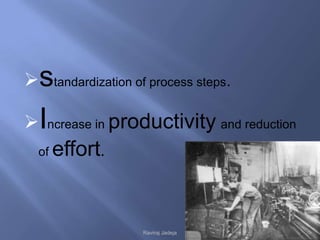
standardization of process steps.

Increase in productivity and reduction
  of   effort.


                   Raviraj Jadeja
 Development of Science for each part of
  men’s job (replacement of rule of thumb)


 Scientific Selection, Training & Development
  of Workers

                    Raviraj Jadeja
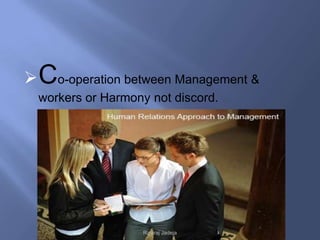
 Co-operation between Management &
  workers or Harmony not discord.


                    Raviraj Jadeja
 Division of Responsibility.


 Mental Revolution.


 Maximum Prosperity for Employer &
  Employees.
                    Raviraj Jadeja
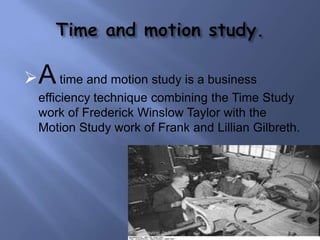
 A time and motion study is a business
  efficiency technique combining the Time Study
  work of Frederick Winslow Taylor with the
  Motion Study work of Frank and Lillian Gilbreth.


                     Raviraj Jadeja
Raviraj Jadeja
 Developed the laws of human motion
  from which evolved the principles of motion
  economy.


 Analyzed each motion of work for wasted
  efforts in an attempt to reduce each task to the
  smallest amount of expended time and energy.


                     Raviraj Jadeja
Raviraj Jadeja
 Specialized in incentive wage plans.


 Introduced a differential piece rate system
  ,Task work with a bonus.


                     Raviraj Jadeja
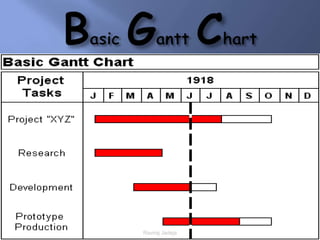
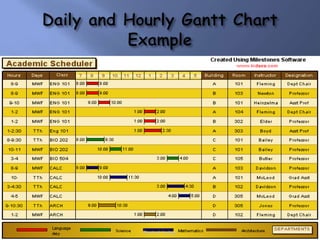
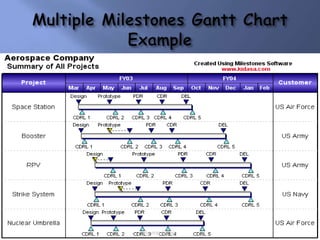
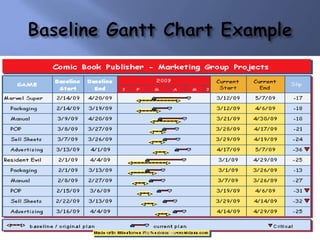
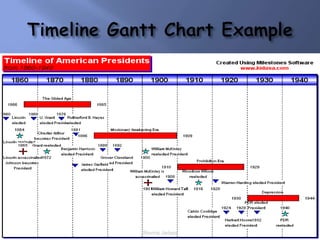
 A graphic schedule for the planning and
  controlling of work, and recording progress
  towards stages of a project.


"man’s record"

"daily balance of work"
                     Raviraj Jadeja
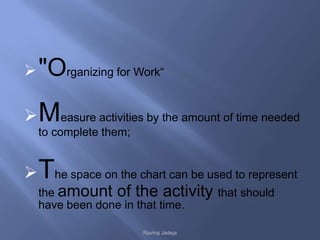
 "Organizing for Work“

 Measure activities by the amount of time needed
  to complete them;


 The space on the chart can be used to represent
  the amount of the activity that should
  have been done in that time.

                      Raviraj Jadeja
Raviraj Jadeja
Raviraj Jadeja
Raviraj Jadeja
Raviraj Jadeja
Raviraj Jadeja
www.ganttchart.com
  Milestone Software.


           Raviraj Jadeja
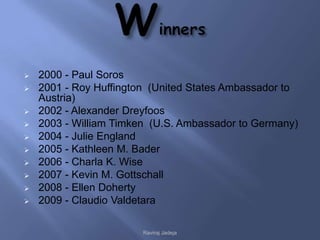
 The Henry Laurence Gantt Medal was
  established in 1929 by the American
  Society of Mechanical Engineers
 for "distinguished achievement in management
 and service to the community."


                  Raviraj Jadeja
   2000 - Paul Soros
   2001 - Roy Huffington (United States Ambassador to
    Austria)
   2002 - Alexander Dreyfoos
   2003 - William Timken (U.S. Ambassador to Germany)
   2004 - Julie England
   2005 - Kathleen M. Bader
   2006 - Charla K. Wise
   2007 - Kevin M. Gottschall
   2008 - Ellen Doherty
   2009 - Claudio Valdetara

                        Raviraj Jadeja
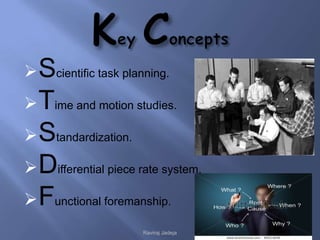
 Scientific task planning.
 Time and motion studies.
 Standardization.
 Differential piece rate system.
 Functional foremanship.
                      Raviraj Jadeja
 Exploitative Device.


 Depersonalized Work.


 Unpsychological.
                     Raviraj Jadeja
 Undemocratic.


 Anti-Social.


 Unrealistic.
                  Raviraj Jadeja
Raviraj Jadeja
 Most valuable and well-known brand in the
  whole world.


 Established the system of rewards so that
  they can meet their goals.


                     Raviraj Jadeja
 Within the restaurant chain uniformity is
  complete.


 Every branch of McDonald is the same as are
  the methods used to prepare food, clear floors,
  promote staff and lock up on closing.


                     Raviraj Jadeja
 Aside from the base payment, the company
  had established the promotional
  programs and the competitive
  wages, motivation, hard work,
  dedication, and results that rewarded and
  recognized by McDonalds.


                   Raviraj Jadeja
 programs such as the “Employees of the
  Month”


 Bonuses that the company is paying for the
  top employees which are based on the
  performance of the business and the individual
  performance.

                    Raviraj Jadeja
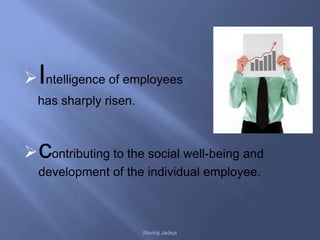
 Intelligence of employees
  has sharply risen.


 contributing to the social well-being and
  development of the individual employee.


                       Raviraj Jadeja
 Scientific management also provides a
  company with the means to achieve
  economies of scale.


                   Raviraj Jadeja
 Higher levels of access to technology and
  information.


 Flexibility.


                    Raviraj Jadeja
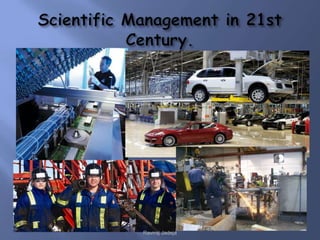
 Scientific Management is still very much a
  part of any organization in the 21st Century.


 Divide between management functions and
  work functions have been employed widely at
  all levels and in all industries.


                     Raviraj Jadeja
 It is perhaps then better to accept that as a
  complete theory Scientific Management is not
  visible in modern organizations, however,
  elements of it are so relevant that they have
  become deeply ingrained in all modern
  organizations and are the very reasons why
  management has taken on new dimension in
  the 21st Century.


                      Raviraj Jadeja
Raviraj Jadeja

Scientific management

  • 1.
    By: Raviraj Jadeja(MBA MEFGI)
  • 2.
    Scientific management wasa theory of management that analyzed and Combines Elements of workflows. Raviraj Jadeja
  • 3.
     Its mainobjective was improving economic efficiency, especially labor productivity. It was one of the earliest attempts to apply science to the engineering of processes and to management. Raviraj Jadeja
  • 4.
     A managementapproach formulated by Frederick W. Taylor and others between 1890 and 1930, that sought to determine scientifically the best methods for performing any task, and for selecting, training, and motivating workers. Raviraj Jadeja
  • 5.
     Frederick W.Taylor (1856-1915)  Henry L. Gantt (1861-1991)  Frank and Lillian Gilbreth (1868-1924 and 1878-1972) Raviraj Jadeja
  • 6.
    (1856-1915) Raviraj Jadeja
  • 7.
     The coreideas of scientific management were developed by Taylor in the 1880s and 1890s, and were first published in his monographs A Piece Rate System (1895), Shop Management (1903) and The Principles of Scientific Management (1911) Raviraj Jadeja
  • 8.
     The theoryof scientific management is the “brainchild” of Frederick Winslow Taylor. “one best way” to do a job. Raviraj Jadeja
  • 9.
     Environment lackedwork standards, bred inefficient workers and jobs were allocated to people without matching the job to the worker’s skill and ability.  Relationship of the workers with the managers included many confrontations. Raviraj Jadeja
  • 10.
     Natural differencesin productivity between workers.  Differences in talent, intelligence, or motivations. Raviraj Jadeja
  • 11.
    standardization of processsteps. Increase in productivity and reduction of effort. Raviraj Jadeja
  • 12.
     Development ofScience for each part of men’s job (replacement of rule of thumb)  Scientific Selection, Training & Development of Workers Raviraj Jadeja
  • 13.
     Co-operation betweenManagement & workers or Harmony not discord. Raviraj Jadeja
  • 14.
     Division ofResponsibility.  Mental Revolution.  Maximum Prosperity for Employer & Employees. Raviraj Jadeja
  • 15.
     A timeand motion study is a business efficiency technique combining the Time Study work of Frederick Winslow Taylor with the Motion Study work of Frank and Lillian Gilbreth. Raviraj Jadeja
  • 16.
  • 17.
     Developed thelaws of human motion from which evolved the principles of motion economy.  Analyzed each motion of work for wasted efforts in an attempt to reduce each task to the smallest amount of expended time and energy. Raviraj Jadeja
  • 18.
  • 19.
     Specialized inincentive wage plans.  Introduced a differential piece rate system ,Task work with a bonus. Raviraj Jadeja
  • 20.
     A graphicschedule for the planning and controlling of work, and recording progress towards stages of a project. "man’s record" "daily balance of work" Raviraj Jadeja
  • 21.
     "Organizing forWork“  Measure activities by the amount of time needed to complete them;  The space on the chart can be used to represent the amount of the activity that should have been done in that time. Raviraj Jadeja
  • 22.
  • 23.
  • 24.
  • 25.
  • 26.
  • 27.
    www.ganttchart.com MilestoneSoftware. Raviraj Jadeja
  • 28.
     The HenryLaurence Gantt Medal was established in 1929 by the American Society of Mechanical Engineers for "distinguished achievement in management and service to the community." Raviraj Jadeja
  • 29.
    2000 - Paul Soros  2001 - Roy Huffington (United States Ambassador to Austria)  2002 - Alexander Dreyfoos  2003 - William Timken (U.S. Ambassador to Germany)  2004 - Julie England  2005 - Kathleen M. Bader  2006 - Charla K. Wise  2007 - Kevin M. Gottschall  2008 - Ellen Doherty  2009 - Claudio Valdetara Raviraj Jadeja
  • 30.
     Scientific taskplanning.  Time and motion studies.  Standardization.  Differential piece rate system.  Functional foremanship. Raviraj Jadeja
  • 31.
     Exploitative Device. Depersonalized Work.  Unpsychological. Raviraj Jadeja
  • 32.
     Undemocratic.  Anti-Social. Unrealistic. Raviraj Jadeja
  • 33.
  • 34.
     Most valuableand well-known brand in the whole world.  Established the system of rewards so that they can meet their goals. Raviraj Jadeja
  • 35.
     Within therestaurant chain uniformity is complete.  Every branch of McDonald is the same as are the methods used to prepare food, clear floors, promote staff and lock up on closing. Raviraj Jadeja
  • 36.
     Aside fromthe base payment, the company had established the promotional programs and the competitive wages, motivation, hard work, dedication, and results that rewarded and recognized by McDonalds. Raviraj Jadeja
  • 37.
     programs suchas the “Employees of the Month”  Bonuses that the company is paying for the top employees which are based on the performance of the business and the individual performance. Raviraj Jadeja
  • 38.
     Intelligence ofemployees has sharply risen.  contributing to the social well-being and development of the individual employee. Raviraj Jadeja
  • 39.
     Scientific managementalso provides a company with the means to achieve economies of scale. Raviraj Jadeja
  • 40.
     Higher levelsof access to technology and information.  Flexibility. Raviraj Jadeja
  • 41.
     Scientific Managementis still very much a part of any organization in the 21st Century.  Divide between management functions and work functions have been employed widely at all levels and in all industries. Raviraj Jadeja
  • 42.
     It isperhaps then better to accept that as a complete theory Scientific Management is not visible in modern organizations, however, elements of it are so relevant that they have become deeply ingrained in all modern organizations and are the very reasons why management has taken on new dimension in the 21st Century. Raviraj Jadeja
  • 43.