1
Agenda ….
 What is Organizational Climate?
 Factors that influence Organizational Climate
 How HR Practices influence Organizational Climate?
 Evolution of HR policies
 Theories/Model of Organizational Climate
 KSF’s (Key Success Factors) for an organization
 Suggestions
 Conclusion
2
What is Organizational Climate?
 Refers to meaningful interpretations of a work environment by
the people in it
– Are social relationships warm and caring?
– Are people treated fairly for rewards/recognition?
– Do people take pride in excellence?
 Organizational Climate is often referred to as Corporate
Climate
3
Factors that influence Organizational Climate
4
 Involvement
 Co-worker Cohesion
 Supervisor Support
 Autonomy
 Task Orientation
 Work Pressure
 Clarity
 Managerial Control
 Innovation
 Physical Comfort
How HR Practices influence Organizational
Climate?
 Employee Relations
 Employee Retention
 Team building activities – done to bring feel good factor in the
organization
 Payroll management
5
Evolution of HR Policies
 ‘Employer Branding’
 Leave policies
 Performance management systems
 HR Audit
6
 HRIS
 Job descriptions
 Information Security Management System (ISMS) within the
organization
 Employee Security
 Strong Information Security Team
 Physical Security
7
From Client Perspective…
 Customized Engagement Processes
 Confidentiality
 Security
 Transparency
 Quality
 Integrity
 Availability
8
Theories/Models of Organizational Climate
 Shared-Perception Model by Hart, Griffin, Wearing & Cooper
(1996)
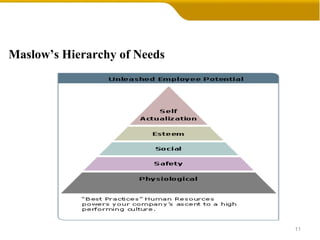
 Maslow’s Hierarchy of Needs displays the five levels of
Human Needs
9
Shared-Perception Model
 Mobilization of workforce to maximize performance
 Focuses on personal & professional parameters
 De-stressing through identification of supervisor and manager
behavior
10
Maslow’s Hierarchy of Needs
11
KSF’s for an Organization
12
 Recruitment, Hiring &
Orientation
 Training (for existing
employees and new hires)
 Talent Management
 Performance, Rewards &
Recognition
 CSR
 Health & Well-being
 Balancing work & personal life
 Knowledge Management
 Information Security
 Commitment to Quality
Suggestions
 Invest more in branding through media
 Suggestion towards CSR – conduct a rally for a good cause
 Monthly Newsletter
 Common Blog
13
Conclusion
“Never doubt that a small group of capable and committed
people can ever change the world, infact it is the only
thing
that ever did”
14

Organisational Climate

  • 1.
  • 2.
    Agenda ….  Whatis Organizational Climate?  Factors that influence Organizational Climate  How HR Practices influence Organizational Climate?  Evolution of HR policies  Theories/Model of Organizational Climate  KSF’s (Key Success Factors) for an organization  Suggestions  Conclusion 2
  • 3.
    What is OrganizationalClimate?  Refers to meaningful interpretations of a work environment by the people in it – Are social relationships warm and caring? – Are people treated fairly for rewards/recognition? – Do people take pride in excellence?  Organizational Climate is often referred to as Corporate Climate 3
  • 4.
    Factors that influenceOrganizational Climate 4  Involvement  Co-worker Cohesion  Supervisor Support  Autonomy  Task Orientation  Work Pressure  Clarity  Managerial Control  Innovation  Physical Comfort
  • 5.
    How HR Practicesinfluence Organizational Climate?  Employee Relations  Employee Retention  Team building activities – done to bring feel good factor in the organization  Payroll management 5
  • 6.
    Evolution of HRPolicies  ‘Employer Branding’  Leave policies  Performance management systems  HR Audit 6
  • 7.
     HRIS  Jobdescriptions  Information Security Management System (ISMS) within the organization  Employee Security  Strong Information Security Team  Physical Security 7
  • 8.
    From Client Perspective… Customized Engagement Processes  Confidentiality  Security  Transparency  Quality  Integrity  Availability 8
  • 9.
    Theories/Models of OrganizationalClimate  Shared-Perception Model by Hart, Griffin, Wearing & Cooper (1996)  Maslow’s Hierarchy of Needs displays the five levels of Human Needs 9
  • 10.
    Shared-Perception Model  Mobilizationof workforce to maximize performance  Focuses on personal & professional parameters  De-stressing through identification of supervisor and manager behavior 10
  • 11.
  • 12.
    KSF’s for anOrganization 12  Recruitment, Hiring & Orientation  Training (for existing employees and new hires)  Talent Management  Performance, Rewards & Recognition  CSR  Health & Well-being  Balancing work & personal life  Knowledge Management  Information Security  Commitment to Quality
  • 13.
    Suggestions  Invest morein branding through media  Suggestion towards CSR – conduct a rally for a good cause  Monthly Newsletter  Common Blog 13
  • 14.
    Conclusion “Never doubt thata small group of capable and committed people can ever change the world, infact it is the only thing that ever did” 14