The Spanish Empire
     By DJ Heston
The Spanish Empire

•   The Spanish Empire consisted of territories in
    Europe, the Americas, Africa, Asia and Oceania
    and lasted from the 15 th century through the 20 th
    century.
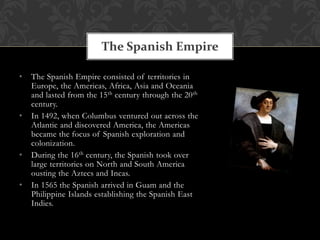
•   In 1492, when Columbus ventured out across the
    Atlantic and discovered America, the Americas
    became the focus of Spanish exploration and
    colonization.
•   During the 16th century, the Spanish took over
    large territories on North and South America
    ousting the Aztecs and Incas.
•   In 1565 the Spanish arrived in Guam and the
    Philippine Islands establishing the Spanish East
    Indies.
The Spanish Empire

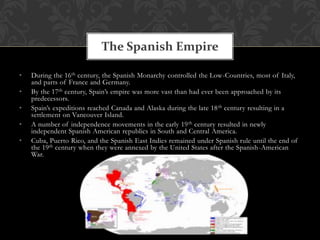
•   During the 16th century, the Spanish Monarchy controlled the Low-Countries, most of Italy,
    and parts of France and Germany.
•   By the 17th century, Spain’s empire was more vast than had ever been approached by its
    predecessors.
•   Spain’s expeditions reached Canada and Alaska during the late 18 th century resulting in a
    settlement on Vancouver Island.
•   A number of independence movements in the early 19 th century resulted in newly
    independent Spanish American republics in South and Central America.
•   Cuba, Puerto Rico, and the Spanish East Indies remained under Spanish rule until the end of
    the 19th century when they were annexed by the United States after the Spanish-American
    War.
Habsburg Spain
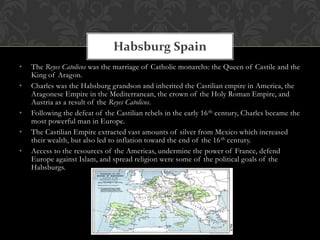
•   The Reyes Catolicos was the marriage of Catholic monarchs: the Queen of Castile and the
    King of Aragon.
•   Charles was the Habsburg grandson and inherited the Castilian empire in America, the
    Aragonese Empire in the Mediterranean, the crown of the Holy Roman Empire, and
    Austria as a result of the Reyes Catolicos.
•   Following the defeat of the Castilian rebels in the early 16 th century, Charles became the
    most powerful man in Europe.
•   The Castilian Empire extracted vast amounts of silver from Mexico which increased
    their wealth, but also led to inflation toward the end of the 16 th century.
•   Access to the resources of the Americas, undermine the power of France, defend
    Europe against Islam, and spread religion were some of the political goals of the
    Habsburgs.
Habsburg Spain

•   Charles V’s only legitimate son, Phillip of
    Spain, defeated the French in the mid 16 th
    century and led to the Peace of Cateau-
    Cambresis, which permanently recognized
    Spanish claims in Italy.
•   After expending vast resources in the
    Netherlands and the threat of piracy of his
    ships from the Americas, Phillip accepted
    bankruptcy in 1576.
•   Spain faced strong adversaries following their
    bankruptcy which led them to sign treaties with
    France and England at the end of the 16 th and
    beginning of the 17 th century.
•   Following their peace with France and England,
    Spain focused on restoring its rule to the Dutch
    provinces.
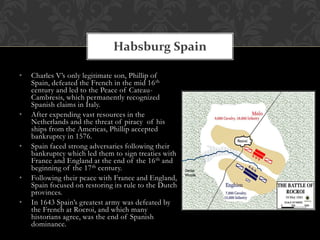
•   In 1643 Spain’s greatest army was defeated by
    the French at Rocroi, and which many
    historians agree, was the end of Spanish
    dominance.
The Spanish Conquest of
   the Aztec Empire
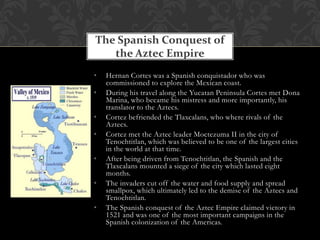
•   Hernan Cortes was a Spanish conquistador who was
    commissioned to explore the Mexican coast.
•   During his travel along the Yucatan Peninsula Cortes met Dona
    Marina, who became his mistress and more importantly, his
    translator to the Aztecs.
•   Cortez befriended the Tlaxcalans, who where rivals of the
    Aztecs.
•   Cortez met the Aztec leader Moctezuma II in the city of
    Tenochtitlan, which was believed to be one of the largest cities
    in the world at that time.
•   After being driven from Tenochtitlan, the Spanish and the
    Tlaxcalans mounted a siege of the city which lasted eight
    months.
•   The invaders cut off the water and food supply and spread
    smallpox, which ultimately led to the demise of the Aztecs and
    Tenochtitlan.
•   The Spanish conquest of the Aztec Empire claimed victory in
    1521 and was one of the most important campaigns in the
    Spanish colonization of the Americas.
The Spanish Conquest of the
                            Aztec Empire

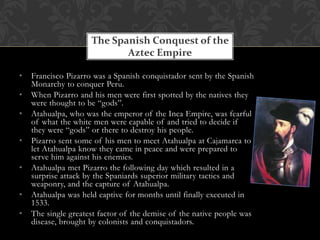
•   Francisco Pizarro was a Spanish conquistador sent by the Spanish
    Monarchy to conquer Peru.
•   When Pizarro and his men were first spotted by the natives they
    were thought to be “gods”.
•   Atahualpa, who was the emperor of the Inca Empire, was fearful
    of what the white men were capable of and tried to decide if
    they were “gods” or there to destroy his people.
•   Pizarro sent some of his men to meet Atahualpa at Cajamarca to
    let Atahualpa know they came in peace and were prepared to
    serve him against his enemies.
•   Atahualpa met Pizarro the following day which resulted in a
    surprise attack by the Spaniards superior military tactics and
    weaponry, and the capture of Atahualpa.
•   Atahualpa was held captive for months until finally executed in
    1533.
•   The single greatest factor of the demise of the native people was
    disease, brought by colonists and conquistadors.

The Spanish Empire

  • 1.
    The Spanish Empire By DJ Heston
  • 2.
    The Spanish Empire • The Spanish Empire consisted of territories in Europe, the Americas, Africa, Asia and Oceania and lasted from the 15 th century through the 20 th century. • In 1492, when Columbus ventured out across the Atlantic and discovered America, the Americas became the focus of Spanish exploration and colonization. • During the 16th century, the Spanish took over large territories on North and South America ousting the Aztecs and Incas. • In 1565 the Spanish arrived in Guam and the Philippine Islands establishing the Spanish East Indies.
  • 3.
    The Spanish Empire • During the 16th century, the Spanish Monarchy controlled the Low-Countries, most of Italy, and parts of France and Germany. • By the 17th century, Spain’s empire was more vast than had ever been approached by its predecessors. • Spain’s expeditions reached Canada and Alaska during the late 18 th century resulting in a settlement on Vancouver Island. • A number of independence movements in the early 19 th century resulted in newly independent Spanish American republics in South and Central America. • Cuba, Puerto Rico, and the Spanish East Indies remained under Spanish rule until the end of the 19th century when they were annexed by the United States after the Spanish-American War.
  • 4.
    Habsburg Spain • The Reyes Catolicos was the marriage of Catholic monarchs: the Queen of Castile and the King of Aragon. • Charles was the Habsburg grandson and inherited the Castilian empire in America, the Aragonese Empire in the Mediterranean, the crown of the Holy Roman Empire, and Austria as a result of the Reyes Catolicos. • Following the defeat of the Castilian rebels in the early 16 th century, Charles became the most powerful man in Europe. • The Castilian Empire extracted vast amounts of silver from Mexico which increased their wealth, but also led to inflation toward the end of the 16 th century. • Access to the resources of the Americas, undermine the power of France, defend Europe against Islam, and spread religion were some of the political goals of the Habsburgs.
  • 5.
    Habsburg Spain • Charles V’s only legitimate son, Phillip of Spain, defeated the French in the mid 16 th century and led to the Peace of Cateau- Cambresis, which permanently recognized Spanish claims in Italy. • After expending vast resources in the Netherlands and the threat of piracy of his ships from the Americas, Phillip accepted bankruptcy in 1576. • Spain faced strong adversaries following their bankruptcy which led them to sign treaties with France and England at the end of the 16 th and beginning of the 17 th century. • Following their peace with France and England, Spain focused on restoring its rule to the Dutch provinces. • In 1643 Spain’s greatest army was defeated by the French at Rocroi, and which many historians agree, was the end of Spanish dominance.
  • 6.
    The Spanish Conquestof the Aztec Empire • Hernan Cortes was a Spanish conquistador who was commissioned to explore the Mexican coast. • During his travel along the Yucatan Peninsula Cortes met Dona Marina, who became his mistress and more importantly, his translator to the Aztecs. • Cortez befriended the Tlaxcalans, who where rivals of the Aztecs. • Cortez met the Aztec leader Moctezuma II in the city of Tenochtitlan, which was believed to be one of the largest cities in the world at that time. • After being driven from Tenochtitlan, the Spanish and the Tlaxcalans mounted a siege of the city which lasted eight months. • The invaders cut off the water and food supply and spread smallpox, which ultimately led to the demise of the Aztecs and Tenochtitlan. • The Spanish conquest of the Aztec Empire claimed victory in 1521 and was one of the most important campaigns in the Spanish colonization of the Americas.
  • 7.
    The Spanish Conquestof the Aztec Empire • Francisco Pizarro was a Spanish conquistador sent by the Spanish Monarchy to conquer Peru. • When Pizarro and his men were first spotted by the natives they were thought to be “gods”. • Atahualpa, who was the emperor of the Inca Empire, was fearful of what the white men were capable of and tried to decide if they were “gods” or there to destroy his people. • Pizarro sent some of his men to meet Atahualpa at Cajamarca to let Atahualpa know they came in peace and were prepared to serve him against his enemies. • Atahualpa met Pizarro the following day which resulted in a surprise attack by the Spaniards superior military tactics and weaponry, and the capture of Atahualpa. • Atahualpa was held captive for months until finally executed in 1533. • The single greatest factor of the demise of the native people was disease, brought by colonists and conquistadors.