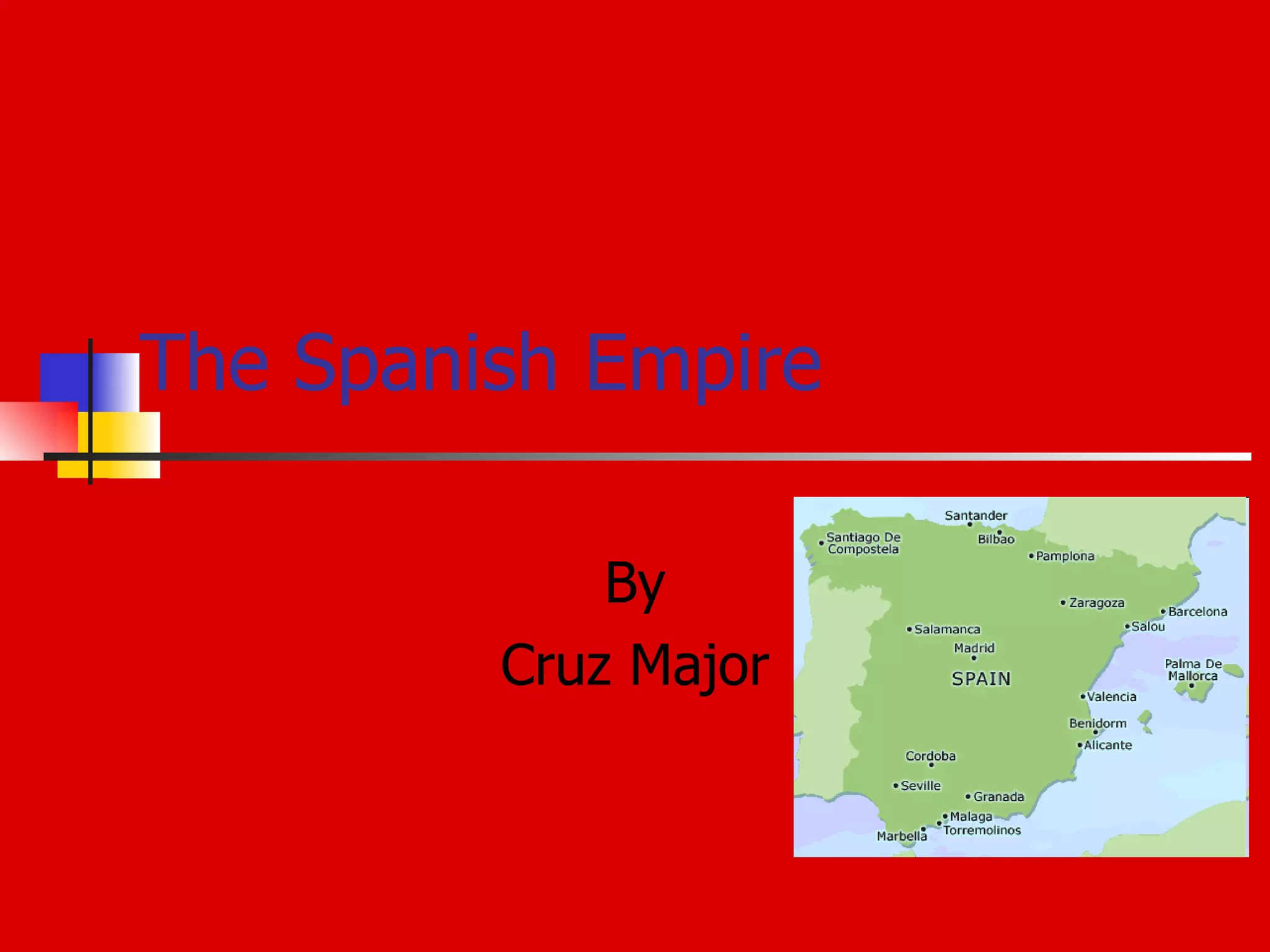
The Spanish Empire By Cruz Major
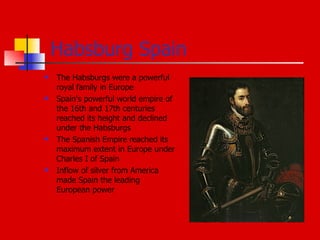
Habsburg Spain The Habsburgs were a powerful royal family in Europe Spain's powerful world empire of the 16th and 17th centuries reached its height and declined under the Habsburgs The Spanish Empire reached its maximum extent in Europe under Charles I of Spain Inflow of silver from America made Spain the leading European power
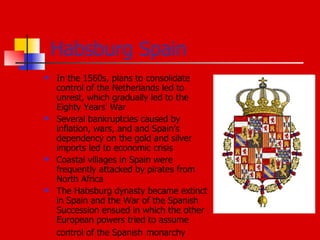
Habsburg Spain In the 1560s, plans to consolidate control of the Netherlands led to unrest, which gradually led to the Eighty Years' War Several bankruptcies caused by inflation, wars, and and Spain’s dependency on the gold and silver imports led to economic crisis Coastal villages in Spain were frequently attacked by pirates from North Africa The Habsburg dynasty became extinct in Spain and the War of the Spanish Succession ensued in which the other European powers tried to assume control of the Spanish   monarchy
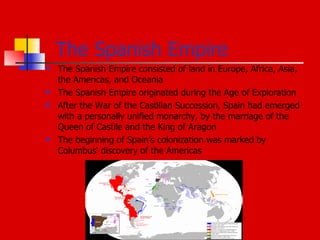
The Spanish Empire The Spanish Empire consisted of land in Europe, Africa, Asia, the Americas, and Oceania The Spanish Empire originated during the Age of Exploration After the War of the Castilian Succession, Spain had emerged with a personally unified monarchy, by the marriage of the Queen of Castile and the King of Aragon  The beginning of Spain’s colonization was marked by Columbus‘ discovery of the Americas
The Spanish Empire The focus of Spain’s colonization was in the Americas although Spain did own territories in Europe, Africa, Asia and Oceania In 1565 Miguel Lopez de Legazpi  landed in Guam and the Philippines, establishing the Spanish East Indies The Roman Catholic religion was brought over to the colonies of Spain and spread through to the natives Spain's European possessions were given up at the conclusion of the War of the Spanish Succession in 1713, but Spain retained its vast overseas empire  The French occupation of Spain in 1808 under Napoleon cut off its American colonies temporarily, and a number of independence movements between 1810 and 1825 resulted in a chain of newly independent Spanish American republics in South and Central America
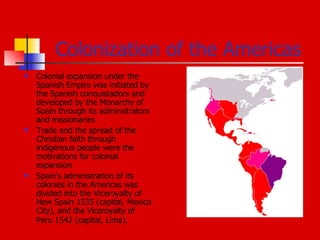
Colonization of the Americas Colonial expansion under the Spanish Empire was initiated by the Spanish conquistadors and developed by the Monarchy of Spain through its administrators and missionaries Trade and the spread of the Christian faith through indigenous people were the motivations for colonial expansion Spain's administration of its colonies in the Americas was divided into the Viceroyalty of New Spain 1535 (capital, Mexico City), and the Viceroyalty of Peru 1542 (capital, Lima).
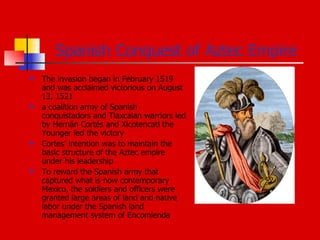
Spanish Conquest of Aztec Empire The invasion began in February 1519 and was acclaimed victorious on August 13, 1521 a coalition army of Spanish conquistadors and Tlaxcalan warriors led by Hernán Cortés and Xicotencatl the Younger led the victory Cortes' intention was to maintain the basic structure of the Aztec empire under his leadership To reward the Spanish army that captured what is now contemporary Mexico, the soldiers and officers were granted large areas of land and native labor under the Spanish land management system of Encomienda

Spanish empire

  • 1.
    The Spanish EmpireBy Cruz Major
  • 2.
    Habsburg Spain TheHabsburgs were a powerful royal family in Europe Spain's powerful world empire of the 16th and 17th centuries reached its height and declined under the Habsburgs The Spanish Empire reached its maximum extent in Europe under Charles I of Spain Inflow of silver from America made Spain the leading European power
  • 3.
    Habsburg Spain Inthe 1560s, plans to consolidate control of the Netherlands led to unrest, which gradually led to the Eighty Years' War Several bankruptcies caused by inflation, wars, and and Spain’s dependency on the gold and silver imports led to economic crisis Coastal villages in Spain were frequently attacked by pirates from North Africa The Habsburg dynasty became extinct in Spain and the War of the Spanish Succession ensued in which the other European powers tried to assume control of the Spanish monarchy
  • 4.
    The Spanish EmpireThe Spanish Empire consisted of land in Europe, Africa, Asia, the Americas, and Oceania The Spanish Empire originated during the Age of Exploration After the War of the Castilian Succession, Spain had emerged with a personally unified monarchy, by the marriage of the Queen of Castile and the King of Aragon The beginning of Spain’s colonization was marked by Columbus‘ discovery of the Americas
  • 5.
    The Spanish EmpireThe focus of Spain’s colonization was in the Americas although Spain did own territories in Europe, Africa, Asia and Oceania In 1565 Miguel Lopez de Legazpi landed in Guam and the Philippines, establishing the Spanish East Indies The Roman Catholic religion was brought over to the colonies of Spain and spread through to the natives Spain's European possessions were given up at the conclusion of the War of the Spanish Succession in 1713, but Spain retained its vast overseas empire The French occupation of Spain in 1808 under Napoleon cut off its American colonies temporarily, and a number of independence movements between 1810 and 1825 resulted in a chain of newly independent Spanish American republics in South and Central America
  • 6.
    Colonization of theAmericas Colonial expansion under the Spanish Empire was initiated by the Spanish conquistadors and developed by the Monarchy of Spain through its administrators and missionaries Trade and the spread of the Christian faith through indigenous people were the motivations for colonial expansion Spain's administration of its colonies in the Americas was divided into the Viceroyalty of New Spain 1535 (capital, Mexico City), and the Viceroyalty of Peru 1542 (capital, Lima).
  • 7.
    Spanish Conquest ofAztec Empire The invasion began in February 1519 and was acclaimed victorious on August 13, 1521 a coalition army of Spanish conquistadors and Tlaxcalan warriors led by Hernán Cortés and Xicotencatl the Younger led the victory Cortes' intention was to maintain the basic structure of the Aztec empire under his leadership To reward the Spanish army that captured what is now contemporary Mexico, the soldiers and officers were granted large areas of land and native labor under the Spanish land management system of Encomienda