SKN SIT, LONAVALA


       Semantic Web

G U I D E : - P R F O. P. R . B A R A PAT R E
                       BY
       A B H I J I T C . M A N E PAT I L
            RO L L N O. - C E 1 9
Contents

 Introduction.
 History.
 Layered approach of Semantic Web.
 Content of Semantic Web.
 Need of Semantic Web.
 Issues and Challenges.
 Conclusion.
 References.
Introduction

 Definition :
 "The Semantic Web is an extension of the current web in
  which information is given well-defined meaning, better
  enabling computers and people to work in co-operation.”

 It is the web of data that can be processed directly & indirectly
  by machine.

 It Defines the things in the way that computer application can
  understand it.

 Developed by Tim Berner lee.
Conti…

 Web has millions of documents with each one has set
 of terms.

 Terms are used to search the documents.


 E.g. Book written by jone.


 Semantic web allows to search exact result.
History

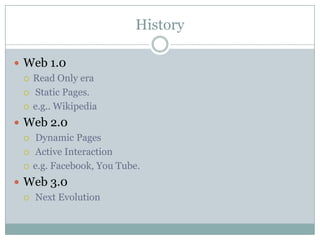
 Web 1.0
   Read Only era

   Static Pages.

   e.g.. Wikipedia

 Web 2.0
   Dynamic Pages

   Active Interaction

   e.g. Facebook, You Tube.

 Web 3.0
   Next Evolution
Web 3.0

 Semantic Web
   Machine Understandable

   Intelligence web

   More Active Interaction

   Defines the specific syntax for web


     1) common format for integration & combination of data
     2) It is also about the language for recording that how the data
         relates to real world objects.
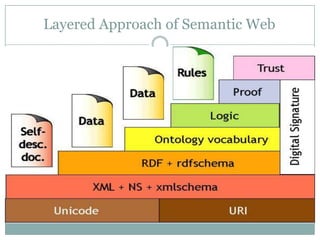
Layered Approach of Semantic Web
Components of the Semantic Web

 XML


 Uniform Resource Identifier (URI)


 Resource Description Framework (RDF)


 Resource Description Framework Schema (RDFS)


 Web Ontology Language (OWL)
XML

 HTML and XML


 XML with structured information


 XML shows the relationship betn terms of
 documents

 Which is machine understandable every peace of
 info. Is described.
Uniform Resource Identifier (URI)

 Web identifier : like string starting with http or ftp


 Anyone can create a URI


 Every resource has URI or a web address


 URI defines the web location


 Anything that has a URI is “On the Web‟‟
Resource Description Framework (RDF)

 Family of W3C designed as metadata model.
 General Methods for conceptual description or
    modeling of information.(Syntax)
   Similar to the ER or Class diagrams
   Shows the relationship between Subject-Predicates-
    Object (triples)
   E.g. „The Sky has the color blue‟
   RDF abstract model with serialization format (ie file
    format)
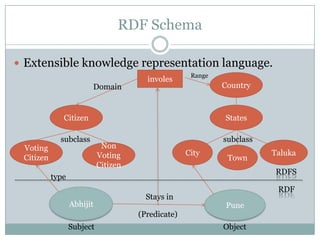
RDF Schema

 Extensible knowledge representation language.
                                                     Range
                                        involes
                        Domain                               Country


              Citizen                                        States

             subclass                                        subclass
 Voting                      Non
                            Voting                  City                Taluka
 Citizen                                                      Town
                            Citizen
                                                                         RDFS
           type
                                                                         RDF
                                        Stays in
                  Abhijit                                     Pune
                                      (Predicate)
                  Subject                                    Object
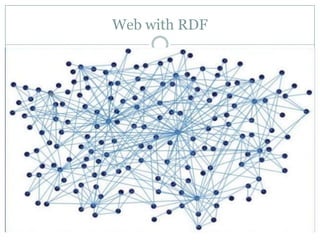
Web with RDF
OWL (Web Ontology Language )

 An ontology is an explict and formal specification of
    a conceptualization.
   It consist of finite list of terms and relationship betn
    them.
   Shared understanding
   Orgnizing and mapping wesite
   Improves the accuracy of web search
Issues and Challenges

 It’s Too Complex
    The RDF model is felt to be complex
    The RDF representation in XML looks complex

 Industry Isn’t Interested
   The Semantic Web won‟t take off unless the IT sector develops
    tools
 Its Too Researchy
   The Semantic Web is an idea for the AI research community
    and not for mainstream use
 Consensus Not Yet Reached On Architectural
  Approach
   There is still debate on RDF, patent issues, etc.
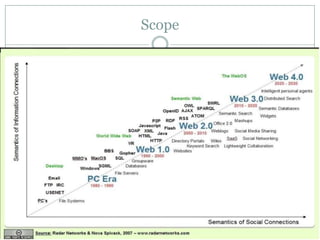
Scope
Conclusion

 To conclude:
   The first version of the Web lacked a metadata framework which was
    needed to describe resources
   W3C developed RDF to provide this framework

   Semantic web is the Future of Internet which will expected to
    rewrite the internet as we know
   Change the way of information search on web

   Semantic web can overcome all the traditional problems to provide a
    better and rich user experience to consumers all over the world.
References

• IEEE Internet Computing The Semantic Web: The Roles of XML
    and RDF Stefan Decker And Sergey Melnik Stanford University.

• IEEE INTELLIGENT SYSTEMS Ontology Languages for the
    Semantic Web Asunción Gómez-Pérez and Oscar Corcho,
    Universidad Politécnica de Madrid.

•   IEEE Published by the IEEE Computer Society:
    Semantics Scales Up Beyond Search in Web 3.0

•   T. Berners-Lee. Semantic Web Road Map
The semantic web

The semantic web

  • 1.
    SKN SIT, LONAVALA Semantic Web G U I D E : - P R F O. P. R . B A R A PAT R E BY A B H I J I T C . M A N E PAT I L RO L L N O. - C E 1 9
  • 2.
    Contents  Introduction.  History. Layered approach of Semantic Web.  Content of Semantic Web.  Need of Semantic Web.  Issues and Challenges.  Conclusion.  References.
  • 3.
    Introduction  Definition : "The Semantic Web is an extension of the current web in which information is given well-defined meaning, better enabling computers and people to work in co-operation.”  It is the web of data that can be processed directly & indirectly by machine.  It Defines the things in the way that computer application can understand it.  Developed by Tim Berner lee.
  • 4.
    Conti…  Web hasmillions of documents with each one has set of terms.  Terms are used to search the documents.  E.g. Book written by jone.  Semantic web allows to search exact result.
  • 5.
    History  Web 1.0  Read Only era  Static Pages.  e.g.. Wikipedia  Web 2.0  Dynamic Pages  Active Interaction  e.g. Facebook, You Tube.  Web 3.0  Next Evolution
  • 6.
    Web 3.0  SemanticWeb  Machine Understandable  Intelligence web  More Active Interaction  Defines the specific syntax for web  1) common format for integration & combination of data  2) It is also about the language for recording that how the data relates to real world objects.
  • 7.
    Layered Approach ofSemantic Web
  • 8.
    Components of theSemantic Web  XML  Uniform Resource Identifier (URI)  Resource Description Framework (RDF)  Resource Description Framework Schema (RDFS)  Web Ontology Language (OWL)
  • 9.
    XML  HTML andXML  XML with structured information  XML shows the relationship betn terms of documents  Which is machine understandable every peace of info. Is described.
  • 10.
    Uniform Resource Identifier(URI)  Web identifier : like string starting with http or ftp  Anyone can create a URI  Every resource has URI or a web address  URI defines the web location  Anything that has a URI is “On the Web‟‟
  • 11.
    Resource Description Framework(RDF)  Family of W3C designed as metadata model.  General Methods for conceptual description or modeling of information.(Syntax)  Similar to the ER or Class diagrams  Shows the relationship between Subject-Predicates- Object (triples)  E.g. „The Sky has the color blue‟  RDF abstract model with serialization format (ie file format)
  • 12.
    RDF Schema  Extensibleknowledge representation language. Range involes Domain Country Citizen States subclass subclass Voting Non Voting City Taluka Citizen Town Citizen RDFS type RDF Stays in Abhijit Pune (Predicate) Subject Object
  • 13.
  • 14.
    OWL (Web OntologyLanguage )  An ontology is an explict and formal specification of a conceptualization.  It consist of finite list of terms and relationship betn them.  Shared understanding  Orgnizing and mapping wesite  Improves the accuracy of web search
  • 15.
    Issues and Challenges It’s Too Complex  The RDF model is felt to be complex  The RDF representation in XML looks complex  Industry Isn’t Interested  The Semantic Web won‟t take off unless the IT sector develops tools  Its Too Researchy  The Semantic Web is an idea for the AI research community and not for mainstream use  Consensus Not Yet Reached On Architectural Approach  There is still debate on RDF, patent issues, etc.
  • 16.
  • 17.
    Conclusion  To conclude:  The first version of the Web lacked a metadata framework which was needed to describe resources  W3C developed RDF to provide this framework  Semantic web is the Future of Internet which will expected to rewrite the internet as we know  Change the way of information search on web  Semantic web can overcome all the traditional problems to provide a better and rich user experience to consumers all over the world.
  • 18.
    References • IEEE InternetComputing The Semantic Web: The Roles of XML and RDF Stefan Decker And Sergey Melnik Stanford University. • IEEE INTELLIGENT SYSTEMS Ontology Languages for the Semantic Web Asunción Gómez-Pérez and Oscar Corcho, Universidad Politécnica de Madrid. • IEEE Published by the IEEE Computer Society: Semantics Scales Up Beyond Search in Web 3.0 • T. Berners-Lee. Semantic Web Road Map