Download to read offline

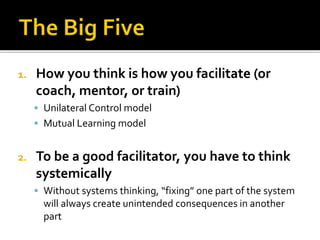
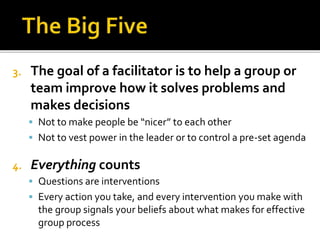
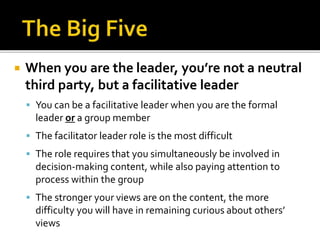
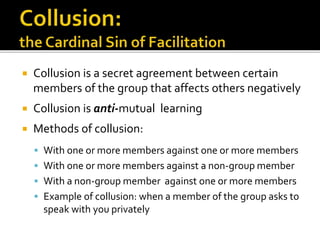
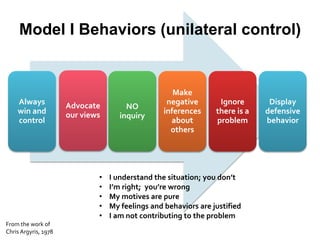
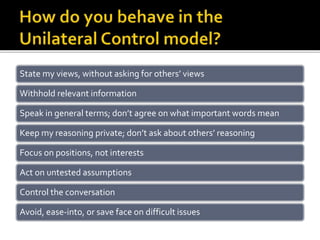
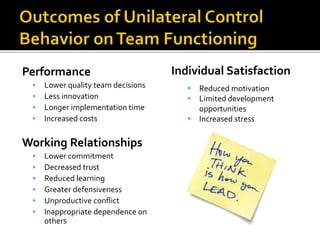
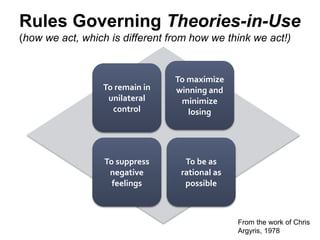
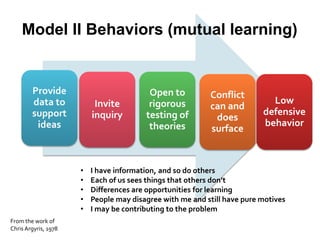
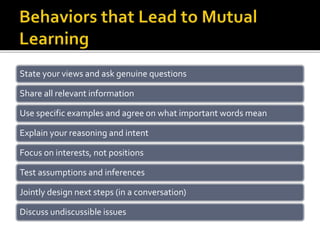
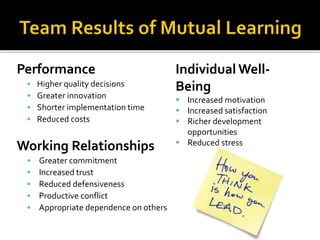
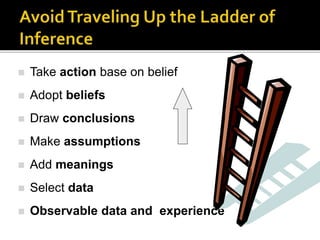
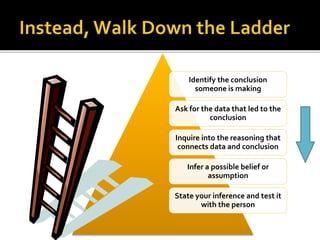
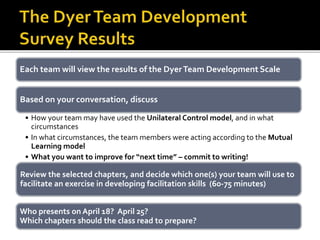

This document discusses key concepts for facilitators and group leaders. It covers: - Two models for how facilitators can think - unilateral control or mutual learning. Mutual learning is preferred as it promotes inquiry and sharing of all views. - The goal of facilitation is to help groups improve problem-solving and decision-making, not control agendas or make people nicer. - Facilitators must be aware of how their words and actions influence the group and signal their process beliefs. - Collusion and defensiveness harm groups, while open inquiry, sharing information, and discussing all issues promotes learning and performance.


![Cyborg1 [autosaved]](https://cdn.slidesharecdn.com/ss_thumbnails/cyborg1autosaved-170328191507-thumbnail.jpg?width=640&height=640&fit=bounds)


