The Road to Revolution
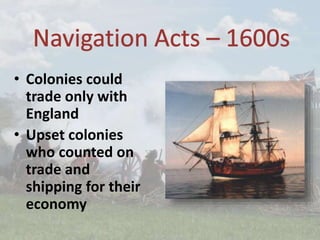
• Colonies could
trade only with
England
• Upset colonies
who counted on
trade and
shipping for their
economy
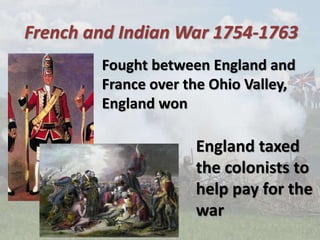
French and Indian War 1754-1763
England taxed
the colonists to
help pay for the
war
Fought between England and
France over the Ohio Valley,
England won
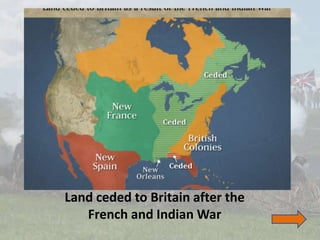
Land ceded to Britain after the
French and Indian War
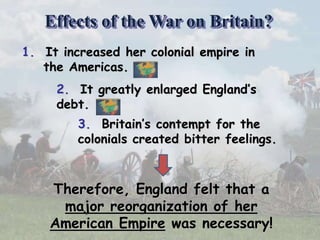
1. It increased her colonial empire in
the Americas.
2. It greatly enlarged England’s
debt.
3. Britain’s contempt for the
colonials created bitter feelings.
Therefore, England felt that a
major reorganization of her
American Empire was necessary!
Effects of the War on Britain?
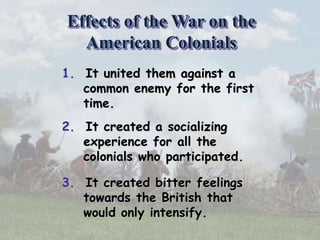
1. It united them against a
common enemy for the first
time.
2. It created a socializing
experience for all the
colonials who participated.
3. It created bitter feelings
towards the British that
would only intensify.
Effects of the War on the
American Colonials
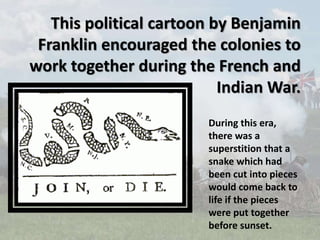
This political cartoon by Benjamin
Franklin encouraged the colonies to
work together during the French and
Indian War.
During this era,
there was a
superstition that a
snake which had
been cut into pieces
would come back to
life if the pieces
were put together
before sunset.
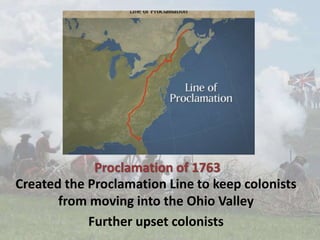
Proclamation of 1763
Created the Proclamation Line to keep colonists
from moving into the Ohio Valley
Further upset colonists
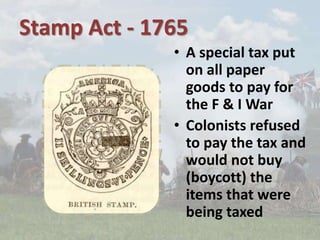
Stamp Act - 1765
• A special tax put
on all paper
goods to pay for
the F & I War
• Colonists refused
to pay the tax and
would not buy
(boycott) the
items that were
being taxed
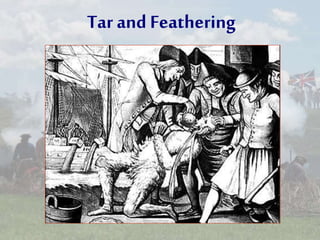
Tar and Feathering
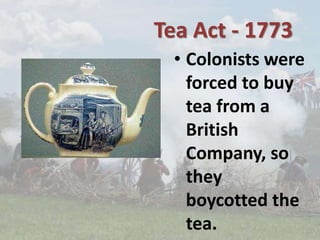
Tea Act - 1773
• Colonists were
forced to buy
tea from a
British
Company, so
they
boycotted the
tea.
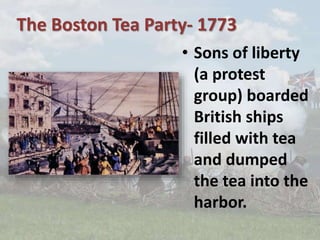
The Boston Tea Party- 1773
• Sons of liberty
(a protest
group) boarded
British ships
filled with tea
and dumped
the tea into the
harbor.
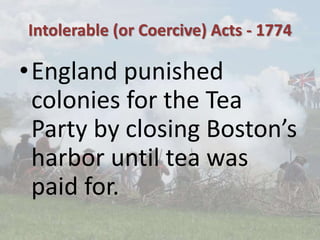
Intolerable (or Coercive) Acts - 1774
•England punished
colonies for the Tea
Party by closing Boston’s
harbor until tea was
paid for.
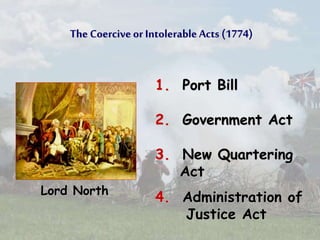
The Coercive or Intolerable Acts (1774)
Lord North
1. Port Bill
2. Government Act
4. Administration of
Justice Act
3. New Quartering
Act
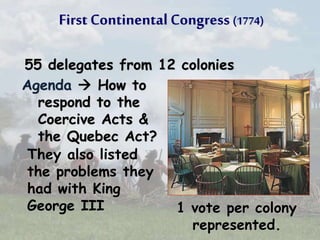
First Continental Congress (1774)
55 delegates from 12 colonies
Agenda  How to
respond to the
Coercive Acts &
the Quebec Act?
1 vote per colony
represented.
They also listed
the problems they
had with King
George III
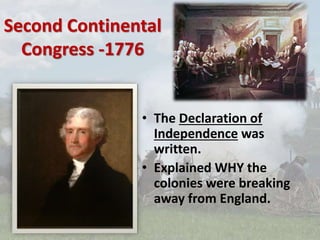
Second Continental
Congress -1776
• The Declaration of
Independence was
written.
• Explained WHY the
colonies were breaking
away from England.
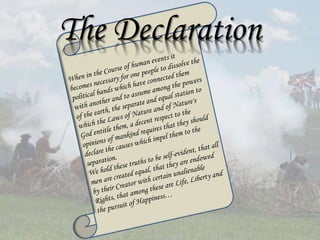
The Declaration
The Enlightenment and The American Revolution
Chain of Events
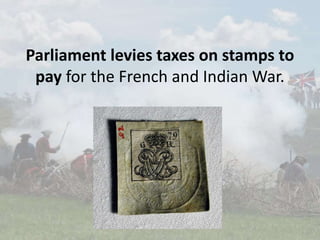
Parliament levies taxes on stamps to
pay for the French and Indian War.
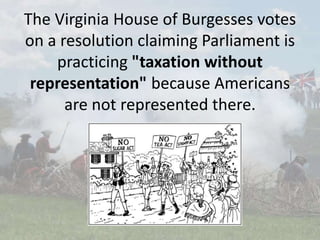
The Virginia House of Burgesses votes
on a resolution claiming Parliament is
practicing "taxation without
representation" because Americans
are not represented there.
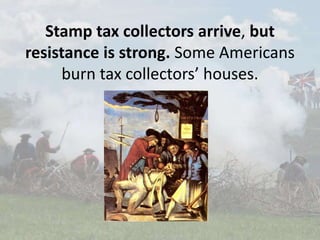
Stamp tax collectors arrive, but
resistance is strong. Some Americans
burn tax collectors’ houses.
The British repeal the Stamp Act and
Parliament passes customs duties on
lead, paper, paint, glass, and tea.
Colonists boycott British goods and
smuggle foreign goods.
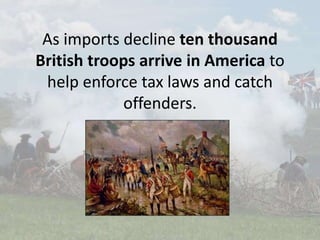
As imports decline ten thousand
British troops arrive in America to
help enforce tax laws and catch
offenders.
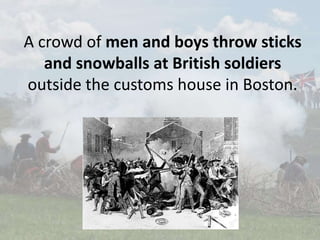
A crowd of men and boys throw sticks
and snowballs at British soldiers
outside the customs house in Boston.
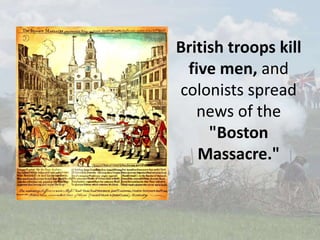
British troops kill
five men, and
colonists spread
news of the
"Boston
Massacre."
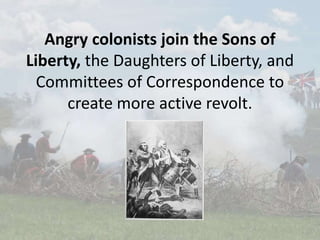
Angry colonists join the Sons of
Liberty, the Daughters of Liberty, and
Committees of Correspondence to
create more active revolt.
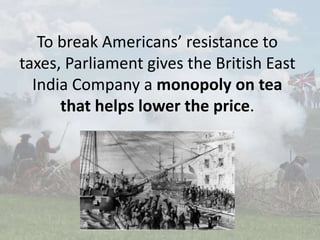
To break Americans’ resistance to
taxes, Parliament gives the British East
India Company a monopoly on tea
that helps lower the price.
Americans refuse to buy tea and
colonists disguised as Indians throw
342 chests of tea into Boston harbor.
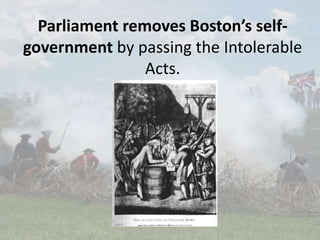
Parliament removes Boston’s self-
government by passing the Intolerable
Acts.
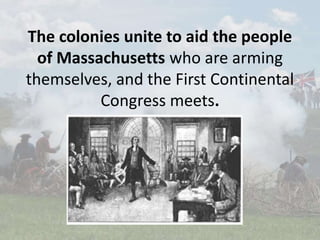
The colonies unite to aid the people
of Massachusetts who are arming
themselves, and the First Continental
Congress meets.
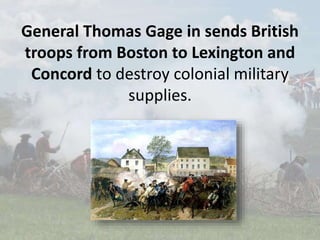
General Thomas Gage in sends British
troops from Boston to Lexington and
Concord to destroy colonial military
supplies.
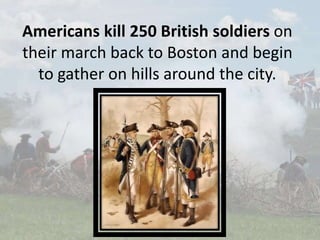
Americans kill 250 British soldiers on
their march back to Boston and begin
to gather on hills around the city.
General Gage sends his men to
capture Bunker (Breed’s) Hill. Forty
percent of his men die. The war is on.

The Road To Revolution

  • 1.
    The Road toRevolution
  • 2.
    • Colonies could tradeonly with England • Upset colonies who counted on trade and shipping for their economy
  • 3.
    French and IndianWar 1754-1763 England taxed the colonists to help pay for the war Fought between England and France over the Ohio Valley, England won
  • 4.
    Land ceded toBritain after the French and Indian War
  • 5.
    1. It increasedher colonial empire in the Americas. 2. It greatly enlarged England’s debt. 3. Britain’s contempt for the colonials created bitter feelings. Therefore, England felt that a major reorganization of her American Empire was necessary! Effects of the War on Britain?
  • 6.
    1. It unitedthem against a common enemy for the first time. 2. It created a socializing experience for all the colonials who participated. 3. It created bitter feelings towards the British that would only intensify. Effects of the War on the American Colonials
  • 7.
    This political cartoonby Benjamin Franklin encouraged the colonies to work together during the French and Indian War. During this era, there was a superstition that a snake which had been cut into pieces would come back to life if the pieces were put together before sunset.
  • 8.
    Proclamation of 1763 Createdthe Proclamation Line to keep colonists from moving into the Ohio Valley Further upset colonists
  • 9.
    Stamp Act -1765 • A special tax put on all paper goods to pay for the F & I War • Colonists refused to pay the tax and would not buy (boycott) the items that were being taxed
  • 10.
  • 11.
    Tea Act -1773 • Colonists were forced to buy tea from a British Company, so they boycotted the tea.
  • 12.
    The Boston TeaParty- 1773 • Sons of liberty (a protest group) boarded British ships filled with tea and dumped the tea into the harbor.
  • 13.
    Intolerable (or Coercive)Acts - 1774 •England punished colonies for the Tea Party by closing Boston’s harbor until tea was paid for.
  • 14.
    The Coercive orIntolerable Acts (1774) Lord North 1. Port Bill 2. Government Act 4. Administration of Justice Act 3. New Quartering Act
  • 15.
    First Continental Congress(1774) 55 delegates from 12 colonies Agenda  How to respond to the Coercive Acts & the Quebec Act? 1 vote per colony represented. They also listed the problems they had with King George III
  • 16.
    Second Continental Congress -1776 •The Declaration of Independence was written. • Explained WHY the colonies were breaking away from England.
  • 17.
  • 18.
    The Enlightenment andThe American Revolution
  • 19.
  • 20.
    Parliament levies taxeson stamps to pay for the French and Indian War.
  • 21.
    The Virginia Houseof Burgesses votes on a resolution claiming Parliament is practicing "taxation without representation" because Americans are not represented there.
  • 22.
    Stamp tax collectorsarrive, but resistance is strong. Some Americans burn tax collectors’ houses.
  • 23.
    The British repealthe Stamp Act and Parliament passes customs duties on lead, paper, paint, glass, and tea.
  • 24.
    Colonists boycott Britishgoods and smuggle foreign goods.
  • 25.
    As imports declineten thousand British troops arrive in America to help enforce tax laws and catch offenders.
  • 26.
    A crowd ofmen and boys throw sticks and snowballs at British soldiers outside the customs house in Boston.
  • 27.
    British troops kill fivemen, and colonists spread news of the "Boston Massacre."
  • 28.
    Angry colonists jointhe Sons of Liberty, the Daughters of Liberty, and Committees of Correspondence to create more active revolt.
  • 29.
    To break Americans’resistance to taxes, Parliament gives the British East India Company a monopoly on tea that helps lower the price.
  • 30.
    Americans refuse tobuy tea and colonists disguised as Indians throw 342 chests of tea into Boston harbor.
  • 31.
    Parliament removes Boston’sself- government by passing the Intolerable Acts.
  • 32.
    The colonies uniteto aid the people of Massachusetts who are arming themselves, and the First Continental Congress meets.
  • 33.
    General Thomas Gagein sends British troops from Boston to Lexington and Concord to destroy colonial military supplies.
  • 34.
    Americans kill 250British soldiers on their march back to Boston and begin to gather on hills around the city.
  • 35.
    General Gage sendshis men to capture Bunker (Breed’s) Hill. Forty percent of his men die. The war is on.