








Laws of DemandGoal 8
DiscussWhat is a market?In a market who is the consumer?How does the price of a good affect the consumer?
MarketAn arrangement that allows buyers and sellers to exchange thingsMarkets exist because no one is self sufficient and no one produces all we require to satisfy all our needs and wants.
DemandDescriptionThe quantities of a particular good or service consumers are willing and able to buy at different possible prices at a particular time
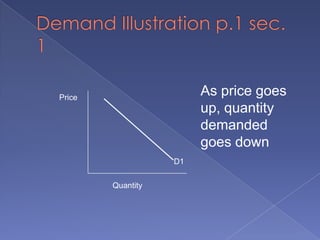
Demand Illustration p.1 sec. 1As price goes up, quantity demanded goes downPriceD1Quantity
DiscussHow does demand and “want” or “desire” differ?You may want or desire a new car or a closet full of clothes, but you demand these things only when you are willing and able to buy them.
Quantity DemandThe quantities of a particular good or service consumers are willing and able to buy at set prices at a particular time
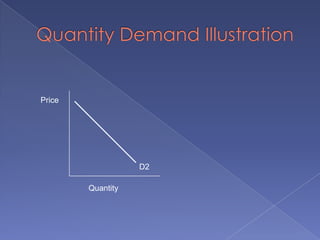
Quantity Demand IllustrationPriceD2Quantity
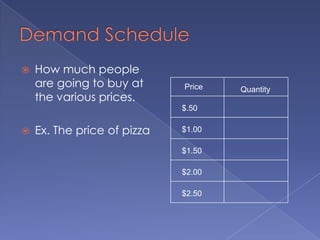
Demand ScheduleHow much people are going to buy at the various prices.Ex. The price of pizzaPriceQuantity$.50$1.00$1.50$2.00$2.50
Law of DemandAs price goes up quantity goes downAs price goes down quantity goes upPeople buy less of something at higher prices than they do at lower prices.
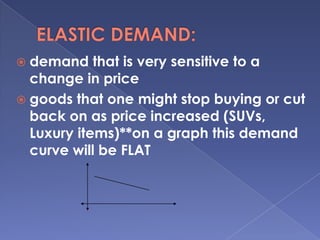
ELASTIC DEMAND:demand that is very sensitive to a change in pricegoods that one might stop buying or cut back on as price increased (SUVs, Luxury items)**on a graph this demand curve will be FLAT
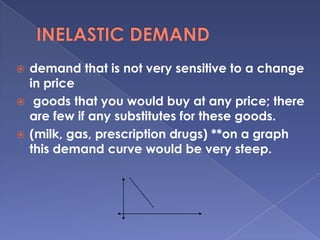
INELASTIC DEMANDdemand that is not very sensitive to a change in price goods that you would buy at any price; there are few if any substitutes for these goods. (milk, gas, prescription drugs) **on a graph this demand curve would be very steep.
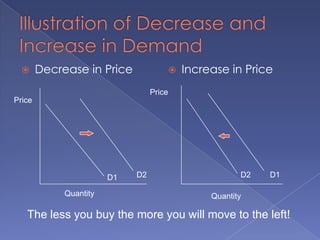
Illustration of Decrease and Increase in DemandDecrease in PriceIncrease in PricePricePriceD2D1D2D1QuantityQuantityThe less you buy the more you will move to the left!
The Demand CurveThe Demand Curve slopes downward to the right because the consumer is willing and able to buy more gasoline at lower prices than at higher prices.
Scenario #1Harris Teeter is advertising a sale on hot dog buns.  What is the impact on the demand for hot dogs?
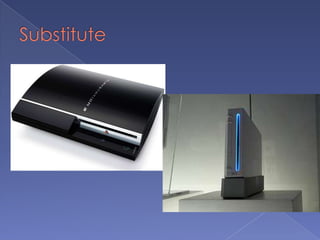
Scenario #2Playstation 3, the newest video game console, hits stores.  What is the impact on the demand for Xbox 360?
Scenario #3The weatherman forecasts rain for the weekend in Charlotte.  What is the impact on the demand for umbrellas?
Scenario #4The N.C. General Assembly increases minimum wage to $7/hour.  What is the impact on the demand for clothing?
Scenario #5A snowy blizzard blows through Charlotte.  What is the impact on the demand for snow boots?
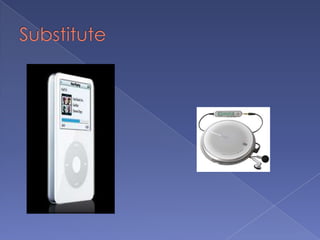
Scenario #6The price of MP3 players decreases dramatically due to new technology.  What is the impact on the demand for portable CD players?
Scenario #7Summertime is approaching.  What is the impact on the demand for shorts?
Scenario #8The price of hamburgers increases at Food Lion.  What is the impact on the demand for French fries?
Changes in Demand
Reasons Demand can changePeople’s IncomeWeatherComplementary GoodsSubstitute Goods
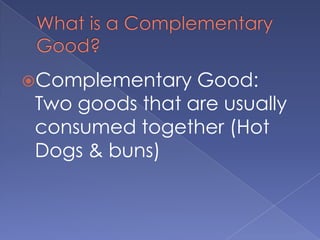
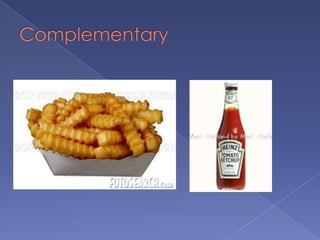
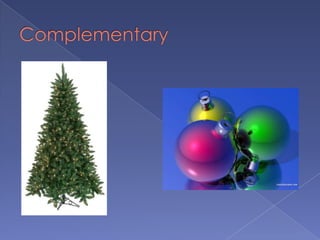
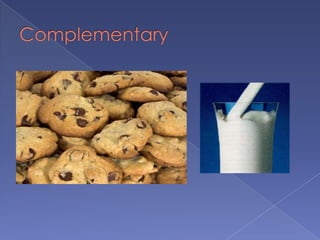
What is a Complementary Good? Complementary Good: Two goods that are usually consumed together (Hot Dogs & buns)
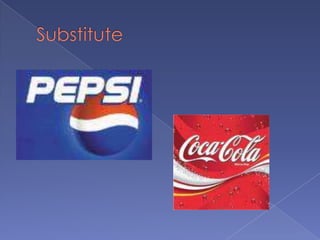
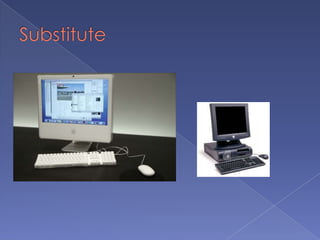
What is a Substitute Good? Substitute Good: An acceptable replacement for a good (Playstation & Xbox)
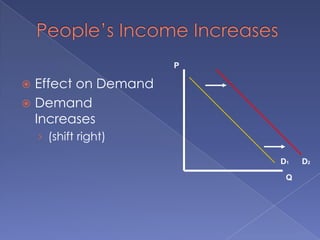
People’s Income IncreasesPEffect on DemandDemand Increases(shift right)D1D2Q
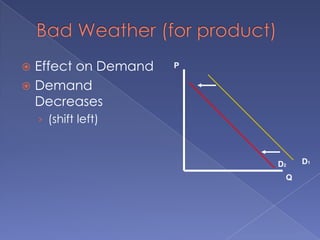
Bad Weather (for product)Effect on DemandDemand Decreases(shift left)PD1D2Q
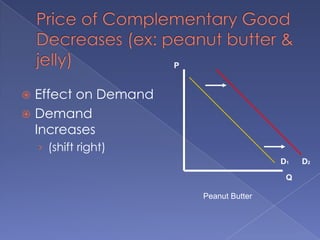
Price of Complementary Good Decreases (ex: peanut butter & jelly)PEffect on DemandDemand Increases(shift right)D1D2QPeanut Butter
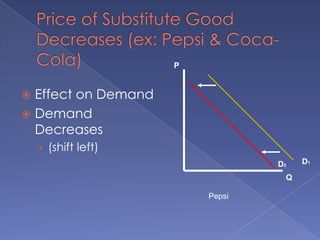
Price of Substitute Good Decreases (ex: Pepsi & Coca-Cola)PEffect on DemandDemand Decreases(shift left)D1D2QPepsi
Complementary vs. SubstituteCan YOU tell the difference????
Substitute
Complementary
Substitute
Complementary
Substitute
Substitute
Complementary
Elasticity of DemandHow much the quantity demanded will change if the price rises or falls.
Supply
DiscussNow you are the producerThink about the business you are creatingThings are now going to reverse
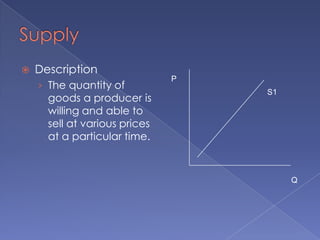
SupplyDescriptionThe quantity of goods a producer is willing and able to sell at various prices at a particular time.PS1Q
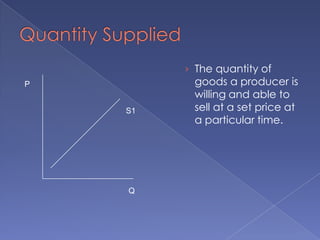
Quantity SuppliedThe quantity of goods a producer is willing and able to sell at a set price at a particular time.PS1Q
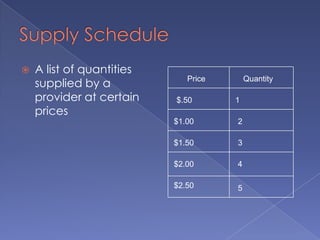
Supply ScheduleA list of quantities supplied by a provider at certain pricesPriceQuantity$.501$1.002$1.503$2.004$2.505
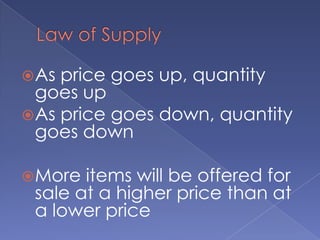
Law of SupplyAs price goes up, quantity goes upAs price goes down, quantity goes downMore items will be offered for sale at a higher price than at a lower price
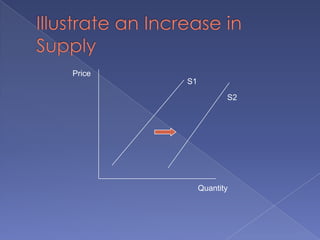
Illustrate an Increase in SupplyPriceS1S2Quantity
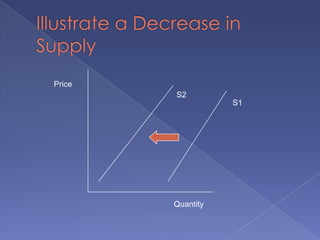
Illustrate a Decrease in SupplyPriceS2S1Quantity
Supply CurveThe Supply Curve slopes upward and to the right because the producer is willing and able to sell more products at higher prices than at lower prices.
Change in Supply
Reasons for change in Supply Cost of InputsNumber of SuppliersWeather
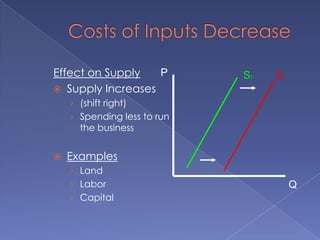
Costs of Inputs DecreaseEffect on SupplySupply Increases(shift right)Spending less to run the businessExamplesLandLaborCapitalPS1S2Q
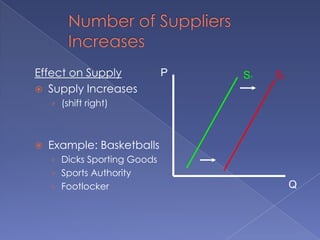
Number of Suppliers IncreasesEffect on SupplySupply Increases(shift right)Example: BasketballsDicks Sporting GoodsSports AuthorityFootlockerPS1S2Q
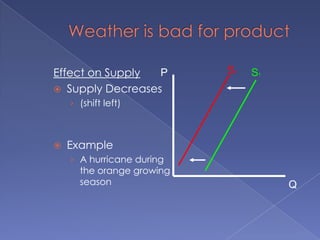
Weather is bad for productS2Effect on SupplySupply Decreases(shift left)ExampleA hurricane during the orange growing seasonPS1Q
SO… can you apply this knowledge?1)  Together lets decide if the following scenarios are a change in…Input costsNumber of suppliersWeather2)  Then decide if it willIncrease supplyDecrease Supply
Situation #1Dick’s Sporting Goods goes out of business.  What is the impact on basketballs in Charlotte?-number of suppliers changes-Supply Decreases
Situation #2A hurricane destroys the orange groves in Florida.  What is the impact on the supply of Orange Juice?-weather changes-Supply Decreases
Situation #3The price of gas decreases.  What is the impact of trucking companies?-cost of inputs change-Supply Increase
Situation #4Nike moves their factory from the U.S. to China where workers are paid less.  What is the impact on the supply of Nike’s shoes?-change in input costs-Supply Increases
Supply and Demand together
Equilibrium: the point at which quantity demanded and quantity supplied are equal
At a point of equilibrium….the price and quantity are balancedthe market for a good/service is stable
Disequilibrium:  any price or quantity not at equilibrium
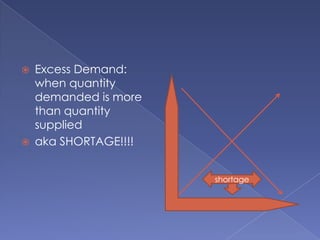
Excess Demand: when quantity demanded is more than quantity suppliedaka SHORTAGE!!!!shortage
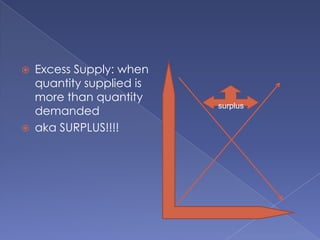
Excess Supply: when quantity supplied is more than quantity demandedaka SURPLUS!!!!   surplus
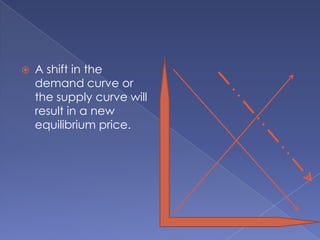
A shift in the demand curve or the supply curve will result in a new equilibrium price.
Government Intervention in a Market EconomyPrice Ceiling: a maximum price that can be legally charged for a good or service (example: rent control) Price Floor: a minimum price for a good or service(example: minimum wage)
Inflation and Deflation Inflation: a general increase in prices (over the years, prices rise and fall, but in the American economy, they have mostly risen) Deflation: A substantial drop in the prices

Goal 8 supply and demand changes

  • 1.
  • 2.
    DiscussWhat is amarket?In a market who is the consumer?How does the price of a good affect the consumer?
  • 3.
    MarketAn arrangement thatallows buyers and sellers to exchange thingsMarkets exist because no one is self sufficient and no one produces all we require to satisfy all our needs and wants.
  • 4.
    DemandDescriptionThe quantities ofa particular good or service consumers are willing and able to buy at different possible prices at a particular time
  • 5.
    Demand Illustration p.1sec. 1As price goes up, quantity demanded goes downPriceD1Quantity
  • 6.
    DiscussHow does demandand “want” or “desire” differ?You may want or desire a new car or a closet full of clothes, but you demand these things only when you are willing and able to buy them.
  • 7.
    Quantity DemandThe quantitiesof a particular good or service consumers are willing and able to buy at set prices at a particular time
  • 8.
  • 9.
    Demand ScheduleHow muchpeople are going to buy at the various prices.Ex. The price of pizzaPriceQuantity$.50$1.00$1.50$2.00$2.50
  • 10.
    Law of DemandAsprice goes up quantity goes downAs price goes down quantity goes upPeople buy less of something at higher prices than they do at lower prices.
  • 11.
    ELASTIC DEMAND:demand thatis very sensitive to a change in pricegoods that one might stop buying or cut back on as price increased (SUVs, Luxury items)**on a graph this demand curve will be FLAT
  • 12.
    INELASTIC DEMANDdemand thatis not very sensitive to a change in price goods that you would buy at any price; there are few if any substitutes for these goods. (milk, gas, prescription drugs) **on a graph this demand curve would be very steep.
  • 13.
    Illustration of Decreaseand Increase in DemandDecrease in PriceIncrease in PricePricePriceD2D1D2D1QuantityQuantityThe less you buy the more you will move to the left!
  • 14.
    The Demand CurveTheDemand Curve slopes downward to the right because the consumer is willing and able to buy more gasoline at lower prices than at higher prices.
  • 15.
    Scenario #1Harris Teeteris advertising a sale on hot dog buns. What is the impact on the demand for hot dogs?
  • 16.
    Scenario #2Playstation 3,the newest video game console, hits stores. What is the impact on the demand for Xbox 360?
  • 17.
    Scenario #3The weathermanforecasts rain for the weekend in Charlotte. What is the impact on the demand for umbrellas?
  • 18.
    Scenario #4The N.C.General Assembly increases minimum wage to $7/hour. What is the impact on the demand for clothing?
  • 19.
    Scenario #5A snowyblizzard blows through Charlotte. What is the impact on the demand for snow boots?
  • 20.
    Scenario #6The priceof MP3 players decreases dramatically due to new technology. What is the impact on the demand for portable CD players?
  • 21.
    Scenario #7Summertime isapproaching. What is the impact on the demand for shorts?
  • 22.
    Scenario #8The priceof hamburgers increases at Food Lion. What is the impact on the demand for French fries?
  • 23.
  • 24.
    Reasons Demand canchangePeople’s IncomeWeatherComplementary GoodsSubstitute Goods
  • 25.
    What is aComplementary Good? Complementary Good: Two goods that are usually consumed together (Hot Dogs & buns)
  • 26.
    What is aSubstitute Good? Substitute Good: An acceptable replacement for a good (Playstation & Xbox)
  • 27.
    People’s Income IncreasesPEffecton DemandDemand Increases(shift right)D1D2Q
  • 28.
    Bad Weather (forproduct)Effect on DemandDemand Decreases(shift left)PD1D2Q
  • 29.
    Price of ComplementaryGood Decreases (ex: peanut butter & jelly)PEffect on DemandDemand Increases(shift right)D1D2QPeanut Butter
  • 30.
    Price of SubstituteGood Decreases (ex: Pepsi & Coca-Cola)PEffect on DemandDemand Decreases(shift left)D1D2QPepsi
  • 31.
    Complementary vs. SubstituteCanYOU tell the difference????
  • 32.
  • 33.
  • 34.
  • 35.
  • 36.
  • 37.
  • 38.
  • 39.
    Elasticity of DemandHowmuch the quantity demanded will change if the price rises or falls.
  • 40.
  • 41.
    DiscussNow you arethe producerThink about the business you are creatingThings are now going to reverse
  • 42.
    SupplyDescriptionThe quantity ofgoods a producer is willing and able to sell at various prices at a particular time.PS1Q
  • 43.
    Quantity SuppliedThe quantityof goods a producer is willing and able to sell at a set price at a particular time.PS1Q
  • 44.
    Supply ScheduleA listof quantities supplied by a provider at certain pricesPriceQuantity$.501$1.002$1.503$2.004$2.505
  • 45.
    Law of SupplyAsprice goes up, quantity goes upAs price goes down, quantity goes downMore items will be offered for sale at a higher price than at a lower price
  • 46.
    Illustrate an Increasein SupplyPriceS1S2Quantity
  • 47.
    Illustrate a Decreasein SupplyPriceS2S1Quantity
  • 48.
    Supply CurveThe SupplyCurve slopes upward and to the right because the producer is willing and able to sell more products at higher prices than at lower prices.
  • 49.
  • 50.
    Reasons for changein Supply Cost of InputsNumber of SuppliersWeather
  • 51.
    Costs of InputsDecreaseEffect on SupplySupply Increases(shift right)Spending less to run the businessExamplesLandLaborCapitalPS1S2Q
  • 52.
    Number of SuppliersIncreasesEffect on SupplySupply Increases(shift right)Example: BasketballsDicks Sporting GoodsSports AuthorityFootlockerPS1S2Q
  • 53.
    Weather is badfor productS2Effect on SupplySupply Decreases(shift left)ExampleA hurricane during the orange growing seasonPS1Q
  • 54.
    SO… can youapply this knowledge?1) Together lets decide if the following scenarios are a change in…Input costsNumber of suppliersWeather2) Then decide if it willIncrease supplyDecrease Supply
  • 55.
    Situation #1Dick’s SportingGoods goes out of business. What is the impact on basketballs in Charlotte?-number of suppliers changes-Supply Decreases
  • 56.
    Situation #2A hurricanedestroys the orange groves in Florida. What is the impact on the supply of Orange Juice?-weather changes-Supply Decreases
  • 57.
    Situation #3The priceof gas decreases. What is the impact of trucking companies?-cost of inputs change-Supply Increase
  • 58.
    Situation #4Nike movestheir factory from the U.S. to China where workers are paid less. What is the impact on the supply of Nike’s shoes?-change in input costs-Supply Increases
  • 59.
  • 60.
    Equilibrium: the pointat which quantity demanded and quantity supplied are equal
  • 61.
    At a pointof equilibrium….the price and quantity are balancedthe market for a good/service is stable
  • 62.
    Disequilibrium: anyprice or quantity not at equilibrium
  • 63.
    Excess Demand: whenquantity demanded is more than quantity suppliedaka SHORTAGE!!!!shortage
  • 64.
    Excess Supply: whenquantity supplied is more than quantity demandedaka SURPLUS!!!! surplus
  • 65.
    A shift inthe demand curve or the supply curve will result in a new equilibrium price.
  • 66.
    Government Intervention ina Market EconomyPrice Ceiling: a maximum price that can be legally charged for a good or service (example: rent control) Price Floor: a minimum price for a good or service(example: minimum wage)
  • 67.
    Inflation and Deflation Inflation:a general increase in prices (over the years, prices rise and fall, but in the American economy, they have mostly risen) Deflation: A substantial drop in the prices