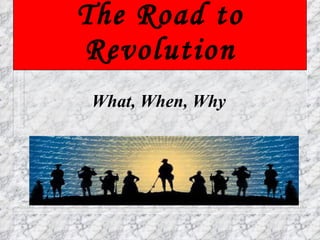

The Road to Revolution What, When, Why
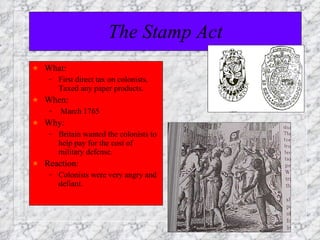
The Stamp Act What: First direct tax on colonists. Taxed any paper products. When:  March 1765 Why: Britain wanted the colonists to help pay for the cost of military defense. Reaction: Colonists were very angry and defiant.
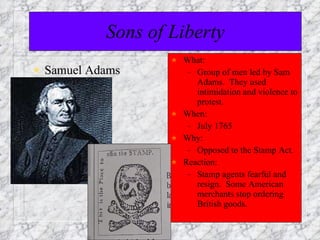
Sons of Liberty Samuel Adams What: Group of men led by Sam Adams.  They used intimidation and violence to protest. When: July 1765 Why: Opposed to the Stamp Act. Reaction: Stamp agents fearful and resign.  Some American merchants stop ordering British goods.
Townshend Acts What:  Taxes on any goods imported from Britain. When:  June 1767 Why:  Officially to offset the costs of administering and protecting the colonies.  Unofficially, imposed by Townshend to prove that he could do it. Reaction:  Boycott of British goods, colonists made their own stuff .
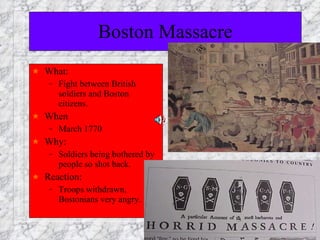
Boston Massacre What: Fight between British soldiers and Boston citizens. When March 1770 Why:  Soldiers being bothered by people so shot back. Reaction:  Troops withdrawn, Bostonians very angry.
Committees of Correspondence What:  Groups formed throughout colonies that wrote to each other. When:  1772 Why: To keep other towns and colonies informed. Reaction:  More colonists supportive after learning about  events.
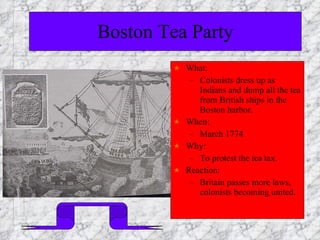
Boston Tea Party What:  Colonists dress up as Indians and dump all the tea from British ships in the Boston harbor. When: March 1774 Why:  To protest the tea tax. Reaction:  Britain passes more laws, colonists becoming united.
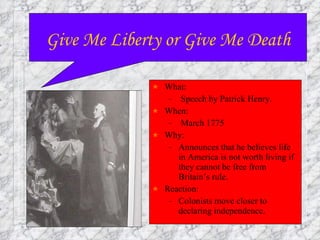
What: Speech by Patrick Henry. When:  March 1775 Why: Announces that he believes life in America is not worth living if they cannot be free from Britain’s rule. Reaction:  Colonists move closer to declaring independence. Give Me Liberty or Give Me Death
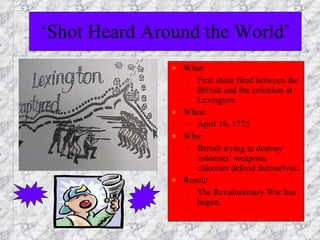
‘Shot Heard Around the World’ What:  First shots fired between the British and the colonists at Lexington. When:  April 19, 1775 Why: British trying to destroy colonists’ weapons, colonists defend themselves. Result: The Revolutionary War has begun.
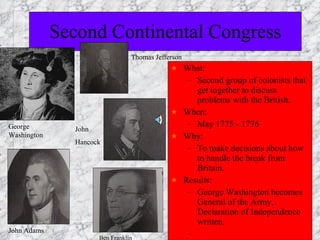
Second Continental Congress What: Second group of colonists that get together to discuss problems with the British. When: May 1775 - 1776 Why: To make decisions about how to handle the break from Britain. Results: George Washington becomes General of the Army, Declaration of Independence written. George Washington Ben Franklin John Adams Thomas Jefferson John Hancock
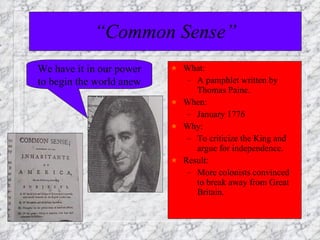
“ Common Sense” What:  A pamphlet written by Thomas Paine. When: January 1776 Why:  To criticize the King and argue for independence. Result: More colonists convinced to break away from Great Britain. We have it in our power to begin the world anew
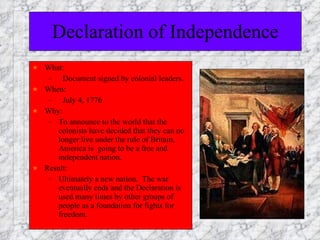
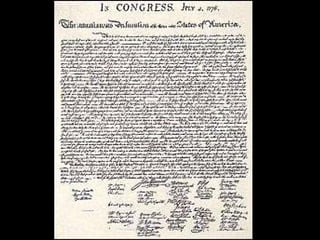
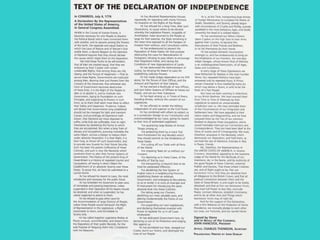
Declaration of Independence What: Document signed by colonial leaders. When: July 4, 1776 Why:  To announce to the world that the colonists have decided that they can no longer live under the rule of Britain, America is  going to be a free and independent nation. Result:  Ultimately a new nation.  The war eventually ends and the Declaration is used many times by other groups of people as a foundation for fights for freedom.
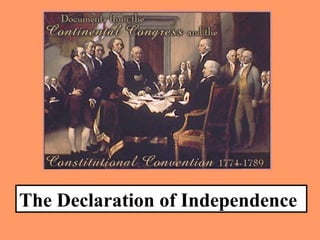
The Declaration of Independence
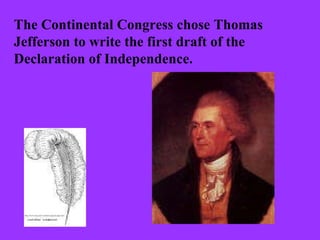
The Continental Congress chose Thomas Jefferson to write the first draft of the Declaration of Independence.
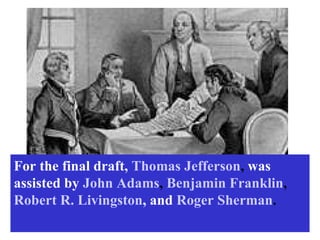
For the final draft,  Thomas Jefferson ,  was assisted by   John Adams ,  Benjamin Franklin ,  Robert R. Livingston , and   Roger Sherman .
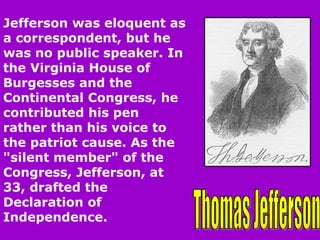
Thomas Jefferson Jefferson was eloquent as a correspondent, but he was no public speaker. In the Virginia House of Burgesses and the Continental Congress, he contributed his pen rather than his voice to the patriot cause. As the "silent member" of the Congress, Jefferson, at 33, drafted the Declaration of Independence.
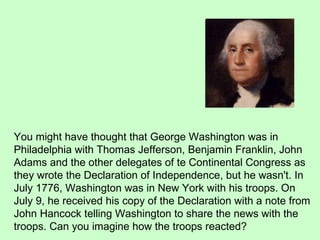
You might have thought that George Washington was in Philadelphia with Thomas Jefferson, Benjamin Franklin, John Adams and the other delegates of te Continental Congress as they wrote the Declaration of Independence, but he wasn't. In July 1776, Washington was in New York with his troops. On July 9, he received his copy of the Declaration with a note from John Hancock telling Washington to share the news with the troops. Can you imagine how the troops reacted?
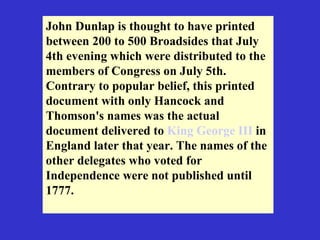
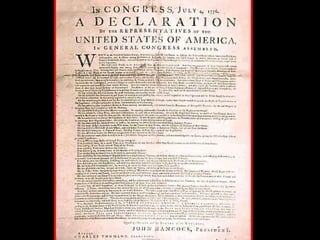
John Dunlap is thought to have printed between 200 to 500 Broadsides that July 4th evening which were distributed to the members of Congress on July 5th. Contrary to popular belief, this printed document with only Hancock and Thomson's names was the actual document delivered to  King George III  in England later that year. The names of the other delegates who voted for Independence were not published until 1777.
 
 
In fact, the Declaration of Independence was made to be  read aloud …


US HIST - Road to Revolution

  • 1.
    The Road toRevolution What, When, Why
  • 2.
    The Stamp ActWhat: First direct tax on colonists. Taxed any paper products. When: March 1765 Why: Britain wanted the colonists to help pay for the cost of military defense. Reaction: Colonists were very angry and defiant.
  • 3.
    Sons of LibertySamuel Adams What: Group of men led by Sam Adams. They used intimidation and violence to protest. When: July 1765 Why: Opposed to the Stamp Act. Reaction: Stamp agents fearful and resign. Some American merchants stop ordering British goods.
  • 4.
    Townshend Acts What: Taxes on any goods imported from Britain. When: June 1767 Why: Officially to offset the costs of administering and protecting the colonies. Unofficially, imposed by Townshend to prove that he could do it. Reaction: Boycott of British goods, colonists made their own stuff .
  • 5.
    Boston Massacre What:Fight between British soldiers and Boston citizens. When March 1770 Why: Soldiers being bothered by people so shot back. Reaction: Troops withdrawn, Bostonians very angry.
  • 6.
    Committees of CorrespondenceWhat: Groups formed throughout colonies that wrote to each other. When: 1772 Why: To keep other towns and colonies informed. Reaction: More colonists supportive after learning about events.
  • 7.
    Boston Tea PartyWhat: Colonists dress up as Indians and dump all the tea from British ships in the Boston harbor. When: March 1774 Why: To protest the tea tax. Reaction: Britain passes more laws, colonists becoming united.
  • 8.
    What: Speech byPatrick Henry. When: March 1775 Why: Announces that he believes life in America is not worth living if they cannot be free from Britain’s rule. Reaction: Colonists move closer to declaring independence. Give Me Liberty or Give Me Death
  • 9.
    ‘Shot Heard Aroundthe World’ What: First shots fired between the British and the colonists at Lexington. When: April 19, 1775 Why: British trying to destroy colonists’ weapons, colonists defend themselves. Result: The Revolutionary War has begun.
  • 10.
    Second Continental CongressWhat: Second group of colonists that get together to discuss problems with the British. When: May 1775 - 1776 Why: To make decisions about how to handle the break from Britain. Results: George Washington becomes General of the Army, Declaration of Independence written. George Washington Ben Franklin John Adams Thomas Jefferson John Hancock
  • 11.
    “ Common Sense”What: A pamphlet written by Thomas Paine. When: January 1776 Why: To criticize the King and argue for independence. Result: More colonists convinced to break away from Great Britain. We have it in our power to begin the world anew
  • 12.
    Declaration of IndependenceWhat: Document signed by colonial leaders. When: July 4, 1776 Why: To announce to the world that the colonists have decided that they can no longer live under the rule of Britain, America is going to be a free and independent nation. Result: Ultimately a new nation. The war eventually ends and the Declaration is used many times by other groups of people as a foundation for fights for freedom.
  • 13.
    The Declaration ofIndependence
  • 14.
    The Continental Congresschose Thomas Jefferson to write the first draft of the Declaration of Independence.
  • 15.
    For the finaldraft, Thomas Jefferson , was assisted by John Adams , Benjamin Franklin , Robert R. Livingston , and Roger Sherman .
  • 16.
    Thomas Jefferson Jeffersonwas eloquent as a correspondent, but he was no public speaker. In the Virginia House of Burgesses and the Continental Congress, he contributed his pen rather than his voice to the patriot cause. As the "silent member" of the Congress, Jefferson, at 33, drafted the Declaration of Independence.
  • 17.
    You might havethought that George Washington was in Philadelphia with Thomas Jefferson, Benjamin Franklin, John Adams and the other delegates of te Continental Congress as they wrote the Declaration of Independence, but he wasn't. In July 1776, Washington was in New York with his troops. On July 9, he received his copy of the Declaration with a note from John Hancock telling Washington to share the news with the troops. Can you imagine how the troops reacted?
  • 18.
    John Dunlap isthought to have printed between 200 to 500 Broadsides that July 4th evening which were distributed to the members of Congress on July 5th. Contrary to popular belief, this printed document with only Hancock and Thomson's names was the actual document delivered to King George III in England later that year. The names of the other delegates who voted for Independence were not published until 1777.
  • 19.
  • 20.
  • 21.
    In fact, theDeclaration of Independence was made to be read aloud …
  • 22.
  • 23.