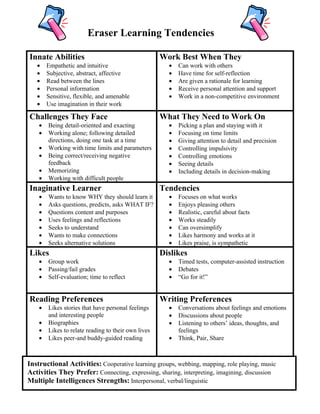
Eraser Learning Tendencies

Innate Abilities                                     Work Best When They
   •    Empathetic and intuitive                       •   Can work with others
   •    Subjective, abstract, affective                •   Have time for self-reflection
   •    Read between the lines                         •   Are given a rationale for learning
   •    Personal information                           •   Receive personal attention and support
   •    Sensitive, flexible, and amenable              •   Work in a non-competitive environment
   •    Use imagination in their work

Challenges They Face                                 What They Need to Work On
    •   Being detail-oriented and exacting             •   Picking a plan and staying with it
    •   Working alone; following detailed              •   Focusing on time limits
        directions, doing one task at a time           •   Giving attention to detail and precision
    •   Working with time limits and parameters        •   Controlling impulsivity
    •   Being correct/receiving negative               •   Controlling emotions
        feedback                                       •   Seeing details
    •   Memorizing                                     •   Including details in decision-making
    •   Working with difficult people
Inaginative Learner                                  Tendencies
    •   Wants to know WHY they should learn it         •   Focuses on what works
    •   Asks questions, predicts, asks WHAT IF?        •   Enjoys pleasing others
    •   Questions content and purposes                 •   Realistic, careful about facts
    •   Uses feelings and reflections                  •   Works steadily
    •   Seeks to understand                            •   Can oversimplify
    •   Wants to make connections                      •   Likes harmony and works at it
    •   Seeks alternative solutions                    •   Likes praise, is sympathetic
Likes                                                Dislikes
    •   Group work                                     •   Timed tests, computer-assisted instruction
    •   Passing/fail grades                            •   Debates
    •   Self-evaluation; time to reflect               •   “Go for it!”


Reading Preferences                                  Writing Preferences
    •   Likes stories that have personal feelings      •   Conversations about feelings and emotions
        and interesting people                         •   Discussions about people
    •   Biographies                                    •   Listening to others’ ideas, thoughts, and
    •   Likes to relate reading to their own lives         feelings
    •   Likes peer-and buddy-guided reading            •   Think, Pair, Share


Instructional Activities: Cooperative learning groups, webbing, mapping, role playing, music
Activities They Prefer: Connecting, expressing, sharing, interpreting, imagining, discussion
Multiple Intelligences Strengths: Interpersonal, verbal/linguistic

Eraser learning tendencies

  • 1.
    Eraser Learning Tendencies InnateAbilities Work Best When They • Empathetic and intuitive • Can work with others • Subjective, abstract, affective • Have time for self-reflection • Read between the lines • Are given a rationale for learning • Personal information • Receive personal attention and support • Sensitive, flexible, and amenable • Work in a non-competitive environment • Use imagination in their work Challenges They Face What They Need to Work On • Being detail-oriented and exacting • Picking a plan and staying with it • Working alone; following detailed • Focusing on time limits directions, doing one task at a time • Giving attention to detail and precision • Working with time limits and parameters • Controlling impulsivity • Being correct/receiving negative • Controlling emotions feedback • Seeing details • Memorizing • Including details in decision-making • Working with difficult people Inaginative Learner Tendencies • Wants to know WHY they should learn it • Focuses on what works • Asks questions, predicts, asks WHAT IF? • Enjoys pleasing others • Questions content and purposes • Realistic, careful about facts • Uses feelings and reflections • Works steadily • Seeks to understand • Can oversimplify • Wants to make connections • Likes harmony and works at it • Seeks alternative solutions • Likes praise, is sympathetic Likes Dislikes • Group work • Timed tests, computer-assisted instruction • Passing/fail grades • Debates • Self-evaluation; time to reflect • “Go for it!” Reading Preferences Writing Preferences • Likes stories that have personal feelings • Conversations about feelings and emotions and interesting people • Discussions about people • Biographies • Listening to others’ ideas, thoughts, and • Likes to relate reading to their own lives feelings • Likes peer-and buddy-guided reading • Think, Pair, Share Instructional Activities: Cooperative learning groups, webbing, mapping, role playing, music Activities They Prefer: Connecting, expressing, sharing, interpreting, imagining, discussion Multiple Intelligences Strengths: Interpersonal, verbal/linguistic