The Research Instruments:
Questionnaire
Introduction: Instrumentation
One of the most important
components of a research design is the
research instruments because they
gather or collect data or information.
These research instruments or tools
are ways of gathering data. Without
them, data would be impossible to put
in hand.
QUESTIONAIRE
The most common instrument or tool of
research for obtaining the data beyond
the physical reach of the observer.
For Example:
May be sent to human beings who are
thousands of miles away or just around the
corner.
Two Forms of Questionnaire
• Closed form / Closed-ended
• Open form / Open-ended
Guidelines in Using the Questionnaire
• Clarity of language
• Singleness of purpose
• Relevant to the objective of the
study
• Correct grammar
Principles to consider in constructing
Questionnaire
1. define or qualify terms that could easily be
misinterpret
2. be careful in using descriptive adjectives and
adverbs that have no agreed-upon meaning
3. be careful of inadequate alternatives
4. beware of double negative
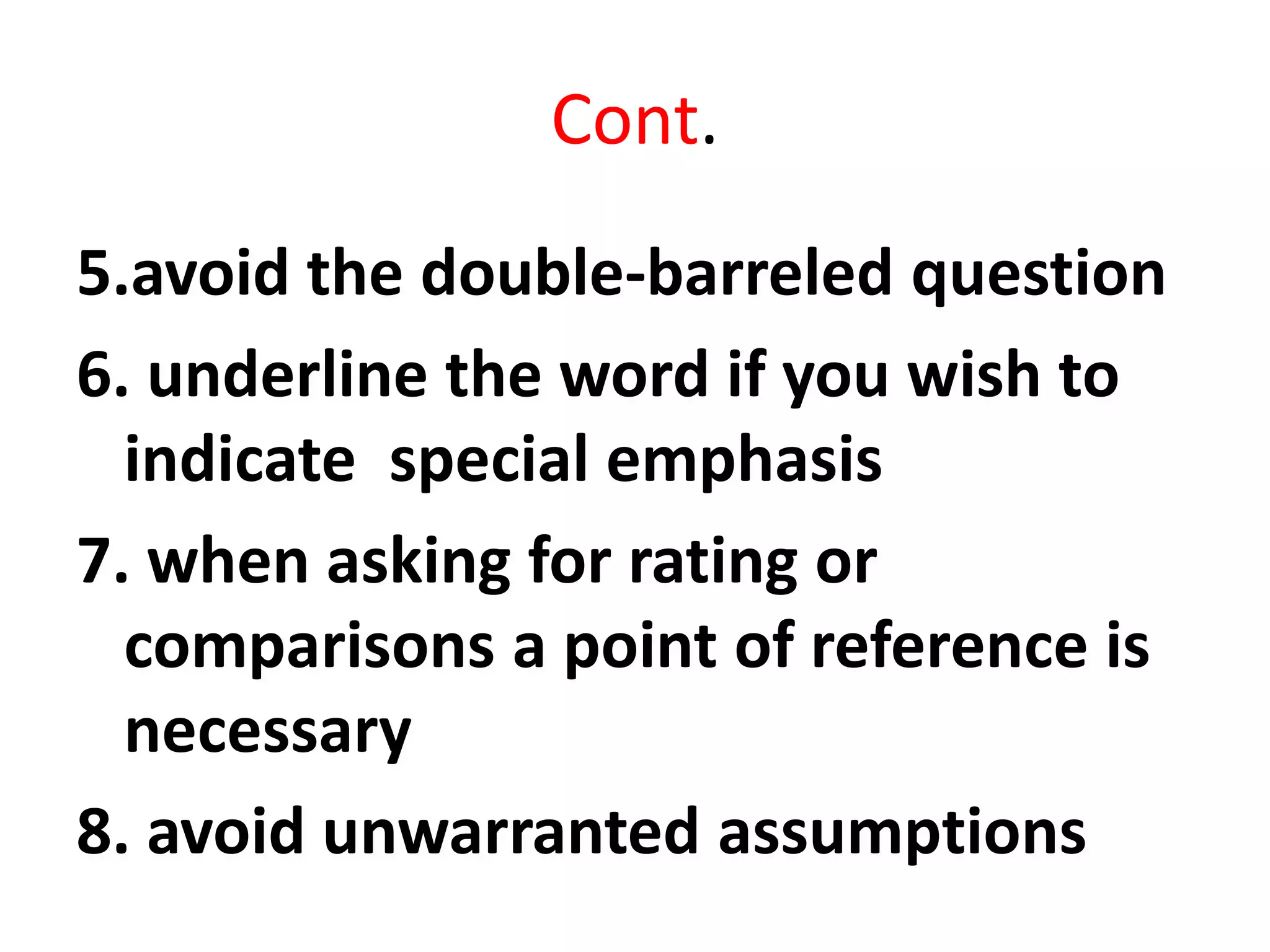
Cont.
5.avoid the double-barreled question
6. underline the word if you wish to
indicate special emphasis
7. when asking for rating or
comparisons a point of reference is
necessary
8. avoid unwarranted assumptions
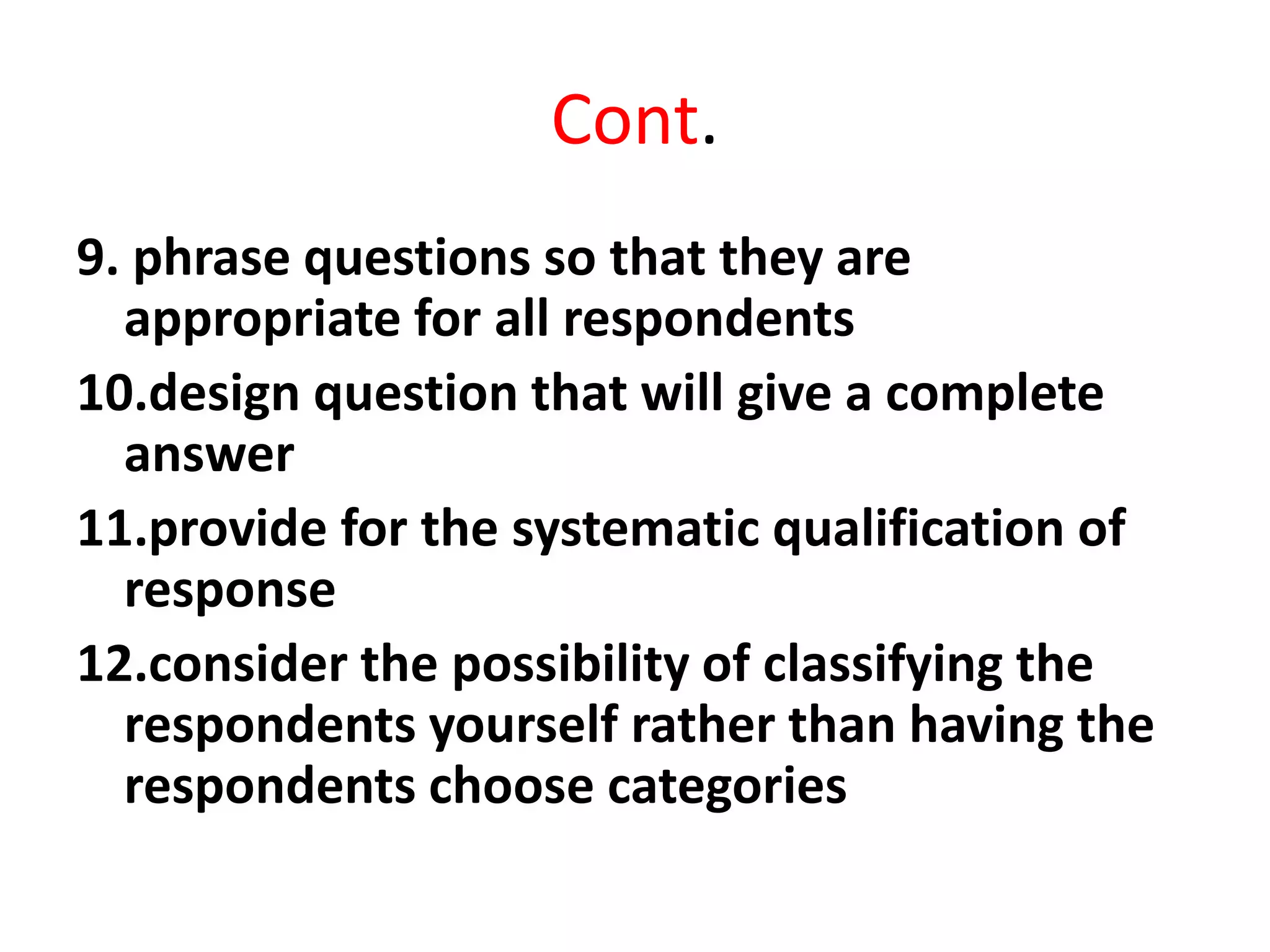
Cont.
9. phrase questions so that they are
appropriate for all respondents
10.design question that will give a complete
answer
11.provide for the systematic qualification of
response
12.consider the possibility of classifying the
respondents yourself rather than having the
respondents choose categories
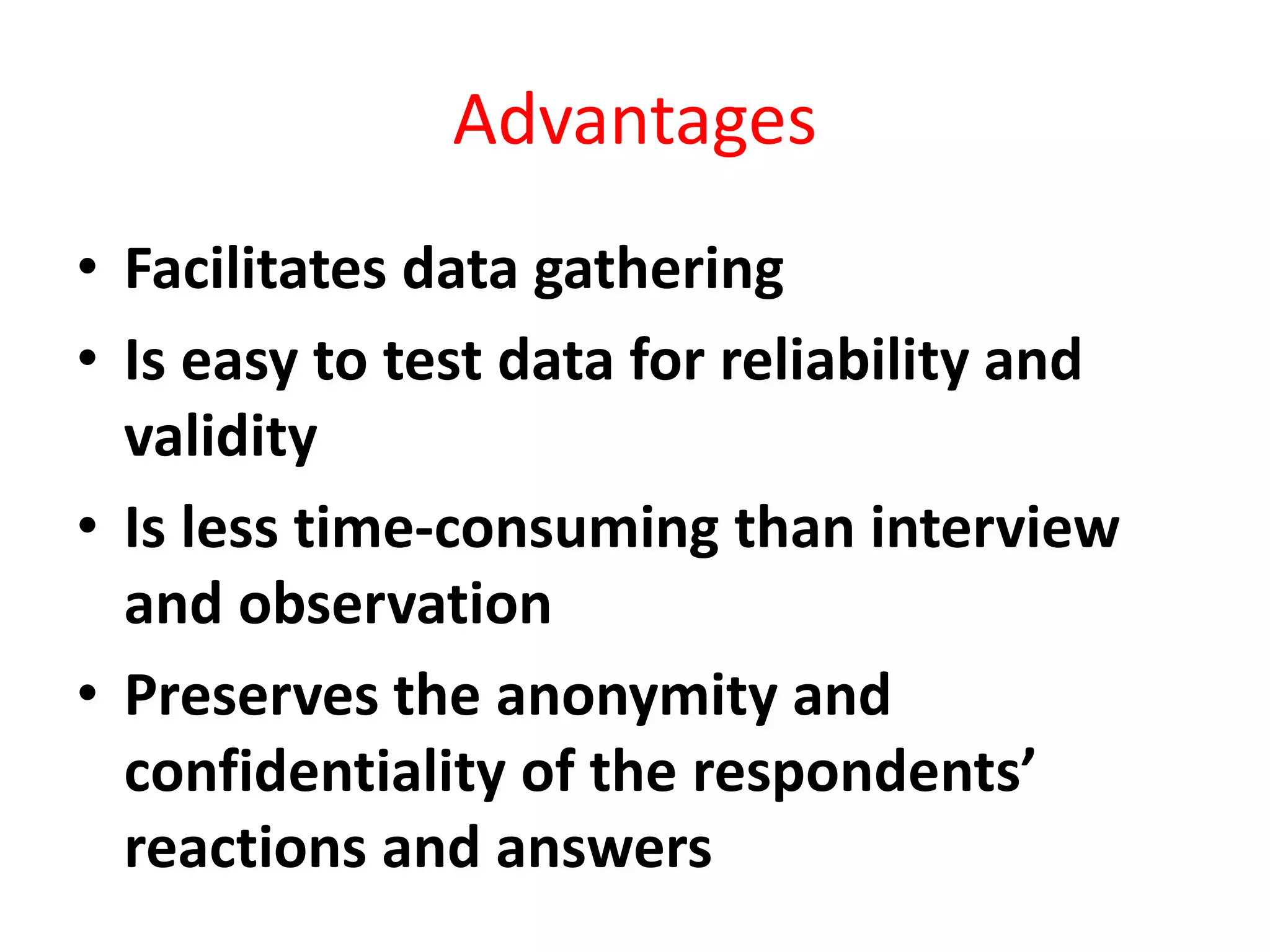
Advantages
• Facilitates data gathering
• Is easy to test data for reliability and
validity
• Is less time-consuming than interview
and observation
• Preserves the anonymity and
confidentiality of the respondents’
reactions and answers
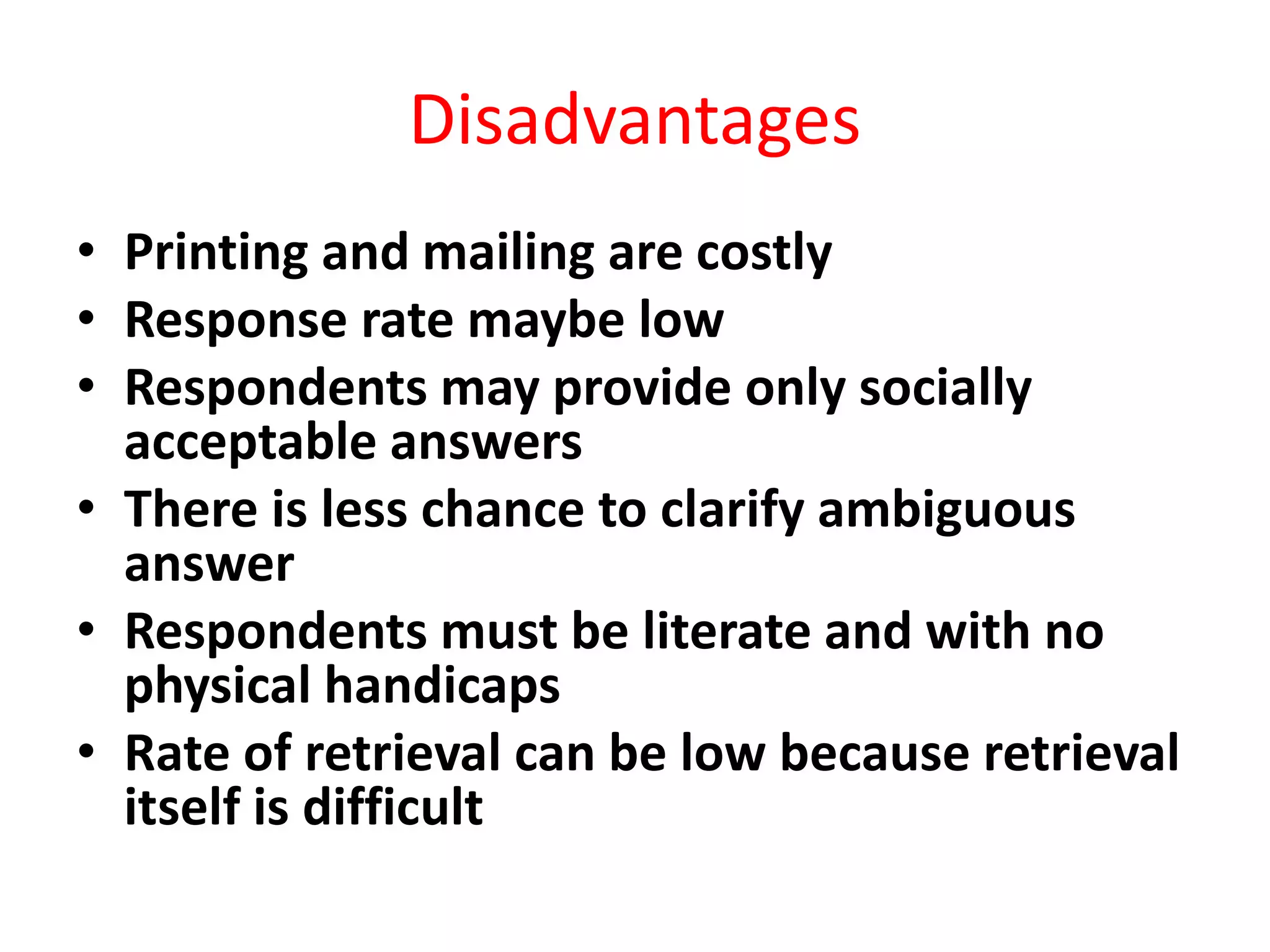
Disadvantages
• Printing and mailing are costly
• Response rate maybe low
• Respondents may provide only socially
acceptable answers
• There is less chance to clarify ambiguous
answer
• Respondents must be literate and with no
physical handicaps
• Rate of retrieval can be low because retrieval
itself is difficult
THANK YOU FOR LISTENING

The research instruments

  • 1.
  • 2.
    Introduction: Instrumentation One ofthe most important components of a research design is the research instruments because they gather or collect data or information. These research instruments or tools are ways of gathering data. Without them, data would be impossible to put in hand.
  • 3.
    QUESTIONAIRE The most commoninstrument or tool of research for obtaining the data beyond the physical reach of the observer. For Example: May be sent to human beings who are thousands of miles away or just around the corner.
  • 4.
    Two Forms ofQuestionnaire • Closed form / Closed-ended • Open form / Open-ended
  • 5.
    Guidelines in Usingthe Questionnaire • Clarity of language • Singleness of purpose • Relevant to the objective of the study • Correct grammar
  • 6.
    Principles to considerin constructing Questionnaire 1. define or qualify terms that could easily be misinterpret 2. be careful in using descriptive adjectives and adverbs that have no agreed-upon meaning 3. be careful of inadequate alternatives 4. beware of double negative
  • 7.
    Cont. 5.avoid the double-barreledquestion 6. underline the word if you wish to indicate special emphasis 7. when asking for rating or comparisons a point of reference is necessary 8. avoid unwarranted assumptions
  • 8.
    Cont. 9. phrase questionsso that they are appropriate for all respondents 10.design question that will give a complete answer 11.provide for the systematic qualification of response 12.consider the possibility of classifying the respondents yourself rather than having the respondents choose categories
  • 9.
    Advantages • Facilitates datagathering • Is easy to test data for reliability and validity • Is less time-consuming than interview and observation • Preserves the anonymity and confidentiality of the respondents’ reactions and answers
  • 10.
    Disadvantages • Printing andmailing are costly • Response rate maybe low • Respondents may provide only socially acceptable answers • There is less chance to clarify ambiguous answer • Respondents must be literate and with no physical handicaps • Rate of retrieval can be low because retrieval itself is difficult
  • 11.
    THANK YOU FORLISTENING