Renin-Angiotensin-Aldosterone System (RAAS)
The Renin-Angiotensin-Aldosterone System (RAAS) is a hormone system within the body that
is essential for the regulation of blood pressure and fluid balance. The system is mainly
comprised of the three hormones renin, angiotensin II and aldosterone. Primarily it is regulated
by the rate of renal blood flow.
Introduction
More than seven decades ago, angiotensin, a poly peptide that is the product of the enzymatic
activity of renin, was found in venous samples of ischaemic dog kidneys. In the 1950s and
1960s, two forms of angiotensin were reported: angiotensin-1 (Ang I), which is 10 amino acids
long, and angiotensin-2 (Ang II), with 8 amino acids.
The latter form results from the metabolism of Ang I by a dipeptidyl carboxypeptidase named
angiotensin-converting enzyme (ACE). The substrate of renin was found to be angiotensinogen,
a serum globulin produced by the liver. Also at this time, the role of Ang II in the regulation of
aldosterone production by the adrenal cortex emerged.In the 1970s, the main catalytic cascade of
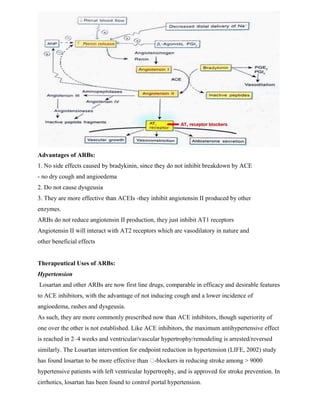
the renin–angiotensin–aldosterone system (RAAS) was described (Figure 1). Plasma
angiotensinogen is cleaved by renal renin, producing Ang I, which is then converted to Ang II by
endothelial ACE, a process that occurs most extensively in lung tissue. Ang II was considered
the most important RAAS mediator, with increased levels of Ang II being associated with
vasoconstriction and increased blood pressure. Ang II binds to the type-1 Ang II receptor (AT1)
in a variety of tissues, including vascular smooth muscle and the adrenal gland, to mediate many
mechanisms that lead to raised blood pressure. The stimulation of aldosterone production via the
AT1 receptor in the adrenal gland facilitates sodium retention by the kidney when aldosterone
binds to the mineralocorticoid receptor. On the basis of the first experimental studies of Ang II,
in which supra physiological doses of this peptide were tested in dogs, the RAAS was related to
the pathophysiology of hypertension mainly through the effects of this system on vascular
constriction. However, more recent studies have helped clarify that blood pressure control by
Ang II at physiological concentrations is more related to sodium and water handling than to
arterial constriction. Ang II shifts the natriuretic blood pressure curve, with increased levels of
Ang II requiring increased blood pressure to eliminate the same quantity of sodium. Part of this
effect occurs via direct mediation by Ang II, which activates sodium transporters in the proximal
tubules of the kidney. Furthermore, Ang II, through binding to the AT1 receptors, is the most
potent regulator of aldosterone secretion in the adrenal cortex. Aldosterone binding to the
mineralocorticoid receptor induces non-genomic (rapid) and genomic effects in many tissues, but
mainly in the kidney, where it increases the epithelial expression of epithelial sodium channel
(ENaC, also known as amiloride-sensitive sodium channel) at the level of the distal tubules,
which favours the retention of sodium and water. Blockade of the RAAS was a major
breakthrough in the treatment of cardiovascular disease, lowering mortality and improving
quality of life in patients with hyper tension, chronic kidney disease (CKD), myocardial
infarction and heart failure.The classic RAAS antagonists target the angiotensinogen–
angiotensin–AT1–aldosterone axis. However, as knowledge about the RAAS expands, the
number of potential therapeutic targets in this system is increasing.
Function of the Renin-Angiotensin-Aldosterone System (RAAS)
The RAAS plays a central role in blood pressure regulation and consists of a cascade of
functional proteins that are renin, angiotensinogen, angiotensin I and II .The physiological
importance of the RAAS is the compensation of hypovolemia, hyponatremia and hypotension. In
people with normal blood pressure and a balanced salt homeostasis, the RAAS is not activated.
The RAAS receives pathophysiological significance in incorrect activation, e.g. in renal artery
stenosis, heart failure or advanced liver disease.
Activation of the Renin-Angiotensin-Aldosterone System (RAAS)
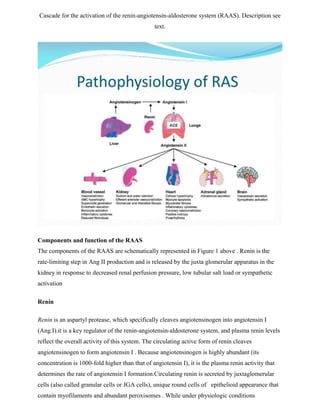
The cascade renin-angiotensin-aldosterone system begins with the cleavage of angiotensinogen
to angiotensin I (Ang.I), mediated by renin. This is the rate-determining step. Next, angiotensin-
converting enzyme (ACE) cleaves angiotensin I and produces angiotensin II (Ang.II), an
extremely potent vasoconstrictor. In addition, Angiotensin II stimulates the release of
aldosterone from the adrenal cortex.
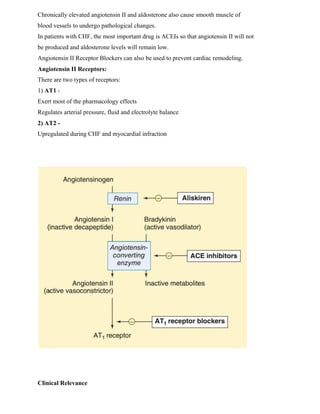
Cascade for the activation of the renin-angiotensin-aldosterone system (RAAS). Description see
text.
Components and function of the RAAS
The components of the RAAS are schematically represented in Figure 1 above . Renin is the
rate-limiting step in Ang II production and is released by the juxta glomerular apparatus in the
kidney in response to decreased renal perfusion pressure, low tubular salt load or sympathetic
activation
Renin
Renin is an aspartyl protease, which specifically cleaves angiotensinogen into angiotensin I
(Ang.I).it is a key regulator of the renin-angiotensin-aldosterone system, and plasma renin levels
reflect the overall activity of this system. The circulating active form of renin cleaves
angiotensinogen to form angiotensin I . Because angiotensinogen is highly abundant (its
concentration is 1000-fold higher than that of angiotensin I), it is the plasma renin activity that
determines the rate of angiotensin I formation.Circulating renin is secreted by juxtaglomerular
cells (also called granular cells or JGA cells), unique round cells of epithelioid appearance that
contain myofilaments and abundant peroxisomes . While under physiologic conditions
juxtaglomerular cells are located just at the outer edge of the renal interstitium (in the
juxtaglomerular interstitium, at the walls of afferent arterioles just at the entrance into glomeruli,
but is also detected in other organs with a local RAAS. Release of renin by juxtaglomerular cells
is regulated by hormones such as atrial natriuretic peptide and angiotensin II and by local factors
contributed by adjacent tubular epithelial cells, by vascular smooth muscle cells and endothelial
cells from afferent arterioles and by sympathetic nerve endings .
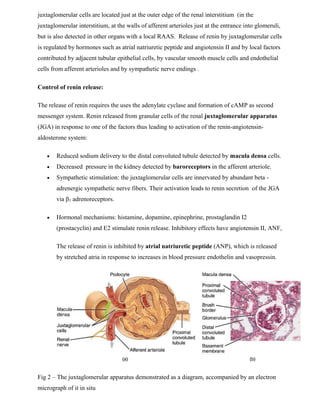
Control of renin release:
The release of renin requires the uses the adenylate cyclase and formation of cAMP as second
messenger system. Renin released from granular cells of the renal juxtaglomerular apparatus
(JGA) in response to one of the factors thus leading to activation of the renin-angiotensin-
aldosterone system:
 Reduced sodium delivery to the distal convoluted tubule detected by macula densa cells.
 Decreased pressure in the kidney detected by baroreceptors in the afferent arteriole.
 Sympathetic stimulation: the juxtaglomerular cells are innervated by abundant beta -
adrenergic sympathetic nerve fibers. Their activation leads to renin secretion of the JGA
via β1 adrenoreceptors.
 Hormonal mechanisms: histamine, dopamine, epinephrine, prostaglandin I2
(prostacyclin) and E2 stimulate renin release. Inhibitory effects have angiotensin II, ANF,
The release of renin is inhibited by atrial natriuretic peptide (ANP), which is released
by stretched atria in response to increases in blood pressure endothelin and vasopressin.
Fig 2 – The juxtaglomerular apparatus demonstrated as a diagram, accompanied by an electron
micrograph of it in situ
Angiotensinogen
The function of angiotensinogen is a serine protease inhibitor. Renin cleaves angiotensinogen
into angiotensin I. Angiotensinogen is produced in the liver, but it is also formed in the CNS,
kidney, adrenal gland, leukocytes and heart. Angiotensin II, estrogen and glucocorticoids
stimulate the synthesis of angiotensinogen, whereas renin is inhibitory.
Angiotensin converting enzyme (ACE)
Angiotensin converting enzyme (ACE) is a zinc-containing glycoprotein with dipeptidyl-carboxy
peptidase activity. ACE cleaves two amino acids from angiotensin I, turning it into angiotensin
II. Other proteases can also non-specifically activate angiotensin II. Furthermore, ACE
inactivates the bradykinin-kallikrein-kinin system. ACE is produced by many endothelial and
epithelial cells, the pulmonary activity is very high. For the RAAS, the activity of ACE is not the
rate-determining step.
Angiotensin II (Ang.II)
Angiotensin II (Ang.II) is an octapeptide, which is produced by proteolytic cleavage (ACE) of
two amino acids from angiotensin I. The following functions are known:
 Angiotensin II regulates the glomerular filtration rate:With a reduced renal perfusion,
Ang.II leads to a constriction of the vasa efferentes and thus to an increased filtration
pressure. ACE inhibitors can lead to acute renal failure, when given in renal artery
stenosis, because the renal perfusion is completely dependent on the RAAS.
 Angiotensin II increases the tubular sodium reabsorption and urine
concentration:Ang.II reduces the medullary blood flow; this increases the osmolarity of
the renal medulla, the tubular sodium reabsorption and the urine concentration.
 Angiotensin II is a potent vasoconstrictor:Ang.II directly stimulates the smooth muscle
contraction in resistance vessels and raises the blood pressure.
 Angiotensin II stimulates aldosterone release:Ang.II acts on the adrenal cortex,
causing it to increase aldosterone production and release.
 Angiotensin II has effects on the central nerve system: Ang. II stimulates the blood
pressure, increases thirst and salt appetite.
Molecular mode of action of angiotensin II:
The effects of angiotensin II are mediated by angiotensin receptors (AT1 and AT2). The vascular
effects of Ang.II are mediated by AT1 receptors. The signal transduction of AT1 receptors starts
with G-protein receptors, this leads to an intracellular activation of phospholipase C, DAG, IP3
and protein kinase C. Antagonist to AT1 receptors are the sartans, e.g. losartan, which are used
for antihypertensive treatment.
Production of Angiotensin II
Angiotensinogen
Angiotensin I is then converted to angiotensin II by angiotensin converting enzyme (ACE).
This conversion occurs mainly in the lungs where ACE is produced by vascular endothelial
cells, although ACE is also generated in smaller quantities within the renal endothelium.
Binding of Angiotensin II
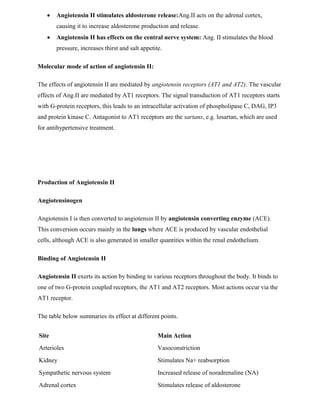
Angiotensin II exerts its action by binding to various receptors throughout the body. It binds to
one of two G-protein coupled receptors, the AT1 and AT2 receptors. Most actions occur via the
AT1 receptor.
The table below summaries its effect at different points.
Site Main Action
Arterioles Vasoconstriction
Kidney Stimulates Na+ reabsorption
Sympathetic nervous system Increased release of noradrenaline (NA)
Adrenal cortex Stimulates release of aldosterone
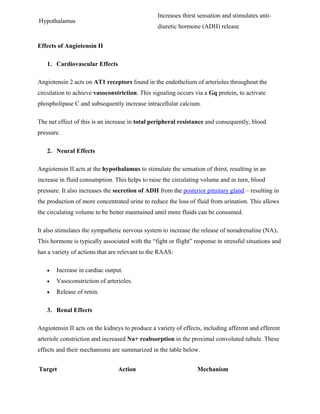
Hypothalamus
Increases thirst sensation and stimulates anti-
diuretic hormone (ADH) release
Effects of Angiotensin II
1. Cardiovascular Effects
Angiotensin 2 acts on AT1 receptors found in the endothelium of arterioles throughout the
circulation to achieve vasoconstriction. This signaling occurs via a Gq protein, to activate
phospholipase C and subsequently increase intracellular calcium.
The net effect of this is an increase in total peripheral resistance and consequently, blood
pressure.
2. Neural Effects
Angiotensin II acts at the hypothalamus to stimulate the sensation of thirst, resulting in an
increase in fluid consumption. This helps to raise the circulating volume and in turn, blood
pressure. It also increases the secretion of ADH from the posterior pituitary gland – resulting in
the production of more concentrated urine to reduce the loss of fluid from urination. This allows
the circulating volume to be better maintained until more fluids can be consumed.
It also stimulates the sympathetic nervous system to increase the release of noradrenaline (NA).
This hormone is typically associated with the “fight or flight” response in stressful situations and
has a variety of actions that are relevant to the RAAS:
 Increase in cardiac output.
 Vasoconstriction of arterioles.
 Release of renin.
3. Renal Effects
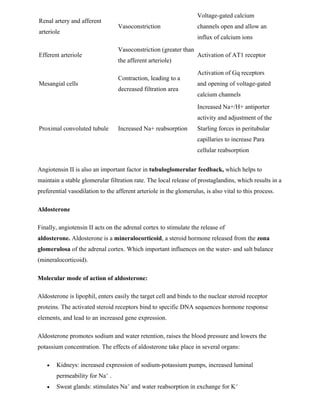
Angiotensin II acts on the kidneys to produce a variety of effects, including afferent and efferent
arteriole constriction and increased Na+ reabsorption in the proximal convoluted tubule. These
effects and their mechanisms are summarized in the table below.
Target Action Mechanism
Renal artery and afferent
arteriole
Vasoconstriction
Voltage-gated calcium
channels open and allow an
influx of calcium ions
Efferent arteriole
Vasoconstriction (greater than
the afferent arteriole)
Activation of AT1 receptor
Mesangial cells
Contraction, leading to a
decreased filtration area
Activation of Gq receptors
and opening of voltage-gated
calcium channels
Proximal convoluted tubule Increased Na+ reabsorption
Increased Na+/H+ antiporter
activity and adjustment of the
Starling forces in peritubular
capillaries to increase Para
cellular reabsorption
Angiotensin II is also an important factor in tubuloglomerular feedback, which helps to
maintain a stable glomerular filtration rate. The local release of prostaglandins, which results in a
preferential vasodilation to the afferent arteriole in the glomerulus, is also vital to this process.
Aldosterone
Finally, angiotensin II acts on the adrenal cortex to stimulate the release of
aldosterone. Aldosterone is a mineralocorticoid, a steroid hormone released from the zona
glomerulosa of the adrenal cortex. Which important influences on the water- and salt balance
(mineralocorticoid).
Molecular mode of action of aldosterone:
Aldosterone is lipophil, enters easily the target cell and binds to the nuclear steroid receptor
proteins. The activated steroid receptors bind to specific DNA sequences hormone response
elements, and lead to an increased gene expression.
Aldosterone promotes sodium and water retention, raises the blood pressure and lowers the
potassium concentration. The effects of aldosterone take place in several organs:
 Kidneys: increased expression of sodium-potassium pumps, increased luminal
permeability for Na+
.
 Sweat glands: stimulates Na+
and water reabsorption in exchange for K+
 Gastrointestinal tract: stimulates Na+
and water reabsorption in exchange for K+
Aldosterone acts on the principal cells of the collecting ducts in the nephron. It increases the
expression of apical epithelial Na+ channels (ENaC) to reabsorb urinary sodium. Furthermore,
the activity of the basolateral Na+/K+/ATPase is increased.
This causes the additional sodium reabsorbed through ENaC to be pumped into the blood by the
sodium/potassium pump. In exchange, potassium is moved from the blood into the principal cell
of the nephron. This potassium then exits the cell into the renal tubule to be excreted into the
urine.
As a result, increased levels of aldosterone cause reduced levels of potassium in the blood.
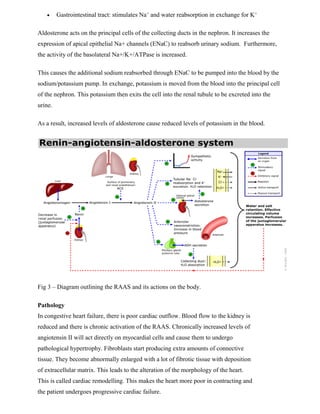
Fig 3 – Diagram outlining the RAAS and its actions on the body.
Pathology
In congestive heart failure, there is poor cardiac outflow. Blood flow to the kidney is
reduced and there is chronic activation of the RAAS. Chronically increased levels of
angiotensin II will act directly on myocardial cells and cause them to undergo
pathological hypertrophy. Fibroblasts start producing extra amounts of connective
tissue. They become abnormally enlarged with a lot of fibrotic tissue with deposition
of extracellular matrix. This leads to the alteration of the morphology of the heart.
This is called cardiac remodelling. This makes the heart more poor in contracting and
the patient undergoes progressive cardiac failure.
Chronically elevated angiotensin II and aldosterone also cause smooth muscle of
blood vessels to undergo pathological changes.
In patients with CHF, the most important drug is ACEIs so that angiotensin II will not
be produced and aldosterone levels will remain low.
Angiotensin II Receptor Blockers can also be used to prevent cardiac remodeling.
Angiotensin II Receptors:
There are two types of receptors:
1) AT1 -
Exert most of the pharmacology effects
Regulates arterial pressure, fluid and electrolyte balance
2) AT2 -
Upregulated during CHF and myocardial infraction
Clinical Relevance
ACE inhibitors are a class of drug typically used in the treatment of hypertension and heart
failure. Examples include; ramipril, lisinopril and enalapril.
They inhibit the action of angiotensin converting enzyme and so reduce the levels of angiotensin
II within the body. This means that it reduces the activity of the RAAS within the body. The
physiological effects of these drugs therefore, include:
 Decreased arteriolar resistance
 Decreased arteriolar vasoconstriction
 Decreased cardiac output
 Reduced potassium excretion in the kidneys
These actions help to lower blood pressure in hypertensive patients and also help to improve
outcomes in conditions such as heart failure.
Typical side effects include dry cough, hyperkaliemia, headache, dizziness, fatigue, renal
impairment and rarely, angioedema.
Renal Disease
The two most important prognostic factors in chronic kidney disease are hypertension and
proteinuria. ACE inhibitors are therefore important in the management of diabetic nephropathy
and other forms of chronic renal impairment. This is because they both reduce systemic blood
pressure, and reduce urinary protein excretion.
The mechanism by which they reduce proteinuria, is likely related to the inhibition of the
preferential vasoconstriction that occurs in the efferent arteriole in the glomerulus, thus reducing
GFR and reducing urinary protein excretion.
It is important to note that ACE inhibitors must be used in caution in patients with bilateral
renal artery stenosis and should often be withheld in instances of acute kidney injury, as the
reduction in GFR can pronounced and harmful
Pharmacology of raas
The drugs involved are basically inhibitors of RAAS.
These drugs are subdivided into 5 major groups.
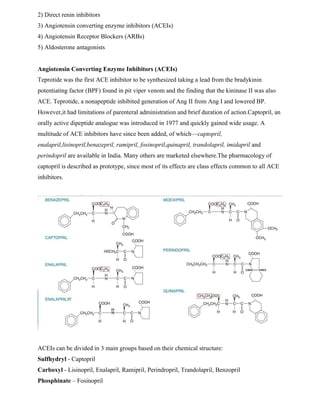
1) Renin release inhibitors
2) Direct renin inhibitors
3) Angiotensin converting enzyme inhibitors (ACEIs)
4) Angiotensin Receptor Blockers (ARBs)
5) Aldosterone antagonists
Angiotensin Converting Enzyme Inhibitors (ACEIs)
Teprotide was the first ACE inhibitor to be synthesized taking a lead from the bradykinin
potentiating factor (BPF) found in pit viper venom and the finding that the kininase II was also
ACE. Teprotide, a nonapeptide inhibited generation of Ang II from Ang I and lowered BP.
However,it had limitations of parenteral administration and brief duration of action.Captopril, an
orally active dipeptide analogue was introduced in 1977 and quickly gained wide usage. A
multitude of ACE inhibitors have since been added, of which—captopril,
enalapril,lisinopril,benazepril, ramipril, fosinopril,quinapril, trandolapril, imidapril and
perindopril are available in India. Many others are marketed elsewhere.The pharmacology of
captopril is described as prototype, since most of its effects are class effects common to all ACE
inhibitors.
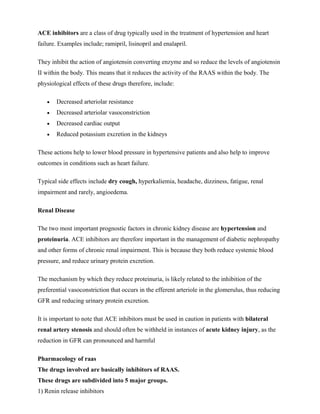
ACEIs can be divided in 3 main groups based on their chemical structure:
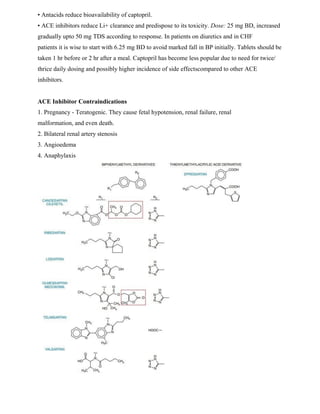
Sulfhydryl - Captopril
Carboxyl - Lisinopril, Enalapril, Ramipril, Perindropril, Trandolapril, Benzopril
Phosphinate – Fosinopril
Mode of Action:
They inhibit Angiotensin Converting Enzyme in the pulmonary vascular beds which
converts angiotensin I to angiotensin II
ACEIs affect capacitance vessels and resistance vessels (arterioles), by inhibiting the
vasoconstrictive effect of angiotensin II. This leads to a decrease in stroke volume and
reduce cardiac load as well as arterial pressure.
They also act on angiotensin-sensitive vascular beds, which include those of the
kidney, heart and brain. This is important in sustaining adequate perfusion of these
vital organs during decreased perfusion pressure.
In Kinin-kalikrein System, ACEIs also lead to increase in bradykinin, by inhibiting its
breakdown by ACE. Bradykinin will promotes the synthesis of important vasodilators such as
PGE2 and prostacyclin which cause vasodilation.
Bradykinin is also a potent vasodilators.
ACEIs will thus have a dual effect of inhibiting the production of the vasoconstrictor,
Angiotensin II, while promoting the production of the vasodilator -bradykinin.
Release of these substances causes a spontaneous decrease in blood pressure due to
Vasodilation and also due to a decrease in blood volume and cardiac load.
Therapeutic Indications:
1) Hypertension
This class of drugs is useful in all grades of hypertension due to any cause.
They are the first line of drugs especially in patients with renal disease, diebetes and
left ventricular hypertrophy.
They can be used synergistically with thiazide diuretics which cause hypokalemia,
Whereas ACEIs cause hyperkalemia.
In hypertensive crisis, ACEIs reduce both preload and afterload.
Decrease in aldosterone secretion will decrease salt and water secretion which
decreases blood volume and venous return. This ultimately leads to a decrease in
preload.
The advantage of using ACEIs is that they do not cause reflex tachycardia as with
other antihypertensive drugs. This is due to their ability to depress the sympathetic
activity. Hence they are safe in patients with ischemic heart disease.
2. Congestive Heart Failure
They are important in patients with CHF due to their ability to:
Reduce afterload: this enhances ventricular stroke volume and improves the
ejection fraction.
They reduce sympathetic activity
Decrease oxygen demand through reductions in afterload and preload
Prevent angiotensin II from triggering deleterious cardiac remodeling
3. Myocardial Infarction
They decrease oxygen demand by decreasing both preload and afterload. This
reduces stress on heart muscle.
4. Cardiac remodeling
They depress the post myocardial remodeling triggered by effects of angiotensin II
on myocardial cells
5. Diabetic nephropathy and hypertensive nephropathy
ACEIs are used to protect the kidney in patients with chronic diabetes or
hypertension.
Damage of the nephrons in patients with diabetes can lead to leading to proteinuria,
worsen renal function, and ultimately the development of chronic kidney disease.
6. Type 2 Diabetes
ACE inhibitors have been used to decrease morbidity in high risk patients.
ACE inhibitors increase levels of bradykinin, which increases the production of
Prostaglandins and nitric oxide. These improve muscular sensitivity to insulin.
Captopril
It is a sulfhydryl containing dipeptide surrogate of proline which abolishes the pressor action of
Ang I but not that of Ang II: does not blockAT1 or AT2 receptors. ACE is a relatively
nonspecific enzyme; splits off a dipeptidyl segment from several peptides including bradykinin,
substance P, a natural stem cell regulating peptide, etc. in addition to
Ang I. As such, captopril increases plasma kinin levels and potentiates the hypotensive action of
exogenously administered bradykinin. Pretreatment with B2 kinin receptor antagonist has shown
that kinins do contribute to the acute vasodepressor action of ACE inhibitors, but they appear to
have little role in the long-term hypotensive effect, probably because, firstly kinins play only a
minor role, if at all, in BP regulation, and, secondly another enzyme ‘Kininase I’ (which also
degrades bradykinin) is not inhibited by captopril.Nevertheless, elevated kinins (and PGs whose
synthesis is enhanced by kinins) may be responsible for cough and angioedema induced by
ACE inhibitors in susceptible individuals. ACE inhibitors interfere with degradation of substance
P also. Rise in the level of stem cell regulator peptide caused by ACE inhibitors could, in part,be
responsible for their cardioprotective effect in CHF.Captopril lowers BP, but in the short-term,
magnitude of response is dependent on Na+ status and the level of RAS activity. In normotensive
Na+ replete individuals, the fall in BP attending initial few doses of ACE inhibitors is modest
This is more marked when Na+ has been depleted by dietary restriction or diuretics, because
renin level is high. In CHF also, the renin level is raised and antihypertensive doses of captopril
cause marked fall in BP initially. ACE inhibitor therapy in these situations has to be initiated at
much lower doses. A greater fall in BP occurs in Reno vascular, accelerated and malignant
hypertension as well. In essential hypertension it has been found that RAS is overactive in 20%,
normal in 60% and hypoactive in the rest. Thus, it contributes to maintenance of vascular tone in
over 80% cases and its inhibition results in lowering of BP. Treatment with ACE inhibitors
causes feed back increase in renin release resulting in overproduction of Ang I. Since its
conversion to Ang II is blocked, Ang I is diverted to produce more Ang (1-7) which has
vasodilator property, and could contribute to the BP lowering action of ACE inhibitors. While
the initial fall in BP is dependent on renin and Ang II levels, in the long-term no correlation has
been observed between plasma renin activity (PRA) and magnitude of fall in BP due to captopril.
Captopril induced hypotension is a result of decrease in total peripheral resistance. The arterioles
dilate and compliance of larger arteries is increased. Both systolic and diastolic BP fall. It has no
effect on cardiac output
Pharmacokinetics:
About 70% of orally administered captopril is absorbed. Presence of food in stomach reduces its
bioavailability. Penetration in brain is poor. It is partly metabolized and partly excreted
unchanged in urine. The plasma t½ is ~2 hours, but actions last for
6–12 hours.
They are orally active
Most of them are prodrugs e.g. captopril, lisinopril
Prodrugs are converted to active drugs by esterase hydrolysis in the liver.
Excretion is by kidney except fosinopril
Bioavailability of ACEIs is reduced by foods.
Adverse effects
The adverse effect profile of all ACE inhibitors is similar. Captopril is well
tolerated by most patients, especially if daily dose is kept below 150 mg.
• Hypotension: an initial sharp fall in BP occurs especially in diuretic treated and CHF patients;
persistent hypotension may be troublesome in MI patient
Hyperkalaemia: more likely in patients with impaired renal function and in those taking K+
blockers.In others significant rise in plasma K+ is rare.
• Cough: a persistent brassy cough occurs in 4–16% patients within 1–8 weeks, often requires
discontinuation of the drug—subsides 4–6 days thereafter. It is not dose related and
appears to be caused by inhibition of bradykinin/substance P breakdown in the lungs of
susceptible individuals.
• Rashes, urticaria: occur in 1–4% recipients;but do not usually warrant drug discontinuation.
• Angioedema: resulting in swelling of lips,mouth, nose, larynx may develop within hours to few
days in 0.06–0.5% patients; may cause airway obstruction. This can be treated with Adr,
antihistaminic and corticosteroids according to need.
• Dysgeusia: reversible loss or alteration of taste sensation due to captopril occurs in few
patients. A still lower incidence with other ACE inhibitors has been noted.
• Foetopathic: foetal growth retardation, hypoplasia of organs and foetal death may occur if
ACE inhibitors are given during later half of pregnancy. A recent report indicates 2.7-fold higher
malformation rate in fetuses exposed to ACE inhibitors in the first trimester.
ACE inhibitors must be stopped when the woman conceives.
• Headache, dizziness, nausea and bowel upset: each reported in 1–4% patients.
• Granulocytopenia and proteinuria: are rare, but warrant withdrawal. Renal disease
predisposes to these adverse effects. However, ACE inhibitors retard diabetic nephropathy,
reduce attendant proteinuria, and are renoprotective.
• Acute renal failure: is precipitated by ACE inhibitors in patients with bilateral renal artery
stenosis due to dilatation of efferent arterioles and fall in glomerular filtration pressure. ACE
inhibitors are contraindicated in such patients.
Interactions
• Diuretics synergise with the hypotensive action of ACE inhibitors by depleting Na+ and
raising
renin levels. In diuretic treated patients, the starting dose of ACE inhibitors should be low.
• Indomethacin (and other NSAIDs) attenuate the hypotensive action by retaining salt and
water. Incidents of renal failure have been reported when a NSAID was given to patients
(especially elderly) receiving ACE inhibitor + diuretic.
• Hyperkalaemia can occur if K+ supplements/ K+ sparing diuretics are given with captopril.
• Antacids reduce bioavailability of captopril.
• ACE inhibitors reduce Li+ clearance and predispose to its toxicity. Dose: 25 mg BD, increased
gradually upto 50 mg TDS according to response. In patients on diuretics and in CHF
patients it is wise to start with 6.25 mg BD to avoid marked fall in BP initially. Tablets should be
taken 1 hr before or 2 hr after a meal. Captopril has become less popular due to need for twice/
thrice daily dosing and possibly higher incidence of side effectscompared to other ACE
inhibitors.
ACE Inhibitor Contraindications
1. Pregnancy - Teratogenic. They cause fetal hypotension, renal failure, renal
malformation, and even death.
2. Bilateral renal artery stenosis
3. Angioedema
4. Anaphylaxis
OTHER ACE INHIBITORS
All ACE inhibitors have the same pharmacological actions, therapeutic uses and spectrum of
adverse
effects, drug interactions and contraindications. Differences among them are primarily
pharmacokinetic, reflected in time course of action. No single drug is superior to others.
Enalapril
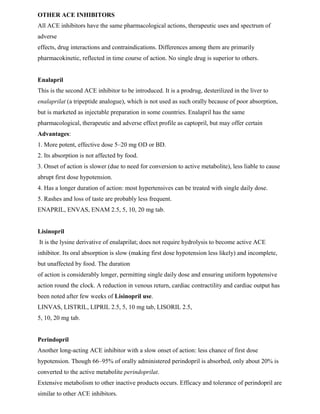
This is the second ACE inhibitor to be introduced. It is a prodrug, desterilized in the liver to
enalaprilat (a tripeptide analogue), which is not used as such orally because of poor absorption,
but is marketed as injectable preparation in some countries. Enalapril has the same
pharmacological, therapeutic and adverse effect profile as captopril, but may offer certain
Advantages:
1. More potent, effective dose 5–20 mg OD or BD.
2. Its absorption is not affected by food.
3. Onset of action is slower (due to need for conversion to active metabolite), less liable to cause
abrupt first dose hypotension.
4. Has a longer duration of action: most hypertensives can be treated with single daily dose.
5. Rashes and loss of taste are probably less frequent.
ENAPRIL, ENVAS, ENAM 2.5, 5, 10, 20 mg tab.
Lisinopril
It is the lysine derivative of enalaprilat; does not require hydrolysis to become active ACE
inhibitor. Its oral absorption is slow (making first dose hypotension less likely) and incomplete,
but unaffected by food. The duration
of action is considerably longer, permitting single daily dose and ensuring uniform hypotensive
action round the clock. A reduction in venous return, cardiac contractility and cardiac output has
been noted after few weeks of Lisinopril use.
LINVAS, LISTRIL, LIPRIL 2.5, 5, 10 mg tab, LISORIL 2.5,
5, 10, 20 mg tab.
Perindopril
Another long-acting ACE inhibitor with a slow onset of action: less chance of first dose
hypotension. Though 66–95% of orally administered perindopril is absorbed, only about 20% is
converted to the active metabolite perindoprilat.
Extensive metabolism to other inactive products occurs. Efficacy and tolerance of perindopril are
similar to other ACE inhibitors.
COVERSYL 2, 4 mg tab.
Fosinopril
This ACE inhibitor is unique in being a phosphonate compound that is glucuronide conjugated
and eliminated both by liver and kidney. The t½ is not altered by renal impairment and the dose
remains the same. However, like most others, it is a prodrug suitable for once daily
administration. First dose hypotension is more likely.
Dose: Initially 10 mg (elderly 5 mg) OD; maximum
40 mg/day.
FOSINACE, FOVAS 10, 20 mg tabs.
Ramipril
The distinctive feature of this long acting ACE inhibitor is its extensive tissue distribution.
Greater inhibition of local RAS has been claimed. However, whether this confers any therapeutic
advantage is not known. The plasma t½ of its active metabolite ramiprilat is 8–18 hours, but
terminel t½ is longer due to slow release of tissue bound drug.
CARDACE, RAMIRIL, CORPRIL, R.PRIL 1.25, 2.5, 5 mg caps.
Quinapril
A prodrug carboxyl ACE inhibitor that is rapidly and completely converted in the liver to the
active form Quinaprilat. Like ramiprilat, it is highly bound to the tissue ACE and exhibits a
biphasic plasma t½ of 2 hours and 24 hours. Elimination occurs in urine and bile in a ratio of 2:1.
Dose: 10–40 mg/day
ACCUPRIL-H: Quinapril 20 mg + hydrochlorothiazide 12.5 mg tab.
Trandolapril
It is a carboxyl prodrug that is 40–60% bioavailable in the active form. Absorption is delayed
but not decreased by food. The peak effect occurs at 4–6 hours. It is partly metabolized and
eliminated both in urine and feaces.
The plasma t½ of active metabolite is biphasic 10–24 hours, suitable for once daily dosing.
Dose: 2–4 mg (max 8 mg) OD; ZETPRIL 1, 2 mg tabs.
Imidapril
The oral bioavailability of this long acting prodrug ACE inhibitor is 40%, which is reduced by
taking the drug with meals. The peak effect occurs at 6–8 hours and plasma t½ is >24 hours.
Dose: Initially 5 mg OD taken 1 hour before food; usual
Maintenance dose 10 mg OD.
TANATRIL 5, 10 mg tabs.
Benazepril
Another nonsulfhydryl prodrug ACE inhibitor; has a bioavailability of 37% and is excreted by
kidney with a t½ of 10–12 hr.
Dose: 10 mg initially, max 20–40 mg/day
Angiotensin II Receptor Blockers (ARBs)
AT1 receptor mediates most of the known actions of Ang II that contribute to hypertension and
volume dysregulation that is the vascular smooth muscle contraction, aldosterone secretion,
dipsogenic responses, renal sodium reabsorption, and pressor and tachycardiac responses as well
as to cardiovascular damage (cellular hypertrophy or proliferation, prothrombotic and
proinflammatory effects, and superoxide formation).Thus, with the discovery of different
receptor subtypes, specific antagonism of Ang II action at the AT1 receptor became a logical
therapeutic target, one considered likely to be more specific than ACE inhibition. Development
of orally active, nonpeptide, selective AT1 receptor blockers began in the 1990s with the
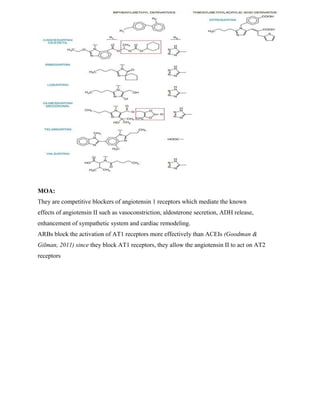
synthesis of losartan. Since that time, several ARBs have been synthesized, including valsartan,
irbesartan, candesartan, eprosartan, telmisartan, and olmesartan. Because ARBs act by
blocking Ang II action at the receptor level, rather than by inhibiting its synthesis, they ought to
antagonize AT1-mediated effects of Ang II no matter how it is synthesized
Thus inhibition of Ang II-mediated vasoconstriction, reduced sympathetic nervous system
activity, and reduced extracellular volume (i.e., by direct inhibition of proximal sodium
reabsorption and by inhibition of aldosterone release). ARB monotherapy produces a satisfactory
reduction in blood pressure in 40% to 60% of patients with mild-to-moderate hypertension. ARB
therapy has also been shown to reduce markers of inflammation in patients with atherosclerosis
suggesting an anti-inflammatory effect, and to reverse endothelial dysfunction in patients with
hypertension, indicating the possibility of significant antiatherogenic effects.
MOA:
They are competitive blockers of angiotensin 1 receptors which mediate the known
effects of angiotensin II such as vasoconstriction, aldosterone secretion, ADH release,
enhancement of sympathetic system and cardiac remodeling.
ARBs block the activation of AT1 receptors more effectively than ACEIs (Goodman &
Gilman, 2011) since they block AT1 receptors, they allow the angiotensin II to act on AT2
receptors
Advantages of ARBs:
1. No side effects caused by bradykinin, since they do not inhibit breakdown by ACE
- no dry cough and angioedema
2. Do not cause dysgeusia
3. They are more effective than ACEIs -they inhibit angiotensin II produced by other
enzymes.
ARBs do not reduce angiotensin II production, they just inhibit AT1 receptors
Angiotensin II will interact with AT2 receptors which are vasodilatory in nature and
other beneficial effects
Therapeutical Uses of ARBs:
Hypertension
Losartan and other ARBs are now first line drugs, comparable in efficacy and desirable features
to ACE inhibitors, with the advantage of not inducing cough and a lower incidence of
angioedema, rashes and dysgeusia.
As such, they are more commonly prescribed now than ACE inhibitors, though superiority of
one over the other is not established. Like ACE inhibitors, the maximum antihypertensive effect
is reached in 2–4 weeks and ventricular/vascular hypertrophy/remodeling is arrested/reversed
similarly. The Losartan intervention for endpoint reduction in hypertension (LIFE, 2002) study
has found losartan to be more effective th -blockers in reducing stroke among > 9000
hypertensive patients with left ventricular hypertrophy, and is approved for stroke prevention. In
cirrhotics, losartan has been found to control portal hypertension.
Congestive heart failure (CHF)
The ARBs afford clear-cut symptomatic relief as well as survival benefit in CHF. However, their
relative value compared to ACE inhibitors, especially in long-term morbidity and mortality
reduction, is still uncertain. A number of large randomized endpoint trials like Evaluation of
losartan in the elderly (ELITE, 1997), ELITE-II (2000), OPTIMAAL (2002), Valsartan in acute
MI (VALIANT, 2003) have produced inconsistent results. Some find ACE inhibitors more
effective, others find ARBs more effective, while still others find them equieffective. For CHF,
the current consensus is to use ACE inhibitors as the first choice drugs and to reserve ARBs for
those who fail to respond well or who develop cough/angioedema/other intolerance to ACE
inhibitors.
Myocardial infarction
The evidence so far indicates that utility of ARBs in MI, including long-term survival, is
comparable to ACE
Inhibitors. However, the latter are generally used first, since there is greater experience with
them.
Diabetic nephropathy
Several studies have confirmed that ARBs are renoprotective in type 2 diabetes mellitus,
independent of BP lowering. The magnitude of benefit is comparable to ACE inhibitors, but
because of better tolerability profile,
many consider first line
ACEIs are used as first line drugs while ARBs are reserved for patients unable to
tolerate ACEIs.
Pharmacokinetics:
1. They are orally active.
2. They are dosed once daily with the exception of valsartan which is dosed twice
daily.
3. They are highly plasma protein bound.
4. Losartan undergoes extensive first pass metabolism, and is converted into an
active metabolite.
5. Elimination of metabolites is by the kidney.
Adverse Effects
1. Similar profile with ACEIs except they do not cause:
Dry cough
Angioedema
Dysgeusia
This because they do not inhibit the breakdown of bradykinin.
2. Hyperkalemia - due to decrease aldosterone release.
3. First dose hypotension
4. Foetal Toxicity
5. Renal failure in patients with bilateral renal artery stenosis.
Losartan
It is a competitive antagonist and inverse agonist, 10,000 times more selective for AT1 than for
AT2 receptor; does not block any other receptor or ion channel, except thromboxane A2 receptor
(has some platelet antiaggregatory
property). All overt actions of Ang II, viz. vasoconstriction, central and peripheral sympathetic
stimulation, release of aldosterone and Adr from adrenals, renal actions promoting salt and water
reabsorption, central actions like thirst, vasopressin release and growth-promoting actions on
heart and blood vessels are blocked. No inhibition of ACE has been noted. Pharmacologically,
ARBs differ from ACE inhibitors in the following ways:
• They do not interfere with degradation of bradykinin and other ACE substrates: no rise in level
or potentiation of bradykinin, substance P occurs. Consequently, ACE inhibitor related cough is
rare.
• They result in more complete inhibition of AT1 receptor activation, because responses to Ang
II generated via alternative pathways and consequent AT1 receptor activation (which remain
intact with ACE inhibitors) are also blocked.
• They result in indirect AT2 receptor activation. Due to blockade of AT1 receptor mediated
feedback inhibition more Ang II is produced which acts on AT2 receptors that remain
unblocked. ACE inhibitors result in attenuation of both AT1 and AT2 receptor activation.
• ARBs cause little increase in the level of Ang (1-7) which is raised by ACE inhibitors, since
Ang (1-7) is partly degraded by ACE. The impact of these differences on clinical efficacy and
therapeutic value of the two classes
of RAS inhibitors is not known. Losartan causes fall in BP in hypertensive patients which lasts
for 24 hours, while HR remains unchanged and cardiovascular reflexes are not interfered. No
significant effect on plasma
lipid profile, carbohydrate tolerance, insulin insensitivity has been noted. A mild probenecid like
uricosuric action is produced.
Pharmacokinetics
Oral absorption of losartan is not affected by food, but bioavailability is only 33% due to first
pass metabolism. It is partially carboxylated in liver to an active metabolite (E3174) which is a
10–30 times more potent noncompetitive AT1 receptor antagonist. After oral ingestion peak
plasma levels are attained at 1 hr for losartan and at 3–4 hours for E3174. Both compounds are
98% plasma protein bound, do not enter brain and are excreted by the kidney. The plasma t½ of
losartan is 2 hr, but that of E3174 is 6–9 hr. No dose adjustment is required in renal
insufficiency, but dose should be reduced in presence of hepatic dysfunction
Adverse effect
Losartan is well tolerated; has side effect profile similar to placebo. Like ACE inhibitors it can
cause hypotension and hyperkalemia, but first dose hypotension is uncommon. Though, a few
reports of dry cough have appeared,
losartan is considered to be free of cough and dysgeusia inducing potential. Patients with a
history of ACE inhibitor related cough have taken losartan without recurrence. Angioedema is
reported in fewer cases. Headache, dizziness, weakness and upper g.i. side effects are mild and
occasional. However, losartan has fetopathic potential like ACE inhibitors—not to be
administered during pregnancy.
Dose: 50 mg OD, rarely BD; in liver disease or volume depleted patients 25 mg OD; addition of
hydrochlorothiazide
12.5–25 mg enhances its effectiveness.
LOSACAR, TOZAAR, ALSARTAN 25, 50 mg tabs.
Candesartan
It has the highest affinity for the AT1 receptor and produces largely unsurmountable
antagonism, probably due to slow dissociation from the receptors or receptor desensitization.
Elimination occurs by both hepatic metabolism and renal excretion with a t½ of 8- 12 hours:
action lasts 24 hours.
Dose: 8 mg OD (max 8 mg BD), liver/kidney impairment
4 mg OD.
Telmisartan
The AT1 receptor blocking action of telmisartan is similar to losartan, but it does notproduce any
active metabolite. After an oral dose, peak action occurs in 3 hours and action lasts > 24 hours. It
is largely excreted unchanged in bile; dose reduction is needed in liver disease.
Dose: 20–80 mg OD.
TELMA, TELSAR, TELVAS 20, 40, 80 mg tabs
Irbesartan
The oral bioavailability of this ARB is relatively high. It is partly metabolized and excreted
mainly in bile. The t½ is ~12 hours. Dose: 150–300 mg OD.
IROVEL, IRBEST 150, 300 mg tabs.
Valsartan
The AT1 receptor affinity of valsartan is similar to that of losartan. Its oral bioavailability
averages 23% and food interferes with its absorption. Elimination occurs mainly by the liver in
unchanged form with a t½ of 6–9 hours; action lasts 24 hours.
Dose: 80–160 mg OD 1 hour before meal (initial dose in
liver disease 40 mg).
DIOVAN, STARVAL, VALZAAR 40, 80, 160 mg tabs.
Olmesartan
Another potent ARB with high affinity for AT1 receptor. It is available as an ester prodrug
which is completely hydrolysed during absorption from the gut. It is eliminated in urine as well
as in bile with a t½ of ~12 hours. No dose adjustment is needed in liver or kidney disease, unless
it is severe.
Dose: 20–40 mg OD; OLMAT 20, 40 mg tabs.
Aldosterone Antagonists
Mineralocorticoid receptor antagonists
The mineralocorticoid receptor antagonist spironolactone was first used in the 1960s as a
potassium-sparing diuretic. Since then, the systemic effects of aldosterone in hypertension, heart
failure and target-organ damage became better known. Randomized clinical trials confirmed the
effectiveness of spironolactone to treat hypertension and showed that the drug has ant fibrotic
and anti-inflammatory properties. Spironolactone binds to other receptors in addition to the
mineralocorticoid receptor, such as androgen and progesterone receptors, which can have
adverse effects such as gynecomastia and decreased libido. In 2002, a second mineralocorticoid
receptor antagonist, eplerenone, was introduced. Eplerenone has less affinity for sex hormone
receptors than spironolactone; the drug has a nearly similar antihypertensive effectiveness to that
of spironolactone, yet is less potent and has fewer adverse effects. A third
antagonist, canrenone, is available in some countries but scant clinical data on this drug exist In
addition to their use in primary hyperaldosteronism, mineralocorticoid receptor blockers are
commonly used to treat ascites,heart failure and resistant hypertension.
There are two drugs available that block the MR and hence the effects of aldosterone
Spironolactone and eplerenone.
Spironolactone - K+ sparing diuretic (studied in diuretics)
Important in hypokalemia.
Cause K+ retention.
Direct Renin Inhibitors
They block the rate limiting step in RAAS which is the conversion of angiotensinogen
to angiotensin I.
Aliskiren
It is a competitive inhibitor of renin that binds to and blocks the active site. This
inhibits the conversion of angiotensinogen to angiotensin I and ultimately decrease
the production of angiotensin II.
It decreases levels of aldosterone therefore causes natriuresis.
Pharmacokinetics
1. Given as one dose
2. Has a low bioavailability
3. Very potent and has high affinity for renin.
4. Should not be taken with fatty meals since they decrease its absorption.
Side Effects
1. Mild gastrointestinal symptoms e.g. diarrhoea. This is only observed at high doses.
2. Abdominal pain
3. Upper-respiratory infection
4. Dyspepsia
5. Fatigue and dizziness.
Recent Advances
Icatibant - bradykinin beta 2 receptor antagonist.
Has been recently approved in Europe for the treatment of hereditary angioedema.
REFERENCES
1) Goodman and Gilman’s. The pharmacological basis of therapeutics. 12ed. McGraw-
Hill Medical; 2011.
2) Garg M.,Angus PW,Burrell LM,Herath C,Gibson PR,Lubel JS,"The pathophysiological
roles of the Renin-Angiotensin System;35th edition;page 414-428.
3) Joseph T. Dipiro. Pharmacotherapy A Pathophysiologic Approach. 6th Edition.
McGraw-Hill; 2005
4) John Wiley & Sons, Inc., Hoboken, New Jersey;2015. The renin-angiotensin system in
the gastrointestinal tract. Aliment Pharmacol Ther 2012; 35:414-28.
5) Katzung. B.G. Basic & Clinical Pharmacology. 14th Edition McGraw-Hill Companies,
Inc.

Function of the renin

  • 1.
    Renin-Angiotensin-Aldosterone System (RAAS) TheRenin-Angiotensin-Aldosterone System (RAAS) is a hormone system within the body that is essential for the regulation of blood pressure and fluid balance. The system is mainly comprised of the three hormones renin, angiotensin II and aldosterone. Primarily it is regulated by the rate of renal blood flow. Introduction More than seven decades ago, angiotensin, a poly peptide that is the product of the enzymatic activity of renin, was found in venous samples of ischaemic dog kidneys. In the 1950s and 1960s, two forms of angiotensin were reported: angiotensin-1 (Ang I), which is 10 amino acids long, and angiotensin-2 (Ang II), with 8 amino acids. The latter form results from the metabolism of Ang I by a dipeptidyl carboxypeptidase named angiotensin-converting enzyme (ACE). The substrate of renin was found to be angiotensinogen, a serum globulin produced by the liver. Also at this time, the role of Ang II in the regulation of aldosterone production by the adrenal cortex emerged.In the 1970s, the main catalytic cascade of the renin–angiotensin–aldosterone system (RAAS) was described (Figure 1). Plasma angiotensinogen is cleaved by renal renin, producing Ang I, which is then converted to Ang II by endothelial ACE, a process that occurs most extensively in lung tissue. Ang II was considered the most important RAAS mediator, with increased levels of Ang II being associated with vasoconstriction and increased blood pressure. Ang II binds to the type-1 Ang II receptor (AT1) in a variety of tissues, including vascular smooth muscle and the adrenal gland, to mediate many mechanisms that lead to raised blood pressure. The stimulation of aldosterone production via the AT1 receptor in the adrenal gland facilitates sodium retention by the kidney when aldosterone binds to the mineralocorticoid receptor. On the basis of the first experimental studies of Ang II, in which supra physiological doses of this peptide were tested in dogs, the RAAS was related to the pathophysiology of hypertension mainly through the effects of this system on vascular constriction. However, more recent studies have helped clarify that blood pressure control by Ang II at physiological concentrations is more related to sodium and water handling than to arterial constriction. Ang II shifts the natriuretic blood pressure curve, with increased levels of Ang II requiring increased blood pressure to eliminate the same quantity of sodium. Part of this effect occurs via direct mediation by Ang II, which activates sodium transporters in the proximal tubules of the kidney. Furthermore, Ang II, through binding to the AT1 receptors, is the most potent regulator of aldosterone secretion in the adrenal cortex. Aldosterone binding to the mineralocorticoid receptor induces non-genomic (rapid) and genomic effects in many tissues, but mainly in the kidney, where it increases the epithelial expression of epithelial sodium channel
  • 2.
    (ENaC, also knownas amiloride-sensitive sodium channel) at the level of the distal tubules, which favours the retention of sodium and water. Blockade of the RAAS was a major breakthrough in the treatment of cardiovascular disease, lowering mortality and improving quality of life in patients with hyper tension, chronic kidney disease (CKD), myocardial infarction and heart failure.The classic RAAS antagonists target the angiotensinogen– angiotensin–AT1–aldosterone axis. However, as knowledge about the RAAS expands, the number of potential therapeutic targets in this system is increasing. Function of the Renin-Angiotensin-Aldosterone System (RAAS) The RAAS plays a central role in blood pressure regulation and consists of a cascade of functional proteins that are renin, angiotensinogen, angiotensin I and II .The physiological importance of the RAAS is the compensation of hypovolemia, hyponatremia and hypotension. In people with normal blood pressure and a balanced salt homeostasis, the RAAS is not activated. The RAAS receives pathophysiological significance in incorrect activation, e.g. in renal artery stenosis, heart failure or advanced liver disease. Activation of the Renin-Angiotensin-Aldosterone System (RAAS) The cascade renin-angiotensin-aldosterone system begins with the cleavage of angiotensinogen to angiotensin I (Ang.I), mediated by renin. This is the rate-determining step. Next, angiotensin- converting enzyme (ACE) cleaves angiotensin I and produces angiotensin II (Ang.II), an extremely potent vasoconstrictor. In addition, Angiotensin II stimulates the release of aldosterone from the adrenal cortex.
  • 3.
    Cascade for theactivation of the renin-angiotensin-aldosterone system (RAAS). Description see text. Components and function of the RAAS The components of the RAAS are schematically represented in Figure 1 above . Renin is the rate-limiting step in Ang II production and is released by the juxta glomerular apparatus in the kidney in response to decreased renal perfusion pressure, low tubular salt load or sympathetic activation Renin Renin is an aspartyl protease, which specifically cleaves angiotensinogen into angiotensin I (Ang.I).it is a key regulator of the renin-angiotensin-aldosterone system, and plasma renin levels reflect the overall activity of this system. The circulating active form of renin cleaves angiotensinogen to form angiotensin I . Because angiotensinogen is highly abundant (its concentration is 1000-fold higher than that of angiotensin I), it is the plasma renin activity that determines the rate of angiotensin I formation.Circulating renin is secreted by juxtaglomerular cells (also called granular cells or JGA cells), unique round cells of epithelioid appearance that contain myofilaments and abundant peroxisomes . While under physiologic conditions
  • 4.
    juxtaglomerular cells arelocated just at the outer edge of the renal interstitium (in the juxtaglomerular interstitium, at the walls of afferent arterioles just at the entrance into glomeruli, but is also detected in other organs with a local RAAS. Release of renin by juxtaglomerular cells is regulated by hormones such as atrial natriuretic peptide and angiotensin II and by local factors contributed by adjacent tubular epithelial cells, by vascular smooth muscle cells and endothelial cells from afferent arterioles and by sympathetic nerve endings . Control of renin release: The release of renin requires the uses the adenylate cyclase and formation of cAMP as second messenger system. Renin released from granular cells of the renal juxtaglomerular apparatus (JGA) in response to one of the factors thus leading to activation of the renin-angiotensin- aldosterone system:  Reduced sodium delivery to the distal convoluted tubule detected by macula densa cells.  Decreased pressure in the kidney detected by baroreceptors in the afferent arteriole.  Sympathetic stimulation: the juxtaglomerular cells are innervated by abundant beta - adrenergic sympathetic nerve fibers. Their activation leads to renin secretion of the JGA via β1 adrenoreceptors.  Hormonal mechanisms: histamine, dopamine, epinephrine, prostaglandin I2 (prostacyclin) and E2 stimulate renin release. Inhibitory effects have angiotensin II, ANF, The release of renin is inhibited by atrial natriuretic peptide (ANP), which is released by stretched atria in response to increases in blood pressure endothelin and vasopressin. Fig 2 – The juxtaglomerular apparatus demonstrated as a diagram, accompanied by an electron micrograph of it in situ
  • 5.
    Angiotensinogen The function ofangiotensinogen is a serine protease inhibitor. Renin cleaves angiotensinogen into angiotensin I. Angiotensinogen is produced in the liver, but it is also formed in the CNS, kidney, adrenal gland, leukocytes and heart. Angiotensin II, estrogen and glucocorticoids stimulate the synthesis of angiotensinogen, whereas renin is inhibitory. Angiotensin converting enzyme (ACE) Angiotensin converting enzyme (ACE) is a zinc-containing glycoprotein with dipeptidyl-carboxy peptidase activity. ACE cleaves two amino acids from angiotensin I, turning it into angiotensin II. Other proteases can also non-specifically activate angiotensin II. Furthermore, ACE inactivates the bradykinin-kallikrein-kinin system. ACE is produced by many endothelial and epithelial cells, the pulmonary activity is very high. For the RAAS, the activity of ACE is not the rate-determining step. Angiotensin II (Ang.II) Angiotensin II (Ang.II) is an octapeptide, which is produced by proteolytic cleavage (ACE) of two amino acids from angiotensin I. The following functions are known:  Angiotensin II regulates the glomerular filtration rate:With a reduced renal perfusion, Ang.II leads to a constriction of the vasa efferentes and thus to an increased filtration pressure. ACE inhibitors can lead to acute renal failure, when given in renal artery stenosis, because the renal perfusion is completely dependent on the RAAS.  Angiotensin II increases the tubular sodium reabsorption and urine concentration:Ang.II reduces the medullary blood flow; this increases the osmolarity of the renal medulla, the tubular sodium reabsorption and the urine concentration.  Angiotensin II is a potent vasoconstrictor:Ang.II directly stimulates the smooth muscle contraction in resistance vessels and raises the blood pressure.
  • 6.
     Angiotensin IIstimulates aldosterone release:Ang.II acts on the adrenal cortex, causing it to increase aldosterone production and release.  Angiotensin II has effects on the central nerve system: Ang. II stimulates the blood pressure, increases thirst and salt appetite. Molecular mode of action of angiotensin II: The effects of angiotensin II are mediated by angiotensin receptors (AT1 and AT2). The vascular effects of Ang.II are mediated by AT1 receptors. The signal transduction of AT1 receptors starts with G-protein receptors, this leads to an intracellular activation of phospholipase C, DAG, IP3 and protein kinase C. Antagonist to AT1 receptors are the sartans, e.g. losartan, which are used for antihypertensive treatment. Production of Angiotensin II Angiotensinogen Angiotensin I is then converted to angiotensin II by angiotensin converting enzyme (ACE). This conversion occurs mainly in the lungs where ACE is produced by vascular endothelial cells, although ACE is also generated in smaller quantities within the renal endothelium. Binding of Angiotensin II Angiotensin II exerts its action by binding to various receptors throughout the body. It binds to one of two G-protein coupled receptors, the AT1 and AT2 receptors. Most actions occur via the AT1 receptor. The table below summaries its effect at different points. Site Main Action Arterioles Vasoconstriction Kidney Stimulates Na+ reabsorption Sympathetic nervous system Increased release of noradrenaline (NA) Adrenal cortex Stimulates release of aldosterone
  • 7.
    Hypothalamus Increases thirst sensationand stimulates anti- diuretic hormone (ADH) release Effects of Angiotensin II 1. Cardiovascular Effects Angiotensin 2 acts on AT1 receptors found in the endothelium of arterioles throughout the circulation to achieve vasoconstriction. This signaling occurs via a Gq protein, to activate phospholipase C and subsequently increase intracellular calcium. The net effect of this is an increase in total peripheral resistance and consequently, blood pressure. 2. Neural Effects Angiotensin II acts at the hypothalamus to stimulate the sensation of thirst, resulting in an increase in fluid consumption. This helps to raise the circulating volume and in turn, blood pressure. It also increases the secretion of ADH from the posterior pituitary gland – resulting in the production of more concentrated urine to reduce the loss of fluid from urination. This allows the circulating volume to be better maintained until more fluids can be consumed. It also stimulates the sympathetic nervous system to increase the release of noradrenaline (NA). This hormone is typically associated with the “fight or flight” response in stressful situations and has a variety of actions that are relevant to the RAAS:  Increase in cardiac output.  Vasoconstriction of arterioles.  Release of renin. 3. Renal Effects Angiotensin II acts on the kidneys to produce a variety of effects, including afferent and efferent arteriole constriction and increased Na+ reabsorption in the proximal convoluted tubule. These effects and their mechanisms are summarized in the table below. Target Action Mechanism
  • 8.
    Renal artery andafferent arteriole Vasoconstriction Voltage-gated calcium channels open and allow an influx of calcium ions Efferent arteriole Vasoconstriction (greater than the afferent arteriole) Activation of AT1 receptor Mesangial cells Contraction, leading to a decreased filtration area Activation of Gq receptors and opening of voltage-gated calcium channels Proximal convoluted tubule Increased Na+ reabsorption Increased Na+/H+ antiporter activity and adjustment of the Starling forces in peritubular capillaries to increase Para cellular reabsorption Angiotensin II is also an important factor in tubuloglomerular feedback, which helps to maintain a stable glomerular filtration rate. The local release of prostaglandins, which results in a preferential vasodilation to the afferent arteriole in the glomerulus, is also vital to this process. Aldosterone Finally, angiotensin II acts on the adrenal cortex to stimulate the release of aldosterone. Aldosterone is a mineralocorticoid, a steroid hormone released from the zona glomerulosa of the adrenal cortex. Which important influences on the water- and salt balance (mineralocorticoid). Molecular mode of action of aldosterone: Aldosterone is lipophil, enters easily the target cell and binds to the nuclear steroid receptor proteins. The activated steroid receptors bind to specific DNA sequences hormone response elements, and lead to an increased gene expression. Aldosterone promotes sodium and water retention, raises the blood pressure and lowers the potassium concentration. The effects of aldosterone take place in several organs:  Kidneys: increased expression of sodium-potassium pumps, increased luminal permeability for Na+ .  Sweat glands: stimulates Na+ and water reabsorption in exchange for K+
  • 9.
     Gastrointestinal tract:stimulates Na+ and water reabsorption in exchange for K+ Aldosterone acts on the principal cells of the collecting ducts in the nephron. It increases the expression of apical epithelial Na+ channels (ENaC) to reabsorb urinary sodium. Furthermore, the activity of the basolateral Na+/K+/ATPase is increased. This causes the additional sodium reabsorbed through ENaC to be pumped into the blood by the sodium/potassium pump. In exchange, potassium is moved from the blood into the principal cell of the nephron. This potassium then exits the cell into the renal tubule to be excreted into the urine. As a result, increased levels of aldosterone cause reduced levels of potassium in the blood. Fig 3 – Diagram outlining the RAAS and its actions on the body. Pathology In congestive heart failure, there is poor cardiac outflow. Blood flow to the kidney is reduced and there is chronic activation of the RAAS. Chronically increased levels of angiotensin II will act directly on myocardial cells and cause them to undergo pathological hypertrophy. Fibroblasts start producing extra amounts of connective tissue. They become abnormally enlarged with a lot of fibrotic tissue with deposition of extracellular matrix. This leads to the alteration of the morphology of the heart. This is called cardiac remodelling. This makes the heart more poor in contracting and the patient undergoes progressive cardiac failure.
  • 10.
    Chronically elevated angiotensinII and aldosterone also cause smooth muscle of blood vessels to undergo pathological changes. In patients with CHF, the most important drug is ACEIs so that angiotensin II will not be produced and aldosterone levels will remain low. Angiotensin II Receptor Blockers can also be used to prevent cardiac remodeling. Angiotensin II Receptors: There are two types of receptors: 1) AT1 - Exert most of the pharmacology effects Regulates arterial pressure, fluid and electrolyte balance 2) AT2 - Upregulated during CHF and myocardial infraction Clinical Relevance
  • 11.
    ACE inhibitors area class of drug typically used in the treatment of hypertension and heart failure. Examples include; ramipril, lisinopril and enalapril. They inhibit the action of angiotensin converting enzyme and so reduce the levels of angiotensin II within the body. This means that it reduces the activity of the RAAS within the body. The physiological effects of these drugs therefore, include:  Decreased arteriolar resistance  Decreased arteriolar vasoconstriction  Decreased cardiac output  Reduced potassium excretion in the kidneys These actions help to lower blood pressure in hypertensive patients and also help to improve outcomes in conditions such as heart failure. Typical side effects include dry cough, hyperkaliemia, headache, dizziness, fatigue, renal impairment and rarely, angioedema. Renal Disease The two most important prognostic factors in chronic kidney disease are hypertension and proteinuria. ACE inhibitors are therefore important in the management of diabetic nephropathy and other forms of chronic renal impairment. This is because they both reduce systemic blood pressure, and reduce urinary protein excretion. The mechanism by which they reduce proteinuria, is likely related to the inhibition of the preferential vasoconstriction that occurs in the efferent arteriole in the glomerulus, thus reducing GFR and reducing urinary protein excretion. It is important to note that ACE inhibitors must be used in caution in patients with bilateral renal artery stenosis and should often be withheld in instances of acute kidney injury, as the reduction in GFR can pronounced and harmful Pharmacology of raas The drugs involved are basically inhibitors of RAAS. These drugs are subdivided into 5 major groups. 1) Renin release inhibitors
  • 12.
    2) Direct renininhibitors 3) Angiotensin converting enzyme inhibitors (ACEIs) 4) Angiotensin Receptor Blockers (ARBs) 5) Aldosterone antagonists Angiotensin Converting Enzyme Inhibitors (ACEIs) Teprotide was the first ACE inhibitor to be synthesized taking a lead from the bradykinin potentiating factor (BPF) found in pit viper venom and the finding that the kininase II was also ACE. Teprotide, a nonapeptide inhibited generation of Ang II from Ang I and lowered BP. However,it had limitations of parenteral administration and brief duration of action.Captopril, an orally active dipeptide analogue was introduced in 1977 and quickly gained wide usage. A multitude of ACE inhibitors have since been added, of which—captopril, enalapril,lisinopril,benazepril, ramipril, fosinopril,quinapril, trandolapril, imidapril and perindopril are available in India. Many others are marketed elsewhere.The pharmacology of captopril is described as prototype, since most of its effects are class effects common to all ACE inhibitors. ACEIs can be divided in 3 main groups based on their chemical structure: Sulfhydryl - Captopril Carboxyl - Lisinopril, Enalapril, Ramipril, Perindropril, Trandolapril, Benzopril Phosphinate – Fosinopril
  • 13.
    Mode of Action: Theyinhibit Angiotensin Converting Enzyme in the pulmonary vascular beds which converts angiotensin I to angiotensin II ACEIs affect capacitance vessels and resistance vessels (arterioles), by inhibiting the vasoconstrictive effect of angiotensin II. This leads to a decrease in stroke volume and reduce cardiac load as well as arterial pressure. They also act on angiotensin-sensitive vascular beds, which include those of the kidney, heart and brain. This is important in sustaining adequate perfusion of these vital organs during decreased perfusion pressure. In Kinin-kalikrein System, ACEIs also lead to increase in bradykinin, by inhibiting its breakdown by ACE. Bradykinin will promotes the synthesis of important vasodilators such as PGE2 and prostacyclin which cause vasodilation. Bradykinin is also a potent vasodilators. ACEIs will thus have a dual effect of inhibiting the production of the vasoconstrictor, Angiotensin II, while promoting the production of the vasodilator -bradykinin. Release of these substances causes a spontaneous decrease in blood pressure due to Vasodilation and also due to a decrease in blood volume and cardiac load. Therapeutic Indications: 1) Hypertension This class of drugs is useful in all grades of hypertension due to any cause. They are the first line of drugs especially in patients with renal disease, diebetes and left ventricular hypertrophy. They can be used synergistically with thiazide diuretics which cause hypokalemia, Whereas ACEIs cause hyperkalemia. In hypertensive crisis, ACEIs reduce both preload and afterload. Decrease in aldosterone secretion will decrease salt and water secretion which decreases blood volume and venous return. This ultimately leads to a decrease in preload. The advantage of using ACEIs is that they do not cause reflex tachycardia as with other antihypertensive drugs. This is due to their ability to depress the sympathetic activity. Hence they are safe in patients with ischemic heart disease. 2. Congestive Heart Failure
  • 14.
    They are importantin patients with CHF due to their ability to: Reduce afterload: this enhances ventricular stroke volume and improves the ejection fraction. They reduce sympathetic activity Decrease oxygen demand through reductions in afterload and preload Prevent angiotensin II from triggering deleterious cardiac remodeling 3. Myocardial Infarction They decrease oxygen demand by decreasing both preload and afterload. This reduces stress on heart muscle. 4. Cardiac remodeling They depress the post myocardial remodeling triggered by effects of angiotensin II on myocardial cells 5. Diabetic nephropathy and hypertensive nephropathy ACEIs are used to protect the kidney in patients with chronic diabetes or hypertension. Damage of the nephrons in patients with diabetes can lead to leading to proteinuria, worsen renal function, and ultimately the development of chronic kidney disease. 6. Type 2 Diabetes ACE inhibitors have been used to decrease morbidity in high risk patients. ACE inhibitors increase levels of bradykinin, which increases the production of Prostaglandins and nitric oxide. These improve muscular sensitivity to insulin. Captopril It is a sulfhydryl containing dipeptide surrogate of proline which abolishes the pressor action of Ang I but not that of Ang II: does not blockAT1 or AT2 receptors. ACE is a relatively nonspecific enzyme; splits off a dipeptidyl segment from several peptides including bradykinin, substance P, a natural stem cell regulating peptide, etc. in addition to Ang I. As such, captopril increases plasma kinin levels and potentiates the hypotensive action of exogenously administered bradykinin. Pretreatment with B2 kinin receptor antagonist has shown that kinins do contribute to the acute vasodepressor action of ACE inhibitors, but they appear to have little role in the long-term hypotensive effect, probably because, firstly kinins play only a
  • 15.
    minor role, ifat all, in BP regulation, and, secondly another enzyme ‘Kininase I’ (which also degrades bradykinin) is not inhibited by captopril.Nevertheless, elevated kinins (and PGs whose synthesis is enhanced by kinins) may be responsible for cough and angioedema induced by ACE inhibitors in susceptible individuals. ACE inhibitors interfere with degradation of substance P also. Rise in the level of stem cell regulator peptide caused by ACE inhibitors could, in part,be responsible for their cardioprotective effect in CHF.Captopril lowers BP, but in the short-term, magnitude of response is dependent on Na+ status and the level of RAS activity. In normotensive Na+ replete individuals, the fall in BP attending initial few doses of ACE inhibitors is modest This is more marked when Na+ has been depleted by dietary restriction or diuretics, because renin level is high. In CHF also, the renin level is raised and antihypertensive doses of captopril cause marked fall in BP initially. ACE inhibitor therapy in these situations has to be initiated at much lower doses. A greater fall in BP occurs in Reno vascular, accelerated and malignant hypertension as well. In essential hypertension it has been found that RAS is overactive in 20%, normal in 60% and hypoactive in the rest. Thus, it contributes to maintenance of vascular tone in over 80% cases and its inhibition results in lowering of BP. Treatment with ACE inhibitors causes feed back increase in renin release resulting in overproduction of Ang I. Since its conversion to Ang II is blocked, Ang I is diverted to produce more Ang (1-7) which has vasodilator property, and could contribute to the BP lowering action of ACE inhibitors. While the initial fall in BP is dependent on renin and Ang II levels, in the long-term no correlation has been observed between plasma renin activity (PRA) and magnitude of fall in BP due to captopril. Captopril induced hypotension is a result of decrease in total peripheral resistance. The arterioles dilate and compliance of larger arteries is increased. Both systolic and diastolic BP fall. It has no effect on cardiac output Pharmacokinetics: About 70% of orally administered captopril is absorbed. Presence of food in stomach reduces its bioavailability. Penetration in brain is poor. It is partly metabolized and partly excreted unchanged in urine. The plasma t½ is ~2 hours, but actions last for 6–12 hours. They are orally active Most of them are prodrugs e.g. captopril, lisinopril Prodrugs are converted to active drugs by esterase hydrolysis in the liver. Excretion is by kidney except fosinopril Bioavailability of ACEIs is reduced by foods. Adverse effects
  • 16.
    The adverse effectprofile of all ACE inhibitors is similar. Captopril is well tolerated by most patients, especially if daily dose is kept below 150 mg. • Hypotension: an initial sharp fall in BP occurs especially in diuretic treated and CHF patients; persistent hypotension may be troublesome in MI patient Hyperkalaemia: more likely in patients with impaired renal function and in those taking K+ blockers.In others significant rise in plasma K+ is rare. • Cough: a persistent brassy cough occurs in 4–16% patients within 1–8 weeks, often requires discontinuation of the drug—subsides 4–6 days thereafter. It is not dose related and appears to be caused by inhibition of bradykinin/substance P breakdown in the lungs of susceptible individuals. • Rashes, urticaria: occur in 1–4% recipients;but do not usually warrant drug discontinuation. • Angioedema: resulting in swelling of lips,mouth, nose, larynx may develop within hours to few days in 0.06–0.5% patients; may cause airway obstruction. This can be treated with Adr, antihistaminic and corticosteroids according to need. • Dysgeusia: reversible loss or alteration of taste sensation due to captopril occurs in few patients. A still lower incidence with other ACE inhibitors has been noted. • Foetopathic: foetal growth retardation, hypoplasia of organs and foetal death may occur if ACE inhibitors are given during later half of pregnancy. A recent report indicates 2.7-fold higher malformation rate in fetuses exposed to ACE inhibitors in the first trimester. ACE inhibitors must be stopped when the woman conceives. • Headache, dizziness, nausea and bowel upset: each reported in 1–4% patients. • Granulocytopenia and proteinuria: are rare, but warrant withdrawal. Renal disease predisposes to these adverse effects. However, ACE inhibitors retard diabetic nephropathy, reduce attendant proteinuria, and are renoprotective. • Acute renal failure: is precipitated by ACE inhibitors in patients with bilateral renal artery stenosis due to dilatation of efferent arterioles and fall in glomerular filtration pressure. ACE inhibitors are contraindicated in such patients. Interactions • Diuretics synergise with the hypotensive action of ACE inhibitors by depleting Na+ and raising renin levels. In diuretic treated patients, the starting dose of ACE inhibitors should be low. • Indomethacin (and other NSAIDs) attenuate the hypotensive action by retaining salt and water. Incidents of renal failure have been reported when a NSAID was given to patients (especially elderly) receiving ACE inhibitor + diuretic. • Hyperkalaemia can occur if K+ supplements/ K+ sparing diuretics are given with captopril.
  • 17.
    • Antacids reducebioavailability of captopril. • ACE inhibitors reduce Li+ clearance and predispose to its toxicity. Dose: 25 mg BD, increased gradually upto 50 mg TDS according to response. In patients on diuretics and in CHF patients it is wise to start with 6.25 mg BD to avoid marked fall in BP initially. Tablets should be taken 1 hr before or 2 hr after a meal. Captopril has become less popular due to need for twice/ thrice daily dosing and possibly higher incidence of side effectscompared to other ACE inhibitors. ACE Inhibitor Contraindications 1. Pregnancy - Teratogenic. They cause fetal hypotension, renal failure, renal malformation, and even death. 2. Bilateral renal artery stenosis 3. Angioedema 4. Anaphylaxis
  • 18.
    OTHER ACE INHIBITORS AllACE inhibitors have the same pharmacological actions, therapeutic uses and spectrum of adverse effects, drug interactions and contraindications. Differences among them are primarily pharmacokinetic, reflected in time course of action. No single drug is superior to others. Enalapril This is the second ACE inhibitor to be introduced. It is a prodrug, desterilized in the liver to enalaprilat (a tripeptide analogue), which is not used as such orally because of poor absorption, but is marketed as injectable preparation in some countries. Enalapril has the same pharmacological, therapeutic and adverse effect profile as captopril, but may offer certain Advantages: 1. More potent, effective dose 5–20 mg OD or BD. 2. Its absorption is not affected by food. 3. Onset of action is slower (due to need for conversion to active metabolite), less liable to cause abrupt first dose hypotension. 4. Has a longer duration of action: most hypertensives can be treated with single daily dose. 5. Rashes and loss of taste are probably less frequent. ENAPRIL, ENVAS, ENAM 2.5, 5, 10, 20 mg tab. Lisinopril It is the lysine derivative of enalaprilat; does not require hydrolysis to become active ACE inhibitor. Its oral absorption is slow (making first dose hypotension less likely) and incomplete, but unaffected by food. The duration of action is considerably longer, permitting single daily dose and ensuring uniform hypotensive action round the clock. A reduction in venous return, cardiac contractility and cardiac output has been noted after few weeks of Lisinopril use. LINVAS, LISTRIL, LIPRIL 2.5, 5, 10 mg tab, LISORIL 2.5, 5, 10, 20 mg tab. Perindopril Another long-acting ACE inhibitor with a slow onset of action: less chance of first dose hypotension. Though 66–95% of orally administered perindopril is absorbed, only about 20% is converted to the active metabolite perindoprilat. Extensive metabolism to other inactive products occurs. Efficacy and tolerance of perindopril are similar to other ACE inhibitors.
  • 19.
    COVERSYL 2, 4mg tab. Fosinopril This ACE inhibitor is unique in being a phosphonate compound that is glucuronide conjugated and eliminated both by liver and kidney. The t½ is not altered by renal impairment and the dose remains the same. However, like most others, it is a prodrug suitable for once daily administration. First dose hypotension is more likely. Dose: Initially 10 mg (elderly 5 mg) OD; maximum 40 mg/day. FOSINACE, FOVAS 10, 20 mg tabs. Ramipril The distinctive feature of this long acting ACE inhibitor is its extensive tissue distribution. Greater inhibition of local RAS has been claimed. However, whether this confers any therapeutic advantage is not known. The plasma t½ of its active metabolite ramiprilat is 8–18 hours, but terminel t½ is longer due to slow release of tissue bound drug. CARDACE, RAMIRIL, CORPRIL, R.PRIL 1.25, 2.5, 5 mg caps. Quinapril A prodrug carboxyl ACE inhibitor that is rapidly and completely converted in the liver to the active form Quinaprilat. Like ramiprilat, it is highly bound to the tissue ACE and exhibits a biphasic plasma t½ of 2 hours and 24 hours. Elimination occurs in urine and bile in a ratio of 2:1. Dose: 10–40 mg/day ACCUPRIL-H: Quinapril 20 mg + hydrochlorothiazide 12.5 mg tab. Trandolapril It is a carboxyl prodrug that is 40–60% bioavailable in the active form. Absorption is delayed but not decreased by food. The peak effect occurs at 4–6 hours. It is partly metabolized and eliminated both in urine and feaces. The plasma t½ of active metabolite is biphasic 10–24 hours, suitable for once daily dosing. Dose: 2–4 mg (max 8 mg) OD; ZETPRIL 1, 2 mg tabs. Imidapril The oral bioavailability of this long acting prodrug ACE inhibitor is 40%, which is reduced by taking the drug with meals. The peak effect occurs at 6–8 hours and plasma t½ is >24 hours. Dose: Initially 5 mg OD taken 1 hour before food; usual Maintenance dose 10 mg OD.
  • 20.
    TANATRIL 5, 10mg tabs. Benazepril Another nonsulfhydryl prodrug ACE inhibitor; has a bioavailability of 37% and is excreted by kidney with a t½ of 10–12 hr. Dose: 10 mg initially, max 20–40 mg/day Angiotensin II Receptor Blockers (ARBs) AT1 receptor mediates most of the known actions of Ang II that contribute to hypertension and volume dysregulation that is the vascular smooth muscle contraction, aldosterone secretion, dipsogenic responses, renal sodium reabsorption, and pressor and tachycardiac responses as well as to cardiovascular damage (cellular hypertrophy or proliferation, prothrombotic and proinflammatory effects, and superoxide formation).Thus, with the discovery of different receptor subtypes, specific antagonism of Ang II action at the AT1 receptor became a logical therapeutic target, one considered likely to be more specific than ACE inhibition. Development of orally active, nonpeptide, selective AT1 receptor blockers began in the 1990s with the synthesis of losartan. Since that time, several ARBs have been synthesized, including valsartan, irbesartan, candesartan, eprosartan, telmisartan, and olmesartan. Because ARBs act by blocking Ang II action at the receptor level, rather than by inhibiting its synthesis, they ought to antagonize AT1-mediated effects of Ang II no matter how it is synthesized Thus inhibition of Ang II-mediated vasoconstriction, reduced sympathetic nervous system activity, and reduced extracellular volume (i.e., by direct inhibition of proximal sodium reabsorption and by inhibition of aldosterone release). ARB monotherapy produces a satisfactory reduction in blood pressure in 40% to 60% of patients with mild-to-moderate hypertension. ARB therapy has also been shown to reduce markers of inflammation in patients with atherosclerosis suggesting an anti-inflammatory effect, and to reverse endothelial dysfunction in patients with hypertension, indicating the possibility of significant antiatherogenic effects.
  • 21.
    MOA: They are competitiveblockers of angiotensin 1 receptors which mediate the known effects of angiotensin II such as vasoconstriction, aldosterone secretion, ADH release, enhancement of sympathetic system and cardiac remodeling. ARBs block the activation of AT1 receptors more effectively than ACEIs (Goodman & Gilman, 2011) since they block AT1 receptors, they allow the angiotensin II to act on AT2 receptors
  • 22.
    Advantages of ARBs: 1.No side effects caused by bradykinin, since they do not inhibit breakdown by ACE - no dry cough and angioedema 2. Do not cause dysgeusia 3. They are more effective than ACEIs -they inhibit angiotensin II produced by other enzymes. ARBs do not reduce angiotensin II production, they just inhibit AT1 receptors Angiotensin II will interact with AT2 receptors which are vasodilatory in nature and other beneficial effects Therapeutical Uses of ARBs: Hypertension Losartan and other ARBs are now first line drugs, comparable in efficacy and desirable features to ACE inhibitors, with the advantage of not inducing cough and a lower incidence of angioedema, rashes and dysgeusia. As such, they are more commonly prescribed now than ACE inhibitors, though superiority of one over the other is not established. Like ACE inhibitors, the maximum antihypertensive effect is reached in 2–4 weeks and ventricular/vascular hypertrophy/remodeling is arrested/reversed similarly. The Losartan intervention for endpoint reduction in hypertension (LIFE, 2002) study has found losartan to be more effective th -blockers in reducing stroke among > 9000 hypertensive patients with left ventricular hypertrophy, and is approved for stroke prevention. In cirrhotics, losartan has been found to control portal hypertension.
  • 23.
    Congestive heart failure(CHF) The ARBs afford clear-cut symptomatic relief as well as survival benefit in CHF. However, their relative value compared to ACE inhibitors, especially in long-term morbidity and mortality reduction, is still uncertain. A number of large randomized endpoint trials like Evaluation of losartan in the elderly (ELITE, 1997), ELITE-II (2000), OPTIMAAL (2002), Valsartan in acute MI (VALIANT, 2003) have produced inconsistent results. Some find ACE inhibitors more effective, others find ARBs more effective, while still others find them equieffective. For CHF, the current consensus is to use ACE inhibitors as the first choice drugs and to reserve ARBs for those who fail to respond well or who develop cough/angioedema/other intolerance to ACE inhibitors. Myocardial infarction The evidence so far indicates that utility of ARBs in MI, including long-term survival, is comparable to ACE Inhibitors. However, the latter are generally used first, since there is greater experience with them. Diabetic nephropathy Several studies have confirmed that ARBs are renoprotective in type 2 diabetes mellitus, independent of BP lowering. The magnitude of benefit is comparable to ACE inhibitors, but because of better tolerability profile, many consider first line ACEIs are used as first line drugs while ARBs are reserved for patients unable to tolerate ACEIs. Pharmacokinetics: 1. They are orally active. 2. They are dosed once daily with the exception of valsartan which is dosed twice daily. 3. They are highly plasma protein bound. 4. Losartan undergoes extensive first pass metabolism, and is converted into an active metabolite. 5. Elimination of metabolites is by the kidney.
  • 24.
    Adverse Effects 1. Similarprofile with ACEIs except they do not cause: Dry cough Angioedema Dysgeusia This because they do not inhibit the breakdown of bradykinin. 2. Hyperkalemia - due to decrease aldosterone release. 3. First dose hypotension 4. Foetal Toxicity 5. Renal failure in patients with bilateral renal artery stenosis. Losartan It is a competitive antagonist and inverse agonist, 10,000 times more selective for AT1 than for AT2 receptor; does not block any other receptor or ion channel, except thromboxane A2 receptor (has some platelet antiaggregatory property). All overt actions of Ang II, viz. vasoconstriction, central and peripheral sympathetic stimulation, release of aldosterone and Adr from adrenals, renal actions promoting salt and water reabsorption, central actions like thirst, vasopressin release and growth-promoting actions on heart and blood vessels are blocked. No inhibition of ACE has been noted. Pharmacologically, ARBs differ from ACE inhibitors in the following ways: • They do not interfere with degradation of bradykinin and other ACE substrates: no rise in level or potentiation of bradykinin, substance P occurs. Consequently, ACE inhibitor related cough is rare. • They result in more complete inhibition of AT1 receptor activation, because responses to Ang II generated via alternative pathways and consequent AT1 receptor activation (which remain intact with ACE inhibitors) are also blocked. • They result in indirect AT2 receptor activation. Due to blockade of AT1 receptor mediated feedback inhibition more Ang II is produced which acts on AT2 receptors that remain unblocked. ACE inhibitors result in attenuation of both AT1 and AT2 receptor activation. • ARBs cause little increase in the level of Ang (1-7) which is raised by ACE inhibitors, since Ang (1-7) is partly degraded by ACE. The impact of these differences on clinical efficacy and therapeutic value of the two classes of RAS inhibitors is not known. Losartan causes fall in BP in hypertensive patients which lasts for 24 hours, while HR remains unchanged and cardiovascular reflexes are not interfered. No significant effect on plasma
  • 25.
    lipid profile, carbohydratetolerance, insulin insensitivity has been noted. A mild probenecid like uricosuric action is produced. Pharmacokinetics Oral absorption of losartan is not affected by food, but bioavailability is only 33% due to first pass metabolism. It is partially carboxylated in liver to an active metabolite (E3174) which is a 10–30 times more potent noncompetitive AT1 receptor antagonist. After oral ingestion peak plasma levels are attained at 1 hr for losartan and at 3–4 hours for E3174. Both compounds are 98% plasma protein bound, do not enter brain and are excreted by the kidney. The plasma t½ of losartan is 2 hr, but that of E3174 is 6–9 hr. No dose adjustment is required in renal insufficiency, but dose should be reduced in presence of hepatic dysfunction Adverse effect Losartan is well tolerated; has side effect profile similar to placebo. Like ACE inhibitors it can cause hypotension and hyperkalemia, but first dose hypotension is uncommon. Though, a few reports of dry cough have appeared, losartan is considered to be free of cough and dysgeusia inducing potential. Patients with a history of ACE inhibitor related cough have taken losartan without recurrence. Angioedema is reported in fewer cases. Headache, dizziness, weakness and upper g.i. side effects are mild and occasional. However, losartan has fetopathic potential like ACE inhibitors—not to be administered during pregnancy. Dose: 50 mg OD, rarely BD; in liver disease or volume depleted patients 25 mg OD; addition of hydrochlorothiazide 12.5–25 mg enhances its effectiveness. LOSACAR, TOZAAR, ALSARTAN 25, 50 mg tabs. Candesartan It has the highest affinity for the AT1 receptor and produces largely unsurmountable antagonism, probably due to slow dissociation from the receptors or receptor desensitization. Elimination occurs by both hepatic metabolism and renal excretion with a t½ of 8- 12 hours: action lasts 24 hours. Dose: 8 mg OD (max 8 mg BD), liver/kidney impairment 4 mg OD. Telmisartan
  • 26.
    The AT1 receptorblocking action of telmisartan is similar to losartan, but it does notproduce any active metabolite. After an oral dose, peak action occurs in 3 hours and action lasts > 24 hours. It is largely excreted unchanged in bile; dose reduction is needed in liver disease. Dose: 20–80 mg OD. TELMA, TELSAR, TELVAS 20, 40, 80 mg tabs Irbesartan The oral bioavailability of this ARB is relatively high. It is partly metabolized and excreted mainly in bile. The t½ is ~12 hours. Dose: 150–300 mg OD. IROVEL, IRBEST 150, 300 mg tabs. Valsartan The AT1 receptor affinity of valsartan is similar to that of losartan. Its oral bioavailability averages 23% and food interferes with its absorption. Elimination occurs mainly by the liver in unchanged form with a t½ of 6–9 hours; action lasts 24 hours. Dose: 80–160 mg OD 1 hour before meal (initial dose in liver disease 40 mg). DIOVAN, STARVAL, VALZAAR 40, 80, 160 mg tabs. Olmesartan Another potent ARB with high affinity for AT1 receptor. It is available as an ester prodrug which is completely hydrolysed during absorption from the gut. It is eliminated in urine as well as in bile with a t½ of ~12 hours. No dose adjustment is needed in liver or kidney disease, unless it is severe. Dose: 20–40 mg OD; OLMAT 20, 40 mg tabs. Aldosterone Antagonists Mineralocorticoid receptor antagonists The mineralocorticoid receptor antagonist spironolactone was first used in the 1960s as a potassium-sparing diuretic. Since then, the systemic effects of aldosterone in hypertension, heart failure and target-organ damage became better known. Randomized clinical trials confirmed the effectiveness of spironolactone to treat hypertension and showed that the drug has ant fibrotic and anti-inflammatory properties. Spironolactone binds to other receptors in addition to the mineralocorticoid receptor, such as androgen and progesterone receptors, which can have adverse effects such as gynecomastia and decreased libido. In 2002, a second mineralocorticoid receptor antagonist, eplerenone, was introduced. Eplerenone has less affinity for sex hormone
  • 27.
    receptors than spironolactone;the drug has a nearly similar antihypertensive effectiveness to that of spironolactone, yet is less potent and has fewer adverse effects. A third antagonist, canrenone, is available in some countries but scant clinical data on this drug exist In addition to their use in primary hyperaldosteronism, mineralocorticoid receptor blockers are commonly used to treat ascites,heart failure and resistant hypertension. There are two drugs available that block the MR and hence the effects of aldosterone Spironolactone and eplerenone. Spironolactone - K+ sparing diuretic (studied in diuretics) Important in hypokalemia. Cause K+ retention. Direct Renin Inhibitors They block the rate limiting step in RAAS which is the conversion of angiotensinogen to angiotensin I. Aliskiren It is a competitive inhibitor of renin that binds to and blocks the active site. This inhibits the conversion of angiotensinogen to angiotensin I and ultimately decrease the production of angiotensin II. It decreases levels of aldosterone therefore causes natriuresis. Pharmacokinetics 1. Given as one dose 2. Has a low bioavailability 3. Very potent and has high affinity for renin. 4. Should not be taken with fatty meals since they decrease its absorption. Side Effects 1. Mild gastrointestinal symptoms e.g. diarrhoea. This is only observed at high doses. 2. Abdominal pain 3. Upper-respiratory infection 4. Dyspepsia 5. Fatigue and dizziness. Recent Advances Icatibant - bradykinin beta 2 receptor antagonist. Has been recently approved in Europe for the treatment of hereditary angioedema. REFERENCES 1) Goodman and Gilman’s. The pharmacological basis of therapeutics. 12ed. McGraw-
  • 28.
    Hill Medical; 2011. 2)Garg M.,Angus PW,Burrell LM,Herath C,Gibson PR,Lubel JS,"The pathophysiological roles of the Renin-Angiotensin System;35th edition;page 414-428. 3) Joseph T. Dipiro. Pharmacotherapy A Pathophysiologic Approach. 6th Edition. McGraw-Hill; 2005 4) John Wiley & Sons, Inc., Hoboken, New Jersey;2015. The renin-angiotensin system in the gastrointestinal tract. Aliment Pharmacol Ther 2012; 35:414-28. 5) Katzung. B.G. Basic & Clinical Pharmacology. 14th Edition McGraw-Hill Companies, Inc.