2001-2008
 Introduction
 Reforms
 Economic Savings and Investments
 Human Capital Development
 Women Empowerment
 Kargil conflict
 Kashmir issue
 Musharraf’s blunders
 Support of US war against terror.
 Emergency by Musharraf.
 Lal Masjid operation
 Born on 11th of August 1943, General Pervez Musharraf was a retired
4-star Army General.
 The 10th president of the Islamic Republic of Pakistan.
 Took over the state and imposed Marshal Law on 12th Oct 1999.
 From 2001 when he deposed the democratically elected government
of Nawaz Sharif.
 Until 2008, when he was forced to resign, to avoid further conflicts.
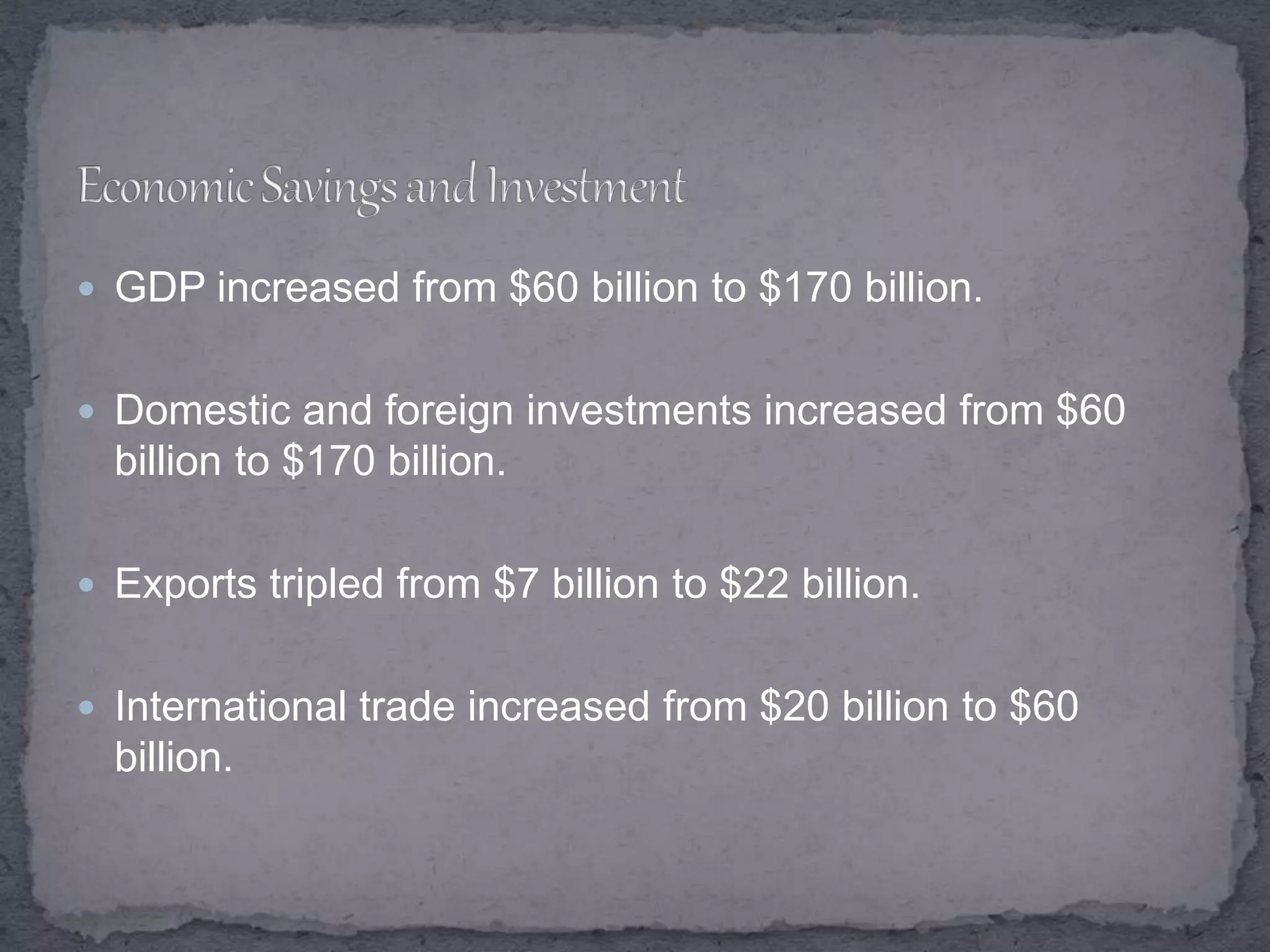
 Economic Savings and Investments
 Human Capital Development
 Women Empowerment
 Agricultural Reforms.
 GDP increased from $60 billion to $170 billion.
 Domestic and foreign investments increased from $60
billion to $170 billion.
 Exports tripled from $7 billion to $22 billion.
 International trade increased from $20 billion to $60
billion.
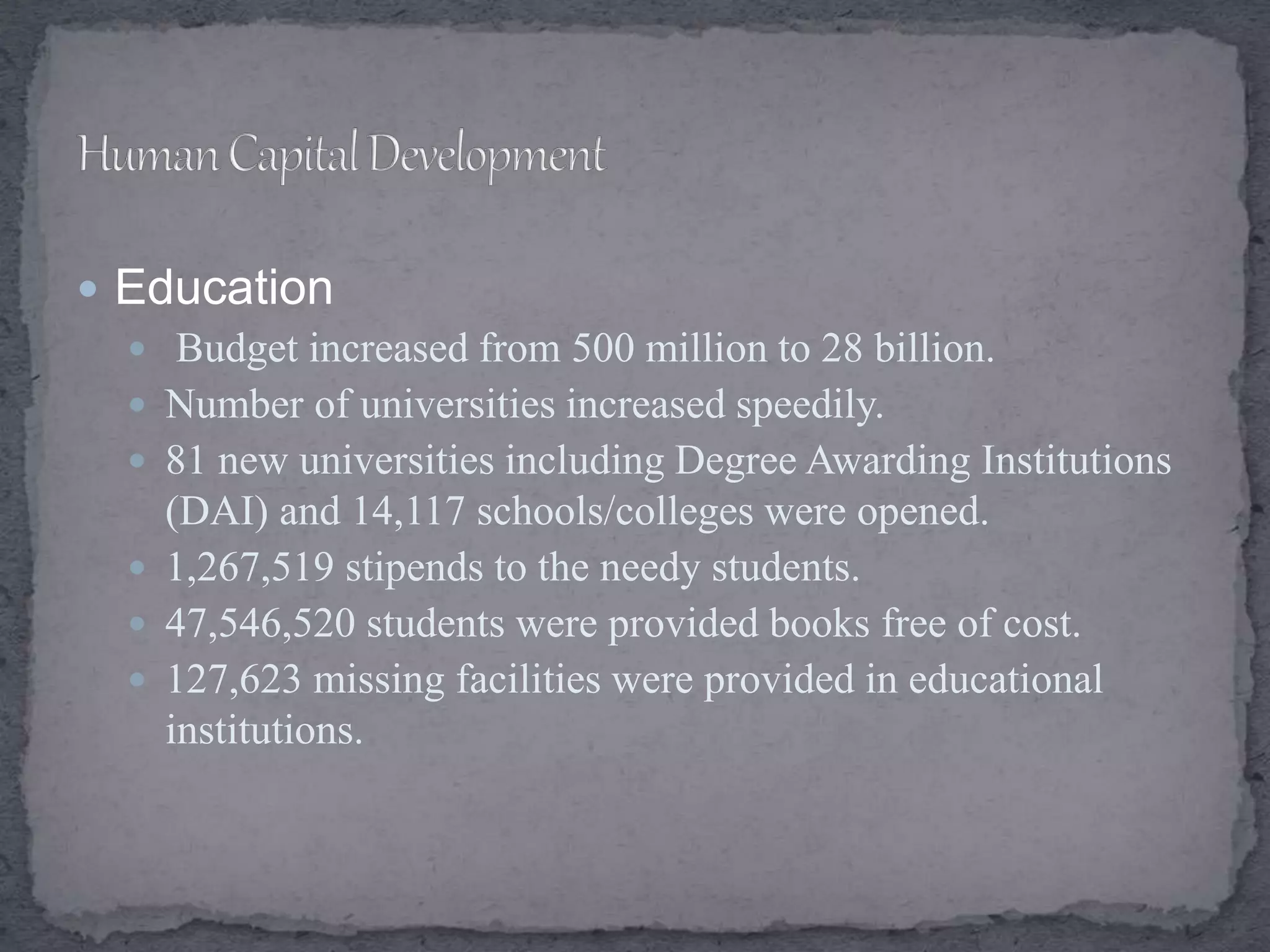
 Education
 Budget increased from 500 million to 28 billion.
 Number of universities increased speedily.
 81 new universities including Degree Awarding Institutions
(DAI) and 14,117 schools/colleges were opened.
 1,267,519 stipends to the needy students.
 47,546,520 students were provided books free of cost.
 127,623 missing facilities were provided in educational
institutions.
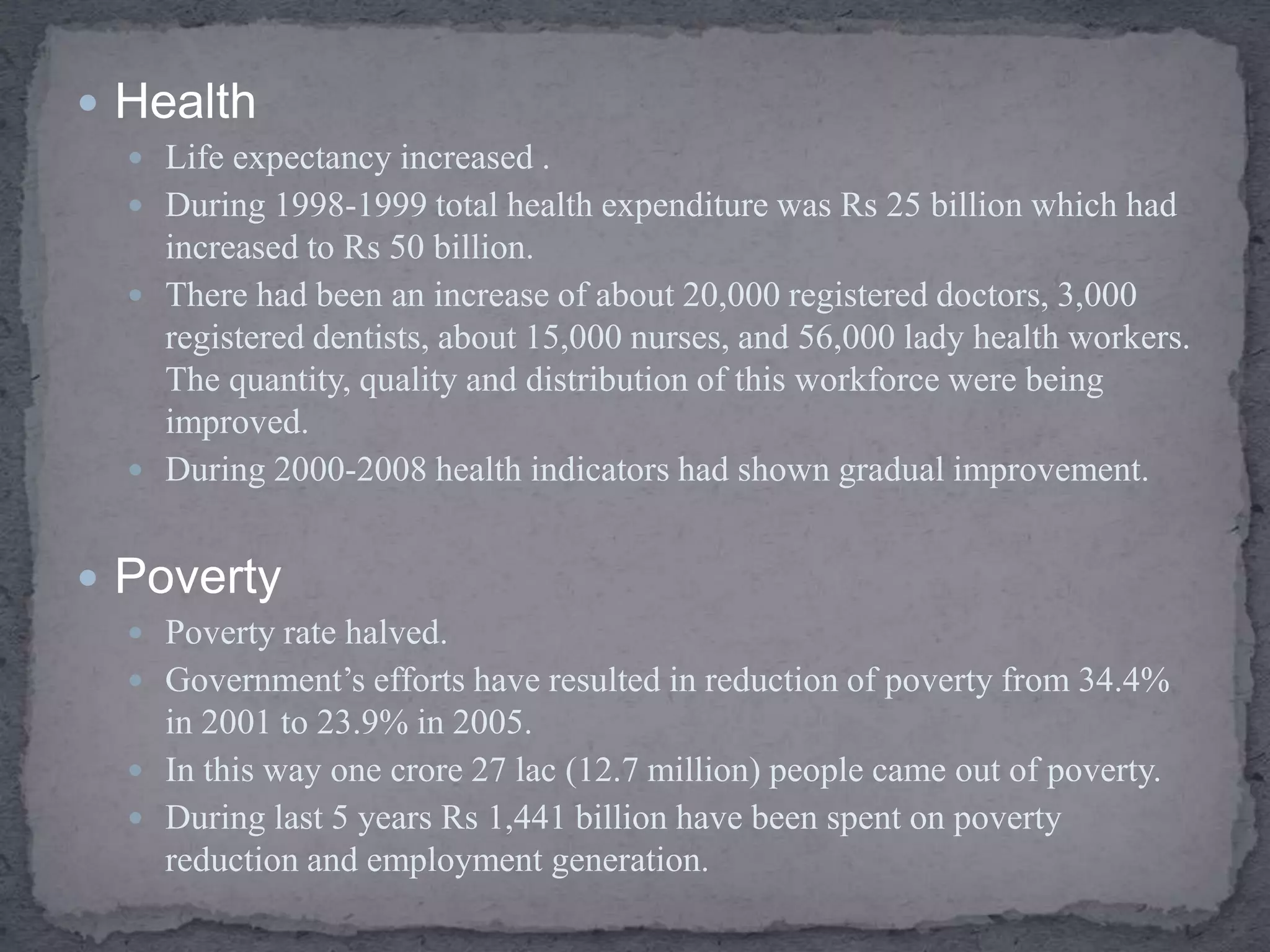
 Health
 Life expectancy increased .
 During 1998-1999 total health expenditure was Rs 25 billion which had
increased to Rs 50 billion.
 There had been an increase of about 20,000 registered doctors, 3,000
registered dentists, about 15,000 nurses, and 56,000 lady health workers.
The quantity, quality and distribution of this workforce were being
improved.
 During 2000-2008 health indicators had shown gradual improvement.
 Poverty
 Poverty rate halved.
 Government’s efforts have resulted in reduction of poverty from 34.4%
in 2001 to 23.9% in 2005.
 In this way one crore 27 lac (12.7 million) people came out of poverty.
 During last 5 years Rs 1,441 billion have been spent on poverty
reduction and employment generation.
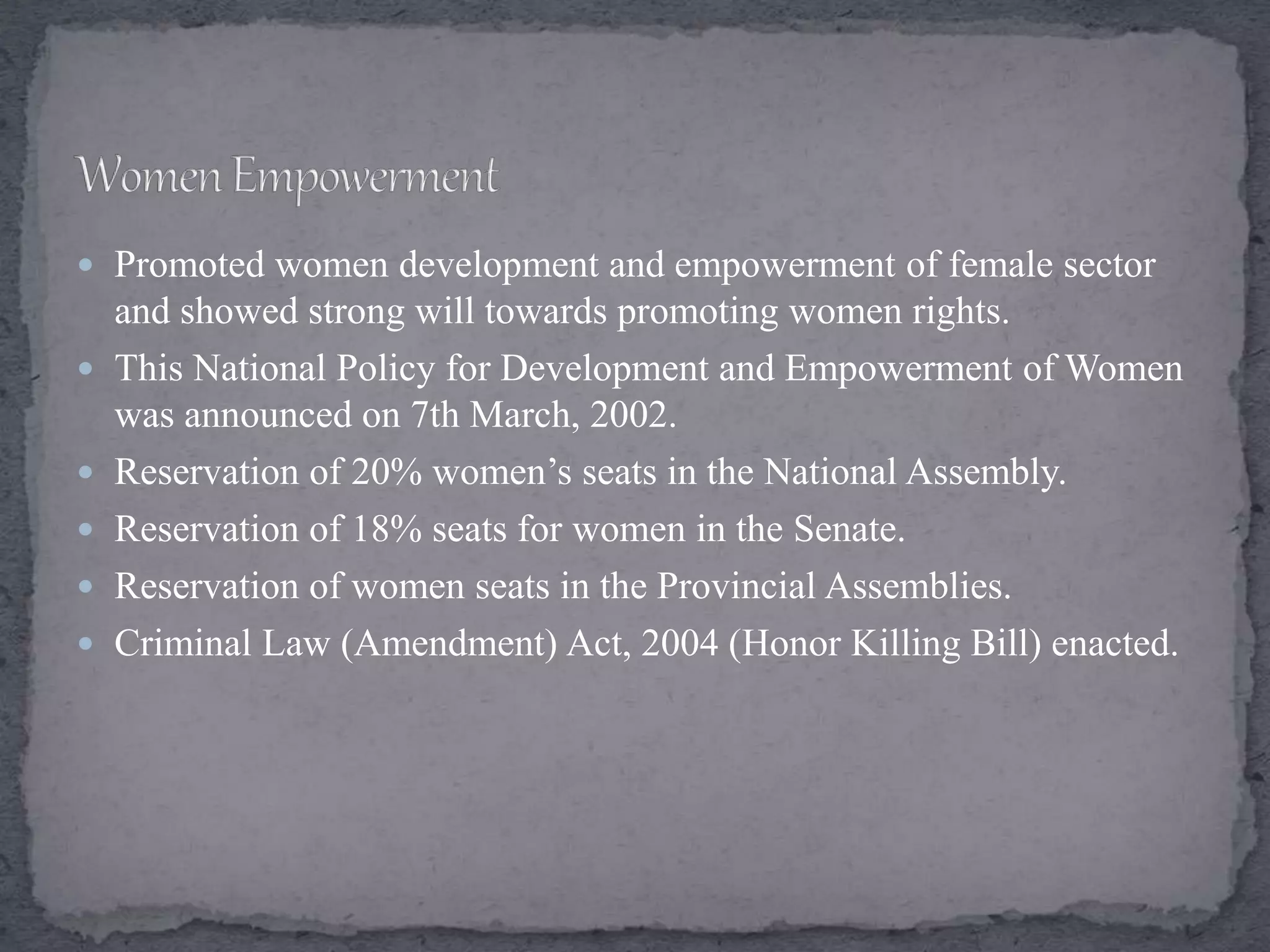
 Promoted women development and empowerment of female sector
and showed strong will towards promoting women rights.
 This National Policy for Development and Empowerment of Women
was announced on 7th March, 2002.
 Reservation of 20% women’s seats in the National Assembly.
 Reservation of 18% seats for women in the Senate.
 Reservation of women seats in the Provincial Assemblies.
 Criminal Law (Amendment) Act, 2004 (Honor Killing Bill) enacted.
 Pervez Musharraf was the leading strategist in the Kargil war
that took place in May to July 1999 between Pakistan and
Indian militants at LOC.
 Casualties:
 India: 524 soldiers.
 Pakistan: 696 soldiers.
 Proposed 4-points formula to solve Kashmir issue.
 Kashmir should have same borders but free for movement
of people of both the states.
 Region should be demilitarized.
 Self-governance but no independence
 Joint mechanism so that the road map may run smoothly,
(includes representatives from Pakistan, India and Kashmir).
 Support of US war against terror.
 Emergency by Musharraf.
 Lal Masjid operation.
 Musharraf was asked by George W. Bush to join war against terror,
after the attacks of 9/11, on sep 2001.
 Purpose was to defeat the Afghan Taliban and end their regime in
Afghanistan.
 As a neighboring country, Pakistan was suitable for the supply and
help for the war.
 Declared emergency on 3rd of Nov, 2007 which remained in action
until 15 Dec, 2007.
 Constitution was suspended.
 Chief justice was house arrested.
 Elections were postponed.
 Media houses were kept under restriction and were monitored.
 Took place on July 2007.
 Between Islamic fundamentalist militants and government of
Pakistan.
 Caused 154 casualties and many more injured.
 Musharraf engaged in legal battles after high court issued warrants for him
for his alleged involvement in the assassinations of Benazir and Bugti.
 In October 2010, after a period of self-imposed exile, Musharraf announced
the formation of a new political party, the All Pakistan Muslim League, and
vowed to return to Pakistan in time for the 2013 national elections.
 He did so in March 2013, but his bid to stand in elections faced a variety of
legal and political obstacles, including several open criminal investigations
regarding his actions as president.
 Upon his return, Musharraf was disqualified from taking part in the
elections by High Court judges in April 2013.
Thank
you
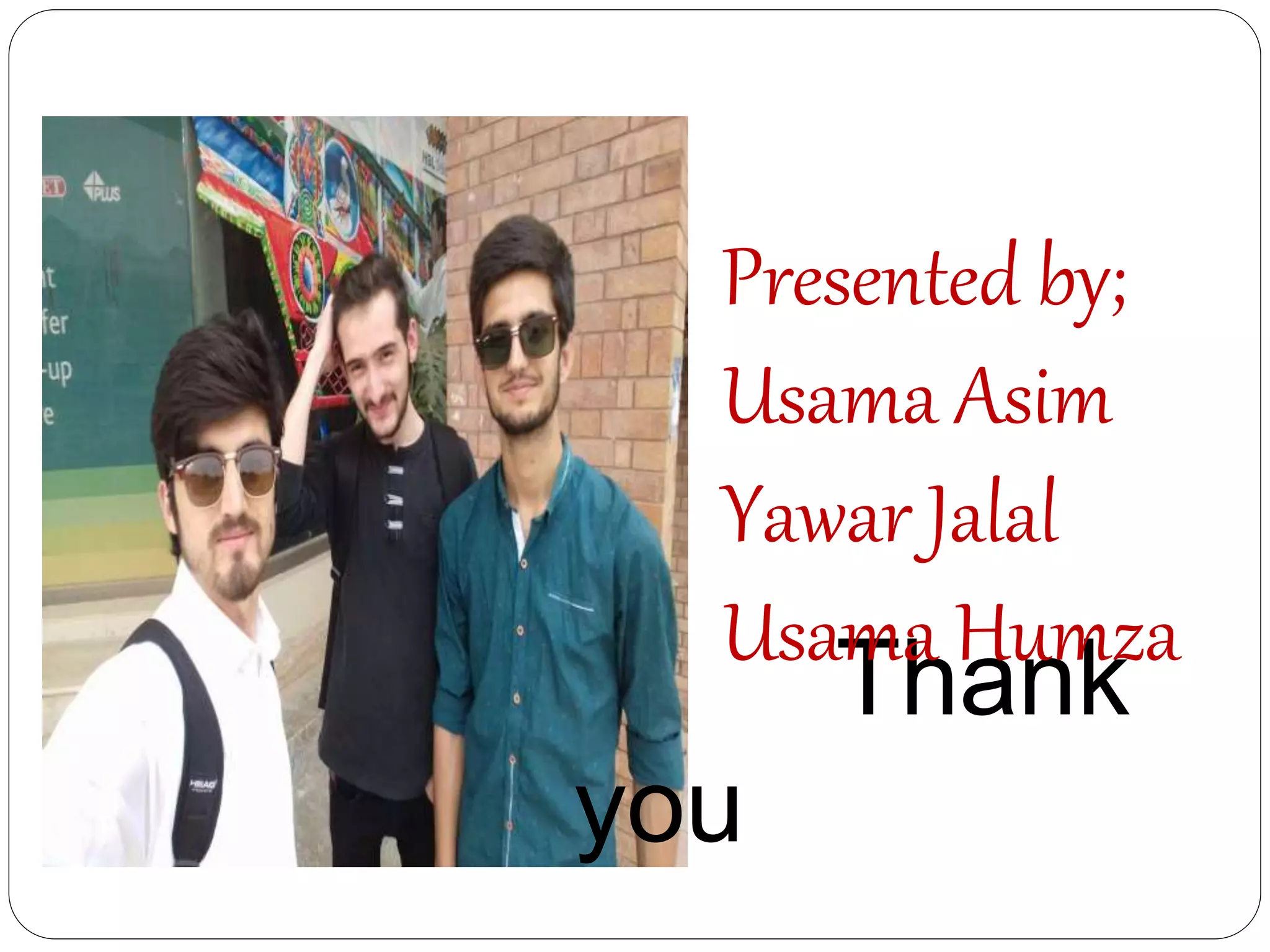
Presented by;
Usama Asim
Yawar Jalal
Usama Humza

The Regime of Gen (R) Pervez musharraf

  • 2.
  • 3.
     Introduction  Reforms Economic Savings and Investments  Human Capital Development  Women Empowerment  Kargil conflict  Kashmir issue  Musharraf’s blunders  Support of US war against terror.  Emergency by Musharraf.  Lal Masjid operation
  • 4.
     Born on11th of August 1943, General Pervez Musharraf was a retired 4-star Army General.  The 10th president of the Islamic Republic of Pakistan.  Took over the state and imposed Marshal Law on 12th Oct 1999.  From 2001 when he deposed the democratically elected government of Nawaz Sharif.  Until 2008, when he was forced to resign, to avoid further conflicts.
  • 5.
     Economic Savingsand Investments  Human Capital Development  Women Empowerment  Agricultural Reforms.
  • 6.
     GDP increasedfrom $60 billion to $170 billion.  Domestic and foreign investments increased from $60 billion to $170 billion.  Exports tripled from $7 billion to $22 billion.  International trade increased from $20 billion to $60 billion.
  • 7.
     Education  Budgetincreased from 500 million to 28 billion.  Number of universities increased speedily.  81 new universities including Degree Awarding Institutions (DAI) and 14,117 schools/colleges were opened.  1,267,519 stipends to the needy students.  47,546,520 students were provided books free of cost.  127,623 missing facilities were provided in educational institutions.
  • 8.
     Health  Lifeexpectancy increased .  During 1998-1999 total health expenditure was Rs 25 billion which had increased to Rs 50 billion.  There had been an increase of about 20,000 registered doctors, 3,000 registered dentists, about 15,000 nurses, and 56,000 lady health workers. The quantity, quality and distribution of this workforce were being improved.  During 2000-2008 health indicators had shown gradual improvement.  Poverty  Poverty rate halved.  Government’s efforts have resulted in reduction of poverty from 34.4% in 2001 to 23.9% in 2005.  In this way one crore 27 lac (12.7 million) people came out of poverty.  During last 5 years Rs 1,441 billion have been spent on poverty reduction and employment generation.
  • 9.
     Promoted womendevelopment and empowerment of female sector and showed strong will towards promoting women rights.  This National Policy for Development and Empowerment of Women was announced on 7th March, 2002.  Reservation of 20% women’s seats in the National Assembly.  Reservation of 18% seats for women in the Senate.  Reservation of women seats in the Provincial Assemblies.  Criminal Law (Amendment) Act, 2004 (Honor Killing Bill) enacted.
  • 10.
     Pervez Musharrafwas the leading strategist in the Kargil war that took place in May to July 1999 between Pakistan and Indian militants at LOC.  Casualties:  India: 524 soldiers.  Pakistan: 696 soldiers.
  • 11.
     Proposed 4-pointsformula to solve Kashmir issue.  Kashmir should have same borders but free for movement of people of both the states.  Region should be demilitarized.  Self-governance but no independence  Joint mechanism so that the road map may run smoothly, (includes representatives from Pakistan, India and Kashmir).
  • 12.
     Support ofUS war against terror.  Emergency by Musharraf.  Lal Masjid operation.
  • 13.
     Musharraf wasasked by George W. Bush to join war against terror, after the attacks of 9/11, on sep 2001.  Purpose was to defeat the Afghan Taliban and end their regime in Afghanistan.  As a neighboring country, Pakistan was suitable for the supply and help for the war.
  • 14.
     Declared emergencyon 3rd of Nov, 2007 which remained in action until 15 Dec, 2007.  Constitution was suspended.  Chief justice was house arrested.  Elections were postponed.  Media houses were kept under restriction and were monitored.
  • 15.
     Took placeon July 2007.  Between Islamic fundamentalist militants and government of Pakistan.  Caused 154 casualties and many more injured.
  • 16.
     Musharraf engagedin legal battles after high court issued warrants for him for his alleged involvement in the assassinations of Benazir and Bugti.  In October 2010, after a period of self-imposed exile, Musharraf announced the formation of a new political party, the All Pakistan Muslim League, and vowed to return to Pakistan in time for the 2013 national elections.  He did so in March 2013, but his bid to stand in elections faced a variety of legal and political obstacles, including several open criminal investigations regarding his actions as president.  Upon his return, Musharraf was disqualified from taking part in the elections by High Court judges in April 2013.
  • 17.