The problem of Solitary
  pulmonary nodule
     Dr/Ahmed A. Bahnassy
      Consultant radiologist
 (MBCHB-MD-FRCR (London –UK
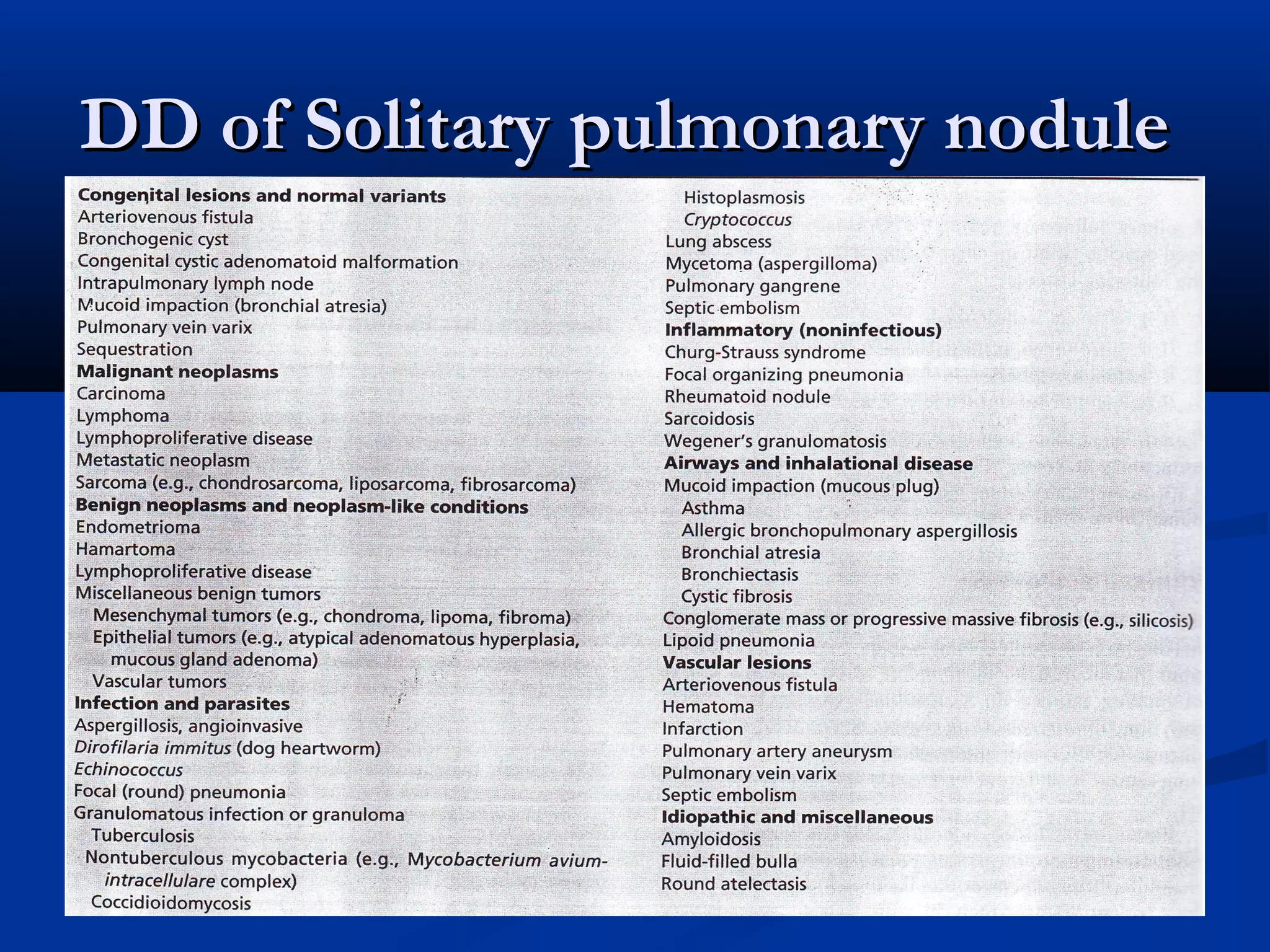
DD of Solitary pulmonary nodule
SPN
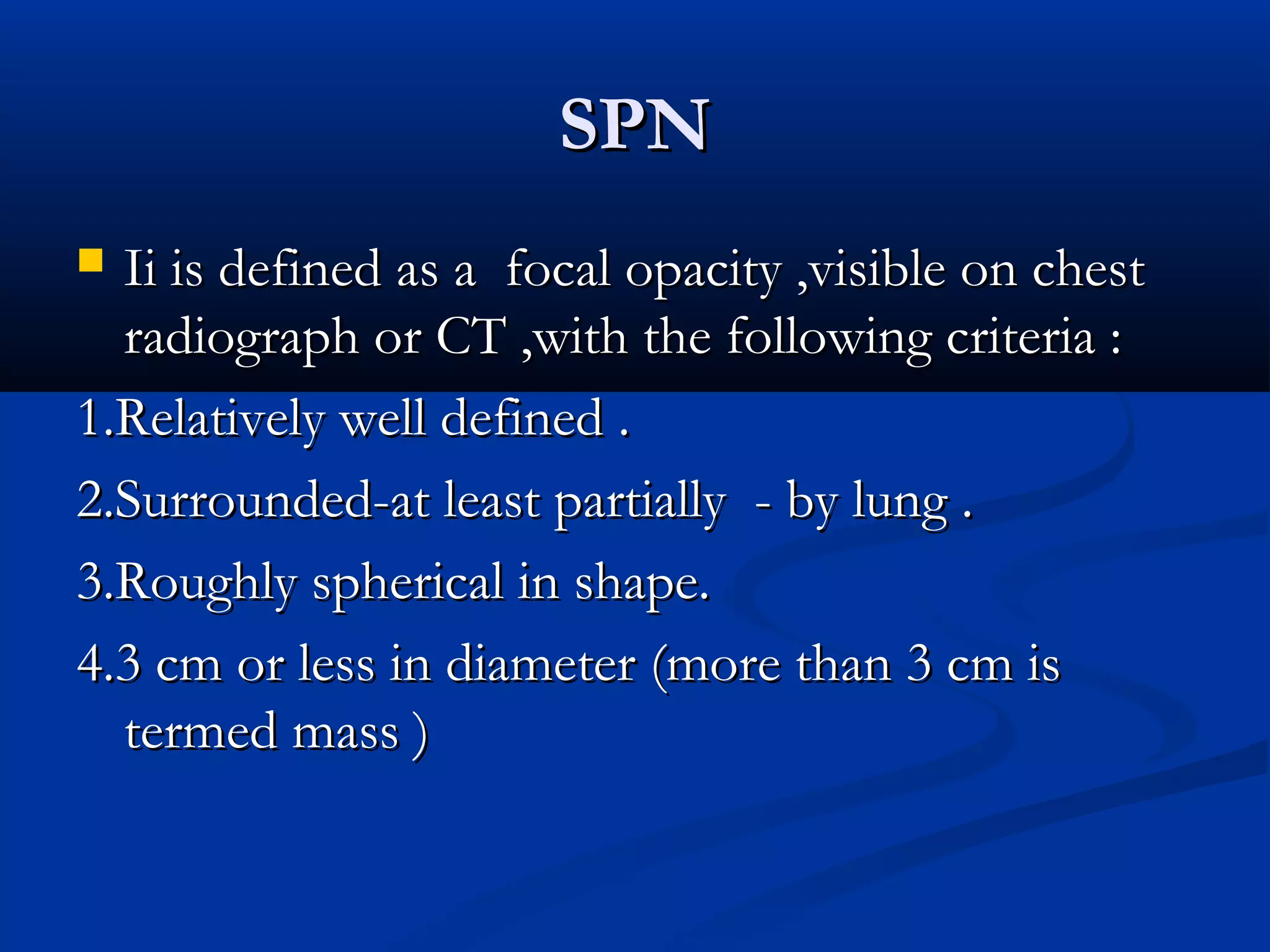
 Ii is defined as a focal opacity ,visible on chest
  radiograph or CT ,with the following criteria :
1.Relatively well defined .
2.Surrounded-at least partially - by lung .
3.Roughly spherical in shape.
4.3 cm or less in diameter (more than 3 cm is
  termed mass )
Clinical evaluation
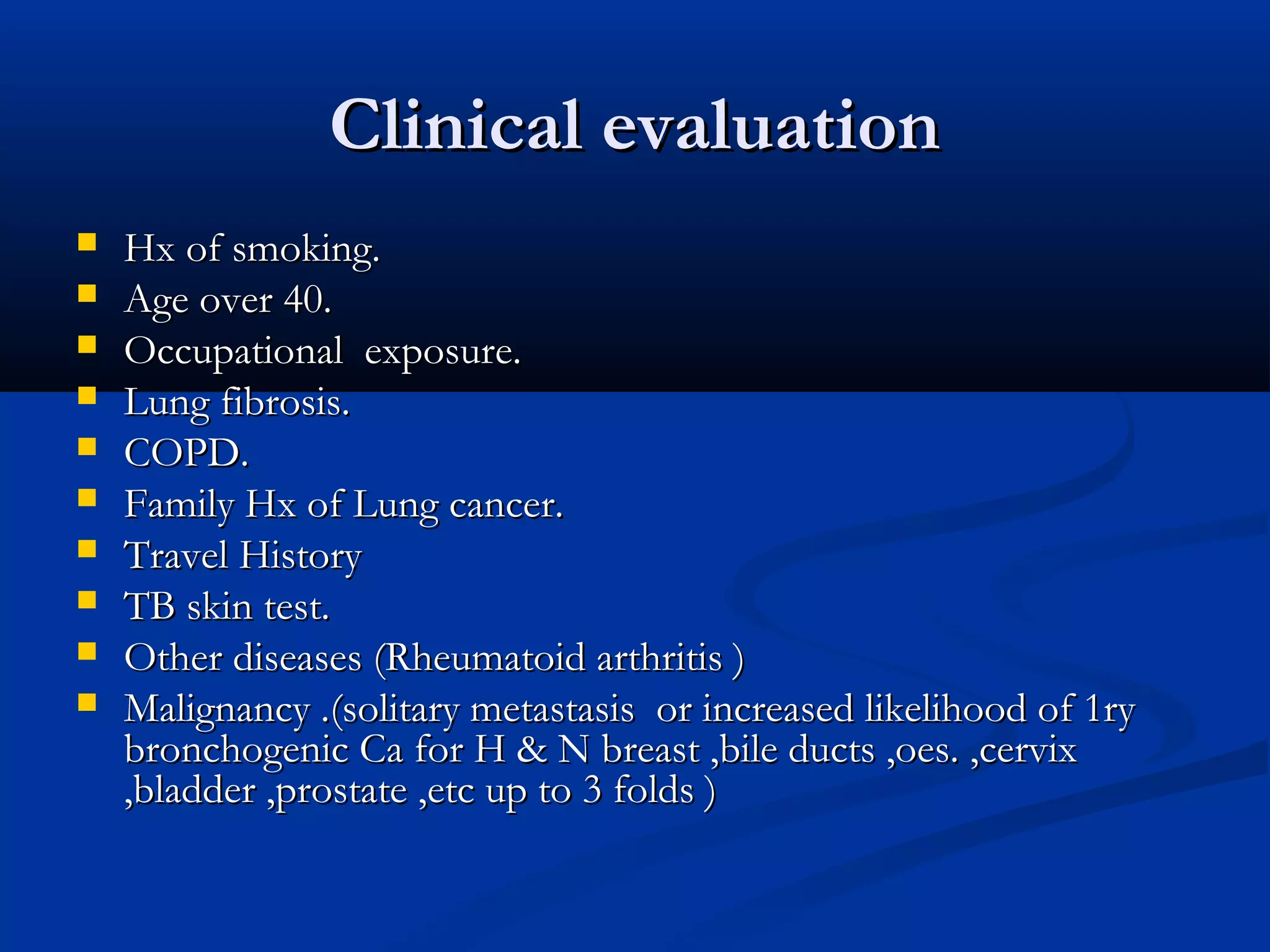
   Hx of smoking.
   Age over 40.
   Occupational exposure.
   Lung fibrosis.
   COPD.
   Family Hx of Lung cancer.
   Travel History
   TB skin test.
   Other diseases (Rheumatoid arthritis )
   Malignancy .(solitary metastasis or increased likelihood of 1ry
    bronchogenic Ca for H & N breast ,bile ducts ,oes. ,cervix
    ,bladder ,prostate ,etc up to 3 folds )
Radiographic evaluation
   Morphological Characteristics.
   Density.
   Growth rate .
I-Morphological Characteristics
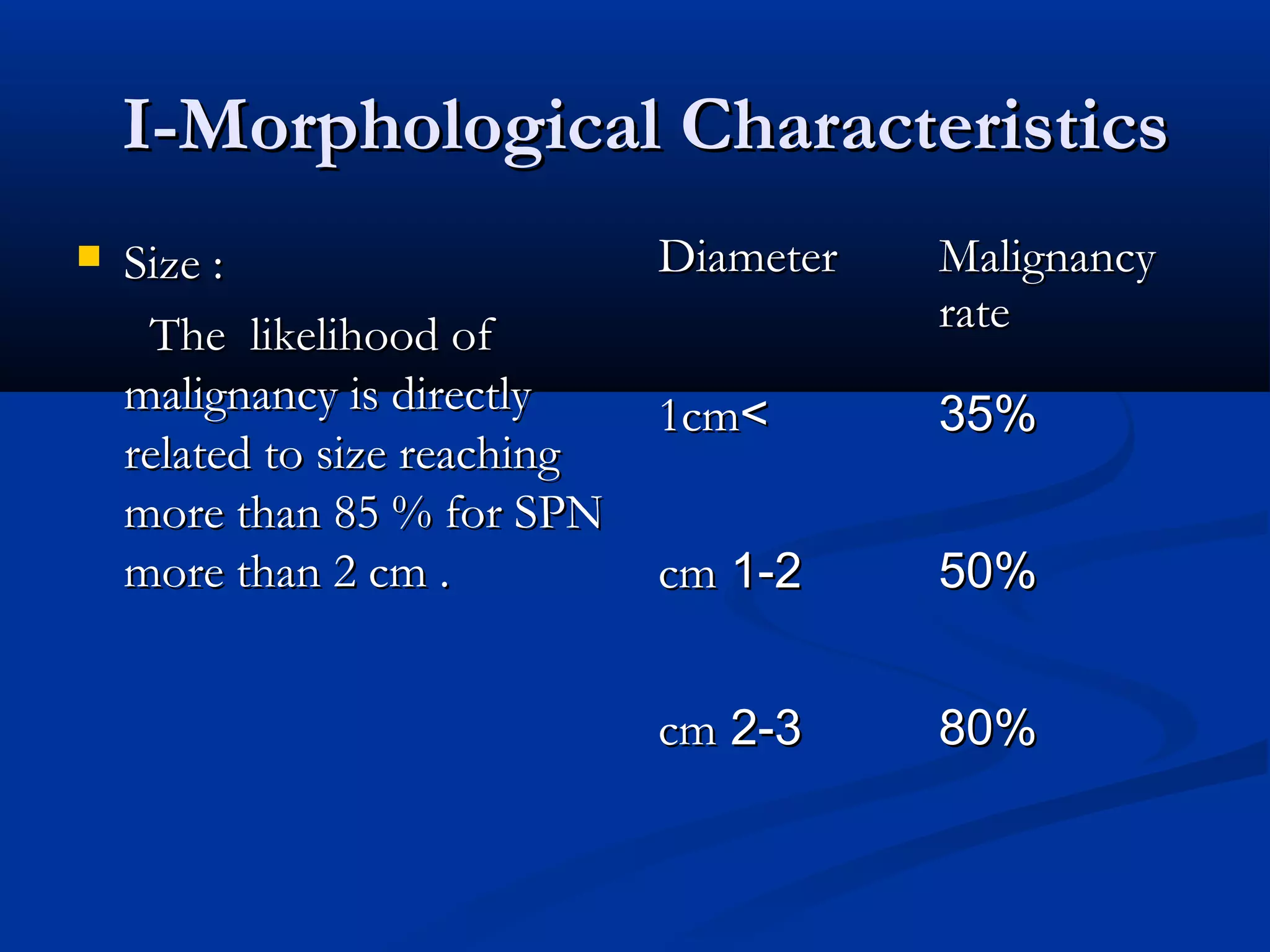
   Size :                     Diameter   Malignancy
     The likelihood of                    rate
    malignancy is directly     1cm>       35%
    related to size reaching
    more than 85 % for SPN
    more than 2 cm .           cm 1-2     50%


                               cm 2-3     80%
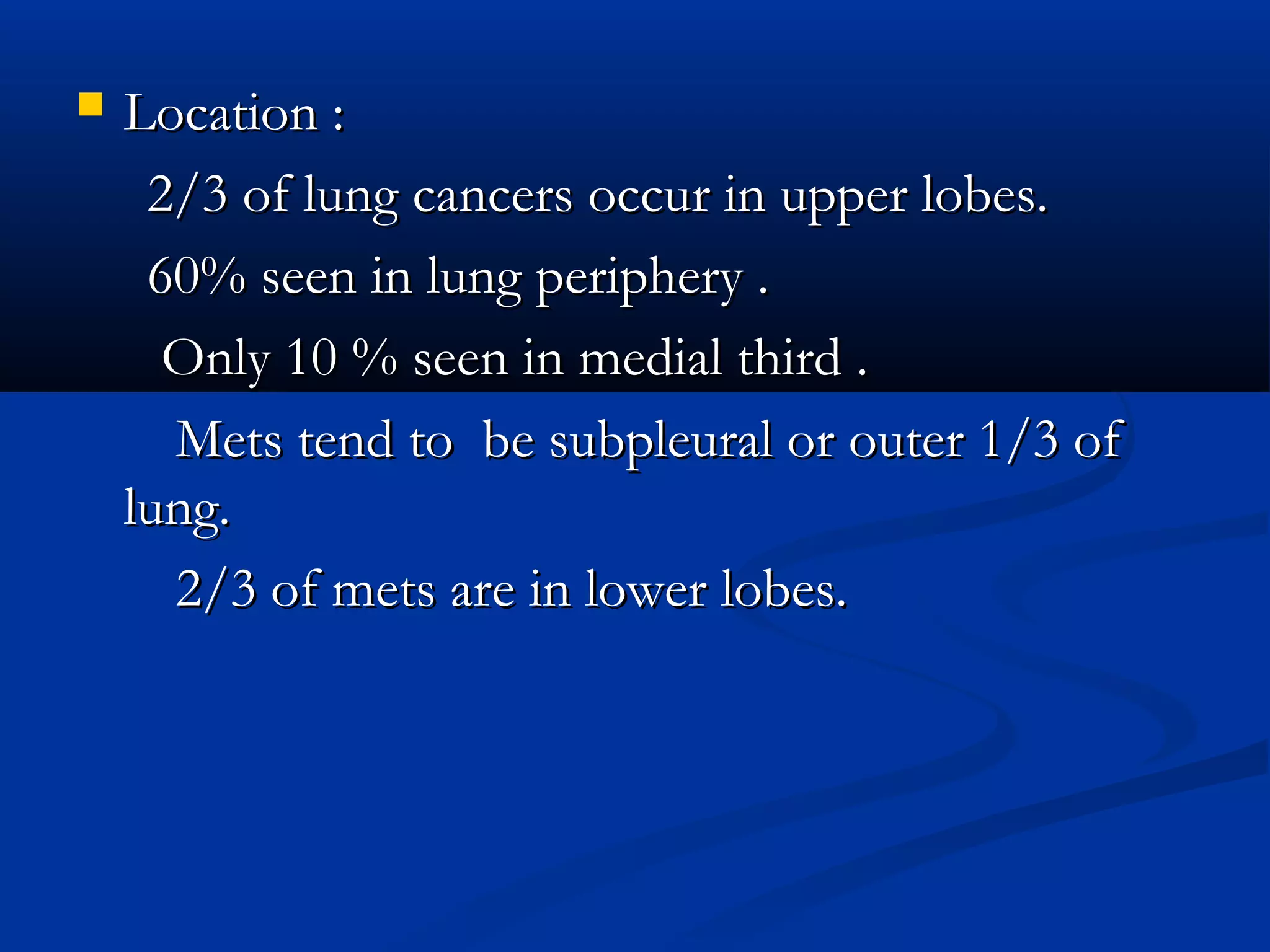
   Location :
     2/3 of lung cancers occur in upper lobes.
     60% seen in lung periphery .
      Only 10 % seen in medial third .
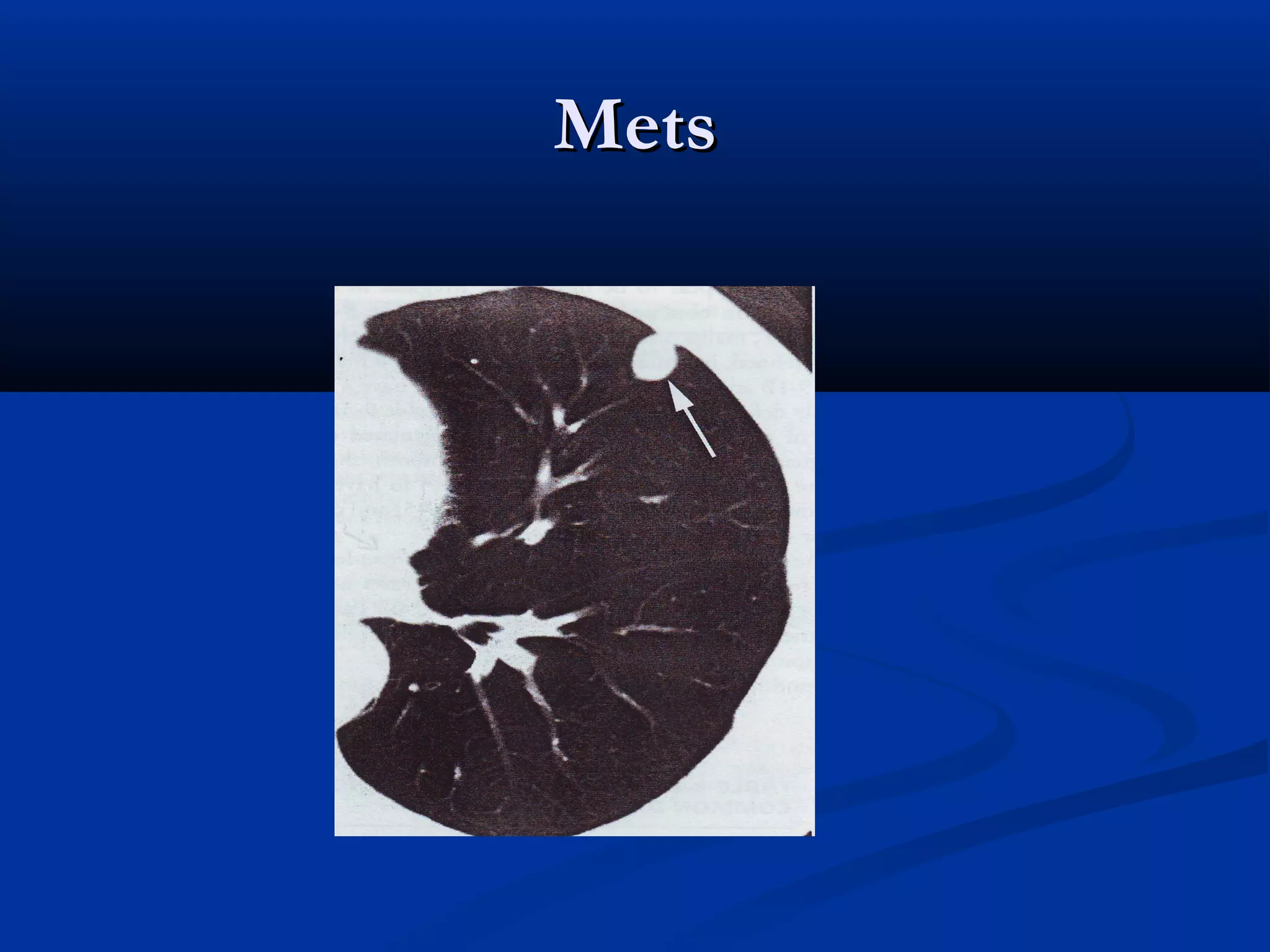
      Mets tend to be subpleural or outer 1/3 of
    lung.
      2/3 of mets are in lower lobes.
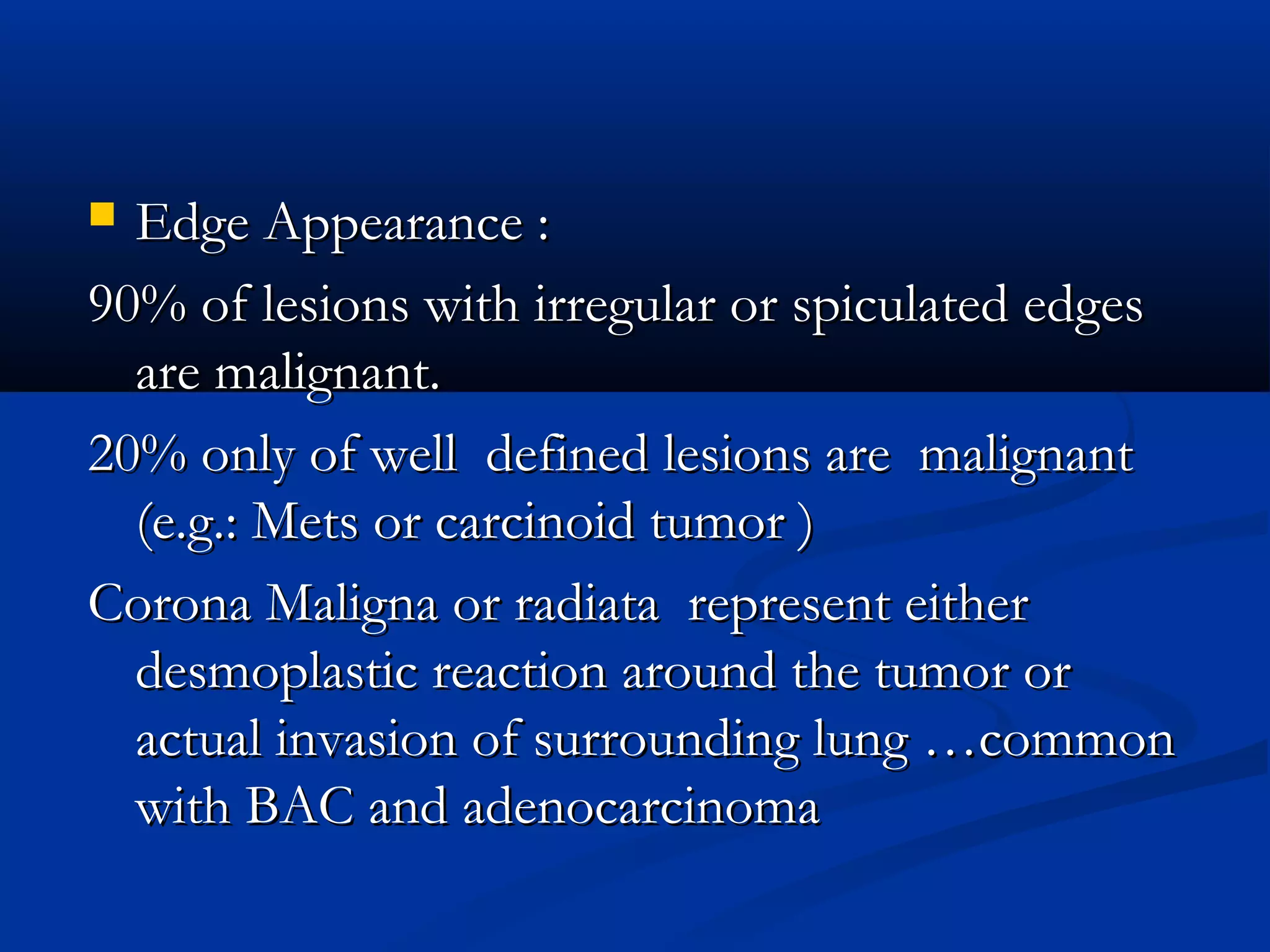
 Edge Appearance :
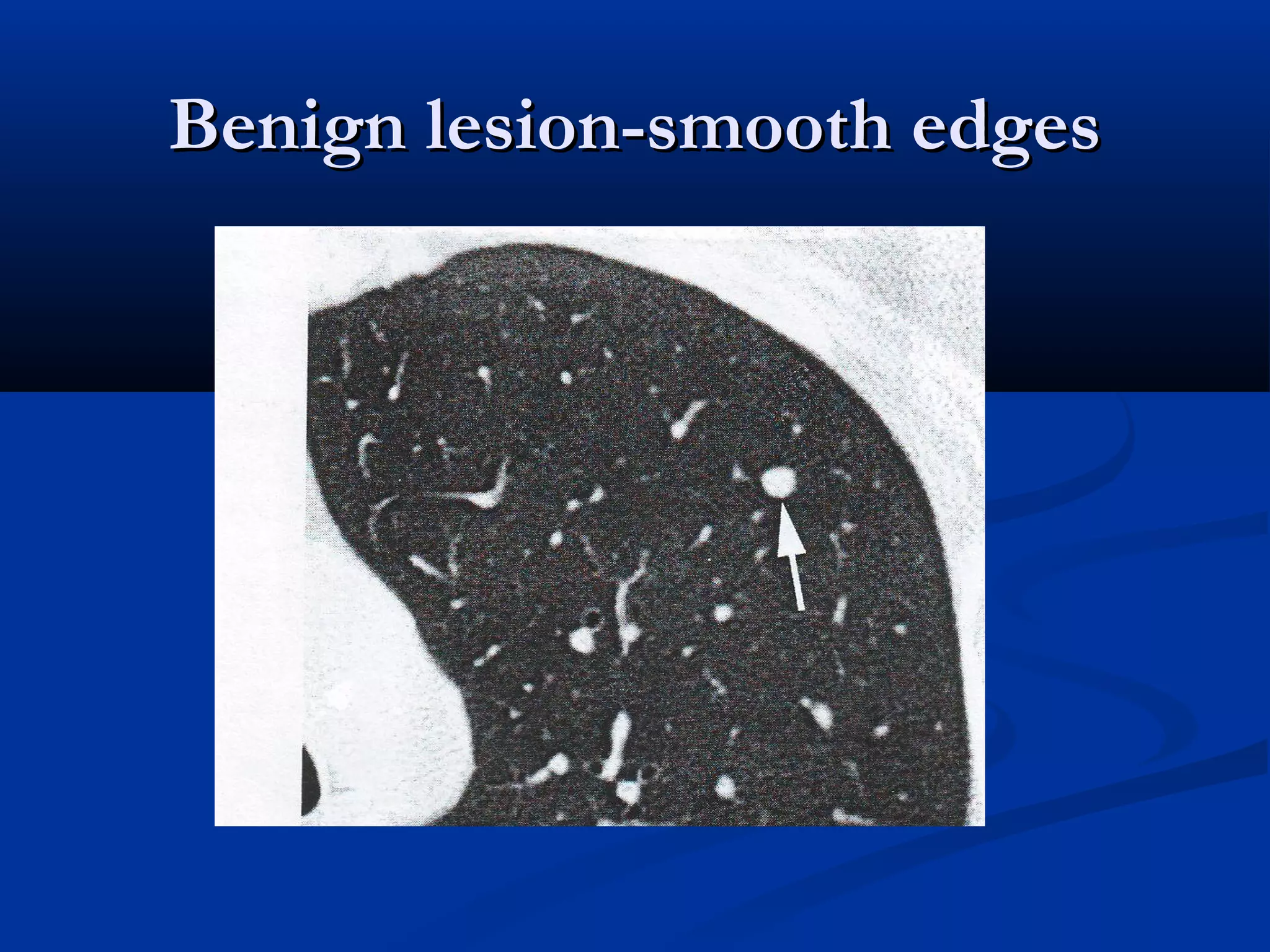
90% of lesions with irregular or spiculated edges
  are malignant.
20% only of well defined lesions are malignant
  (e.g.: Mets or carcinoid tumor )
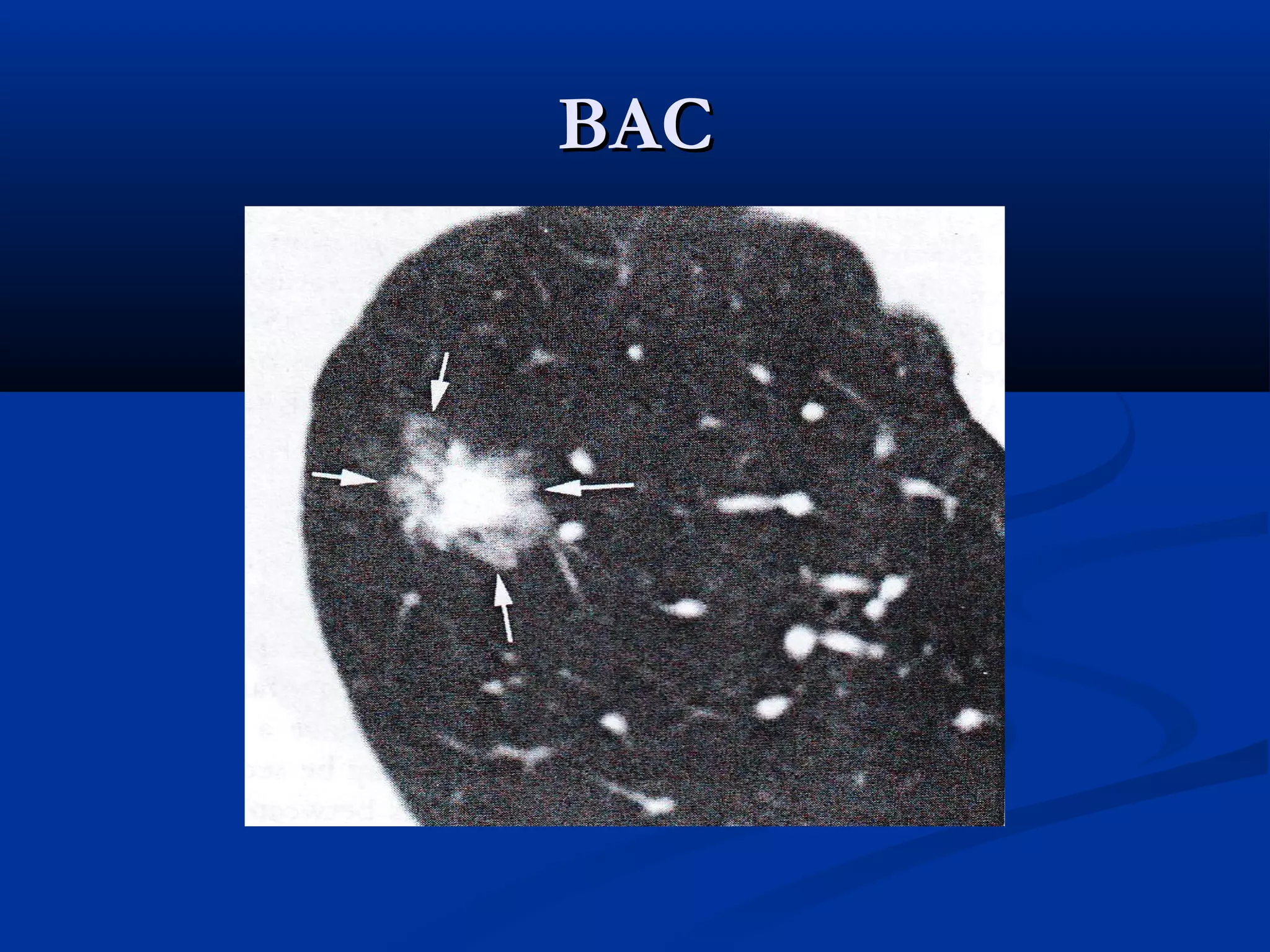
Corona Maligna or radiata represent either
  desmoplastic reaction around the tumor or
  actual invasion of surrounding lung …common
  with BAC and adenocarcinoma
Carcinoma
Focal scarring
Brncioalveolar cell carcinoma
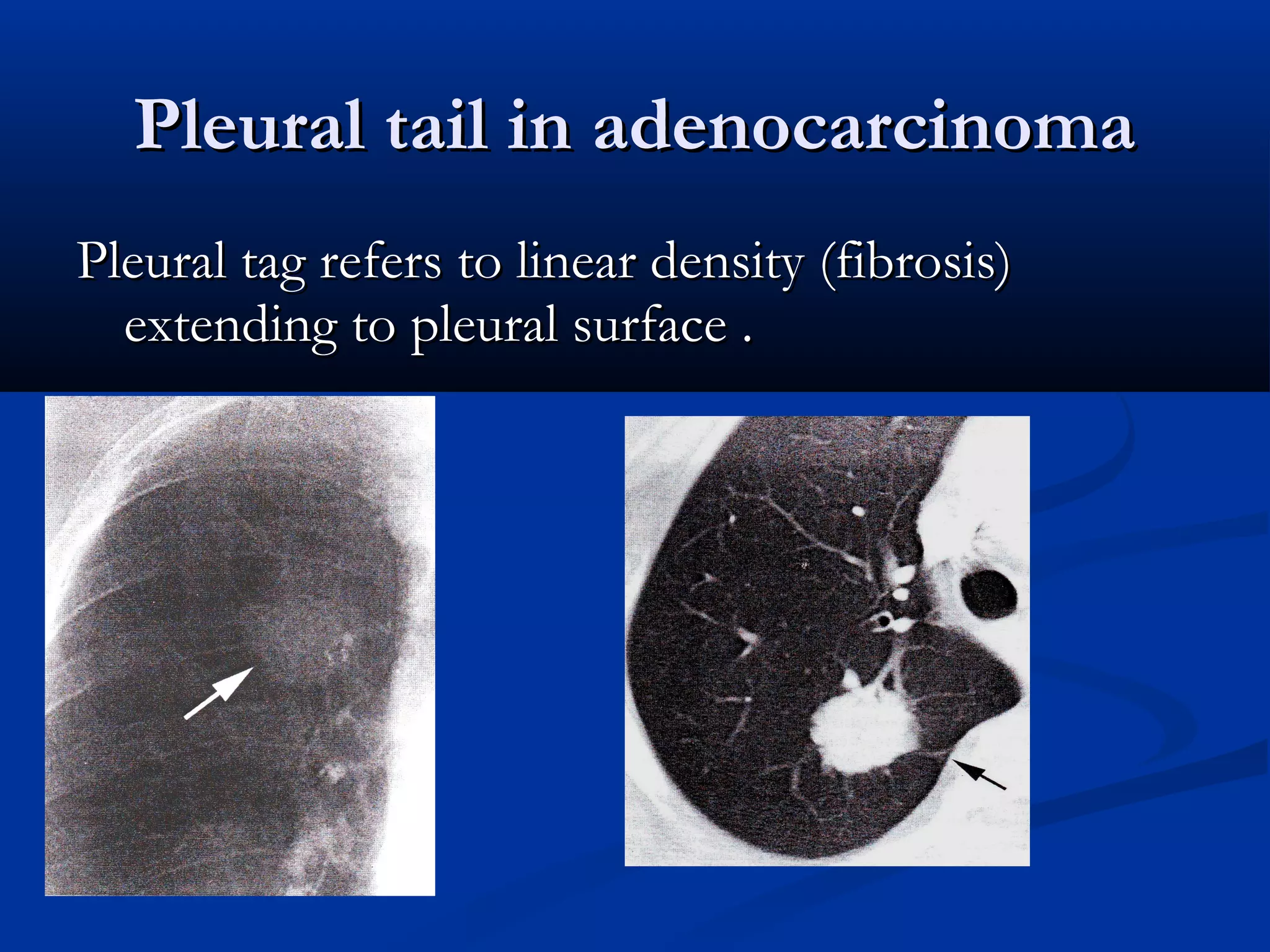
Pleural tail in adenocarcinoma
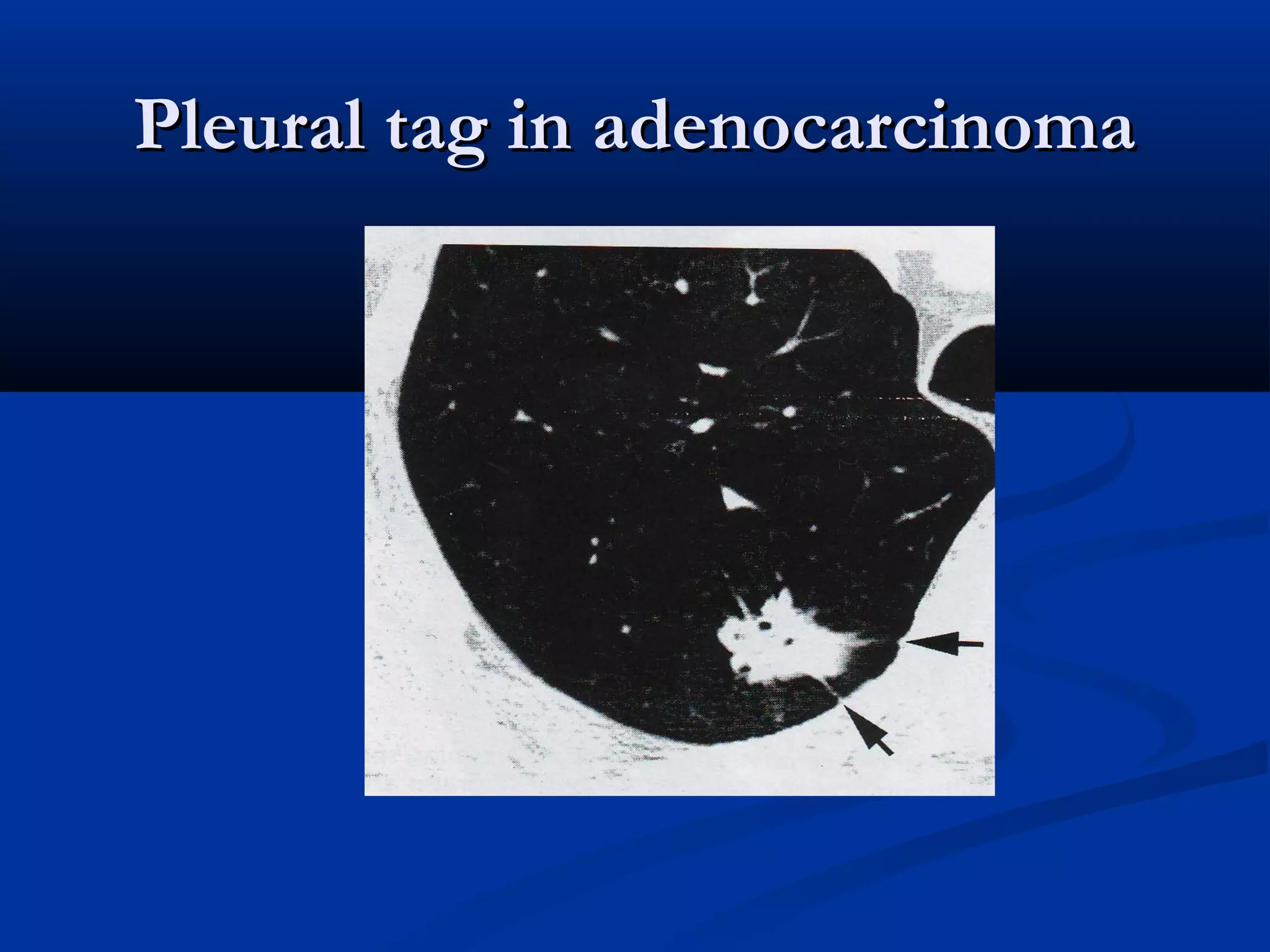
Pleural tag refers to linear density (fibrosis)
  extending to pleural surface .
Pleural tag in adenocarcinoma
Granuloma
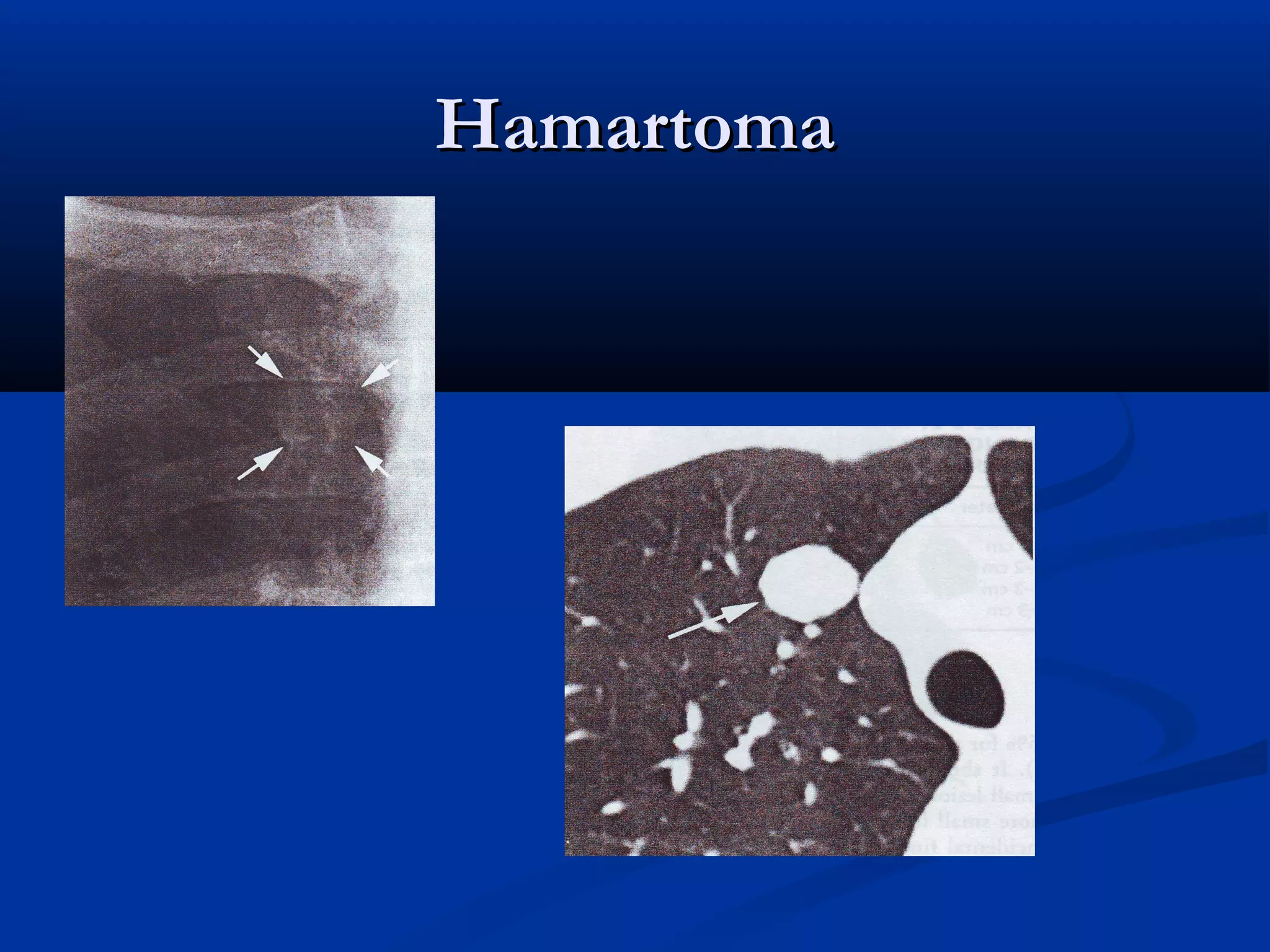
Hamartoma
.Metastasis
Benign lesion-smooth edges
Mets
Hamartoma
Halo sign
 Halo of ground glass opacity surrounding a
  nodule .
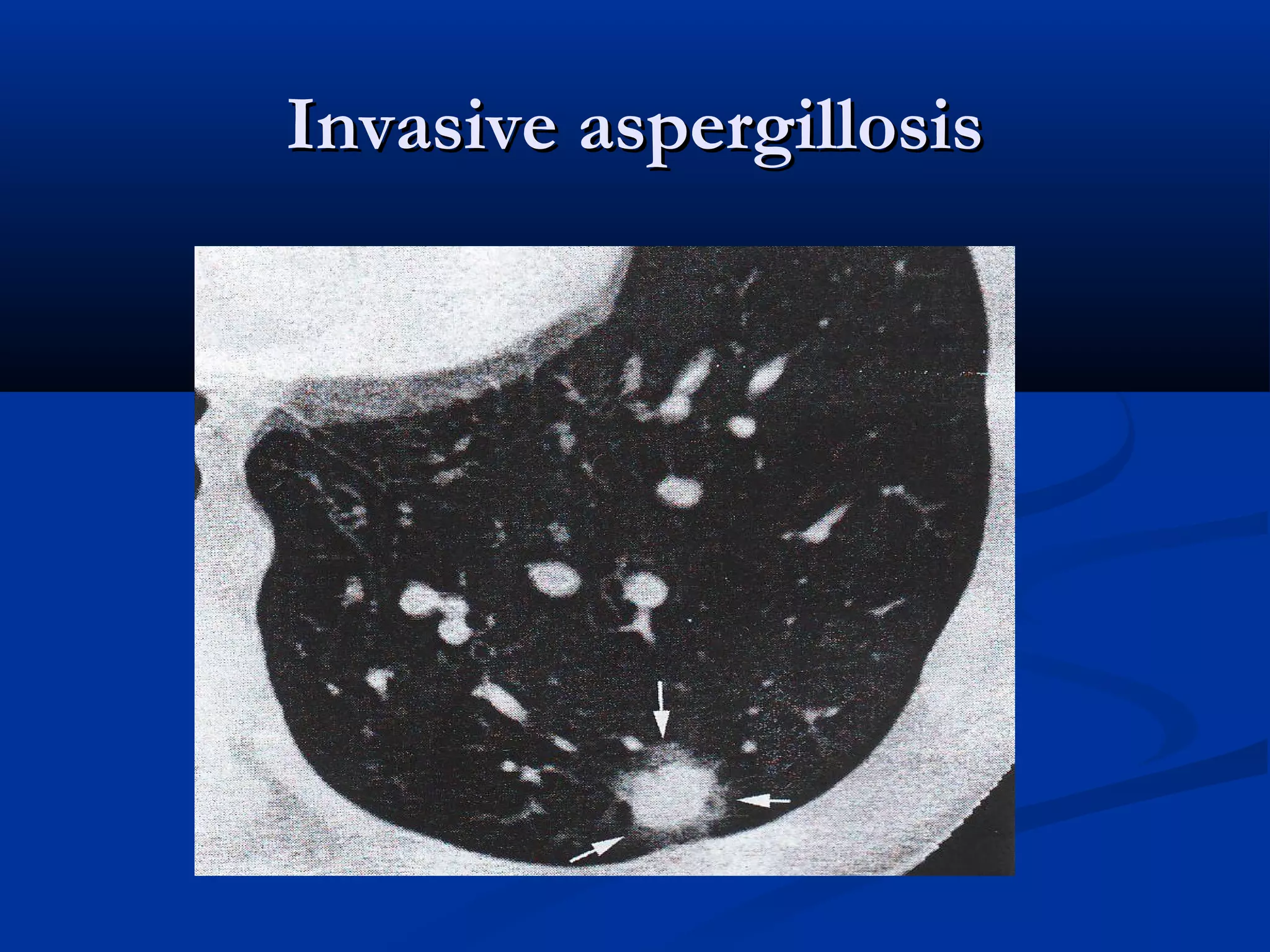
Commonly present in Leukemic patient with
  invasive aspergillosis (represent hemorrhagic
  infarction )
Can occur with any other infections .
Can be seen with BAC and adenocarcinoma
  (representing lepidic growth )
Causes of Halo sign
Invasive aspegillosis
.Wegener Granulomatosis
.BAC
.Kaposi sarcoma
.Mets
.TB, nocardiosis
.CMV infection
PCP
BOOP
Invasive aspergillosis
BAC
 Shape :
Lung Ca tends to be irregular , lobulated or
  notched.
Granuloma are rounded.
Hamartoma and metastasis are round ,oval or
  lobulated.
Scars , atelectasis may appear linear .
AVM and mucous plugs are particular in shape
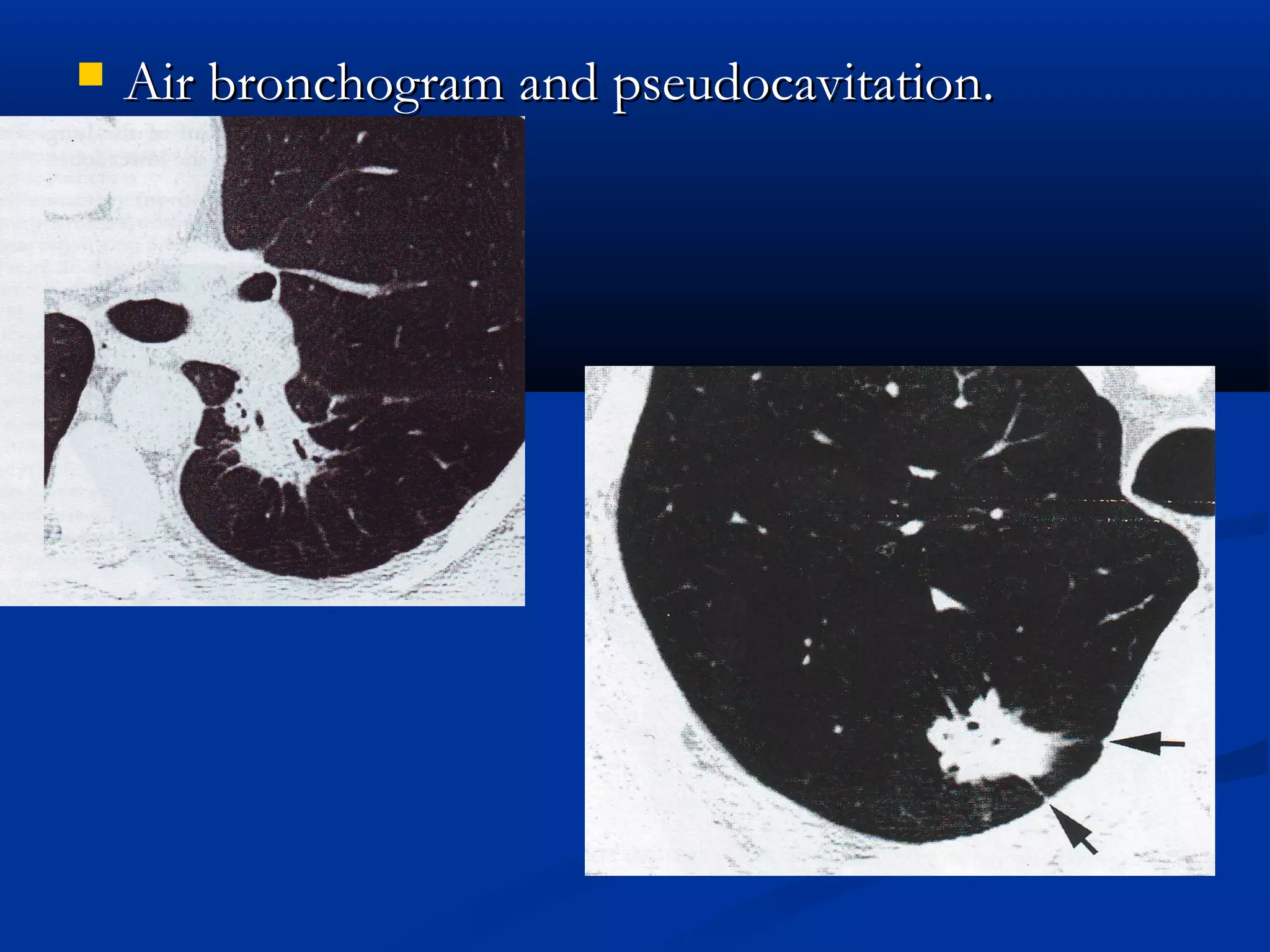
   Air bronchogram and pseudocavitation.
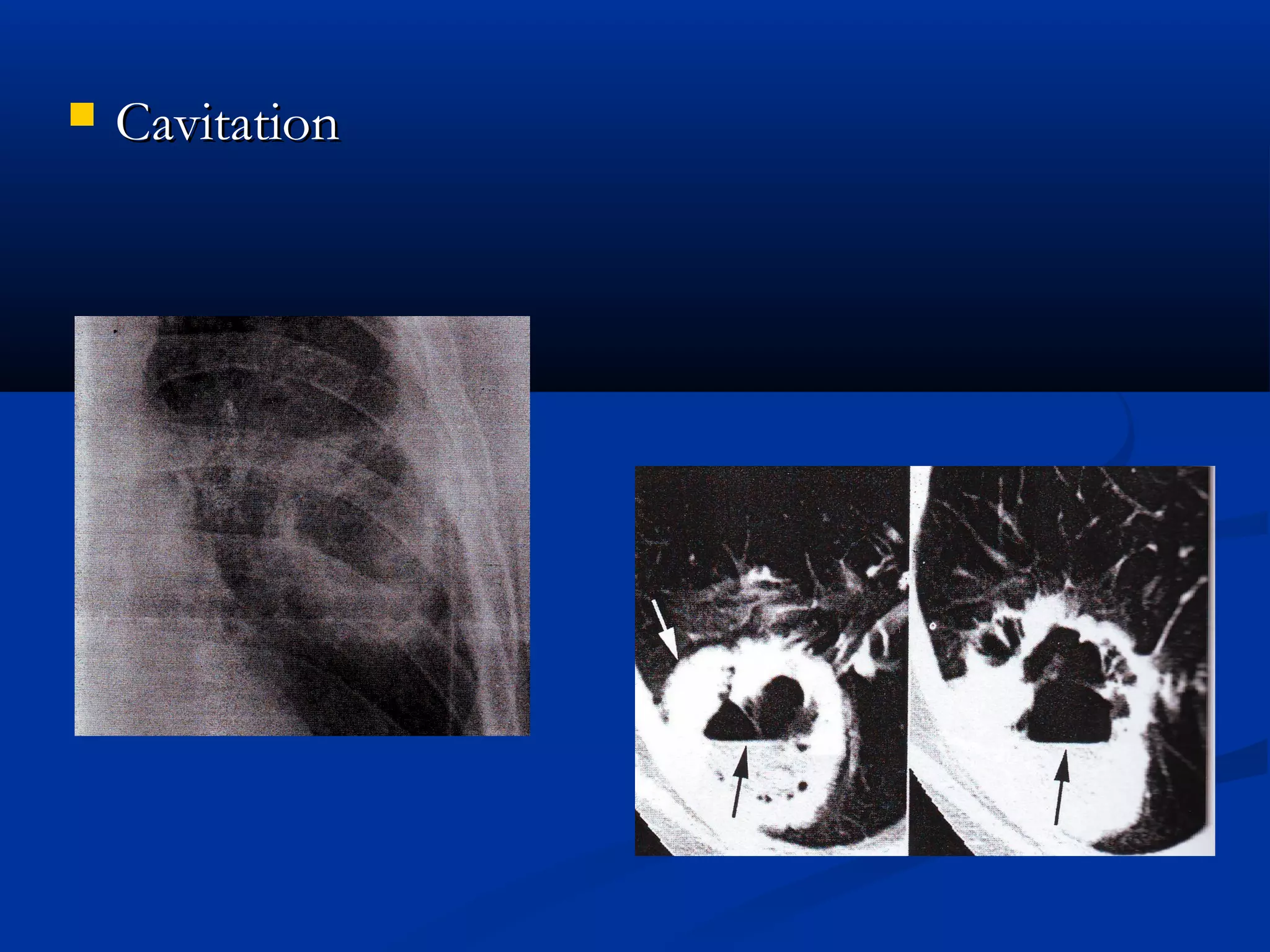
   Cavitation
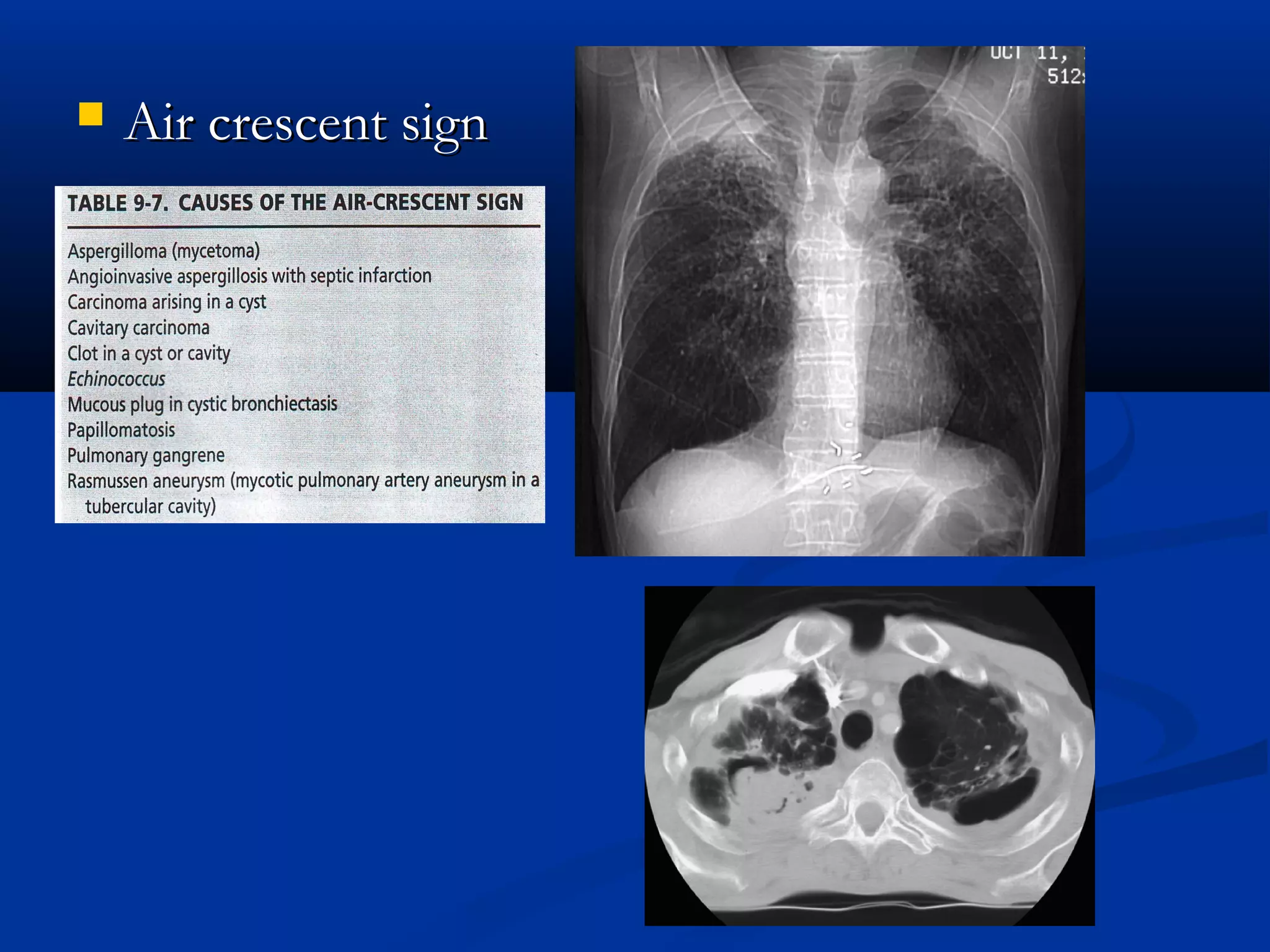
   Air crescent sign
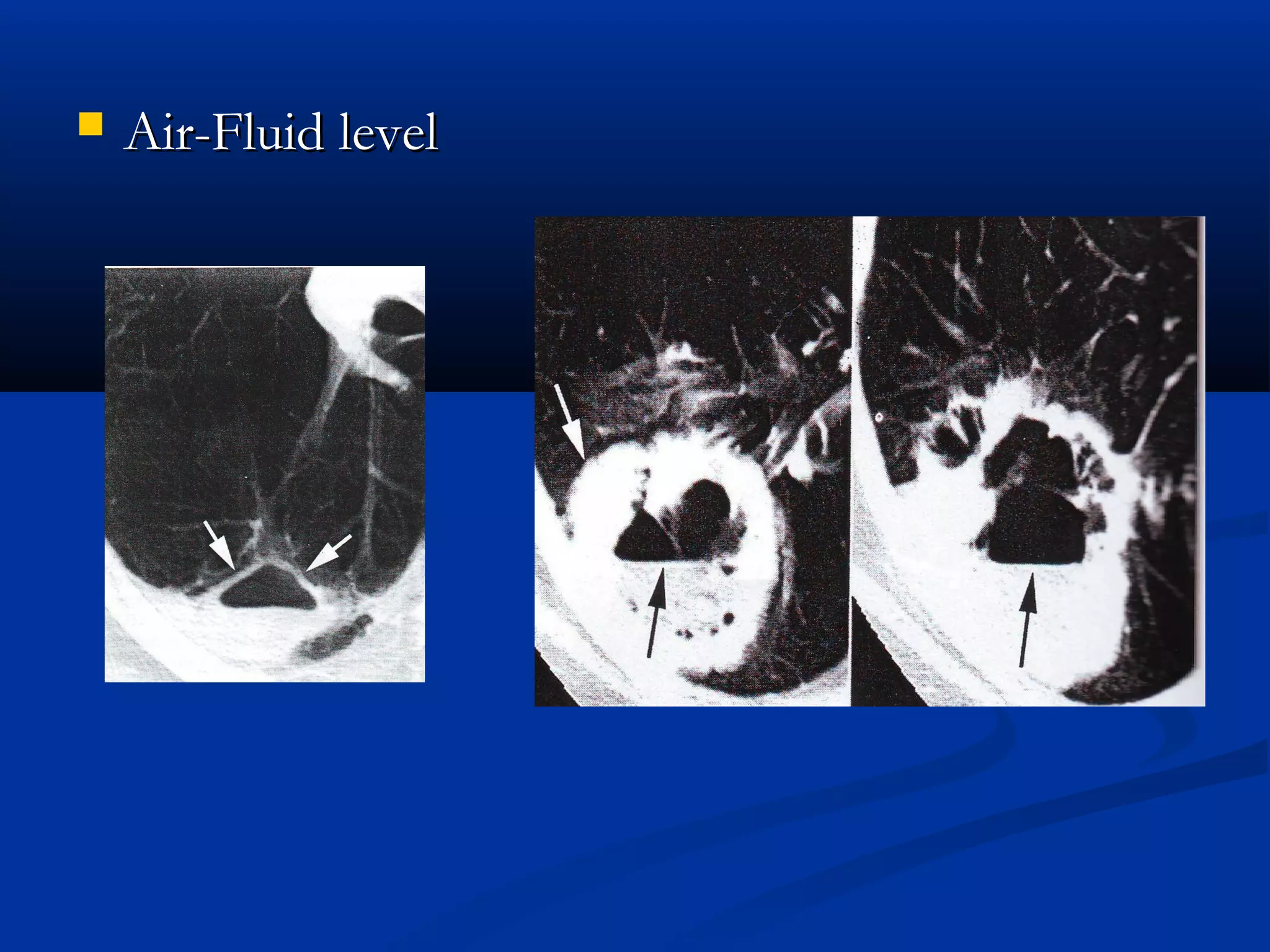
   Air-Fluid level
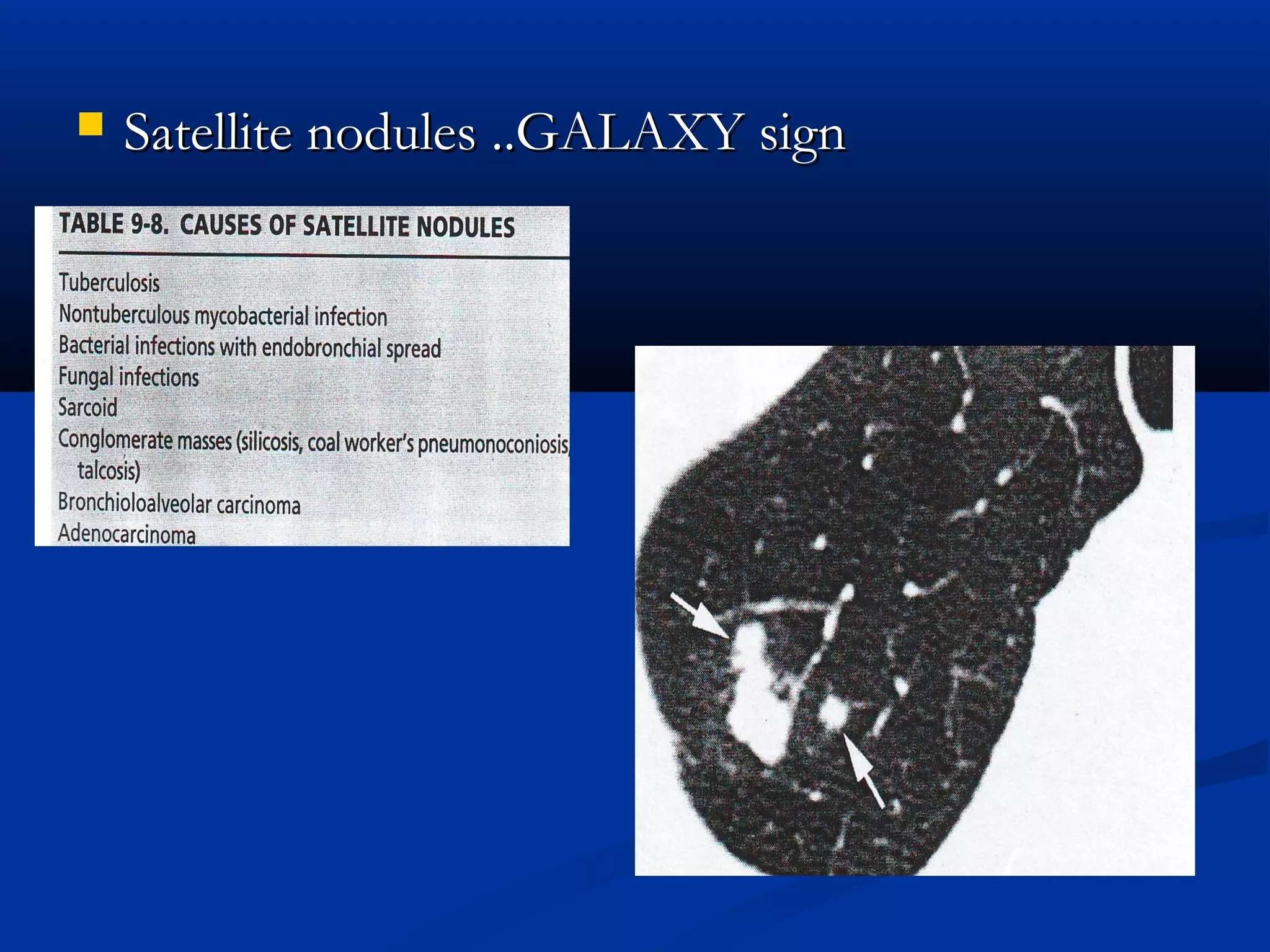
   Satellite nodules ..GALAXY sign
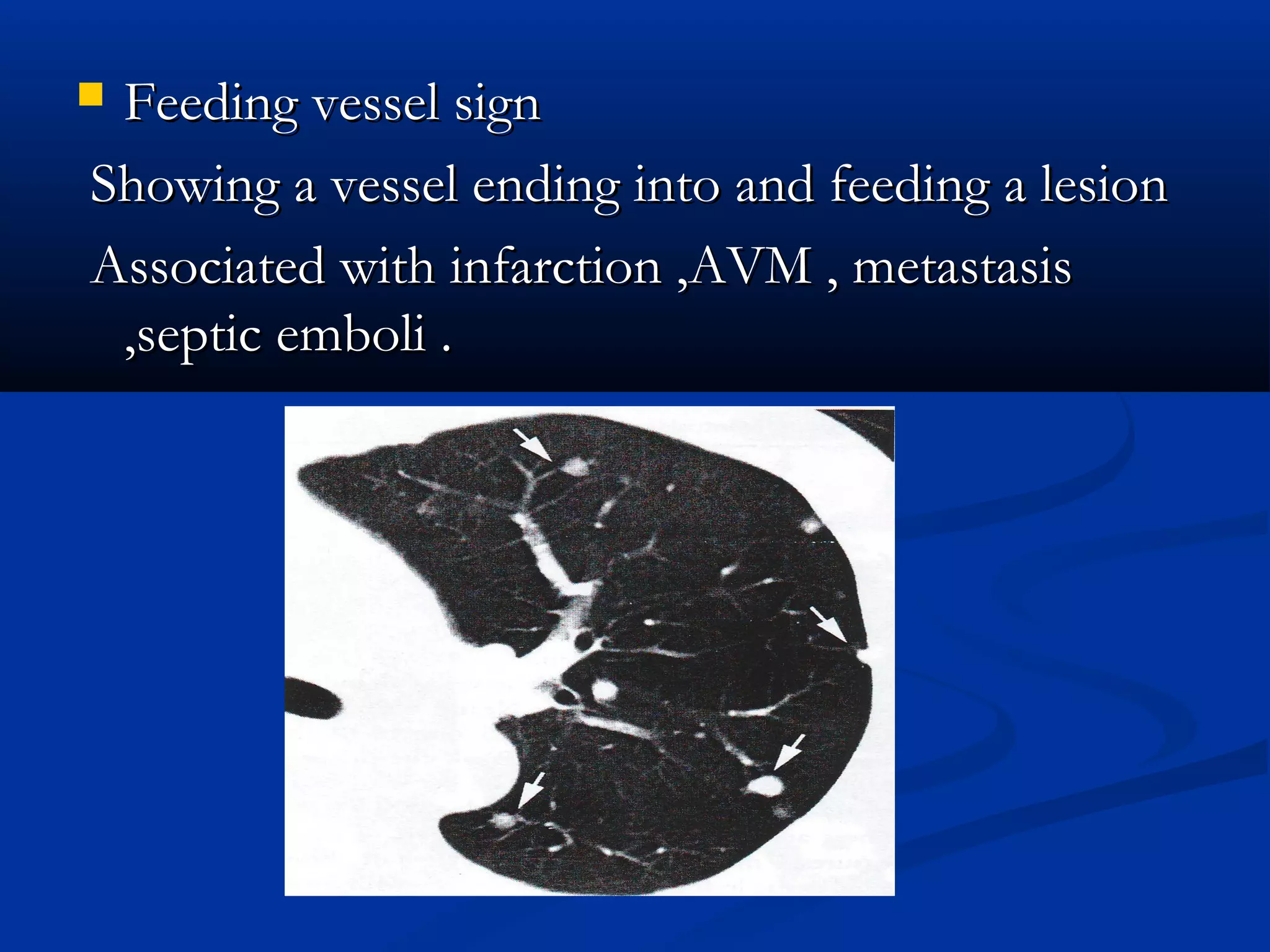
Feeding vessel sign
Showing a vessel ending into and feeding a lesion
Associated with infarction ,AVM , metastasis
 ,septic emboli .
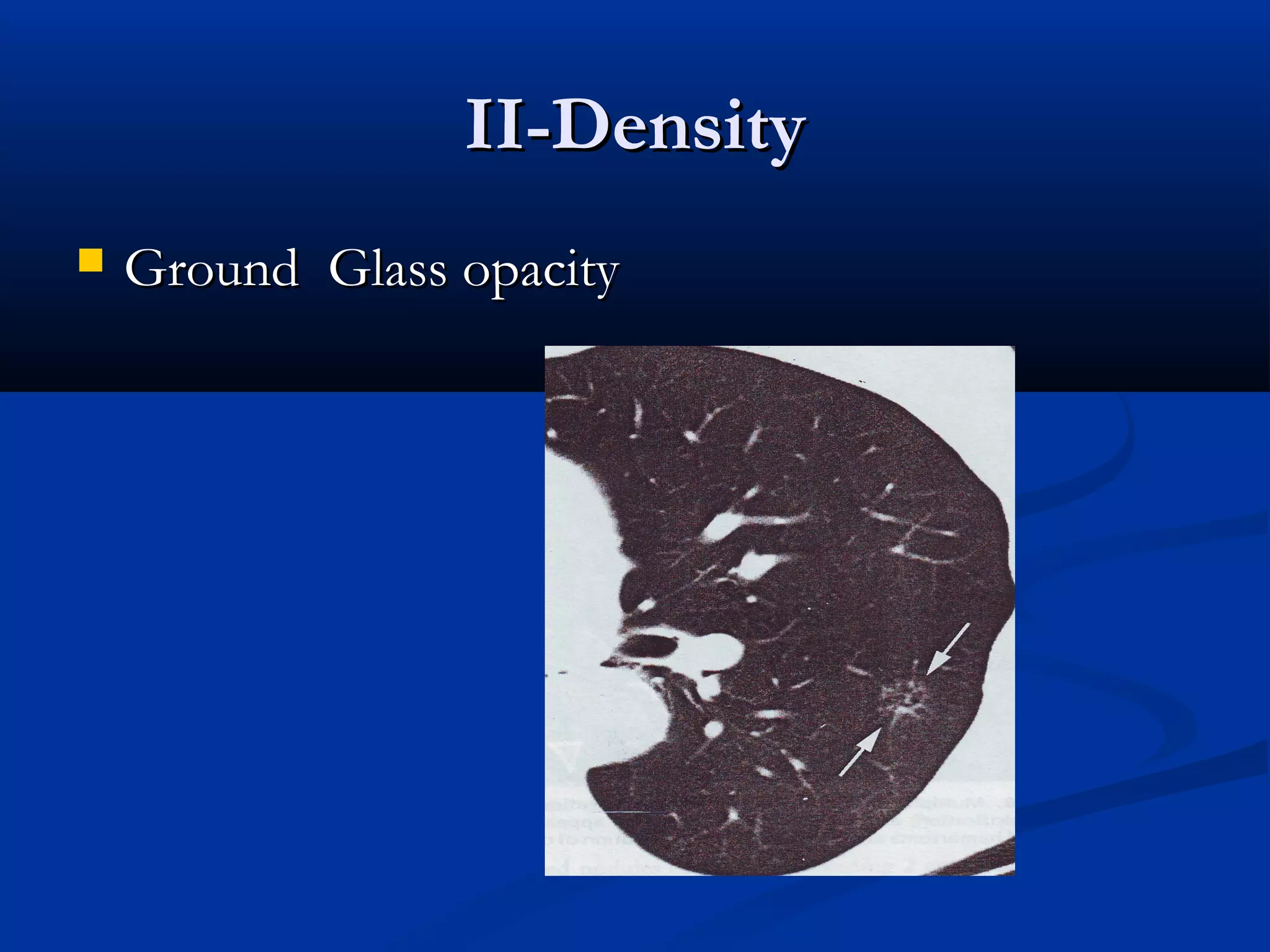
II-Density
   Ground Glass opacity
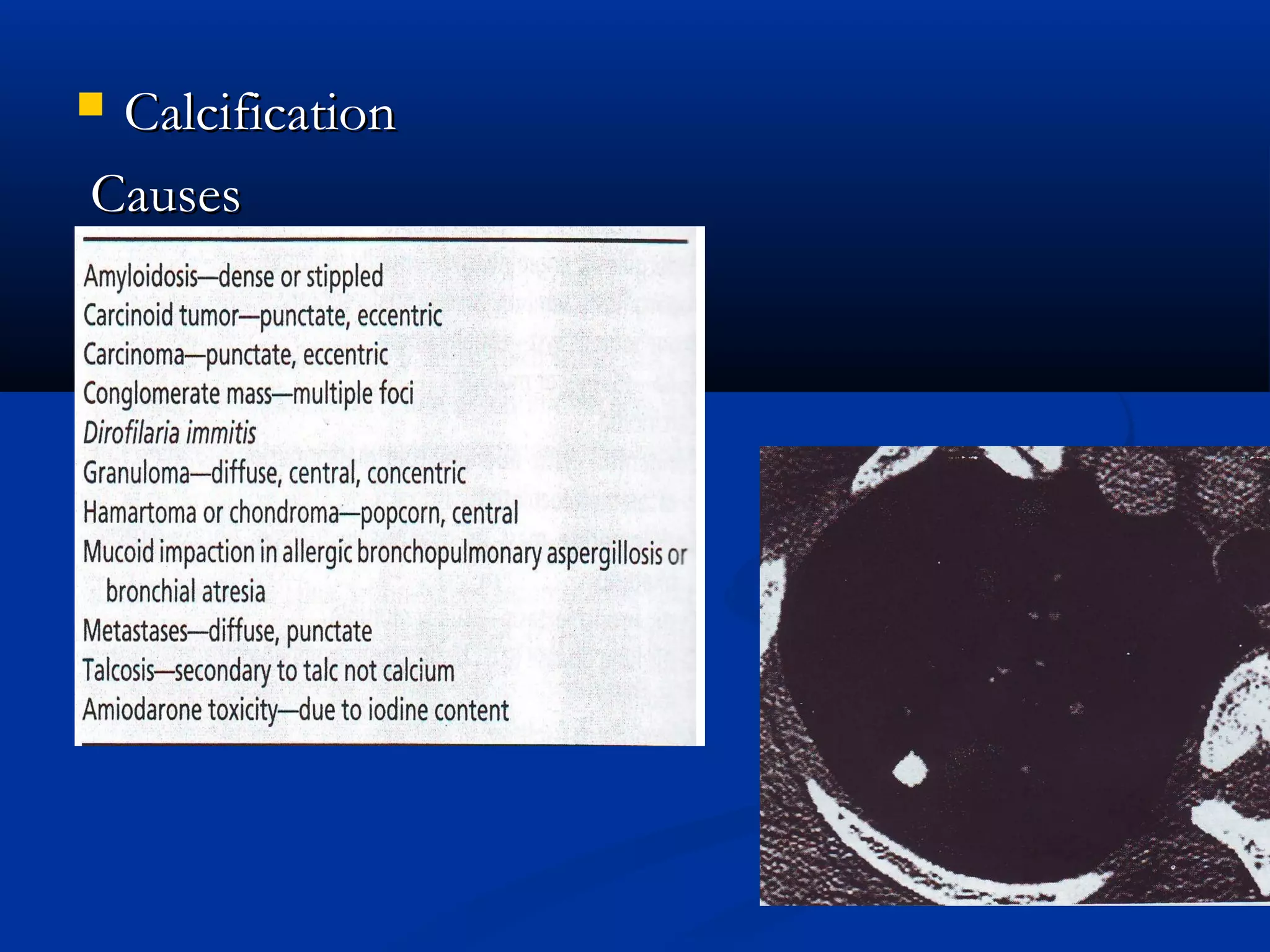
Calcification
Causes
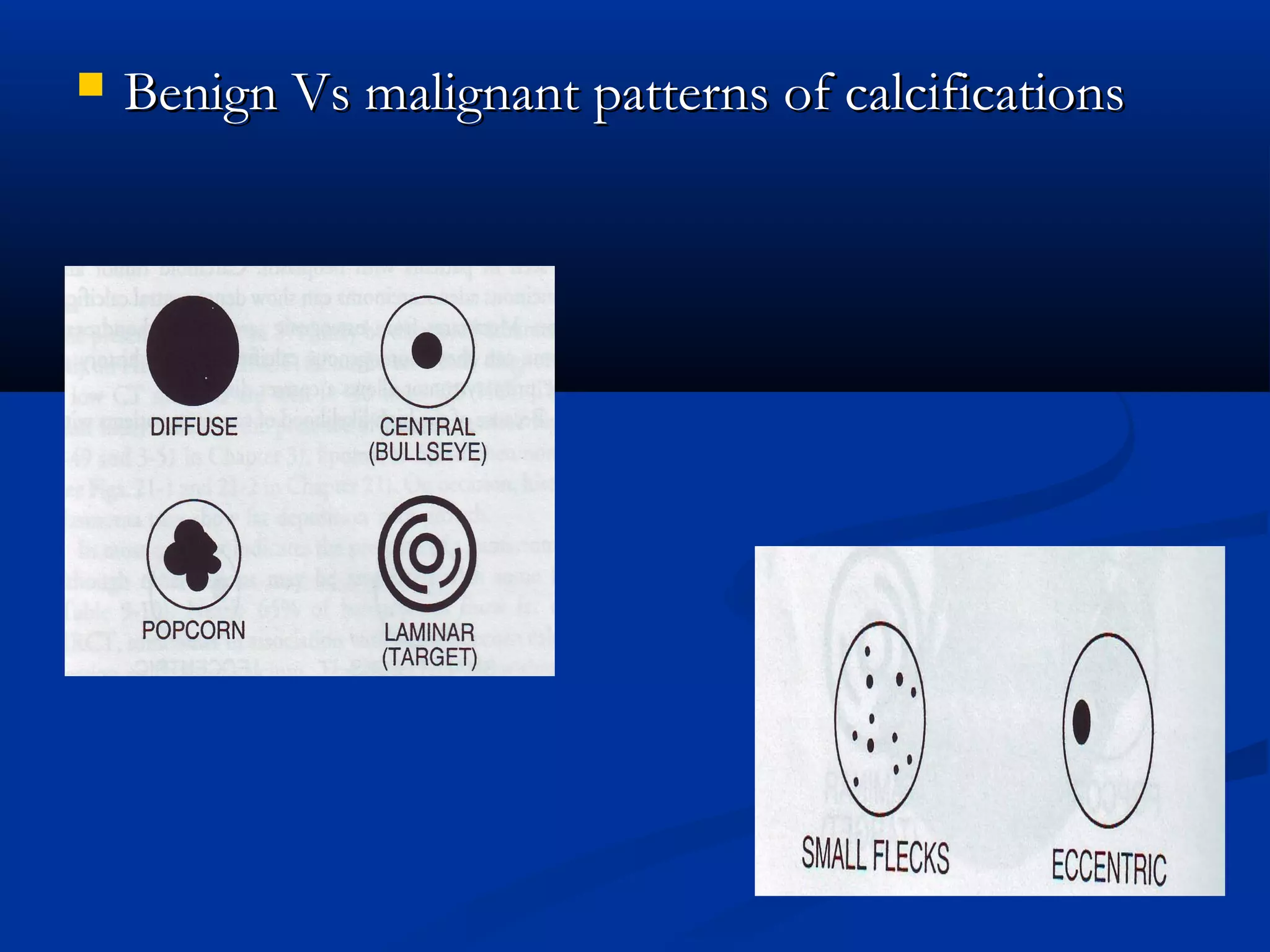
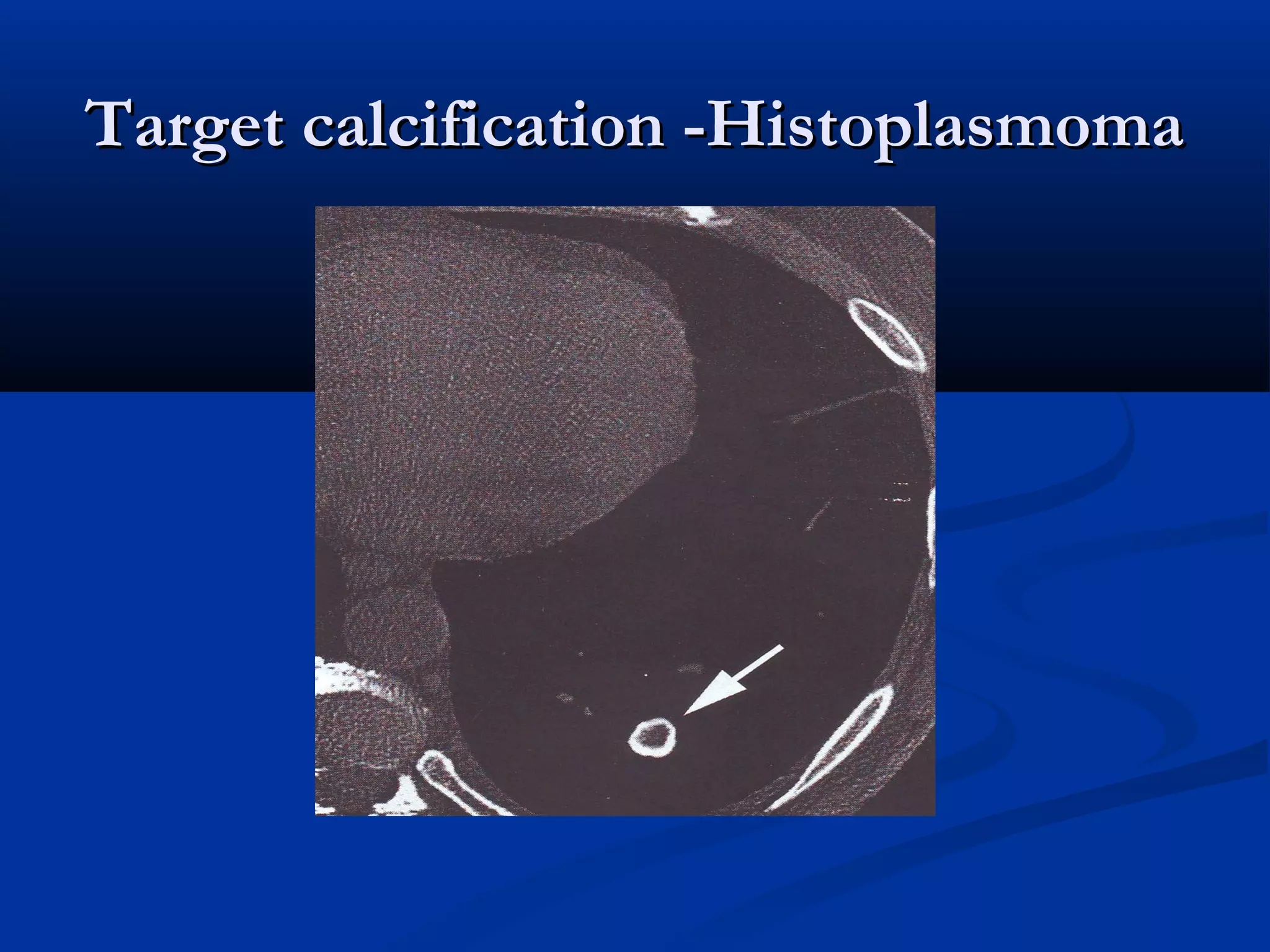
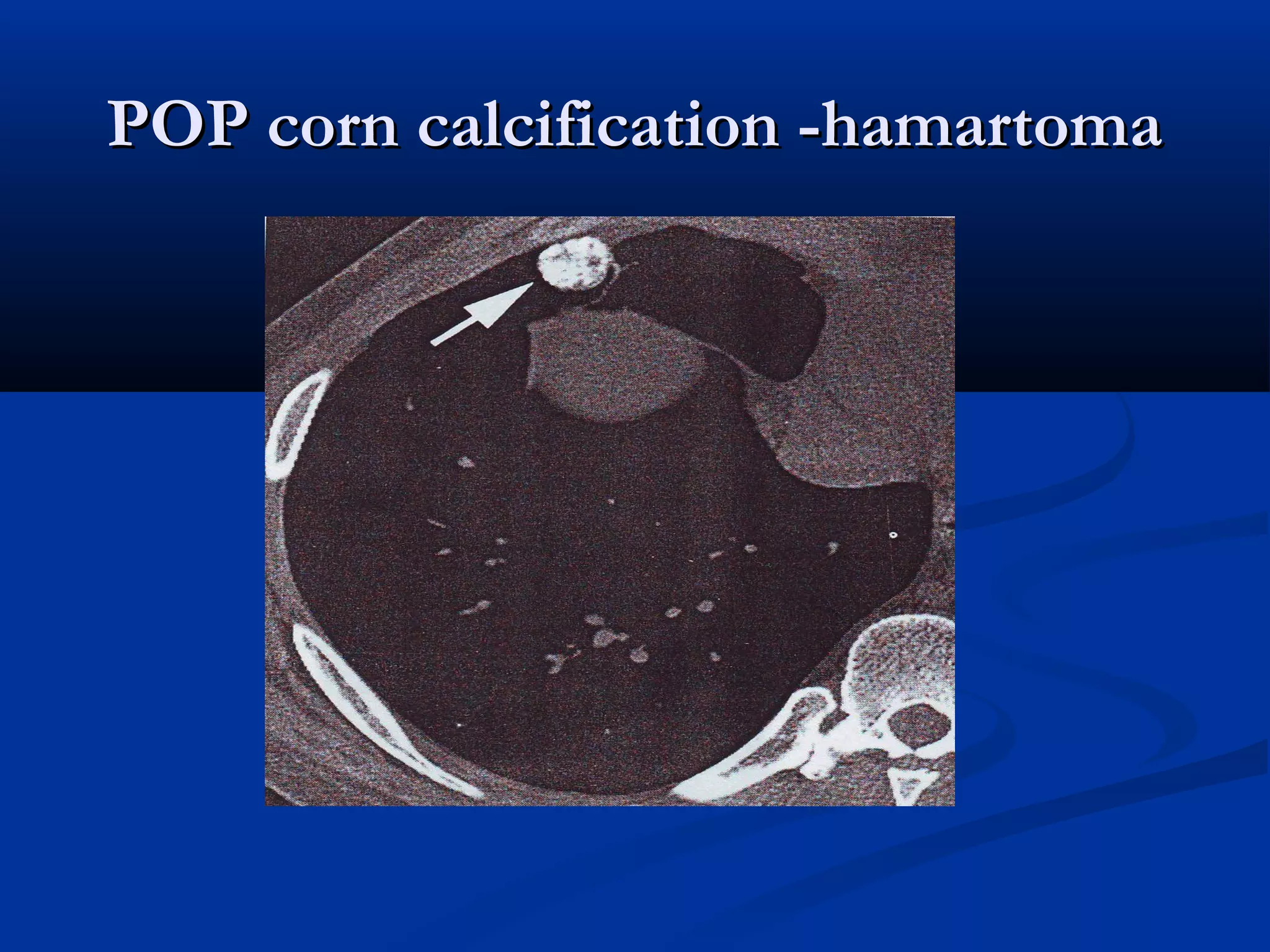
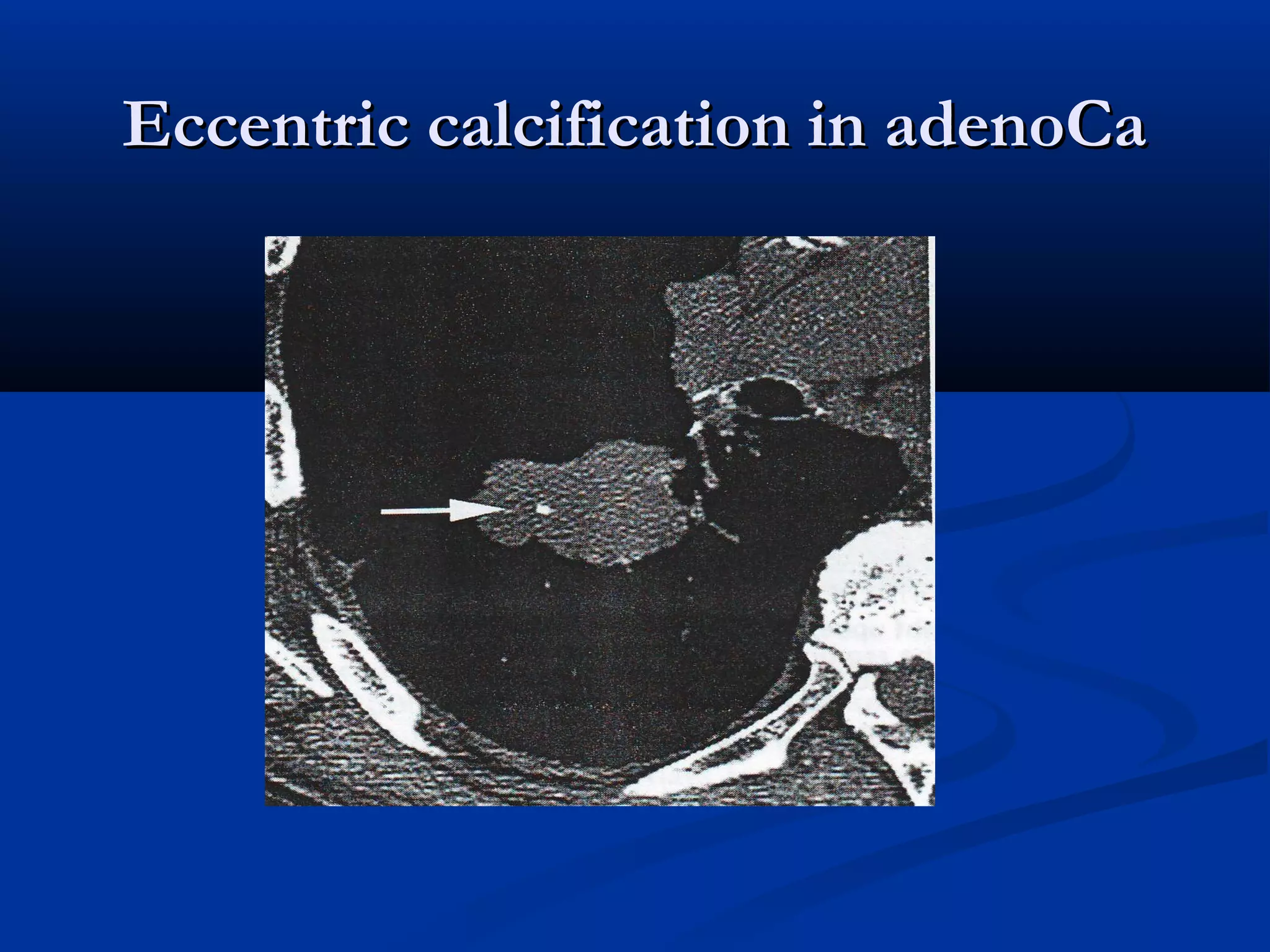
   Benign Vs malignant patterns of calcifications
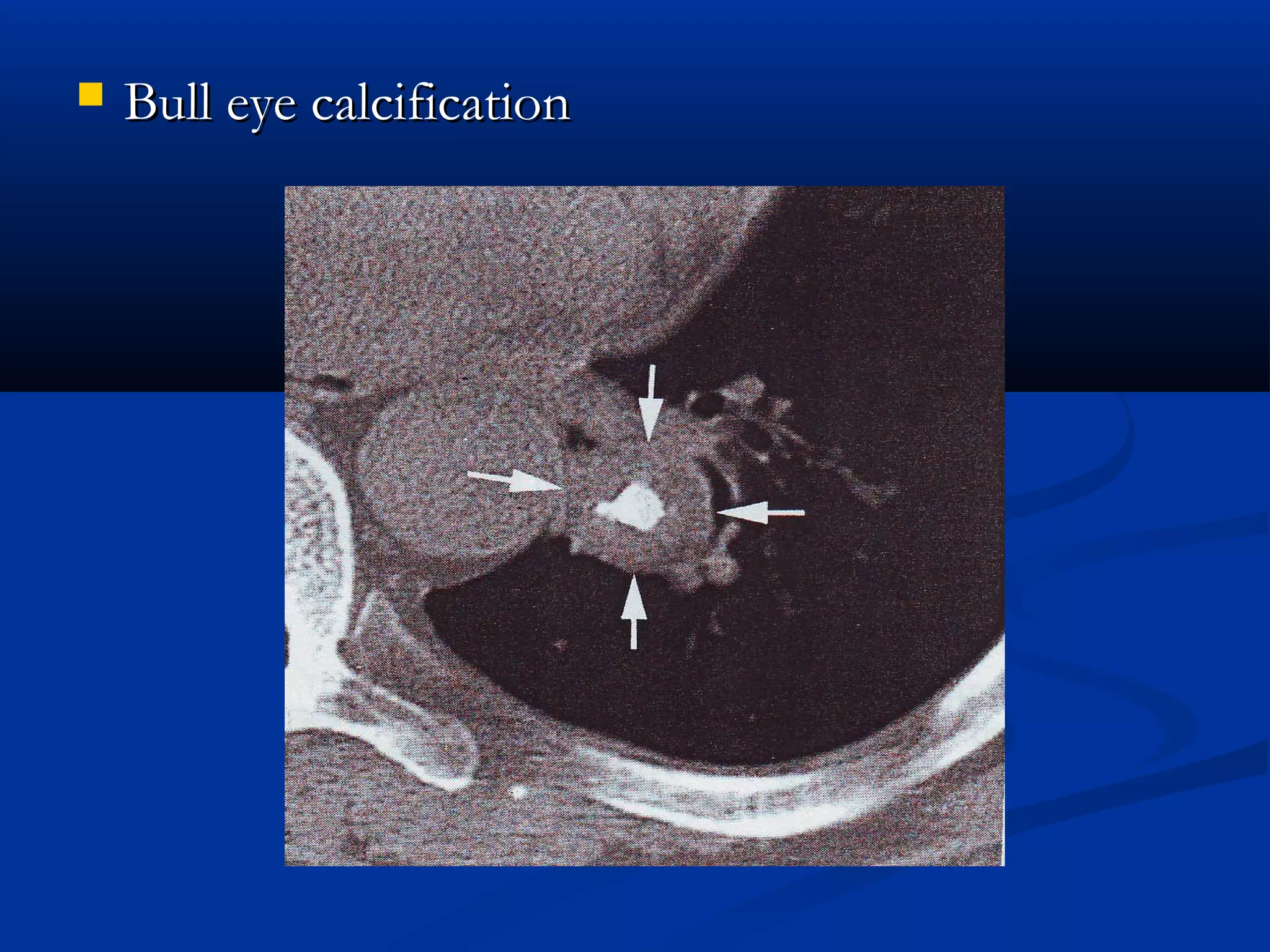
   Bull eye calcification
Target calcification -Histoplasmoma
POP corn calcification -hamartoma
Eccentric calcification in adenoCa
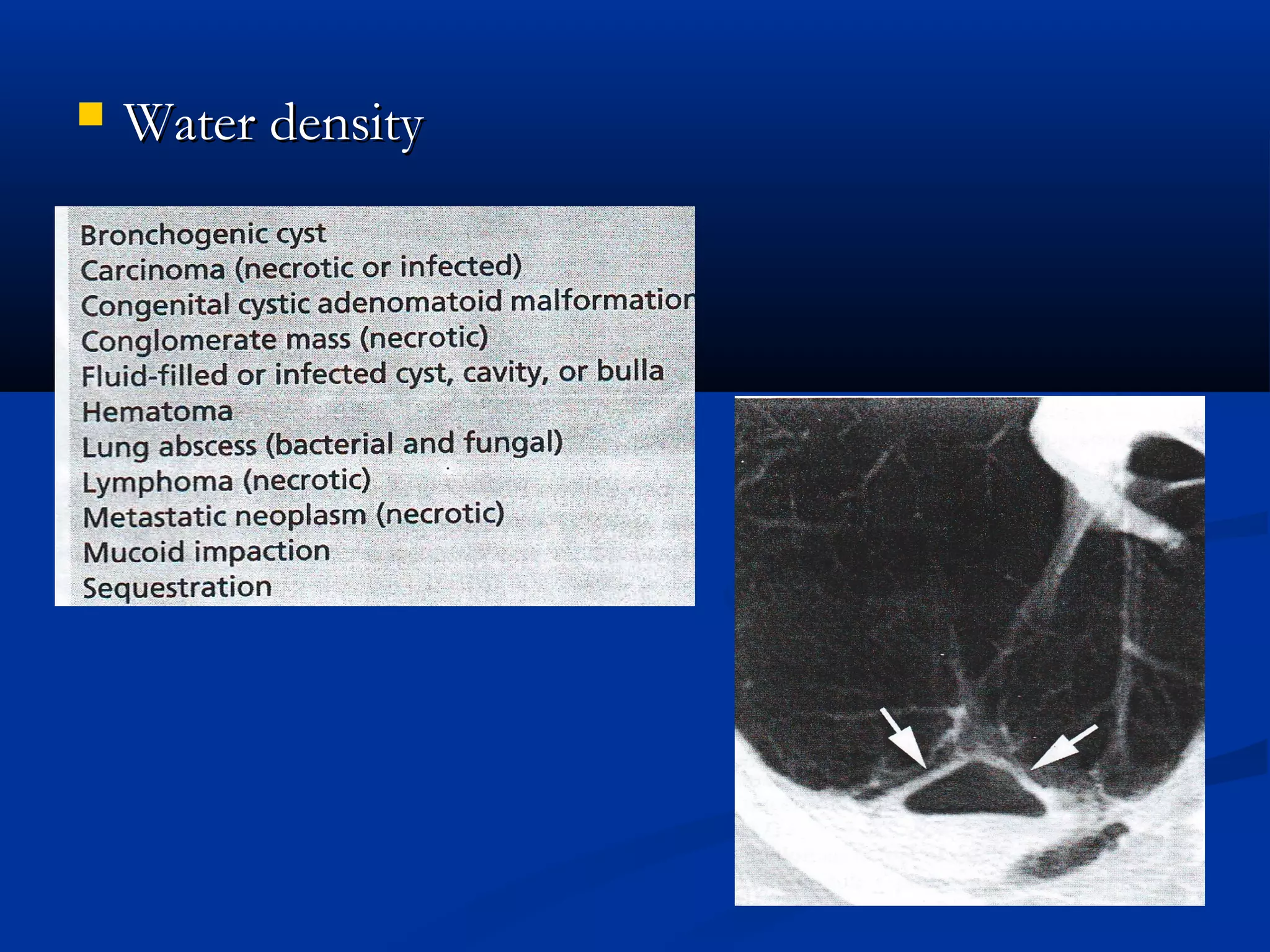
   Water density
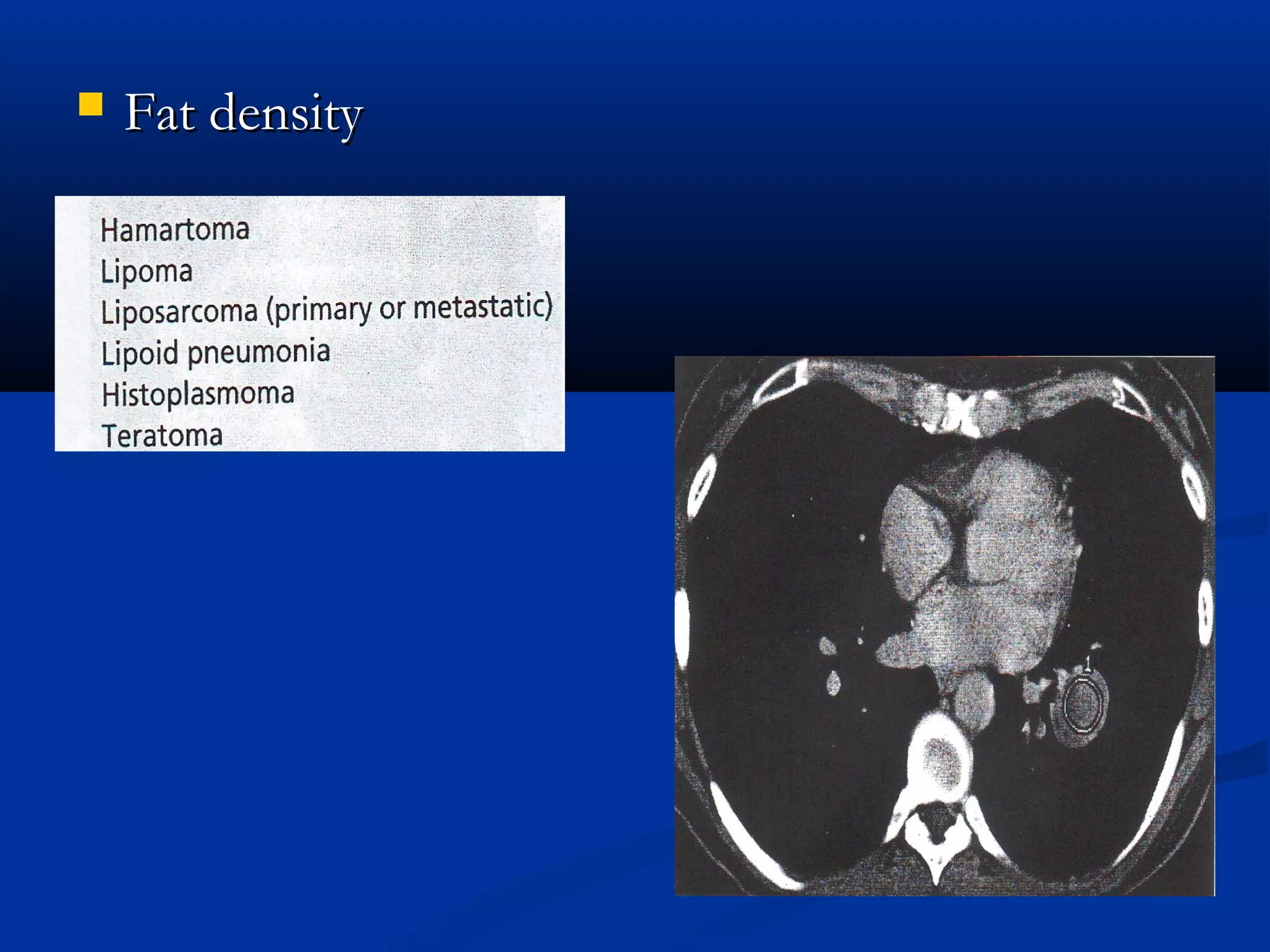
   Fat density
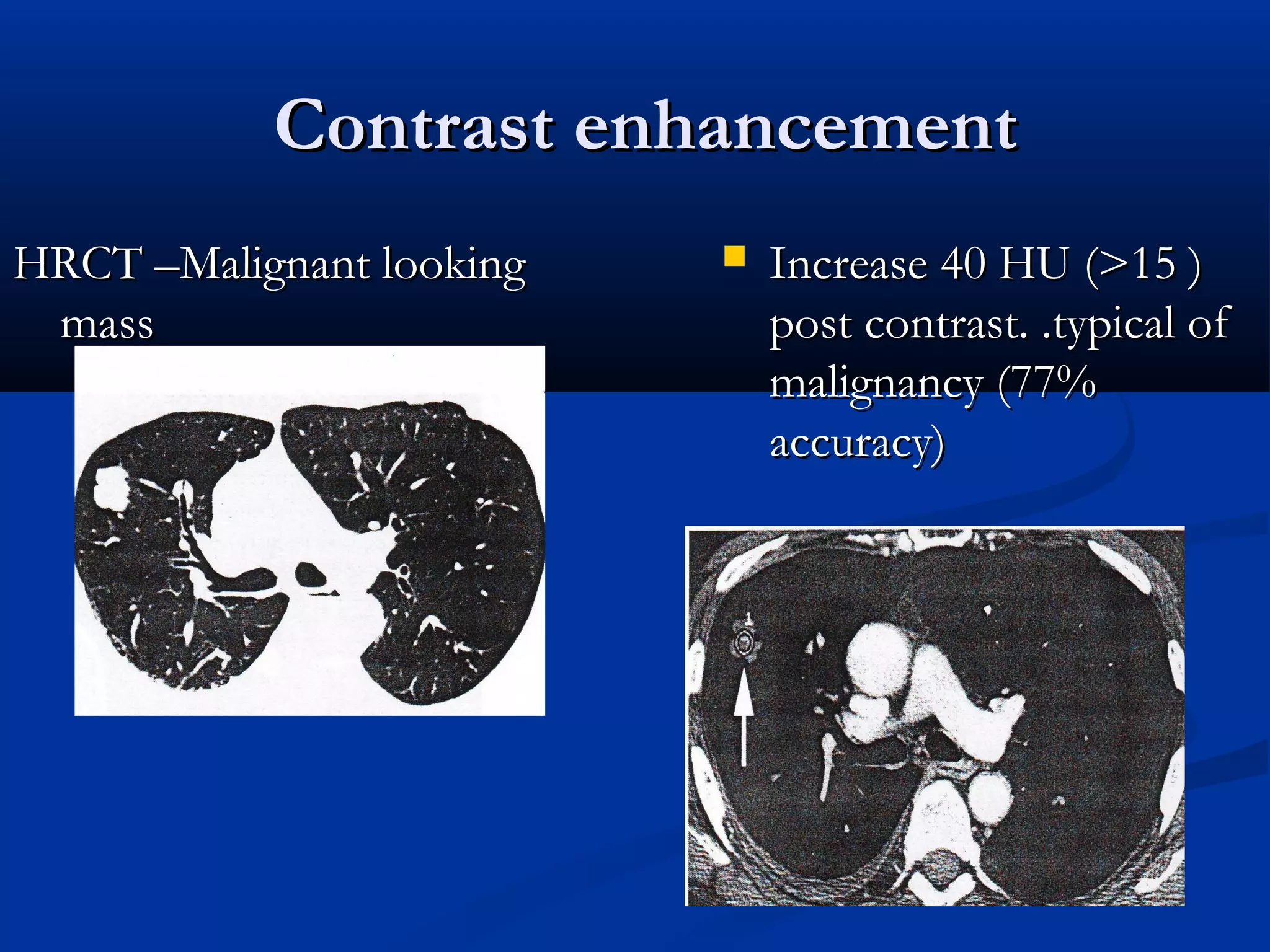
Contrast enhancement
HRCT –Malignant looking      Increase 40 HU (>15 )
 mass                         post contrast. .typical of
                              malignancy (77%
                              accuracy)
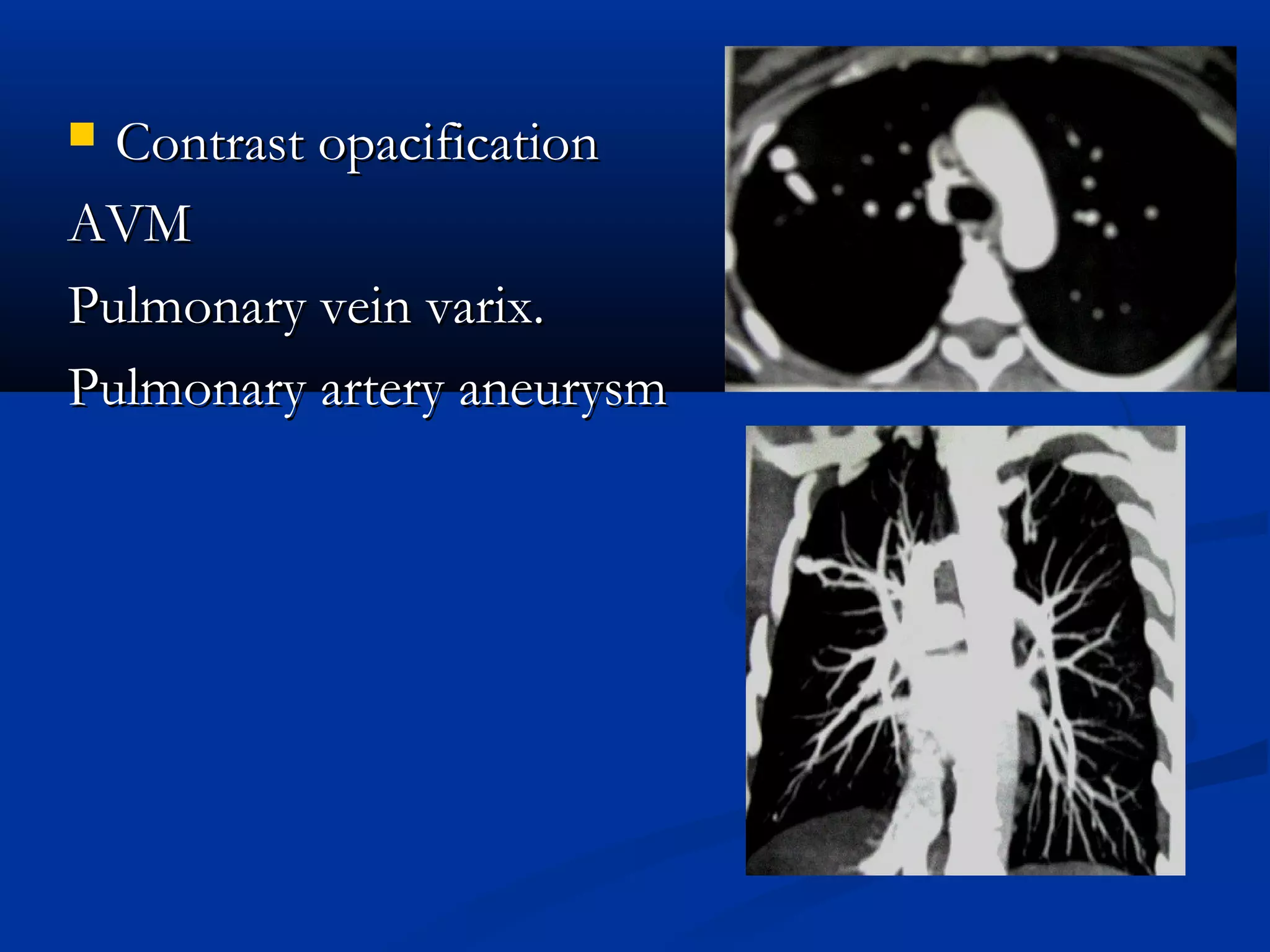
 Contrast opacification
AVM
Pulmonary vein varix.
Pulmonary artery aneurysm
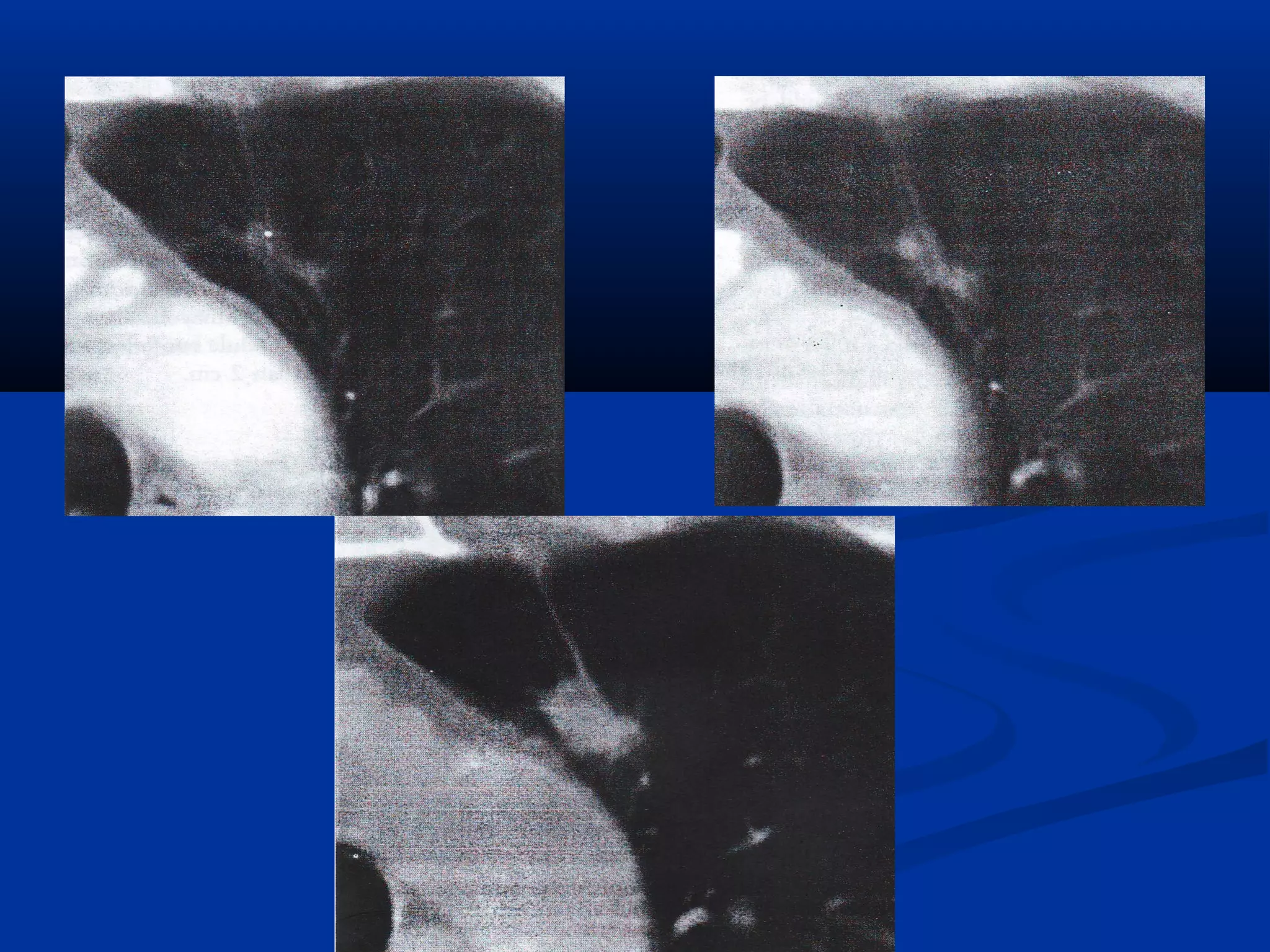
III-Growth
   Doubling time is the time required for a lesion
    to double its volume .
   26% increase in nodule diameter is one doubling
   Doubling of diameter is 3 volume doublings.
   Range of doubling time of carcinomas is 1
    week to 16 months.
   Doubling time <1 month or >200 days is likely
    to be benign .
   No growth over 2 years most likely benign.
?How to evaluate
.See prior examinations
If not available
Small lesions follow up is at 3,6 months ,1 and 2
.year
Very small lesions (3mm)..yearly follow up
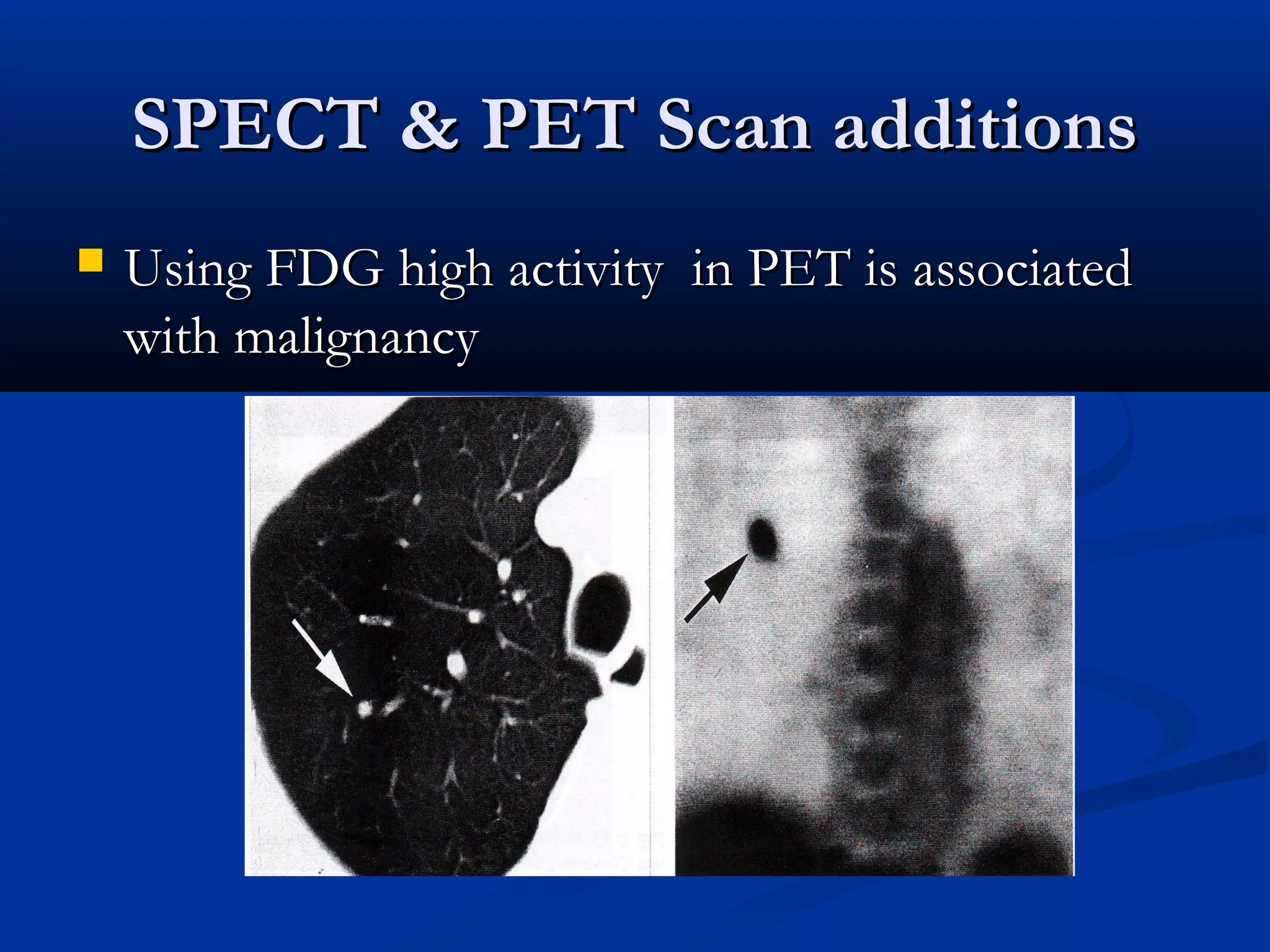
SPECT & PET Scan additions
   Using FDG high activity in PET is associated
    with malignancy
.Biopsy taking
 FOB =fiber optic
  bronchoscopy..for central lesions.
 TNB =Trans thoracic needle
  biopsy ..For peripheral lesions.
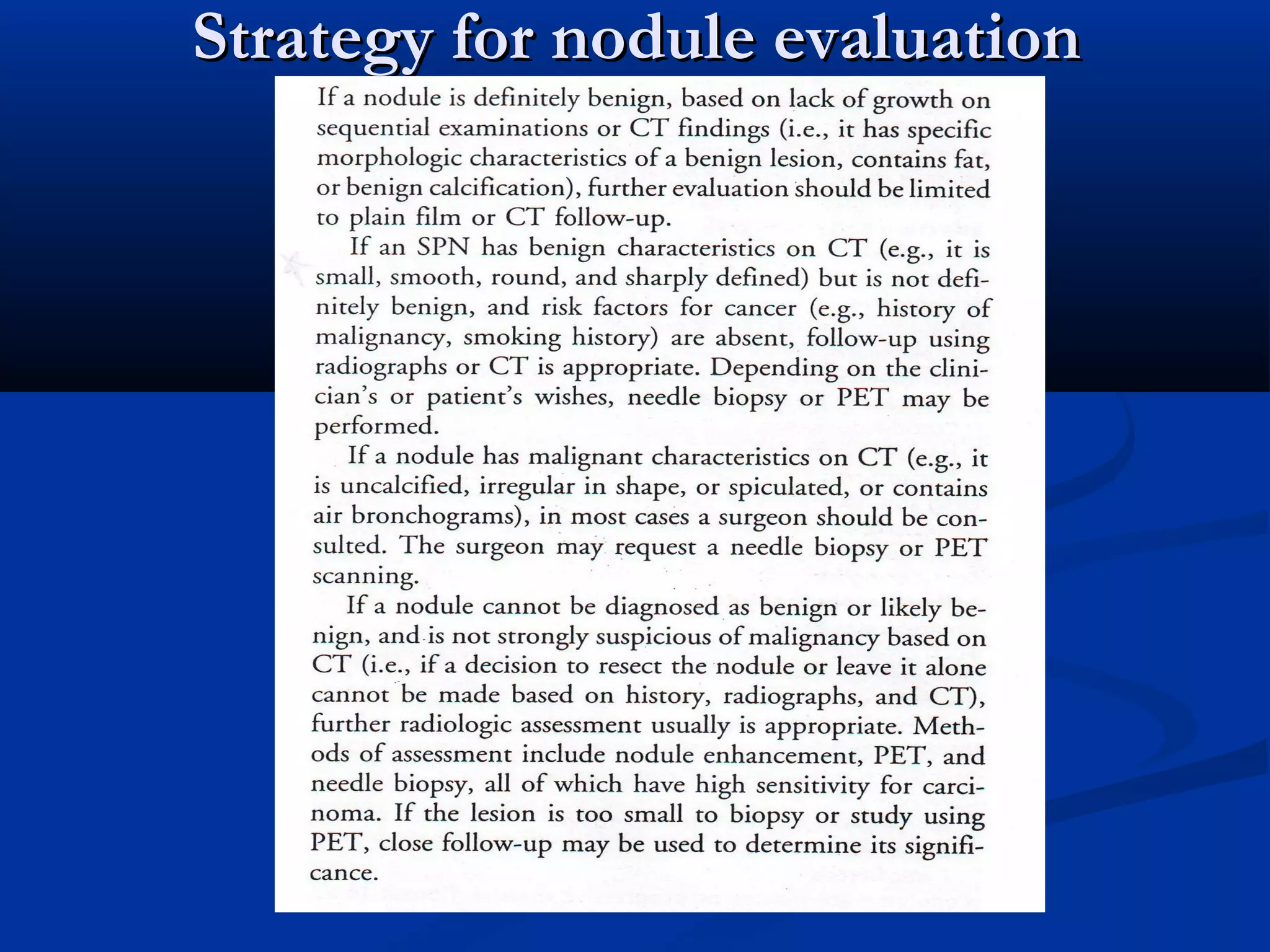
Strategy for nodule evaluation
The problem of solitary pulmonary nodule.

The problem of solitary pulmonary nodule.

  • 1.
    The problem ofSolitary pulmonary nodule Dr/Ahmed A. Bahnassy Consultant radiologist (MBCHB-MD-FRCR (London –UK
  • 2.
    DD of Solitarypulmonary nodule
  • 3.
    SPN  Ii isdefined as a focal opacity ,visible on chest radiograph or CT ,with the following criteria : 1.Relatively well defined . 2.Surrounded-at least partially - by lung . 3.Roughly spherical in shape. 4.3 cm or less in diameter (more than 3 cm is termed mass )
  • 5.
    Clinical evaluation  Hx of smoking.  Age over 40.  Occupational exposure.  Lung fibrosis.  COPD.  Family Hx of Lung cancer.  Travel History  TB skin test.  Other diseases (Rheumatoid arthritis )  Malignancy .(solitary metastasis or increased likelihood of 1ry bronchogenic Ca for H & N breast ,bile ducts ,oes. ,cervix ,bladder ,prostate ,etc up to 3 folds )
  • 7.
    Radiographic evaluation  Morphological Characteristics.  Density.  Growth rate .
  • 8.
    I-Morphological Characteristics  Size : Diameter Malignancy The likelihood of rate malignancy is directly 1cm> 35% related to size reaching more than 85 % for SPN more than 2 cm . cm 1-2 50% cm 2-3 80%
  • 9.
    Location : 2/3 of lung cancers occur in upper lobes. 60% seen in lung periphery . Only 10 % seen in medial third . Mets tend to be subpleural or outer 1/3 of lung. 2/3 of mets are in lower lobes.
  • 10.
     Edge Appearance: 90% of lesions with irregular or spiculated edges are malignant. 20% only of well defined lesions are malignant (e.g.: Mets or carcinoid tumor ) Corona Maligna or radiata represent either desmoplastic reaction around the tumor or actual invasion of surrounding lung …common with BAC and adenocarcinoma
  • 11.
  • 12.
    Pleural tail inadenocarcinoma Pleural tag refers to linear density (fibrosis) extending to pleural surface .
  • 13.
    Pleural tag inadenocarcinoma
  • 14.
  • 15.
  • 16.
  • 17.
  • 18.
    Halo sign  Haloof ground glass opacity surrounding a nodule . Commonly present in Leukemic patient with invasive aspergillosis (represent hemorrhagic infarction ) Can occur with any other infections . Can be seen with BAC and adenocarcinoma (representing lepidic growth )
  • 19.
    Causes of Halosign Invasive aspegillosis .Wegener Granulomatosis .BAC .Kaposi sarcoma .Mets .TB, nocardiosis .CMV infection PCP BOOP
  • 20.
  • 21.
  • 22.
     Shape : LungCa tends to be irregular , lobulated or notched. Granuloma are rounded. Hamartoma and metastasis are round ,oval or lobulated. Scars , atelectasis may appear linear . AVM and mucous plugs are particular in shape
  • 23.
    Air bronchogram and pseudocavitation.
  • 24.
    Cavitation
  • 25.
    Air crescent sign
  • 26.
    Air-Fluid level
  • 27.
    Satellite nodules ..GALAXY sign
  • 28.
    Feeding vessel sign Showinga vessel ending into and feeding a lesion Associated with infarction ,AVM , metastasis ,septic emboli .
  • 29.
    II-Density  Ground Glass opacity
  • 30.
  • 31.
    Benign Vs malignant patterns of calcifications
  • 32.
    Bull eye calcification
  • 33.
  • 34.
  • 35.
  • 36.
    Water density
  • 37.
    Fat density
  • 38.
    Contrast enhancement HRCT –Malignantlooking  Increase 40 HU (>15 ) mass post contrast. .typical of malignancy (77% accuracy)
  • 39.
     Contrast opacification AVM Pulmonaryvein varix. Pulmonary artery aneurysm
  • 40.
    III-Growth  Doubling time is the time required for a lesion to double its volume .  26% increase in nodule diameter is one doubling  Doubling of diameter is 3 volume doublings.  Range of doubling time of carcinomas is 1 week to 16 months.  Doubling time <1 month or >200 days is likely to be benign .  No growth over 2 years most likely benign.
  • 41.
    ?How to evaluate .Seeprior examinations If not available Small lesions follow up is at 3,6 months ,1 and 2 .year Very small lesions (3mm)..yearly follow up
  • 43.
    SPECT & PETScan additions  Using FDG high activity in PET is associated with malignancy
  • 44.
    .Biopsy taking  FOB=fiber optic bronchoscopy..for central lesions.  TNB =Trans thoracic needle biopsy ..For peripheral lesions.
  • 45.