THE PASSIVE
THE PASSIVE
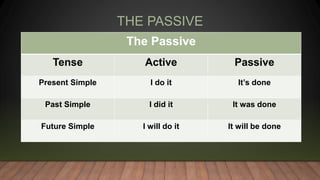
The Passive
Tense Active Passive
Present Simple I do it It’s done
Past Simple I did it It was done
Future Simple I will do it It will be done
THE PASSIVE
The Passive
Tense Active Passive
Present Continuous I am doing it It is being done
Past Continuous I was doing it It was being done
Future Continuous I will be doing it It will be being done
THE PASSIVE
The Passive
Tense Active Passive
Present Perfect I have done it It has been done
Past Perfect I had done it It had been done
Future Perfect I will have done it It will have been done
THE PASSIVE
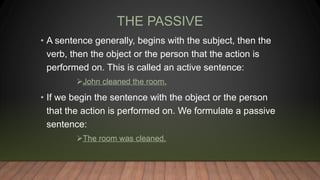
• A sentence generally, begins with the subject, then the
verb, then the object or the person that the action is
performed on. This is called an active sentence:
John cleaned the room.
• If we begin the sentence with the object or the person
that the action is performed on. We formulate a passive
sentence:
The room was cleaned.
THE PASSIVE
• We use the passive when:
I. We don’t know who the subject is, or it's not important
who the subject is.
Somebody cleaned the room. -> The room was cleaned.
II. When it's obvious to the listener or the reader who the
subject is.
The cleaner clean the room. -> The room was cleaned.
THE PASSIVE
• To formulate a passive sentence:
I. Get rid of the subject.
II. Put the object at the begging.
III. Conjugate the verb (to be) in the same tense as the active
sentence.
IV. Put the main verb in the past participle (Verb 3) form.
The postman delivers the mail. -> The mail is delivered.
The painter is painting my room. -> My room is being painted.
Someone stole the money. -> the money was stolen.
THE PASSIVE
• We can also formulate passive sentence with a person in the
object positon:
Somebody pushed me. -> I was pushed.
They have invited us. -> we have been invited.
Someone was interviewing Joey. -> Joey was being interviewed.
• Some sentences have both an object and a person in the
object position, you can choose either:
Somebody handed me a note. -> I was handed a note.
Somebody handed me a note. -> A note was handed to me.
EXERCISE 1
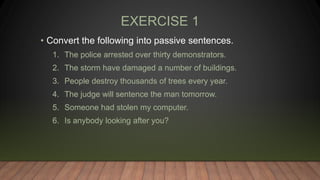
• Convert the following into passive sentences.
1. The police arrested over thirty demonstrators.
2. The storm have damaged a number of buildings.
3. People destroy thousands of trees every year.
4. The judge will sentence the man tomorrow.
5. Someone had stolen my computer.
6. Is anybody looking after you?
EXERCISE 1 SOLUTION
1. Over thirty demonstrators were arrested.
2. A number of buildings have been damaged.
3. Thousands of trees are destroyed every year.
4. The will be sentenced tomorrow.
5. My computer had been stolen.
6. Are you being looked after?
EXERCISE 2
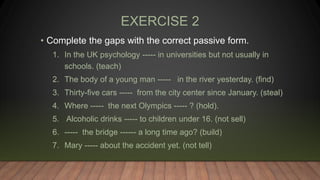
• Complete the gaps with the correct passive form.
1. In the UK psychology ----- in universities but not usually in
schools. (teach)
2. The body of a young man ----- in the river yesterday. (find)
3. Thirty-five cars ----- from the city center since January. (steal)
4. Where ----- the next Olympics ----- ? (hold).
5. Alcoholic drinks ----- to children under 16. (not sell)
6. ----- the bridge ------ a long time ago? (build)
7. Mary ----- about the accident yet. (not tell)
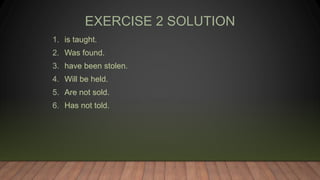
EXERCISE 2 SOLUTION
1. is taught.
2. Was found.
3. have been stolen.
4. Will be held.
5. Are not sold.
6. Has not told.

The Passive

  • 1.
  • 2.
    THE PASSIVE The Passive TenseActive Passive Present Simple I do it It’s done Past Simple I did it It was done Future Simple I will do it It will be done
  • 3.
    THE PASSIVE The Passive TenseActive Passive Present Continuous I am doing it It is being done Past Continuous I was doing it It was being done Future Continuous I will be doing it It will be being done
  • 4.
    THE PASSIVE The Passive TenseActive Passive Present Perfect I have done it It has been done Past Perfect I had done it It had been done Future Perfect I will have done it It will have been done
  • 5.
    THE PASSIVE • Asentence generally, begins with the subject, then the verb, then the object or the person that the action is performed on. This is called an active sentence: John cleaned the room. • If we begin the sentence with the object or the person that the action is performed on. We formulate a passive sentence: The room was cleaned.
  • 6.
    THE PASSIVE • Weuse the passive when: I. We don’t know who the subject is, or it's not important who the subject is. Somebody cleaned the room. -> The room was cleaned. II. When it's obvious to the listener or the reader who the subject is. The cleaner clean the room. -> The room was cleaned.
  • 7.
    THE PASSIVE • Toformulate a passive sentence: I. Get rid of the subject. II. Put the object at the begging. III. Conjugate the verb (to be) in the same tense as the active sentence. IV. Put the main verb in the past participle (Verb 3) form. The postman delivers the mail. -> The mail is delivered. The painter is painting my room. -> My room is being painted. Someone stole the money. -> the money was stolen.
  • 8.
    THE PASSIVE • Wecan also formulate passive sentence with a person in the object positon: Somebody pushed me. -> I was pushed. They have invited us. -> we have been invited. Someone was interviewing Joey. -> Joey was being interviewed. • Some sentences have both an object and a person in the object position, you can choose either: Somebody handed me a note. -> I was handed a note. Somebody handed me a note. -> A note was handed to me.
  • 9.
    EXERCISE 1 • Convertthe following into passive sentences. 1. The police arrested over thirty demonstrators. 2. The storm have damaged a number of buildings. 3. People destroy thousands of trees every year. 4. The judge will sentence the man tomorrow. 5. Someone had stolen my computer. 6. Is anybody looking after you?
  • 10.
    EXERCISE 1 SOLUTION 1.Over thirty demonstrators were arrested. 2. A number of buildings have been damaged. 3. Thousands of trees are destroyed every year. 4. The will be sentenced tomorrow. 5. My computer had been stolen. 6. Are you being looked after?
  • 11.
    EXERCISE 2 • Completethe gaps with the correct passive form. 1. In the UK psychology ----- in universities but not usually in schools. (teach) 2. The body of a young man ----- in the river yesterday. (find) 3. Thirty-five cars ----- from the city center since January. (steal) 4. Where ----- the next Olympics ----- ? (hold). 5. Alcoholic drinks ----- to children under 16. (not sell) 6. ----- the bridge ------ a long time ago? (build) 7. Mary ----- about the accident yet. (not tell)
  • 12.
    EXERCISE 2 SOLUTION 1.is taught. 2. Was found. 3. have been stolen. 4. Will be held. 5. Are not sold. 6. Has not told.