The document discusses key aspects of negotiable instruments under the Negotiable Instruments Act of 1881 in India. It covers:
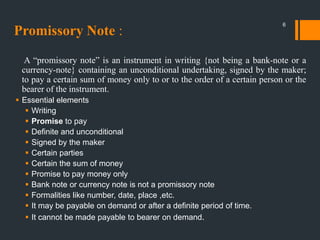
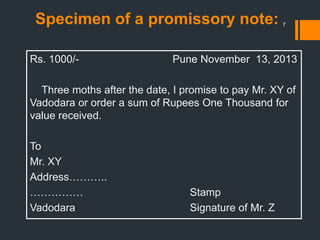
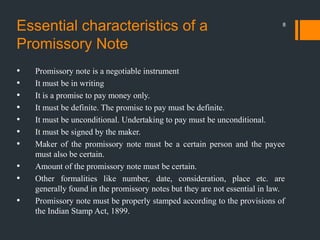
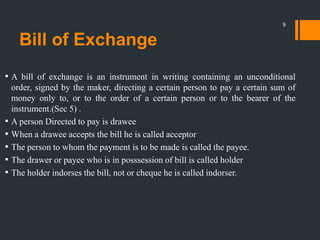
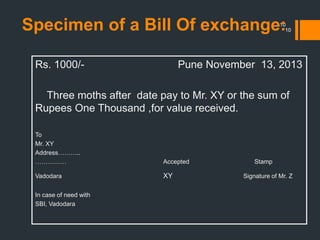
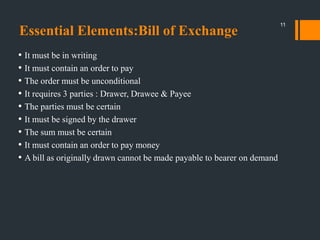
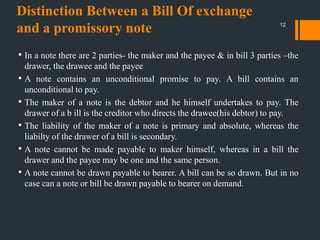
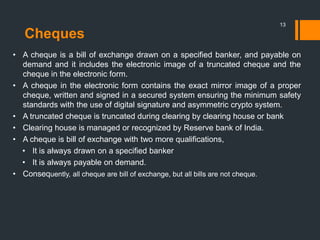
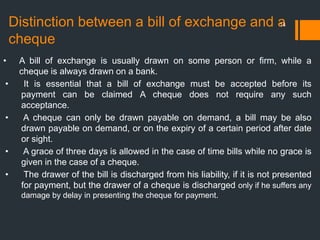
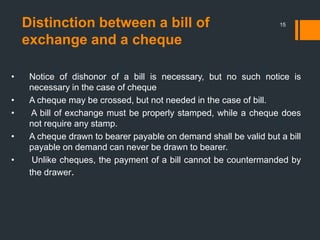
1) The main types of negotiable instruments like promissory notes, bills of exchange, and cheques. It explains their essential elements and differences.
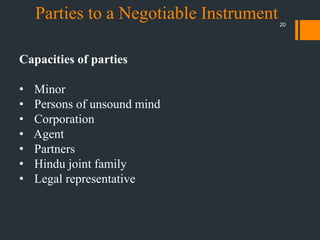
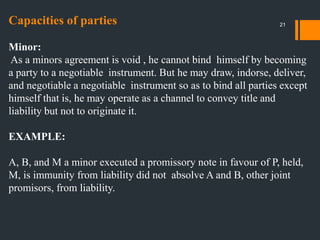
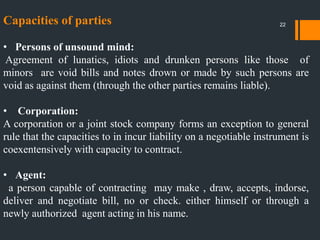
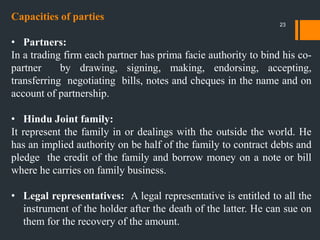
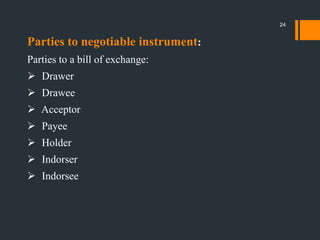
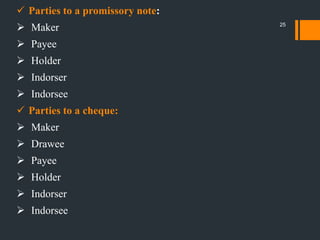
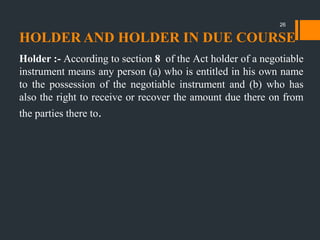
2) Key parties to negotiable instruments like drawers, drawees, makers, payees, holders, and endorsers. It also discusses capacities of different parties.
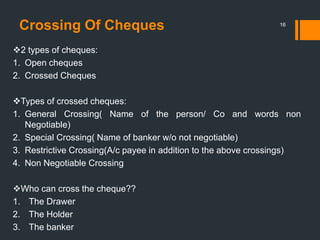
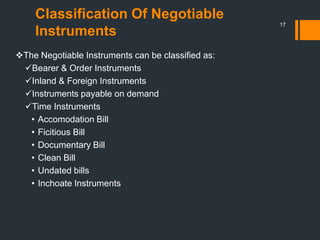
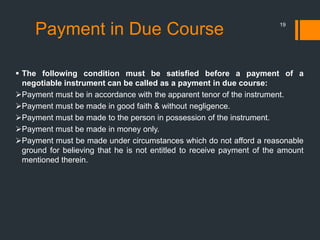
3) Important concepts like crossing of cheques, classification of instruments, presumption of consideration, and distinction between payment in due course vs other payments.
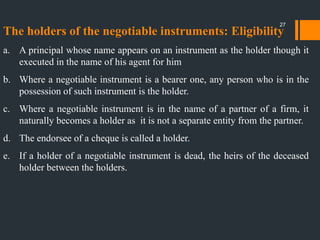
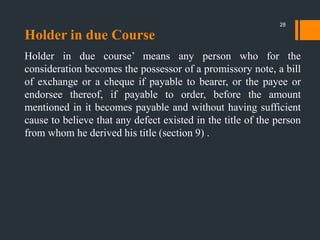
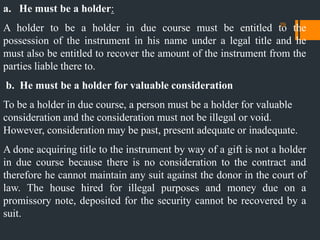
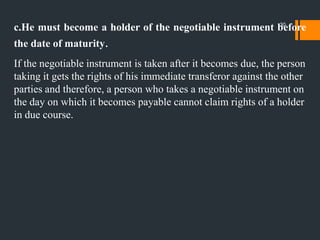
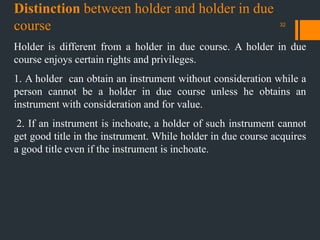
4) The characteristics and requirements to qualify as a holder in due course, who has additional rights
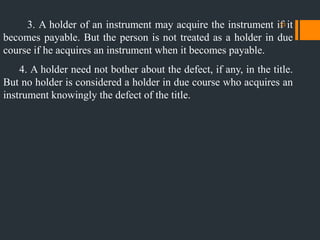
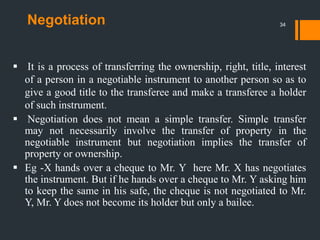
![d. He must become a holder of the negotiable instrument in
good faith:
Here the term „good faith‟ implies that he should not accept the
instrument after knowing about the defect or defects in the title to
the instrument. A thing is done in good faith when it is done
honestly. It is the duty of a person [who takes a negotiable
instrument] to examine its contents thoroughly. If the negotiable
instrument contains any material alteration or if it is incomplete,
he will not become a holder in due course. Thus, he must become
a holder and must take the negotiable instrument complete and
regular on its face.
31](https://image.slidesharecdn.com/the-negotiable-instruments-act-18812-140328130744-phpapp02/85/The-negotiable-instruments-act-1881-2-31-320.jpg)
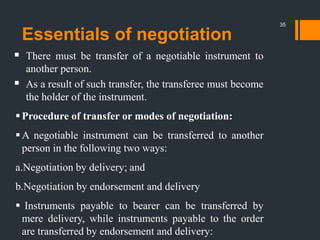
![• Thus delivery of a negotiable instrument is a voluntary transfer of
possession of the negotiable instrument. When an instrument is negotiated
by delivery it is not necessary for a transferor to put his or her signature on
the instrument and therefore, there is no privacy of any contract between
the transferor and any subsequent transferee.
• Negotiation by endorsement and delivery:
• Subject to the provision of section 48 [which is stated earlier] a promissory
note, cheque or a bill of exchange payable to order is negotiable by the
holder by endorsement and delivery thereof [section 48]
• Thus the delivery is the common element between the two modes of
negotiation i.e. negotiation by mere delivery and negotiation by
endorsement and delivery.
36](https://image.slidesharecdn.com/the-negotiable-instruments-act-18812-140328130744-phpapp02/85/The-negotiable-instruments-act-1881-2-36-320.jpg)