Downloaded 273 times
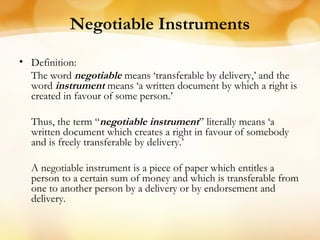

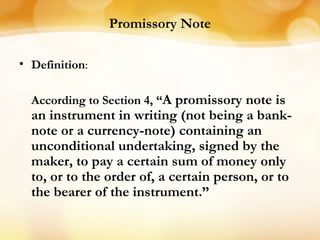
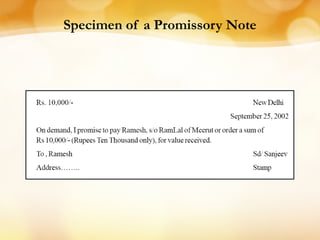
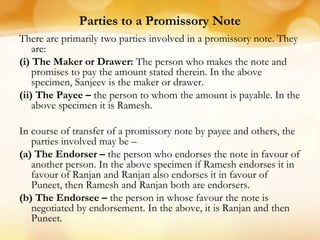




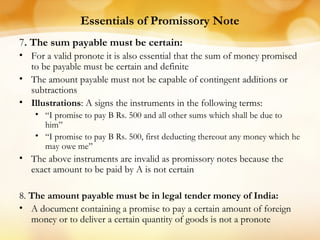
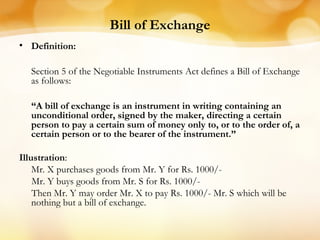
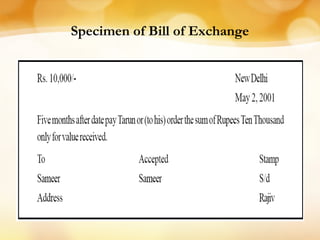
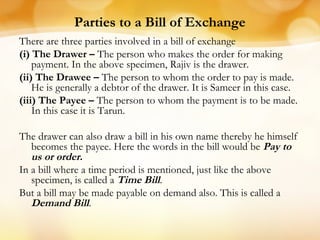
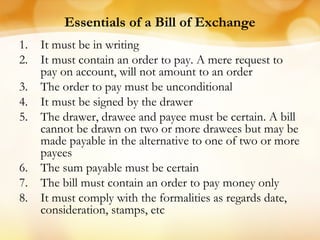

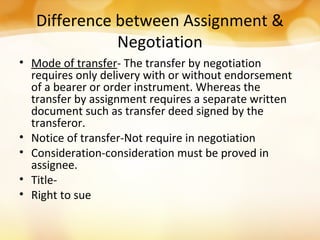
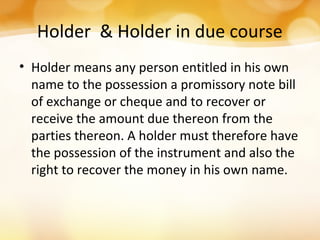
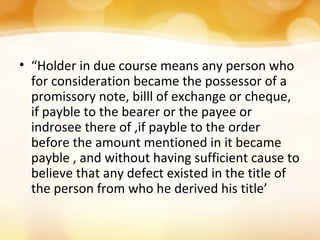



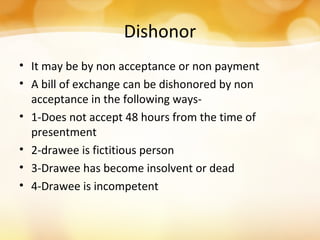


The document summarizes key aspects of negotiable instruments law in India as defined by the Negotiable Instruments Act, 1881. It defines negotiable instruments as written documents that are freely transferable and create a monetary obligation. The three main types of negotiable instruments are promissory notes, bills of exchange, and cheques. It outlines the essential characteristics of each, including the parties involved, requirements for validity, methods of negotiation or assignment, and concepts of holders and holders in due course. The document provides an overview of key terms and processes regarding negotiable instruments under Indian law.


