By: Maya Webb
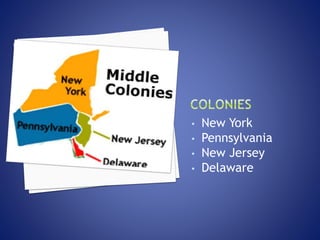
• New York 
• Pennsylvania 
• New Jersey 
• Delaware
 Rich soil 
 Good climate 
 Excellent natural harbors 
Wide, flowing rivers 
 Trading 
 Farming: cash crops 
 Fishing 
 Craftsmen 
 Shipyards 
*Known as the Breadbasket colonies
 New York was originally founded by the Dutch as 
New Amsterdam, so that the Dutch could make a 
name for their own country by business. New 
Amsterdam became a very successful trading 
port (led by Peter Stuyvesant), so the English 
decided they wanted it. They took over the city 
with no blood spilled and renamed it New York. 
 New Amsterdam was founded in 1624, but was 
taken over in 1664 and continued to be a 
successful trading port.
 Pennsylvania was founded by William 
Penn as a place of religious freedom 
especially for Quakers. 
 Pennsylvania was founded in 1681 
when William Penn was granted a 
charter by the King to make a colony. 
The King did this because he owed 
the Penn family a lot of money, and 
William said that he would clear the 
King’s debts. 
 Philadelphia, a trading port and town 
in Pennsylvania, was the fastest 
growing city in the colonies because 
of the amount of religious tolerance 
the colony had and how successful 
the trading port was. 
 Quakers were Christians 
who were tolerant and 
peaceful. 
 They didn’t have regular 
church services, formal 
ministers, and men and 
women were equal. 
 These people were also 
the first ones to stand up 
against slavery.
Delaware was founded by the 
Swedes for trading and more land in 
1638. 
The Dutch eventually took over from 
the Swedes until the English took 
over it later.
 New Jersey was founded by George Carteret 
and Lord John Berkley by the Duke of York as 
a present in 1664. 
 These men were wealthy noblemen in 
England. 
 The colony offered religious and political 
freedoms.
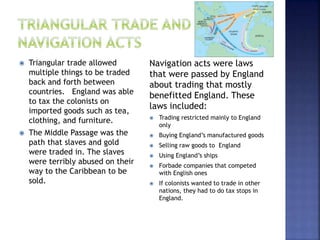
 Triangular trade allowed 
multiple things to be traded 
back and forth between 
countries. England was able 
to tax the colonists on 
imported goods such as tea, 
clothing, and furniture. 
 The Middle Passage was the 
path that slaves and gold 
were traded in. The slaves 
were terribly abused on their 
way to the Caribbean to be 
sold. 
Navigation acts were laws 
that were passed by England 
about trading that mostly 
benefitted England. These 
laws included: 
 Trading restricted mainly to England 
only 
 Buying England’s manufactured goods 
 Selling raw goods to England 
 Using England’s ships 
 Forbade companies that competed 
with English ones 
 If colonists wanted to trade in other 
nations, they had to do tax stops in 
England.

The Middle Colonies

  • 1.
  • 2.
    • New York • Pennsylvania • New Jersey • Delaware
  • 3.
     Rich soil  Good climate  Excellent natural harbors Wide, flowing rivers  Trading  Farming: cash crops  Fishing  Craftsmen  Shipyards *Known as the Breadbasket colonies
  • 4.
     New Yorkwas originally founded by the Dutch as New Amsterdam, so that the Dutch could make a name for their own country by business. New Amsterdam became a very successful trading port (led by Peter Stuyvesant), so the English decided they wanted it. They took over the city with no blood spilled and renamed it New York.  New Amsterdam was founded in 1624, but was taken over in 1664 and continued to be a successful trading port.
  • 5.
     Pennsylvania wasfounded by William Penn as a place of religious freedom especially for Quakers.  Pennsylvania was founded in 1681 when William Penn was granted a charter by the King to make a colony. The King did this because he owed the Penn family a lot of money, and William said that he would clear the King’s debts.  Philadelphia, a trading port and town in Pennsylvania, was the fastest growing city in the colonies because of the amount of religious tolerance the colony had and how successful the trading port was.  Quakers were Christians who were tolerant and peaceful.  They didn’t have regular church services, formal ministers, and men and women were equal.  These people were also the first ones to stand up against slavery.
  • 6.
    Delaware was foundedby the Swedes for trading and more land in 1638. The Dutch eventually took over from the Swedes until the English took over it later.
  • 7.
     New Jerseywas founded by George Carteret and Lord John Berkley by the Duke of York as a present in 1664.  These men were wealthy noblemen in England.  The colony offered religious and political freedoms.
  • 8.
     Triangular tradeallowed multiple things to be traded back and forth between countries. England was able to tax the colonists on imported goods such as tea, clothing, and furniture.  The Middle Passage was the path that slaves and gold were traded in. The slaves were terribly abused on their way to the Caribbean to be sold. Navigation acts were laws that were passed by England about trading that mostly benefitted England. These laws included:  Trading restricted mainly to England only  Buying England’s manufactured goods  Selling raw goods to England  Using England’s ships  Forbade companies that competed with English ones  If colonists wanted to trade in other nations, they had to do tax stops in England.