THE MIDDLE COLONIES: (New York, Pennsylvania, New Jersey, Delaware)

Characteristics of The Middle Colonies

-fertile soil
-top cash crop was wheat/became America’s “bread-basket.”
-Largest manufacturers produced iron, flour and paper. Artisans worked as
shoemakers, carpenters, masons, weavers and coopers.

NEW YORK:
-already occupied by the Dutch (New Netherland)
-base for a profitable fur trade between Dutch and Native Americans
THE ENGLISH MOVE INTO NEW YORK:
-the English wished to link New England and Virginia
-war in Europe brakes out between England and Netherlands
-England sends warships to New Amsterdam
-The Dutch were outgunned and forced to surrender without a fight
-King Charles gave control of New Netherlands to his bother the Duke of York
-1683 the people in New York were allowed to choose an assembly to make laws

New Jersey:
-In 1664 the Duke of York gave part of his land to two friends
-Lord Berkeley and Sir George Carteret
-both men set up a PROPRIETARY COLONY: king give land to one or more people and
takes a percentage of the profits
-New Jersey was divided into East & West NJ
-Settled by many different groups of people (Puritans, French, Protestants, Scots, Irish,
Dutch, Finns, etc.)
-In 1702 New Jersey was united into one colony
-it was made a ROYAL COLONY: under the king’s control
-colony was allowed religious freedoms & an assembly to vote on local matters

PENNSYLVANIA: “holy experiment”
-founded by William Penn 1682
-wanted religious freedom for a group known as the Quakers
-land in new world had been given to Penn’s father by the king
-Quakers believed that men and women were equal
-they had no ministers or priests and paid no taxes
-Quakers had no religious ceremonies and refused to fight in wars
-In England & New England, Quakers were arrested, fined, even executed
-William Penn, a wealthy man who personally knew King Charles II got a charter to
form a new colony in North America.
1682-wrote Frame of Government:
          *Penn appointed a governor and a council of advisors to make laws
         *a representative assembly accepted or rejected these laws
          *any white man who owned property could vote
*allowed freedom of worship (Protestants, Catholics, Jews, others)

-Penn felt that the land belong to the Indians and even paid them for it
--Penn advertised all over Europe (large number of Germans, English, Welsh and Irish
went to PA)
-built the capital at PHILADELPHIA “City of Brotherly Love”
-backcountry was home to the Scotch-Irish and the Germans or “Deutsch”


DELAWARE:
-the Duke of York gave some land to PA so they could have an outlet to the coast
-residents did not like sending delegates to a distant assembly in Philadelphia
-in 1701 Penn allows them to set up their own assembly
-new colony called Delaware

THE SOUTHERN COLONIES:
(VIRGINIA, MARYLAND, N. CAROLINA, S. CAROLINA, GEORGIA)

CHARACTERISTICS OF SOUTHERN COLONIES:
-large plantations with slaves
-staple crops
-aristocratic
-few cities, churches, schools
-some religious tolerance

COLONY OF VIRGINIA:
-Jamestown founded in 1607 – later settlement grows into Virginia
-colony in trouble at first until they start to grow tobacco
-Tobacco was a problem (ruined soil, single crop economy, need for labor)
-many indentured servants (males 15-24)
-1619 first African slaves were sold in Jamestown (Dutch ship knocked off course)
-Representative Government (House of Burgesses) 1619
-1624 King James I revokes charter, made Virginia into a
royal colony (directly under the kings control)

BACON’S REBELLION
-new poorer settlers in Virginia clashed with Indians for land inland
-wanted the Governor to help protect them
-governor refuses
-Bacon raises army – attacks Indian villages – marches on & burns Jamestown
-result; English settlers keep moving onto Native American lands.


MARYLAND:
-founded by Lord Baltimore (never visited, but planned colony)
-Proprietary Colony
-large estates given to Catholic land owners (smaller for protestants)
-Tobacco economy – indentured servants and slaves
-ACTS OF TOLERATION: 1649
-all Christians tolerated/adult male Christians given the right to vote
-intolerance towards Jews and atheists
-established representative assembly

THE CAROLINAS:
-Royal Colonies granted to Lord proprietors in the 1670’s

SOUTH CAROLINA:
-Sugar & Rice Economy
-at first Indian slaves then African slaves used (majority of population by 1710)
-Charles Town – large port
-English aristocrats
-often threatened by Spanish in Florida

NORTH CAROLINA:
-outcasts from Virginia mostly squatters – not nearly as wealthy as people in South
Carolina
-settlers lived on small farms and raised and exported tobacco and lumber for ship
building.
-separated from South Carolina (1712)
-more democratic, independent, less aristocratic

GEORGIA: THE LAST COLONY
-established in 1733 by James Ogelthorpe
-founded as a buffer between S. Carolina and Spanish Florida
-populated by people released from debtors (people who own money) prison in England
-religious tolerance except Catholics
-least populous, slowest growing

Notes on the colonies take root the middle & southern colonies

  • 1.
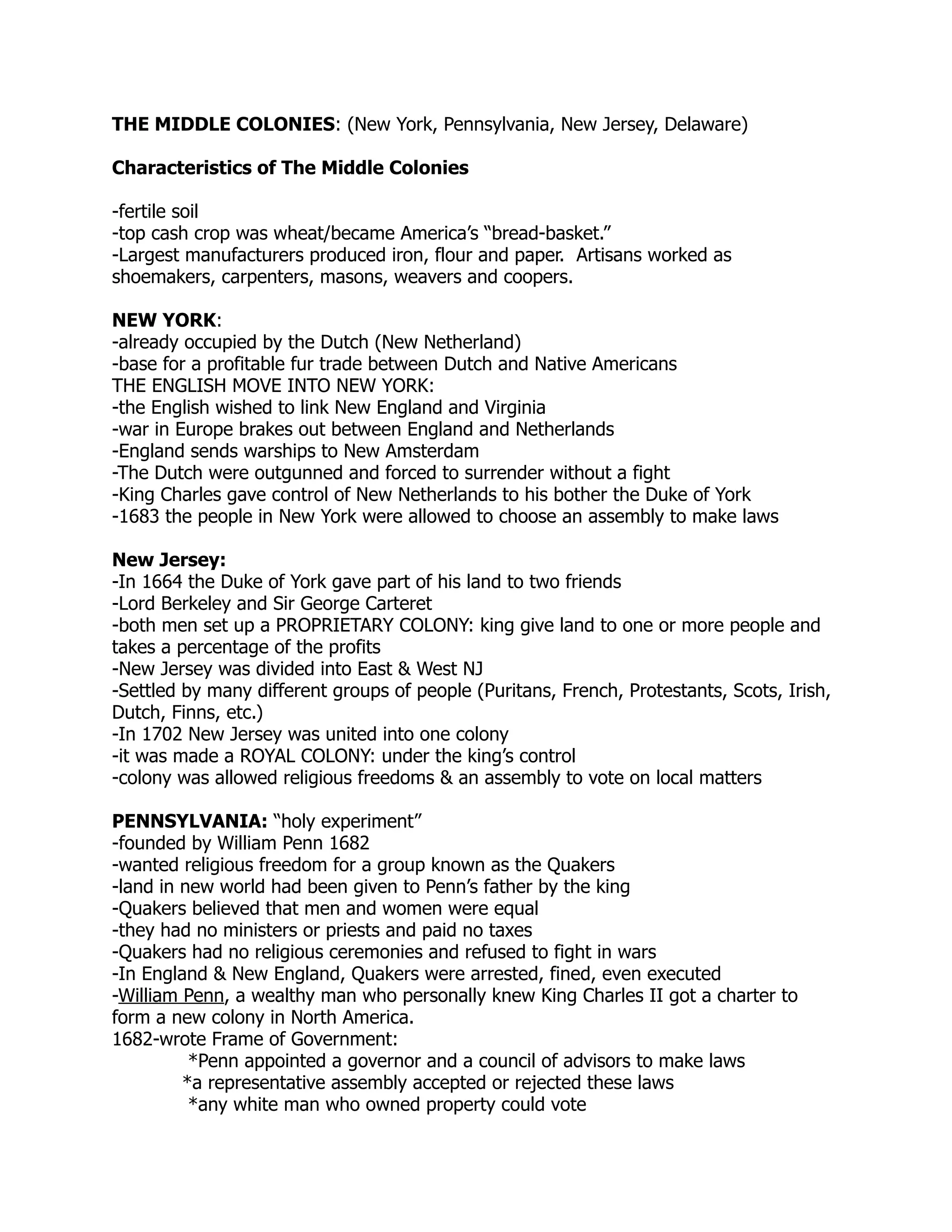
    THE MIDDLE COLONIES:(New York, Pennsylvania, New Jersey, Delaware) Characteristics of The Middle Colonies -fertile soil -top cash crop was wheat/became America’s “bread-basket.” -Largest manufacturers produced iron, flour and paper. Artisans worked as shoemakers, carpenters, masons, weavers and coopers. NEW YORK: -already occupied by the Dutch (New Netherland) -base for a profitable fur trade between Dutch and Native Americans THE ENGLISH MOVE INTO NEW YORK: -the English wished to link New England and Virginia -war in Europe brakes out between England and Netherlands -England sends warships to New Amsterdam -The Dutch were outgunned and forced to surrender without a fight -King Charles gave control of New Netherlands to his bother the Duke of York -1683 the people in New York were allowed to choose an assembly to make laws New Jersey: -In 1664 the Duke of York gave part of his land to two friends -Lord Berkeley and Sir George Carteret -both men set up a PROPRIETARY COLONY: king give land to one or more people and takes a percentage of the profits -New Jersey was divided into East & West NJ -Settled by many different groups of people (Puritans, French, Protestants, Scots, Irish, Dutch, Finns, etc.) -In 1702 New Jersey was united into one colony -it was made a ROYAL COLONY: under the king’s control -colony was allowed religious freedoms & an assembly to vote on local matters PENNSYLVANIA: “holy experiment” -founded by William Penn 1682 -wanted religious freedom for a group known as the Quakers -land in new world had been given to Penn’s father by the king -Quakers believed that men and women were equal -they had no ministers or priests and paid no taxes -Quakers had no religious ceremonies and refused to fight in wars -In England & New England, Quakers were arrested, fined, even executed -William Penn, a wealthy man who personally knew King Charles II got a charter to form a new colony in North America. 1682-wrote Frame of Government: *Penn appointed a governor and a council of advisors to make laws *a representative assembly accepted or rejected these laws *any white man who owned property could vote
  • 2.
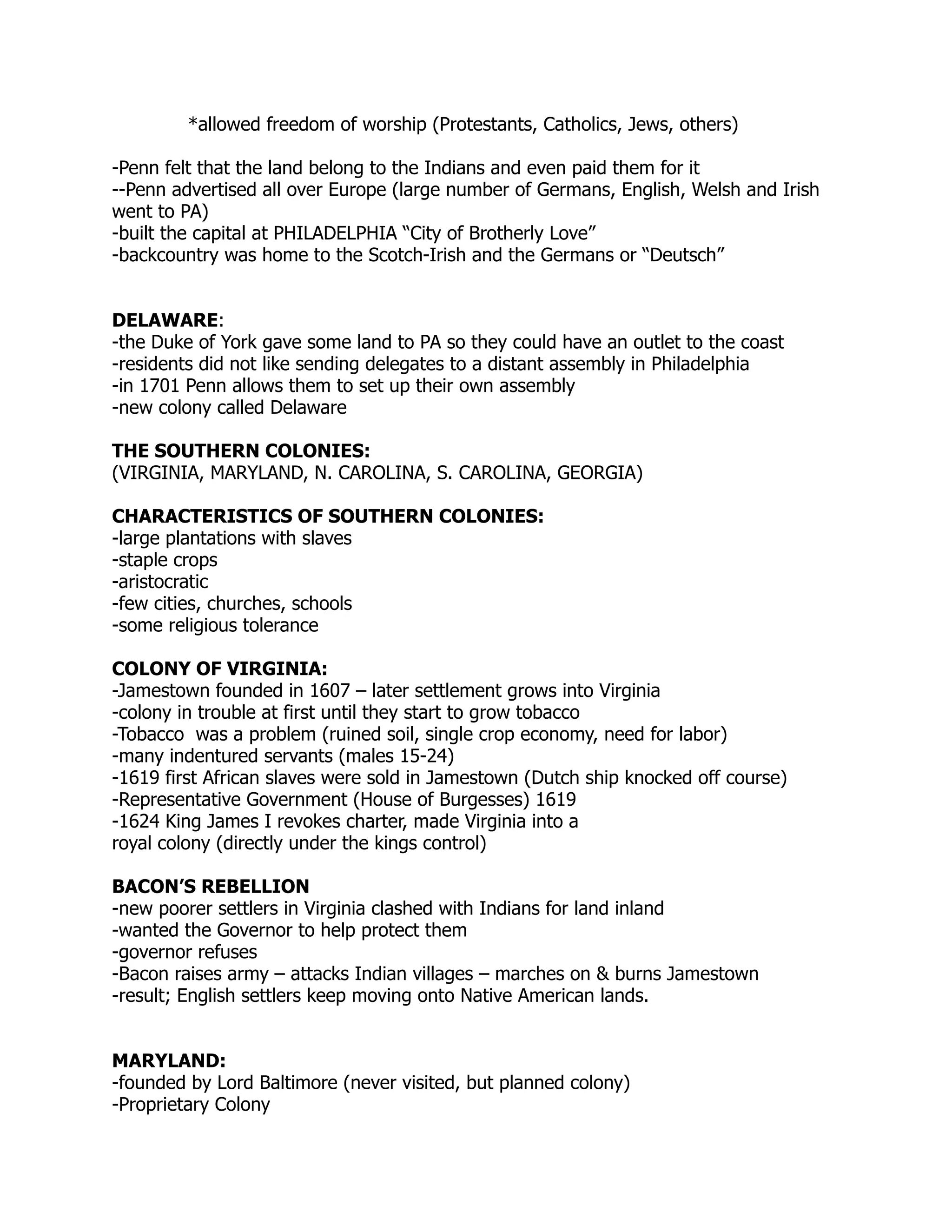
    *allowed freedom ofworship (Protestants, Catholics, Jews, others) -Penn felt that the land belong to the Indians and even paid them for it --Penn advertised all over Europe (large number of Germans, English, Welsh and Irish went to PA) -built the capital at PHILADELPHIA “City of Brotherly Love” -backcountry was home to the Scotch-Irish and the Germans or “Deutsch” DELAWARE: -the Duke of York gave some land to PA so they could have an outlet to the coast -residents did not like sending delegates to a distant assembly in Philadelphia -in 1701 Penn allows them to set up their own assembly -new colony called Delaware THE SOUTHERN COLONIES: (VIRGINIA, MARYLAND, N. CAROLINA, S. CAROLINA, GEORGIA) CHARACTERISTICS OF SOUTHERN COLONIES: -large plantations with slaves -staple crops -aristocratic -few cities, churches, schools -some religious tolerance COLONY OF VIRGINIA: -Jamestown founded in 1607 – later settlement grows into Virginia -colony in trouble at first until they start to grow tobacco -Tobacco was a problem (ruined soil, single crop economy, need for labor) -many indentured servants (males 15-24) -1619 first African slaves were sold in Jamestown (Dutch ship knocked off course) -Representative Government (House of Burgesses) 1619 -1624 King James I revokes charter, made Virginia into a royal colony (directly under the kings control) BACON’S REBELLION -new poorer settlers in Virginia clashed with Indians for land inland -wanted the Governor to help protect them -governor refuses -Bacon raises army – attacks Indian villages – marches on & burns Jamestown -result; English settlers keep moving onto Native American lands. MARYLAND: -founded by Lord Baltimore (never visited, but planned colony) -Proprietary Colony
  • 3.
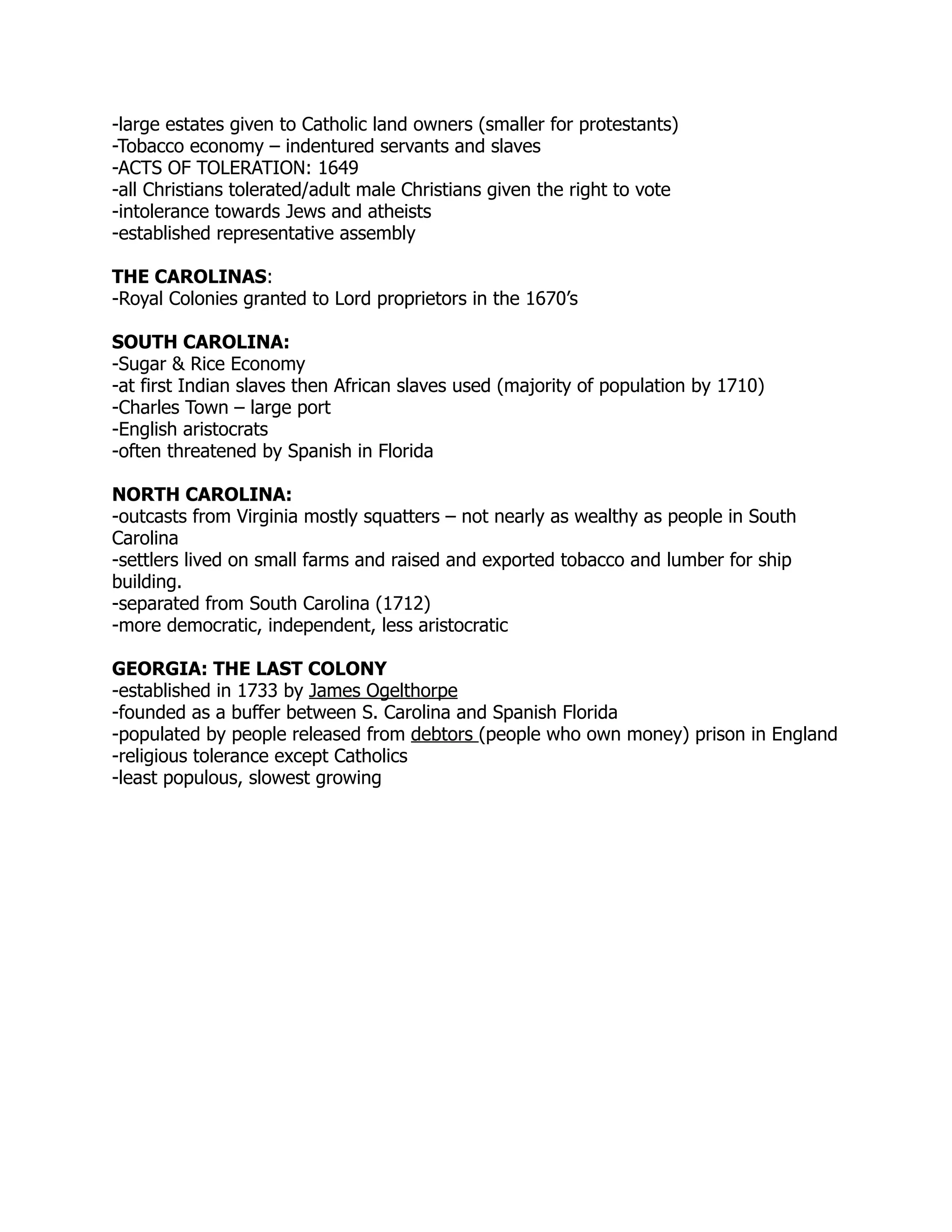
    -large estates givento Catholic land owners (smaller for protestants) -Tobacco economy – indentured servants and slaves -ACTS OF TOLERATION: 1649 -all Christians tolerated/adult male Christians given the right to vote -intolerance towards Jews and atheists -established representative assembly THE CAROLINAS: -Royal Colonies granted to Lord proprietors in the 1670’s SOUTH CAROLINA: -Sugar & Rice Economy -at first Indian slaves then African slaves used (majority of population by 1710) -Charles Town – large port -English aristocrats -often threatened by Spanish in Florida NORTH CAROLINA: -outcasts from Virginia mostly squatters – not nearly as wealthy as people in South Carolina -settlers lived on small farms and raised and exported tobacco and lumber for ship building. -separated from South Carolina (1712) -more democratic, independent, less aristocratic GEORGIA: THE LAST COLONY -established in 1733 by James Ogelthorpe -founded as a buffer between S. Carolina and Spanish Florida -populated by people released from debtors (people who own money) prison in England -religious tolerance except Catholics -least populous, slowest growing