English Colonies AP U.S. History
Learning Targets: I can explain the differences between the New England, Middle, and Southern Colonies. I understand the significance of the Atlantic Slave Trade on Colonial Society. I can interpret documents from the time period and relate their significance to overall topics discussed in class. I can analyze the significance of various religious movements and their impact on colonial society.
New England Colonies Plymouth Colony Settled by a group of English settlers who believed the Church of England was beyond saving- “Separatists” Pilgrims Led by William Bradford-1620 Mayflower Compact Established a foundation for orderly government based on the consent of the governed-One of the first of its kind! Massachusetts Bay Colony Settled by Puritans who believed the Anglican church had too many practices left over from Catholicism Lost the civil war in England and were persecuted-left! Led by John Winthrop-1629/30 During the Great Migration many new towns were chartered
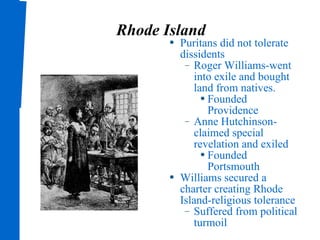
Rhode Island Puritans did not tolerate dissidents Roger Williams-went into exile and bought land from natives. Founded Providence Anne Hutchinson-claimed special revelation and exiled Founded Portsmouth Williams secured a charter creating Rhode Island-religious tolerance Suffered from political turmoil
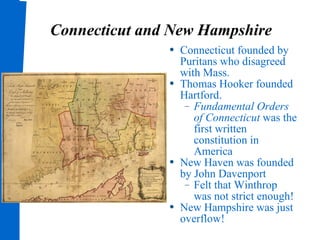
Connecticut and New Hampshire Connecticut founded by Puritans who disagreed with Mass. Thomas Hooker founded Hartford. Fundamental Orders of Connecticut  was the first written constitution in America New Haven was founded by John Davenport  Felt that Winthrop was not strict enough! New Hampshire was just overflow!
New York and New Jersey New York: Charles II gave his brother, James Duke of York control over the Dutch lands (he just had to conquer them first...) James was against representative assemblies-Puritans and other resisted New Jersey: James gave some of his territory to two wealthy English nobles Caused confusion over territory Conflicting claims of land ownership plagued New Jersey
Pennsylvania and Delaware Pennsylvania Founded as a refuge for Quakers Fertile soil Believed they could communicate directly with God Pacifists William Penn=founder Granted full religious freedom Planned out Philadelphia Peaceful with natives Delaware At first part of Penn. colony Penn granted them a separate legislature Pennsylvania was growing so large!
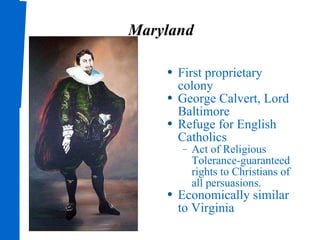
Maryland First proprietary colony George Calvert, Lord Baltimore Refuge for English Catholics Act of Religious Tolerance-guaranteed rights to Christians of all persuasions. Economically similar to Virginia
Jamestown and Virginia First permanent English Settlement Founded by Joint-stock companies=raise capital by the sale of shares of stock. Earliest settlers suffered (starvation, disease, Native hostility) Most considered themselves to be “Gentlemen” who were too good for hard labor.  Wanted gold and riches. Land was low and swampy Problems with Powhatan John Smith-kept colony from collapsing “He who works not, eats not” John Rolfe discovered tobacco could be grown in VA-major cash crop-saved colony Used indenture system to increase numbers House of Burgesses-promised same rights as in Eng., a representative assembly.
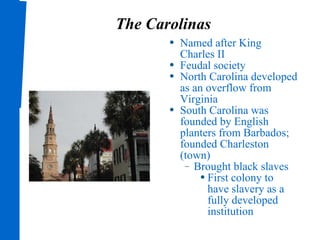
The Carolinas Named after King Charles II Feudal society North Carolina developed as an overflow from Virginia South Carolina was founded by English planters from Barbados; founded Charleston (town) Brought black slaves First colony to have slavery as a fully developed institution
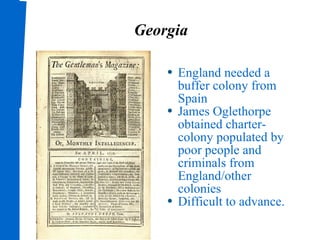
Georgia England needed a buffer colony from Spain James Oglethorpe obtained charter-colony populated by poor people and criminals from England/other colonies Difficult to advance.

13 Colonies

  • 1.
    English Colonies APU.S. History
  • 2.
    Learning Targets: Ican explain the differences between the New England, Middle, and Southern Colonies. I understand the significance of the Atlantic Slave Trade on Colonial Society. I can interpret documents from the time period and relate their significance to overall topics discussed in class. I can analyze the significance of various religious movements and their impact on colonial society.
  • 3.
    New England ColoniesPlymouth Colony Settled by a group of English settlers who believed the Church of England was beyond saving- “Separatists” Pilgrims Led by William Bradford-1620 Mayflower Compact Established a foundation for orderly government based on the consent of the governed-One of the first of its kind! Massachusetts Bay Colony Settled by Puritans who believed the Anglican church had too many practices left over from Catholicism Lost the civil war in England and were persecuted-left! Led by John Winthrop-1629/30 During the Great Migration many new towns were chartered
  • 4.
    Rhode Island Puritansdid not tolerate dissidents Roger Williams-went into exile and bought land from natives. Founded Providence Anne Hutchinson-claimed special revelation and exiled Founded Portsmouth Williams secured a charter creating Rhode Island-religious tolerance Suffered from political turmoil
  • 5.
    Connecticut and NewHampshire Connecticut founded by Puritans who disagreed with Mass. Thomas Hooker founded Hartford. Fundamental Orders of Connecticut was the first written constitution in America New Haven was founded by John Davenport Felt that Winthrop was not strict enough! New Hampshire was just overflow!
  • 6.
    New York andNew Jersey New York: Charles II gave his brother, James Duke of York control over the Dutch lands (he just had to conquer them first...) James was against representative assemblies-Puritans and other resisted New Jersey: James gave some of his territory to two wealthy English nobles Caused confusion over territory Conflicting claims of land ownership plagued New Jersey
  • 7.
    Pennsylvania and DelawarePennsylvania Founded as a refuge for Quakers Fertile soil Believed they could communicate directly with God Pacifists William Penn=founder Granted full religious freedom Planned out Philadelphia Peaceful with natives Delaware At first part of Penn. colony Penn granted them a separate legislature Pennsylvania was growing so large!
  • 8.
    Maryland First proprietarycolony George Calvert, Lord Baltimore Refuge for English Catholics Act of Religious Tolerance-guaranteed rights to Christians of all persuasions. Economically similar to Virginia
  • 9.
    Jamestown and VirginiaFirst permanent English Settlement Founded by Joint-stock companies=raise capital by the sale of shares of stock. Earliest settlers suffered (starvation, disease, Native hostility) Most considered themselves to be “Gentlemen” who were too good for hard labor. Wanted gold and riches. Land was low and swampy Problems with Powhatan John Smith-kept colony from collapsing “He who works not, eats not” John Rolfe discovered tobacco could be grown in VA-major cash crop-saved colony Used indenture system to increase numbers House of Burgesses-promised same rights as in Eng., a representative assembly.
  • 10.
    The Carolinas Namedafter King Charles II Feudal society North Carolina developed as an overflow from Virginia South Carolina was founded by English planters from Barbados; founded Charleston (town) Brought black slaves First colony to have slavery as a fully developed institution
  • 11.
    Georgia England neededa buffer colony from Spain James Oglethorpe obtained charter-colony populated by poor people and criminals from England/other colonies Difficult to advance.