SOUTHERN
COLONIES
1. Charter – a document which gives permission to organize a settlement or
start a colony
2. Joint-stock company – a company in which investors buy stock in the
company in return for a share in its future profits
3. Burgesses – elected representatives to an assembly
4. Sea dogs – English sailors who raided Spanish treasure ships
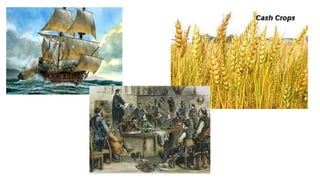
5. Cash crop – a crop produced solely for its ability to bring profit rather than for
use by the grower
6. Indentured servants – colonists who received free passage to North
America in exchange for working without pay for a certain number of years
7. Slave codes – laws passed in the colonies to control the slaves
8. Proprietary colony – a colony whose owners controlled the government
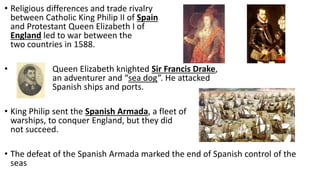
• Religious differences and trade rivalry
between Catholic King Philip II of Spain
and Protestant Queen Elizabeth I of
England led to war between the
two countries in 1588.
• Queen Elizabeth knighted Sir Francis Drake,
an adventurer and “sea dog”. He attacked
Spanish ships and ports.
• King Philip sent the Spanish Armada, a fleet of
warships, to conquer England, but they did
not succeed.
• The defeat of the Spanish Armada marked the end of Spanish control of the
seas
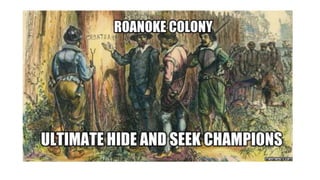
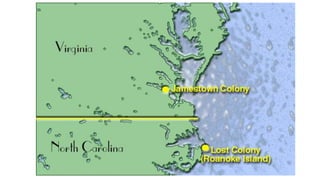
The Lost Colony of Roanoke
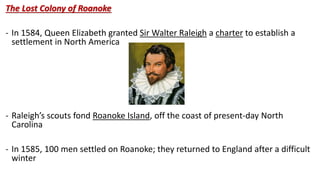
- In 1584, Queen Elizabeth granted Sir Walter Raleigh a charter to establish a
settlement in North America
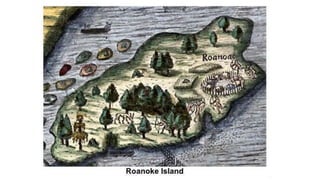
- Raleigh’s scouts fond Roanoke Island, off the coast of present-day North
Carolina
- In 1585, 100 men settled on Roanoke; they returned to England after a difficult
winter
• In 1587, John White led another group of settlers to Roanoke
• White’s granddaughter, Virginia Dare, became the first English child to be
born in North America
• The settlers tried to build a colony, but the quickly ran low on supplies.
John White sailed back to England for supplies and to recruit more settlers
• When he returned three years later, he found Roanoke deserted. The
colonists of Roanoke had disappeared.
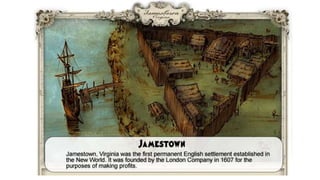
• In 1606, the Virginia Company of London, a joint-stock company, sent 144
settlers to build a colony in North America
• After losing 40 people on the voyage, in April of 1607 they entered the
Chesapeake Bay
• They named the new colony Jamestown after King James
• Jamestown colonists faced many difficulties. There was not enough farmland,
and the settlers spent more time looking for gold and silver than in producing
food
• By the spring of 1608, only 38 of the Jamestown colonists were left
• Captain John Smith explored the land and forced the settlers to work. He also
acquired corn from the Native Americans led by Chief Powhatan
• 400 new settlers arrived in the summer of 1609. However, Smith returned to
England in October, leaving the settlers without a strong leader
• The winter of 1609-1610 became known as “the Starving Time”, and there was
much violence between the Native Americans and the settlers
• By the spring of 1610, there were only 60 survivors left
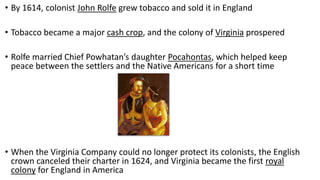
• By 1614, colonist John Rolfe grew tobacco and sold it in England
• Tobacco became a major cash crop, and the colony of Virginia prospered
• Rolfe married Chief Powhatan’s daughter Pocahontas, which helped keep
peace between the settlers and the Native Americans for a short time
• When the Virginia Company could no longer protect its colonists, the English
crown canceled their charter in 1624, and Virginia became the first royal
colony for England in America
• Private land ownership encouraged the colonists to work harder
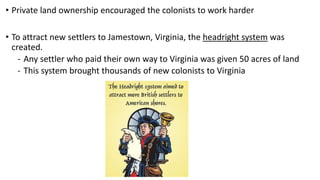
• To attract new settlers to Jamestown, Virginia, the headright system was
created.
- Any settler who paid their own way to Virginia was given 50 acres of land
- This system brought thousands of new colonists to Virginia
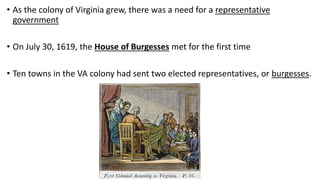
• As the colony of Virginia grew, there was a need for a representative
government
• On July 30, 1619, the House of Burgesses met for the first time
• Ten towns in the VA colony had sent two elected representatives, or burgesses.
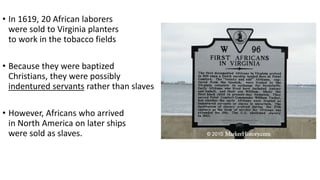
• In 1619, 20 African laborers
were sold to Virginia planters
to work in the tobacco fields
• Because they were baptized
Christians, they were possibly
indentured servants rather than slaves
• However, Africans who arrived
in North America on later ships
were sold as slaves.
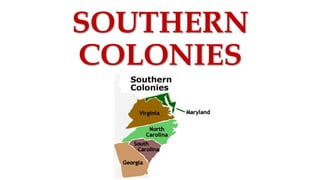
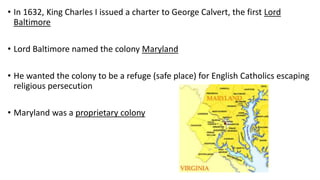
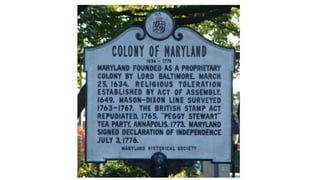
• In 1632, King Charles I issued a charter to George Calvert, the first Lord
Baltimore
• Lord Baltimore named the colony Maryland
• He wanted the colony to be a refuge (safe place) for English Catholics escaping
religious persecution
• Maryland was a proprietary colony
• Though it was founded by Catholics, many Protestants lived in Maryland as
well. There were conflicts between the two groups.
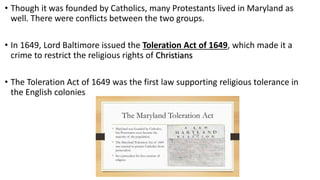
• In 1649, Lord Baltimore issued the Toleration Act of 1649, which made it a
crime to restrict the religious rights of Christians
• The Toleration Act of 1649 was the first law supporting religious tolerance in
the English colonies
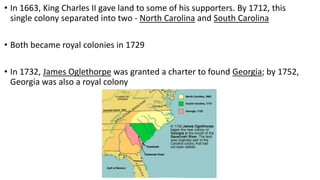
• In 1663, King Charles II gave land to some of his supporters. By 1712, this
single colony separated into two - North Carolina and South Carolina
• Both became royal colonies in 1729
• In 1732, James Oglethorpe was granted a charter to found Georgia; by 1752,
Georgia was also a royal colony
• High taxes and poor protection from the Native Americans led to protests
among the colonists
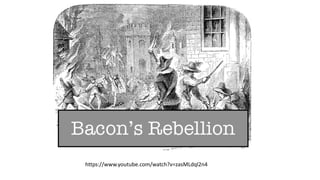
• In 1676, Nathanial Bacon led an attack on some Native Americans. Bacon
opposed trade with the Native people, and felt that the colonists should
be allowed to take their land
• Bacon and his followers burned Jamestown, and until his death Bacon
controlled much of the colony
• This conflict became known as Bacon’s Rebellion
https://www.youtube.com/watch?v=zasMLdql2n4
• The economy of the Southern colonies depended on cash crops such as
tobacco, rice, and indigo (used for making blue dye)
• These crops required a lot of workers
• By the 1700s, the main source of labor was enslaved Africans
• Laws called slave codes were passed to control the behavior of the slaves.
Soc studies #8 southern colonies

Soc studies #8 southern colonies

  • 1.
  • 2.
    1. Charter –a document which gives permission to organize a settlement or start a colony 2. Joint-stock company – a company in which investors buy stock in the company in return for a share in its future profits 3. Burgesses – elected representatives to an assembly 4. Sea dogs – English sailors who raided Spanish treasure ships 5. Cash crop – a crop produced solely for its ability to bring profit rather than for use by the grower
  • 4.
    6. Indentured servants– colonists who received free passage to North America in exchange for working without pay for a certain number of years 7. Slave codes – laws passed in the colonies to control the slaves 8. Proprietary colony – a colony whose owners controlled the government
  • 5.
    • Religious differencesand trade rivalry between Catholic King Philip II of Spain and Protestant Queen Elizabeth I of England led to war between the two countries in 1588. • Queen Elizabeth knighted Sir Francis Drake, an adventurer and “sea dog”. He attacked Spanish ships and ports. • King Philip sent the Spanish Armada, a fleet of warships, to conquer England, but they did not succeed. • The defeat of the Spanish Armada marked the end of Spanish control of the seas
  • 6.
    The Lost Colonyof Roanoke - In 1584, Queen Elizabeth granted Sir Walter Raleigh a charter to establish a settlement in North America - Raleigh’s scouts fond Roanoke Island, off the coast of present-day North Carolina - In 1585, 100 men settled on Roanoke; they returned to England after a difficult winter
  • 8.
    • In 1587,John White led another group of settlers to Roanoke • White’s granddaughter, Virginia Dare, became the first English child to be born in North America • The settlers tried to build a colony, but the quickly ran low on supplies. John White sailed back to England for supplies and to recruit more settlers • When he returned three years later, he found Roanoke deserted. The colonists of Roanoke had disappeared.
  • 10.
    • In 1606,the Virginia Company of London, a joint-stock company, sent 144 settlers to build a colony in North America • After losing 40 people on the voyage, in April of 1607 they entered the Chesapeake Bay • They named the new colony Jamestown after King James • Jamestown colonists faced many difficulties. There was not enough farmland, and the settlers spent more time looking for gold and silver than in producing food
  • 12.
    • By thespring of 1608, only 38 of the Jamestown colonists were left • Captain John Smith explored the land and forced the settlers to work. He also acquired corn from the Native Americans led by Chief Powhatan • 400 new settlers arrived in the summer of 1609. However, Smith returned to England in October, leaving the settlers without a strong leader • The winter of 1609-1610 became known as “the Starving Time”, and there was much violence between the Native Americans and the settlers • By the spring of 1610, there were only 60 survivors left
  • 14.
    • By 1614,colonist John Rolfe grew tobacco and sold it in England • Tobacco became a major cash crop, and the colony of Virginia prospered • Rolfe married Chief Powhatan’s daughter Pocahontas, which helped keep peace between the settlers and the Native Americans for a short time • When the Virginia Company could no longer protect its colonists, the English crown canceled their charter in 1624, and Virginia became the first royal colony for England in America
  • 15.
    • Private landownership encouraged the colonists to work harder • To attract new settlers to Jamestown, Virginia, the headright system was created. - Any settler who paid their own way to Virginia was given 50 acres of land - This system brought thousands of new colonists to Virginia
  • 16.
    • As thecolony of Virginia grew, there was a need for a representative government • On July 30, 1619, the House of Burgesses met for the first time • Ten towns in the VA colony had sent two elected representatives, or burgesses.
  • 17.
    • In 1619,20 African laborers were sold to Virginia planters to work in the tobacco fields • Because they were baptized Christians, they were possibly indentured servants rather than slaves • However, Africans who arrived in North America on later ships were sold as slaves.
  • 18.
    • In 1632,King Charles I issued a charter to George Calvert, the first Lord Baltimore • Lord Baltimore named the colony Maryland • He wanted the colony to be a refuge (safe place) for English Catholics escaping religious persecution • Maryland was a proprietary colony
  • 20.
    • Though itwas founded by Catholics, many Protestants lived in Maryland as well. There were conflicts between the two groups. • In 1649, Lord Baltimore issued the Toleration Act of 1649, which made it a crime to restrict the religious rights of Christians • The Toleration Act of 1649 was the first law supporting religious tolerance in the English colonies
  • 22.
    • In 1663,King Charles II gave land to some of his supporters. By 1712, this single colony separated into two - North Carolina and South Carolina • Both became royal colonies in 1729 • In 1732, James Oglethorpe was granted a charter to found Georgia; by 1752, Georgia was also a royal colony
  • 23.
    • High taxesand poor protection from the Native Americans led to protests among the colonists • In 1676, Nathanial Bacon led an attack on some Native Americans. Bacon opposed trade with the Native people, and felt that the colonists should be allowed to take their land • Bacon and his followers burned Jamestown, and until his death Bacon controlled much of the colony • This conflict became known as Bacon’s Rebellion
  • 24.
  • 25.
    • The economyof the Southern colonies depended on cash crops such as tobacco, rice, and indigo (used for making blue dye) • These crops required a lot of workers • By the 1700s, the main source of labor was enslaved Africans • Laws called slave codes were passed to control the behavior of the slaves.