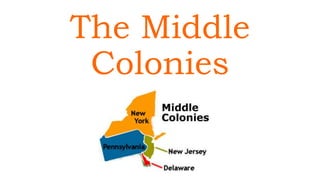
The Middle
Colonies
1. Quakers – a Protestant sect also known as the “Society of Friends”; begun in
England in the 1640s
2. staple crop – a crop that is always in demand
3. patroon – a “Lord” or landowner in the Dutch colonies
NEW YORK and NEW JERSEY
• New Netherland was founded by the Dutch in 1613 as a trading post
• The population grew due to large land grants to patroons, and because of
religious tolerance
• From 1647-1664, New Netherland was led by Dutch-born Peter Stuyvesant
• England’s King Charles II wanted control of the entire Atlantic Coast
• In 1664 an English fleet captured the colony, and it was renamed New York,
with its main town of New Amsterdam being renamed New York City
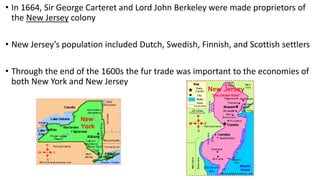
• In 1664, Sir George Carteret and Lord John Berkeley were made proprietors of
the New Jersey colony
• New Jersey’s population included Dutch, Swedish, Finnish, and Scottish settlers
• Through the end of the 1600s the fur trade was important to the economies of
both New York and New Jersey
PENNSYLVANIA and DELAWARE
• In 1681 King Charles II granted a charter to William Penn, who was a member of
the Society of Friends (a Quaker)
• The Quakers believed in equality of men and women, supported nonviolence
and religious tolerance, and disagreed with the practice of slavery
• Because of their beliefs, the Quakers were persecuted in England and in America
• Penn’s colony, called Pennsylvania, would be a safe place for Quakers, and
promised religious freedom to all Christians
• Penn established an elected assembly, which became an important example of
self-government
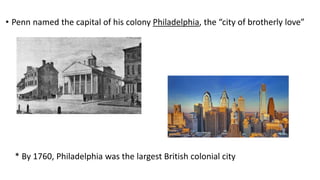
• Penn named the capital of his colony Philadelphia, the “city of brotherly love”
* By 1760, Philadelphia was the largest British colonial city
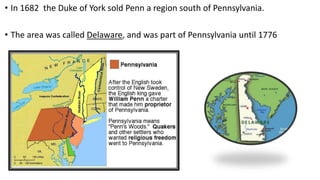
• In 1682 the Duke of York sold Penn a region south of Pennsylvania.
• The area was called Delaware, and was part of Pennsylvania until 1776
• Farmers in the Middle Colonies grew large amounts of staple crops such as
wheat, barley, and oats
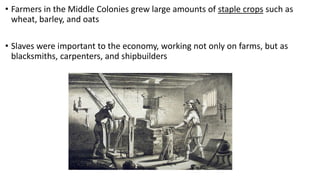
• Slaves were important to the economy, working not only on farms, but as
blacksmiths, carpenters, and shipbuilders
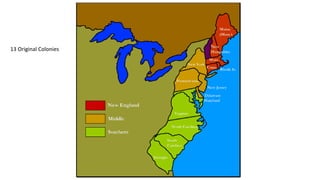
13 Original Colonies
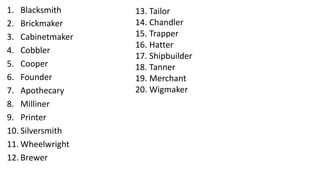
1. Blacksmith
2. Brickmaker
3. Cabinetmaker
4. Cobbler
5. Cooper
6. Founder
7. Apothecary
8. Milliner
9. Printer
10. Silversmith
11. Wheelwright
12. Brewer
13. Tailor
14. Chandler
15. Trapper
16. Hatter
17. Shipbuilder
18. Tanner
19. Merchant
20. Wigmaker

Soc studies #10 the middle colonies

  • 1.
  • 2.
    1. Quakers –a Protestant sect also known as the “Society of Friends”; begun in England in the 1640s 2. staple crop – a crop that is always in demand 3. patroon – a “Lord” or landowner in the Dutch colonies
  • 3.
    NEW YORK andNEW JERSEY • New Netherland was founded by the Dutch in 1613 as a trading post • The population grew due to large land grants to patroons, and because of religious tolerance • From 1647-1664, New Netherland was led by Dutch-born Peter Stuyvesant • England’s King Charles II wanted control of the entire Atlantic Coast • In 1664 an English fleet captured the colony, and it was renamed New York, with its main town of New Amsterdam being renamed New York City
  • 5.
    • In 1664,Sir George Carteret and Lord John Berkeley were made proprietors of the New Jersey colony • New Jersey’s population included Dutch, Swedish, Finnish, and Scottish settlers • Through the end of the 1600s the fur trade was important to the economies of both New York and New Jersey
  • 6.
    PENNSYLVANIA and DELAWARE •In 1681 King Charles II granted a charter to William Penn, who was a member of the Society of Friends (a Quaker) • The Quakers believed in equality of men and women, supported nonviolence and religious tolerance, and disagreed with the practice of slavery • Because of their beliefs, the Quakers were persecuted in England and in America • Penn’s colony, called Pennsylvania, would be a safe place for Quakers, and promised religious freedom to all Christians • Penn established an elected assembly, which became an important example of self-government
  • 7.
    • Penn namedthe capital of his colony Philadelphia, the “city of brotherly love” * By 1760, Philadelphia was the largest British colonial city
  • 8.
    • In 1682the Duke of York sold Penn a region south of Pennsylvania. • The area was called Delaware, and was part of Pennsylvania until 1776
  • 9.
    • Farmers inthe Middle Colonies grew large amounts of staple crops such as wheat, barley, and oats • Slaves were important to the economy, working not only on farms, but as blacksmiths, carpenters, and shipbuilders
  • 10.
  • 11.
    1. Blacksmith 2. Brickmaker 3.Cabinetmaker 4. Cobbler 5. Cooper 6. Founder 7. Apothecary 8. Milliner 9. Printer 10. Silversmith 11. Wheelwright 12. Brewer 13. Tailor 14. Chandler 15. Trapper 16. Hatter 17. Shipbuilder 18. Tanner 19. Merchant 20. Wigmaker