The Learning Brain
Aaron Wolowiec
Founder | Event Garde
EventGarde.com
Learn Network Transfer
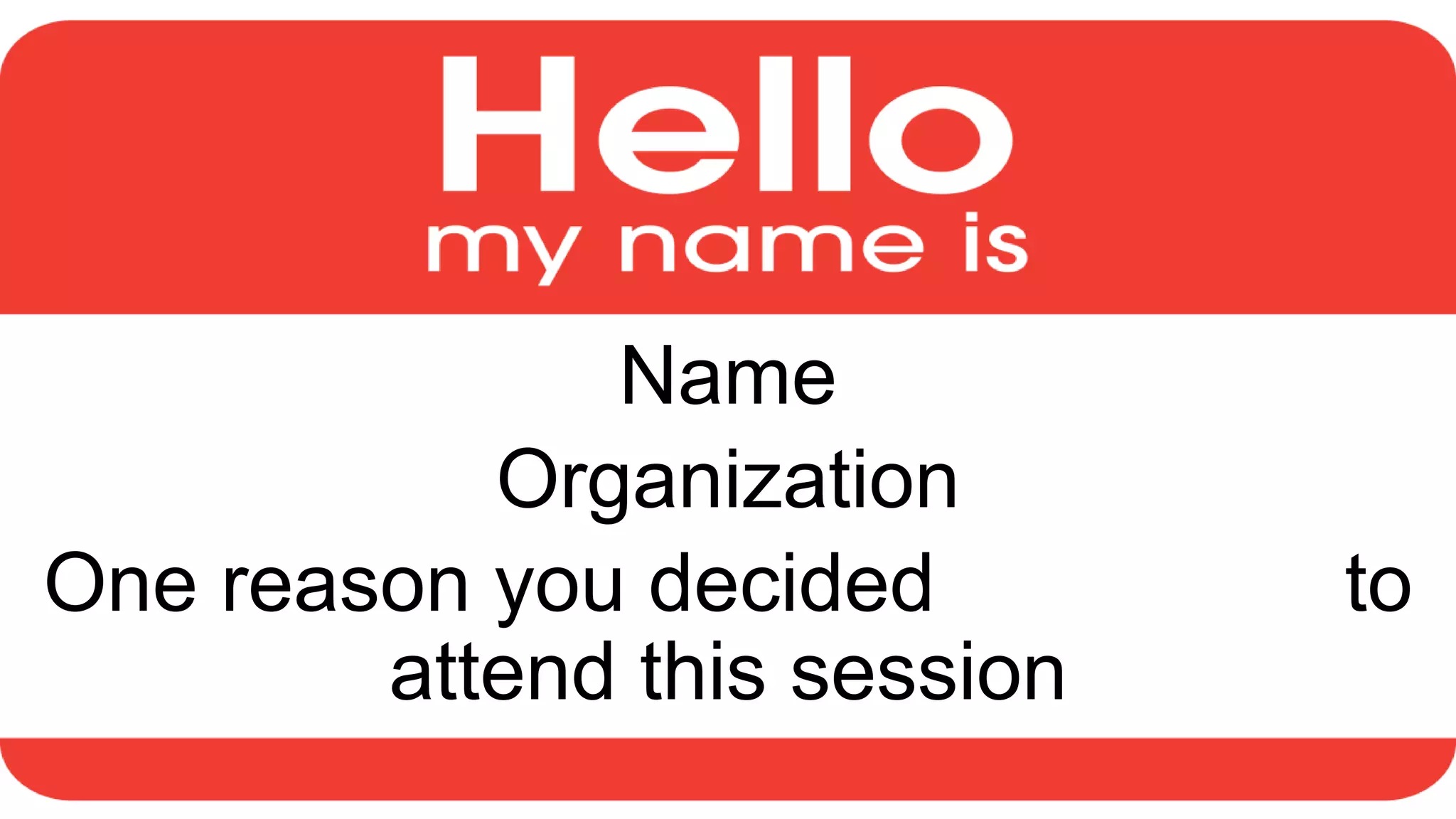
Name
Organization
One reason you decided to
attend this session
09000 3 87654321520 04 98765432103 9876543210987654321021 987654321098765432100Hours Minutes Seconds
Participant Introductions
09000 2 87654321510 04 98765432103 9876543210987654321021 987654321098765432100Hours Minutes Seconds
Participant Introductions
09000 1 87654321500 04 98765432103 9876543210987654321021 987654321098765432100Hours Minutes Seconds
Participant Introductions
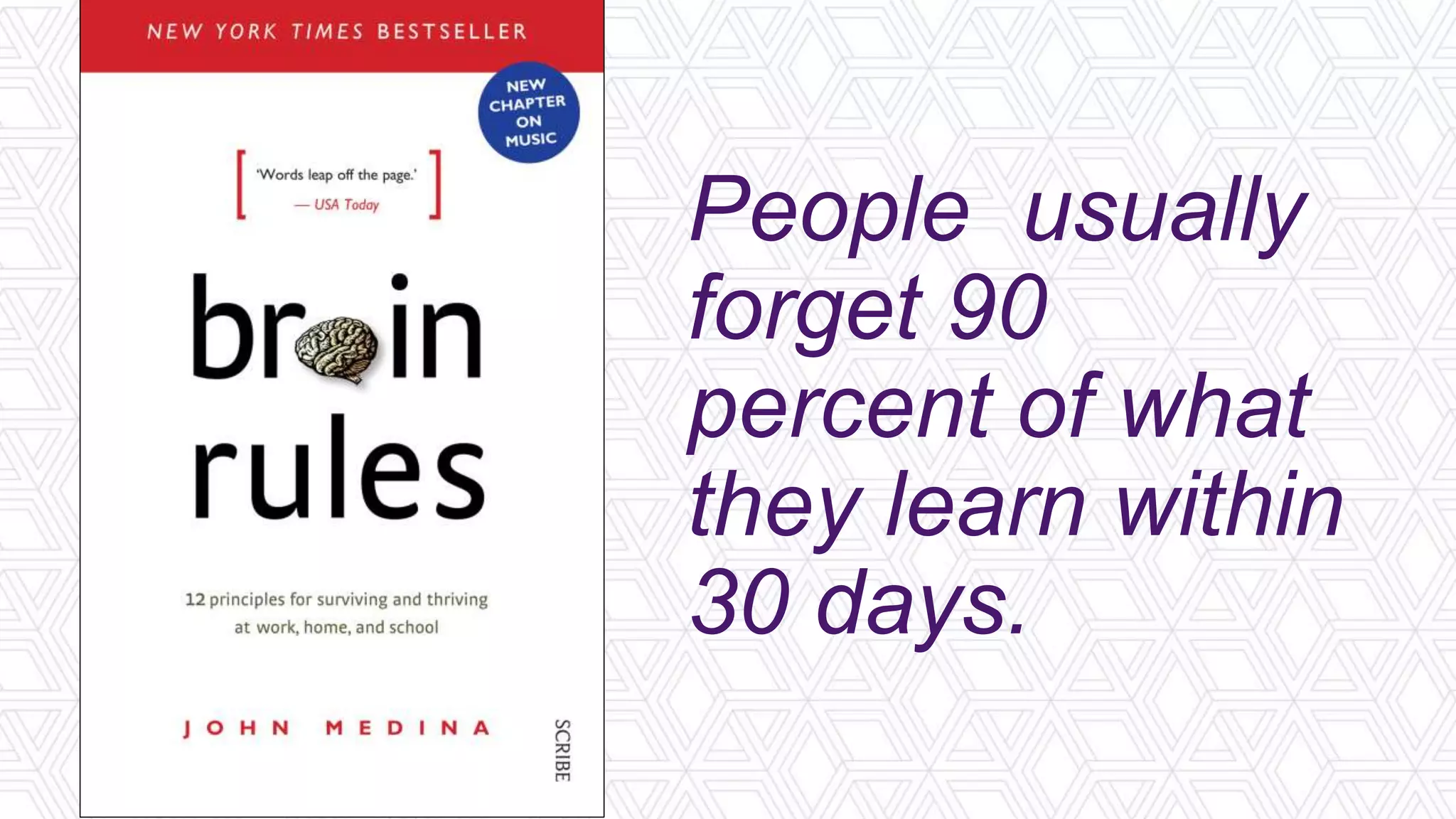
People usually
forget 90
percent of what
they learn within
30 days.
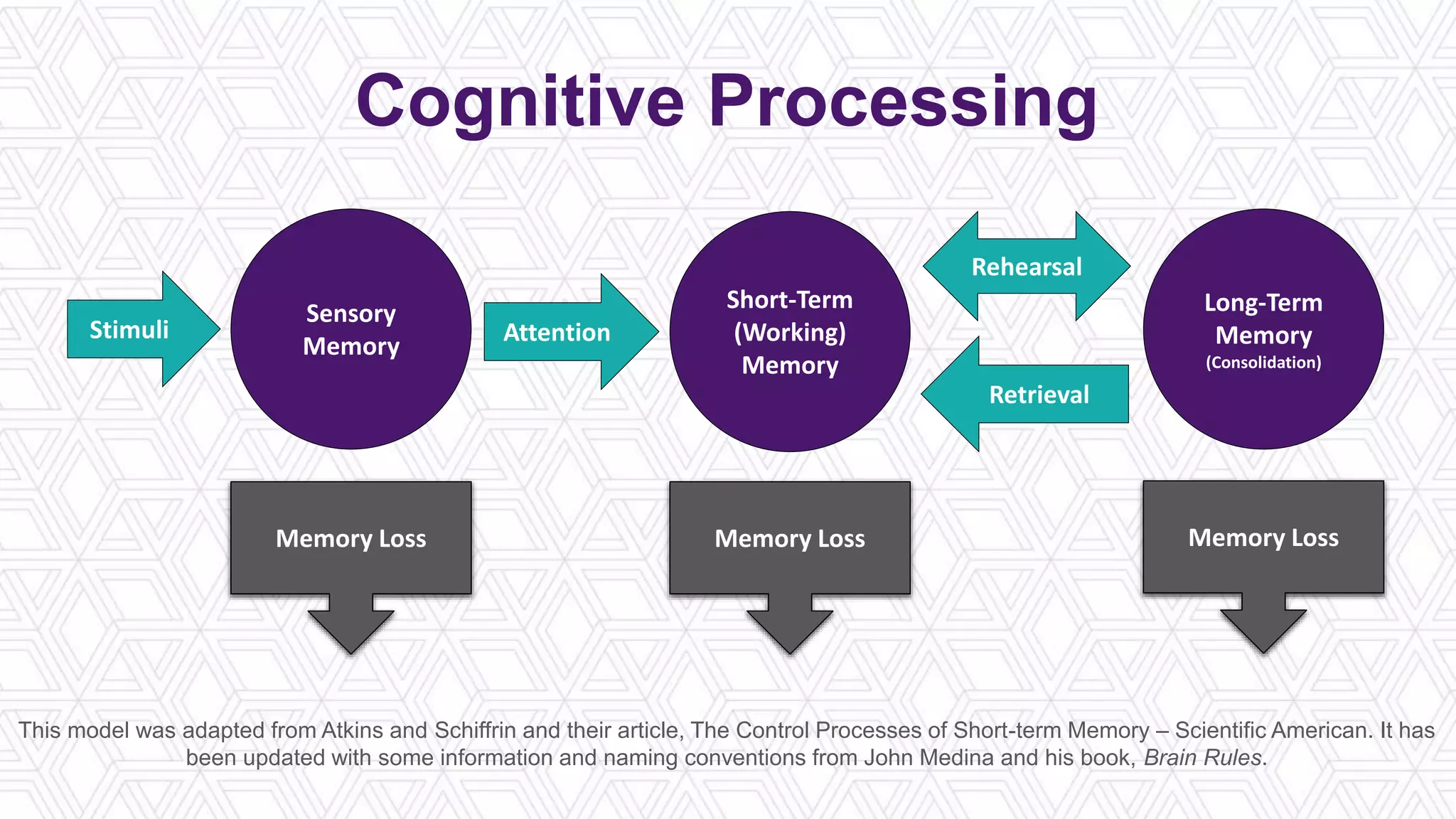
Stimuli Attention
Retrieval
Rehearsal
Sensory
Memory
Memory Loss
Short-Term
(Working)
Memory
Memory Loss
Long-Term
Memory
(Consolidation)
Memory Loss
Cognitive Processing
This model was adapted from Atkins and Schiffrin and their article, The Control Processes of Short-term Memory – Scientific American. It has
been updated with some information and naming conventions from John Medina and his book, Brain Rules.
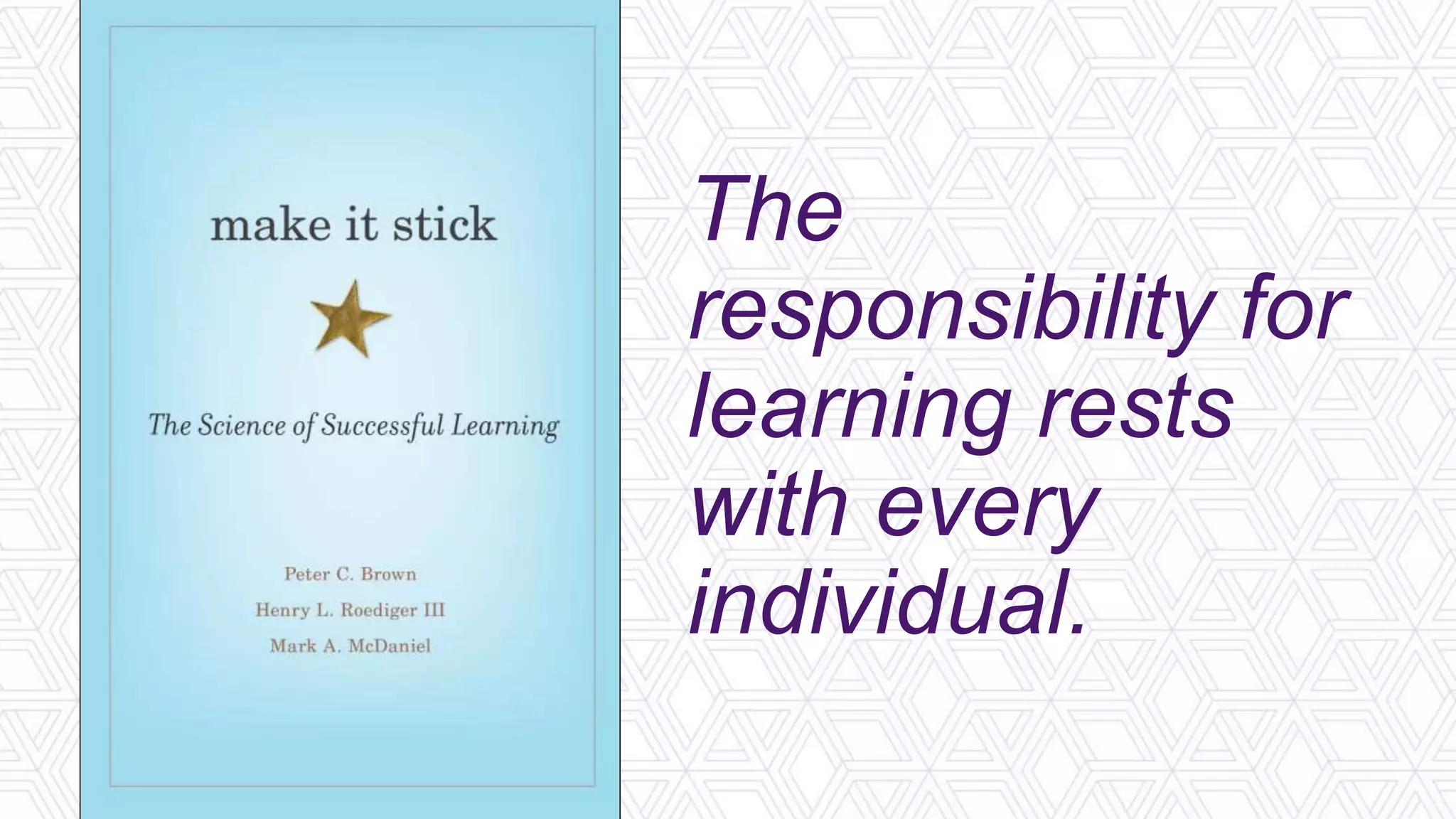
The
responsibility for
learning rests
with every
individual.
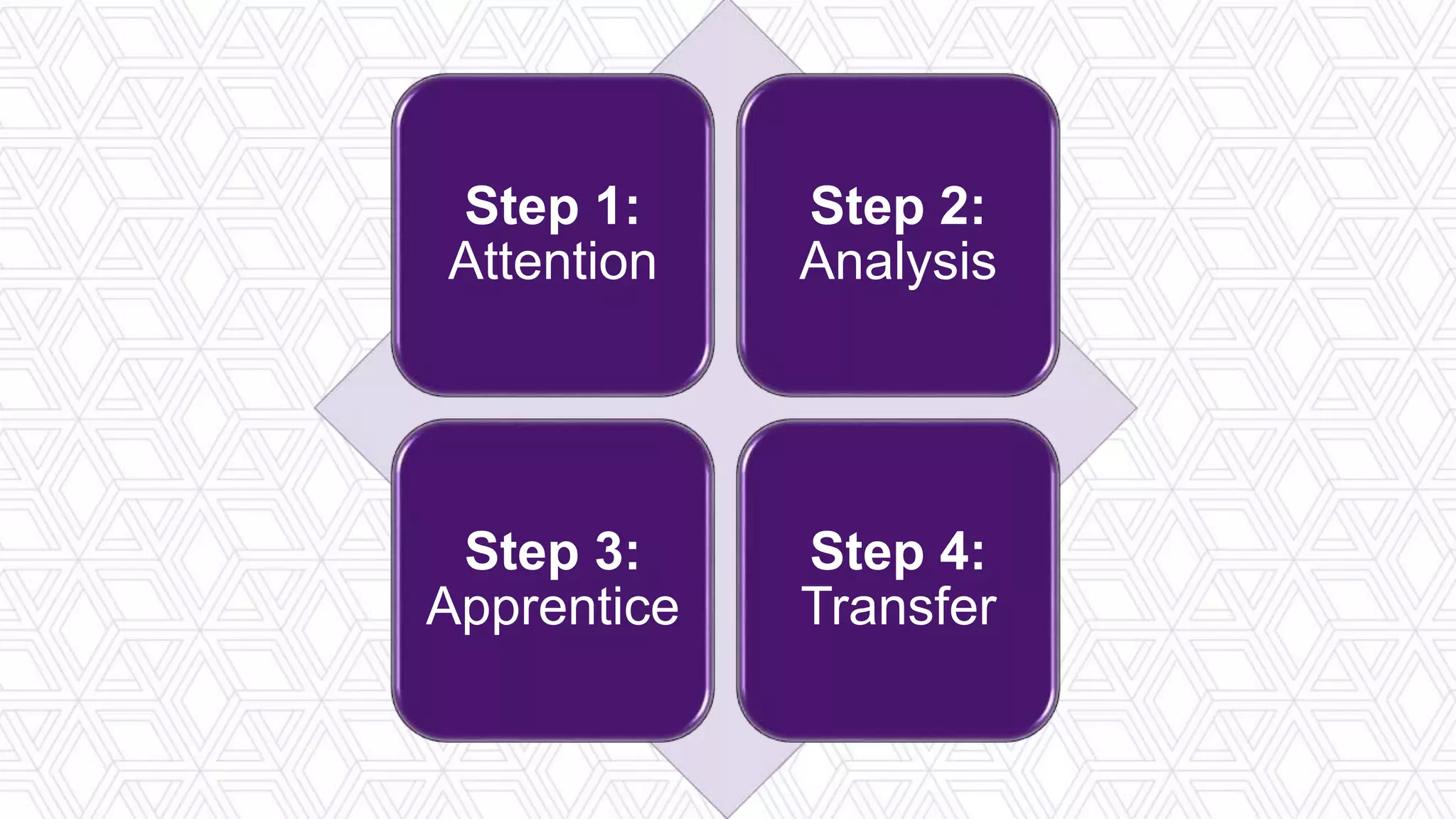
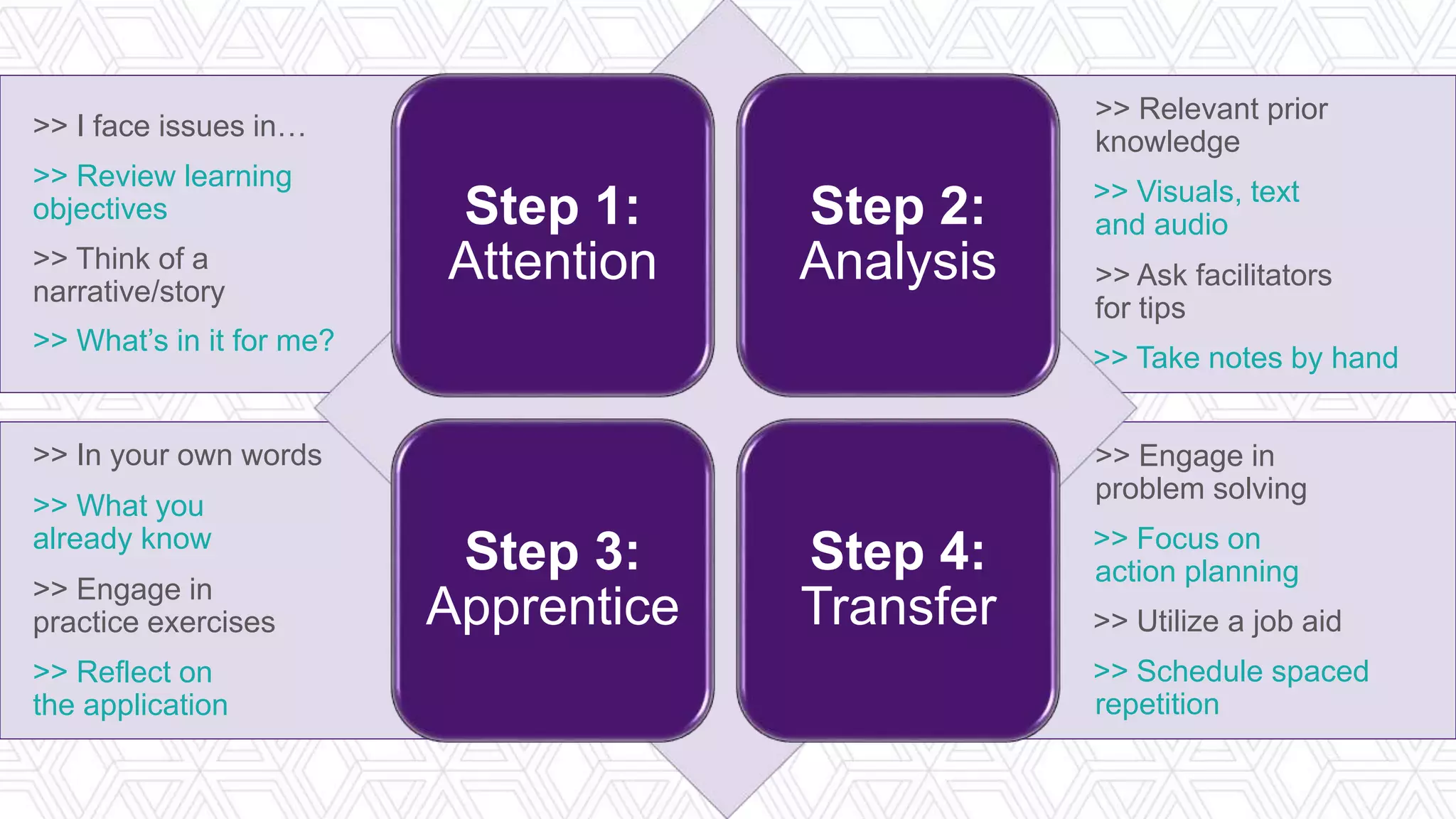
Step 1:
Attention
Step 2:
Analysis
Step 3:
Apprentice
Step 4:
Transfer
Step 1: Attention
>> I face issues in…
>> Review learning objectives
>> Think of a narrative/story
>> What’s in it for me?
Step 1: Attention
>> I face issues in…
>> Review learning objectives
>> Think of a narrative/story
>> What’s in it for me?
Step 1: Attention
>> I face issues in…
>> Review learning objectives
>> Think of a narrative/story
>> What’s in it for me?
Step 1: Attention
>> I face issues in…
>> Review learning objectives
>> Think of a narrative/story
>> What’s in it for me?
Step 2: Analysis
>> Relevant prior knowledge
>> Visuals, text and audio
>> Ask facilitators for tips
>> Take notes by hand
Step 2: Analysis
>> Relevant prior knowledge
>> Visuals, text and audio
>> Ask facilitators for tips
>> Take notes by hand
Step 2: Analysis
>> Relevant prior knowledge
>> Visuals, text and audio
>> Ask facilitators for tips
>> Take notes by hand
Step 2: Analysis
>> Relevant prior knowledge
>> Visuals, text and audio
>> Ask facilitators for tips
>> Take notes by hand
Step 3: Apprentice
>> In your own words
>> What you already know
>> Engage in practice exercises
>> Reflect on the application
Step 3: Apprentice
>> In your own words
>> What you already know
>> Engage in practice exercises
>> Reflect on the application
Step 3: Apprentice
>> In your own words
>> What you already know
>> Engage in practice exercises
>> Reflect on the application
Step 3: Apprentice
>> In your own words
>> What you already know
>> Engage in practice exercises
>> Reflect on the application
Step 4: Transfer
>> Engage in problem solving
>> Focus on action planning
>> Utilize a job aid
>> Schedule spaced repetition
Step 4: Transfer
>> Engage in problem solving
>> Focus on action planning
>> Utilize a job aid
>> Schedule spaced repetition
Step 4: Transfer
>> Engage in problem solving
>> Focus on action planning
>> Utilize a job aid
>> Schedule spaced repetition
Step 4: Transfer
>> Engage in problem solving
>> Focus on action planning
>> Utilize a job aid
>> Schedule spaced repetition
>> Engage in
problem solving
>> Focus on
action planning
>> Utilize a job aid
>> Schedule spaced
repetition
>> Relevant prior
knowledge
>> Visuals, text
and audio
>> Ask facilitators
for tips
>> Take notes by hand
>> In your own words
>> What you
already know
>> Engage in
practice exercises
>> Reflect on
the application
>> I face issues in…
>> Review learning
objectives
>> Think of a
narrative/story
>> What’s in it for me?
Step 1:
Attention
Step 2:
Analysis
Step 3:
Apprentice
Step 4:
Transfer
Focused Conversation
Aaron Wolowiec
Founder | Event Garde
EventGarde.com
Stay In Touch

The Learning Brain

  • 1.
    The Learning Brain AaronWolowiec Founder | Event Garde EventGarde.com
  • 3.
  • 5.
    Name Organization One reason youdecided to attend this session
  • 6.
    09000 3 8765432152004 98765432103 9876543210987654321021 987654321098765432100Hours Minutes Seconds Participant Introductions
  • 7.
    09000 2 8765432151004 98765432103 9876543210987654321021 987654321098765432100Hours Minutes Seconds Participant Introductions
  • 8.
    09000 1 8765432150004 98765432103 9876543210987654321021 987654321098765432100Hours Minutes Seconds Participant Introductions
  • 10.
    People usually forget 90 percentof what they learn within 30 days.
  • 11.
    Stimuli Attention Retrieval Rehearsal Sensory Memory Memory Loss Short-Term (Working) Memory MemoryLoss Long-Term Memory (Consolidation) Memory Loss Cognitive Processing This model was adapted from Atkins and Schiffrin and their article, The Control Processes of Short-term Memory – Scientific American. It has been updated with some information and naming conventions from John Medina and his book, Brain Rules.
  • 12.
  • 13.
    Step 1: Attention Step 2: Analysis Step3: Apprentice Step 4: Transfer
  • 14.
    Step 1: Attention >>I face issues in… >> Review learning objectives >> Think of a narrative/story >> What’s in it for me?
  • 15.
    Step 1: Attention >>I face issues in… >> Review learning objectives >> Think of a narrative/story >> What’s in it for me?
  • 16.
    Step 1: Attention >>I face issues in… >> Review learning objectives >> Think of a narrative/story >> What’s in it for me?
  • 17.
    Step 1: Attention >>I face issues in… >> Review learning objectives >> Think of a narrative/story >> What’s in it for me?
  • 18.
    Step 2: Analysis >>Relevant prior knowledge >> Visuals, text and audio >> Ask facilitators for tips >> Take notes by hand
  • 19.
    Step 2: Analysis >>Relevant prior knowledge >> Visuals, text and audio >> Ask facilitators for tips >> Take notes by hand
  • 20.
    Step 2: Analysis >>Relevant prior knowledge >> Visuals, text and audio >> Ask facilitators for tips >> Take notes by hand
  • 21.
    Step 2: Analysis >>Relevant prior knowledge >> Visuals, text and audio >> Ask facilitators for tips >> Take notes by hand
  • 22.
    Step 3: Apprentice >>In your own words >> What you already know >> Engage in practice exercises >> Reflect on the application
  • 23.
    Step 3: Apprentice >>In your own words >> What you already know >> Engage in practice exercises >> Reflect on the application
  • 24.
    Step 3: Apprentice >>In your own words >> What you already know >> Engage in practice exercises >> Reflect on the application
  • 25.
    Step 3: Apprentice >>In your own words >> What you already know >> Engage in practice exercises >> Reflect on the application
  • 26.
    Step 4: Transfer >>Engage in problem solving >> Focus on action planning >> Utilize a job aid >> Schedule spaced repetition
  • 27.
    Step 4: Transfer >>Engage in problem solving >> Focus on action planning >> Utilize a job aid >> Schedule spaced repetition
  • 28.
    Step 4: Transfer >>Engage in problem solving >> Focus on action planning >> Utilize a job aid >> Schedule spaced repetition
  • 29.
    Step 4: Transfer >>Engage in problem solving >> Focus on action planning >> Utilize a job aid >> Schedule spaced repetition
  • 30.
    >> Engage in problemsolving >> Focus on action planning >> Utilize a job aid >> Schedule spaced repetition >> Relevant prior knowledge >> Visuals, text and audio >> Ask facilitators for tips >> Take notes by hand >> In your own words >> What you already know >> Engage in practice exercises >> Reflect on the application >> I face issues in… >> Review learning objectives >> Think of a narrative/story >> What’s in it for me? Step 1: Attention Step 2: Analysis Step 3: Apprentice Step 4: Transfer
  • 32.
  • 34.
    Aaron Wolowiec Founder |Event Garde EventGarde.com Stay In Touch