



#WFwebinar
The presentation will begin at the top of the hour.
A dial in number will not be provided.
Listen to today’s webinar using your computer’s
speakers or headphones.
Welcome to the webinar!
#WFwebinar


Tools You Can Use
Audio Control
–  A dial in number will not
be provided.
–  Adjust the volume on
your computer or
headphones
#WFwebinar
Questions and Handouts
You can submit questions by
clicking on this icon here.
You can download a PDF of the
slide deck by clicking here.
#WFwebinar


1. May I receive a copy of the slides?
YES! Click on the handouts list located on the right portion of
your screen.
2. May I review the webinar recording at a later date?
YES! You may log in again using today’s link to review the
presentation on-demand.
3. Is this webinar HRCI or SHRM certified?
YES! The HRCI and SHRM certification codes will be sent in
the same follow up email as the recording
Frequently	
  Asked	
  Ques0ons	
  
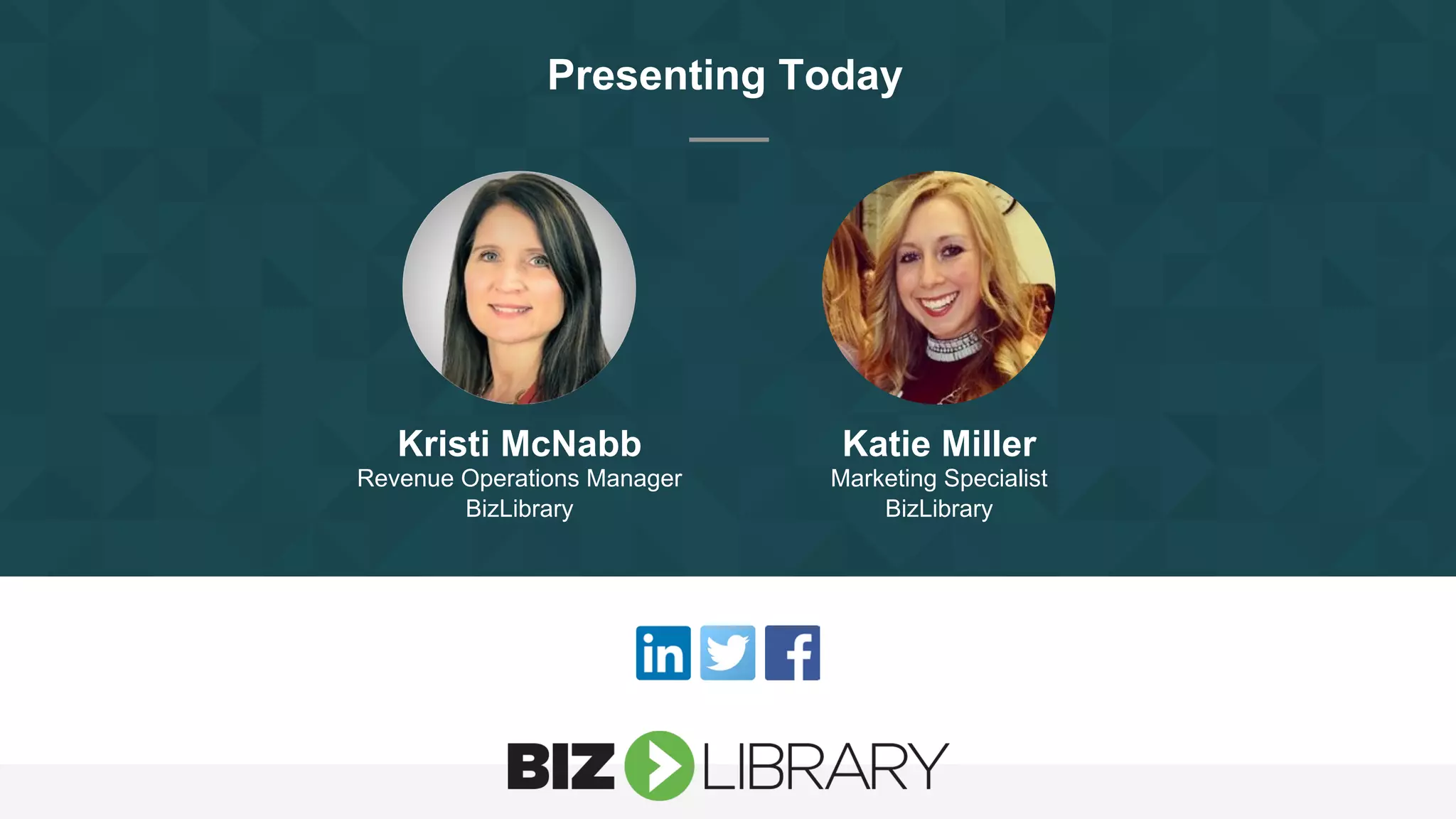
Presenting Today
Kristi McNabb
Revenue Operations Manager
BizLibrary
Katie Miller
Marketing Specialist
BizLibrary
www.bizlibrary.com/demo
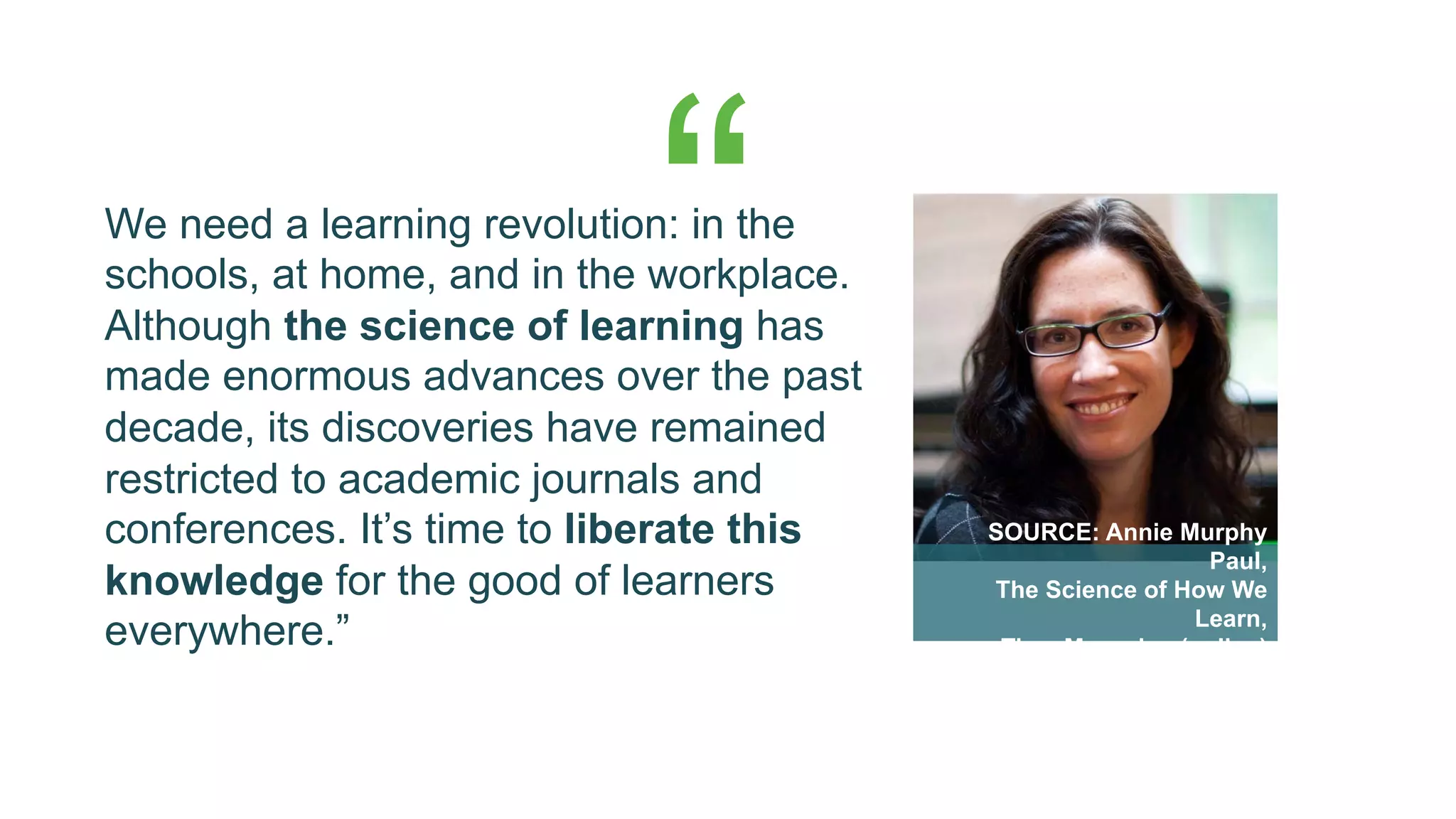
We need a learning revolution: in the
schools, at home, and in the workplace.
Although the science of learning has
made enormous advances over the past
decade, its discoveries have remained
restricted to academic journals and
conferences. It’s time to liberate this
knowledge for the good of learners
everywhere.”
SOURCE: Annie Murphy
Paul,
The Science of How We
Learn,
Time Magazine (online)
“
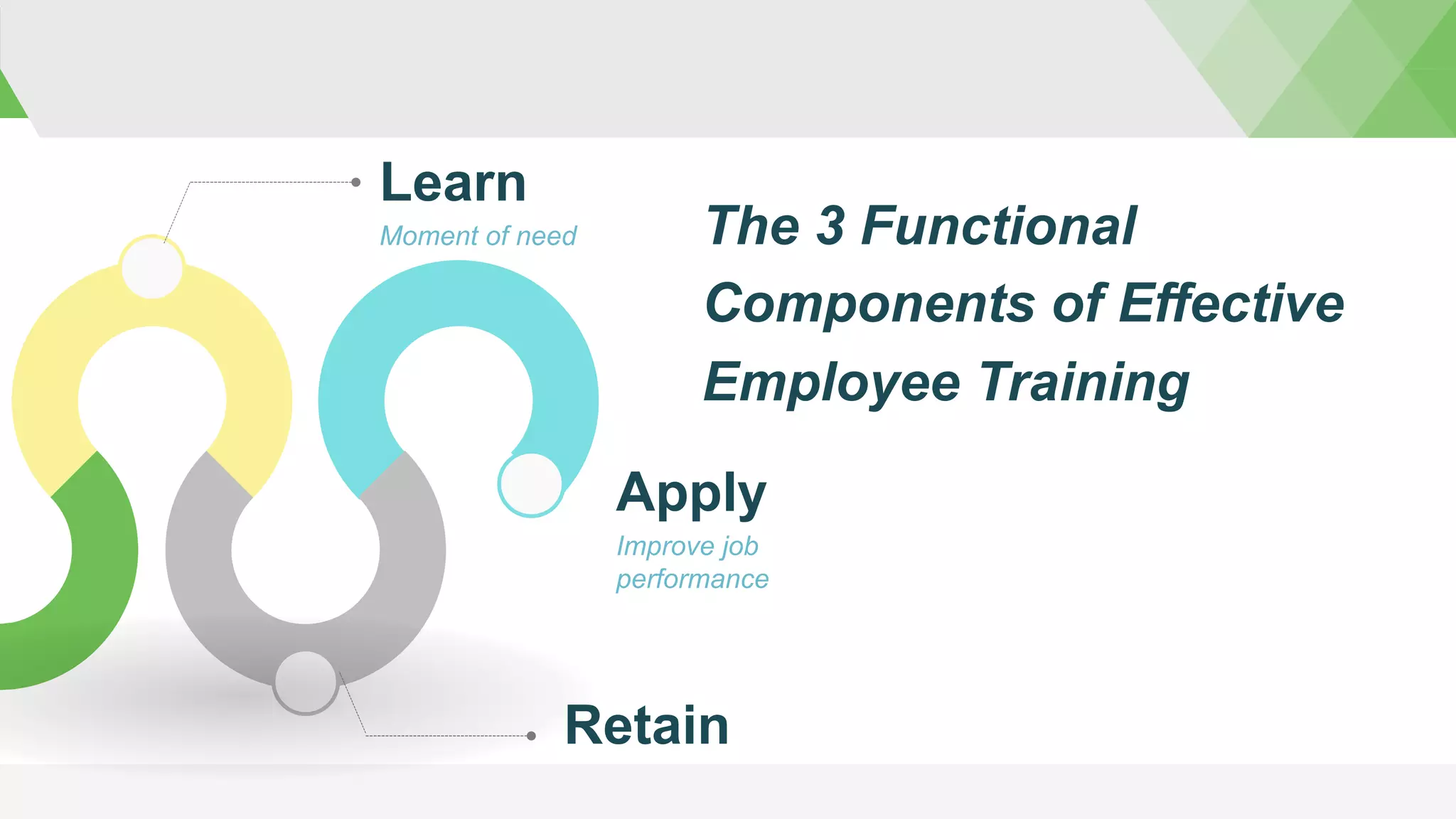
Learn
Moment of need
Apply
Improve job
performance
Retain
The 3 Functional
Components of Effective
Employee Training
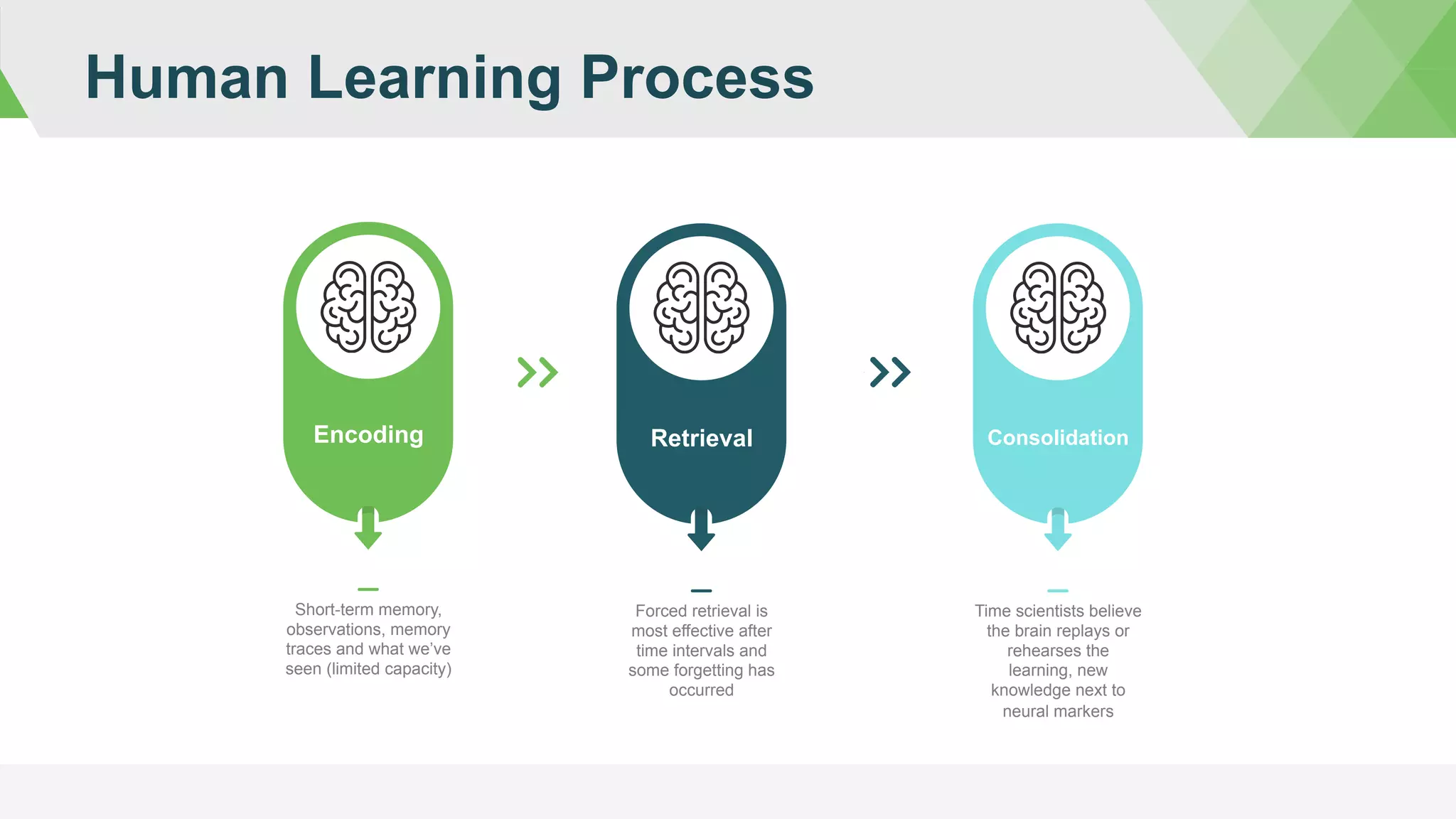
Human Learning Process
Encoding
Short-term memory,
observations, memory
traces and what we’ve
seen (limited capacity)
Retrieval
Forced retrieval is
most effective after
time intervals and
some forgetting has
occurred
Consolidation
Time scientists believe
the brain replays or
rehearses the
learning, new
knowledge next to
neural markers
The three elements cannot be separated…
though we try.
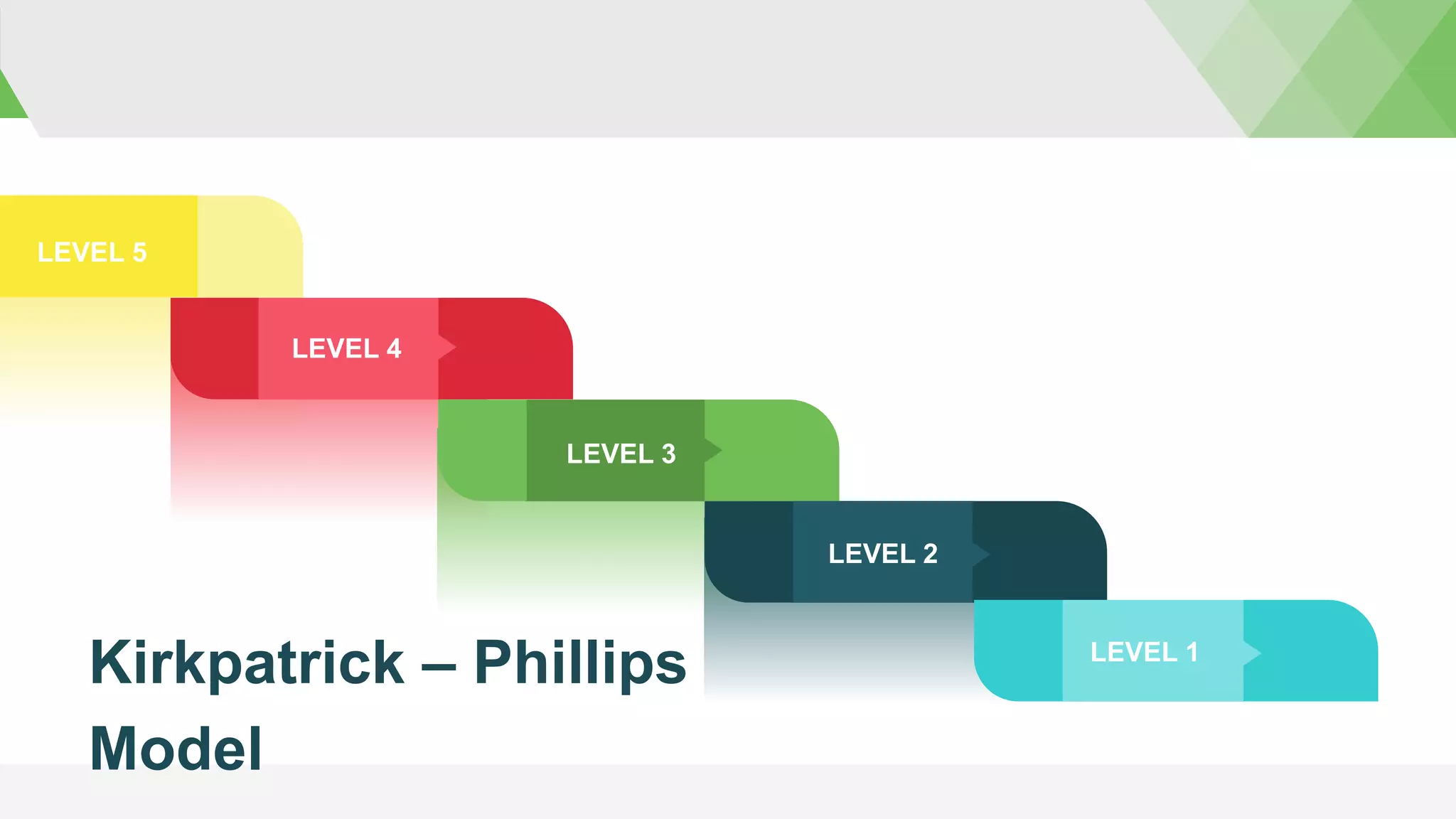
LEVEL 1
LEVEL 4
LEVEL 2
LEVEL 3
LEVEL 5
Kirkpatrick – Phillips
Model
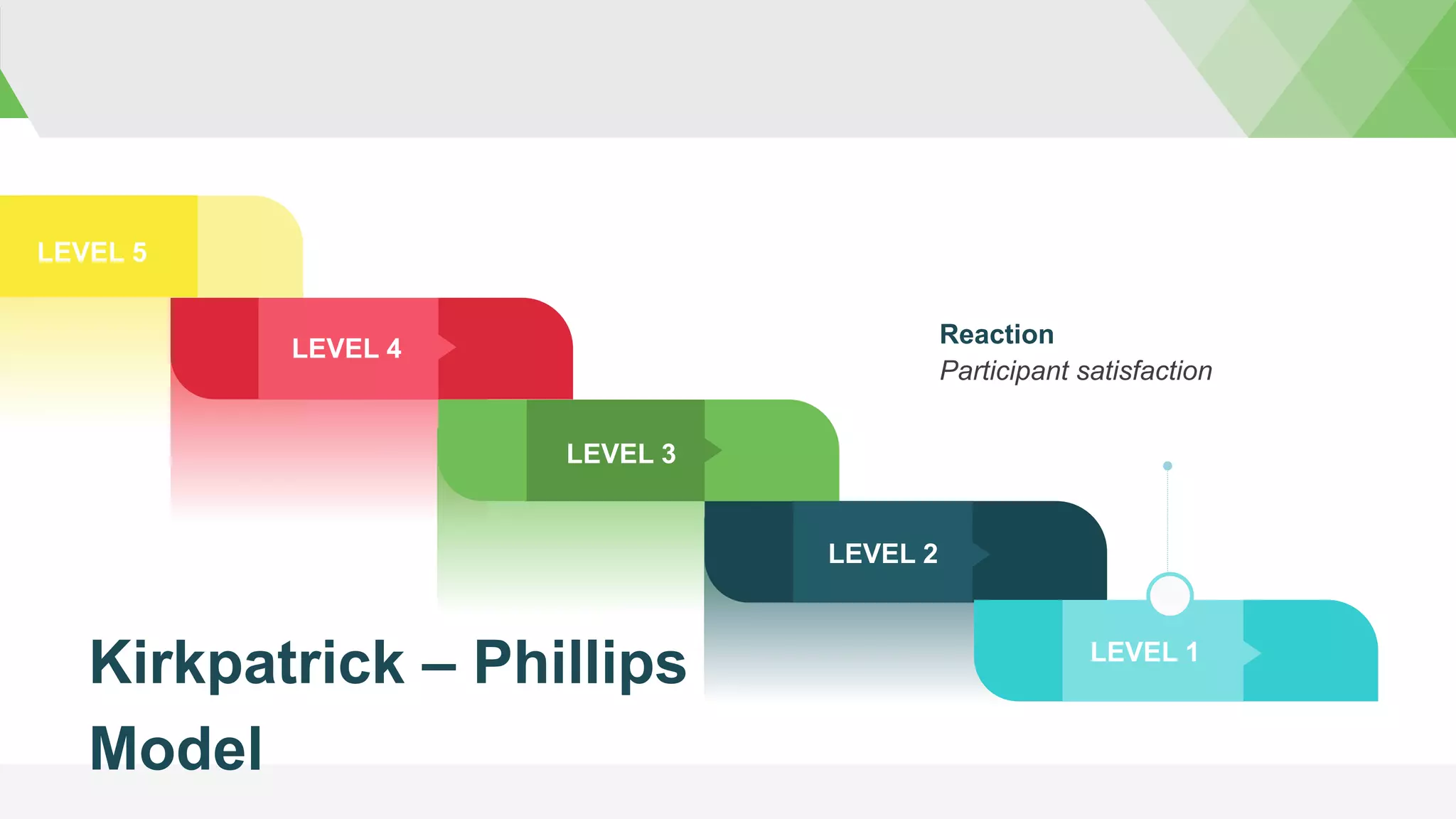
Kirkpatrick – Phillips
Model
LEVEL 1
LEVEL 4
LEVEL 2
LEVEL 3
LEVEL 5
Reaction
Participant satisfaction
Kirkpatrick – Phillips
Model
LEVEL 1
LEVEL 4
LEVEL 2
LEVEL 3
LEVEL 5
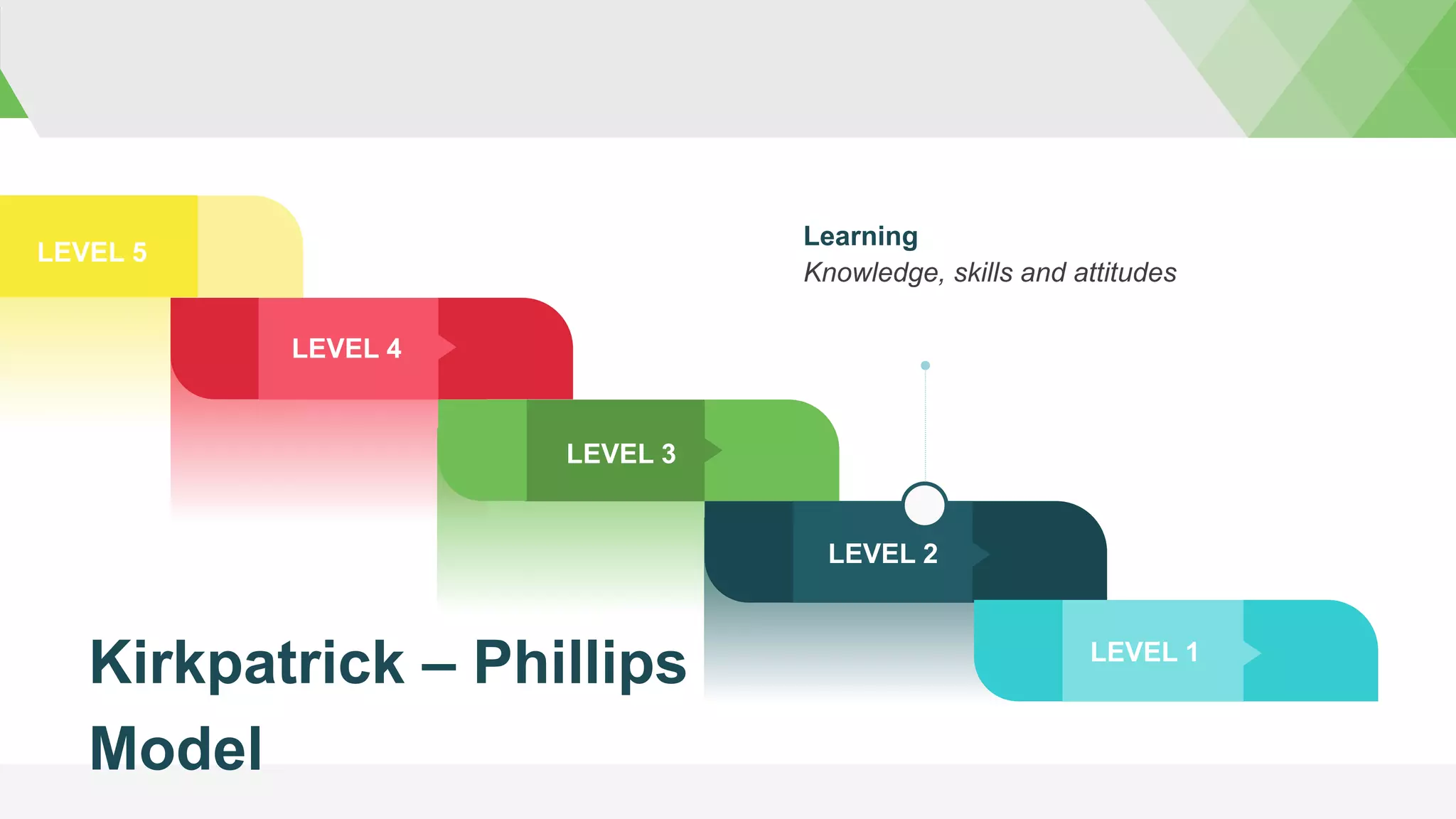
Learning
Knowledge, skills and attitudes
Kirkpatrick – Phillips
Model
LEVEL 1
LEVEL 4
LEVEL 2
LEVEL 3
LEVEL 5
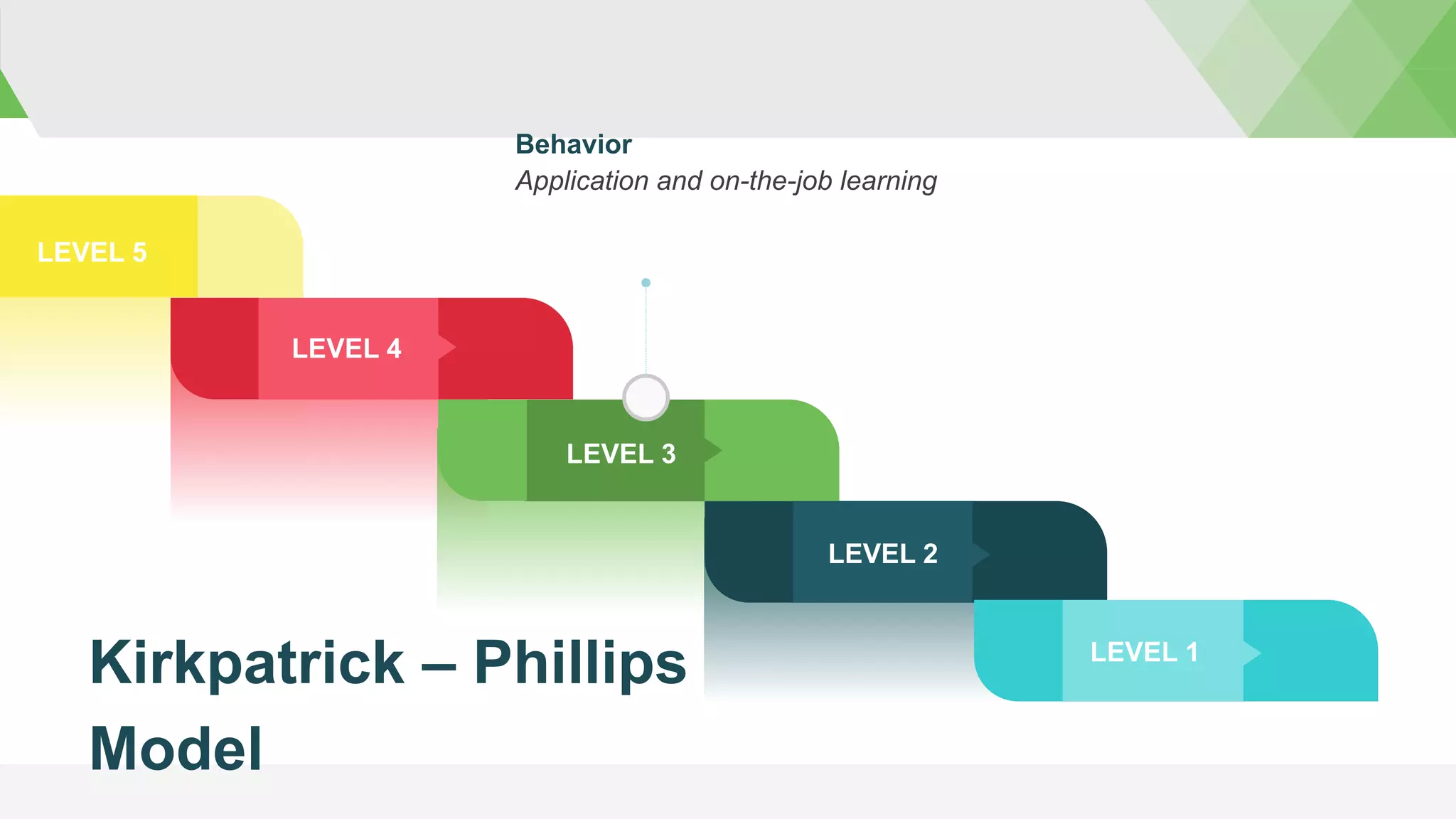
Behavior
Application and on-the-job learning
Kirkpatrick – Phillips
Model
LEVEL 1
LEVEL 4
LEVEL 2
LEVEL 3
LEVEL 5
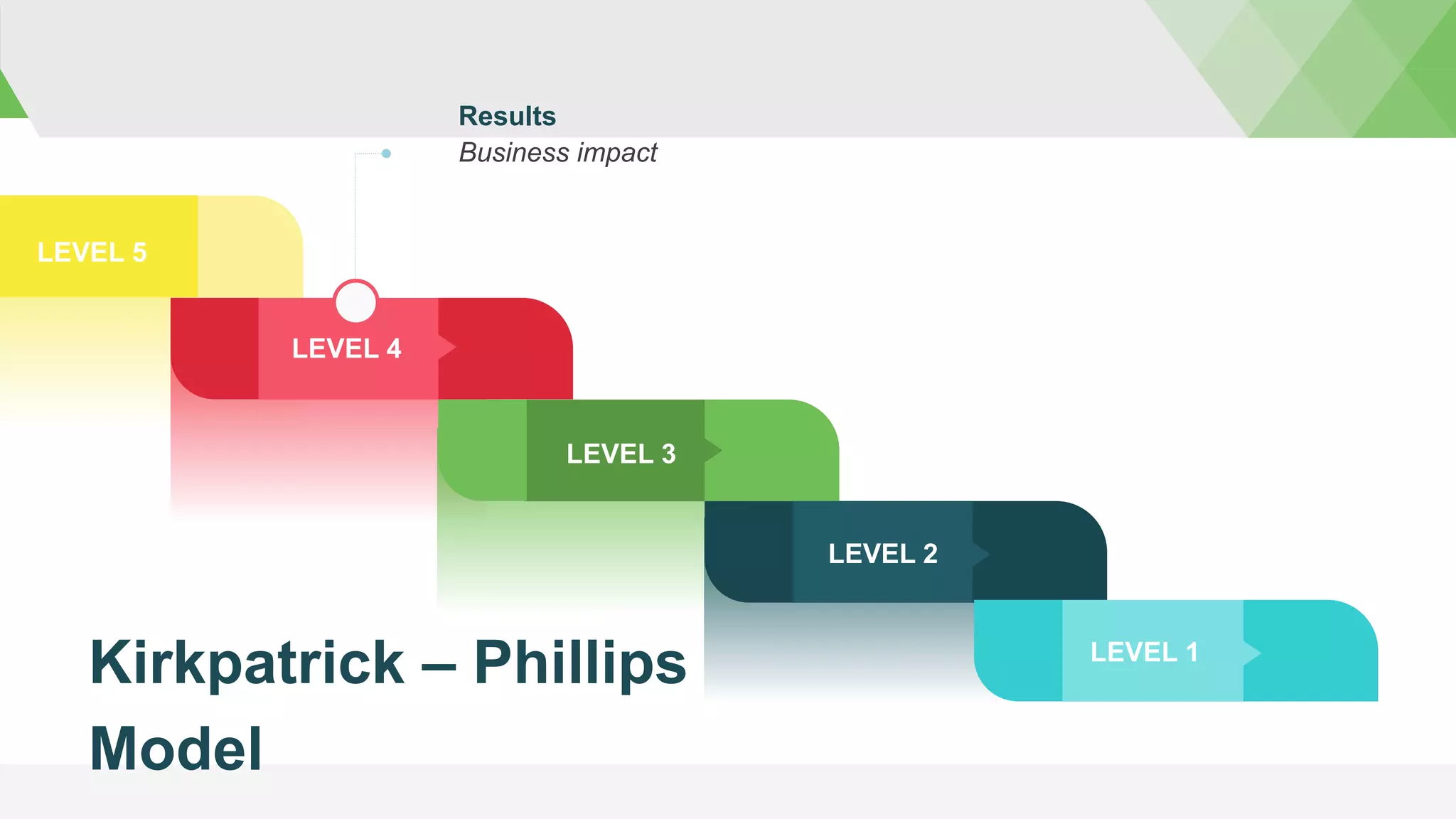
Results
Business impact
Kirkpatrick – Phillips
Model
LEVEL 1
LEVEL 4
LEVEL 2
LEVEL 3
LEVEL 5
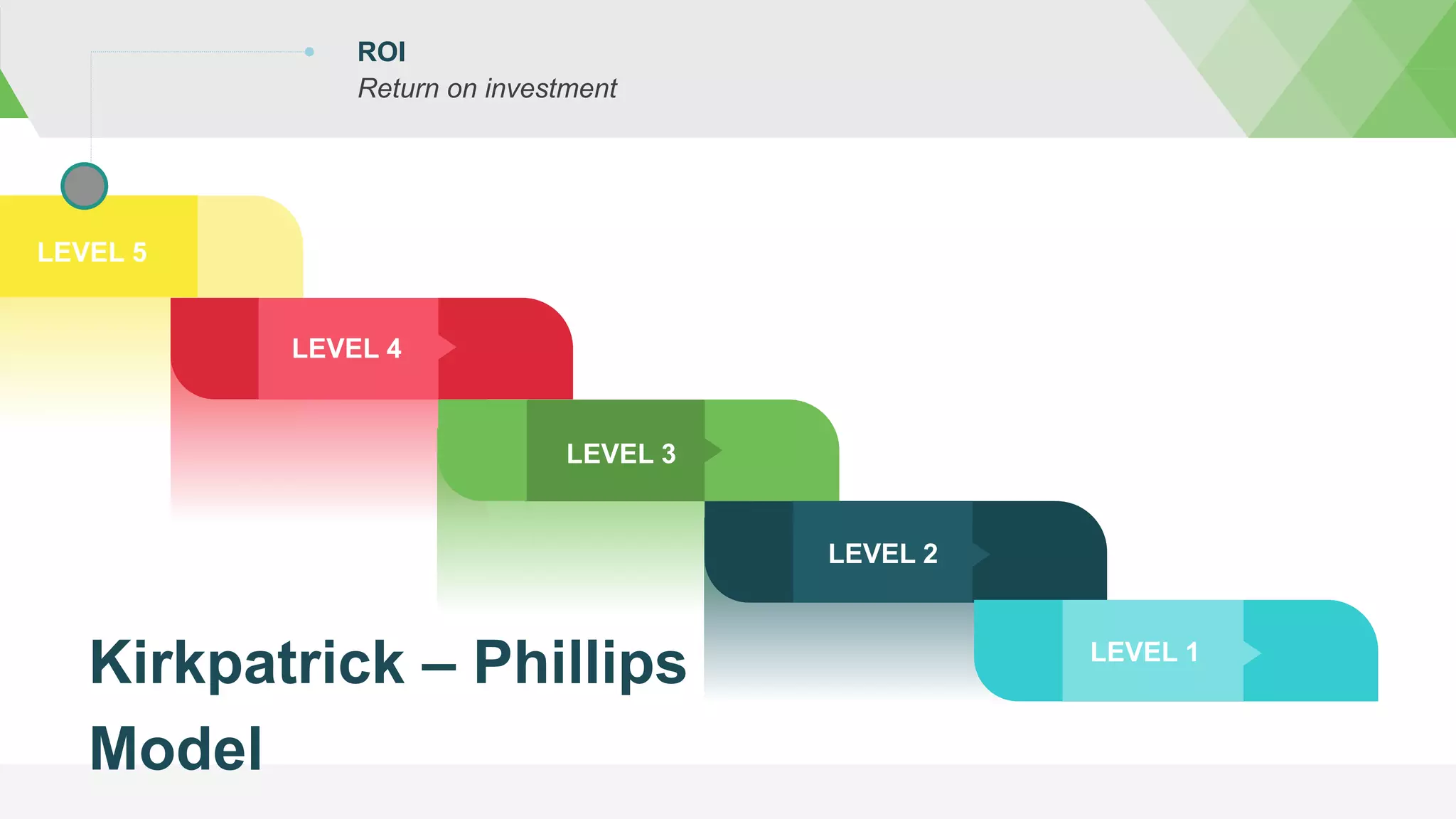
ROI
Return on investment
ROI + Business Benefit Require Application
That’s why the Kirkpatrick-Phillips Model still
matters…
Employees must learn . . .
Employees must retain what they’ve learned
Employees must apply what they’ve learned to improve performance
Simple, right? Should be, but too many organizations struggle with it.
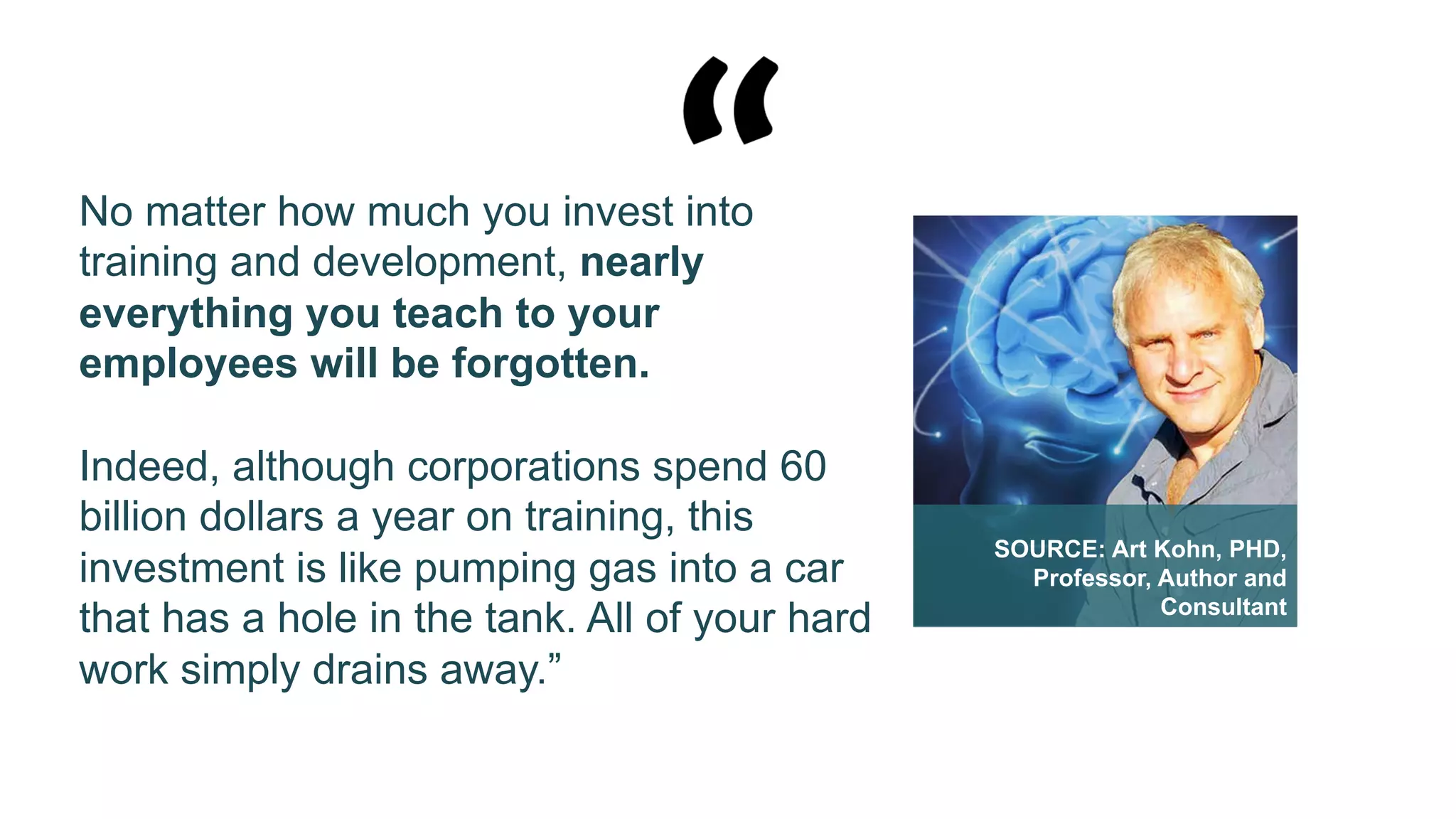
No matter how much you invest into
training and development, nearly
everything you teach to your
employees will be forgotten.
Indeed, although corporations spend 60
billion dollars a year on training, this
investment is like pumping gas into a car
that has a hole in the tank. All of your hard
work simply drains away.”
SOURCE: Art Kohn, PHD,
Professor, Author and
Consultant
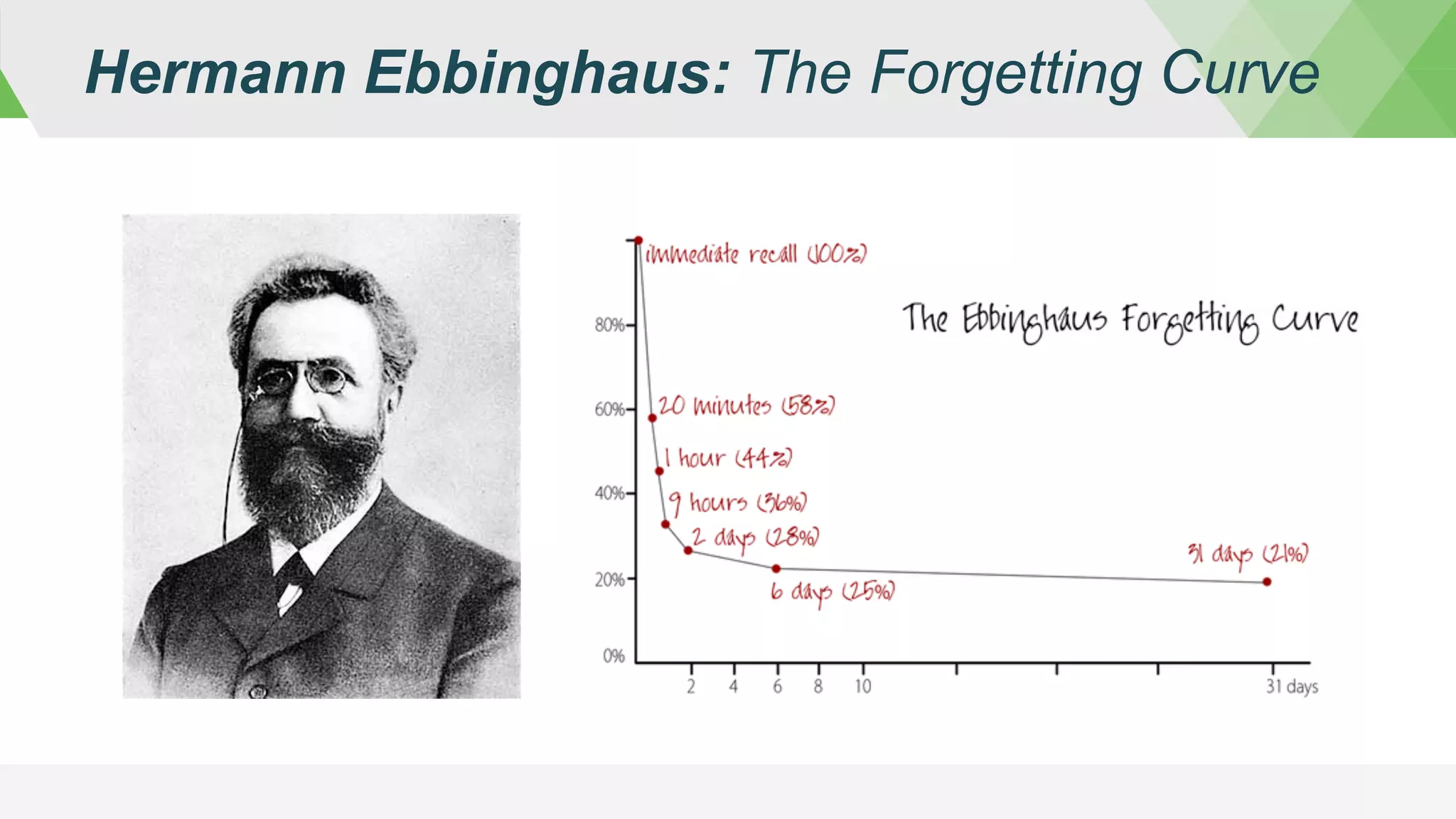
Hermann Ebbinghaus: The Forgetting Curve
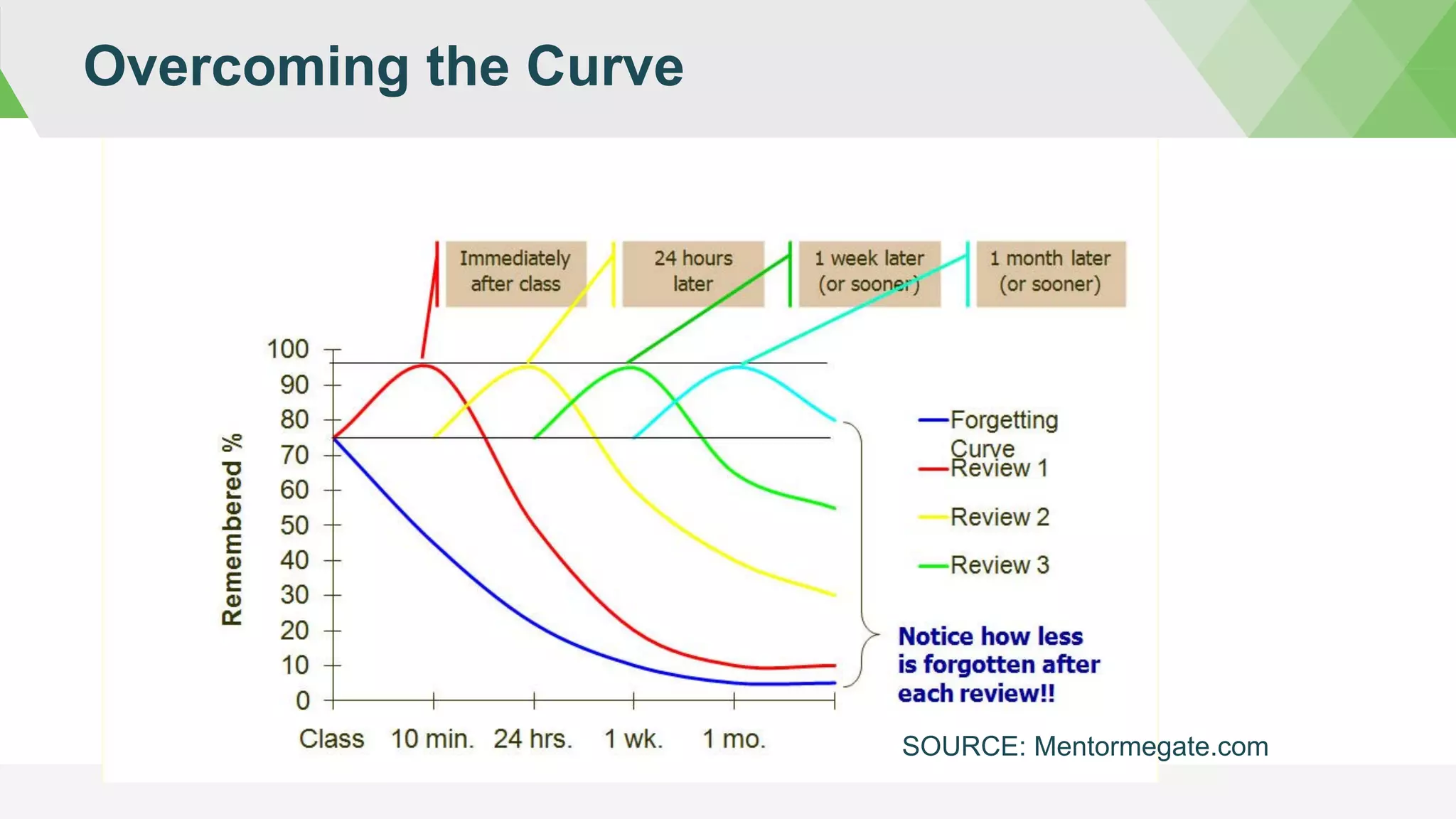
Overcoming the Curve
SOURCE: Mentormegate.com
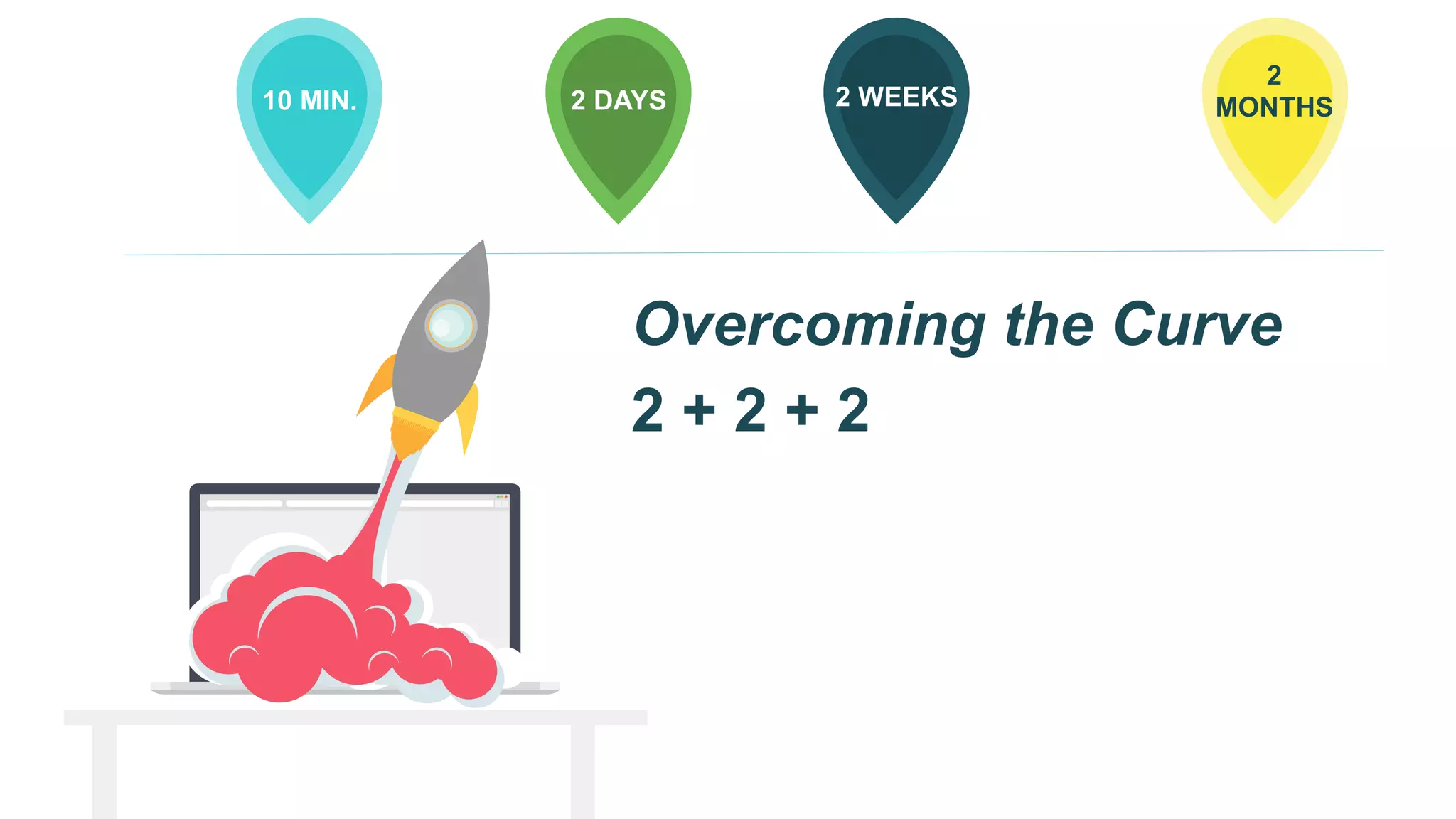
10 MIN. 2 DAYS 2 WEEKS
2
MONTHS
Overcoming the Curve
2 + 2 + 2
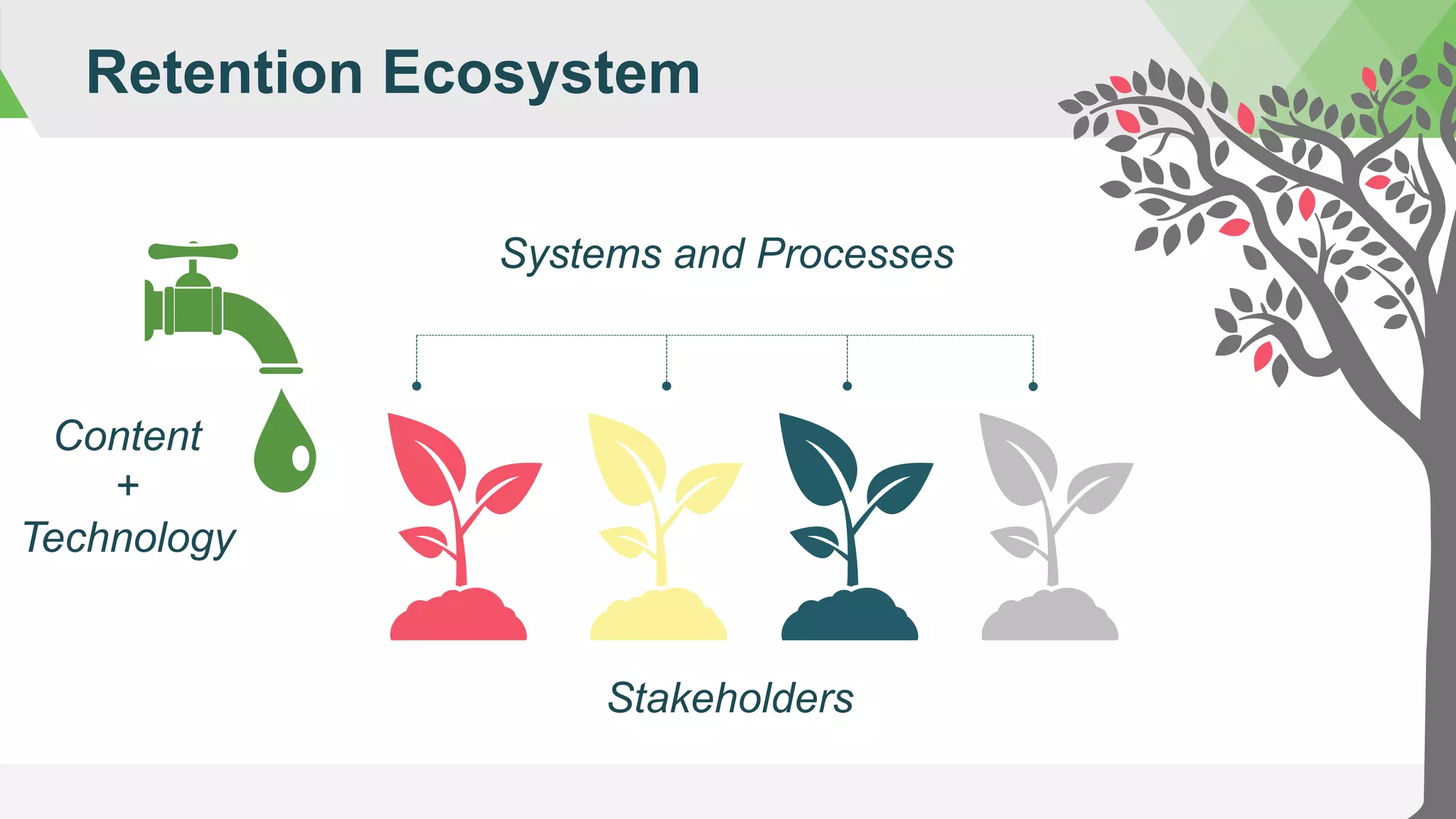
Retention Ecosystem
Content
+
Technology
Systems and Processes
Stakeholders
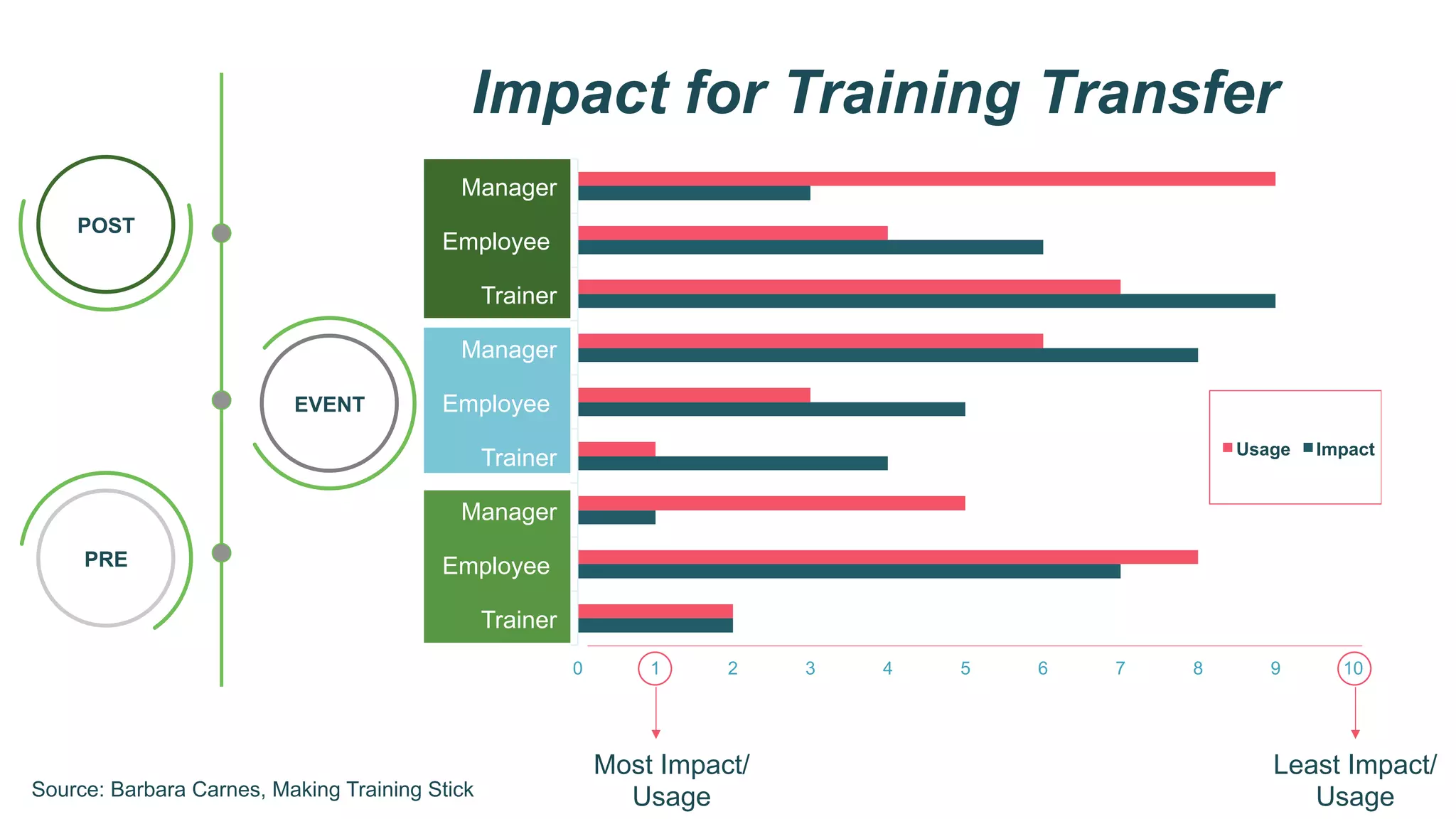
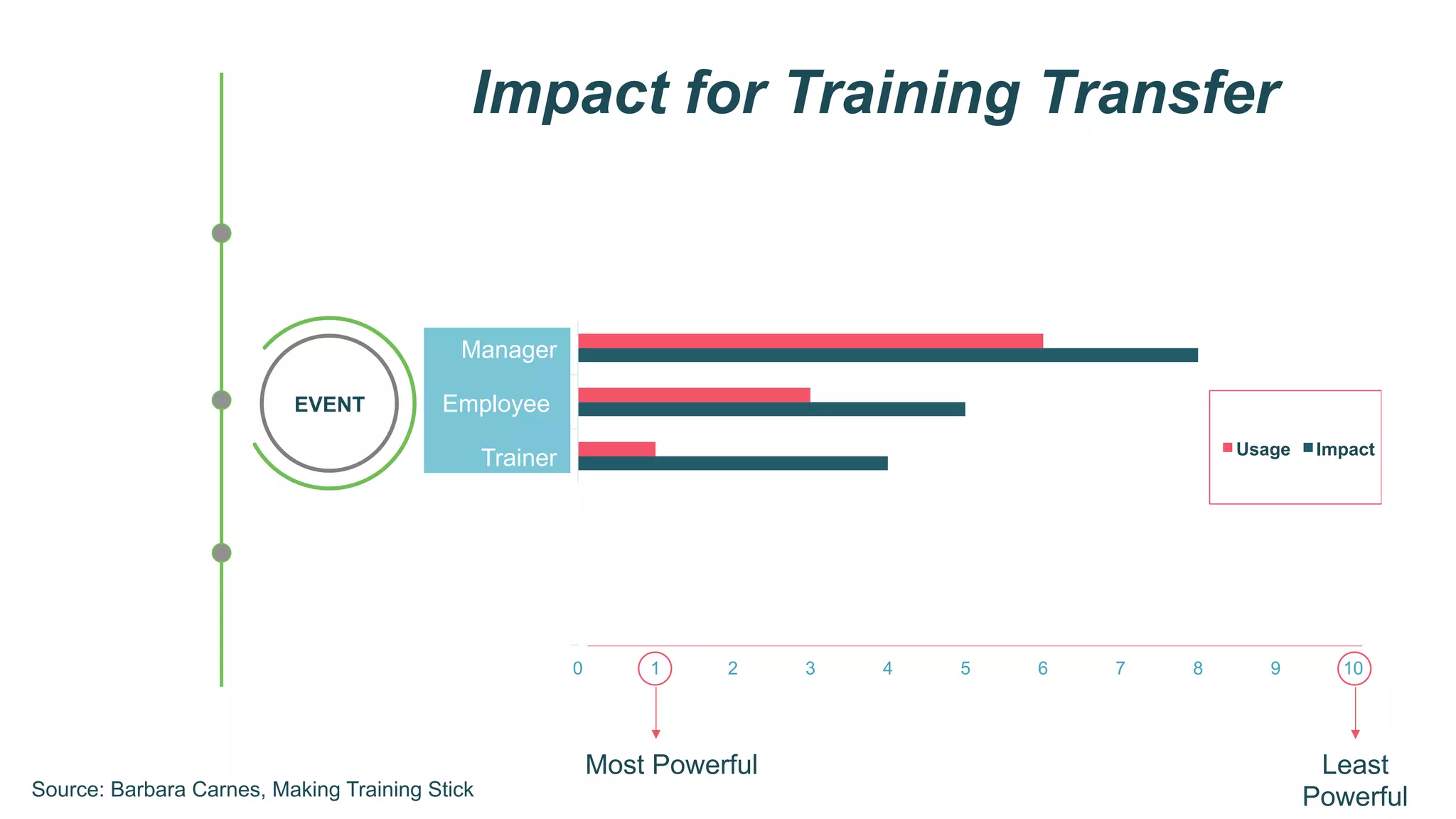
0 1 2 3 4 5 6 7 8 9 10
Trainer
Employee
Manager
Trainer
Employee
Manager
Trainer
Employee
Manager
Usage Impact
POST
EVENT
PRE
Impact for Training Transfer
Most Impact/
Usage
Least Impact/
UsageSource: Barbara Carnes, Making Training Stick
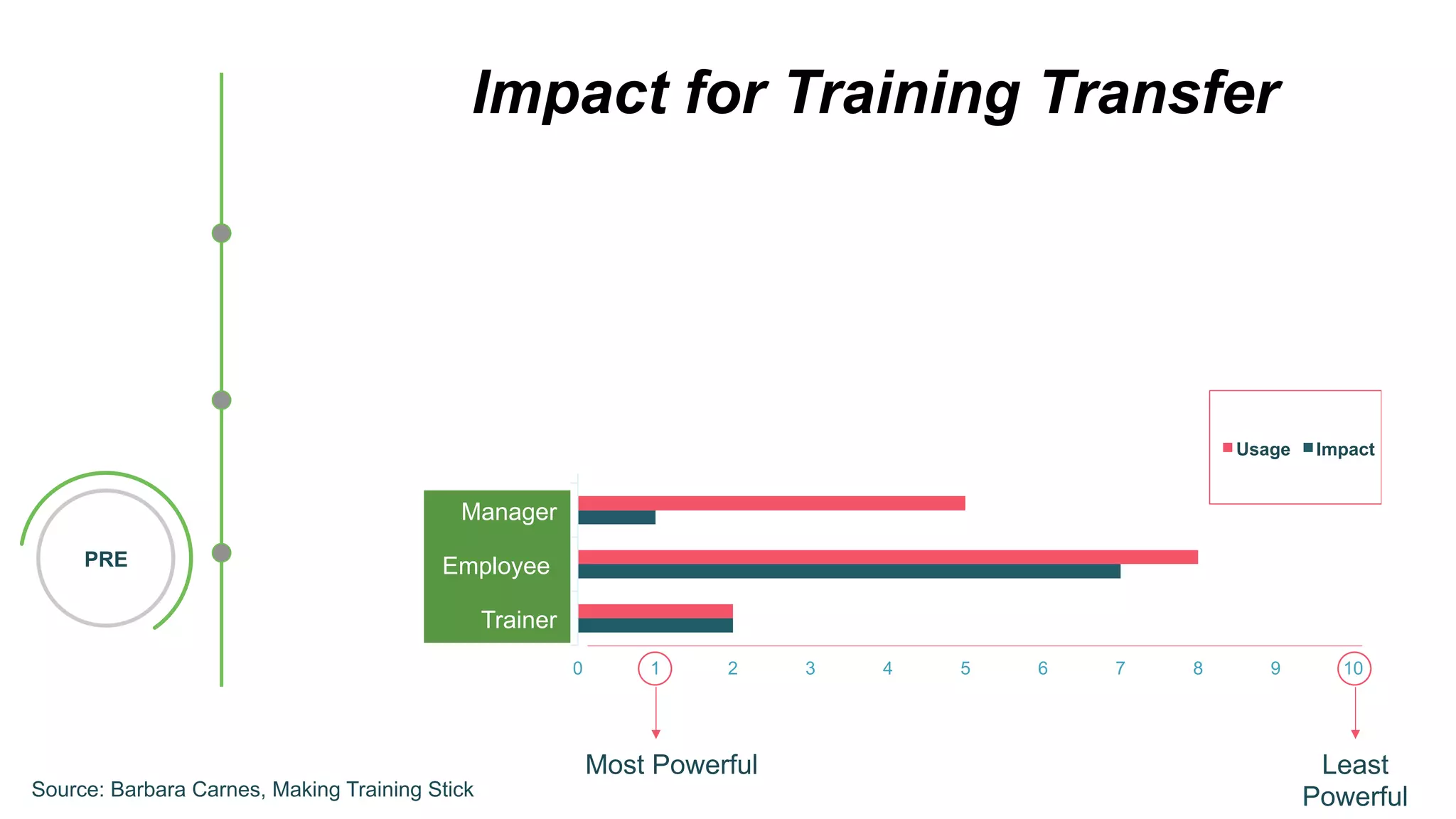
0 1 2 3 4 5 6 7 8 9 10
Trainer
Employee
Manager
Trainer
Employee
Manager
Trainer
Employee
Manager
Usage Impact
PRE
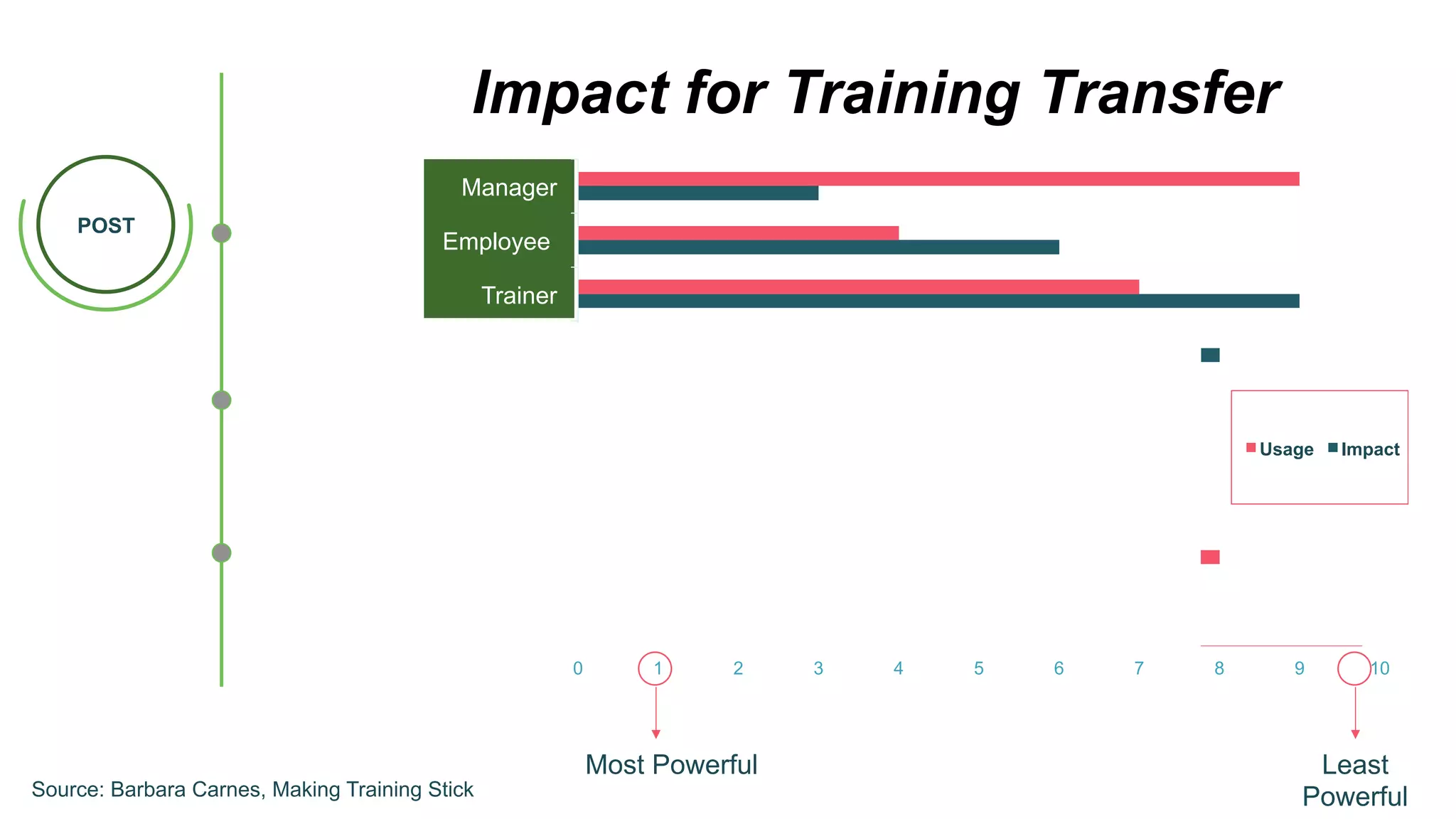
Impact for Training Transfer
Most Powerful Least
PowerfulSource: Barbara Carnes, Making Training Stick
0 1 2 3 4 5 6 7 8 9 10
Trainer
Employee
Manager
Trainer
Employee
Manager
Trainer
Employee
Manager
Usage Impact
EVENT
Impact for Training Transfer
Most Powerful Least
PowerfulSource: Barbara Carnes, Making Training Stick
0 1 2 3 4 5 6 7 8 9 10
Trainer
Employee
Manager
Trainer
Employee
Manager
Trainer
Employee
Manager
Usage Impact
POST
Impact for Training Transfer
Most Powerful Least
PowerfulSource: Barbara Carnes, Making Training Stick
0 1 2 3 4 5 6 7 8 9 10
Trainer
Employee
Manager
Trainer
Employee
Manager
Trainer
Employee
Manager
Use /
Frequency
Power /
Impact
POST
EVENT
PRE
Impact for Training Transfer
Most Powerful Least
Powerful
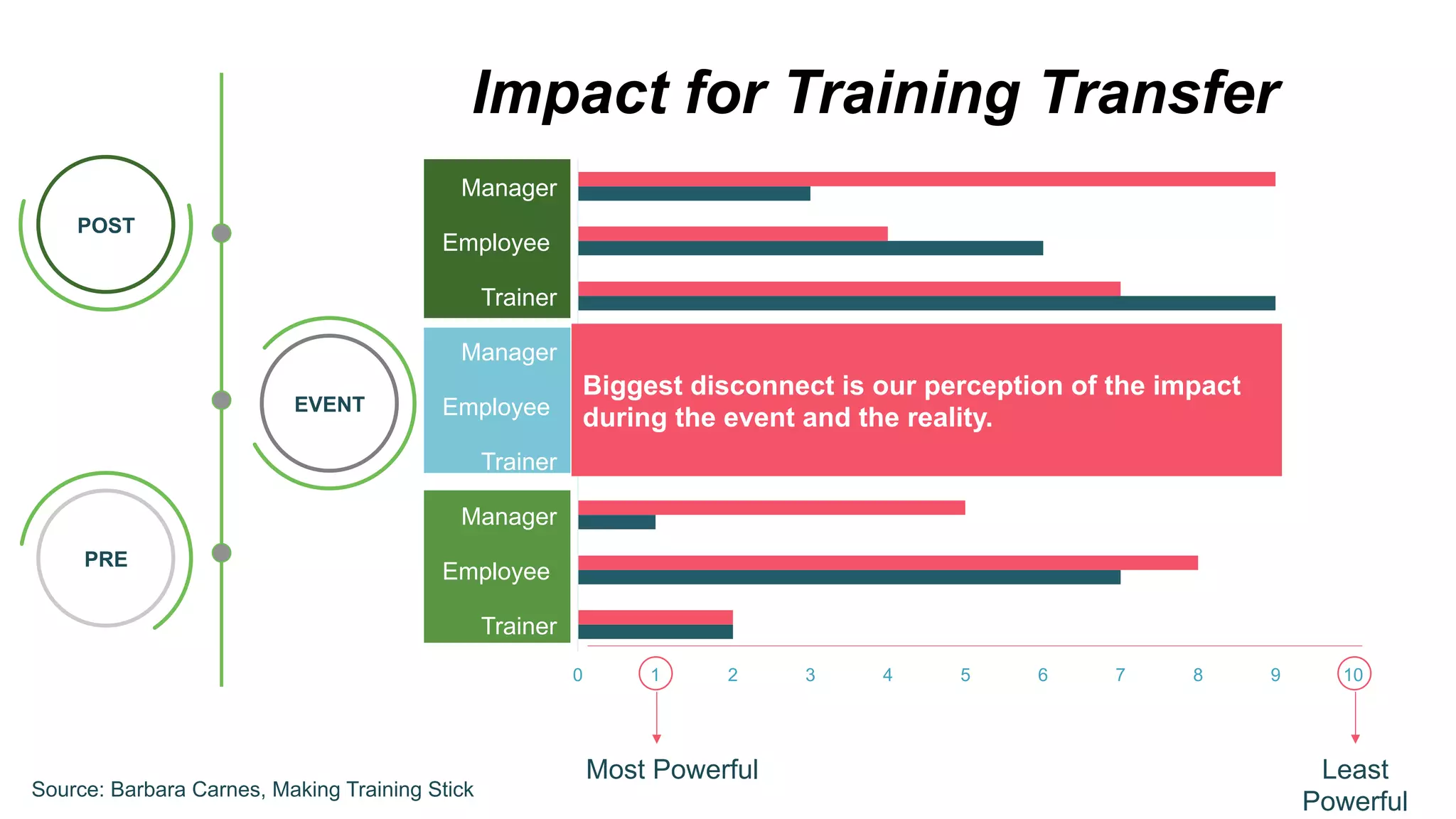
Biggest disconnect is our perception of the impact
during the event and the reality.
Source: Barbara Carnes, Making Training Stick
0 1 2 3 4 5 6 7 8 9 10
Trainer
Employee
Manager
Trainer
Employee
Manager
Trainer
Employee
Manager
U
s
e
/
POST
EVENT
PRE
Impact for Training Transfer
Most Powerful Least
Powerful
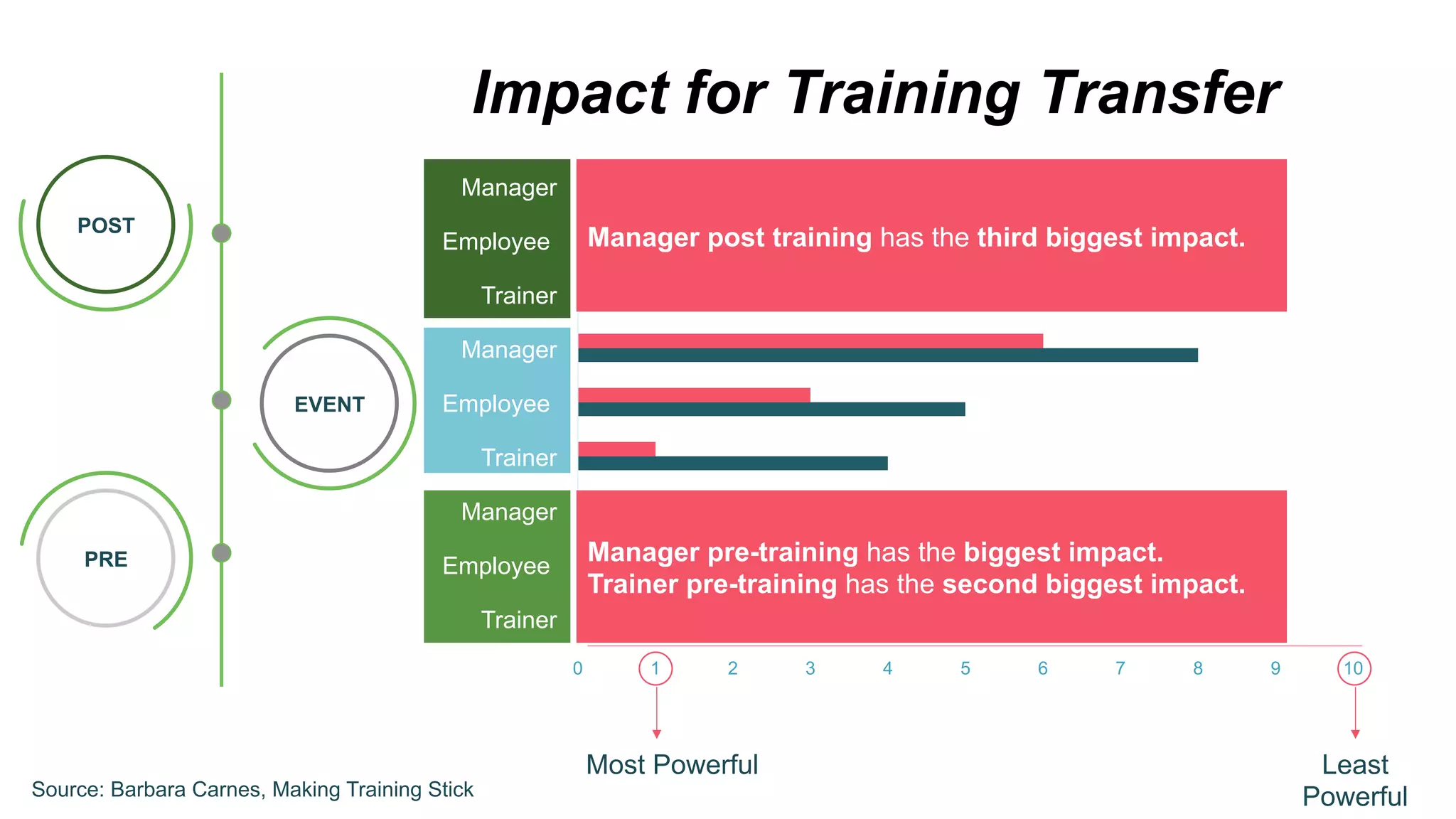
Manager pre-training has the biggest impact.
Trainer pre-training has the second biggest impact.
Manager post training has the third biggest impact.
Source: Barbara Carnes, Making Training Stick
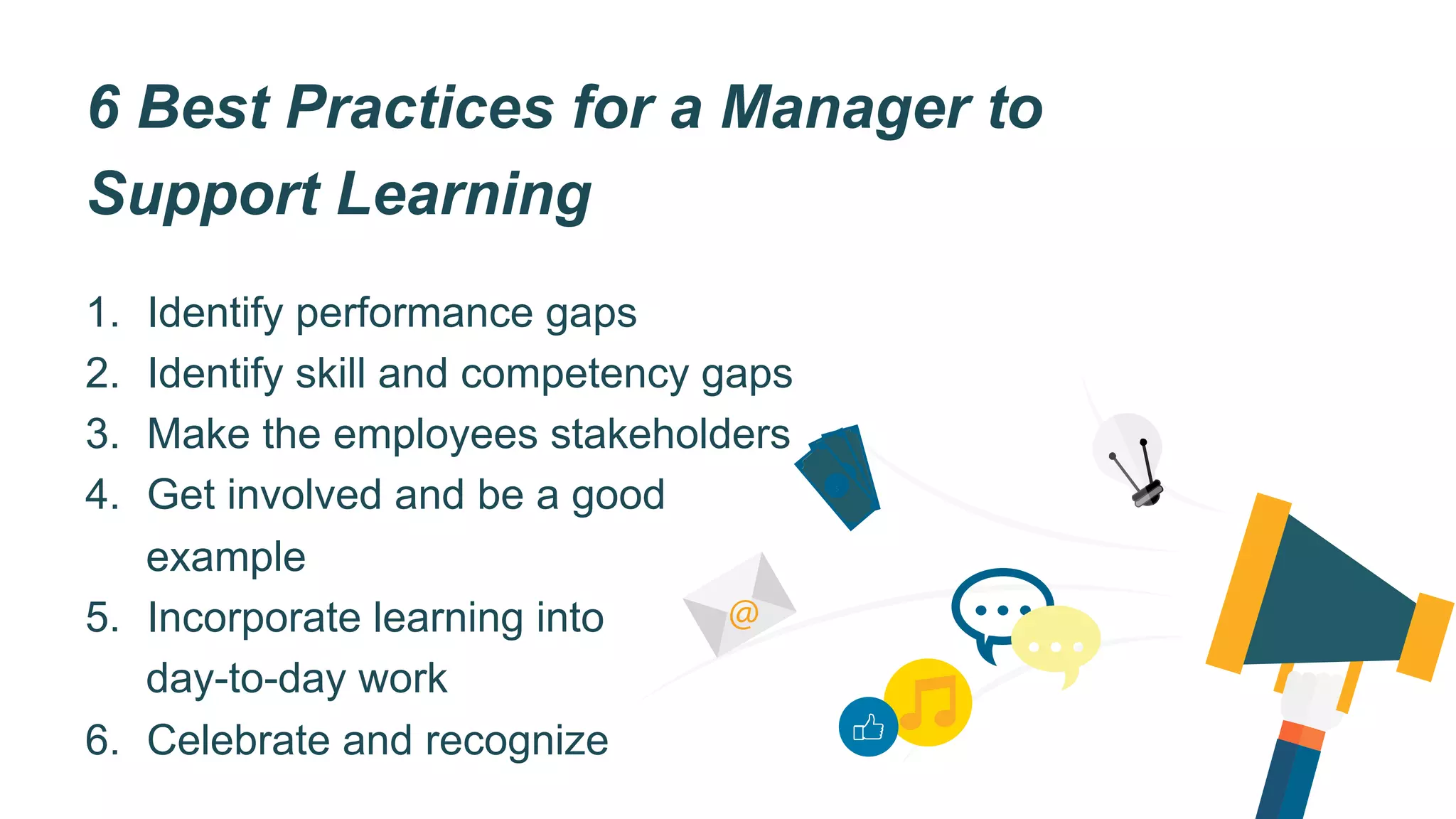
6 Best Practices for a Manager to
Support Learning
1.  Identify performance gaps
2.  Identify skill and competency gaps
3.  Make the employees stakeholders
4.  Get involved and be a good
example
5.  Incorporate learning into
day-to-day work
6.  Celebrate and recognize
$
$
$
@
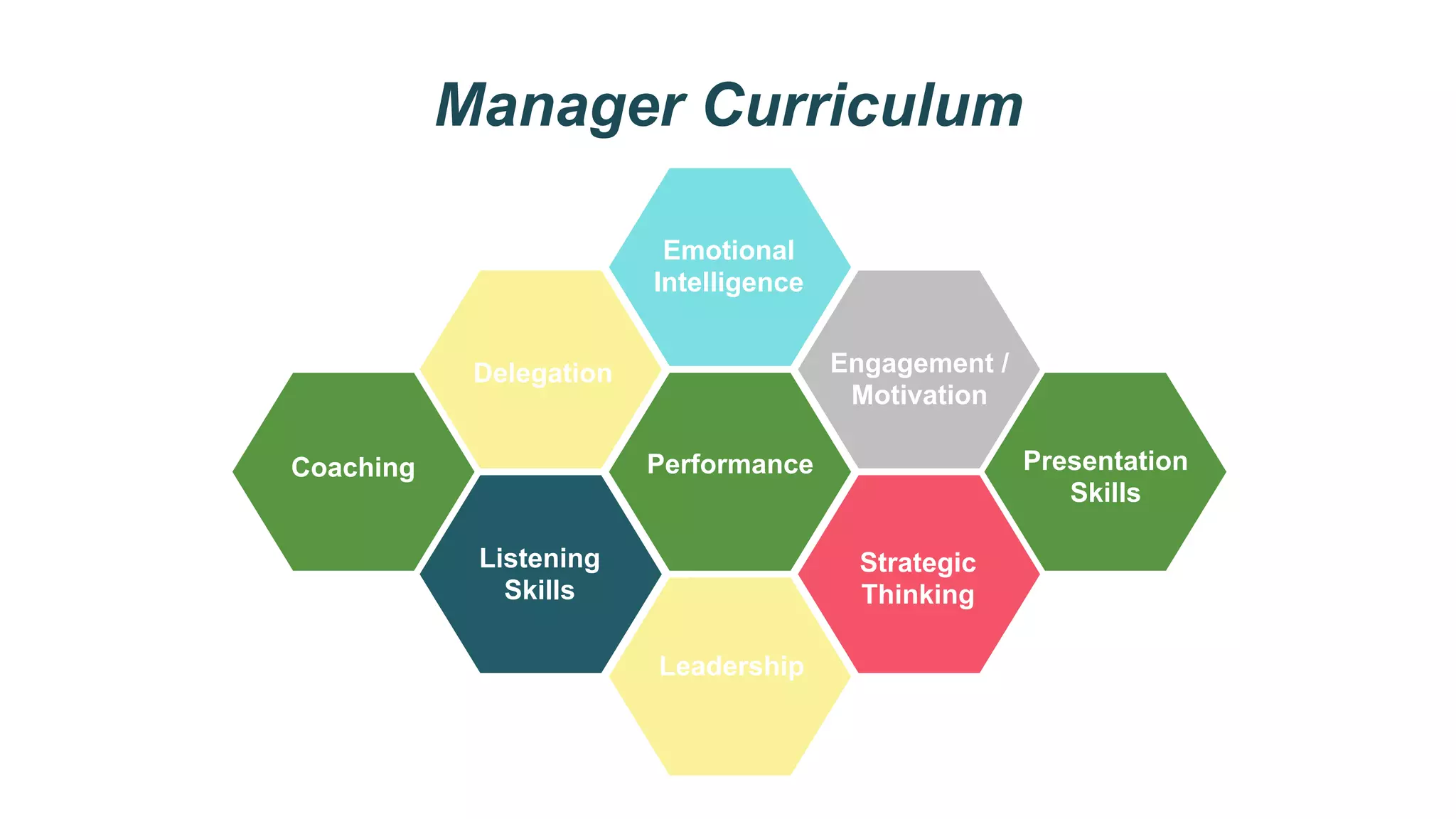
Manager Curriculum
Performance
Emotional
Intelligence
Delegation Engagement /
Motivation
Listening
Skills
Strategic
Thinking
Coaching Presentation
Skills
Leadership
10 MIN. 2 DAYS 2 WEEKS
2
MONTHS
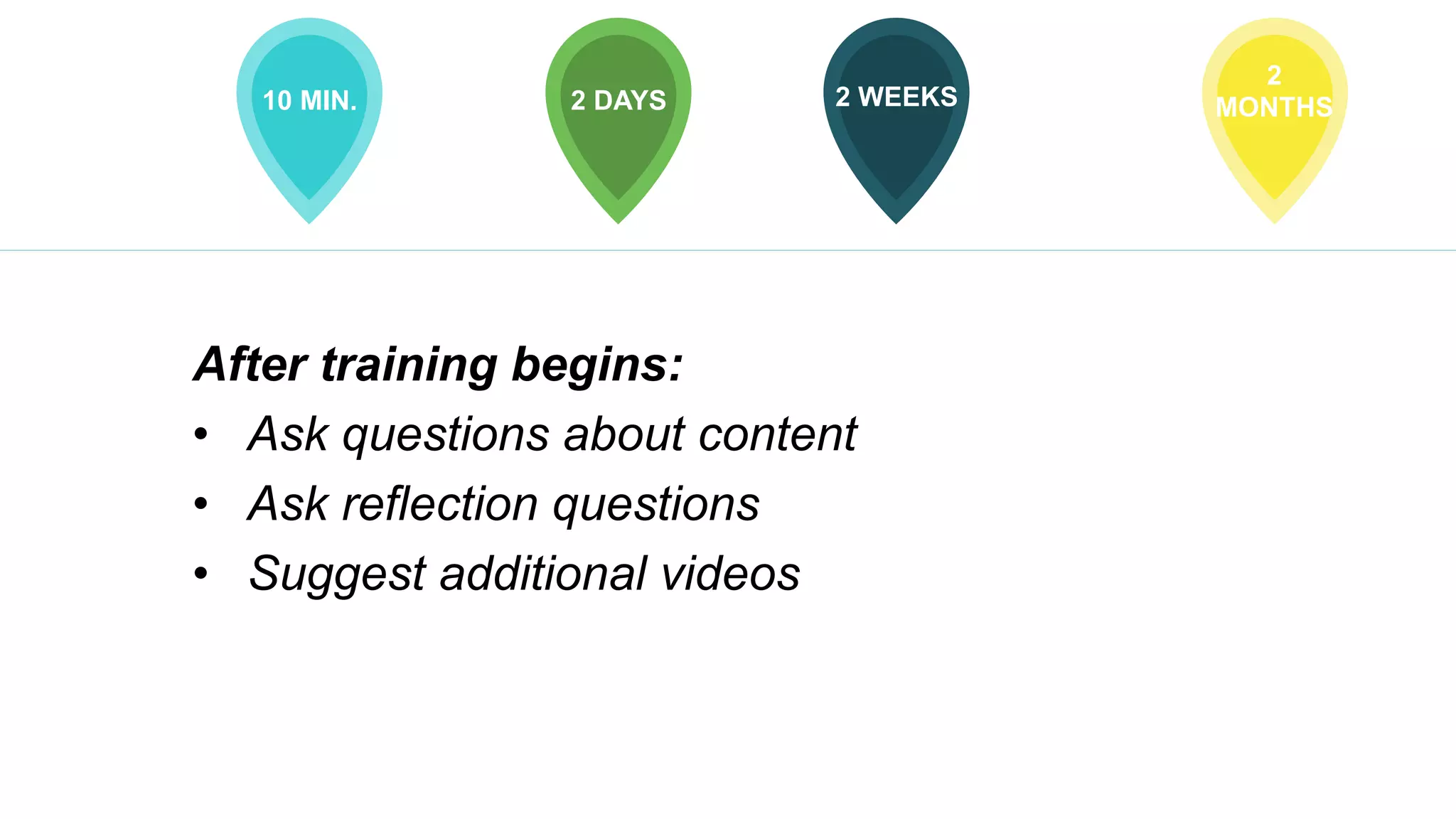
After training begins:
•  Ask questions about content
•  Ask reflection questions
•  Suggest additional videos
Sample Reflection Question
According to the webinar materials so
far, how might you involve your
managers in the planning of your next
employee training effort?
10 MIN. 2 DAYS 2 WEEKS
2
MONTHS
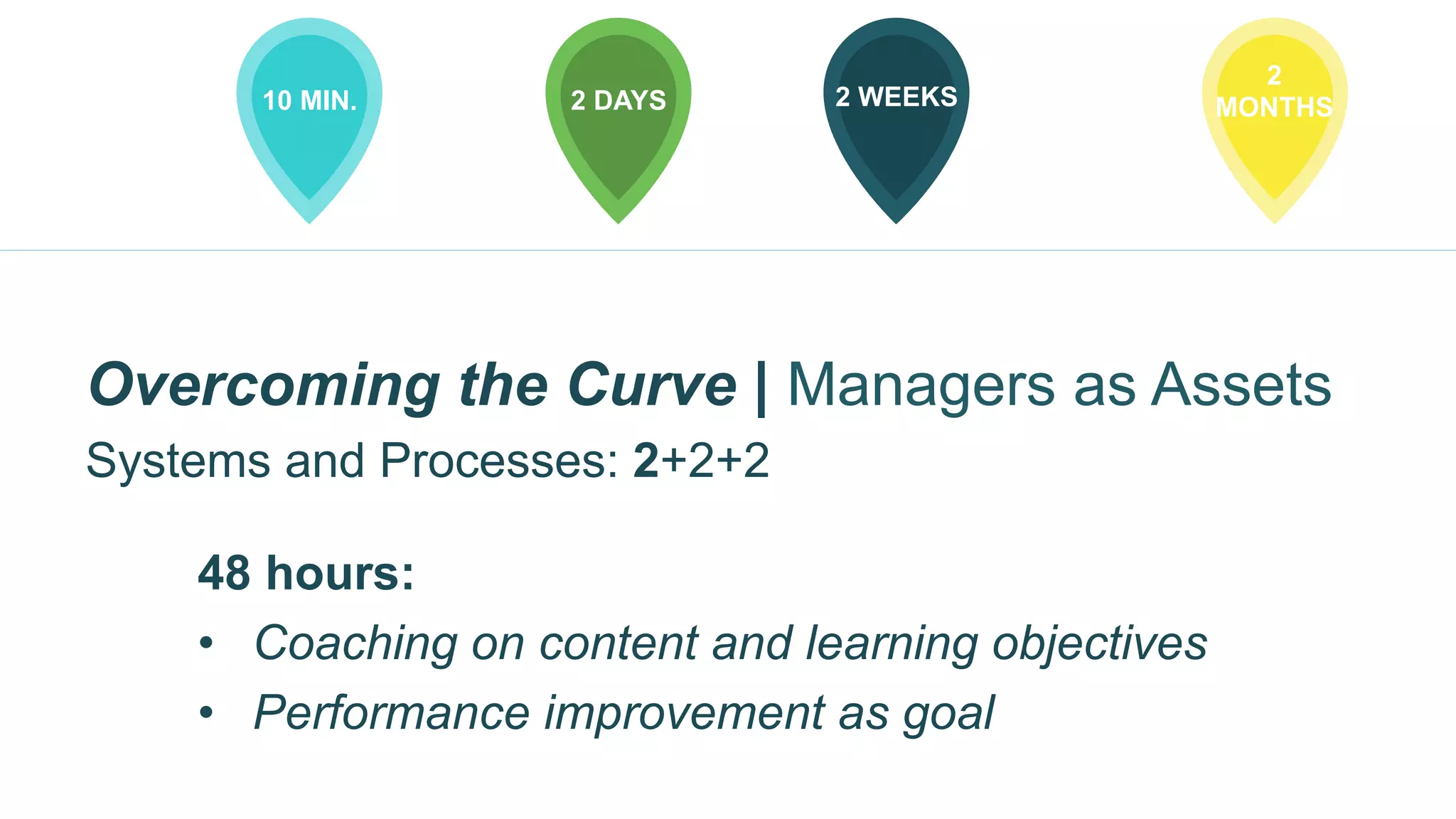
48 hours:
•  Coaching on content and learning objectives
•  Performance improvement as goal
Overcoming the Curve | Managers as Assets
Systems and Processes: 2+2+2
Poll Question
In your organization, how do your
managers support employees in the
application of new things to their
jobs?
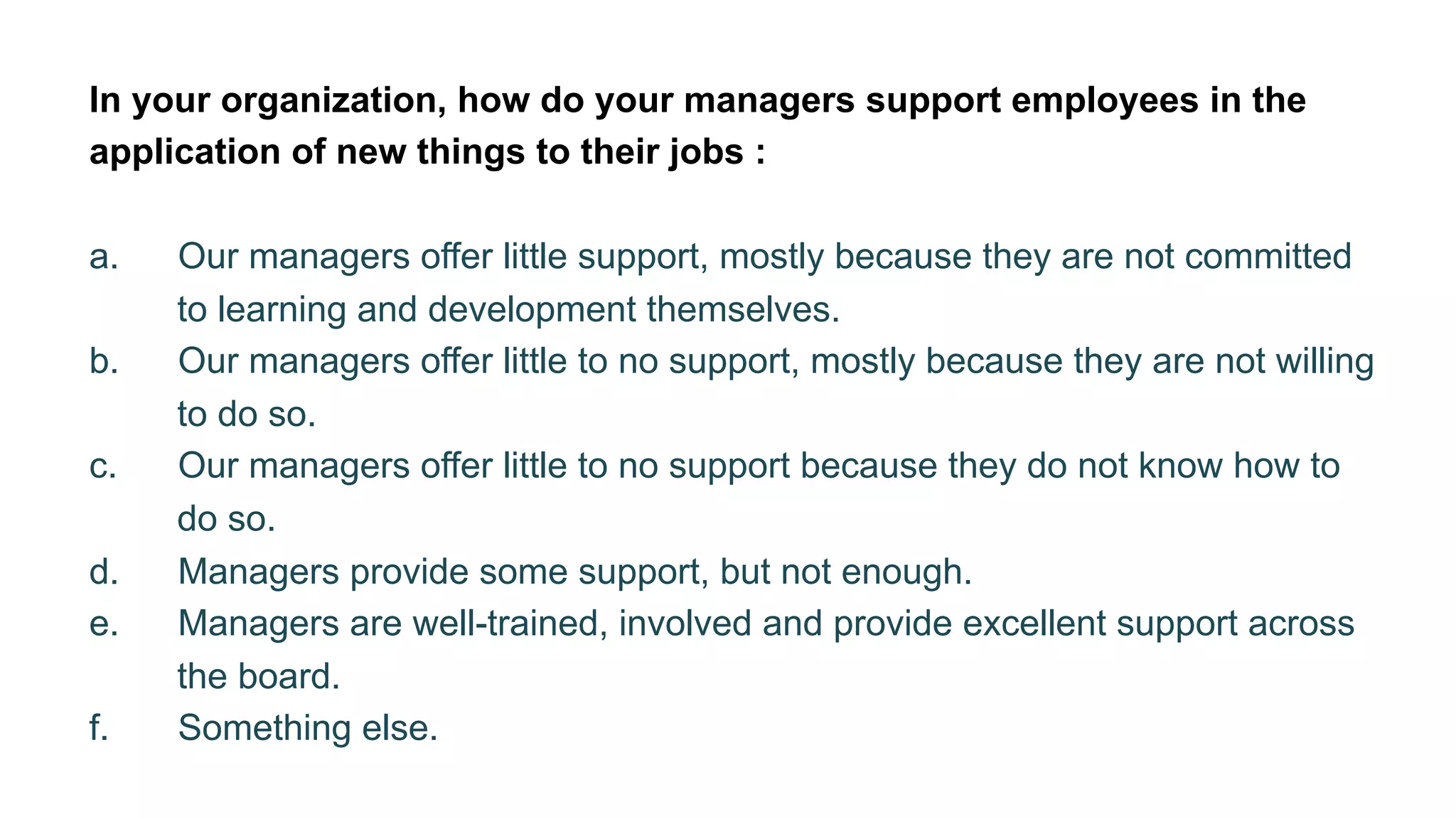
In your organization, how do your managers support employees in the
application of new things to their jobs :
a.  Our managers offer little support, mostly because they are not committed
to learning and development themselves.
b.  Our managers offer little to no support, mostly because they are not willing
to do so.
c.  Our managers offer little to no support because they do not know how to
do so.
d.  Managers provide some support, but not enough.
e.  Managers are well-trained, involved and provide excellent support across
the board.
f.  Something else.
10 MIN. 2 DAYS 2 WEEKS
2
MONTHS
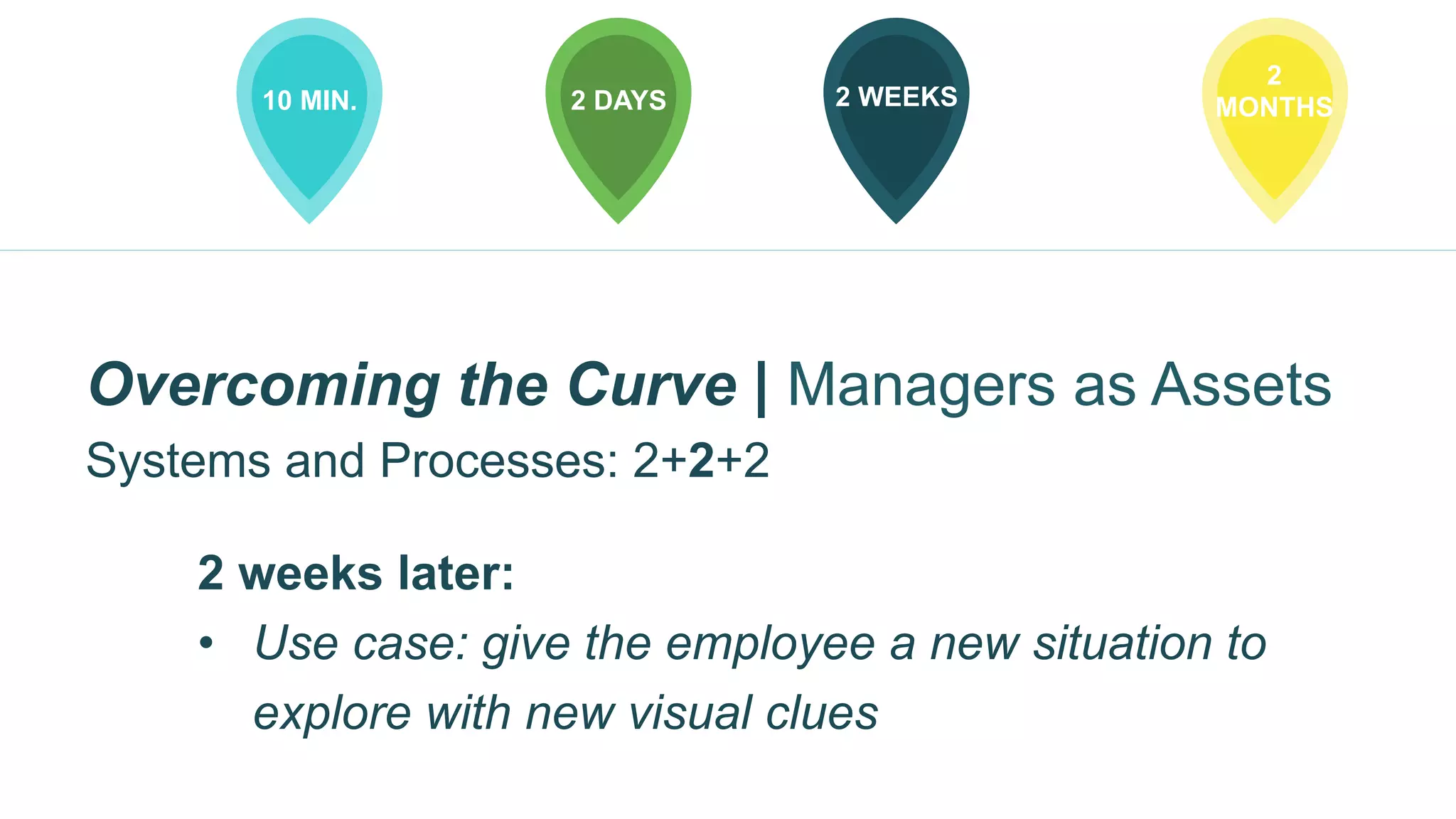
2 weeks later:
•  Use case: give the employee a new situation to
explore with new visual clues
Overcoming the Curve | Managers as Assets
Systems and Processes: 2+2+2
10 MIN. 2 DAYS 2 WEEKS
2
MONTHS
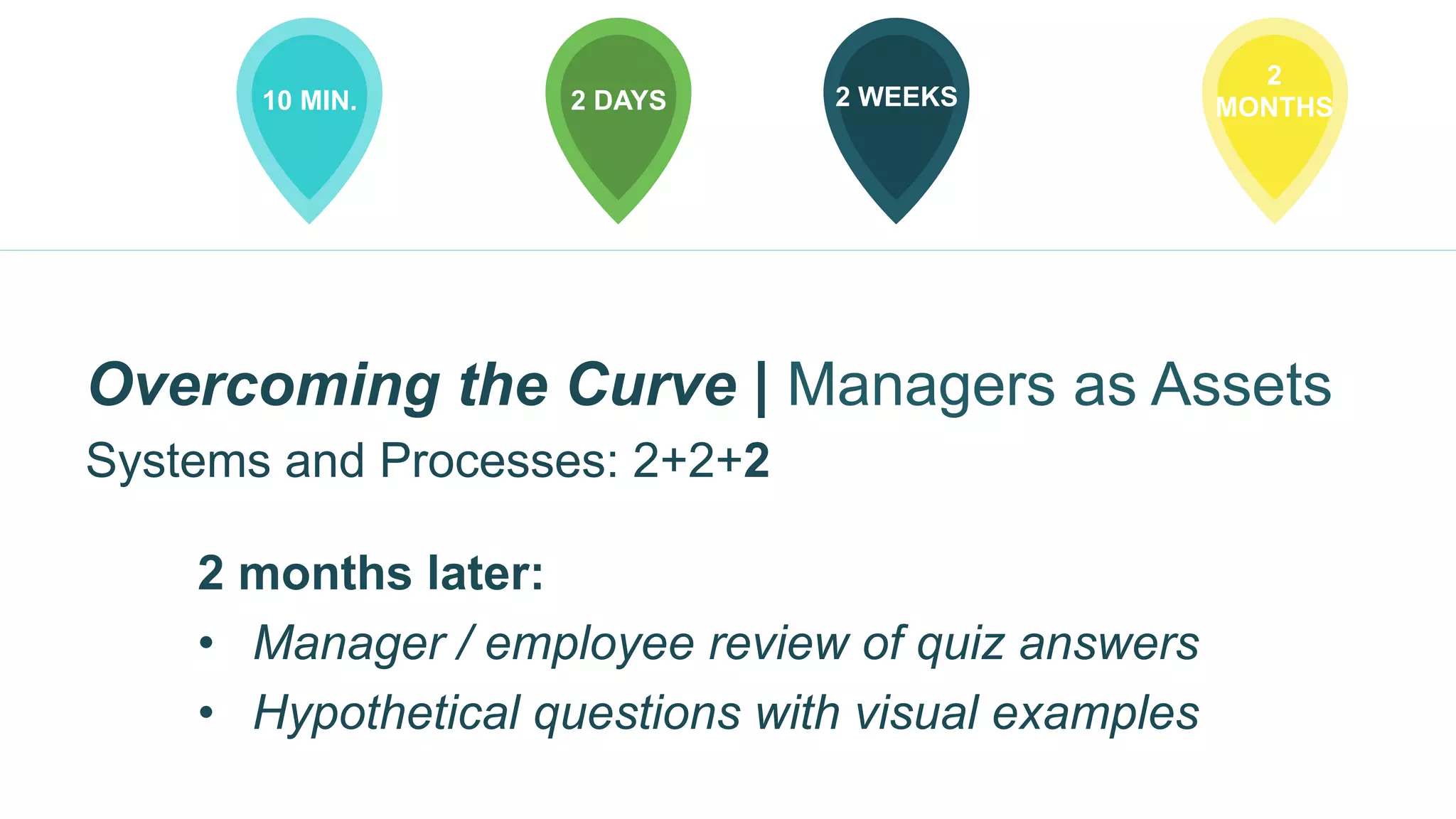
2 months later:
•  Manager / employee review of quiz answers
•  Hypothetical questions with visual examples
Overcoming the Curve | Managers as Assets
Systems and Processes: 2+2+2
Overcoming the Curve
Manager Key for the 2 Month Mark
Employees should be applying what they’ve learned . . . .
•  Compare new levels of performance to performance gap analysis
•  Still gaps?
•  What part of learning is and is not being applied?
•  Managers must explore any barriers to application of learning now!
Sample Question for Managers
Provide a specific instance where you had a problem
applying the active listening skills training we’ve been
working on over the last two months?
•  What happened?
•  What do you think caused the problem?
•  What might you have done differently?
•  What was the outcome?
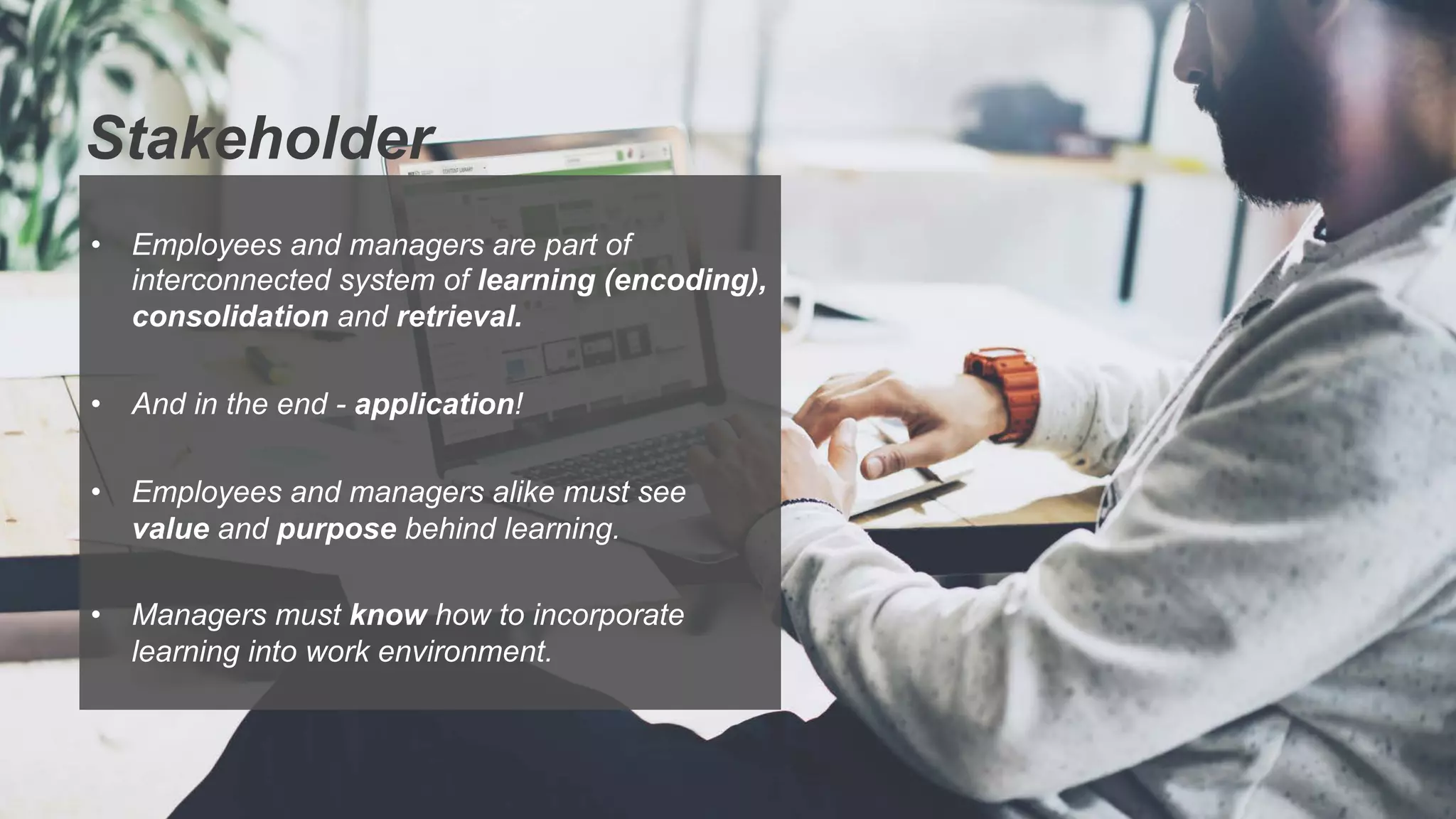
Stakeholder
•  Employees and managers are part of
interconnected system of learning (encoding),
consolidation and retrieval.
•  And in the end - application!
•  Employees and managers alike must see
value and purpose behind learning.
•  Managers must know how to incorporate
learning into work environment.
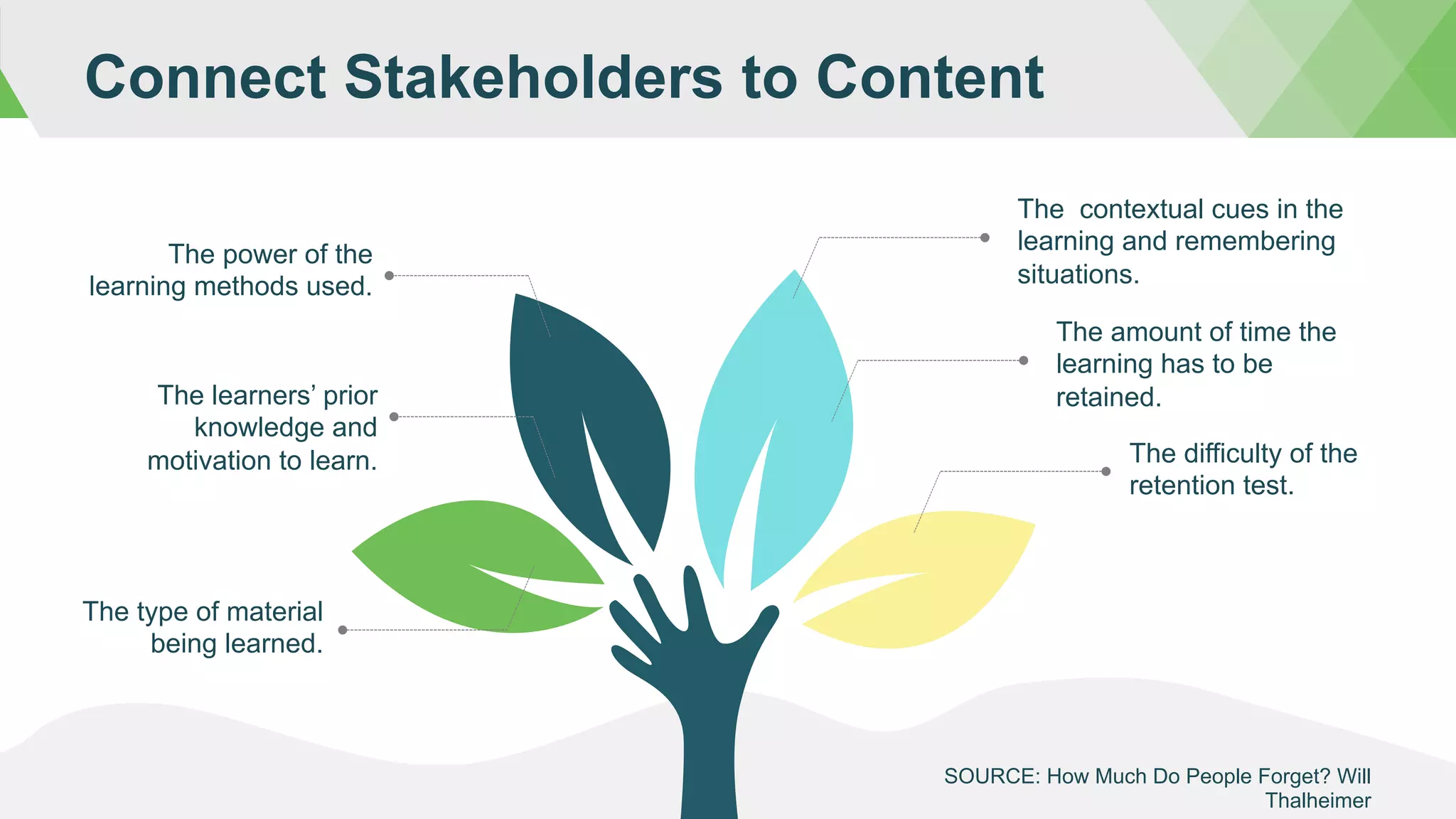
The contextual cues in the
learning and remembering
situations.
The difficulty of the
retention test.
The power of the
learning methods used.
The type of material
being learned.
Connect Stakeholders to Content
The amount of time the
learning has to be
retained.The learners’ prior
knowledge and
motivation to learn.
SOURCE: How Much Do People Forget? Will
Thalheimer
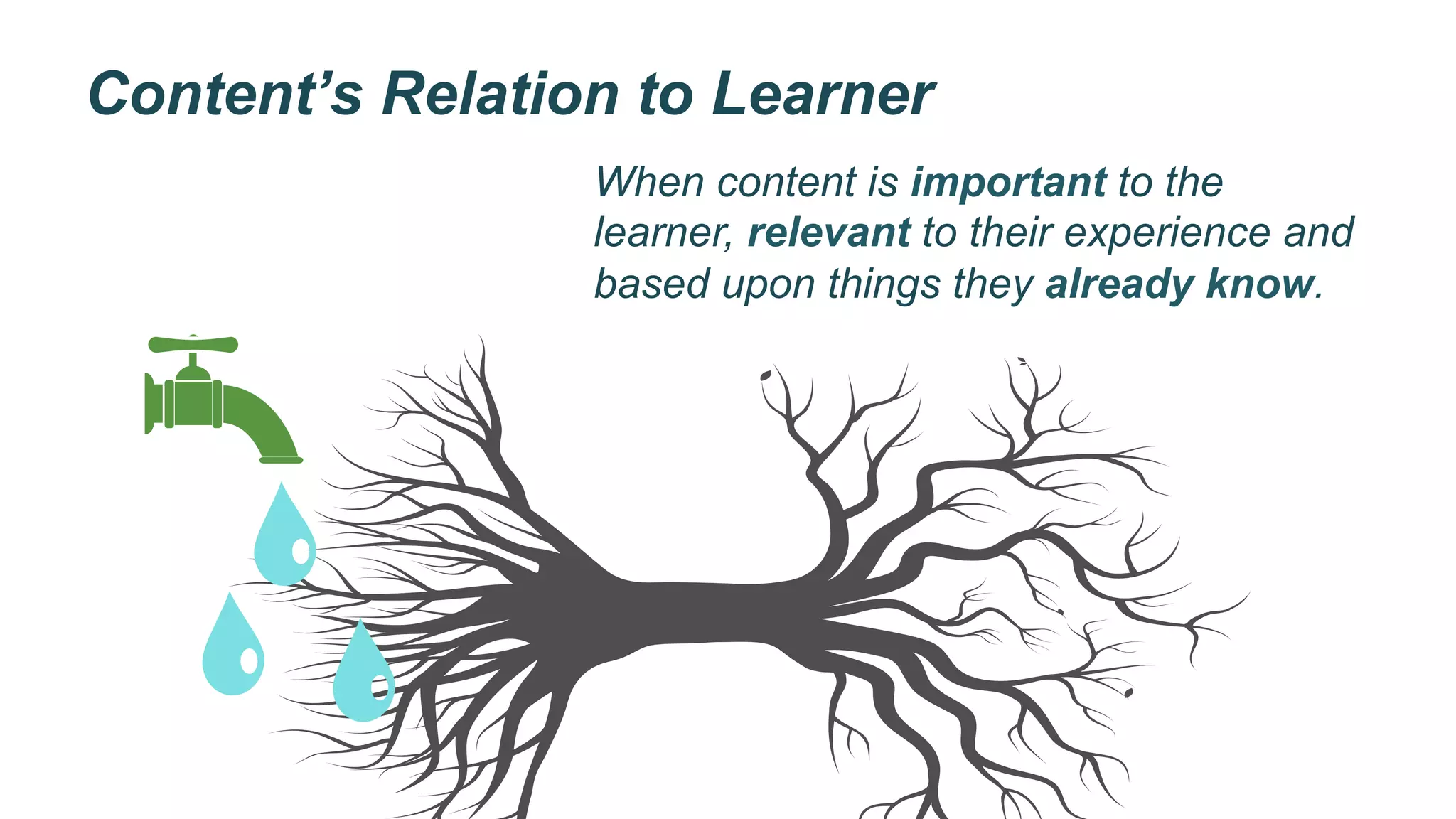
Content’s Relation to Learner
When content is important to the
learner, relevant to their experience and
based upon things they already know.
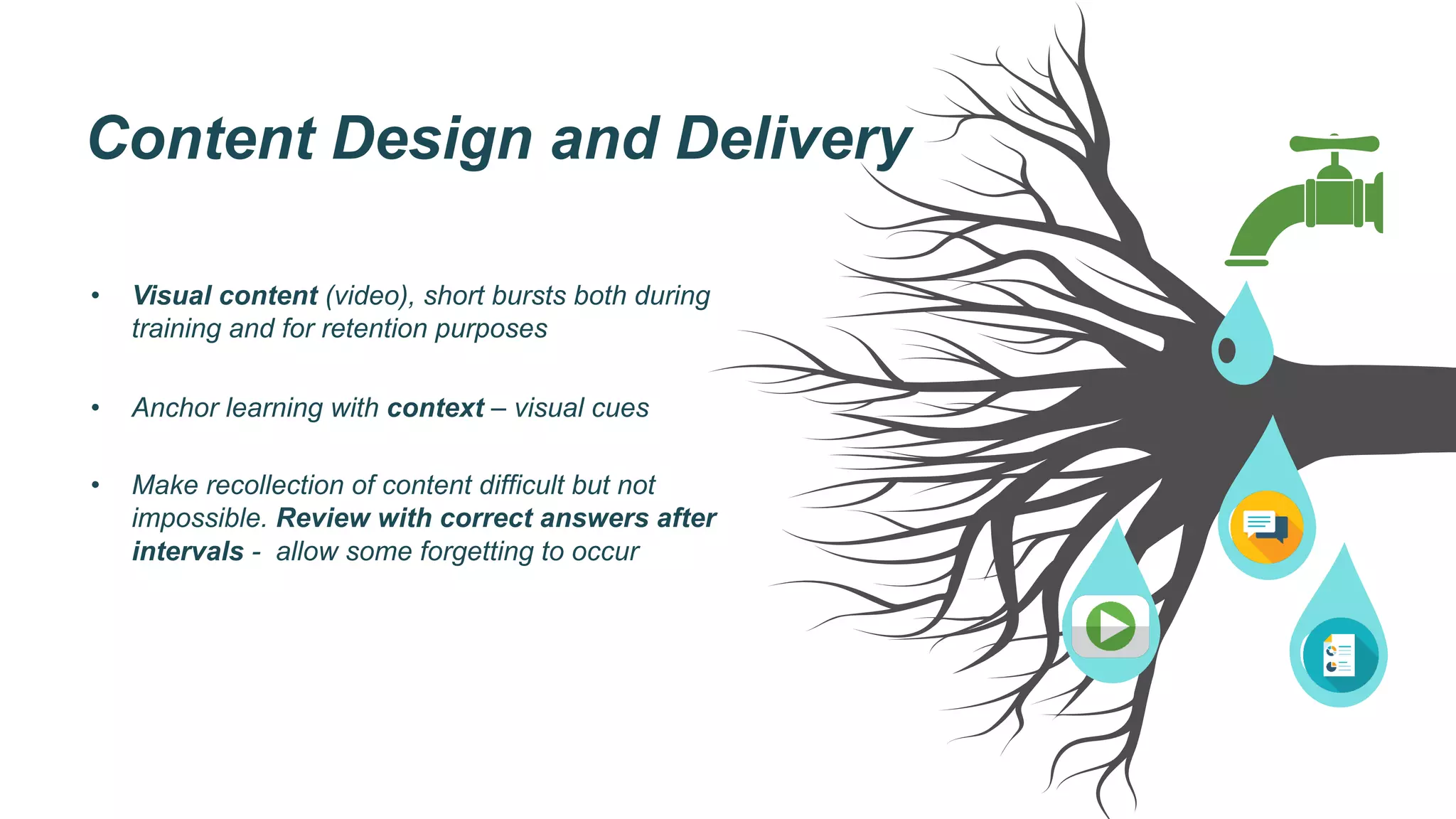
Content Design and Delivery
•  Visual content (video), short bursts both during
training and for retention purposes
•  Anchor learning with context – visual cues
•  Make recollection of content difficult but not
impossible. Review with correct answers after
intervals - allow some forgetting to occur
Key
Take-Aways
Employee application of learning to
improved job performance begins
BEFORE training programs ever start!
Managers are a crucial part of the
retention/application ecosystem to drive
ROI and business benefits.
Microlearning can be a great tool to help
employees in the moment of need as a
direct application of newly acquired skills to
job performance.
www.bizlibrary.com
Questions?
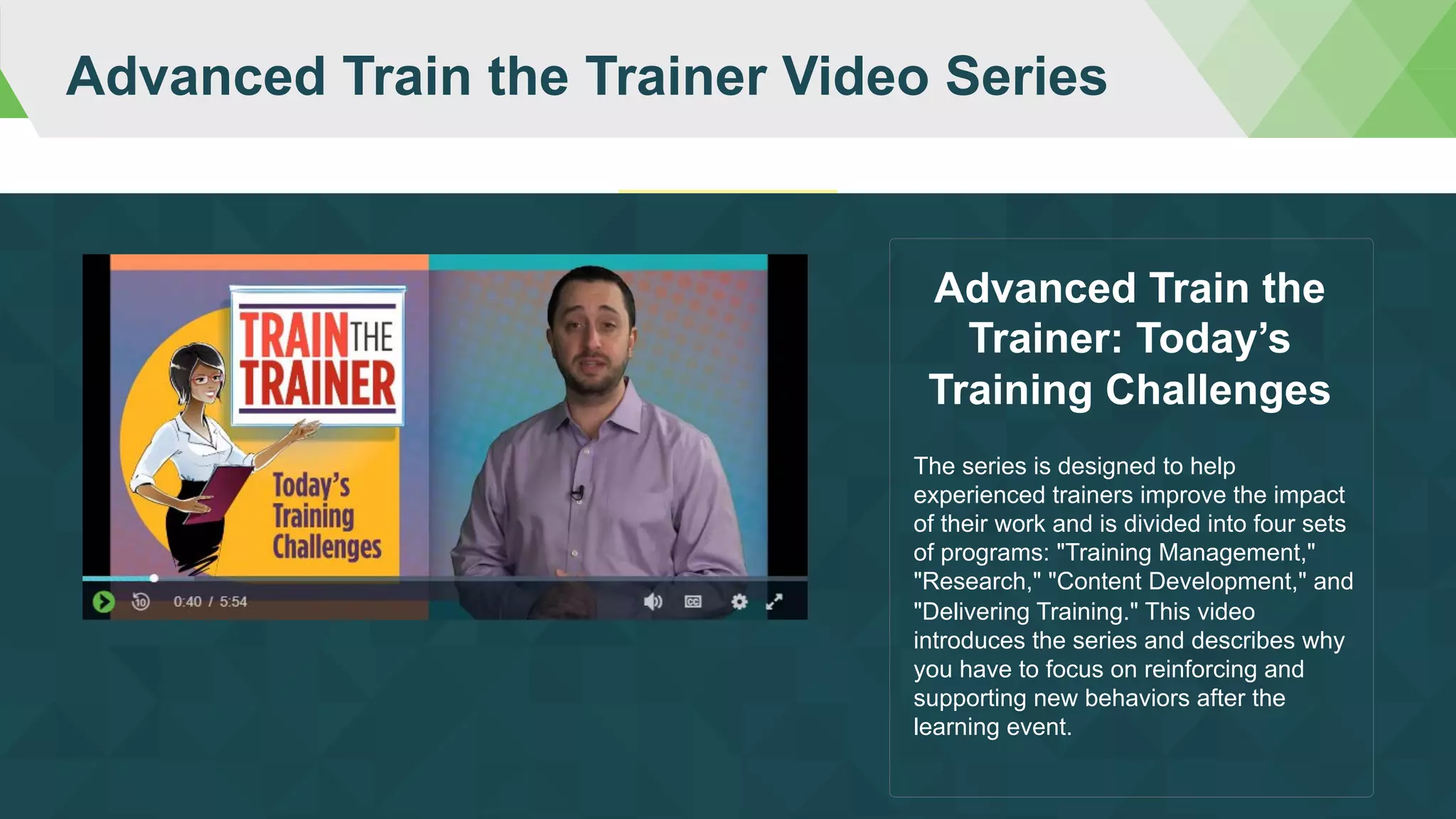
Advanced Train the Trainer Video Series
The series is designed to help
experienced trainers improve the impact
of their work and is divided into four sets
of programs: "Training Management,"
"Research," "Content Development," and
"Delivering Training." This video
introduces the series and describes why
you have to focus on reinforcing and
supporting new behaviors after the
learning event.
Advanced Train the
Trainer: Today’s
Training Challenges
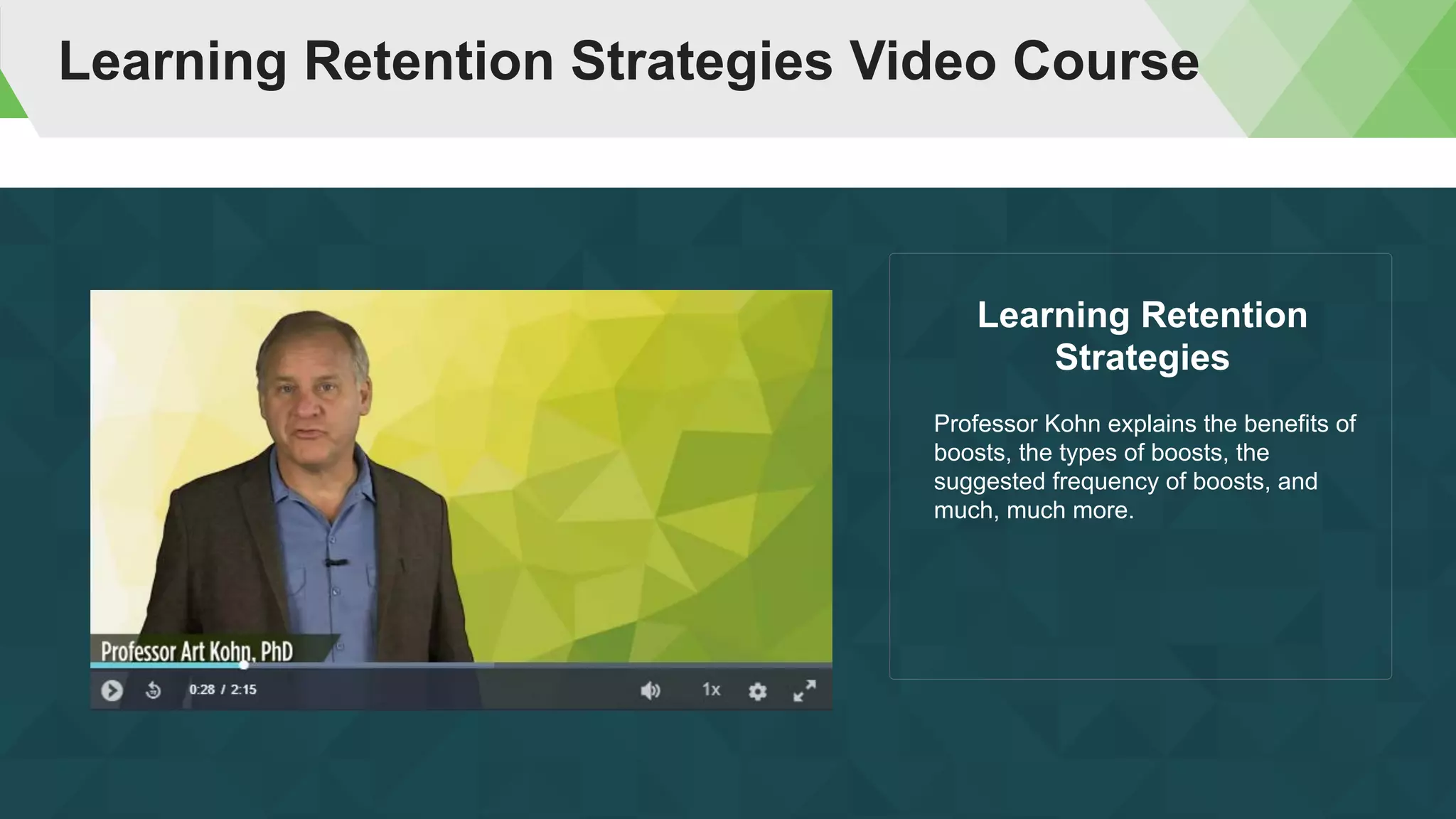
Learning Retention Strategies Video Course
Professor Kohn explains the benefits of
boosts, the types of boosts, the
suggested frequency of boosts, and
much, much more.
Learning Retention
Strategies
Let us know through the poll if you’d like a free demo of
BizLibrary’s online course collection.
www.bizlibrary.com/demo
Try out these video lessons
and more!
Thank you for attending!
Katie Miller
Marketing Specialist
BizLibrary
Kristi McNabb
Revenue Operations Manager
BizLibrary


Register	
  for	
  the	
  next	
  webinar!	
  
Supporting Veterans in Transition
Wednesday, April 18, 2018
Webinars start at 2 p.m. Eastern / 11 a.m. Pacific
Register for all upcoming Workforce Webinars at workforce.com/webinars

BOOST EMPLOYEE PERFORMANCE WITH MICROLEARNING AND MANAGER TRAINING

  • 1.
    #WFwebinar The presentation willbegin at the top of the hour. A dial in number will not be provided. Listen to today’s webinar using your computer’s speakers or headphones. Welcome to the webinar!
  • 2.
    #WFwebinar         Tools You Can Use Audio Control –  A dial in number will not be provided. –  Adjust the volume on your computer or headphones
  • 3.
    #WFwebinar Questions and Handouts Youcan submit questions by clicking on this icon here. You can download a PDF of the slide deck by clicking here.
  • 4.
    #WFwebinar         1. May I receive a copy of the slides? YES! Click on the handouts list located on the right portion of your screen. 2. May I review the webinar recording at a later date? YES! You may log in again using today’s link to review the presentation on-demand. 3. Is this webinar HRCI or SHRM certified? YES! The HRCI and SHRM certification codes will be sent in the same follow up email as the recording Frequently  Asked  Ques0ons  
  • 6.
    Presenting Today Kristi McNabb RevenueOperations Manager BizLibrary Katie Miller Marketing Specialist BizLibrary
  • 7.
  • 8.
    We need alearning revolution: in the schools, at home, and in the workplace. Although the science of learning has made enormous advances over the past decade, its discoveries have remained restricted to academic journals and conferences. It’s time to liberate this knowledge for the good of learners everywhere.” SOURCE: Annie Murphy Paul, The Science of How We Learn, Time Magazine (online) “
  • 10.
    Learn Moment of need Apply Improvejob performance Retain The 3 Functional Components of Effective Employee Training
  • 11.
    Human Learning Process Encoding Short-termmemory, observations, memory traces and what we’ve seen (limited capacity) Retrieval Forced retrieval is most effective after time intervals and some forgetting has occurred Consolidation Time scientists believe the brain replays or rehearses the learning, new knowledge next to neural markers
  • 12.
    The three elementscannot be separated… though we try.
  • 13.
    LEVEL 1 LEVEL 4 LEVEL2 LEVEL 3 LEVEL 5 Kirkpatrick – Phillips Model
  • 14.
    Kirkpatrick – Phillips Model LEVEL1 LEVEL 4 LEVEL 2 LEVEL 3 LEVEL 5 Reaction Participant satisfaction
  • 15.
    Kirkpatrick – Phillips Model LEVEL1 LEVEL 4 LEVEL 2 LEVEL 3 LEVEL 5 Learning Knowledge, skills and attitudes
  • 16.
    Kirkpatrick – Phillips Model LEVEL1 LEVEL 4 LEVEL 2 LEVEL 3 LEVEL 5 Behavior Application and on-the-job learning
  • 17.
    Kirkpatrick – Phillips Model LEVEL1 LEVEL 4 LEVEL 2 LEVEL 3 LEVEL 5 Results Business impact
  • 18.
    Kirkpatrick – Phillips Model LEVEL1 LEVEL 4 LEVEL 2 LEVEL 3 LEVEL 5 ROI Return on investment
  • 19.
    ROI + BusinessBenefit Require Application That’s why the Kirkpatrick-Phillips Model still matters… Employees must learn . . . Employees must retain what they’ve learned Employees must apply what they’ve learned to improve performance Simple, right? Should be, but too many organizations struggle with it.
  • 20.
    No matter howmuch you invest into training and development, nearly everything you teach to your employees will be forgotten. Indeed, although corporations spend 60 billion dollars a year on training, this investment is like pumping gas into a car that has a hole in the tank. All of your hard work simply drains away.” SOURCE: Art Kohn, PHD, Professor, Author and Consultant
  • 21.
    Hermann Ebbinghaus: TheForgetting Curve
  • 22.
  • 23.
    10 MIN. 2DAYS 2 WEEKS 2 MONTHS Overcoming the Curve 2 + 2 + 2
  • 24.
  • 25.
    0 1 23 4 5 6 7 8 9 10 Trainer Employee Manager Trainer Employee Manager Trainer Employee Manager Usage Impact POST EVENT PRE Impact for Training Transfer Most Impact/ Usage Least Impact/ UsageSource: Barbara Carnes, Making Training Stick
  • 26.
    0 1 23 4 5 6 7 8 9 10 Trainer Employee Manager Trainer Employee Manager Trainer Employee Manager Usage Impact PRE Impact for Training Transfer Most Powerful Least PowerfulSource: Barbara Carnes, Making Training Stick
  • 27.
    0 1 23 4 5 6 7 8 9 10 Trainer Employee Manager Trainer Employee Manager Trainer Employee Manager Usage Impact EVENT Impact for Training Transfer Most Powerful Least PowerfulSource: Barbara Carnes, Making Training Stick
  • 28.
    0 1 23 4 5 6 7 8 9 10 Trainer Employee Manager Trainer Employee Manager Trainer Employee Manager Usage Impact POST Impact for Training Transfer Most Powerful Least PowerfulSource: Barbara Carnes, Making Training Stick
  • 29.
    0 1 23 4 5 6 7 8 9 10 Trainer Employee Manager Trainer Employee Manager Trainer Employee Manager Use / Frequency Power / Impact POST EVENT PRE Impact for Training Transfer Most Powerful Least Powerful Biggest disconnect is our perception of the impact during the event and the reality. Source: Barbara Carnes, Making Training Stick
  • 30.
    0 1 23 4 5 6 7 8 9 10 Trainer Employee Manager Trainer Employee Manager Trainer Employee Manager U s e / POST EVENT PRE Impact for Training Transfer Most Powerful Least Powerful Manager pre-training has the biggest impact. Trainer pre-training has the second biggest impact. Manager post training has the third biggest impact. Source: Barbara Carnes, Making Training Stick
  • 31.
    6 Best Practicesfor a Manager to Support Learning 1.  Identify performance gaps 2.  Identify skill and competency gaps 3.  Make the employees stakeholders 4.  Get involved and be a good example 5.  Incorporate learning into day-to-day work 6.  Celebrate and recognize $ $ $ @
  • 32.
    Manager Curriculum Performance Emotional Intelligence Delegation Engagement/ Motivation Listening Skills Strategic Thinking Coaching Presentation Skills Leadership
  • 33.
    10 MIN. 2DAYS 2 WEEKS 2 MONTHS After training begins: •  Ask questions about content •  Ask reflection questions •  Suggest additional videos
  • 34.
    Sample Reflection Question Accordingto the webinar materials so far, how might you involve your managers in the planning of your next employee training effort?
  • 35.
    10 MIN. 2DAYS 2 WEEKS 2 MONTHS 48 hours: •  Coaching on content and learning objectives •  Performance improvement as goal Overcoming the Curve | Managers as Assets Systems and Processes: 2+2+2
  • 36.
    Poll Question In yourorganization, how do your managers support employees in the application of new things to their jobs?
  • 37.
    In your organization,how do your managers support employees in the application of new things to their jobs : a.  Our managers offer little support, mostly because they are not committed to learning and development themselves. b.  Our managers offer little to no support, mostly because they are not willing to do so. c.  Our managers offer little to no support because they do not know how to do so. d.  Managers provide some support, but not enough. e.  Managers are well-trained, involved and provide excellent support across the board. f.  Something else.
  • 38.
    10 MIN. 2DAYS 2 WEEKS 2 MONTHS 2 weeks later: •  Use case: give the employee a new situation to explore with new visual clues Overcoming the Curve | Managers as Assets Systems and Processes: 2+2+2
  • 39.
    10 MIN. 2DAYS 2 WEEKS 2 MONTHS 2 months later: •  Manager / employee review of quiz answers •  Hypothetical questions with visual examples Overcoming the Curve | Managers as Assets Systems and Processes: 2+2+2
  • 40.
    Overcoming the Curve ManagerKey for the 2 Month Mark Employees should be applying what they’ve learned . . . . •  Compare new levels of performance to performance gap analysis •  Still gaps? •  What part of learning is and is not being applied? •  Managers must explore any barriers to application of learning now!
  • 41.
    Sample Question forManagers Provide a specific instance where you had a problem applying the active listening skills training we’ve been working on over the last two months? •  What happened? •  What do you think caused the problem? •  What might you have done differently? •  What was the outcome?
  • 42.
    Stakeholder •  Employees andmanagers are part of interconnected system of learning (encoding), consolidation and retrieval. •  And in the end - application! •  Employees and managers alike must see value and purpose behind learning. •  Managers must know how to incorporate learning into work environment.
  • 43.
    The contextual cuesin the learning and remembering situations. The difficulty of the retention test. The power of the learning methods used. The type of material being learned. Connect Stakeholders to Content The amount of time the learning has to be retained.The learners’ prior knowledge and motivation to learn. SOURCE: How Much Do People Forget? Will Thalheimer
  • 44.
    Content’s Relation toLearner When content is important to the learner, relevant to their experience and based upon things they already know.
  • 45.
    Content Design andDelivery •  Visual content (video), short bursts both during training and for retention purposes •  Anchor learning with context – visual cues •  Make recollection of content difficult but not impossible. Review with correct answers after intervals - allow some forgetting to occur
  • 46.
    Key Take-Aways Employee application oflearning to improved job performance begins BEFORE training programs ever start! Managers are a crucial part of the retention/application ecosystem to drive ROI and business benefits. Microlearning can be a great tool to help employees in the moment of need as a direct application of newly acquired skills to job performance. www.bizlibrary.com
  • 47.
  • 48.
    Advanced Train theTrainer Video Series The series is designed to help experienced trainers improve the impact of their work and is divided into four sets of programs: "Training Management," "Research," "Content Development," and "Delivering Training." This video introduces the series and describes why you have to focus on reinforcing and supporting new behaviors after the learning event. Advanced Train the Trainer: Today’s Training Challenges
  • 49.
    Learning Retention StrategiesVideo Course Professor Kohn explains the benefits of boosts, the types of boosts, the suggested frequency of boosts, and much, much more. Learning Retention Strategies
  • 50.
    Let us knowthrough the poll if you’d like a free demo of BizLibrary’s online course collection. www.bizlibrary.com/demo Try out these video lessons and more!
  • 51.
    Thank you forattending! Katie Miller Marketing Specialist BizLibrary Kristi McNabb Revenue Operations Manager BizLibrary
  • 52.
            Register  for  the  next  webinar!   Supporting Veterans in Transition Wednesday, April 18, 2018 Webinars start at 2 p.m. Eastern / 11 a.m. Pacific Register for all upcoming Workforce Webinars at workforce.com/webinars