Evaluations That Matter
Aaron Wolowiec
Founder | Event Garde
EventGarde.com
Name
Organization
One question you have about
Evaluations That Matter
09000 3 87654321520 04 98765432103 9876543210987654321021 987654321098765432100Hours Minutes Seconds
Participant Introductions
09000 2 87654321510 04 98765432103 9876543210987654321021 987654321098765432100Hours Minutes Seconds
Participant Introductions
09000 1 87654321500 04 98765432103 9876543210987654321021 987654321098765432100Hours Minutes Seconds
Participant Introductions
Learner Objectives
Ask the right questions.
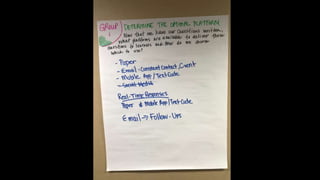
Determine the optimal platform.
Promote and incentivize participation.
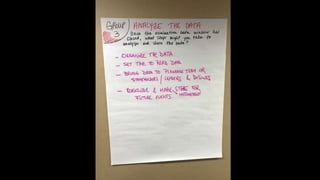
Analyze the data.
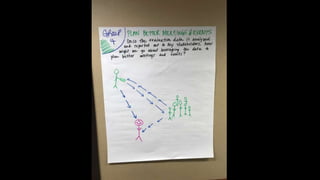
Plan better meetings and events.
Learner Objectives
Ask the right questions.
Determine the optimal platform.
Promote and incentivize participation.
Analyze the data.
Plan better meetings and events.
Learner Objectives
Ask the right questions.
Determine the optimal platform.
Promote and incentivize participation.
Analyze the data.
Plan better meetings and events.
Learner Objectives
Ask the right questions.
Determine the optimal platform.
Promote and incentivize participation.
Analyze the data.
Plan better meetings and events.
Learner Objectives
Ask the right questions.
Determine the optimal platform.
Promote and incentivize participation.
Analyze the data.
Plan better meetings and events.
Learner Objectives
Ask the right questions.
Determine the optimal platform.
Promote and incentivize participation.
Analyze the data.
Plan better meetings and events.
09000 3 87654321520 04 98765432103 9876543210987654321021 987654321098765432100Hours Minutes Seconds
Evaluation Question
09000 2 87654321510 04 98765432103 9876543210987654321021 987654321098765432100Hours Minutes Seconds
Evaluation Question
09000 1 87654321500 04 98765432103 9876543210987654321021 987654321098765432100Hours Minutes Seconds
Evaluation Question
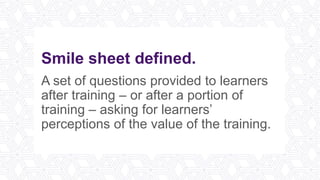
Smile sheet defined.
A set of questions provided to learners
after training – or after a portion of
training – asking for learners’
perceptions of the value of the training.
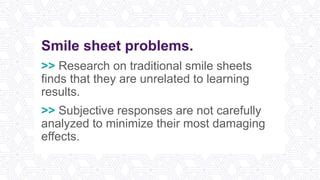
Smile sheet problems.
>> Research on traditional smile sheets
finds that they are unrelated to learning
results.
>> Subjective responses are not carefully
analyzed to minimize their most damaging
effects.
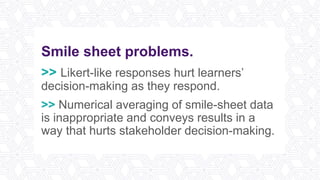
Smile sheet problems.
>> Likert-like responses hurt learners’
decision-making as they respond.
>> Numerical averaging of smile-sheet data
is inappropriate and conveys results in a
way that hurts stakeholder decision-making.
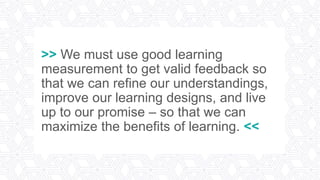
>> We must use good learning
measurement to get valid feedback so
that we can refine our understandings,
improve our learning designs, and live
up to our promise – so that we can
maximize the benefits of learning. <<
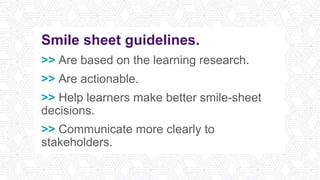
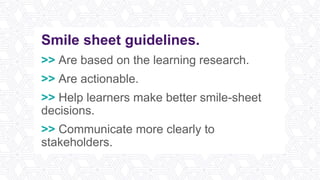
Smile sheet guidelines.
>> Are based on the learning research.
>> Are actionable.
>> Help learners make better smile-sheet
decisions.
>> Communicate more clearly to
stakeholders.
Step 1 >>
Ask the right questions.
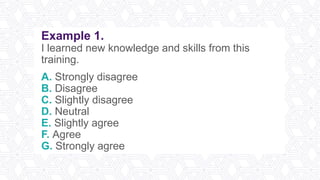
Example 1.
I learned new knowledge and skills from this
training.
A. Strongly disagree
B. Disagree
C. Slightly disagree
D. Neutral
E. Slightly agree
F. Agree
G. Strongly agree
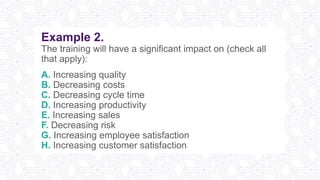
Example 2.
The training will have a significant impact on (check all
that apply):
A. Increasing quality
B. Decreasing costs
C. Decreasing cycle time
D. Increasing productivity
E. Increasing sales
F. Decreasing risk
G. Increasing employee satisfaction
H. Increasing customer satisfaction
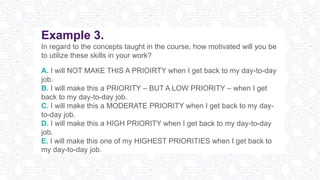
Example 3.
In regard to the concepts taught in the course, how motivated will you be
to utilize these skills in your work?
A. I will NOT MAKE THIS A PRIOIRTY when I get back to my day-to-day
job.
B. I will make this a PRIORITY – BUT A LOW PRIORITY – when I get
back to my day-to-day job.
C. I will make this a MODERATE PRIORITY when I get back to my day-
to-day job.
D. I will make this a HIGH PRIORITY when I get back to my day-to-day
job.
E. I will make this one of my HIGHEST PRIORITIES when I get back to
my day-to-day job.
Example 4.
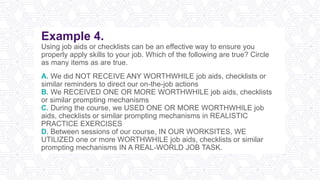
Using job aids or checklists can be an effective way to ensure you
properly apply skills to your job. Which of the following are true? Circle
as many items as are true.
A. We did NOT RECEIVE ANY WORTHWHILE job aids, checklists or
similar reminders to direct our on-the-job actions
B. We RECEIVED ONE OR MORE WORTHWHILE job aids, checklists
or similar prompting mechanisms
C. During the course, we USED ONE OR MORE WORTHWHILE job
aids, checklists or similar prompting mechanisms in REALISTIC
PRACTICE EXERCISES
D. Between sessions of our course, IN OUR WORKSITES, WE
UTILIZED one or more WORTHWHILE job aids, checklists or similar
prompting mechanisms IN A REAL-WORLD JOB TASK.
Smile sheet guidelines.
>> Are based on the learning research.
>> Are actionable.
>> Help learners make better smile-sheet
decisions.
>> Communicate more clearly to
stakeholders.
Step 2 >>
Determine the optimal platform.
Step 3 >>
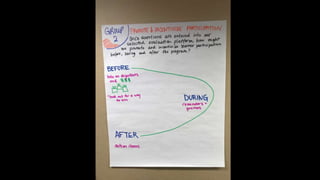
Promote and incentivize participation.
Step 4 >>
Analyze the data.
Step 5 >>
Plan better meetings and events.
Focused Conversation
Questions you had about
Evaluations That Matter
Aaron Wolowiec
Founder | Event Garde
EventGarde.com
Stay In Touch

Evaluations That Matter

  • 1.
    Evaluations That Matter AaronWolowiec Founder | Event Garde EventGarde.com
  • 2.
    Name Organization One question youhave about Evaluations That Matter
  • 3.
    09000 3 8765432152004 98765432103 9876543210987654321021 987654321098765432100Hours Minutes Seconds Participant Introductions
  • 4.
    09000 2 8765432151004 98765432103 9876543210987654321021 987654321098765432100Hours Minutes Seconds Participant Introductions
  • 5.
    09000 1 8765432150004 98765432103 9876543210987654321021 987654321098765432100Hours Minutes Seconds Participant Introductions
  • 8.
    Learner Objectives Ask theright questions. Determine the optimal platform. Promote and incentivize participation. Analyze the data. Plan better meetings and events.
  • 9.
    Learner Objectives Ask theright questions. Determine the optimal platform. Promote and incentivize participation. Analyze the data. Plan better meetings and events.
  • 10.
    Learner Objectives Ask theright questions. Determine the optimal platform. Promote and incentivize participation. Analyze the data. Plan better meetings and events.
  • 11.
    Learner Objectives Ask theright questions. Determine the optimal platform. Promote and incentivize participation. Analyze the data. Plan better meetings and events.
  • 12.
    Learner Objectives Ask theright questions. Determine the optimal platform. Promote and incentivize participation. Analyze the data. Plan better meetings and events.
  • 13.
    Learner Objectives Ask theright questions. Determine the optimal platform. Promote and incentivize participation. Analyze the data. Plan better meetings and events.
  • 15.
    09000 3 8765432152004 98765432103 9876543210987654321021 987654321098765432100Hours Minutes Seconds Evaluation Question
  • 16.
    09000 2 8765432151004 98765432103 9876543210987654321021 987654321098765432100Hours Minutes Seconds Evaluation Question
  • 17.
    09000 1 8765432150004 98765432103 9876543210987654321021 987654321098765432100Hours Minutes Seconds Evaluation Question
  • 22.
    Smile sheet defined. Aset of questions provided to learners after training – or after a portion of training – asking for learners’ perceptions of the value of the training.
  • 23.
    Smile sheet problems. >>Research on traditional smile sheets finds that they are unrelated to learning results. >> Subjective responses are not carefully analyzed to minimize their most damaging effects.
  • 24.
    Smile sheet problems. >>Likert-like responses hurt learners’ decision-making as they respond. >> Numerical averaging of smile-sheet data is inappropriate and conveys results in a way that hurts stakeholder decision-making.
  • 25.
    >> We mustuse good learning measurement to get valid feedback so that we can refine our understandings, improve our learning designs, and live up to our promise – so that we can maximize the benefits of learning. <<
  • 26.
    Smile sheet guidelines. >>Are based on the learning research. >> Are actionable. >> Help learners make better smile-sheet decisions. >> Communicate more clearly to stakeholders.
  • 27.
    Step 1 >> Askthe right questions.
  • 28.
    Example 1. I learnednew knowledge and skills from this training. A. Strongly disagree B. Disagree C. Slightly disagree D. Neutral E. Slightly agree F. Agree G. Strongly agree
  • 29.
    Example 2. The trainingwill have a significant impact on (check all that apply): A. Increasing quality B. Decreasing costs C. Decreasing cycle time D. Increasing productivity E. Increasing sales F. Decreasing risk G. Increasing employee satisfaction H. Increasing customer satisfaction
  • 30.
    Example 3. In regardto the concepts taught in the course, how motivated will you be to utilize these skills in your work? A. I will NOT MAKE THIS A PRIOIRTY when I get back to my day-to-day job. B. I will make this a PRIORITY – BUT A LOW PRIORITY – when I get back to my day-to-day job. C. I will make this a MODERATE PRIORITY when I get back to my day- to-day job. D. I will make this a HIGH PRIORITY when I get back to my day-to-day job. E. I will make this one of my HIGHEST PRIORITIES when I get back to my day-to-day job.
  • 31.
    Example 4. Using jobaids or checklists can be an effective way to ensure you properly apply skills to your job. Which of the following are true? Circle as many items as are true. A. We did NOT RECEIVE ANY WORTHWHILE job aids, checklists or similar reminders to direct our on-the-job actions B. We RECEIVED ONE OR MORE WORTHWHILE job aids, checklists or similar prompting mechanisms C. During the course, we USED ONE OR MORE WORTHWHILE job aids, checklists or similar prompting mechanisms in REALISTIC PRACTICE EXERCISES D. Between sessions of our course, IN OUR WORKSITES, WE UTILIZED one or more WORTHWHILE job aids, checklists or similar prompting mechanisms IN A REAL-WORLD JOB TASK.
  • 33.
    Smile sheet guidelines. >>Are based on the learning research. >> Are actionable. >> Help learners make better smile-sheet decisions. >> Communicate more clearly to stakeholders.
  • 36.
    Step 2 >> Determinethe optimal platform.
  • 38.
    Step 3 >> Promoteand incentivize participation.
  • 40.
  • 42.
    Step 5 >> Planbetter meetings and events.
  • 44.
  • 45.
    Questions you hadabout Evaluations That Matter
  • 47.
    Aaron Wolowiec Founder |Event Garde EventGarde.com Stay In Touch