Prepare to Succeed: Applying Gilly Salmon’s Emoderating Model
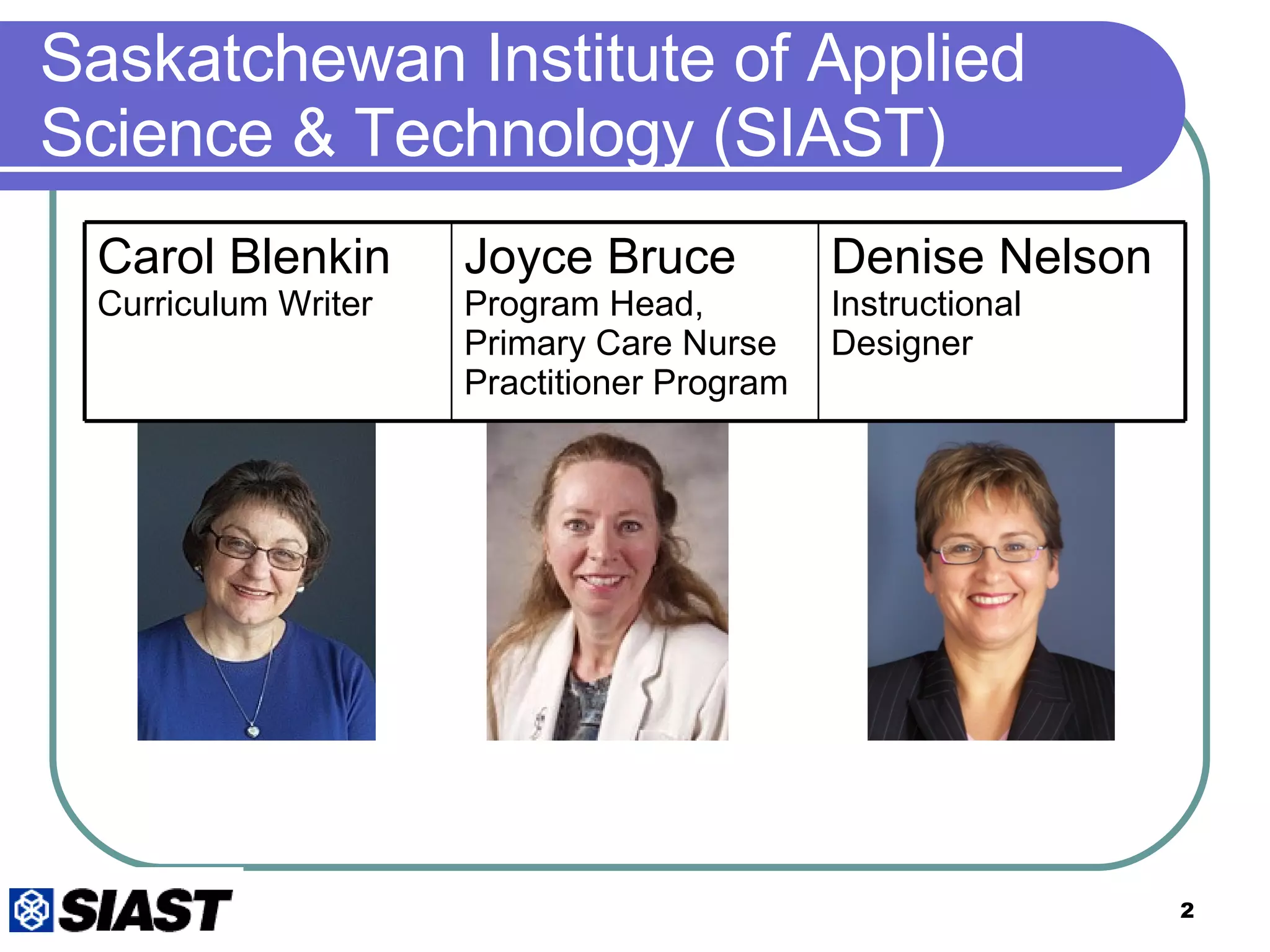
Saskatchewan Institute of Applied Science & Technology (SIAST) Carol Blenkin Curriculum Writer Joyce Bruce Program Head, Primary Care Nurse Practitioner Program Denise Nelson Instructional Designer
Student Comment “ Come on! This is an online course. Chatting with my classmates is a waste of my valuable time. I didn’t pay money to socialize. Is there an online course I can take that doesn’t require conferencing?”
Spark How many of you support faculty in developing e-moderating skills?
Plan Background Problem Model of Teaching and Learning Online 5 stages & examples Action for the future Further research Questions
Background Saskatchewan Institute of Applied Science and Technology 4 campuses across province 12,000 full time students Half are sequential and half workplace Offers ~160 programs in business and agriculture, health and science, technology, industry, nursing, hospitality services, community services and basic education.  Over 200 fully online courses
Continued… Evolution – course design to e-moderating Campus Sask. Salmon Elluminate session Campus Sask. ~ 5 week E-moderating course Nurse practitioner program professional development in-service – practice e-moderating skills with authentic student examples Informal dialogue with Gilly
Problem – Program/Faculty Perspective trained new tutors every semester via telephone conferencing online course orientation – focused on technical training and course management tutor-student interaction minimal use of online discussion forums directed to time management and study skills tutors unaware of role to enhance active learning of course content
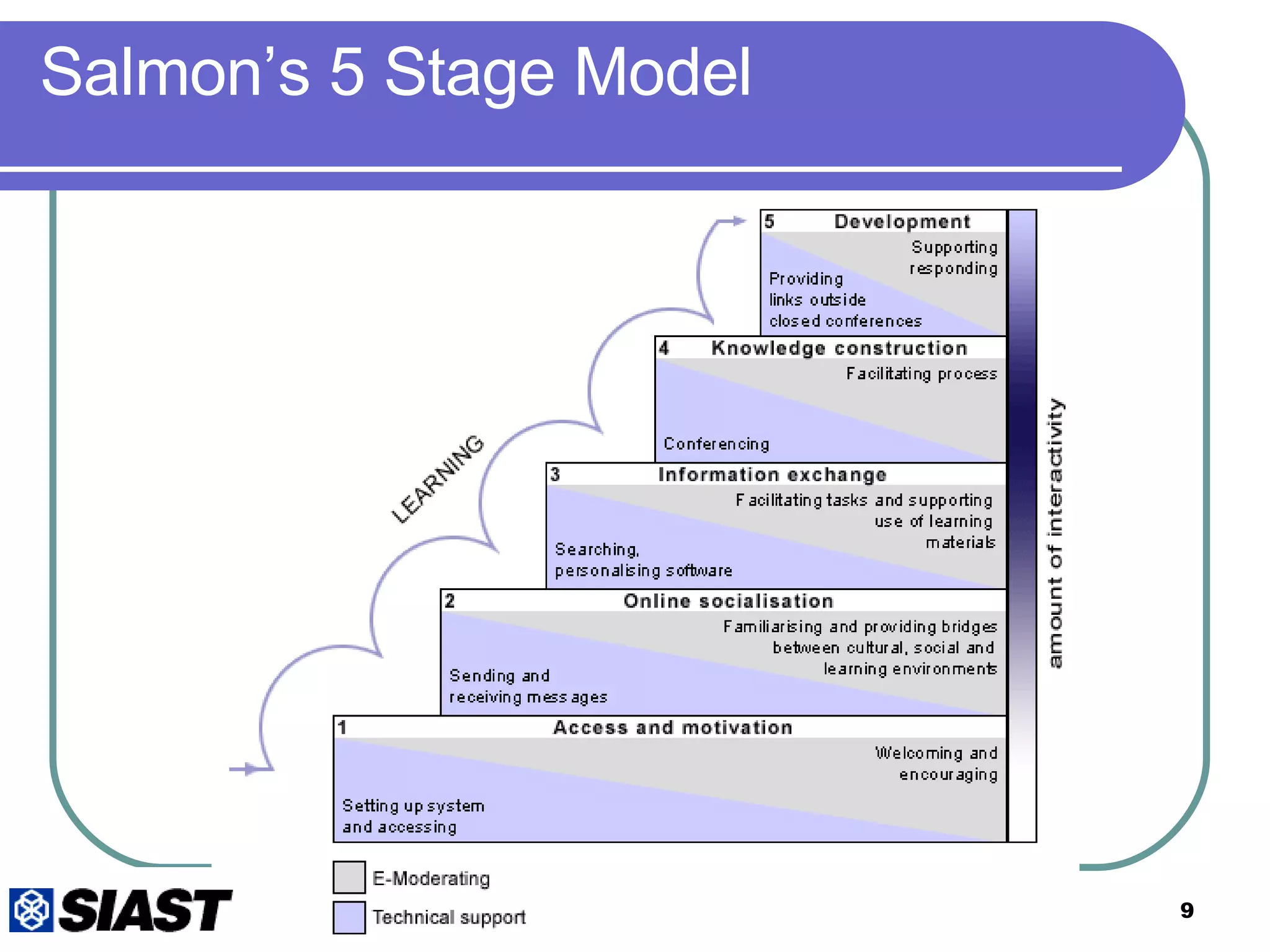
Salmon’s 5 Stage Model
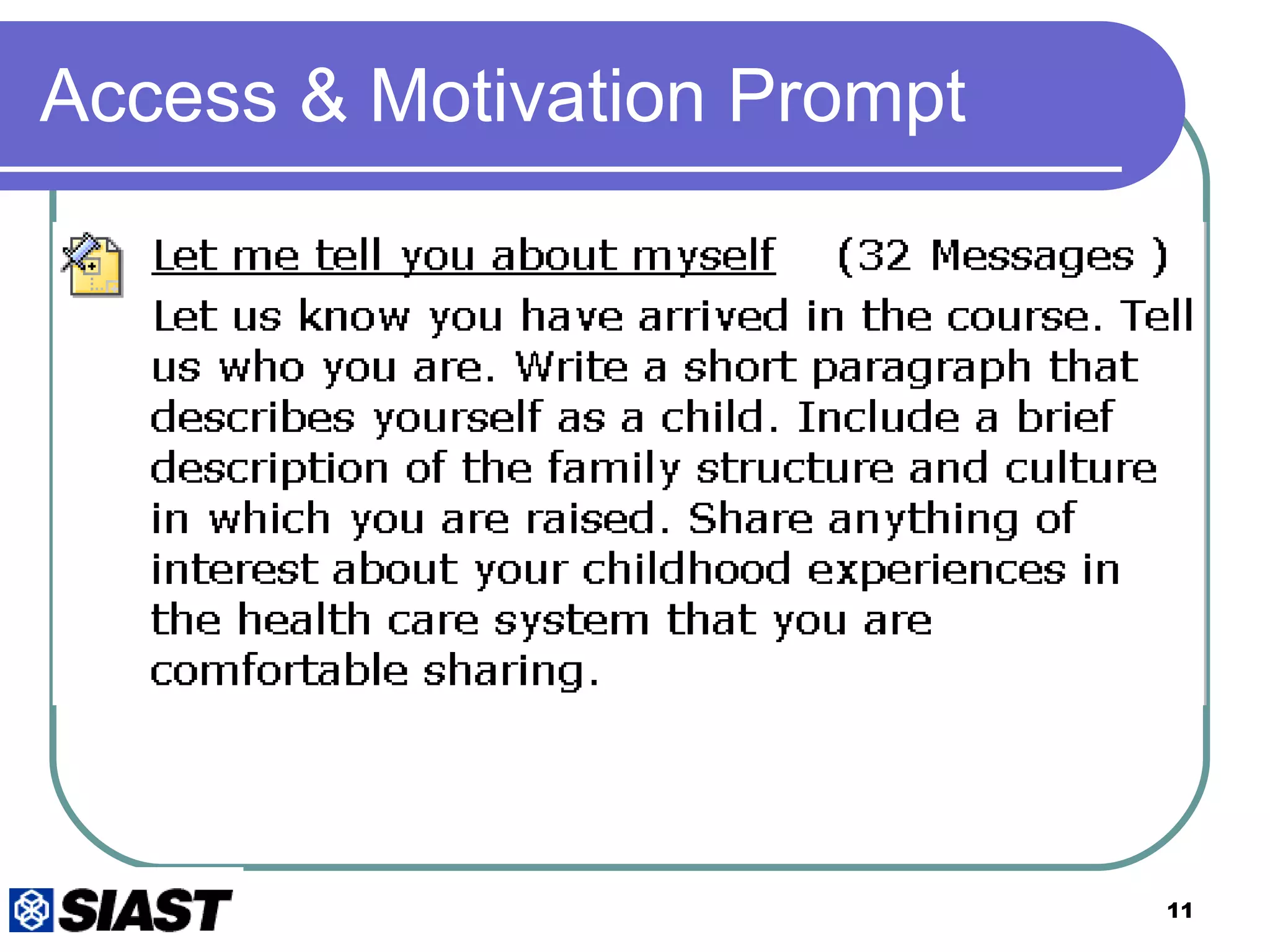
Stage 1: Access and Motivation Ensure accessibility Welcome and encourage participation Students post 1 st  message
Access & Motivation Prompt
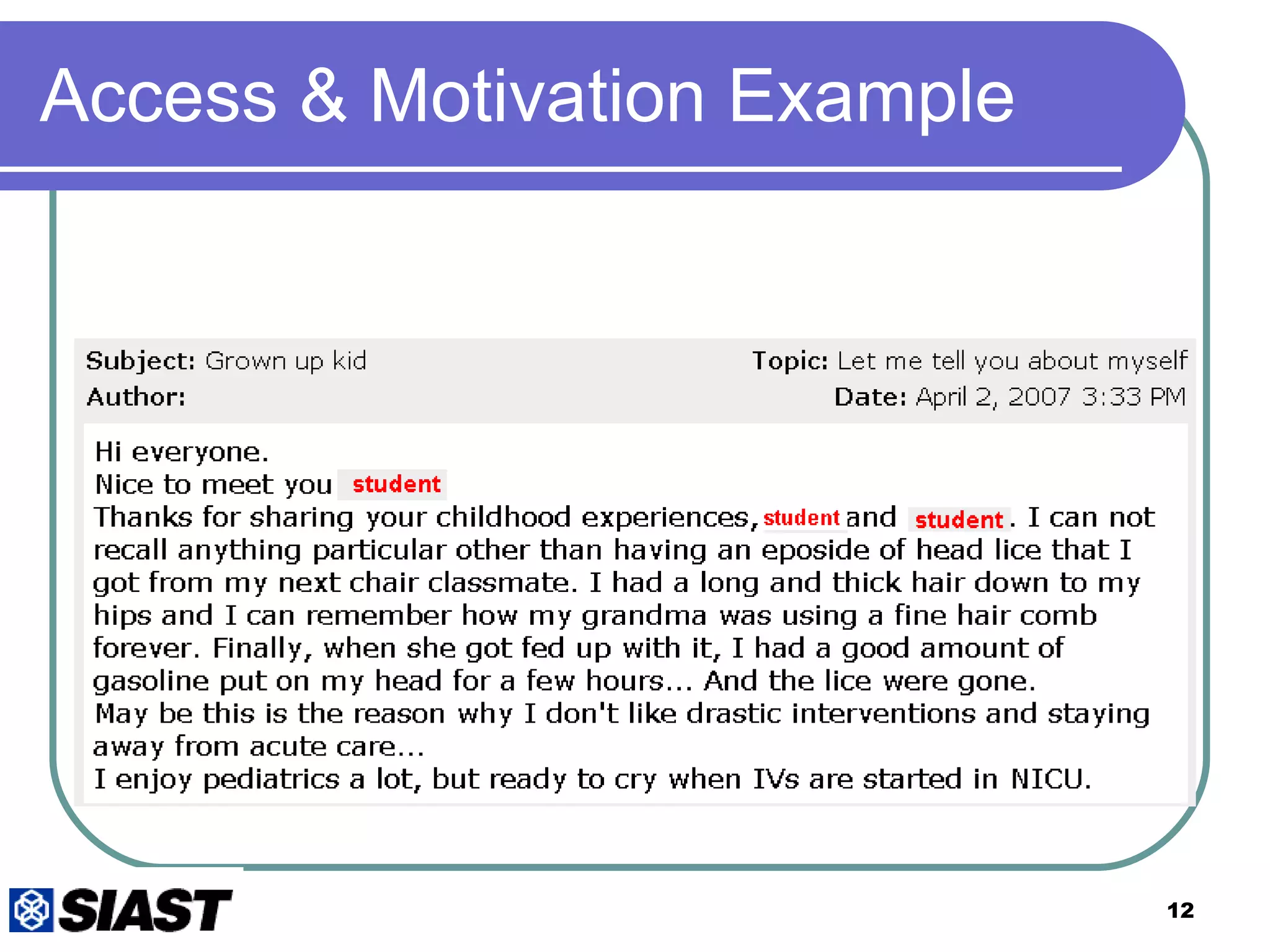
Access & Motivation Example
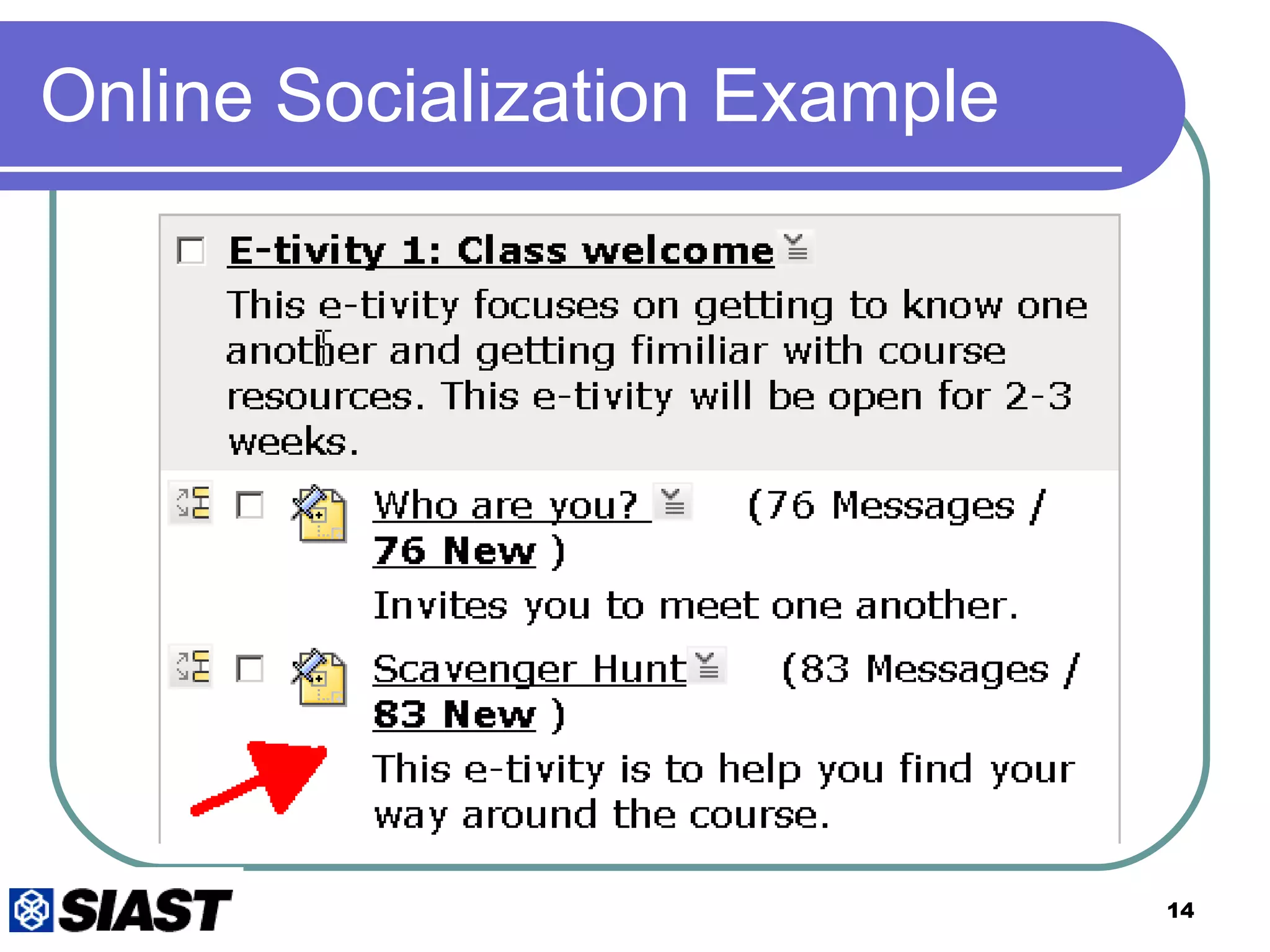
Stage 2: Online Socialization Students explore the technology, send and receive messages, meet classmates and establish relationships with peers and tutor. (scavenger hunt)
Online Socialization Example
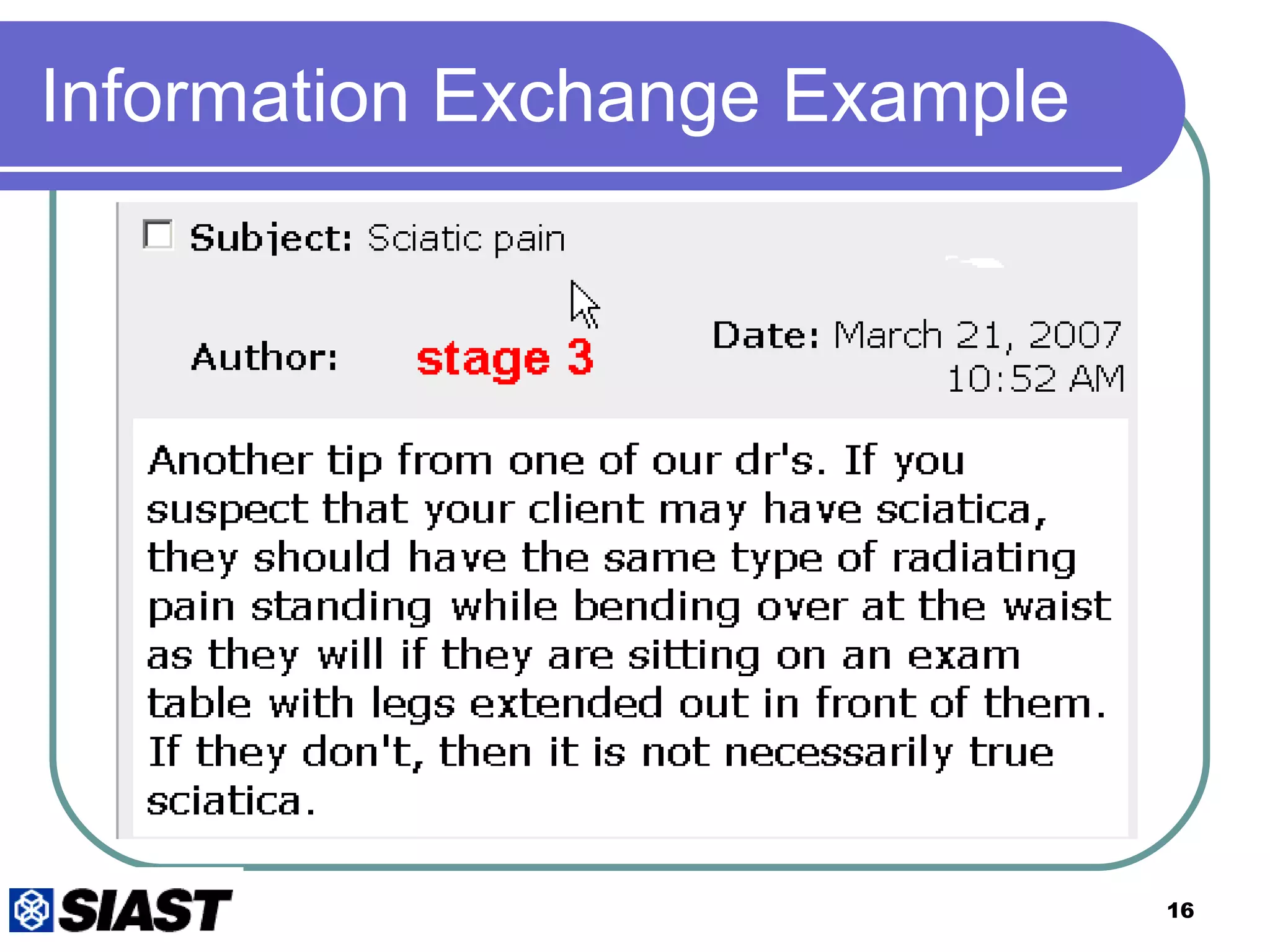
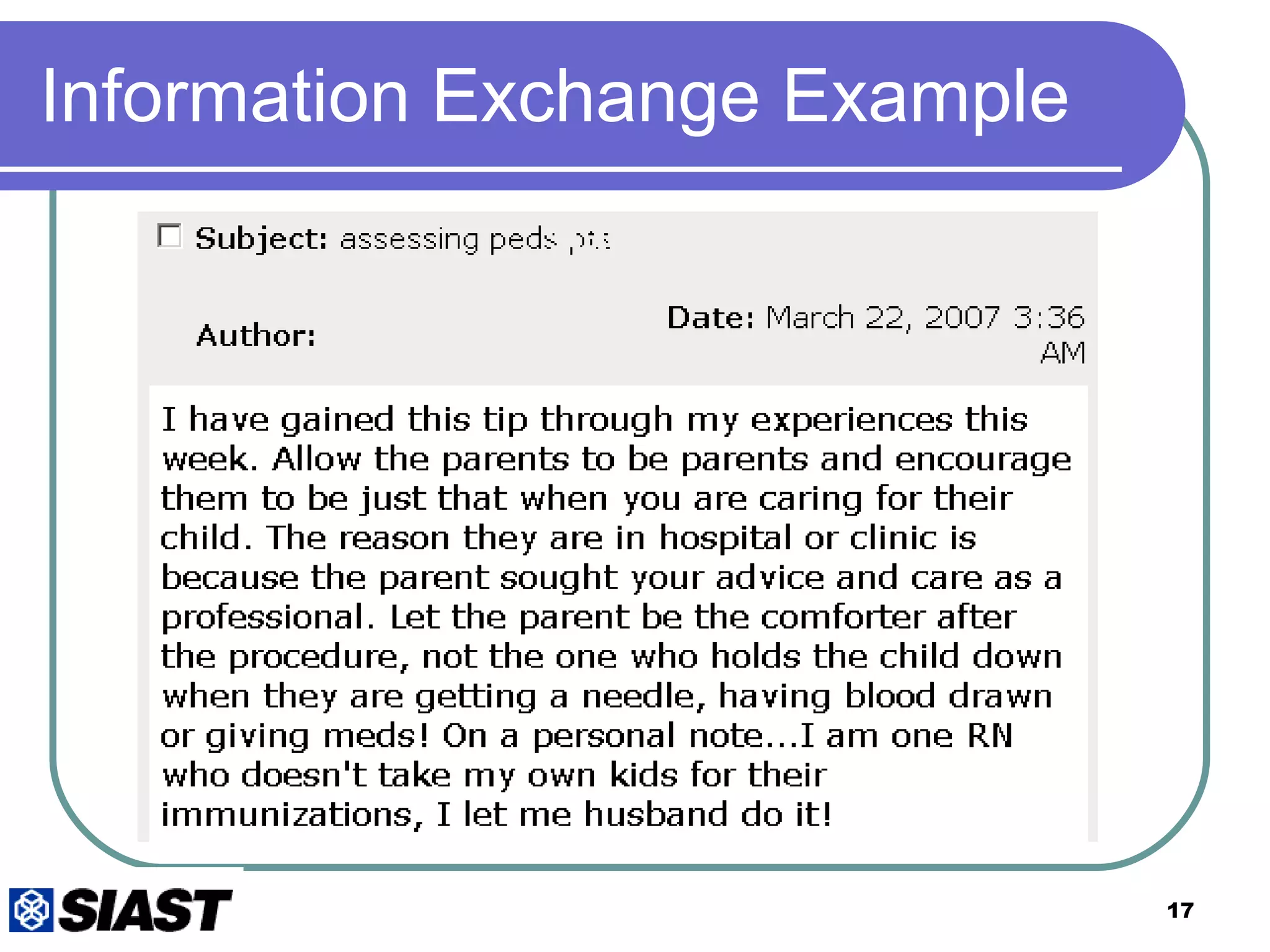
Stage 3: Information Exchange Students share information in discussions relating to the course content.
Information Exchange Example
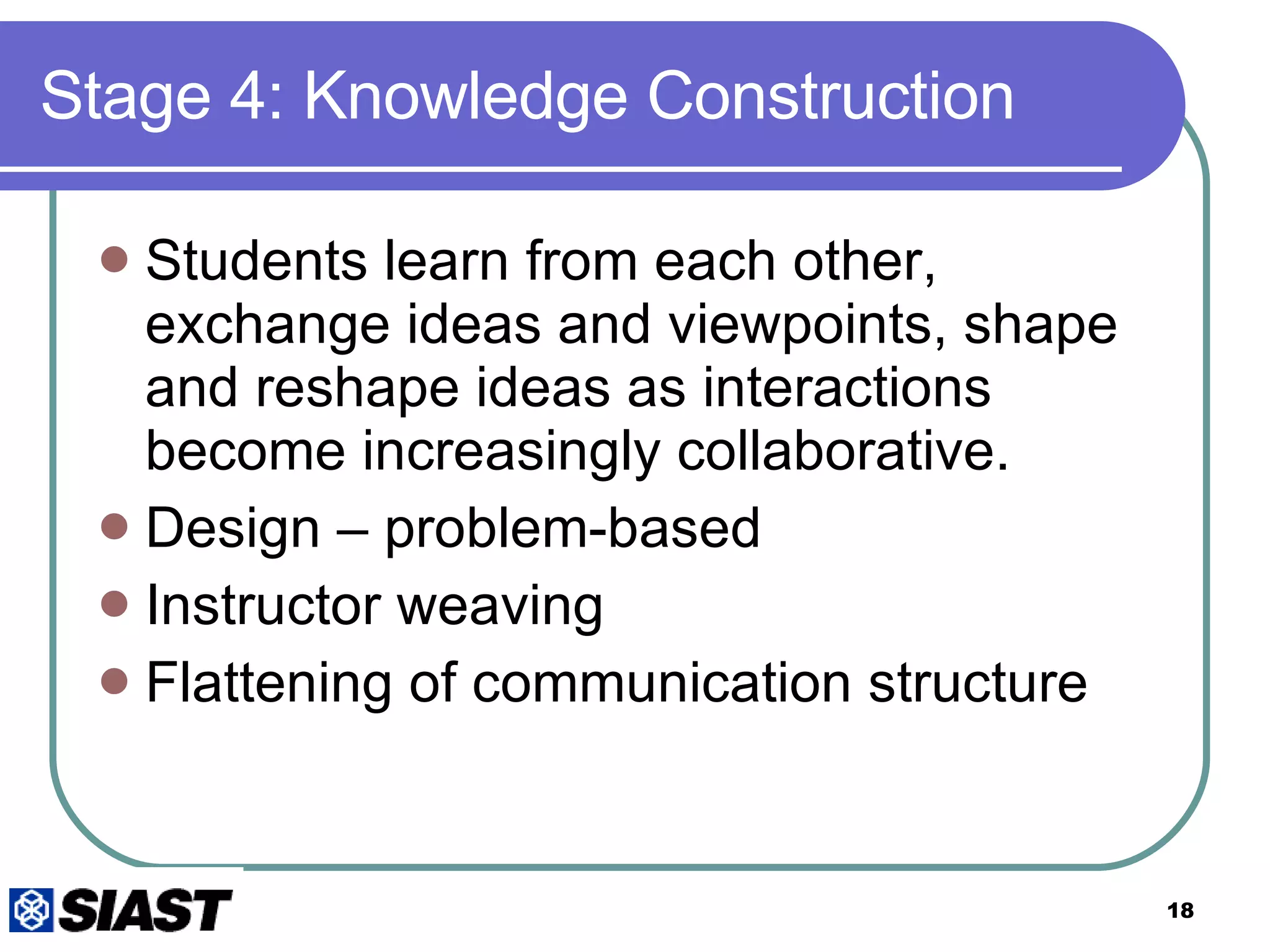
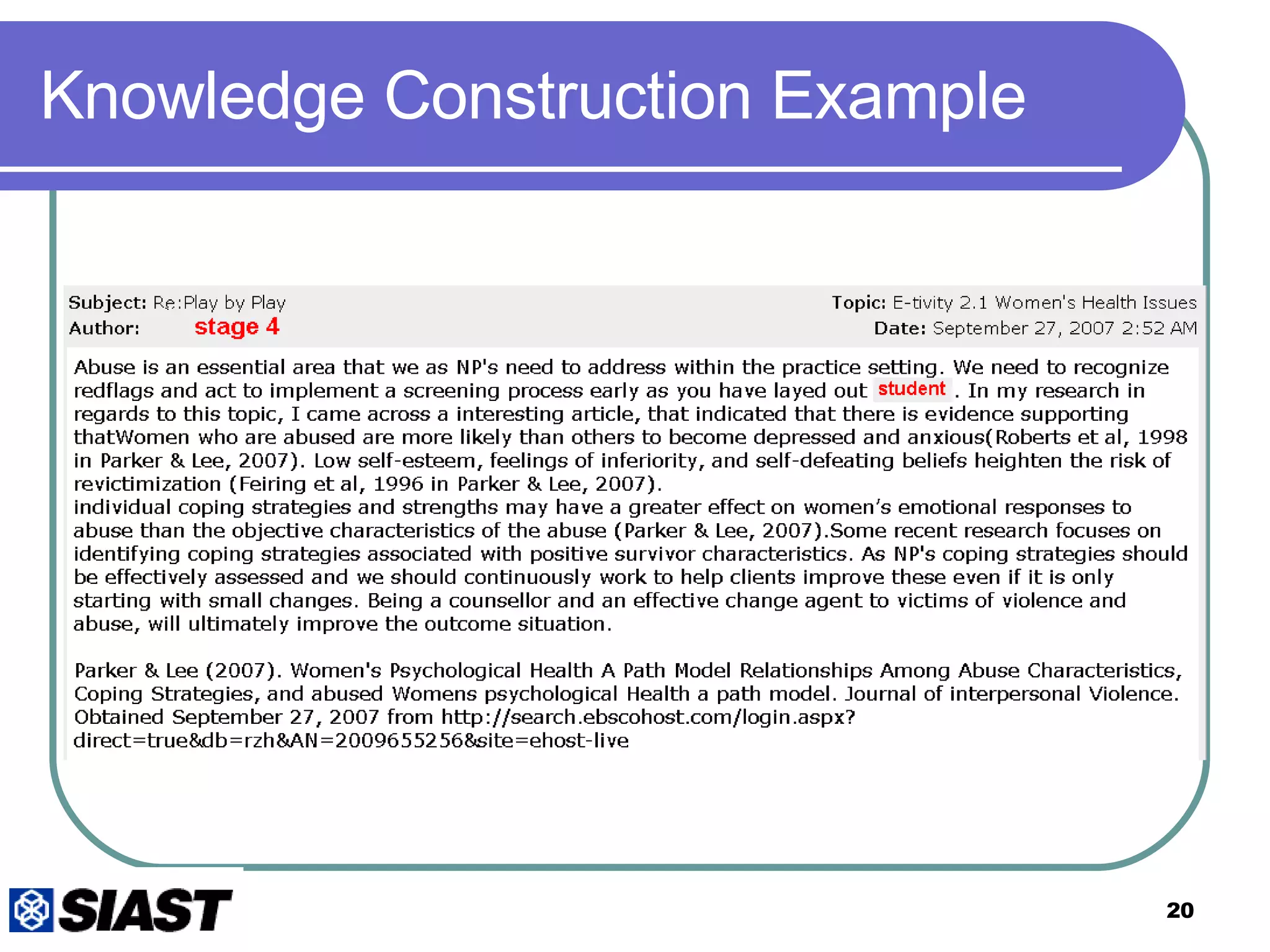
Stage 4: Knowledge Construction Students learn from each other, exchange ideas and viewpoints, shape and reshape ideas as interactions become increasingly collaborative.  Design – problem-based Instructor weaving  Flattening of communication structure
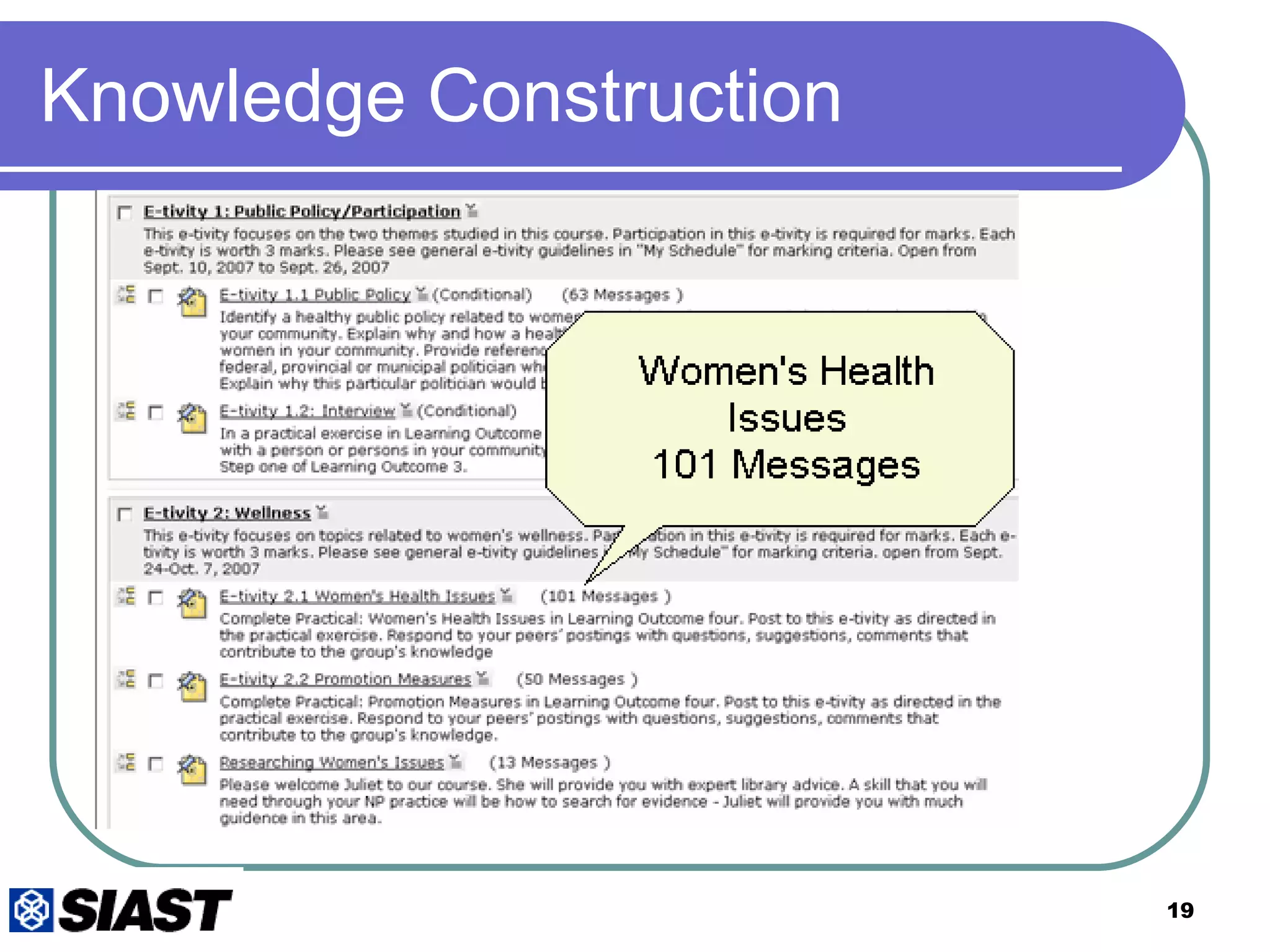
Knowledge Construction
Knowledge Construction Example
Summarizing vs. Weaving  E-moderator Skills Summarizing – reproducing the material in a shortened form – picking out the main points Weaving – selects themes & rearranges them into a new statement making connections that may not be intended by the writers
Stage 5: Development Students  reflect  on their involvement in the E-tivities:  what learned? from whom? how learned? how to apply? understanding of networking & involvement with technology and classmates? evaluating thoughts and processes   
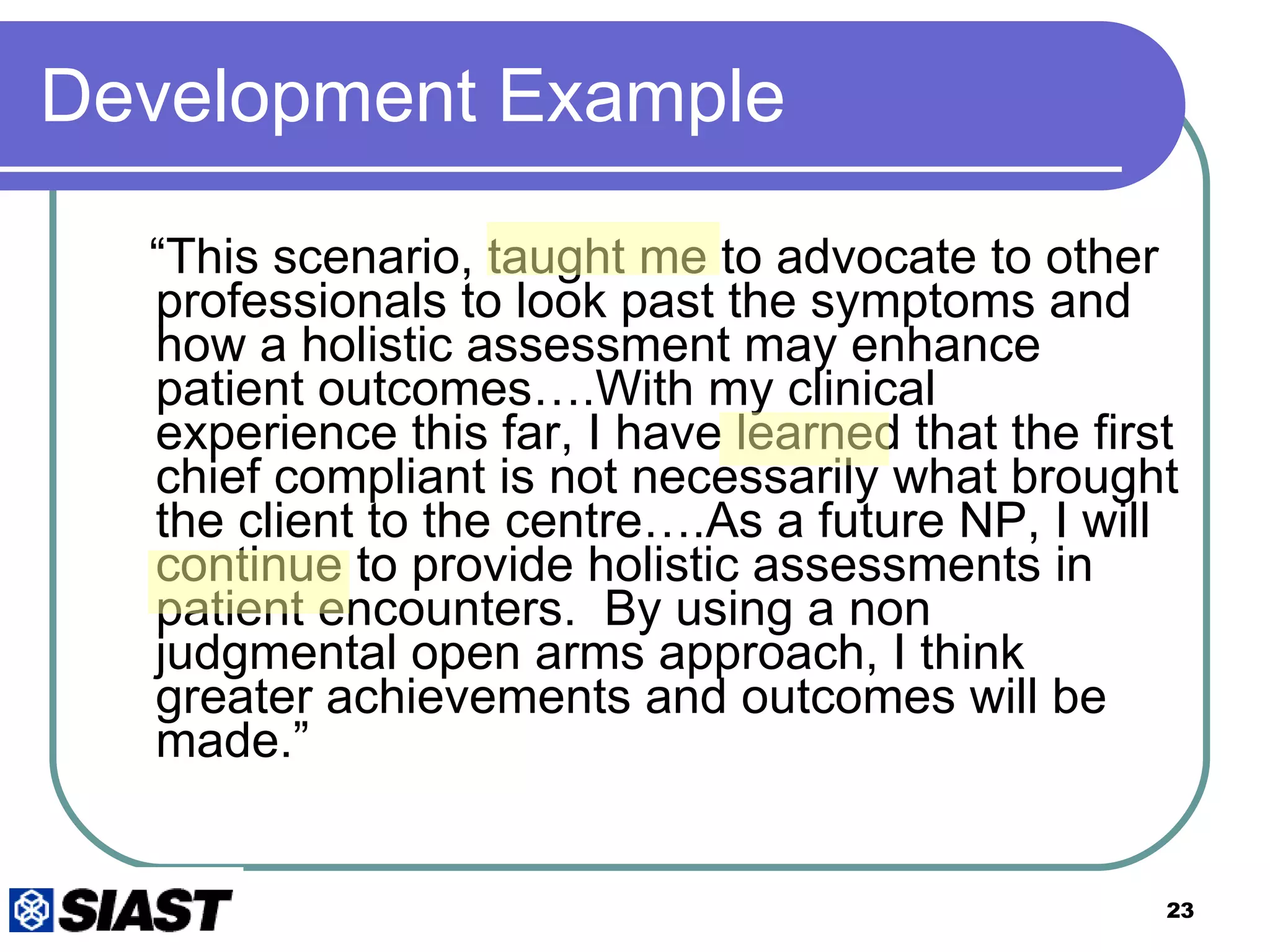
Development Example “ This scenario, taught me to advocate to other professionals to look past the symptoms and how a holistic assessment may enhance patient outcomes….With my clinical experience this far, I have learned that the first chief compliant is not necessarily what brought the client to the centre….As a future NP, I will continue to provide holistic assessments in patient encounters.  By using a non judgmental open arms approach, I think greater achievements and outcomes will be made.”
Vision for the Future  implement peer auditing develop evaluation strategies for e-tivities develop summarizing and weaving skills develop library of e-moderating activities  identify e-tivities for each style of learner be transparent to students
Possibilities for Further Research Investigate… student/instructor interactions per Salmon’s stage model effective e-moderating training strategies students and instructors’ perspectives with use of Salmon’s model strategies for implementing Salmon’s model …
Questions?
Resources Gilly Salmon Web site – All Things in Moderation.  http:// www.atimod.com Salmon, G. (2004).  E-moderating: The key to teaching and learning online . London: Taylor and Francis.  www.e-moderating.com Salmon, G. (2002).  E-tivities: The key to active online learning . London: Taylor and Francis.  www.e-tivities.com
Contact Info c [email_address] [email_address] [email_address] presentation will be available at  http://programs.siast.sk.ca/nelson

CNIE Prepare To Succeed Salmon5 Stage Emoderating Model April27 08

  • 1.
    Prepare to Succeed:Applying Gilly Salmon’s Emoderating Model
  • 2.
    Saskatchewan Institute ofApplied Science & Technology (SIAST) Carol Blenkin Curriculum Writer Joyce Bruce Program Head, Primary Care Nurse Practitioner Program Denise Nelson Instructional Designer
  • 3.
    Student Comment “Come on! This is an online course. Chatting with my classmates is a waste of my valuable time. I didn’t pay money to socialize. Is there an online course I can take that doesn’t require conferencing?”
  • 4.
    Spark How manyof you support faculty in developing e-moderating skills?
  • 5.
    Plan Background ProblemModel of Teaching and Learning Online 5 stages & examples Action for the future Further research Questions
  • 6.
    Background Saskatchewan Instituteof Applied Science and Technology 4 campuses across province 12,000 full time students Half are sequential and half workplace Offers ~160 programs in business and agriculture, health and science, technology, industry, nursing, hospitality services, community services and basic education. Over 200 fully online courses
  • 7.
    Continued… Evolution –course design to e-moderating Campus Sask. Salmon Elluminate session Campus Sask. ~ 5 week E-moderating course Nurse practitioner program professional development in-service – practice e-moderating skills with authentic student examples Informal dialogue with Gilly
  • 8.
    Problem – Program/FacultyPerspective trained new tutors every semester via telephone conferencing online course orientation – focused on technical training and course management tutor-student interaction minimal use of online discussion forums directed to time management and study skills tutors unaware of role to enhance active learning of course content
  • 9.
  • 10.
    Stage 1: Accessand Motivation Ensure accessibility Welcome and encourage participation Students post 1 st message
  • 11.
  • 12.
  • 13.
    Stage 2: OnlineSocialization Students explore the technology, send and receive messages, meet classmates and establish relationships with peers and tutor. (scavenger hunt)
  • 14.
  • 15.
    Stage 3: InformationExchange Students share information in discussions relating to the course content.
  • 16.
  • 17.
  • 18.
    Stage 4: KnowledgeConstruction Students learn from each other, exchange ideas and viewpoints, shape and reshape ideas as interactions become increasingly collaborative. Design – problem-based Instructor weaving Flattening of communication structure
  • 19.
  • 20.
  • 21.
    Summarizing vs. Weaving E-moderator Skills Summarizing – reproducing the material in a shortened form – picking out the main points Weaving – selects themes & rearranges them into a new statement making connections that may not be intended by the writers
  • 22.
    Stage 5: DevelopmentStudents reflect on their involvement in the E-tivities: what learned? from whom? how learned? how to apply? understanding of networking & involvement with technology and classmates? evaluating thoughts and processes   
  • 23.
    Development Example “This scenario, taught me to advocate to other professionals to look past the symptoms and how a holistic assessment may enhance patient outcomes….With my clinical experience this far, I have learned that the first chief compliant is not necessarily what brought the client to the centre….As a future NP, I will continue to provide holistic assessments in patient encounters.  By using a non judgmental open arms approach, I think greater achievements and outcomes will be made.”
  • 24.
    Vision for theFuture implement peer auditing develop evaluation strategies for e-tivities develop summarizing and weaving skills develop library of e-moderating activities identify e-tivities for each style of learner be transparent to students
  • 25.
    Possibilities for FurtherResearch Investigate… student/instructor interactions per Salmon’s stage model effective e-moderating training strategies students and instructors’ perspectives with use of Salmon’s model strategies for implementing Salmon’s model …
  • 26.
  • 27.
    Resources Gilly SalmonWeb site – All Things in Moderation. http:// www.atimod.com Salmon, G. (2004). E-moderating: The key to teaching and learning online . London: Taylor and Francis. www.e-moderating.com Salmon, G. (2002). E-tivities: The key to active online learning . London: Taylor and Francis. www.e-tivities.com
  • 28.
    Contact Info c[email_address] [email_address] [email_address] presentation will be available at http://programs.siast.sk.ca/nelson