Parts of the circulation . Definition of circulatory system: Arturo The heart: Jonathan (Miki) The blood: Álvaro Systemic  circulation: Alejandro M and Álvaro. Pulmonary  circulation: Miki and Arturo Taking care of circulatory system : Alejandro Moreno García
Definition The circulatory  system comprises  the blood, circulatory system and limphathic  system. Its functions includes respiratory  function , nutritional function and  maintaining  the  temperature.  This system consists of :a liquid medium,the blood; an impulsor organ,  the heart; and a system of blood vessels that  carries blood to  every part of the body. In humans,blood makes two circuits - double circulation is complete -  it does not mix the oxigenated and desoxigenated blood.
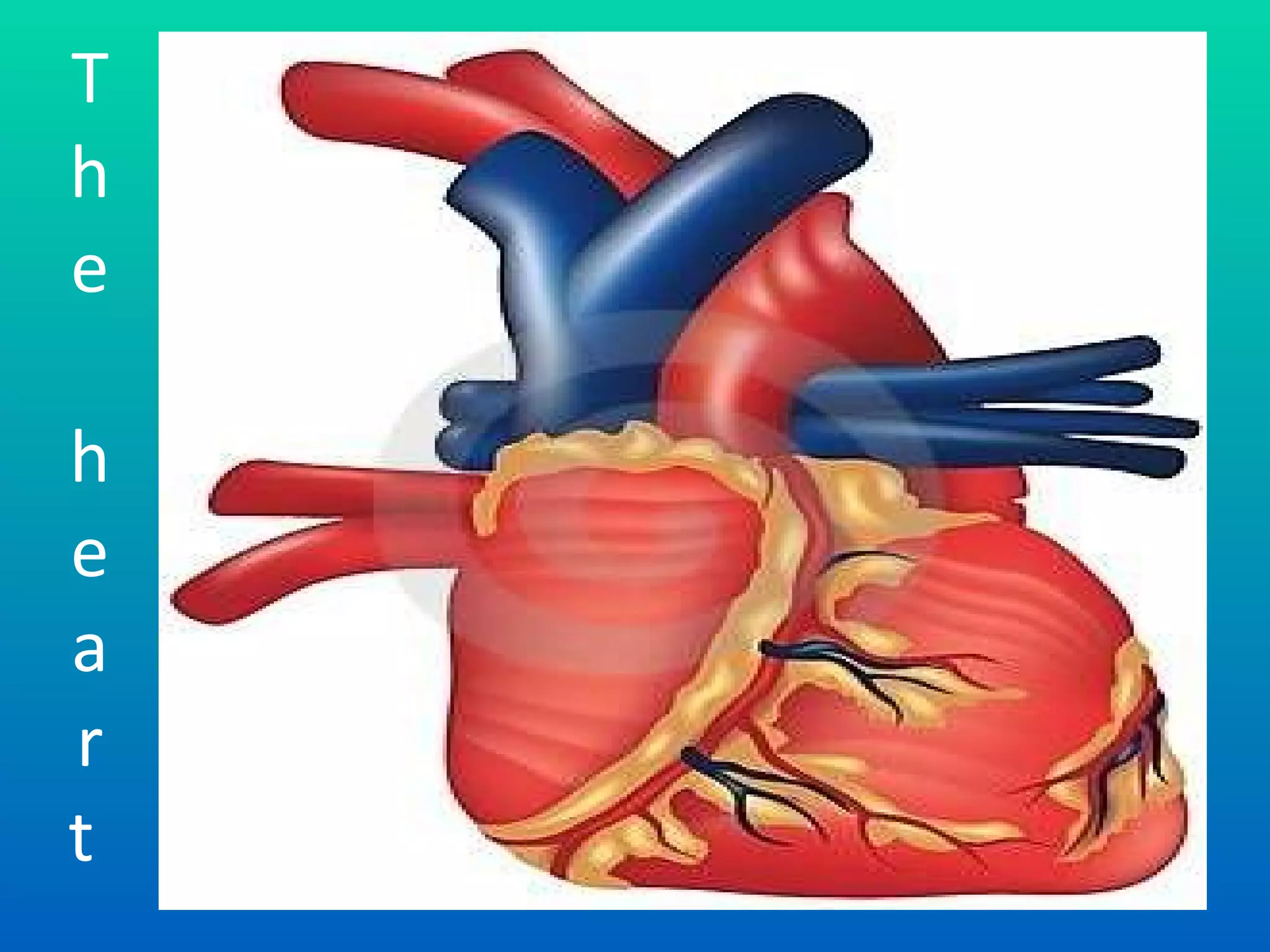
Function of heart The heart is a muscular organ and responsible for pumping blood throughout the blood vessels.It is the most important organ . The heart is located in  the anterior sternum . The human heart has four chambers: two superior atria and two inferior ventricles.  The pathway of blood throught the human  body consist of a pulmonary circuit and a systemic circuit .
T he heart
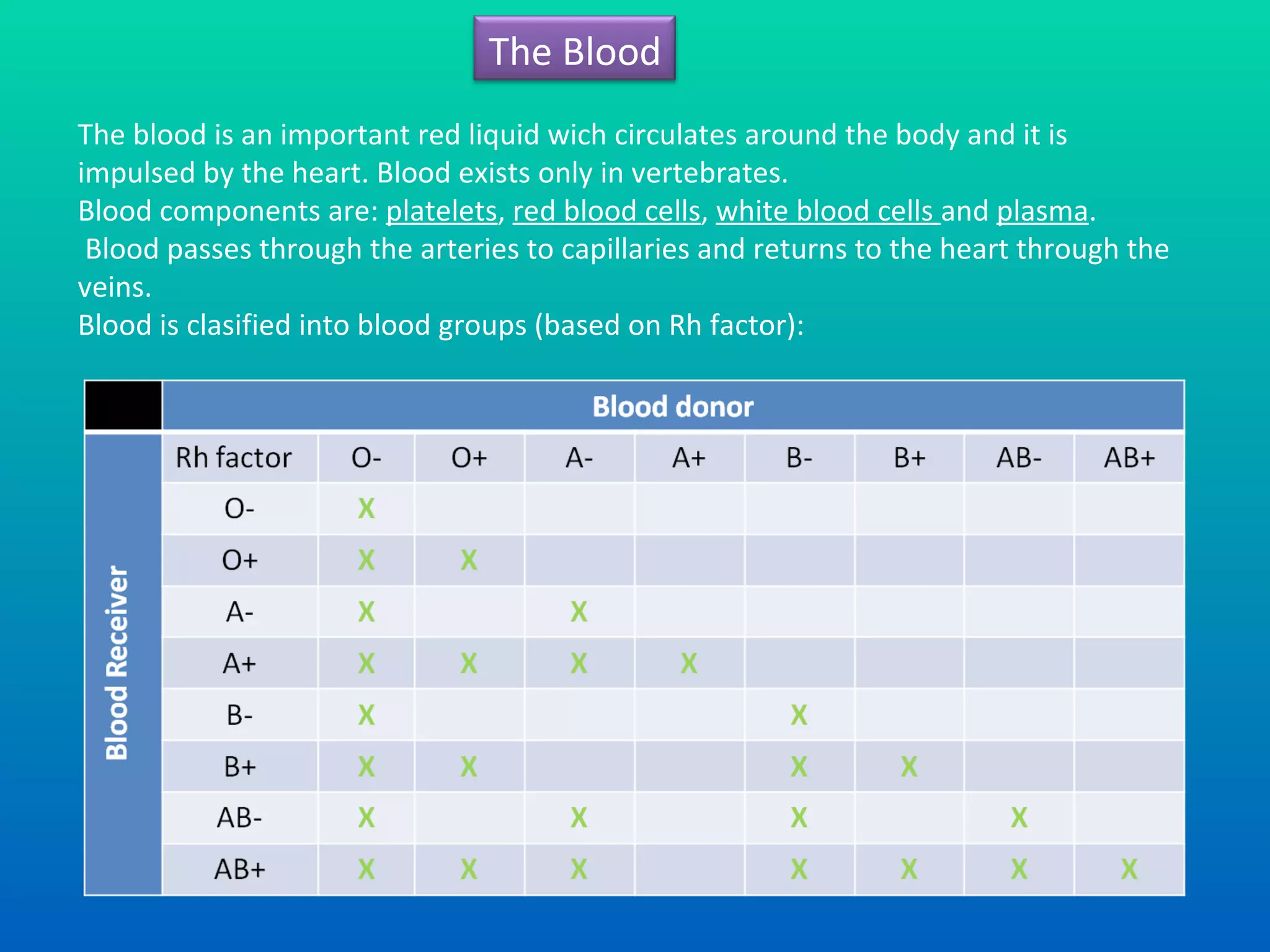
The blood is an important red liquid wich circulates around the body and it  i s impulsed by the heart. Blood exists only in vertebrates.  Blood components are:  p latelets ,  red blood cells ,  white blood cells  and  plasma . Blood passes through the arteries to capillaries and returns to the heart through the veins. Blood is clasified into blood groups (based on Rh factor): The Blood
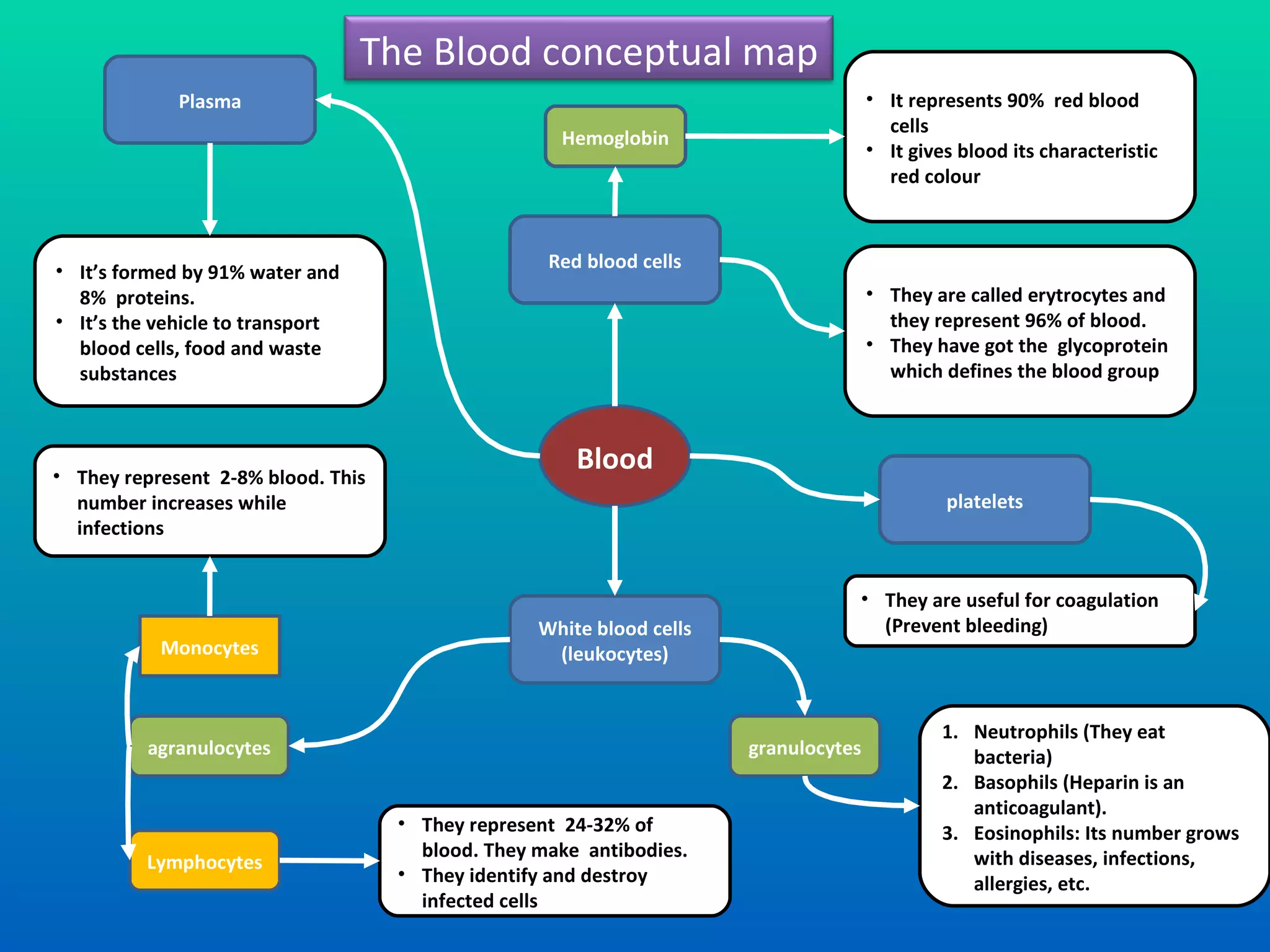
Blood Red blood cells White blood cells (leukocytes) Plasma platelets Hemoglobin It represents 90%  red blood cells It gives blood its characteristic red colour They are called erytrocytes and they represent 96% of blood. They have got the  glycoprotein which defines the blood group They are useful for coagulation (Prevent bleeding) It’s formed by 91% water and 8%  proteins. It’s the vehicle to transport blood cells, food and waste substances Monocytes Lymphocytes granulocytes agranulocytes They represent  2-8% blood. This number increases while infections They represent  24-32% of blood. They make  antibodies. They identify and destroy infected cells Neutrophils (They eat bacteria) Basophils (Heparin is an  anticoagulant ). Eosinophils: Its number grows with diseases, infections, allergies, etc. The Blood conceptual map
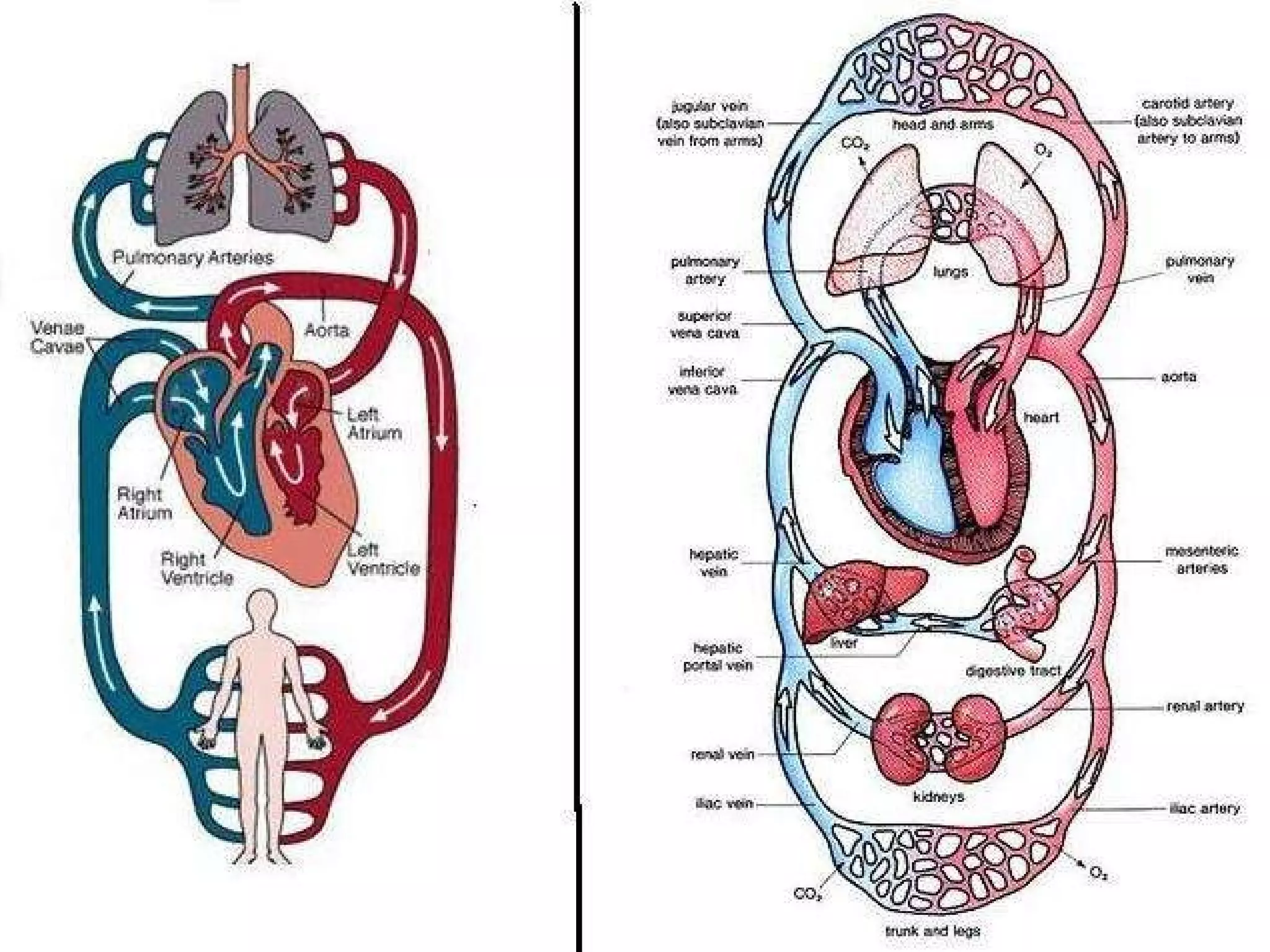
Systemic  circulation It is the circuit of the circulatory system where  the blood is carried  from  the lungs to  the   heart   and from there  to the rest of the body .  Blood provides oxygen to the cells . Both venae cavae send blood without oxygen to the right atrium.  From here the blood exits to fill the right ventricle, ready to be pumped into the pulmonary circulation for more oxygen.
PULMONARY CIRCULATION The pulmonary circulation is the circuit of the circulatory system where deoxygenated blood is carried from the heart- right ventricle- to the lungs.  In the lungs the blood is oxygenated and the carbon dioxide is removed from the blood. Then the blood with oxygen leaves the lungs  through the pulmonary  veins  and returns to the heart .
 
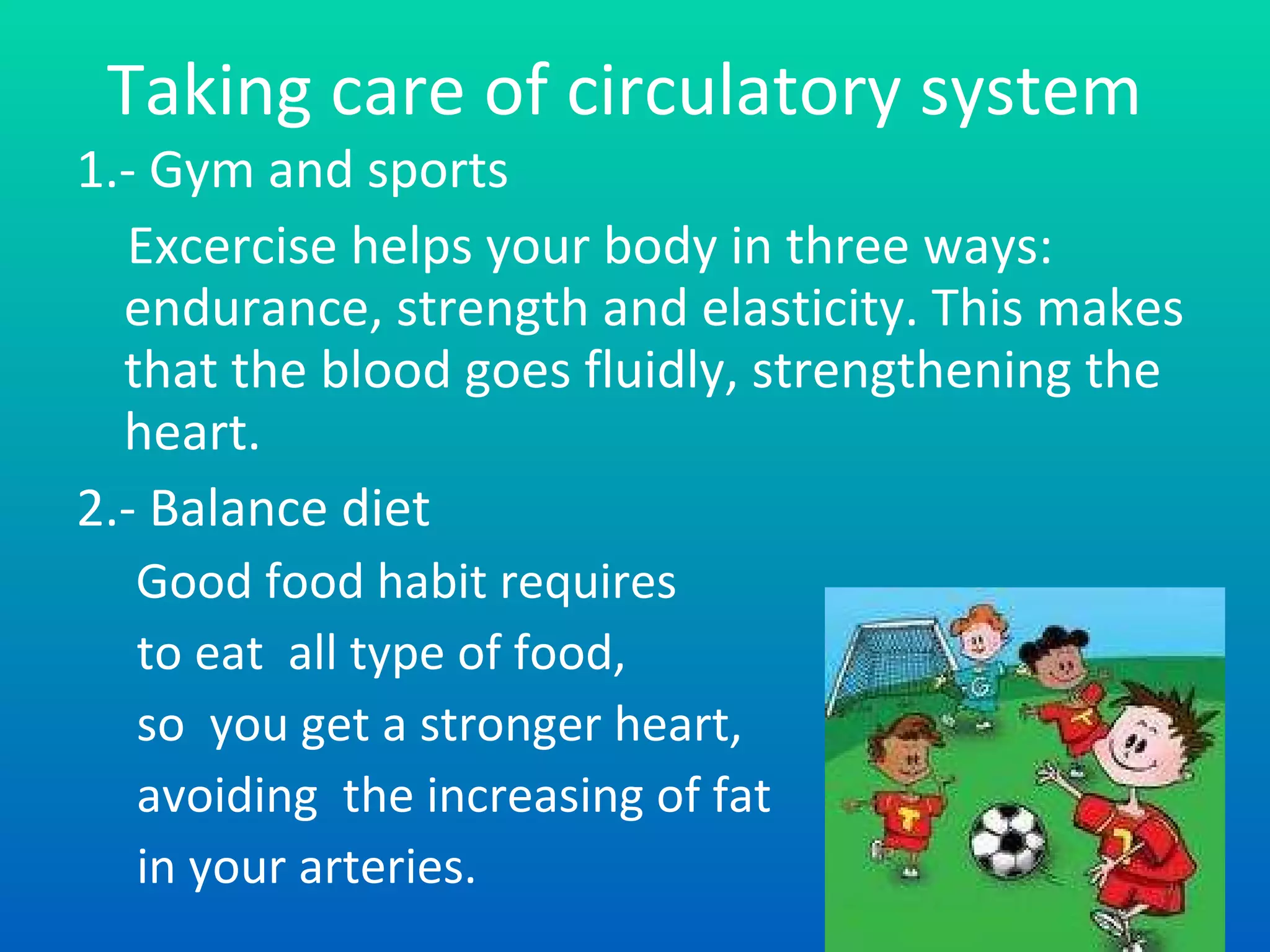
Taking care of circulatory system 1.- Gym and sports Excer c i s e helps your body in three ways: endurance, strength and elasticity. This makes that the blood goes fluid ly,  strengthening the heart. 2.- Balance diet   Good food habit requires to  eat  all  type of food, so  you get a stronger heart , avo i ding  the increasing of fat in your arteries. Turn next page there are more information of system care.
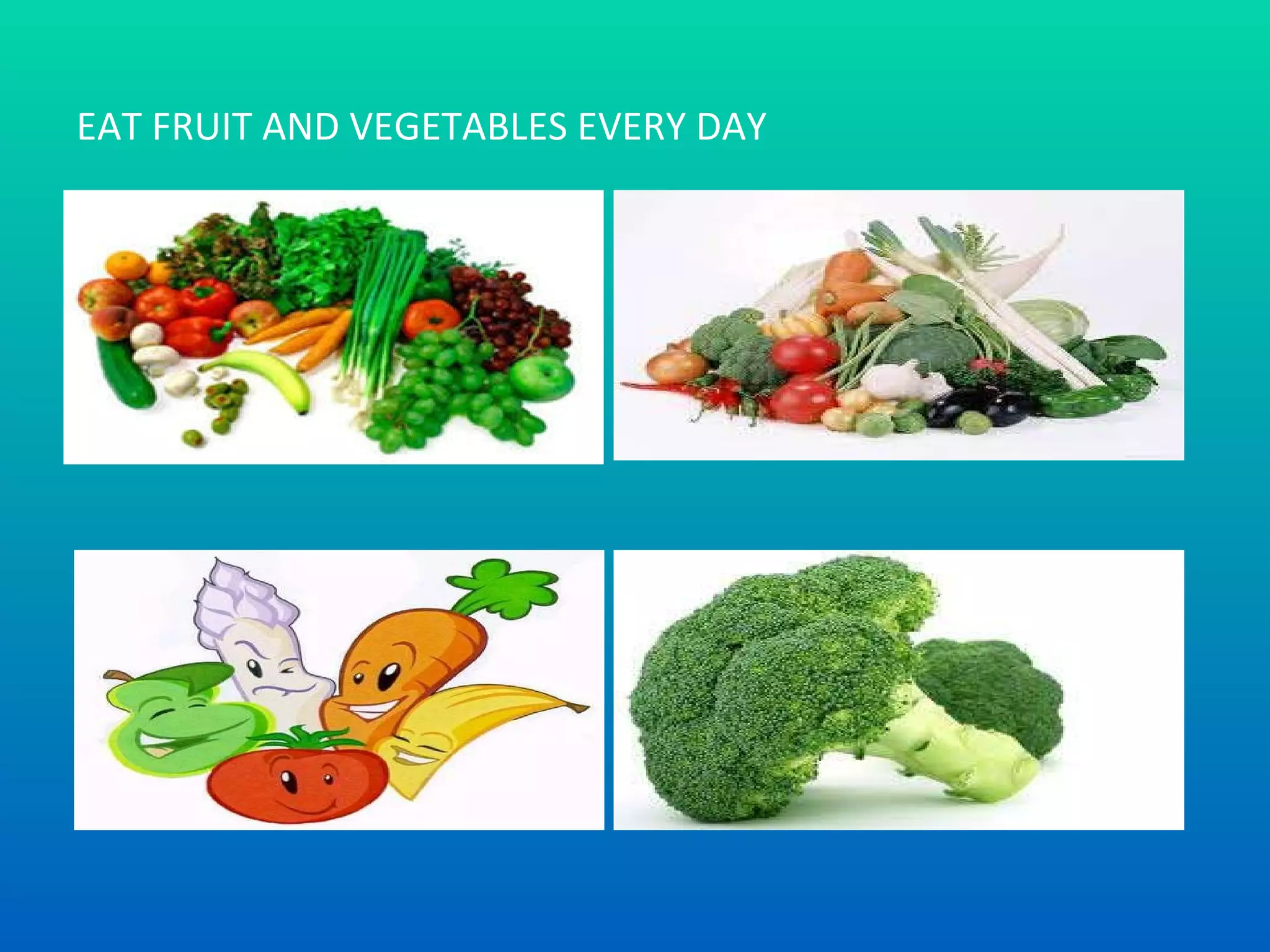
EAT FRUIT AND VEGETABLES EVERY DAY
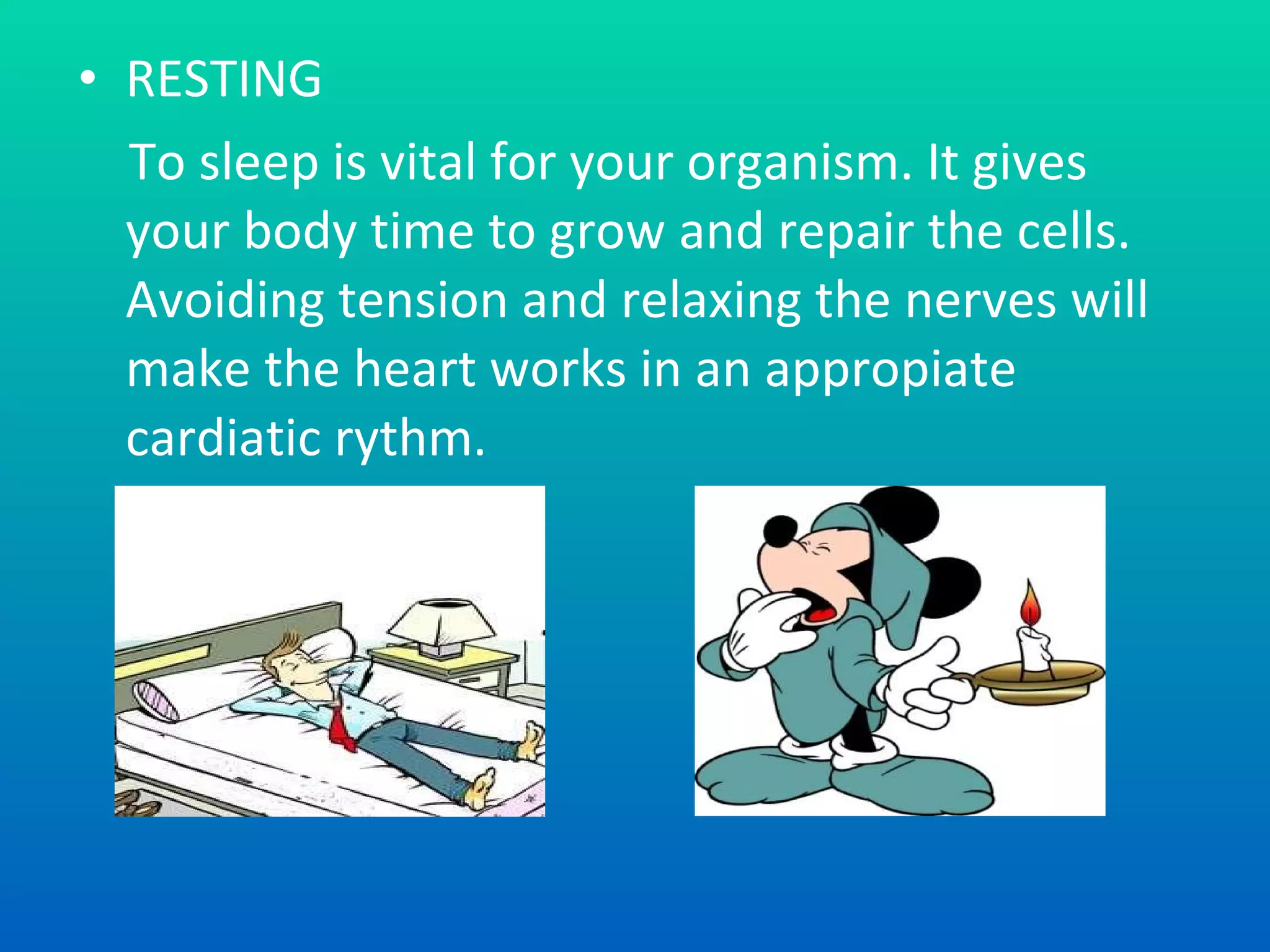
R ESTING To s leep is vital for your organism. It gives your body time to grow and repair  the cells.   A vo i ding tension and relaxing the nerves will make the heart  works in  an appropiate cardiatic rythm.
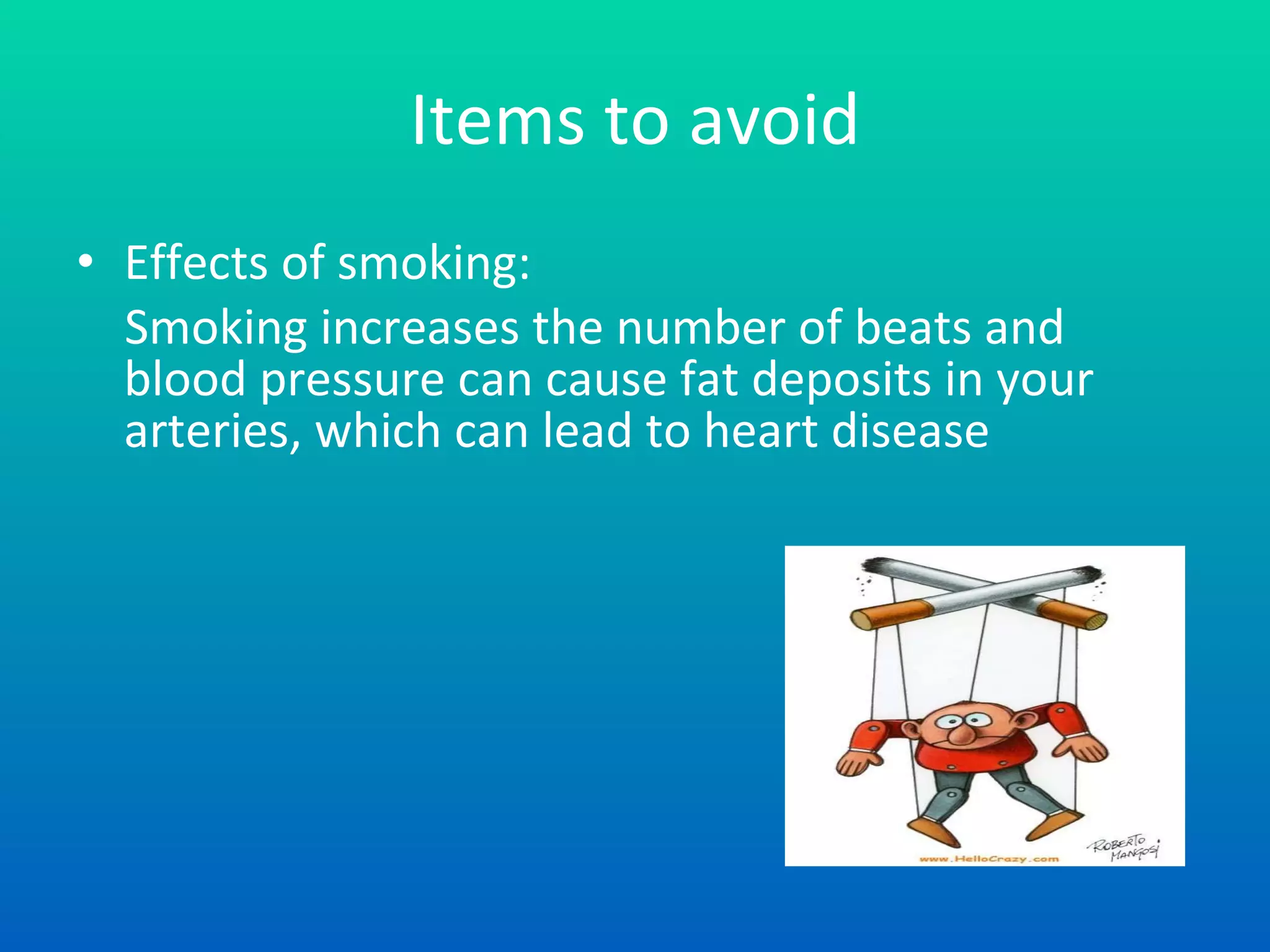
Items to avoid Effects of smoking: Smoking increases the number of beats and blood pressure can cause fat deposits in your arteries, which can lead to heart disease
Effects of Alcohol: Alcohol is a slow poison.It is pumped through the blood to the rest of the body hampering the cardiac rhythm.
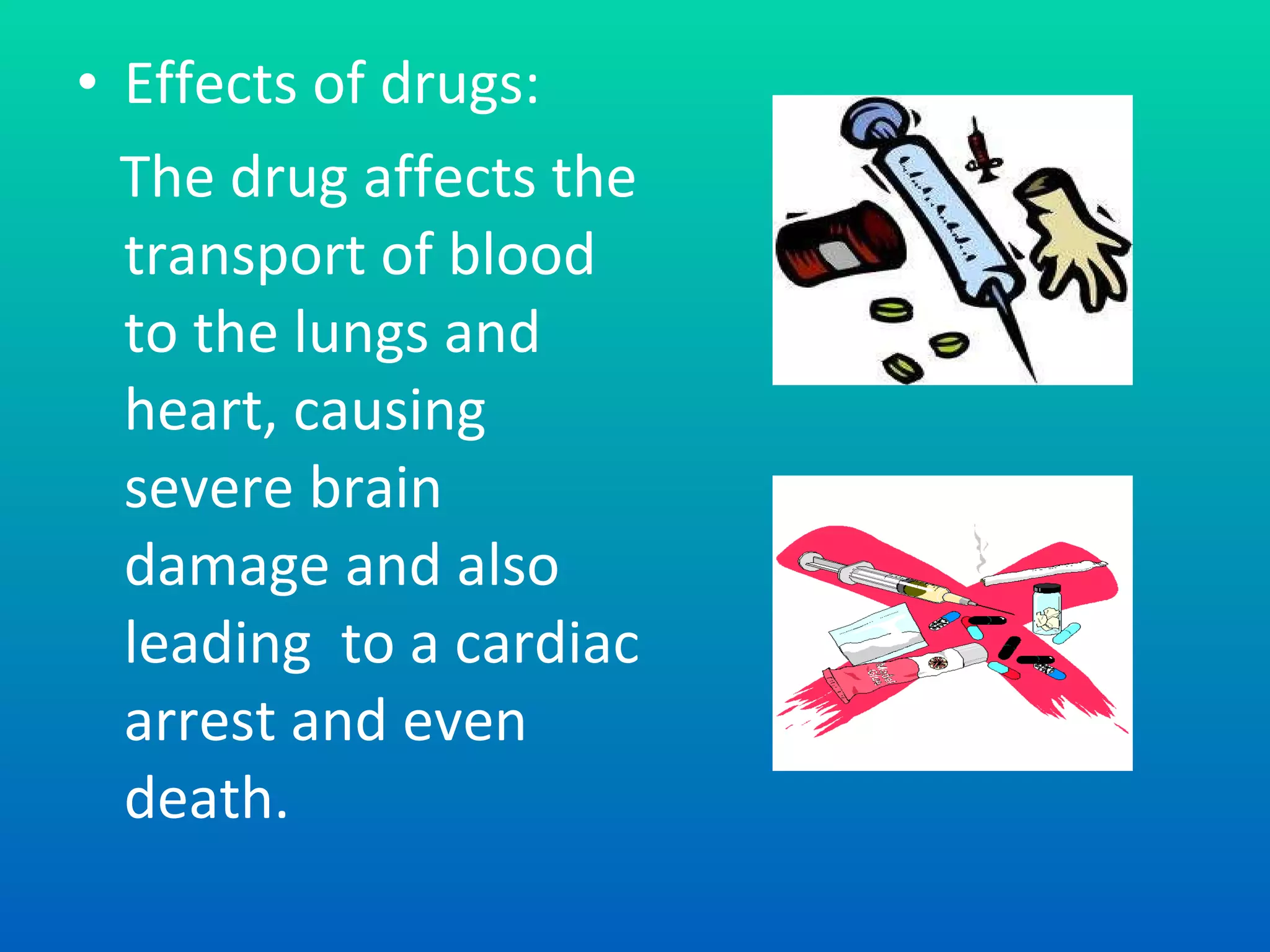
Effects of drugs: The drug affects the transport of blood to the lungs and heart, causing severe brain damage and also leading  to a cardiac arrest and even death.
GREAT work!!!

The circulatory system

  • 1.
  • 2.
    Parts of thecirculation . Definition of circulatory system: Arturo The heart: Jonathan (Miki) The blood: Álvaro Systemic circulation: Alejandro M and Álvaro. Pulmonary circulation: Miki and Arturo Taking care of circulatory system : Alejandro Moreno García
  • 3.
    Definition The circulatory system comprises the blood, circulatory system and limphathic system. Its functions includes respiratory function , nutritional function and maintaining the temperature. This system consists of :a liquid medium,the blood; an impulsor organ, the heart; and a system of blood vessels that carries blood to every part of the body. In humans,blood makes two circuits - double circulation is complete - it does not mix the oxigenated and desoxigenated blood.
  • 4.
    Function of heartThe heart is a muscular organ and responsible for pumping blood throughout the blood vessels.It is the most important organ . The heart is located in the anterior sternum . The human heart has four chambers: two superior atria and two inferior ventricles. The pathway of blood throught the human body consist of a pulmonary circuit and a systemic circuit .
  • 5.
  • 6.
    The blood isan important red liquid wich circulates around the body and it i s impulsed by the heart. Blood exists only in vertebrates. Blood components are: p latelets , red blood cells , white blood cells and plasma . Blood passes through the arteries to capillaries and returns to the heart through the veins. Blood is clasified into blood groups (based on Rh factor): The Blood
  • 7.
    Blood Red bloodcells White blood cells (leukocytes) Plasma platelets Hemoglobin It represents 90% red blood cells It gives blood its characteristic red colour They are called erytrocytes and they represent 96% of blood. They have got the glycoprotein which defines the blood group They are useful for coagulation (Prevent bleeding) It’s formed by 91% water and 8% proteins. It’s the vehicle to transport blood cells, food and waste substances Monocytes Lymphocytes granulocytes agranulocytes They represent 2-8% blood. This number increases while infections They represent 24-32% of blood. They make antibodies. They identify and destroy infected cells Neutrophils (They eat bacteria) Basophils (Heparin is an anticoagulant ). Eosinophils: Its number grows with diseases, infections, allergies, etc. The Blood conceptual map
  • 8.
    Systemic circulationIt is the circuit of the circulatory system where the blood is carried from the lungs to the heart and from there to the rest of the body . Blood provides oxygen to the cells . Both venae cavae send blood without oxygen to the right atrium. From here the blood exits to fill the right ventricle, ready to be pumped into the pulmonary circulation for more oxygen.
  • 9.
    PULMONARY CIRCULATION The pulmonarycirculation is the circuit of the circulatory system where deoxygenated blood is carried from the heart- right ventricle- to the lungs. In the lungs the blood is oxygenated and the carbon dioxide is removed from the blood. Then the blood with oxygen leaves the lungs through the pulmonary veins and returns to the heart .
  • 10.
  • 11.
    Taking care ofcirculatory system 1.- Gym and sports Excer c i s e helps your body in three ways: endurance, strength and elasticity. This makes that the blood goes fluid ly, strengthening the heart. 2.- Balance diet Good food habit requires to eat all type of food, so you get a stronger heart , avo i ding the increasing of fat in your arteries. Turn next page there are more information of system care.
  • 12.
    EAT FRUIT ANDVEGETABLES EVERY DAY
  • 13.
    R ESTING Tos leep is vital for your organism. It gives your body time to grow and repair the cells. A vo i ding tension and relaxing the nerves will make the heart works in an appropiate cardiatic rythm.
  • 14.
    Items to avoidEffects of smoking: Smoking increases the number of beats and blood pressure can cause fat deposits in your arteries, which can lead to heart disease
  • 15.
    Effects of Alcohol:Alcohol is a slow poison.It is pumped through the blood to the rest of the body hampering the cardiac rhythm.
  • 16.
    Effects of drugs:The drug affects the transport of blood to the lungs and heart, causing severe brain damage and also leading to a cardiac arrest and even death.
  • 17.

Editor's Notes