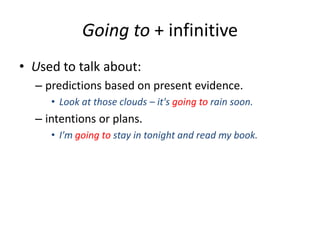
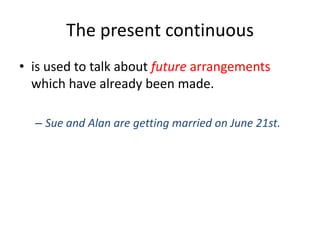
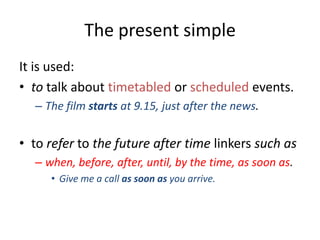
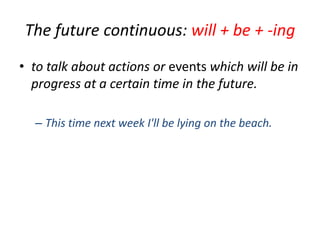
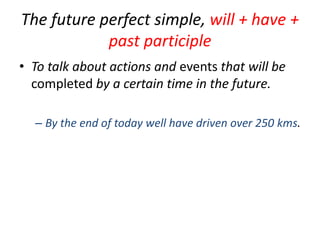
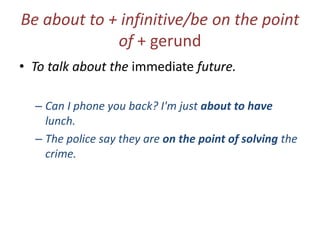
This document discusses various ways to talk about the future in English, including using will + infinitive to make predictions or express expectations. Alternatives like likely/unlikely + infinitive with "to" and may/might/could + infinitive without "to" can also express probability. Going to + infinitive is used for predictions based on present evidence or intentions/plans. Other structures like the present continuous, present simple, future continuous, future perfect, and phrases like "be about to" and "be on the point of" are also explained in terms of how they are used to refer to future events, arrangements, or timelines.