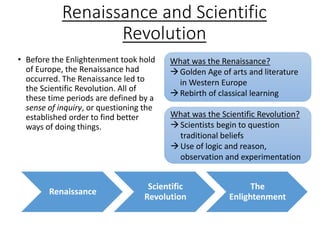
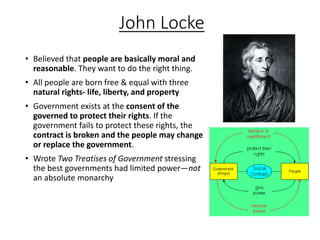
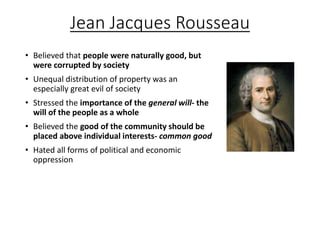
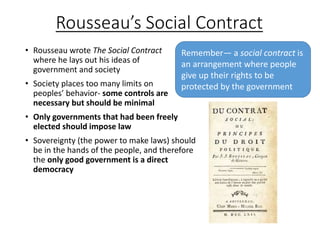
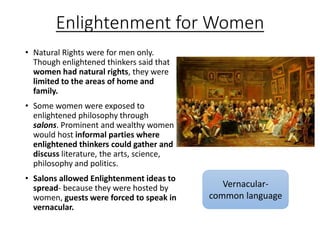
The document summarizes key aspects of the Renaissance, Scientific Revolution, and Enlightenment periods in Europe. It explains that the Scientific Revolution led to using reason and experimentation to study the natural world. During the Enlightenment, this rational approach was applied to understanding human behavior and society. Philosophes like Locke, Montesquieu, Voltaire, Rousseau, and Smith developed ideas about natural rights, separation of powers, freedom of expression, social contracts, and laissez-faire economics that influenced the development of democratic governments. However, their radical ideas threatened the existing social and political order and faced censorship.