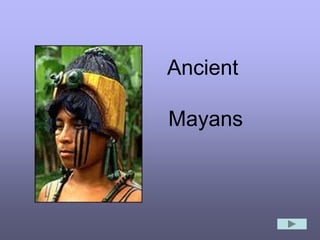
Ancient
Mayans
Introduction
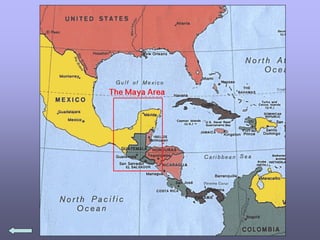
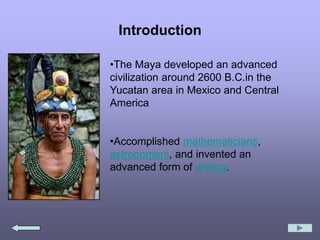
•The Maya developed an advanced
civilization around 2600 B.C.in the
Yucatan area in Mexico and Central
America
•Accomplished mathematicians,
astronomers, and invented an
advanced form of writing.
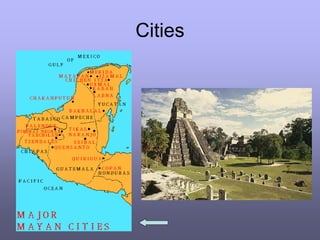
Mayan
Cities
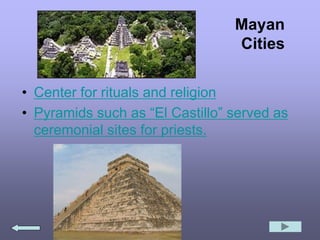
• Center for rituals and religion
• Pyramids such as “El Castillo” served as
ceremonial sites for priests.
Cities
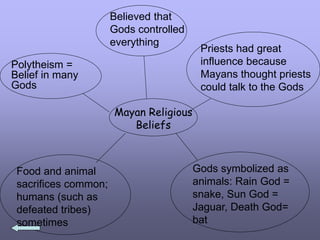
Mayan Religious
Beliefs
Polytheism =
Belief in many
Gods
Believed that
Gods controlled
everything
Priests had great
influence because
Mayans thought priests
could talk to the Gods
Gods symbolized as
animals: Rain God =
snake, Sun God =
Jaguar, Death God=
bat
Food and animal
sacrifices common;
humans (such as
defeated tribes)
sometimes
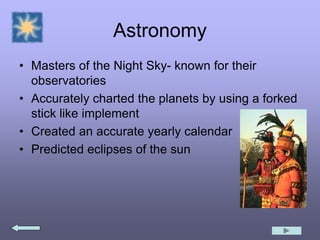
Astronomy
• Masters of the Night Sky- known for their
observatories
• Accurately charted the planets by using a forked
stick like implement
• Created an accurate yearly calendar
• Predicted eclipses of the sun
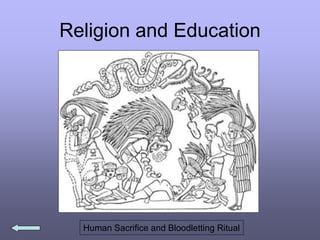
Religion and Education
Human Sacrifice and Bloodletting Ritual
Religion: Importance of Agriculture
• Mayan religion reflected the fundamental
role of agriculture in their society
• Popol Vuh, was the Mayan creation myth
that taught that the gods had created
human beings out of maize and water
• Gods kept the world in order and
maintained the agricultural cycle in
exchange for honors and sacrifices
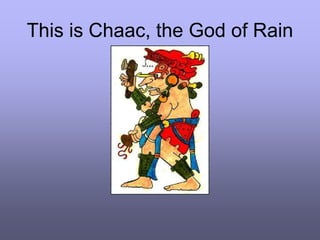
This is Chaac, the God of Rain
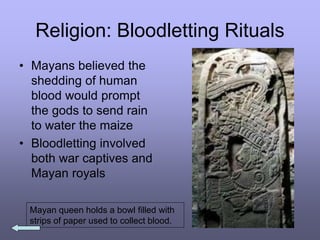
Religion: Bloodletting Rituals
• Mayans believed the
shedding of human
blood would prompt
the gods to send rain
to water the maize
• Bloodletting involved
both war captives and
Mayan royals
Mayan queen holds a bowl filled with
strips of paper used to collect blood.
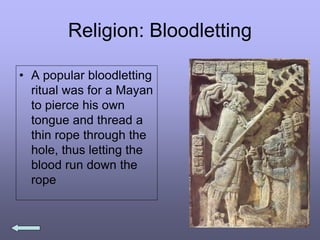
Religion: Bloodletting
• A popular bloodletting
ritual was for a Mayan
to pierce his own
tongue and thread a
thin rope through the
hole, thus letting the
blood run down the
rope
Religion: The Ball Game
• Mayans inherited a ball game from the Olmecs
that was an important part of Mayan political and
religious festivals
• High-ranking captives were forced to play the
game for their very lives
– The losers became sacrificial victims and faced
torture and execution immediately following the match
• Object of the game was to propel an 8 inch ball
of solid baked rubber through a ring or onto a
marker without using your hands
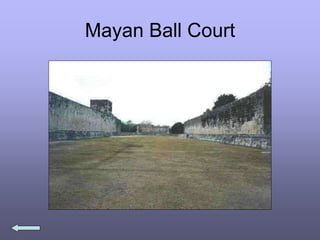
Mayan Ball Court
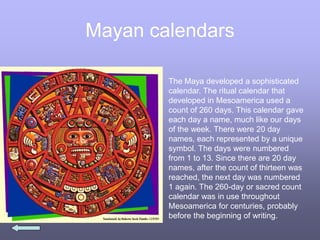
Mayan calendars
The Maya developed a sophisticated
calendar. The ritual calendar that
developed in Mesoamerica used a
count of 260 days. This calendar gave
each day a name, much like our days
of the week. There were 20 day
names, each represented by a unique
symbol. The days were numbered
from 1 to 13. Since there are 20 day
names, after the count of thirteen was
reached, the next day was numbered
1 again. The 260-day or sacred count
calendar was in use throughout
Mesoamerica for centuries, probably
before the beginning of writing.
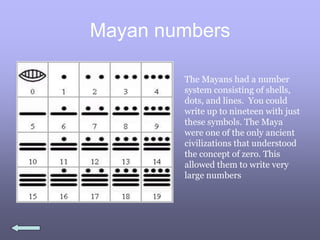
Mayan numbers
The Mayans had a number
system consisting of shells,
dots, and lines. You could
write up to nineteen with just
these symbols. The Maya
were one of the only ancient
civilizations that understood
the concept of zero. This
allowed them to write very
large numbers
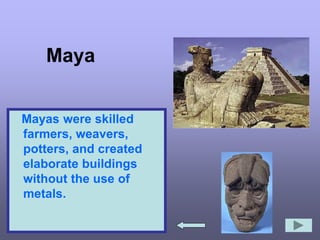
Maya
Mayas were skilled
farmers, weavers,
potters, and created
elaborate buildings
without the use of
metals.
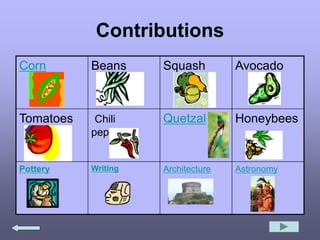
Contributions
Corn Beans Squash Avocado
Tomatoes Chili
peppers
Quetzal Honeybees
Pottery Writing Architecture Astronomy
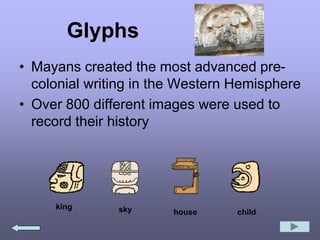
Glyphs
• Mayans created the most advanced pre-
colonial writing in the Western Hemisphere
• Over 800 different images were used to
record their history
king sky house child
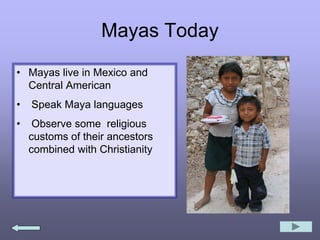
Mayas Today
• Mayas live in Mexico and
Central American
• Speak Maya languages
• Observe some religious
customs of their ancestors
combined with Christianity

Ancient Mayans

  • 1.
  • 3.
    Introduction •The Maya developedan advanced civilization around 2600 B.C.in the Yucatan area in Mexico and Central America •Accomplished mathematicians, astronomers, and invented an advanced form of writing.
  • 4.
    Mayan Cities • Center forrituals and religion • Pyramids such as “El Castillo” served as ceremonial sites for priests.
  • 5.
  • 6.
    Mayan Religious Beliefs Polytheism = Beliefin many Gods Believed that Gods controlled everything Priests had great influence because Mayans thought priests could talk to the Gods Gods symbolized as animals: Rain God = snake, Sun God = Jaguar, Death God= bat Food and animal sacrifices common; humans (such as defeated tribes) sometimes
  • 7.
    Astronomy • Masters ofthe Night Sky- known for their observatories • Accurately charted the planets by using a forked stick like implement • Created an accurate yearly calendar • Predicted eclipses of the sun
  • 8.
    Religion and Education HumanSacrifice and Bloodletting Ritual
  • 9.
    Religion: Importance ofAgriculture • Mayan religion reflected the fundamental role of agriculture in their society • Popol Vuh, was the Mayan creation myth that taught that the gods had created human beings out of maize and water • Gods kept the world in order and maintained the agricultural cycle in exchange for honors and sacrifices
  • 10.
    This is Chaac,the God of Rain
  • 11.
    Religion: Bloodletting Rituals •Mayans believed the shedding of human blood would prompt the gods to send rain to water the maize • Bloodletting involved both war captives and Mayan royals Mayan queen holds a bowl filled with strips of paper used to collect blood.
  • 12.
    Religion: Bloodletting • Apopular bloodletting ritual was for a Mayan to pierce his own tongue and thread a thin rope through the hole, thus letting the blood run down the rope
  • 13.
    Religion: The BallGame • Mayans inherited a ball game from the Olmecs that was an important part of Mayan political and religious festivals • High-ranking captives were forced to play the game for their very lives – The losers became sacrificial victims and faced torture and execution immediately following the match • Object of the game was to propel an 8 inch ball of solid baked rubber through a ring or onto a marker without using your hands
  • 14.
  • 15.
    Mayan calendars The Mayadeveloped a sophisticated calendar. The ritual calendar that developed in Mesoamerica used a count of 260 days. This calendar gave each day a name, much like our days of the week. There were 20 day names, each represented by a unique symbol. The days were numbered from 1 to 13. Since there are 20 day names, after the count of thirteen was reached, the next day was numbered 1 again. The 260-day or sacred count calendar was in use throughout Mesoamerica for centuries, probably before the beginning of writing.
  • 16.
    Mayan numbers The Mayanshad a number system consisting of shells, dots, and lines. You could write up to nineteen with just these symbols. The Maya were one of the only ancient civilizations that understood the concept of zero. This allowed them to write very large numbers
  • 17.
    Maya Mayas were skilled farmers,weavers, potters, and created elaborate buildings without the use of metals.
  • 18.
    Contributions Corn Beans SquashAvocado Tomatoes Chili peppers Quetzal Honeybees Pottery Writing Architecture Astronomy
  • 19.
    Glyphs • Mayans createdthe most advanced pre- colonial writing in the Western Hemisphere • Over 800 different images were used to record their history king sky house child
  • 20.
    Mayas Today • Mayaslive in Mexico and Central American • Speak Maya languages • Observe some religious customs of their ancestors combined with Christianity