The
Inca Empire
Background
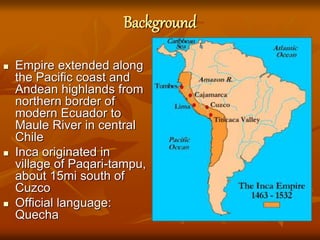
 Empire extended along
the Pacific coast and
Andean highlands from
northern border of
modern Ecuador to
Maule River in central
Chile
 Inca originated in
village of Paqari-tampu,
about 15mi south of
Cuzco
 Official language:
Quecha
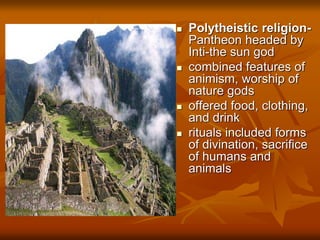
 Polytheistic religion-
Pantheon headed by
Inti-the sun god
 combined features of
animism, worship of
nature gods
 offered food, clothing,
and drink
 rituals included forms
of divination, sacrifice
of humans and
animals
Events leading to
Rise and Fall
 1438: Manco Capac established capital at
Cuzco (Peru)
 1400-1500: Pachacuti gained control of Andean
population about 12 million people
 1525: Emperor Huayna Capac died of plague;
civil war broke out between two sons because
no successor named
 1532: Spanish arrived in Peru
 1535: Empire lost
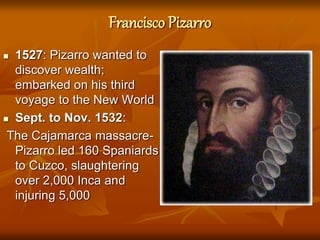
Francisco Pizarro
 1527: Pizarro wanted to
discover wealth;
embarked on his third
voyage to the New World
 Sept. to Nov. 1532:
The Cajamarca massacre-
Pizarro led 160 Spaniards
to Cuzco, slaughtering
over 2,000 Inca and
injuring 5,000
 November 16, 1532:
Atahualpa captured by
Spaniards, offered gold
for his freedom.
 Pizarro accepted more
than 11 tons of gold
($6 million+) baubles,
dishes, icons,
ornaments, jewelry, &
vases, but never
released Atahualpa.
 July 26, 1533:
Atahualpa was killed
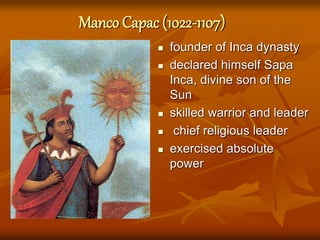
Manco Capac (1022-1107)
 founder of Inca dynasty
 declared himself Sapa
Inca, divine son of the
Sun
 skilled warrior and leader
 chief religious leader
 exercised absolute
power
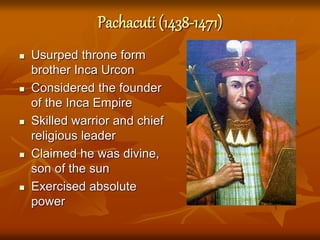
Pachacuti (1438-1471)
 Usurped throne form
brother Inca Urcon
 Considered the founder
of the Inca Empire
 Skilled warrior and chief
religious leader
 Claimed he was divine,
son of the sun
 Exercised absolute
power
Political Philosophy
 policy of forced resettlement ensured political stability
 officials collected taxes, enforced laws, kept records
on a quipu (collection of knotted colored strings)
which noted dates, events, population, crops
 use of road system strictly limited to government,
military business
 private property forbidden, crime nonexistent, citizens
never starved
 no written records; oral tradition preserved through
generations
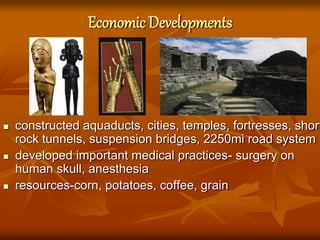
Economic Developments
 constructed aquaducts, cities, temples, fortresses, short
rock tunnels, suspension bridges, 2250mi road system
 developed important medical practices- surgery on
human skull, anesthesia
 resources-corn, potatoes, coffee, grain
Today
 descendants of Inca are present day Quechua-speaking
peasants of Andes, constitute about 45% population of Peru
 combine farming, herding w/ simple traditional technology
 rural settlements three kinds: families living in midst of
fields, true village communities w/ fields outside of inhabited
centers, combination of two
 towns centers of mestizo (mixed-blood) population
 Indian community close-knit, families usually intermarrying;
much of agricultural work done cooperatively
 religion is Roman Catholicism infused w/ pagan hierarchy of
spirits and deities

Inca empire powerpoint

  • 1.
  • 2.
    Background  Empire extendedalong the Pacific coast and Andean highlands from northern border of modern Ecuador to Maule River in central Chile  Inca originated in village of Paqari-tampu, about 15mi south of Cuzco  Official language: Quecha
  • 3.
     Polytheistic religion- Pantheonheaded by Inti-the sun god  combined features of animism, worship of nature gods  offered food, clothing, and drink  rituals included forms of divination, sacrifice of humans and animals
  • 4.
    Events leading to Riseand Fall  1438: Manco Capac established capital at Cuzco (Peru)  1400-1500: Pachacuti gained control of Andean population about 12 million people  1525: Emperor Huayna Capac died of plague; civil war broke out between two sons because no successor named  1532: Spanish arrived in Peru  1535: Empire lost
  • 5.
    Francisco Pizarro  1527:Pizarro wanted to discover wealth; embarked on his third voyage to the New World  Sept. to Nov. 1532: The Cajamarca massacre- Pizarro led 160 Spaniards to Cuzco, slaughtering over 2,000 Inca and injuring 5,000
  • 6.
     November 16,1532: Atahualpa captured by Spaniards, offered gold for his freedom.  Pizarro accepted more than 11 tons of gold ($6 million+) baubles, dishes, icons, ornaments, jewelry, & vases, but never released Atahualpa.  July 26, 1533: Atahualpa was killed
  • 7.
    Manco Capac (1022-1107) founder of Inca dynasty  declared himself Sapa Inca, divine son of the Sun  skilled warrior and leader  chief religious leader  exercised absolute power
  • 8.
    Pachacuti (1438-1471)  Usurpedthrone form brother Inca Urcon  Considered the founder of the Inca Empire  Skilled warrior and chief religious leader  Claimed he was divine, son of the sun  Exercised absolute power
  • 9.
    Political Philosophy  policyof forced resettlement ensured political stability  officials collected taxes, enforced laws, kept records on a quipu (collection of knotted colored strings) which noted dates, events, population, crops  use of road system strictly limited to government, military business  private property forbidden, crime nonexistent, citizens never starved  no written records; oral tradition preserved through generations
  • 10.
    Economic Developments  constructedaquaducts, cities, temples, fortresses, short rock tunnels, suspension bridges, 2250mi road system  developed important medical practices- surgery on human skull, anesthesia  resources-corn, potatoes, coffee, grain
  • 11.
    Today  descendants ofInca are present day Quechua-speaking peasants of Andes, constitute about 45% population of Peru  combine farming, herding w/ simple traditional technology  rural settlements three kinds: families living in midst of fields, true village communities w/ fields outside of inhabited centers, combination of two  towns centers of mestizo (mixed-blood) population  Indian community close-knit, families usually intermarrying; much of agricultural work done cooperatively  religion is Roman Catholicism infused w/ pagan hierarchy of spirits and deities