The Elementary Curriculum
     Responding the
  Challenge of Learners

    Yolanda S. Quijano, ED.D.
  Bureau of Elementary Education
     Department of Education
             Pasig City
Every child has unique characteristics,
 interests, abilities and learning needs
               and therefore,
  if the right to education is to mean
anything, education systems should be
  designed and educational programs
 implemented, to take into account the
 wide diversity of these characteristics
                 and needs.

       Salamanca Conference in Education
               (Spain, 1994)
Outline
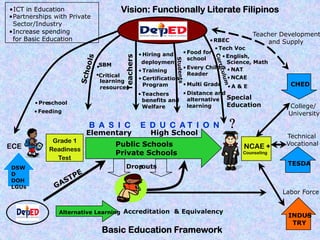
The Basic Education Framework
Background and Rationale
Curriculum Refinement
Thrusts
Directions
Programs & Projects :Existing &
 New
Intended Outcomes
•ICT in Education                   Vision: Functionally Literate Filipinos
•
•Partnerships with Private
  Sector/Industry
•Increase spending                                                                    Teacher Development
  for Basic Education                                                     • RBEC               and Supply
                                                                            • Tech Voc
                                                • Hiring and    • Food for
                                                                               • English,


                                     Teachers
                                                                  school
                                                 deployment                      Science, Math
                             •SBM                               • Every Child a • NAT
                                                • Training
                             •Critical                            Reader
                                                • Certification                  • NCAE
                              learning
                              resources           Program       • Multi Grade • A & E
                                                                     -                               CHED
                                                • Teachers     • Distance and
        • Pre
            -school                               benefits and alternative Special
                                                  Welfare        learning     Education          College/
        • Feeding                                                                                University
                         B A S I C              E D U C AT I O N              ?
                        Elementary                 High School                                   Technical
             Grade 1
ECE                               Public Schools                                   NCAE +        Vocational
            Readiness
                                  Private Schools                                 Counseling
              Test
                                      Drop
                                         -outs                                                   TESDA
DSW
D
DOH
LGUs
                                                                                               Labor Force


                Alternative Learning Accreditation & Equivalency
                                                                                                 INDUS-
                                                                                                  TRY
                              Basic Education Framework
Background and Rationale
Elementary Education Curriculum
(EEC) as major component of Basic
Education Curriculum (BEC) first
implemented in 2002

Evaluation of EEC conducted by PNU
from June 2005-June 2006
Background and Rationale
Two issues identified: teachers as
facilitators and lack of textbooks,
equipment and materials
Issues addressed through:
* training
* lesson exemplars
* procurement
* stakeholders support
Background and Rationale
         Realities in Education
Rapidly changing world that need
empowered and lifelong learners

Standards-based School Initiatives in
Differentiated Curriculum
“All students can learn to high standards.”
“Ensure full access to the general curriculum
to the maximum extent appropriate to the
needs of the child.”
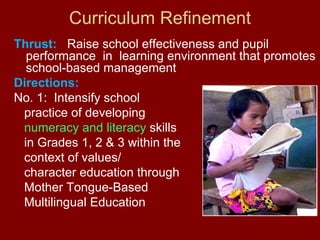
Curriculum Refinement
Thrust: Raise school effectiveness and pupil
  performance in learning environment that promotes
  school-based management
Directions:
No. 1: Intensify school
 practice of developing
 numeracy and literacy skills
 in Grades 1, 2 & 3 within the
 context of values/
 character education through
 Mother Tongue-Based
 Multilingual Education
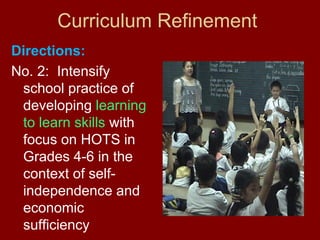
Curriculum Refinement
Directions:
No. 2: Intensify
 school practice of
 developing learning
 to learn skills with
 focus on HOTS in
 Grades 4-6 in the
 context of self-
 independence and
 economic
 sufficiency
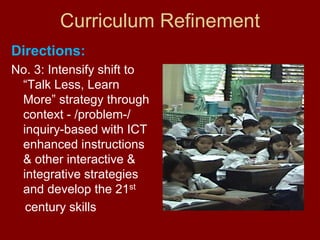
Curriculum Refinement
Directions:
No. 3: Intensify shift to
 “Talk Less, Learn
 More” strategy through
 context - /problem-/
 inquiry-based with ICT
 enhanced instructions
 & other interactive &
 integrative strategies
 and develop the 21st
  century skills
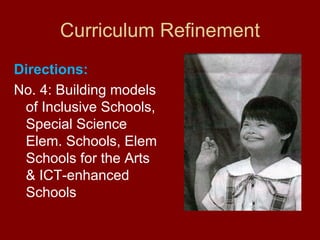
Curriculum Refinement
Directions:
No. 4: Building models
 of Inclusive Schools,
 Special Science
 Elem. Schools, Elem
 Schools for the Arts
 & ICT-enhanced
 Schools
Teacher-Support Program for
    Curriculum Refinement
Building teacher-leaders through institution-
based training for master’s degree through
blended learning (face-to-face & e-learning)
Development of training designs and
sessions through print and e-learning
 in support to school/cluster-based training,
LAC sessions, mentoring/coaching,
 distance education
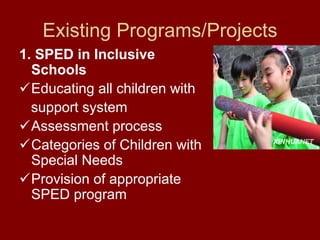
Existing Programs/Projects
1. SPED in Inclusive
  Schools
  Educating all children with
  support system
  Assessment process
  Categories of Children with
  Special Needs
  Provision of appropriate
  SPED program
Existing Programs/Projects
2. Mother Tongue-Based Multilingual
  Education
  Mother tongue as language of instruction
  (LOI) from preparatory level, Grades 1, 2
  &3
  Filipino and English are offered as
  subjects
  Filipino and English are used as LOI in
  Grades 4, 5 & 6 in designated learning
  areas
Existing Programs/Projects
3. Special Science Elementary School
  Curriculum Model
  Enriched science curriculum
  Science & Health is taught starting Gr.1
  Provides ICT-enhanced instruction
  LOI are Filipino and English
  Assessment of Grade 1 entrants
  Special trainings provided to teachers by
  RECSAM
Existing Programs/Projects
4. Model Schools Using ICT- enhanced
  Curriculum
  Provision of computer units and multi-
  media equipment by DepED with
  assistance from LGUs/NGOs/business
  sector
  Uses on-line collaborative teaching
  through Oracle Education Foundation, Inc.
  and other service providers
  Uses multimedia in providing instruction
New Projects
5.Enhancing Curriculum for EPP and
  Work Centers
  Differentiated curriculum based on
  community resources for regular and
  special children
  Establishment of Work Centers for
  development of entrepreneurship
  Linkage with community for volunteer
  teachers
New Projects
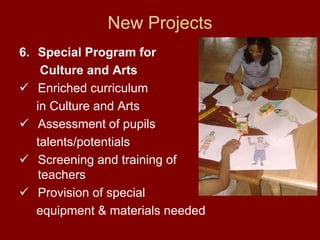
6. Special Program for
     Culture and Arts
    Enriched curriculum
   in Culture and Arts
    Assessment of pupils
   talents/potentials
    Screening and training of
    teachers
    Provision of special
   equipment & materials needed
New Projects
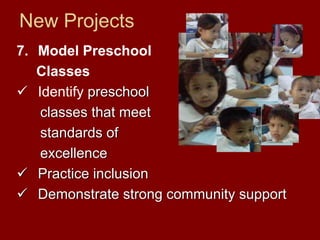
7. Model Preschool
   Classes
   Identify preschool
    classes that meet
    standards of
    excellence
   Practice inclusion
   Demonstrate strong community support
Intended Outcomes
Scaling up of models with
stakeholders participation
Support to schools initiatives on
differentiated curriculum
Students possess skills and values
for continuous learning and cope with
demands of rapidly changing world

The elementary curriculum

  • 1.
    The Elementary Curriculum Responding the Challenge of Learners Yolanda S. Quijano, ED.D. Bureau of Elementary Education Department of Education Pasig City
  • 2.
    Every child hasunique characteristics, interests, abilities and learning needs and therefore, if the right to education is to mean anything, education systems should be designed and educational programs implemented, to take into account the wide diversity of these characteristics and needs. Salamanca Conference in Education (Spain, 1994)
  • 3.
    Outline The Basic EducationFramework Background and Rationale Curriculum Refinement Thrusts Directions Programs & Projects :Existing & New Intended Outcomes
  • 4.
    •ICT in Education Vision: Functionally Literate Filipinos • •Partnerships with Private Sector/Industry •Increase spending Teacher Development for Basic Education • RBEC and Supply • Tech Voc • Hiring and • Food for • English, Teachers school deployment Science, Math •SBM • Every Child a • NAT • Training •Critical Reader • Certification • NCAE learning resources Program • Multi Grade • A & E - CHED • Teachers • Distance and • Pre -school benefits and alternative Special Welfare learning Education College/ • Feeding University B A S I C E D U C AT I O N ? Elementary High School Technical Grade 1 ECE Public Schools NCAE + Vocational Readiness Private Schools Counseling Test Drop -outs TESDA DSW D DOH LGUs Labor Force Alternative Learning Accreditation & Equivalency INDUS- TRY Basic Education Framework
  • 5.
    Background and Rationale ElementaryEducation Curriculum (EEC) as major component of Basic Education Curriculum (BEC) first implemented in 2002 Evaluation of EEC conducted by PNU from June 2005-June 2006
  • 6.
    Background and Rationale Twoissues identified: teachers as facilitators and lack of textbooks, equipment and materials Issues addressed through: * training * lesson exemplars * procurement * stakeholders support
  • 7.
    Background and Rationale Realities in Education Rapidly changing world that need empowered and lifelong learners Standards-based School Initiatives in Differentiated Curriculum “All students can learn to high standards.” “Ensure full access to the general curriculum to the maximum extent appropriate to the needs of the child.”
  • 8.
    Curriculum Refinement Thrust: Raiseschool effectiveness and pupil performance in learning environment that promotes school-based management Directions: No. 1: Intensify school practice of developing numeracy and literacy skills in Grades 1, 2 & 3 within the context of values/ character education through Mother Tongue-Based Multilingual Education
  • 9.
    Curriculum Refinement Directions: No. 2:Intensify school practice of developing learning to learn skills with focus on HOTS in Grades 4-6 in the context of self- independence and economic sufficiency
  • 10.
    Curriculum Refinement Directions: No. 3:Intensify shift to “Talk Less, Learn More” strategy through context - /problem-/ inquiry-based with ICT enhanced instructions & other interactive & integrative strategies and develop the 21st century skills
  • 11.
    Curriculum Refinement Directions: No. 4:Building models of Inclusive Schools, Special Science Elem. Schools, Elem Schools for the Arts & ICT-enhanced Schools
  • 12.
    Teacher-Support Program for Curriculum Refinement Building teacher-leaders through institution- based training for master’s degree through blended learning (face-to-face & e-learning) Development of training designs and sessions through print and e-learning in support to school/cluster-based training, LAC sessions, mentoring/coaching, distance education
  • 13.
    Existing Programs/Projects 1. SPEDin Inclusive Schools Educating all children with support system Assessment process Categories of Children with Special Needs Provision of appropriate SPED program
  • 14.
    Existing Programs/Projects 2. MotherTongue-Based Multilingual Education Mother tongue as language of instruction (LOI) from preparatory level, Grades 1, 2 &3 Filipino and English are offered as subjects Filipino and English are used as LOI in Grades 4, 5 & 6 in designated learning areas
  • 15.
    Existing Programs/Projects 3. SpecialScience Elementary School Curriculum Model Enriched science curriculum Science & Health is taught starting Gr.1 Provides ICT-enhanced instruction LOI are Filipino and English Assessment of Grade 1 entrants Special trainings provided to teachers by RECSAM
  • 16.
    Existing Programs/Projects 4. ModelSchools Using ICT- enhanced Curriculum Provision of computer units and multi- media equipment by DepED with assistance from LGUs/NGOs/business sector Uses on-line collaborative teaching through Oracle Education Foundation, Inc. and other service providers Uses multimedia in providing instruction
  • 17.
    New Projects 5.Enhancing Curriculumfor EPP and Work Centers Differentiated curriculum based on community resources for regular and special children Establishment of Work Centers for development of entrepreneurship Linkage with community for volunteer teachers
  • 18.
    New Projects 6. SpecialProgram for Culture and Arts Enriched curriculum in Culture and Arts Assessment of pupils talents/potentials Screening and training of teachers Provision of special equipment & materials needed
  • 19.
    New Projects 7. ModelPreschool Classes Identify preschool classes that meet standards of excellence Practice inclusion Demonstrate strong community support
  • 20.
    Intended Outcomes Scaling upof models with stakeholders participation Support to schools initiatives on differentiated curriculum Students possess skills and values for continuous learning and cope with demands of rapidly changing world